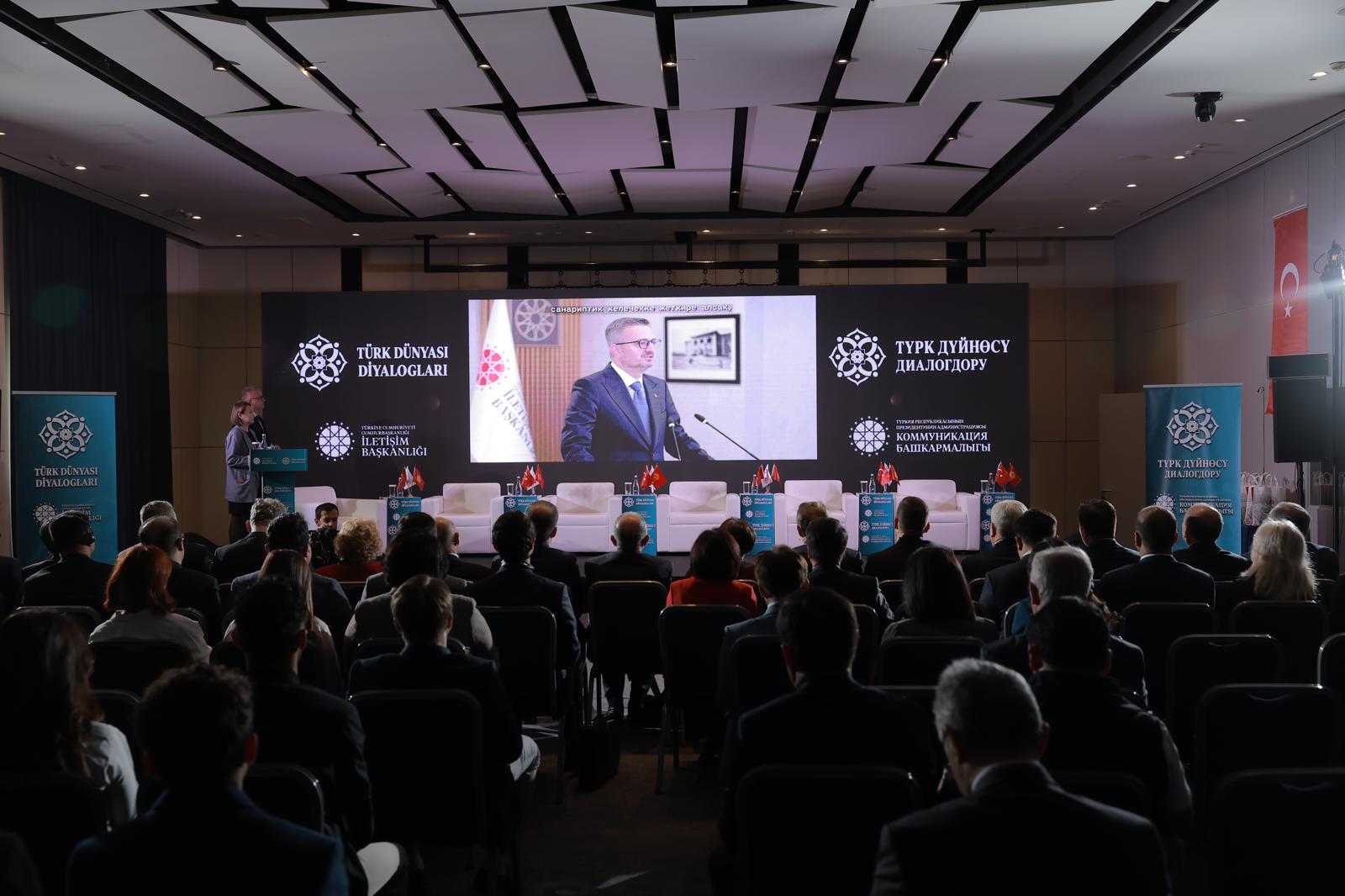
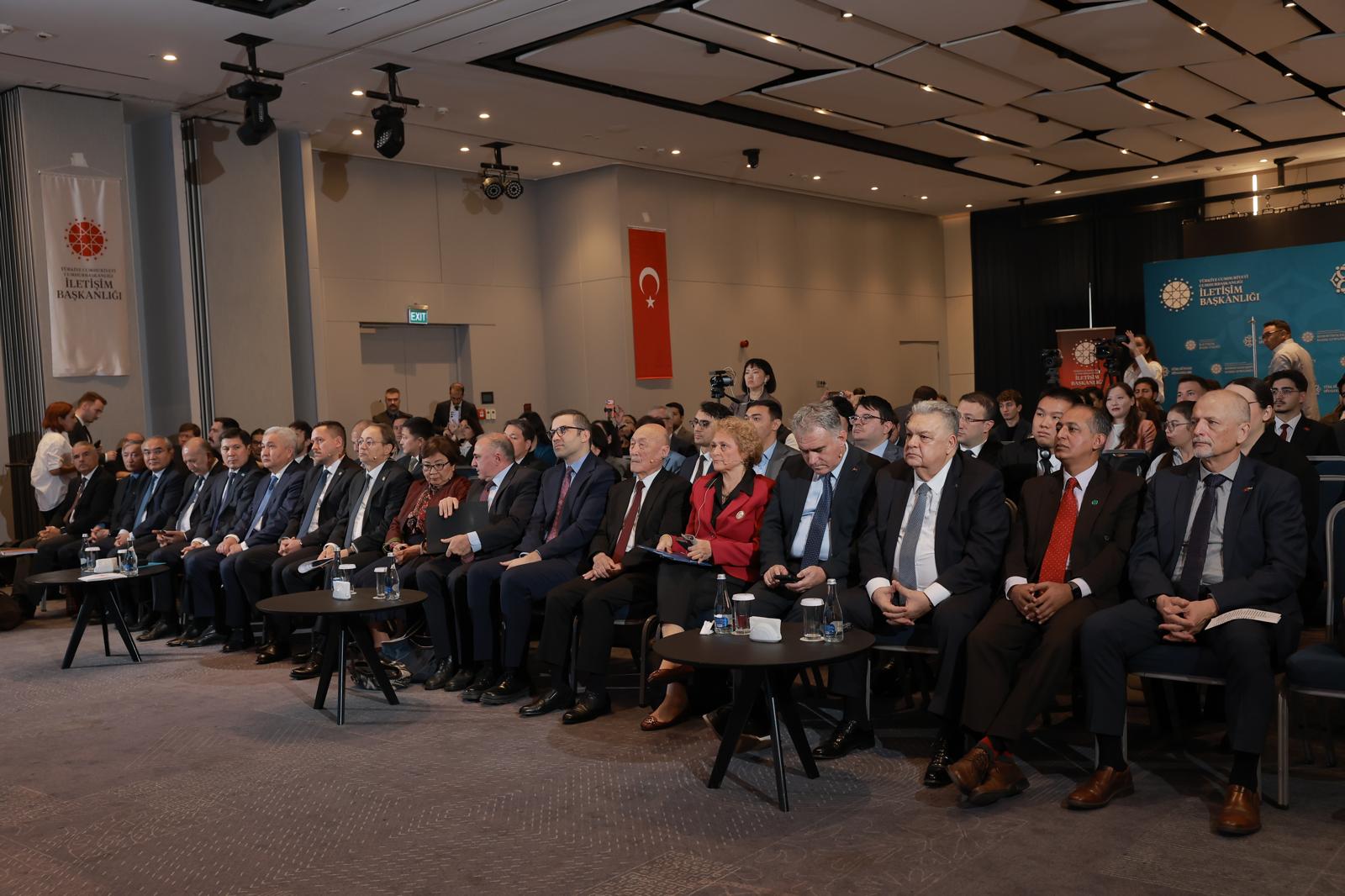
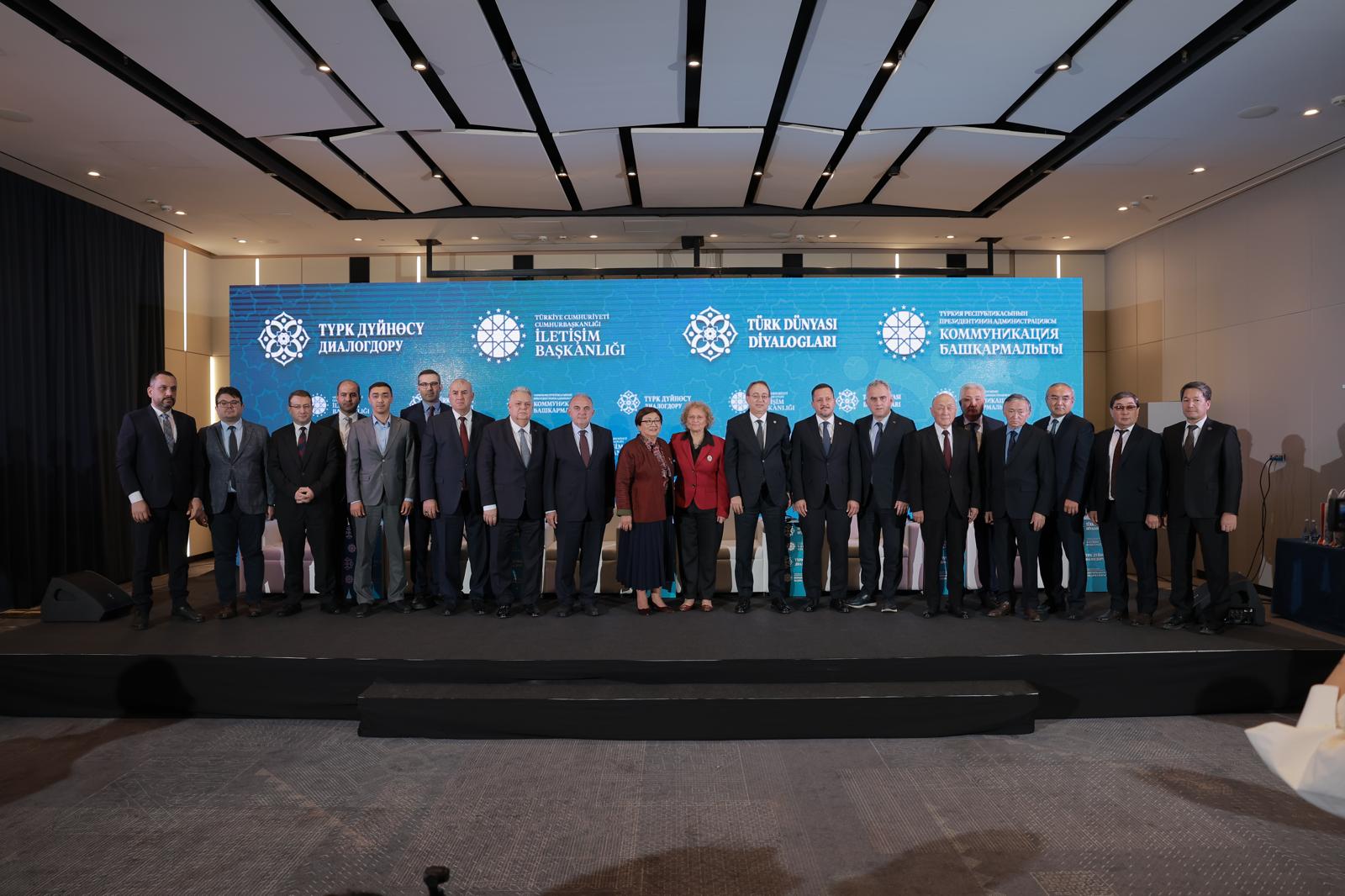
The Presidency’s Directorate of Communications organised a panel titled “Turkic World Dialogues: Shared Future, Shared Vision” in Bishkek, the capital of Kyrgyzstan.
Ahead of the 13th Summit of Heads of State of the Organisation of Turkic States (OTS), to be hosted by Türkiye on 29–30 October 2026, panels titled “Turkic World Dialogues: Shared Future, Shared Vision” are being held in various OTS member and observer countries.
The fourth event in the panel series took place in Bishkek, the capital of Kyrgyzstan, on 1 October 2026, following the first three panels held in Astana, the capital of Kazakhstan; Baku; and Tashkent, respectively.
The programme began with opening remarks by Türkiye’s Ambassador to Kyrgyzstan, Dr Mekin Mustafa Kemal Ökem, followed by a video message to the participants from the Presidency's Head of Communications, Prof. Burhanettin Duran.
In his video message, the Presidency's Head of Communications, Prof. Burhanettin Duran, stated that the Turkic world possesses a strong civilisational heritage rooted in a shared history, language and culture, and stressed the importance of Turkic states acting with common wisdom and strong coordination in the face of multidimensional challenges such as intensifying geopolitical competition, energy and food security concerns, irregular migration, cyber threats and disinformation. Head of Communications Duran stated that the Organisation of Turkic States embodies a vision that contributes to regional peace and supports economic development.
Highlighting the strategic importance of cooperation in the fields of media and communications, Head of Communications Duran noted the need to enhance the exchange of information and experience and develop common platforms in the fight against disinformation, hate speech and digital manipulation. Stating that artificial intelligence and emerging communication technologies are areas in which the Turkic states should jointly help shape the future, Head of Communications Duran said that during Türkiye’s OTS Chairmanship, Türkiye aims to further advance the institutional integration and global visibility of the Turkic world.
Moderated by Prof. Nurşin Ateşoğlu Güney, Member of the Presidential Security and Foreign Policy Council and National Intelligence Academy Faculty Member, the panel featured Former-President Roza Otunbayeva of Kyrgyzstan, Prof. İlyas Topsakal, 28th-term MHP Member of Parliament for Samsun and Deputy Chairman of the MHP; Selman Oğuzhan Eser, 28th-term AK Party Member of Parliament for Karaman; Prof. Ragıp Kutay Karaca, Vice-Rector of İstanbul Aydın University; and Prof. Medetkan Sherimkulov, the Speaker of the first Parliament of the Kyrgyz Republic.
The panel addressed multifaceted cooperation among the Turkic states, current challenges, the progress made by the Organisation from past to present, and the common alphabet. In addition, developments in the economic and political spheres, as well as views on issues regarding joint defence industry initiatives, doctrinal unity, communications, and artificial intelligence, were discussed within the context of the Turkic states.
Prof. Nurşin Ateşoğlu Güney, Member of the Presidential Security and Foreign Policies Council and National Intelligence Academy Faculty Member, who moderated the panel, stated that at a time when the international system is undergoing a critical transformation and experiencing instability, the Organisation of Turkic States is advancing in a distinctive manner thanks to both its strategic importance and flexible structure. Güney stated that cooperation, driven by a shared history, language and culture, has developed in a functional manner and that this mechanism has been maintained through a flexible structure. She added that rather than pursuing cooperation in every field at the same pace, a flexible and multi-layered approach has been adopted, allowing progress in different areas and at different speeds.
Former President of the Kyrgyz Republic Roza Otunbayeva stated that before the establishment of the Organisation of Turkic States, relations within the Turkic world had been distant, yet shaped by a strong sense of longing and shared ideals, whereas today these ideas have begun to translate into concrete cooperation. Otunbayeva also emphasised that Kyrgyzstan benefits from Türkiye’s accumulated knowledge and experience in numerous fields, particularly in diplomacy, education and media, and expressed her hope that cooperation between the two countries would be further strengthened.
Prof. İlyas Topsakal, 28th-term MHP Member of Parliament for Samsun and Deputy Chairman of the MHP, stated in his remarks that the Kyrgyz were among the first peoples mentioned in the Göktürk Inscriptions, one of the fundamental sources of Turkic history, and noted that the main contours of Turkic history had taken shape in this geography. Topsakal stated that the regional paradigm increasingly prevailing across the world compels Turkic peoples to return once again to their roots, their own history and their geography.
Selman Oğuzhan Eser, 28th-term AK Party Member of Parliament for Karaman, stated that geographical and historical proximity alone was not sufficient and that shared memory must be transformed into shared objectives and shared objectives into major areas of cooperation. In this context, he stressed the importance of strengthening ties in every field, from the economy and education to culture and youth, and from media to civil society.
Prof. Ragıp Kutay Karaca, Vice-Rector of İstanbul Aydın University, drew attention to the importance of economic cooperation alongside historical and cultural ties and stated that the strategic importance of the Middle Corridor was increasing. Calling for common objectives to be established for the corridor and for coordination to be strengthened, Karaca proposed the establishment of an Institute for Turkic World Logistics and Connectivity in Bishkek, as well as addressing complementary connections in the South Caucasus in a manner that would support regional peace.
Prof. Medetkan Sherimkulov, Speaker of the first Parliament of the Kyrgyz Republic, stated that cooperation in all fields was very important, but that security was the most important, and that common security mechanisms were vital to prevent us from experiencing the suffering witnessed in our immediate region.
A press conference was held in the second part of the panel programme. At the meeting, the panellists answered questions from journalists and offered assessments particularly on the role of the OTS in advancing cooperation among the Turkic states, the key parameters shaping the approach of major global actors towards the Turkic geography, efforts towards a common alphabet, and the potential contributions of young people. The well-attended panel programme also attracted considerable interest from the Kyrgyz media.
The event brought together members of parliament, representatives of diplomatic missions and public institutions, academics, think tanks, security and foreign policy circles, and members of the international media, contributing to efforts to communicate to the international public the role of the OTS in advancing cooperation among the Turkic states ahead of the 13th Summit of the Heads of State of the Organisation of Turkic States to be held in Ankara.