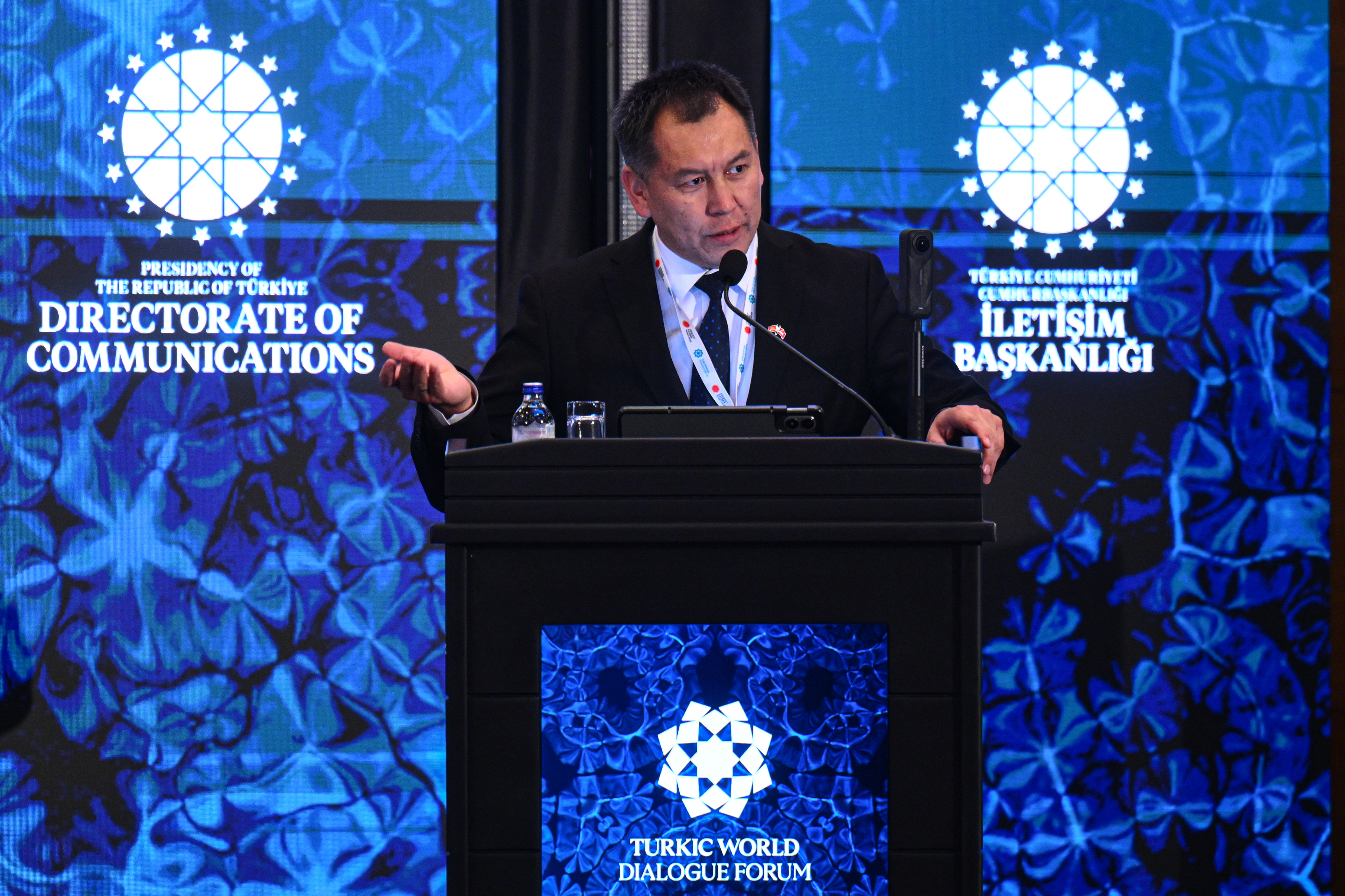
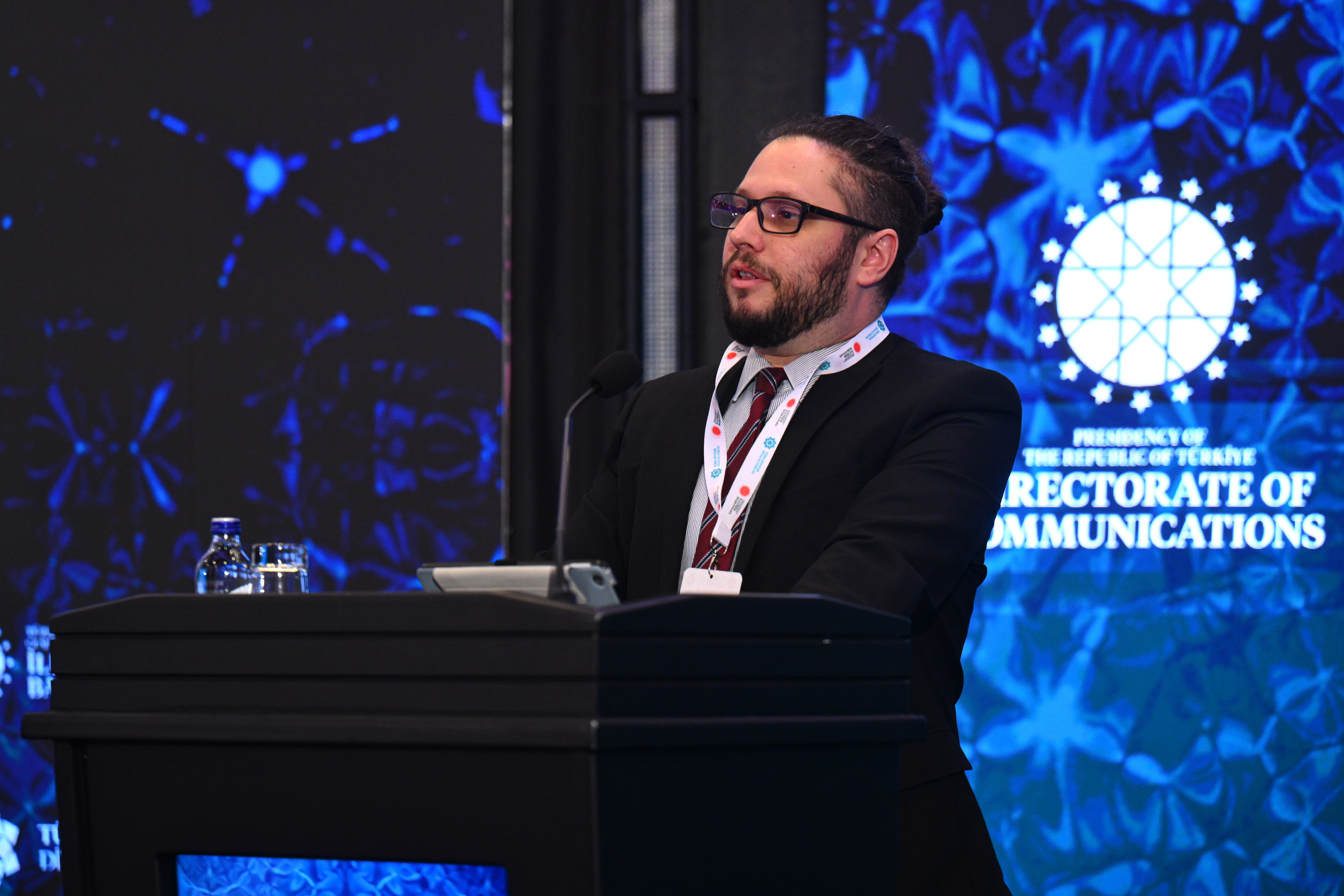
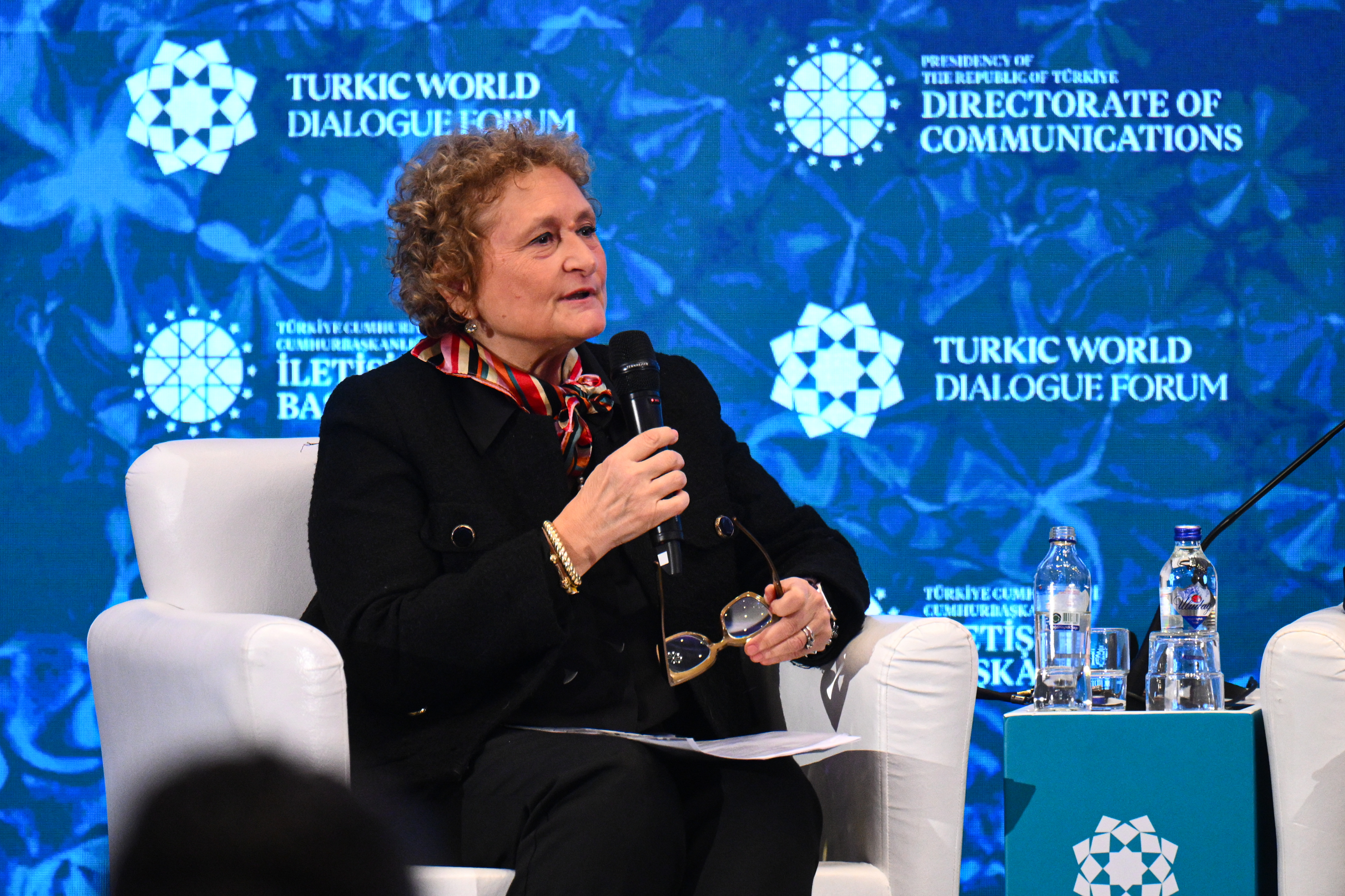
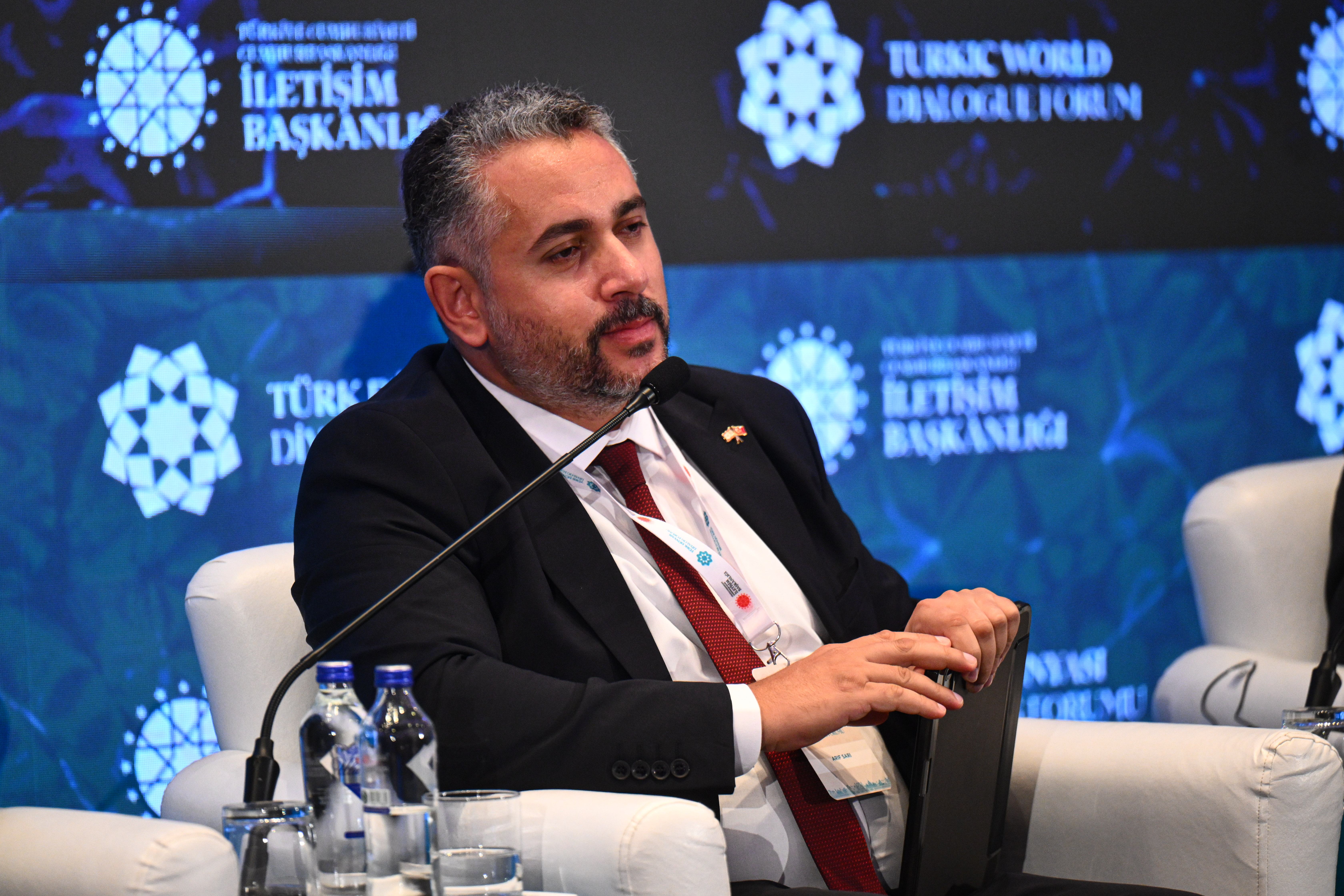
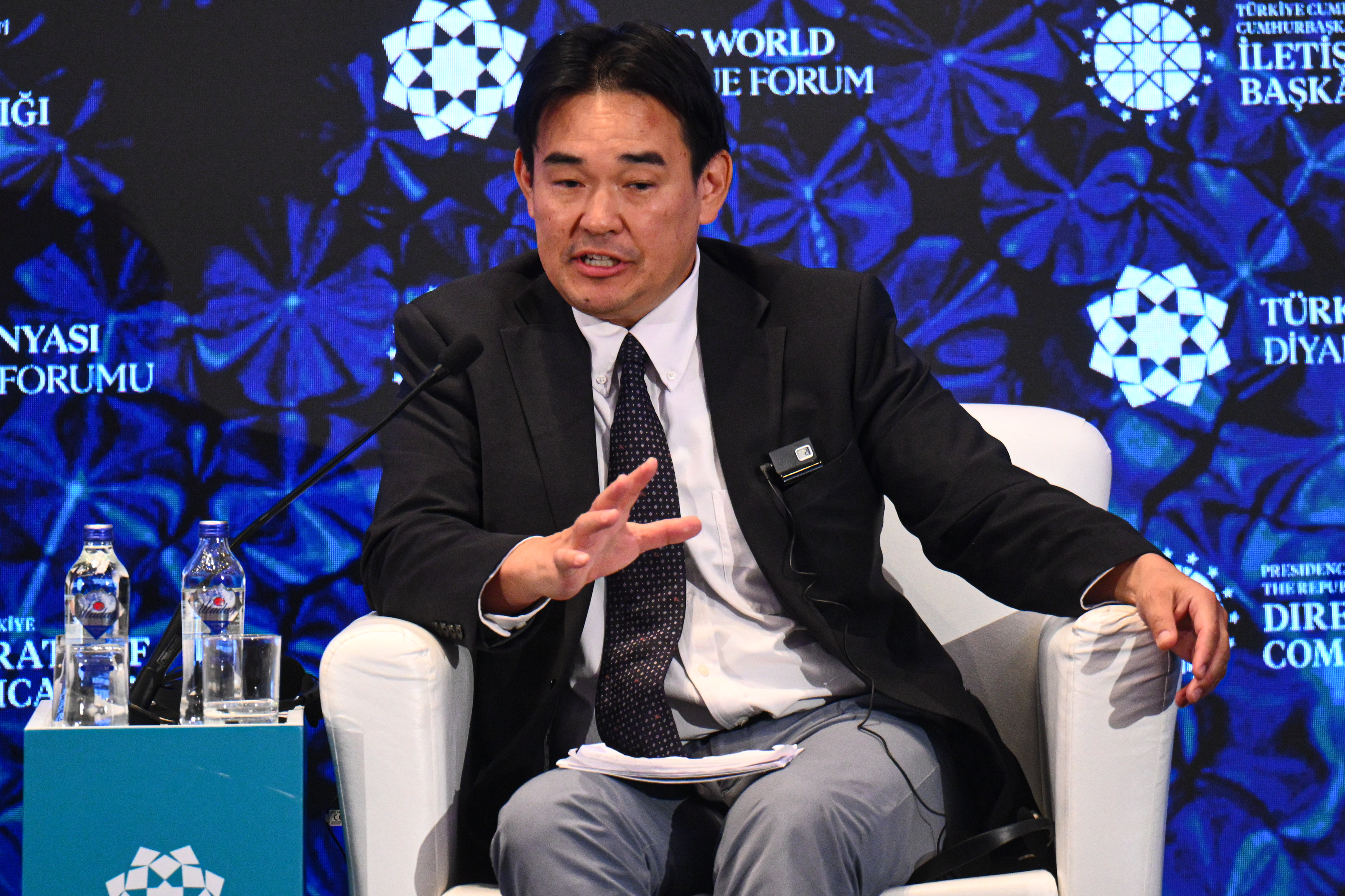
As part of the "Turkic World Dialogue Forum", a panel titled "New Areas of Power: The Future of the Turkish Defence Industry" was held in Ankara, organised by the Directorate of Communications.
At the panel discussion moderated by Prof. Nurşin Ateşoğlu Güney, a member of the Presidential Security and Foreign Policy Council, the emerging new security architecture within the Organisation of Turkic States (OTS) and across the Eurasian region was discussed.
In her opening remarks, Prof. Güney said that a glance at the OTS Ankara Summit Declaration revealed just how important the issue of security was.
Pointing to the impact of new security perceptions, particularly on Eurasian geopolitics, Güney added, "We see that the conflict zones in and around the region, the external supply difficulties caused by all of this, and all these geopolitical pressures have led to the emergence of cooperation between countries in this region and within the context of the OTS; and that elements in the non-traditional military and defence sectors have also become of great importance, going beyond the mere procurement of traditional military equipment."
Drawing attention to developments in the fields of artificial intelligence, cyber capabilities and advanced technology, Güney emphasised the importance of determining how the opportunities arising from the momentum Turkey has gained in the defence industry in recent years can be capitalised on and institutionalised within the context of the OTS.
Prof. Güney continued:
"In fact, as we know from the Summit Declaration and also from the meeting held previously in Baku, a roadmap has been drawn up in the field of the defence industry. What does this show us? How can the OTS now move beyond mere cultural and economic cooperation and, within the framework of this new geopolitical transformation, institutionalise a mechanism for cooperation in areas where the countries’ respective needs converge? The fact that a roadmap has been drawn up for this is a hopeful development for us."
"Star Wars" metaphor between Japan and Türkiye
Ken Moriyasu, a Senior Research Fellow at the Hudson Institute, also noted that there is intense great power competition in the region stretching from the Pacific to the Middle East and that the Central Corridor and Eurasia are becoming increasingly important in this context.
Moriyasu, emphasising that Türkiye and Japan—located at opposite ends of Asia—play a special role in maintaining this balance of power, stated that Japan is keen to cooperate with Türkiye in the defence industry.
Moriyasu, drawing a parallel between potential cooperation between Türkiye and Japan and elements from the "Star Wars" film, said, "Türkiye is skilled at building the agile and versatile ‘X-Wing’ fighter, equipped with its combat experience. Japan, on the other hand, has been highly successful in producing the "R2-D2" robot, which provides navigation, computational and maintenance support for this aircraft. These two countries complement each other.”
Moriyasu, noting that Japan had watched with admiration as Turkish unmanned aerial vehicles achieved success in Syria, Libya and Karabakh, described this as a revolution; he stated that the combination of Türkiye’s operational experience in the field and its capacity for rapid innovation with Japan’s sensor technologies and electronic systems presented a significant opportunity.
TRNC calls for "technology transfer and joint investment"
Prof. Arif Sarı, Lead Cybersecurity Architect and Co-Founder at SnipeSec Cybersecurity emphasised that the Turkish Republic of Northern Cyprus (TRNC) plays a critical role in matters relating to energy supply and regional security in the Eastern Mediterranean.
Drawing attention to Türkiye’s increasing budgetary support for the defence industry in the TRNC, as well as the Eastern Mediterranean Vessel Traffic Services System and the unmanned surveillance stations established in the region, Sarı highlighted the role these measures play in ensuring energy and food security.
Addressing OTS countries, Prof. Sarı stated:
“We are a country that is very open to technological cooperation and technology transfer. We invite leading defence industry companies from the countries of the Organisation of Turkic States to the TRNC. We are ready to provide all the necessary infrastructure. We could hold a workshop on the defence industry within the framework of the Organization of Turkic States (OTS) in the TRNC.”
Transition with Hungary “from procurement to industrial partnership”
David Biro, Research Fellow at the John Lukacs Institute of Ludovika University of Public Service in Hungary, stated that global geopolitical shifts and technological transformation make it essential for the defence industry not only to procure equipment but also to develop joint industrial capacity.
Noting that Türkiye’s export success in the defence and aerospace industries spans a wide range, from land and sea platforms to electronic systems, Biro outlined the cooperation between Hungary and Türkiye.
Noting that the aim was not merely to import the platform, Biro said, "This partnership must evolve into a long-term investment in national capability through the development of local industry, the integration of cybersecurity and the acquisition of maintenance capabilities."
"We must develop a permanent communication mechanism among the Turkic states"
İlyazbek Baltashev, General Manager of Kyrgyzstan’s Channel 7, emphasised today that safeguarding national security is possible not only through military capabilities but also through information security and the fight against disinformation.
Baltashev noted that the progress Türkiye has made in the defence industry through its long-standing engineering and national technology initiatives is an inspiration to the Turkic world and recalled that Kyrgyzstan has also added Bayraktar TB2s to its inventory as part of this effort.
Pointing out that it is necessary to act in unison in the field of information as well as in technological independence, Baltashev said, “We must develop a permanent communication mechanism for information security among the Turkic states. We must ensure a rapid flow of information to counter cyberattacks, AI-generated fake content and disinformation campaigns, and create a unified media platform in the digital revolution."
Avazbek Abdulkhaev, Head of the Urban Development and Major Investments Department at the Uzbekistan Economy Assembly, stated that a shared ecosystem needed to be established among the Turkic states, where academic research could be directly translated into engineering and industrial projects.
Highlighting the importance of combining modern laboratory facilities to encourage young people and scientists to engage in collaborative research, Abdulkhaev made the following recommendations for commercial integration:
"I propose the creation of an artificial intelligence-powered B2B platform that will bring the Turkish states together under a single umbrella. Thanks to this digital supply chain, which will bring together importers, exporters and manufacturers and facilitate all processes—such as licensing, pricing and insurance—we can pool our economic potential. As the Turkic world, we must not merely be countries that purchase off-the-shelf technology but states that jointly develop our own technologies and build a strong common market."