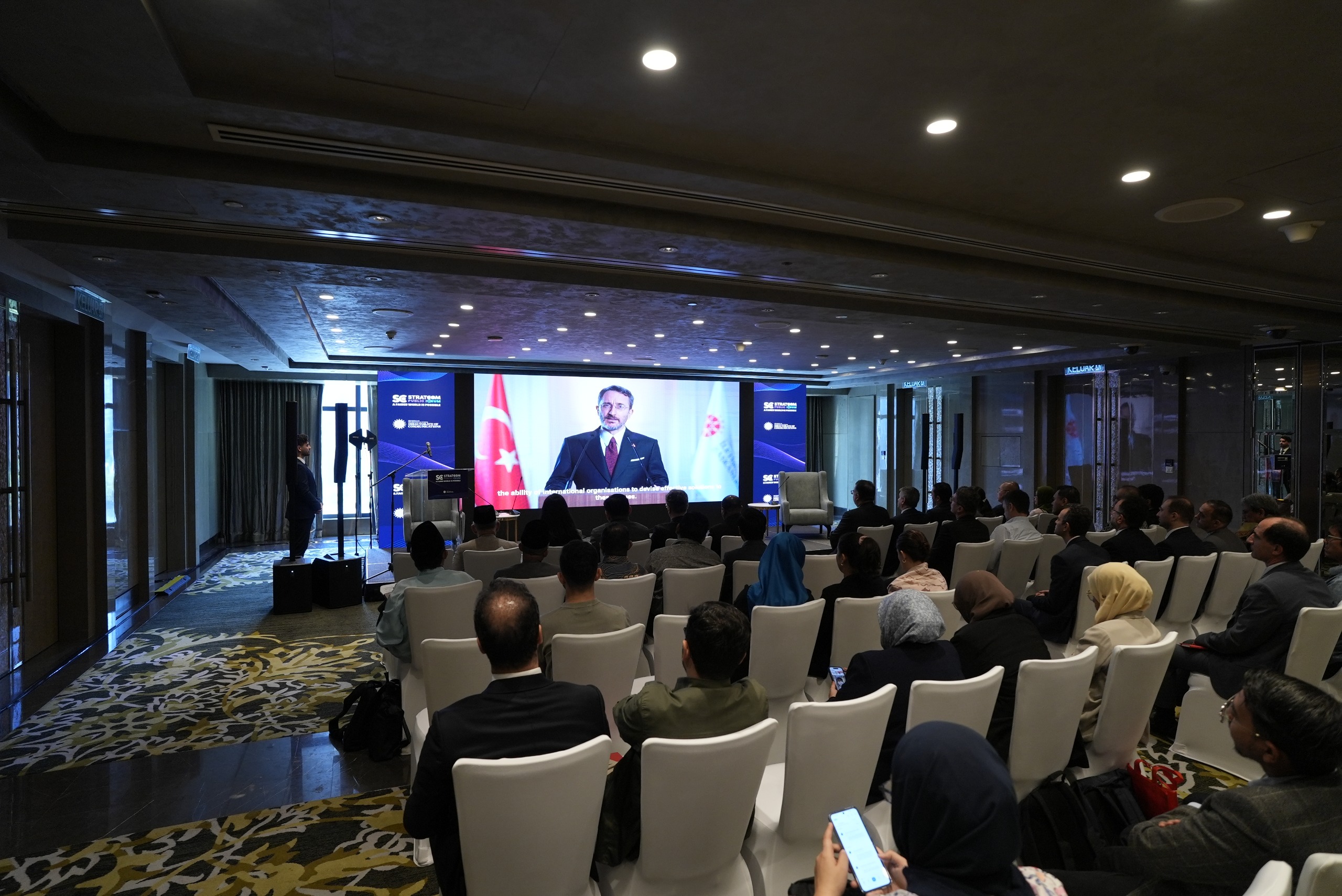
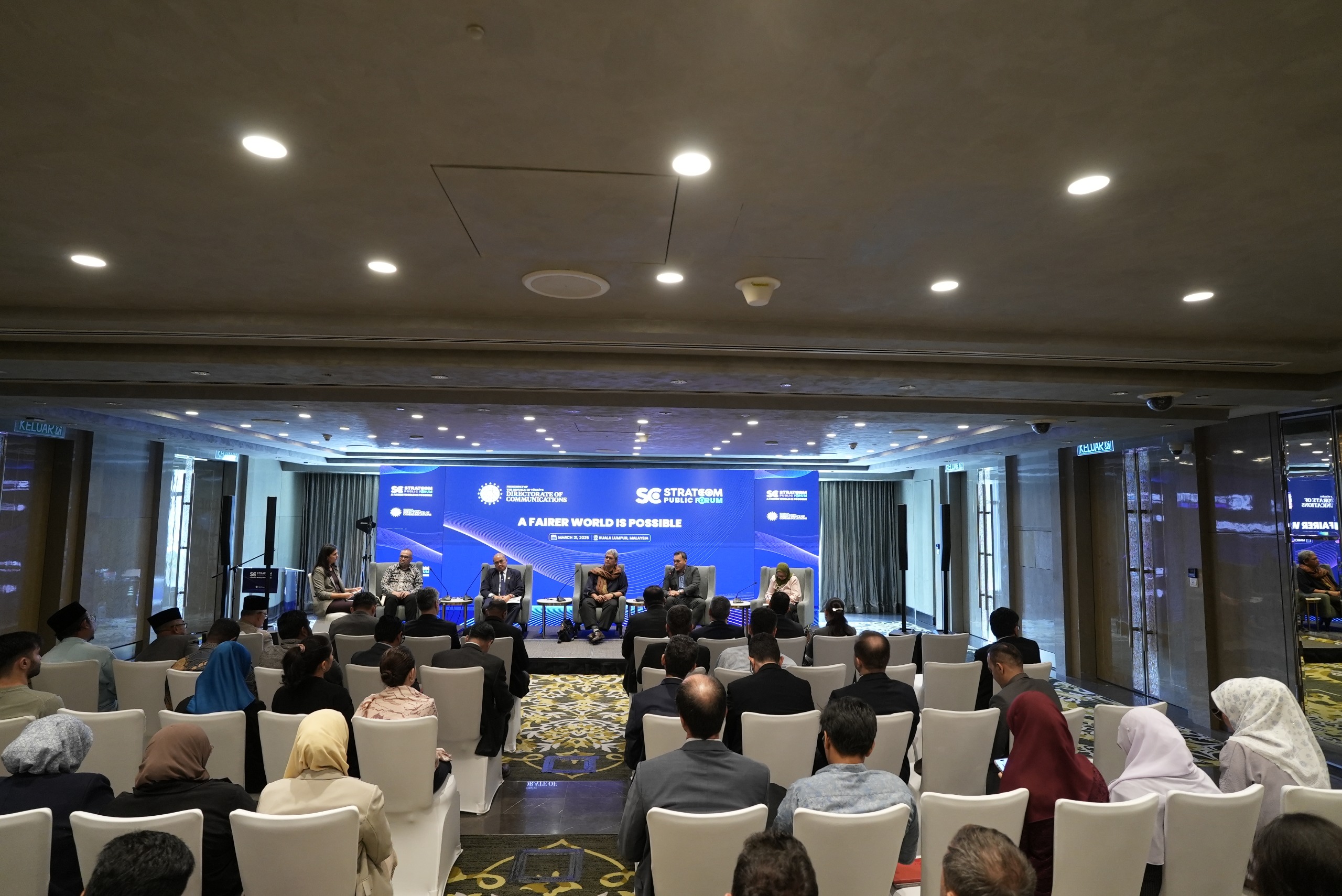
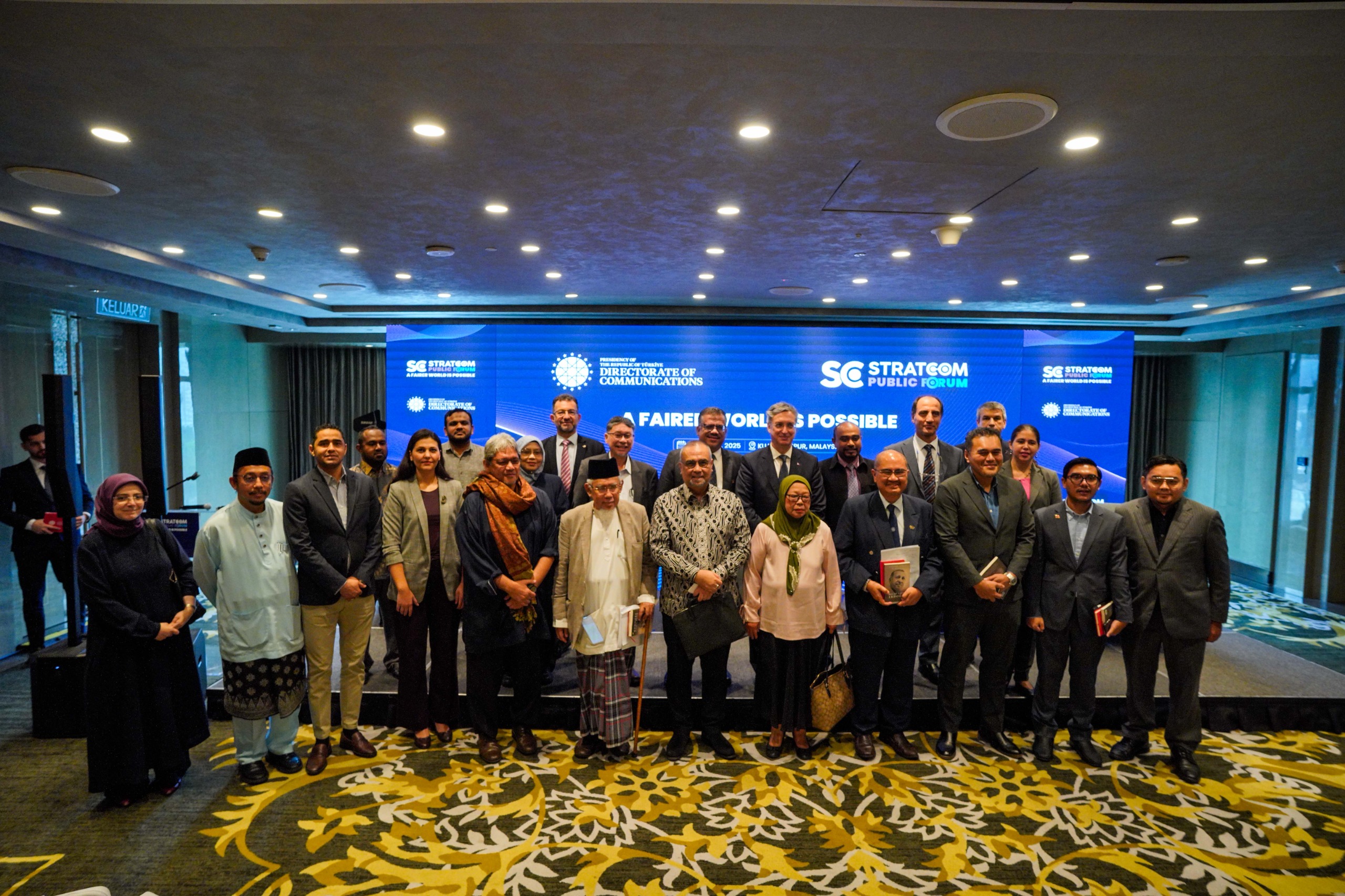
The Stratcom Public Forum, organised by the Directorate of Communications in various countries, was held in Kuala Lumpur, the capital of Malaysia, under the theme "A Fairer World Is Possible." The event focused on the problems of global governance, the crises of the international system, and the role of international institutions and organisations in establishing a sustainable and fair system.
At the round of the panel series held in Kuala Lumpur, the event commenced with the screening of the "Stratcom Public Forum" themed video, followed by the presentation of a video message from the Presidency's Head of Communications, Professor Fahrettin Altun, which was sent specifically for the panel.
Ambassador of Türkiye to Kuala Lumpur Emir Salim Yüksel delivered the opening speech, and the panel was moderated by Olga Şanlı Gerger, Head of the Department of Translation at the Presidency's Directorate of Communications. At the panel, Prof Ruhanas Harun, Professor at the National Defence University of Malaysia, Dr Mohd Iqbal, Lecturer at the International Islamic University Malaysia, Dr Roy Anthony Rogers, Lecturer at the University of Malaya, Prof Mohd Azizuddin Mohd Sani, Vice Chancellor of the Universiti Utara Malaysia, and Dr Abdulrazak Ahmad, Founding Director of Bait Al Amanah, a think tank, participated as speakers.
Ambassador of Türkiye to Kuala Lumpur Emir Salim Yüksel underscored in his opening address that the international institutions established after World War II began to lose their effectiveness and functionality, as well as their capacity to resolve global conflicts and crises. Stating that the international community should take an active role in solving both global and regional crises, Ambassador Yüksel pointed out that this solution is embodied in President Recep Tayyip Erdoğan's motto, "The world is bigger than five".
Prof Ruhanas Harun, the first speaker of the panel moderated by Olga Şanlı Gerger, noted that the dominant powers in the international order established after World War II continue to maintain their dominance today in the face of a changing world. Pointing out that the United Nations (UN) was established to ensure peace and justice, Prof Harun gave the example of Palestine and stated that problems such as the failure to implement the decisions taken by the UN expose the limitations of the UN. Prof Harun emphasised that international organisations are fundamentally comprised of sovereign states, which results in decisions being made in accordance with national interests. Prof Harun noted that despite the growing influence of non-state actors, the integration of their needs into global decision-making processes is restricted.
Dr Mohd Iqbal, Lecturer at the International Islamic University Malaysia, stated that many past events and experiences with the UN have weakened hopes and reinforced the belief that the UN is inadequate. Dr Iqbal particularly referred to previous failed UN initiatives in Bosnia and Herzegovina and Iraq. Dr Iqbal emphasised that the international system has frequently failed to ensure justice and protect human rights but that the UN remains the most essential international organisation in terms of cooperation and collective agenda setting despite its failed attempts and that interaction with this organisation should continue.
Emphasising that Malaysia has assumed an important role in contributing to a fairer world through the UN, Dr Roy Anthony Rogers, Lecturer at the University of Malaya, stated that Malaysia has been trying to contribute to this process from past to present with state and non-state actors. Dr Rogers emphasised that Malaysia's prior efforts to reform the UN aligned with our President Recep Tayyip Erdoğan's ideas.
Prof Mohd Azizuddin Mohd Sani, Vice Chancellor of the Universiti Utara Malaysia, pointed out that, despite various international organisations' initiatives since World War II, there are significant gaps between ideal expectations and practical realities in achieving peace, security, and stability. Giving examples of accountability and justice efforts from various decisions of the International Criminal Court (ICC), he underlined that these efforts are limited as they rely on the voluntary cooperation of states. Prof Sani stated that in order to advance the need for reform in the international system and ensure that states can protect their interests in the international system, they must act collectively.
The panel's final speaker, Dr Abdulrazak Ahmad, Founding Director of the think tank Bait Al Amanah, emphasised that global peace affects not only politics and security issues but also young generations' thinking and behaviour, as well as the multifaceted challenges of our age, such as climate change and artificial intelligence. Stressing the need for a comprehensive security approach, Dr Ahmad noted that regional organisations such as the Association of Southeast Asian Nations (ASEAN) can play an active role beyond the economic sphere on critical issues such as global peace and UN Reform. Dr Ahmad emphasised that Türkiye is a key actor in UN reform and suggested that Malaysia and Türkiye increase their joint efforts.
A photo exhibition titled "Century of Türkiye" was organised as part of the Stratcom Public Forum panel series, which focused on the theme "A Fairer World Is Possible." Additionally, a documentary was screened, chronicling the professional life of painter Devrim Erbil, which spanned over 60 years.