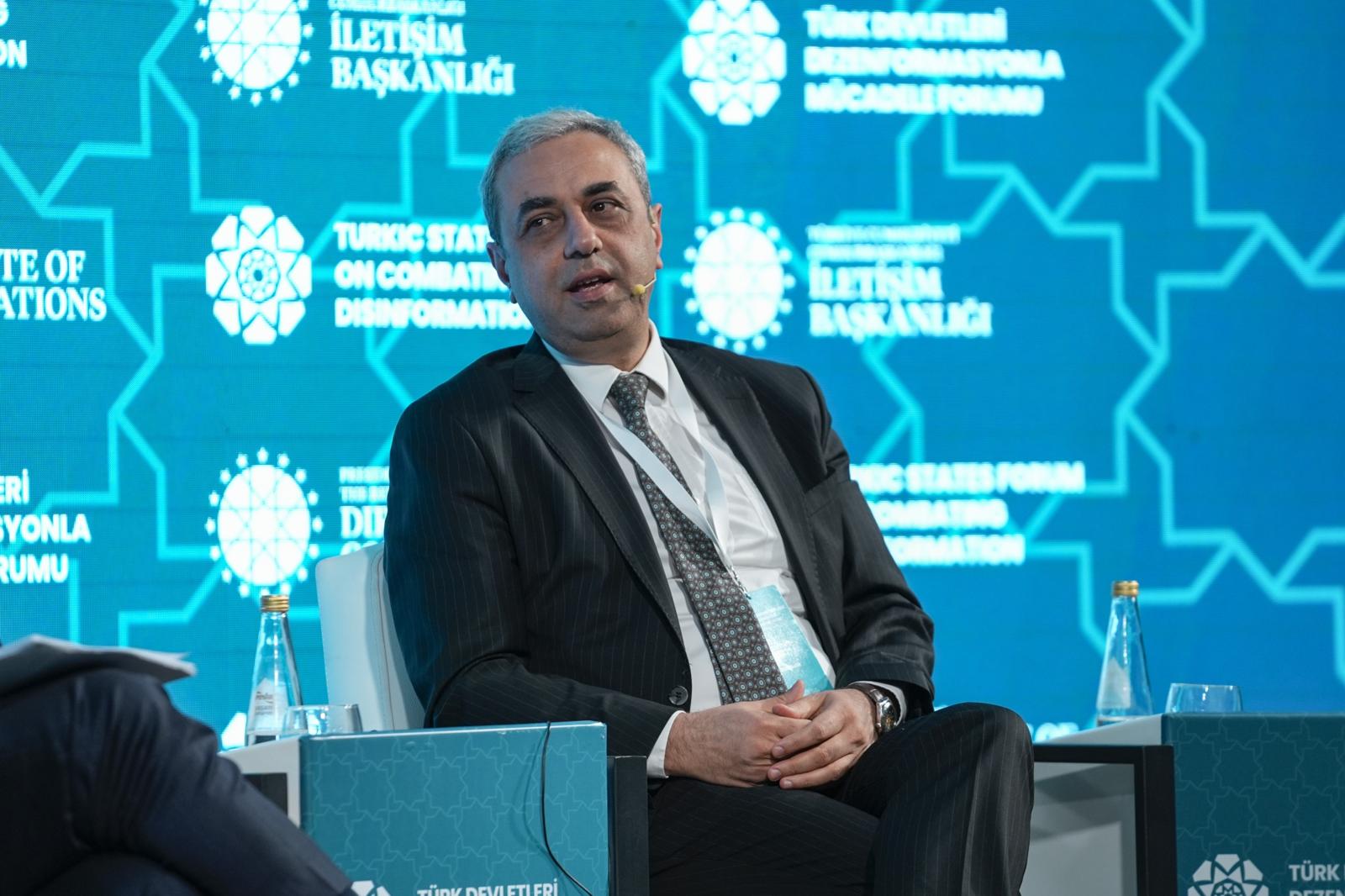
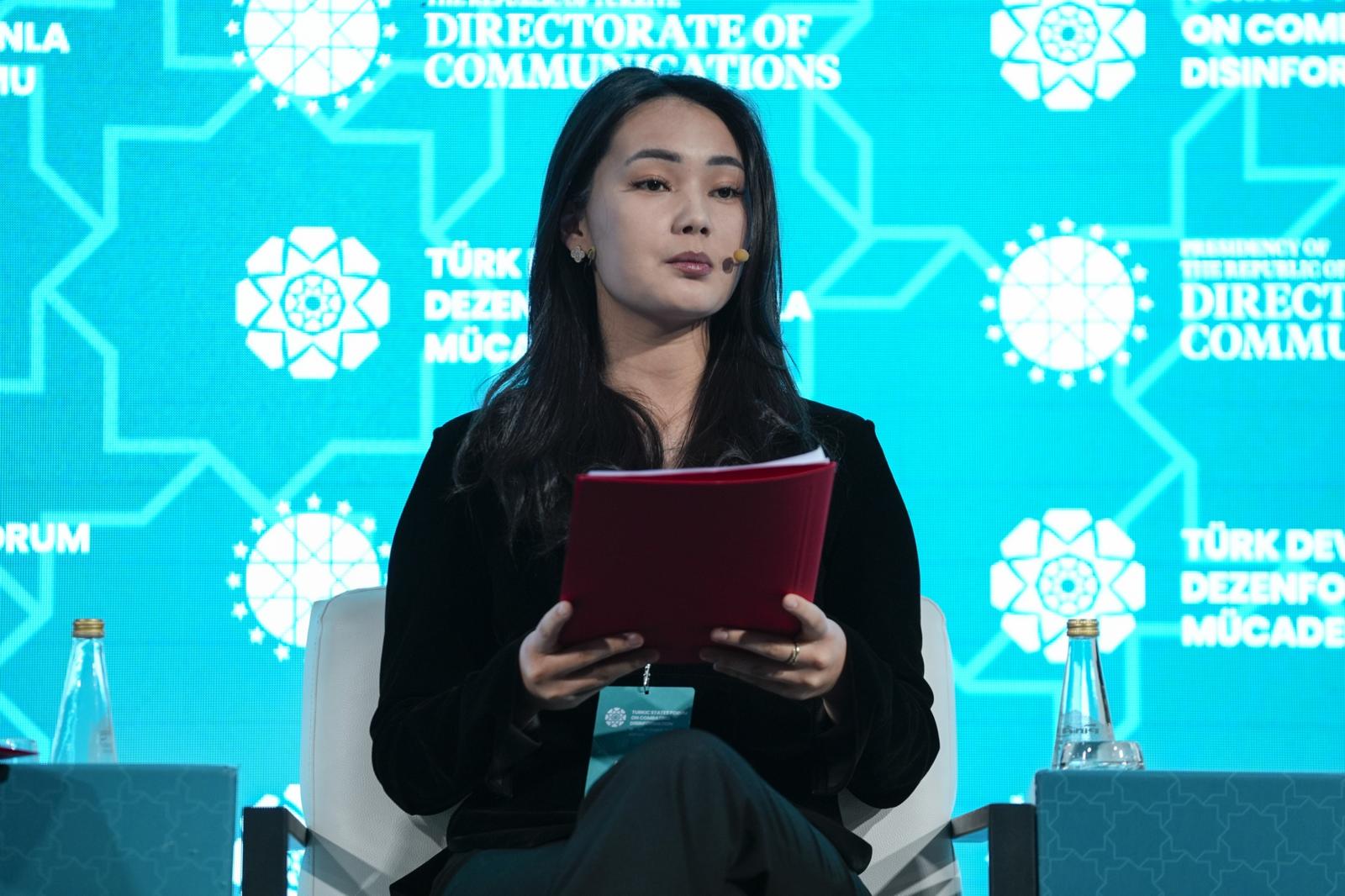
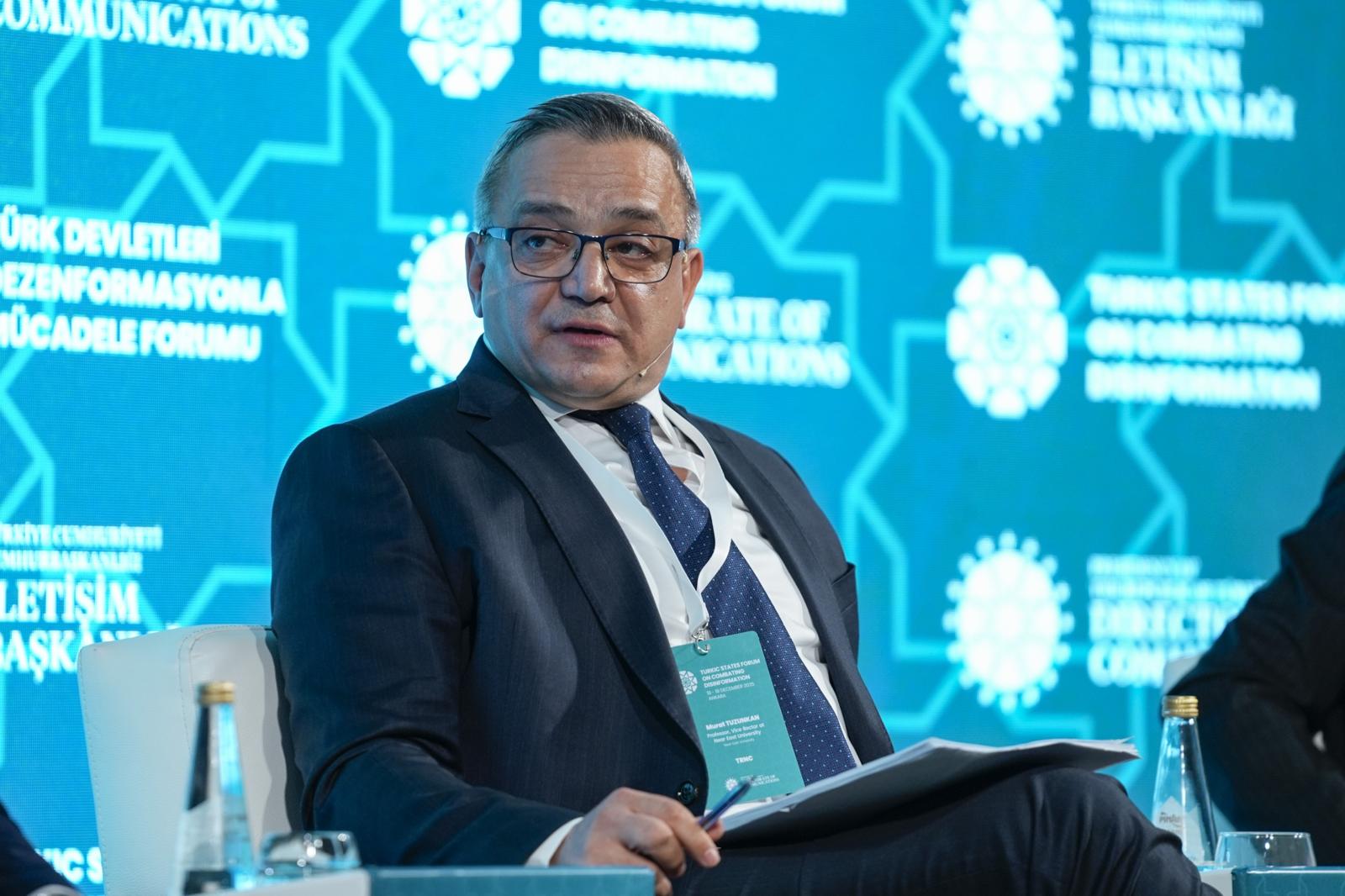
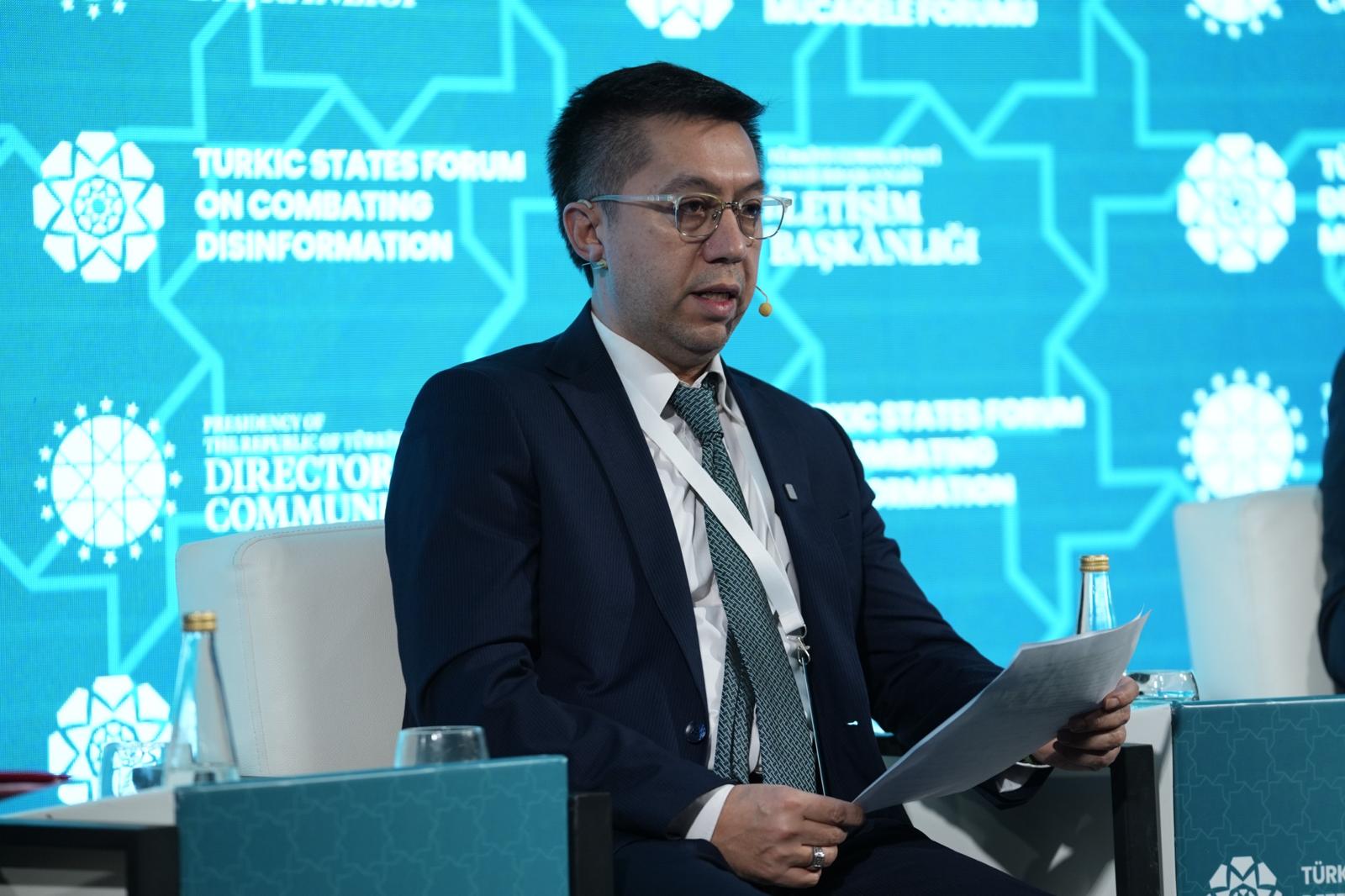
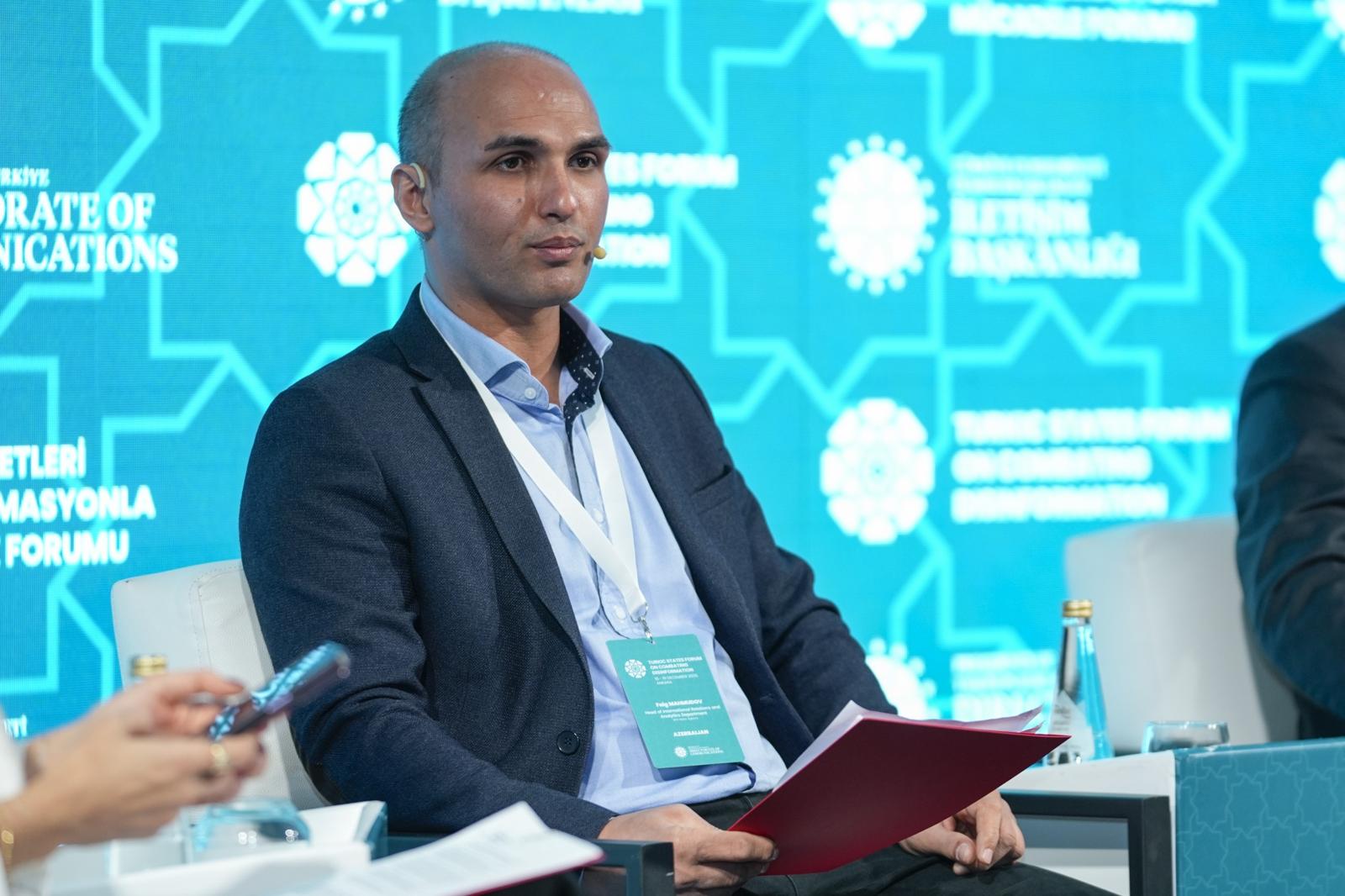
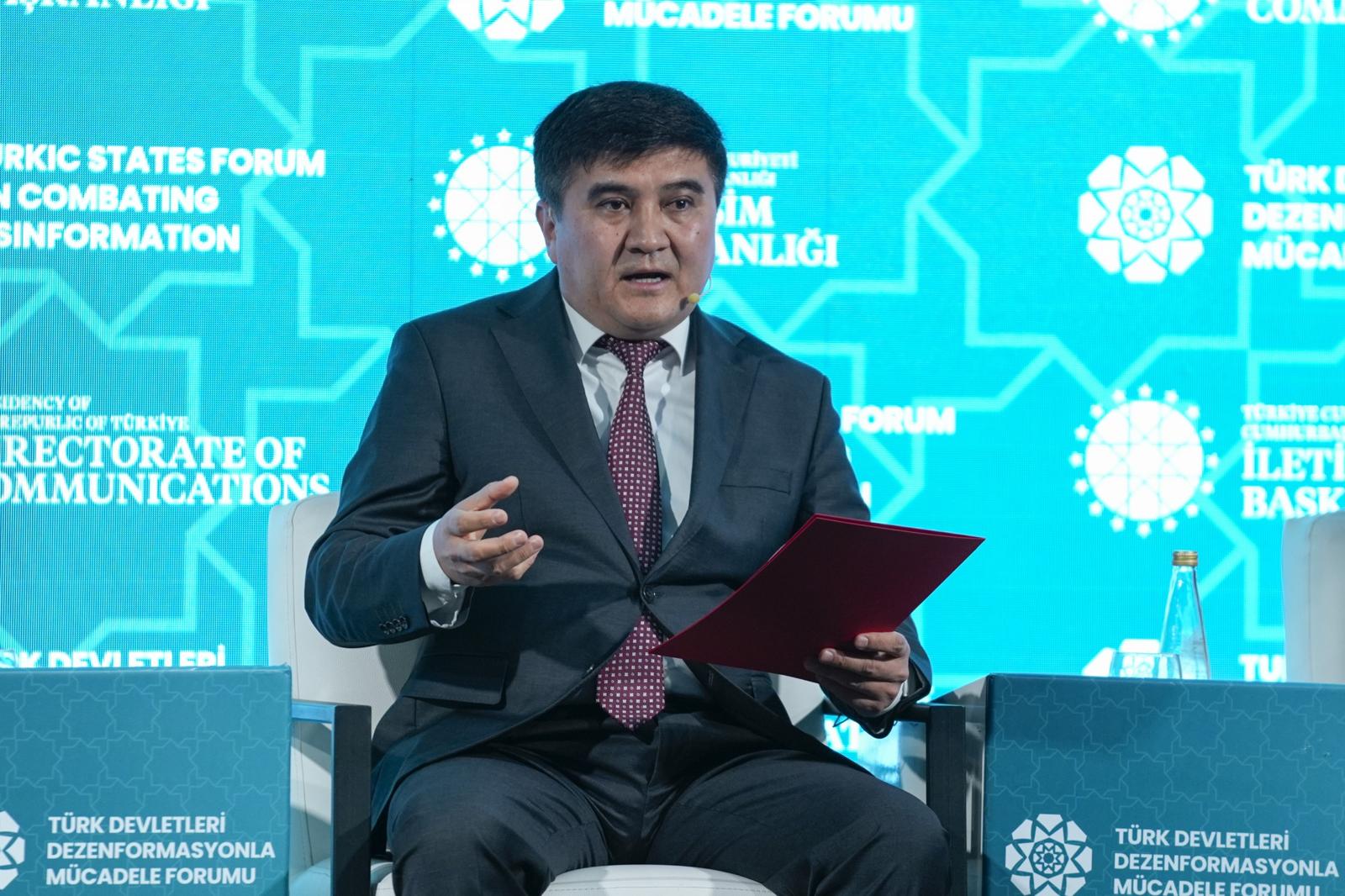
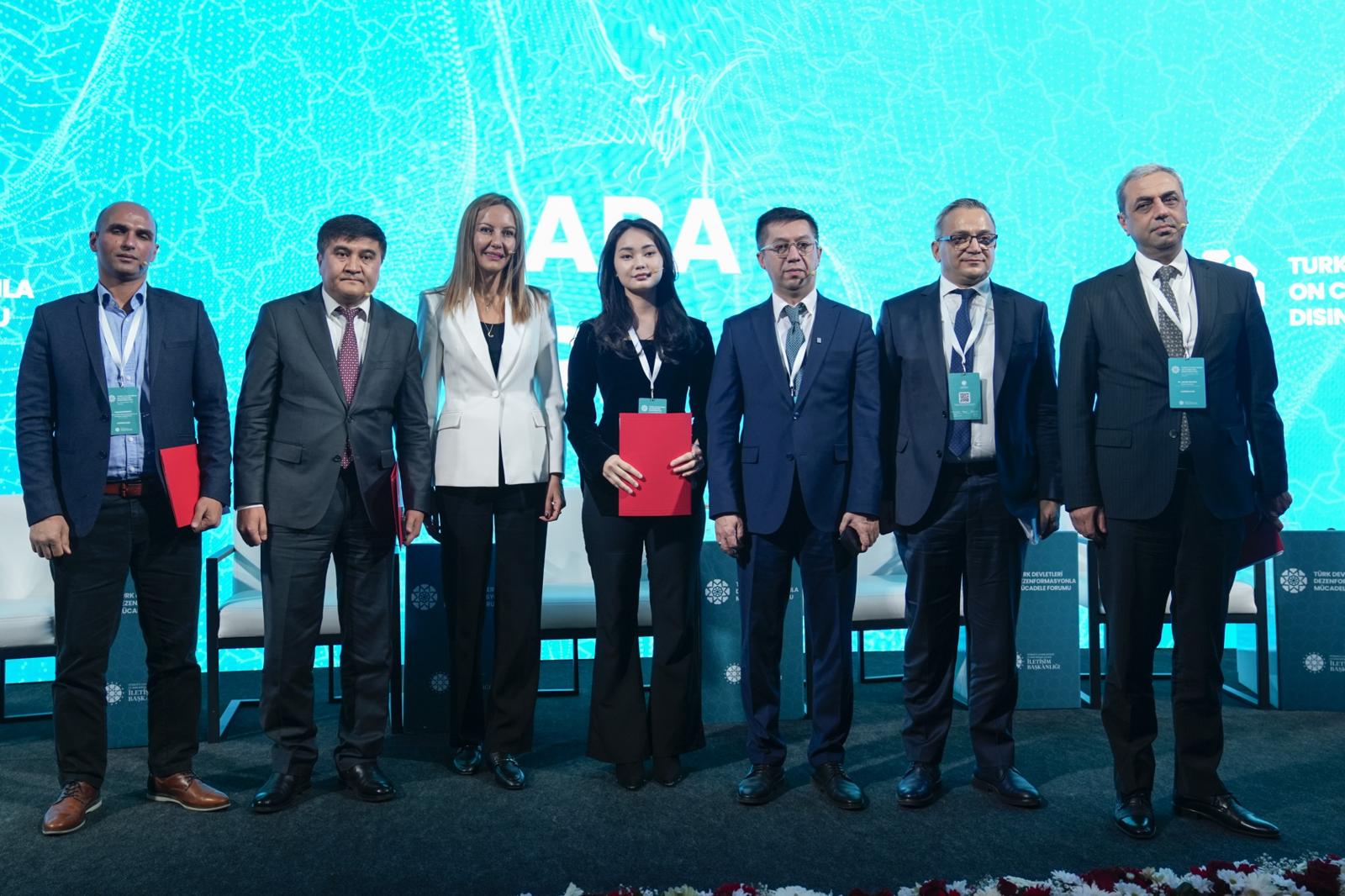
A panel titled "Turkic Media's Role in Building a Common Future" was held by our Directorate within the scope of the Turkic States Forum on Combating Disinformation.
The panel was moderated by Gözde Kirişçioğlu (PhD), International Media Coordinator of the Directorate of Communications.
The panellists were Faig Mahmudov, Head of the International Relations and Analytics Department of APA News Agency of Azerbaijan; Bolat Mursalim, Director of the Kazakhstan TV Channel; Akzhol Islamova, Journalist at the Editorial Office of MediaHub in Kyrgyzstan; Khamza Djumaev, Advisor to the Chairman of the State Bank of the Republic of Uzbekistan on State Language, Spirituality and Educational Affairs; Prof. Murat Tüzünkan, Vice Rector of Near East University in TRNC; and Javid Veliyev (Ph.D), Board Member of the Centre for Analysis for International Relations in Azerbaijan.
Head of the International Relations and Analytics Department of Azerbaijan's APA News Agency, Mahmudov, said that political, economic, and cultural integration is progressing in the Turkic world and noted that the Turkish-speaking media is responsible not only for reporting news but also for preserving the cultural memory and passing it on to future generations.
"If we fail to make each other’s voices heard, it will be challenging to speak of a collective future," stated Mahmudov, expressing the necessity for joint resistance in the face of disinformation carried out on traditional and social platforms.
Mahmudov pointed out that information targeting Turkic-speaking countries that bear hostility towards Turks and Islam negatively affects public opinion, emphasising that anti-Turkic approaches aim to disrupt the friendship among brotherly nations.
Director of Qazaqstan TV Channel Mursalim also stated that the information domain of the Turkic states is common and that they should act together, noting that not only natural disasters and calamities but also events that bring joy to one Turkic state should be followed by other Turkic states.
Mursalim expressed satisfaction that the Uzbek national football team's qualification for the FIFA World Cup, as well as the successes of Kazakhstan's Kairat football team, are being watched with interest by other Turkic states, and he emphasised the importance of strengthening the information ecosystem.
Mursalim also stated that platforms such as the Turkic States Forum on Combating Disinformation build trust among media representatives and provide space for new ideas, and that Qazaqstan TV is willing to participate in joint projects.
Joint projects
Islamova, a journalist at the Editorial Office of MediaHub, also emphasised the importance of media in providing linguistic and cultural proximity in Turkic states, stating that media is the most important factor in preserving national identity.
Islamova, who emphasised that the Turkic media should adhere to international standards, such as impartiality and objectivity, stated, "The development of shared standards will enhance the quality of the shared information space."
Islamova emphasised that new opportunities have emerged for Turkic media and predicted that digital cooperation will make Turkic media competitive in the global market.
Djumaev, Advisor to the Chairman of the State Bank of the Republic of Uzbekistan on State Language, Spirituality and Educational Affairs, also stated that the media shapes culture and instils confidence in youth, and that the media of Turkic states is responsible for promoting common history and heritage, reporting on educational achievements, combating disinformation, and developing moral unity among peoples.
Djumaev emphasised the importance of a common media platform for Turkic states, explaining that the realisation of digital archives and a state-level discussion of the issue would help establish a platform that can offer joint content.
Djumaev noted that the struggle against those opposing the joint action of the Turkic states could be carried out together, stating, "If we unite, no one can break us."
Turkic media that shapes the sense of ‘us’ and sets the agenda
Prof Tüzünkan, Vice-Rector of Near East University in the Turkish Republic of Northern Cyprus, spoke of a constructive approach to the media structure of the Organisation of Turkic States (OTS), stating that the aim was to foster a sense of ‘us’ within the organisation.
Tüzünkan stated that the media is an important tool for disseminating produced strategic narratives globally, adding that OTS's media structure offers scope for horizontal expansion.
Tüzünkan stated that OTS media is a policy instrument that strengthens the common identity of the Turkic world, provides resilience against disinformation, and increases international visibility, emphasising the importance of influencing international public opinion.
“As the final speaker of the panel, Veliyev (PhD), Board Member of the Centre for Analysis for International Relations of Azerbaijan, drew attention to the fact that solidarity among the Turkic states has entered its fourth stage, moving from organisation towards unity.”
Veliyev emphasised that the OTS is not only cultural and linguistic but has now become a strategic organisation, noting that the statements of the heads of state of the member countries attest to this.
Veliyev underlined that the Turkic states must set the agenda and promote themselves, stressing the importance of taking an active role in defining a permanent agenda that will highlight common identity and regional cooperation, a periodic agenda that will introduce summits and forums, and a crisis agenda.