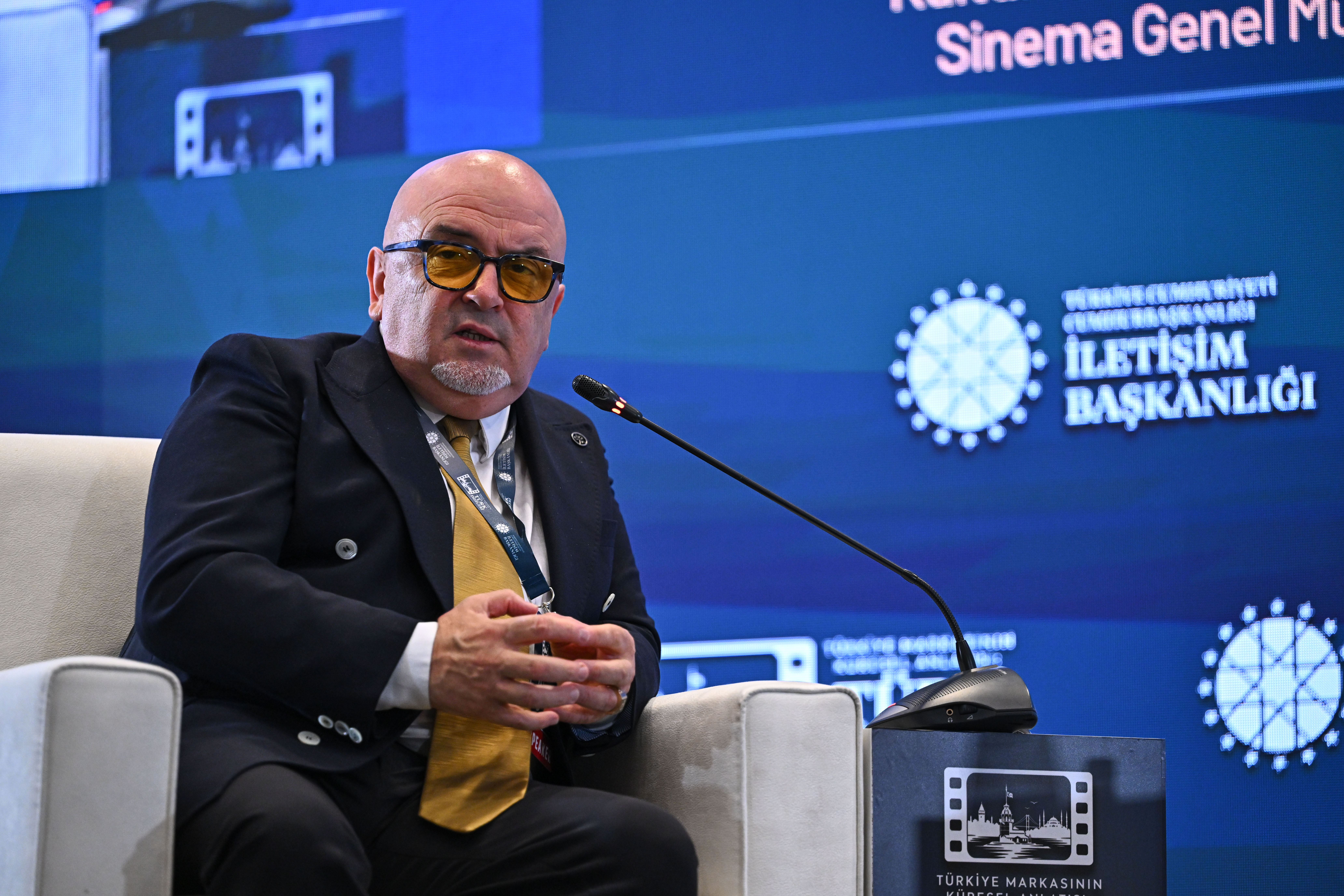
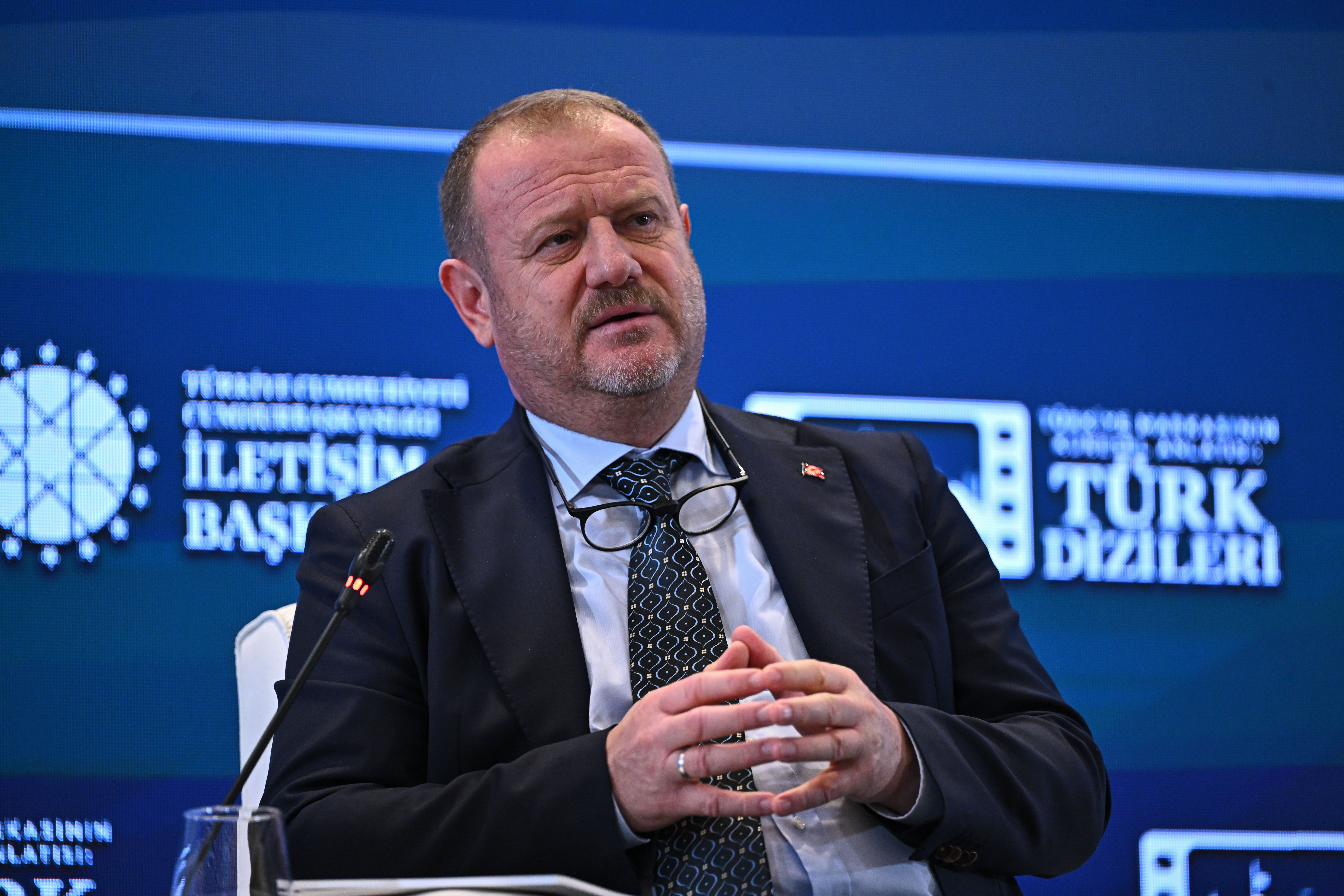
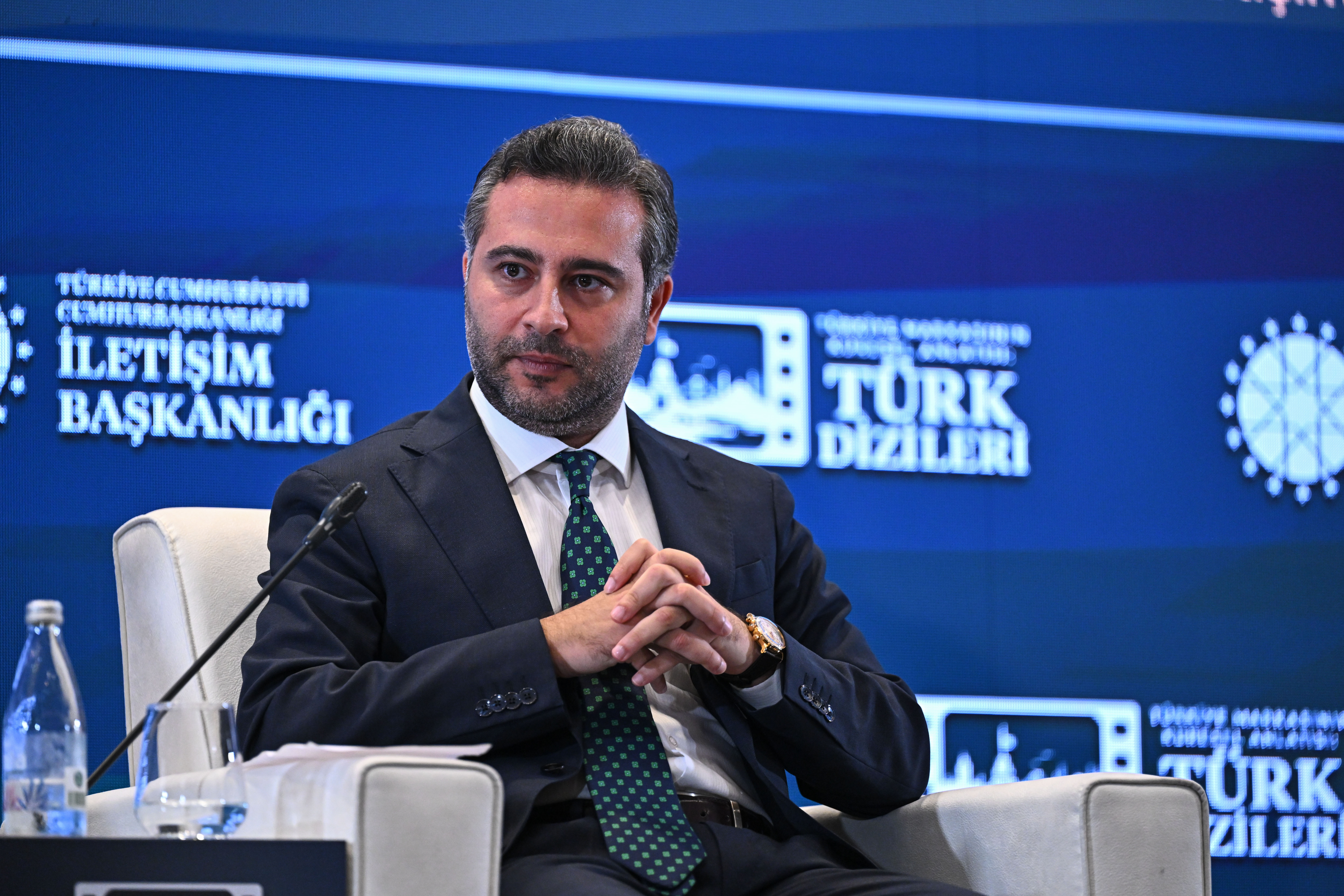
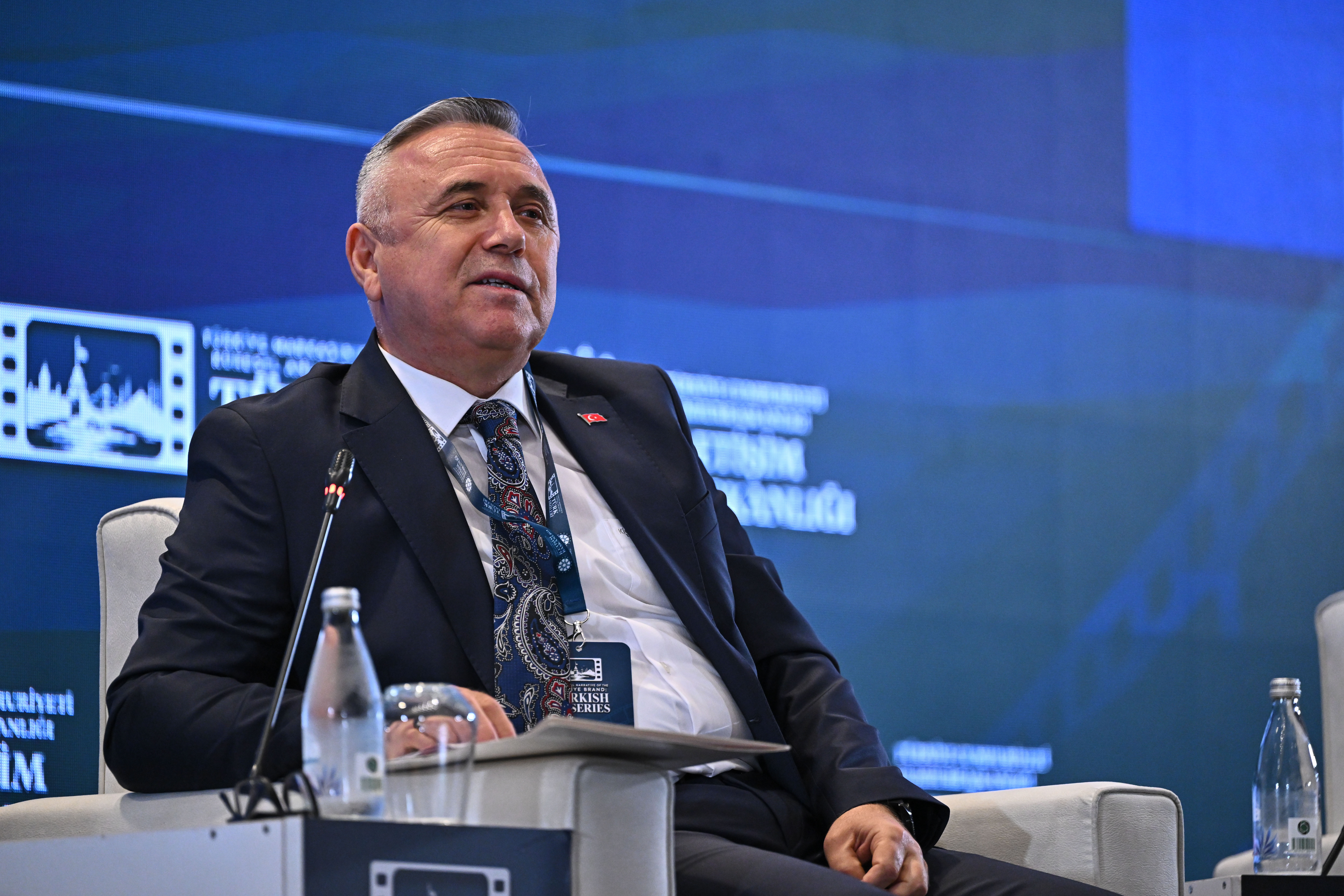
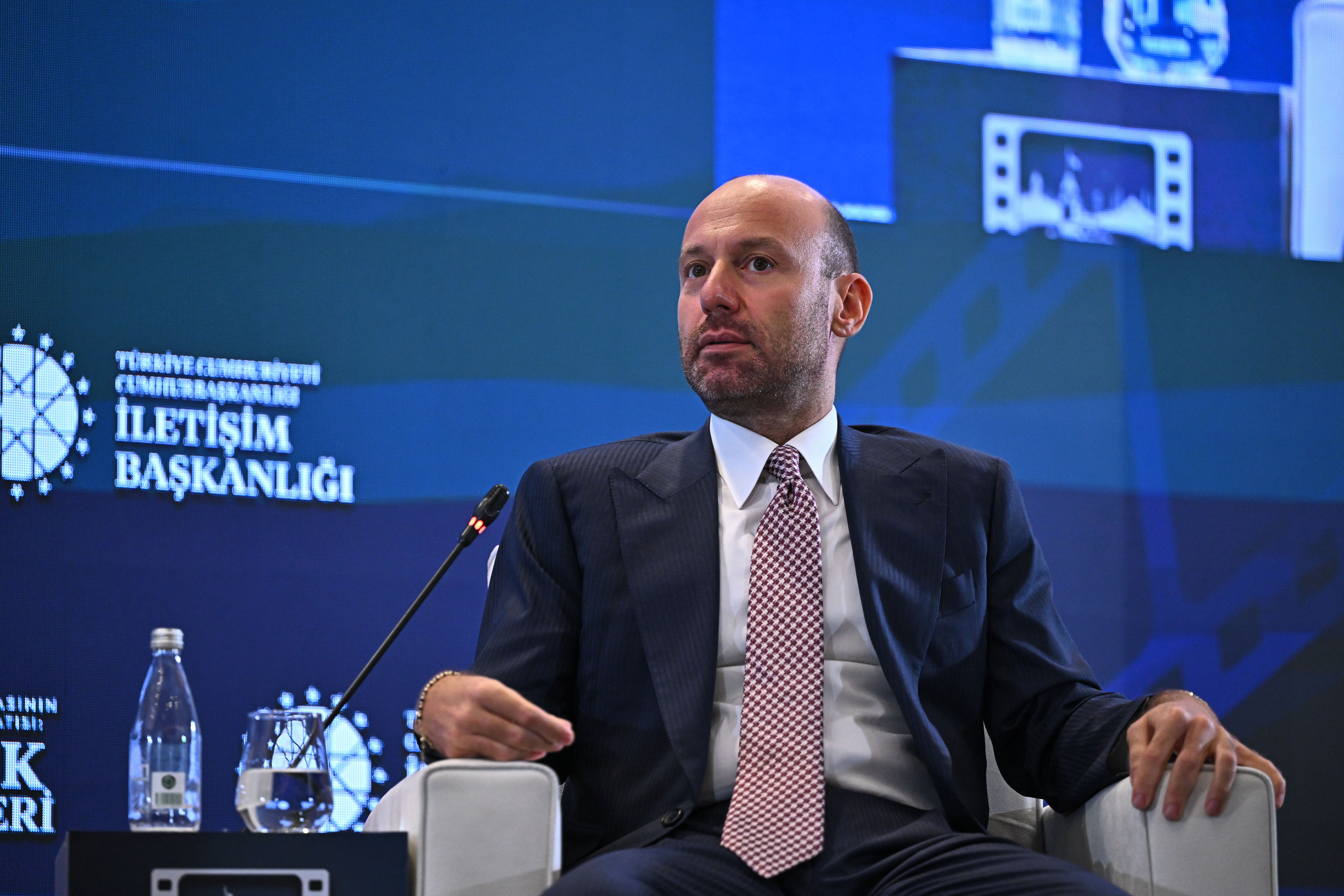
As part of the “Global Narrative of the Türkiye Brand: Turkish TV Series” programme, which kicked off at a hotel in Ataşehir with opening remarks by Minister of Culture and Tourism Mehmet Nuri Ersoy and Head of Communications Burhanettin Duran, a panel entitled "A Public Diplomacy Success Story: Turkish TV Series” was held.
The panel was moderated by the Director-General of Cinema at the Ministry of Culture and Tourism, Birol Güven, and featured remarks by the President of the Radio and Television Supreme Council (RTÜK) Mehmet Daniş, the Deputy Director-General of the Turkish Radio and Television Corporation (TRT) Yusuf Şimşek, the Dean of the Faculty of Communication at Ankara Hacı Bayram Veli University Prof. Mehmet Sezai Türk, and film producer Onur Güvenatam.
Birol Güven noted that just as Turkish TV series have an impact on public diplomacy, public diplomacy also has an impact on the series, adding, "I believe that Türkiye’s growing influence on the international stage has been a major factor behind the success of Turkish TV series exports."
Güven highlighted the century-long legacy of Turkish cinema behind the success of Türkiye’s TV series industry, saying, "In my personal view, the Turkish TV series industry owes a great deal to Yeşilçam. I would like to thank all our esteemed predecessors who have contributed their efforts. We could never repay them."
"Television advertising revenues have fallen sharply"
President of RTÜK Mehmet Daniş said that approximately one billion people around the world watch Turkish TV series, adding,
Daniş noted that the emergence of digital platforms had reduced television advertising revenues, affecting the TV series industry, saying, "Considerable efforts are being made in this area, but television advertising revenues have fallen sharply. This is one of the main factors threatening the sector’s sustainability."
Daniş added that these lands offer a wealth of stories that can be brought to the screen, noting that public institutions, in addition to industry stakeholders, should provide greater support to ensure that such stories receive wider exposure.
"If character conflicts can be developed rapidly on screen, we regard it as a digital-platform production"
Deputy Director-General of TRT Yusuf Şimşek pointed to the changes taking place in the TV series industry with the evolution of the digital landscape, discussing the emergence of global digital platforms and noting that work on "tabii" began in 2021 before the platform was launched in 2023.
Şimşek highlighted that the vast majority of Türkiye’s production industry had produced content for TRT and the tabii platform between 2023 and 2025, adding that 72 TV series had been made available to audiences since 2023.
Addressing the criteria for determining whether a series should be broadcast on mainstream television or a digital platform, Şimşek said, “If questions can be answered quickly, there are no scenes or lengthy dialogues merely to fill extra time, and character conflicts can be developed rapidly on screen, then we regard it better suited to a digital platform production. This is our basic criteria."
"The influence of Turkish TV series is far from a recent phenomenon"
Dean of the Faculty of Communication at Ankara University, Prof. Mehmet Sezai Türk highlighted how Turkish TV series contribute to Türkiye's global visibility.
Türk stated that the rising visibility of Türkiye across multiple sectors since the 2000s aided this process, noting that the influence of Turkish TV series is far from a recent phenomenon.
Highlighting that Time magazine placed President Recep Tayyip Erdoğan on its cover in 2011 with the caption "Erdogan’s Moment," Prof. Türk stated that the publication also pointed to Turkish TV series as a key factor expanding Türkiye's global influence.
Prof. Türk argued that academic research should support the growth of the TV series industry through closer collaboration between universities and the sector.
Discussing the global influence of Turkish TV series, Prof. Türk noted that the TV series industry should receive support comparable to that provided to the film industry.
"Our greatest strength is our television channels"
Producer Onur Güvenatam stated that the current strength of the sector should be maintained, emphasising that Turkish TV series contribute significantly to Türkiye's economy, tourism, and promotion.
Güvenatam highlighted the extensive experience and collective effort of industry professionals behind the rise of the Turkish TV series, stating, “Turkish TV series have made a tremendous contribution to Türkiye, whether in tourism, the economy or international promotion, and have tremendous reach, influence and impact.”
Güvenatam also noted that television channels play a vital role in the success of Turkish TV series, and the opportunities they offer the sector are decisive in preserving the production quality of these shows.
Addressing the sector's contraction in recent years, Güvenatam said:
"Our greatest strength here is our television channels. Television channels need to stay afloat so that we can continue doing business with them and producing content for them. The global acclaim of our actors and widely discussed series was ultimately achieved through television series. I think we should retain the 140-minute running time [for TV series]. In a sense, this is our trademark. Global recognition for our actors and crews has been achieved thanks to this."
Following the panel, a workshop was held with the participation of representatives of public institutions, the TV series industry and academia to discuss the contribution of Turkish TV series to Türkiye’s public diplomacy and international perceptions of Türkiye and to develop a joint roadmap through cooperation among the public sector, the TV series industry and academia.