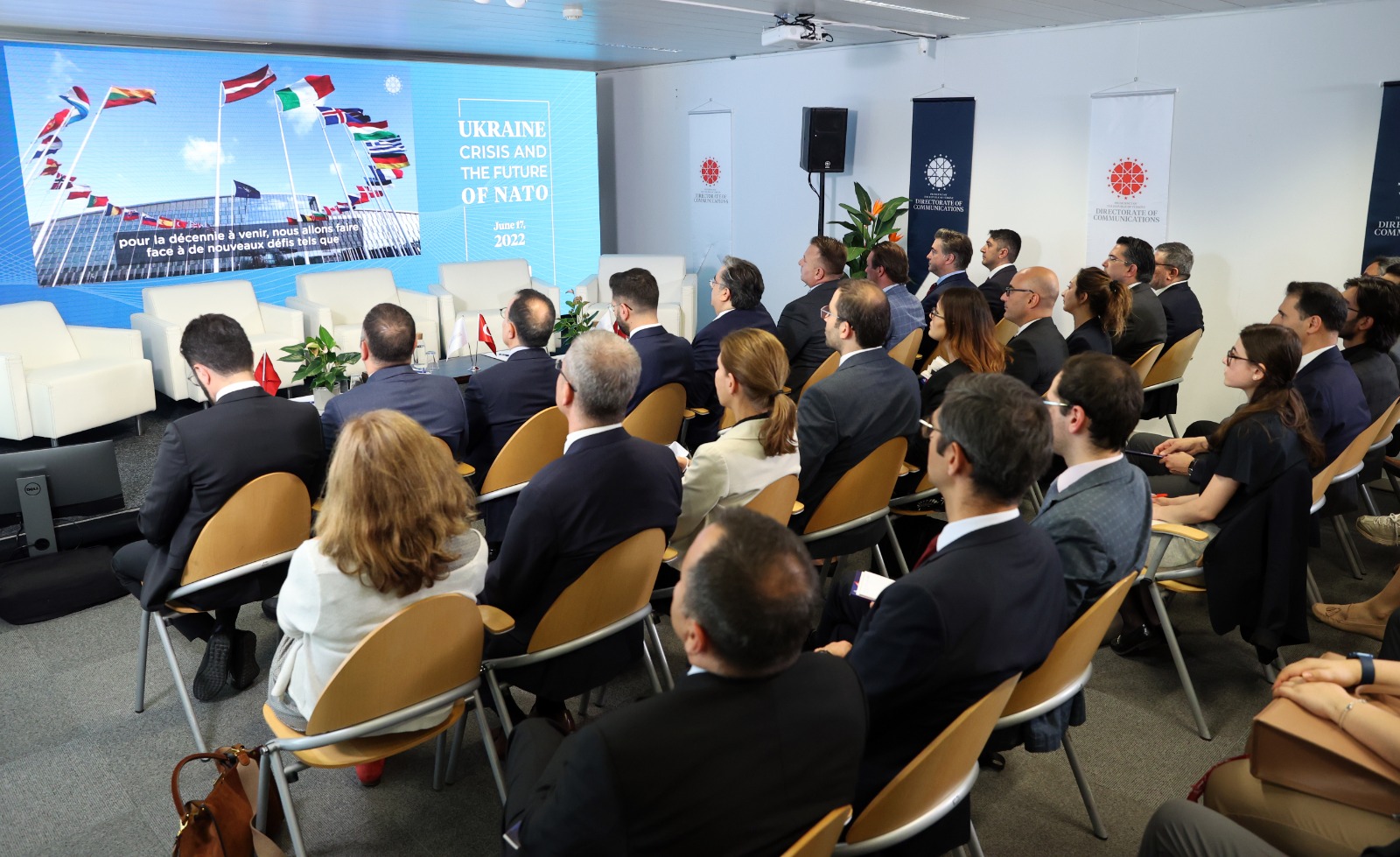
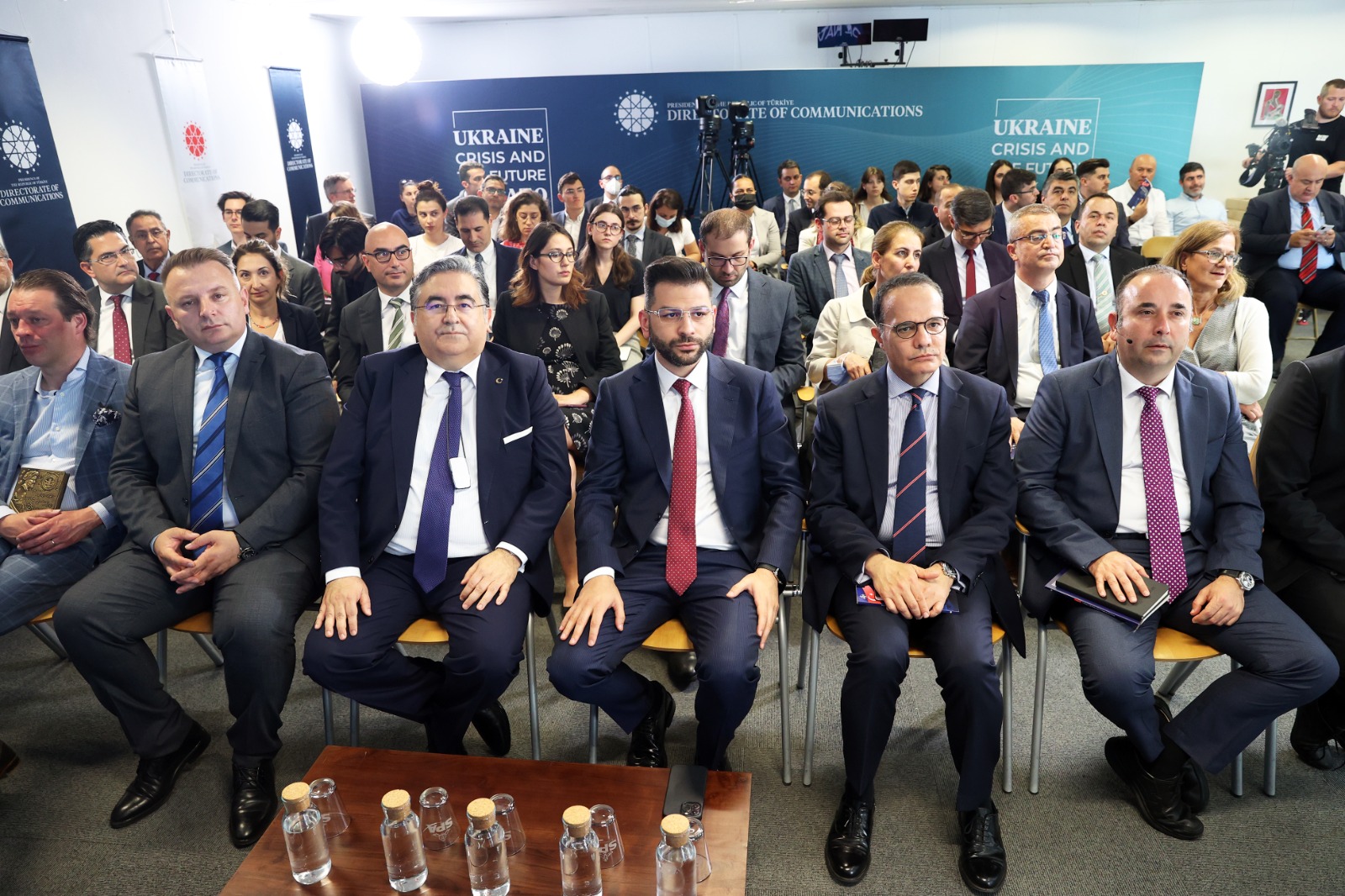
The “Ukraine Crisis and the Future of NATO” Panel, hosted by the Presidency's Directorate of Communications in Brussels, the capital of Belgium, addressed Türkiye's key role as well as its reasonable concerns about countries that support terrorism.
Ambassador Mehmet Kemal Bozay, Permanent Delegate of Türkiye to the European Union (EU), Ambassador to Brussels Hasan Ulusoy and Consul General in Brussels Umut Deniz, as well as numerous Turkish and foreign guests attended the panel, which began with a video message from Fahrettin Altun, Presidency's Directorate of Communications.
During the panel which was moderated by Associate Professor Enes Bayraklı from the Turkish-German University, Richard Milsom, Executive Director of European Conservatives and Reformists Party described himself as a strong friend of Türkiye and emphasised his support for many of the country's political, military, and economic goals.
According to Milsom, NATO has resurfaced on the table as a result of Russia’s aggression in Ukraine, and the United States' long-standing calls to "raise defence spending" on European countries have begun to be taken seriously during this time.
Milsom claimed that NATO is united in the face of the Ukrainian crisis, but opposing Sweden and Finland’s membership raises concerns about harmony within NATO, and he added that he is confident that Türkiye will reach an agreement with the two countries that is satisfactory to everyone.
Prof. Sadık Giray from the International Relations Department of Ankara Yıldırım Beyazıt University stated that Türkiye has always been of key importance for the security of Europe and NATO, and that NATO allies need to unite more than ever because current threats are hybrid in nature.
Sadık stated that it is incorrect for countries within NATO or seeking to join the alliance to use rhetoric indicating sanctions against one another, and that Sweden and Finland's shift from this approach may be the start of a constructive discourse.
Dr. Koert Debeuf from the Vrije University of Brussels said that Europe does not truly understand Türkiye's sensitivities, interpreting the issue as "Türkiye is causing problems for NATO's enlargement," and added that the massive damage created by the PKK and FETO terror in Türkiye should be better appreciated through communication and dialogue.
Associate Professor from Medipol University Hüseyin Alptekin stressed that NATO membership should not be understood as a universal right granted to every country, and that NATO is an alliance that offers its members privileges under certain conditions, the most important of which is to comply with the security concerns and assessments of the members.
Alptekin emphasised that the images related to the terrorist organisation PKK's propaganda in the Swedish capital Stockholm are contradictory to the situation, and that it would be pleasing if Sweden realised the discomfort caused by such acts and took necessary measures.
Contacts of the Presidency's Directorate of Communications' delegation
During their visit to Brussels, the delegation of the Directorate of Communications also met with Turkish politicians working in the regional and federal parliaments of Belgium.
The delegation also met with Ricardo Borges de Castro and Amanda Paul, officials of the Center for European Policy, one of the leading think tanks in the country.
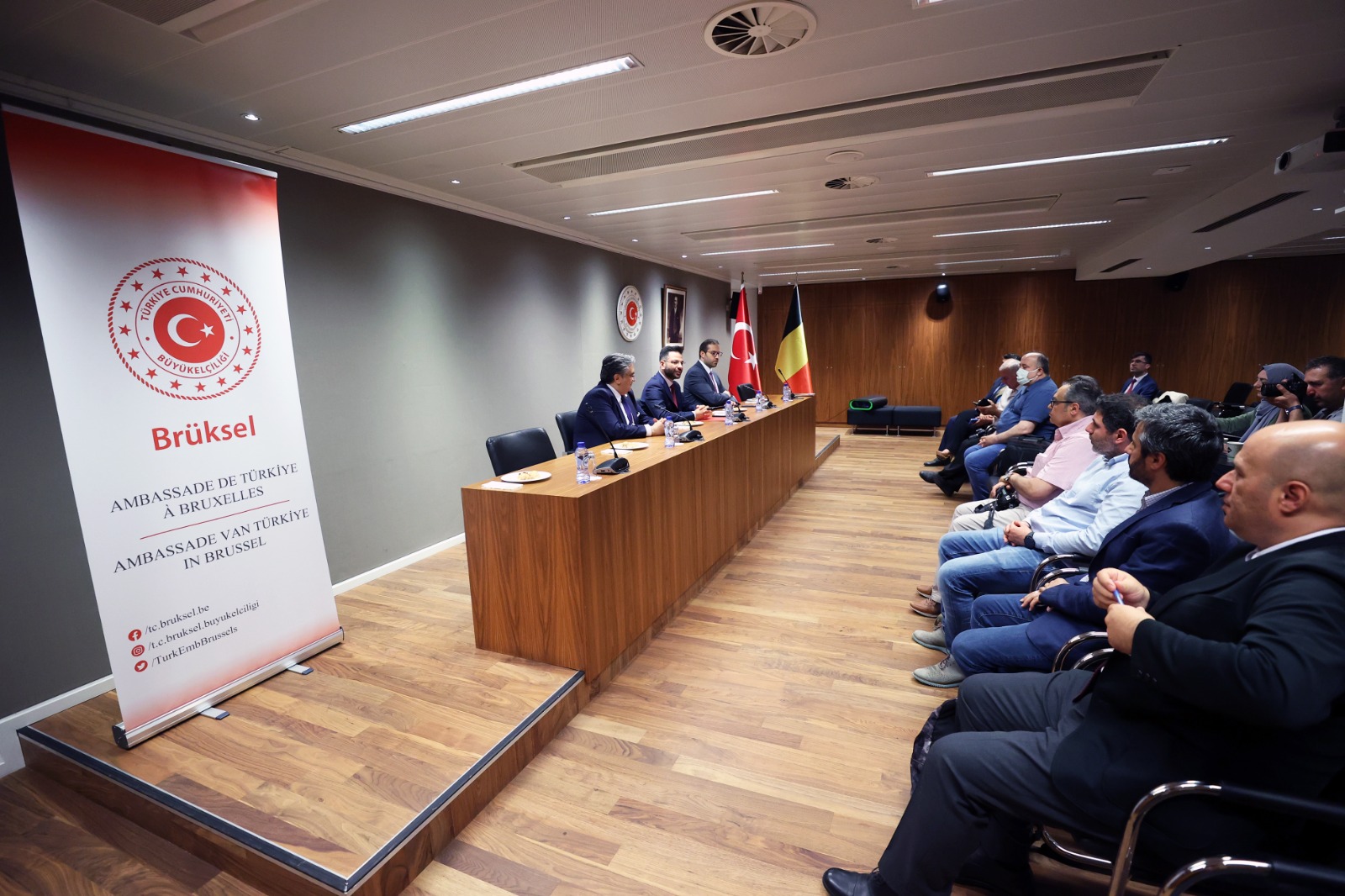
The delegation then attended a press meeting event with the participation of Deputy Director of Communications Çağatay Özdemir and Türkiye’s Ambassador to Brussels Hasan Ulusoy.