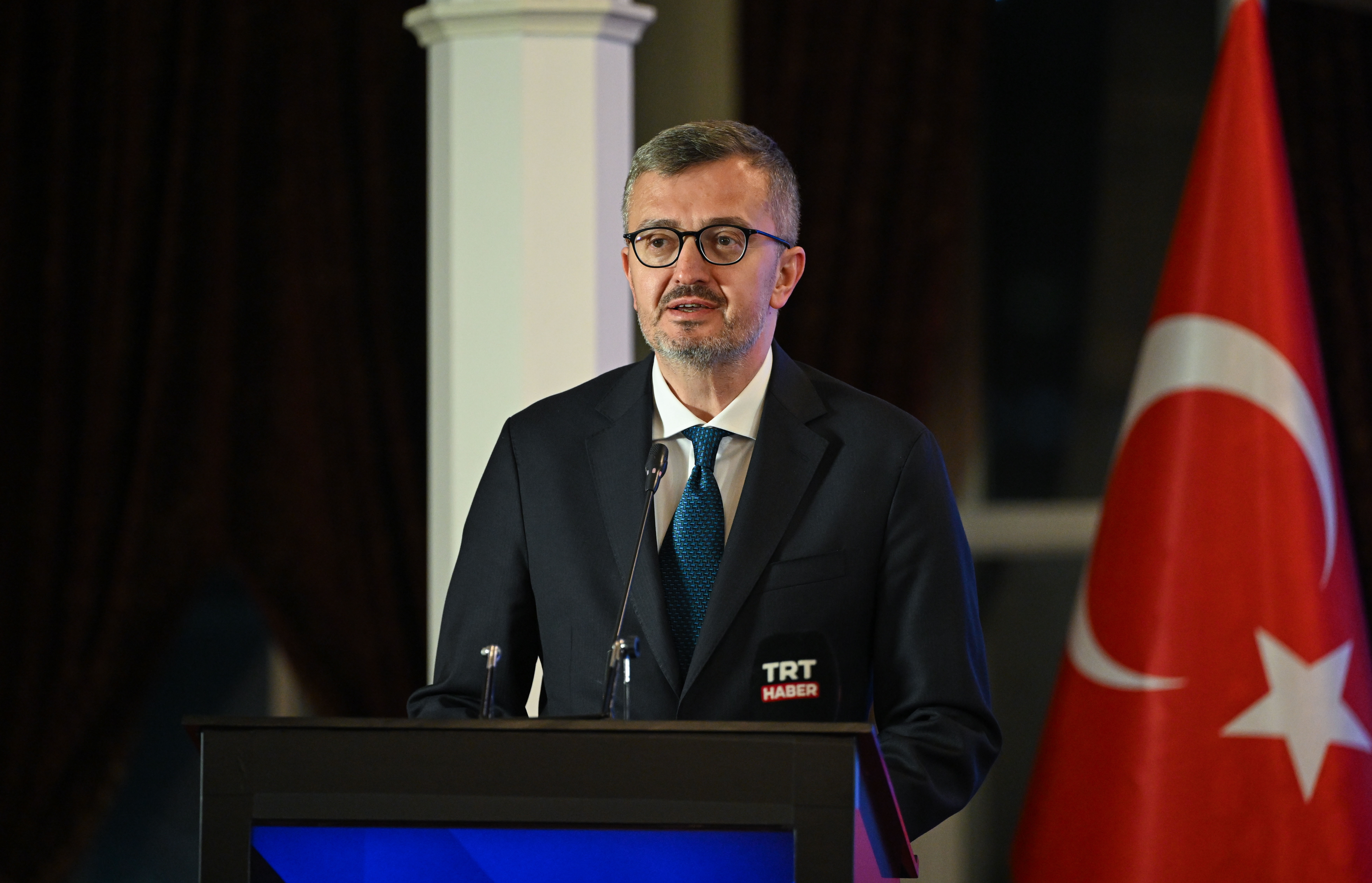
Head of Communications Burhanettin Duran said, “We aim for Türkiye to contribute to peace, stability, and economic cooperation—first in its immediate region and then in other parts of the world—as a country that has overcome tutelage, secured internal peace, moved beyond sterile debates, and established itself as a stable actor with a voice in regional and global politics.”
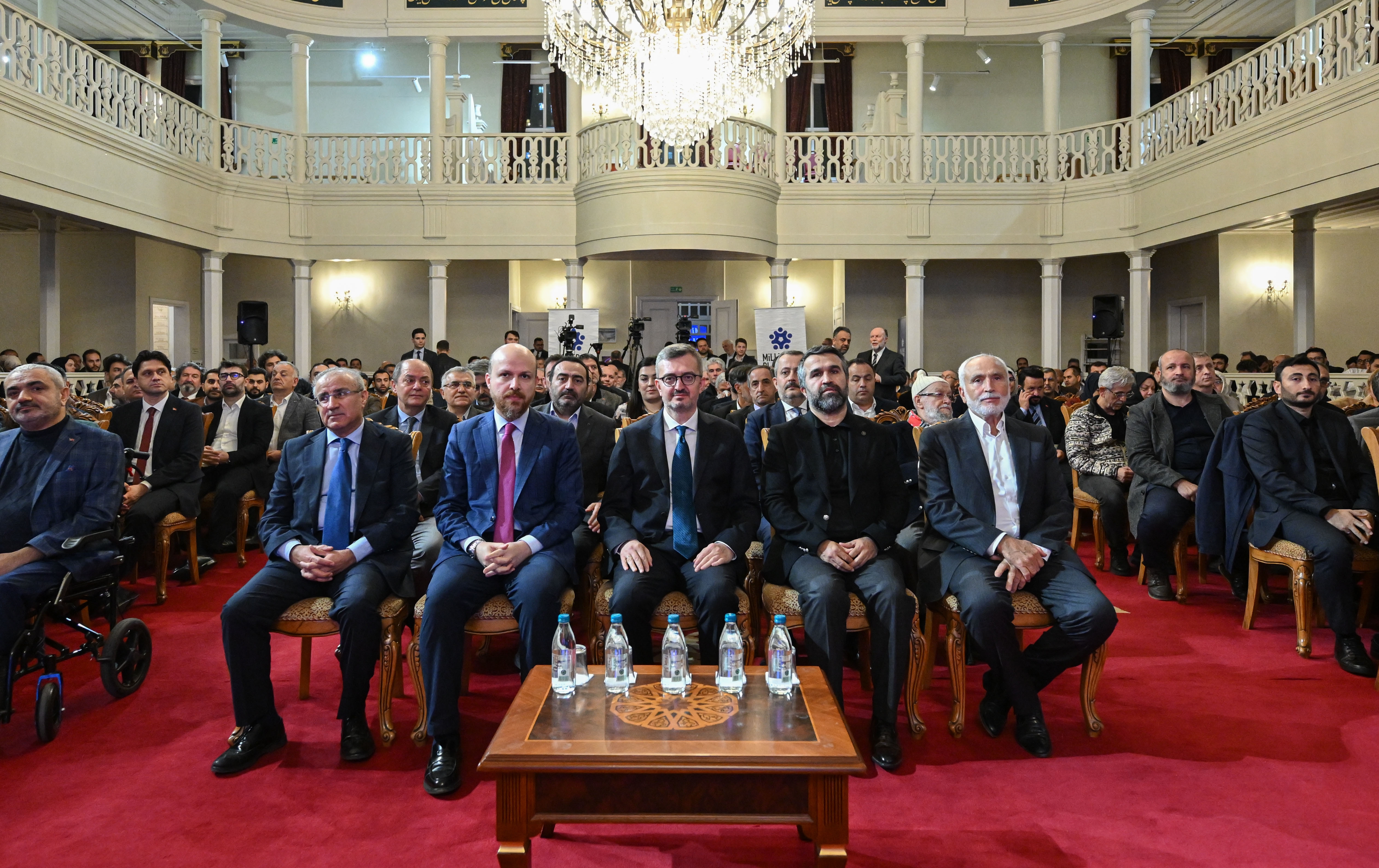
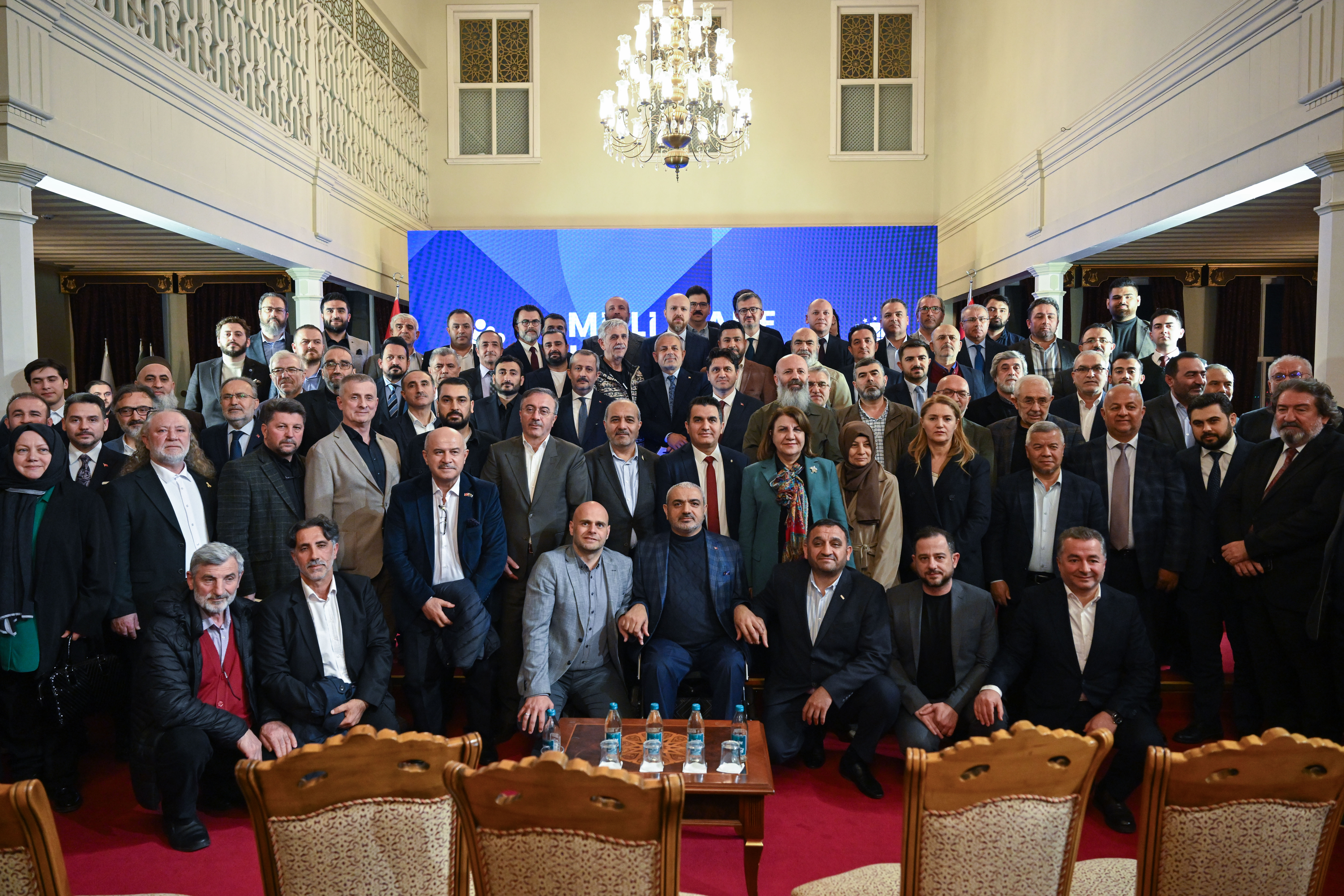
Delivering a speech at the programme titled “National Will Gatherings: Communication in the Century of Türkiye”, organised by the National Will Platform at the Bahariye Mevlevi Lodge in Eyüpsultan, Presidency's Head of Communications Duran stated that civil society is an indispensable element of democracy and that the National Will Platform is a structure that has undertaken important missions during Türkiye’s most challenging times.
Drawing attention to the fact that “Communication in the Century of Türkiye” is a highly important issue that must be addressed by civil society, as well as at the level of the family and the individual, Head of Communications Burhanettin Duran stated that, since the founding of the Republic of Türkiye, particularly during the single-party period, the media took a certain position. He explained that this structure was designed over time with a Western-oriented mindset to keep Türkiye within a particular trajectory and to follow the footsteps of Western civilisation. Head of Communications Duran further noted that this engineering process aimed to position Türkiye in a fundamentally different place and that it was sustained during critical periods.
Head of Communications Burhanettin Duran stated that the media’s conduct during the trial of the late Prime Minister Adnan Menderes remains a source of shame, adding: “In every period of tutelage, the media—regrettably—even when claiming to be civilian, displayed poor performance. We all remember the role it played in legitimising the military interventions of 1960, 1971, and 1980. These memories remain vivid in our minds. It is impossible to forget the state of the tutelary media during the 28 February period and how those who described themselves as civilians could so easily align with a tutelary order.”
Head of Communications Burhanettin Duran noted that the resolve demonstrated by civil society during the 28 February period—despite attempts by certain media monopolies to discredit it—paved the way for a different political trajectory. He pointed to the beginning of a new era from 2002 onwards, in which both democracy and civilianisation were brought to the fore in Türkiye, adding, "We have noticed that the media and communication sphere has become more diverse and pluralistic since 2002. However, we also know that efforts to shape and influence the media have not disappeared so easily.” Head of Communications Duran further stated that, today, Türkiye has a wide range of media outlets enabling individuals from all perspectives to express their political and ideological views, adding that the media has played significant roles during critical periods over the past 25 years.”
"Our aim is for Türkiye to contribute to peace, stability and economic cooperation in other parts of the world"
Head of Communications Burhanettin Duran stated that it has become evident how the media was instrumentalised during the Gezi protests, the 17–25 December process, the civil war in Syria, and the 15 July coup attempt. He added that, in recent years, many countries have come to view social media as a component of hybrid warfare, making it vulnerable to various campaigns.
Head of Communications Burhanettin Duran stated that, with digitalisation, it has become easier to shape public perceptions through algorithms, adding: “Digitalisation has mobilised a wide range of capabilities, significantly expanding the potential for far-reaching political and social transformations. We are also in a period of intensifying competition. Every country now regards cyberspace as a domain of sovereignty and is taking measures accordingly. As is well known, in Türkiye too, we must safeguard this sovereignty through recent and forthcoming legislative arrangements. We face a multifaceted challenge—from protecting our children to safeguarding our critical strategic capabilities. It indeed represents a multi-layered challenge, calling for immediate adoption of measures.”
Highlighting that the Directorate of Communications conducts its policies within a strategic communications framework, Head of Communications Duran noted, “We aim for Türkiye to contribute to peace, stability, and economic cooperation—first in its immediate region and then in other parts of the world—as a country that has overcome tutelage, secured internal peace, moved beyond sterile debates, and established itself as a stable actor with a voice in regional and global politics.” Head of Communications Burhanettin Duran stated that Türkiye has a story to tell, noting that the positive response received when Türkiye shares its defence industry capabilities and technological know-how, or engages in Africa on a win–win basis, clearly reflects this. In his remarks, Head of Communications Duran also outlined the founding objectives of the Directorate of Communications and its ongoing efforts.
"The responsibility of combating disinformation extends to all social groups"
Chairman of the Board of Directors of the Human and Civilisation Movement, Kemal Özden, addressed the audience on behalf of the National Will Platform, stating that a communications revolution, the likes of which have never been seen before, is now taking place. Emphasising that communication tools such as radio and television had facilitated major transformations in their respective eras, Özden stated that new-generation media and social media today present a fundamentally different reality for individuals, driven by their speed, widespread reach, and lack of controllability.
Stressing how the rise of digitalisation and artificial intelligence has made it nearly impossible to distinguish between authentic and artificial content, Özden remarked that the masses who believe they are exercising free will are, in reality, confined to predetermined choices.
Pointing out that access to accurate and reliable news is a constitutional right, Özden stated, "This right, protected under the Constitution, may unfortunately be transformed into a planned and systematic form of conflict targeting the public mind, the family, and national and moral values through deliberately produced and consciously disseminated disinformation." Özden underscored that the responsibility of combating disinformation extends beyond the state to all social groups, including families and civil society, and said, "This is, above all, a fundamentally moral struggle before a political one.”
The programme was also attended by Necmeddin Bilal Erdoğan, the Chairman of the Board of Trustees of the İlim Yayma Foundation (Foundation for the Expansion of Knowledge).
In addition, Head of Communications Duran shared a post on his NSocial account about the programme on "Communication in the Century of Türkiye".
In the post, Head of Communications Duran said:
"It was a great pleasure to have participated in the programme held by the National Will Platform under the theme ‘Communication in the Century of Türkiye’.
Looking back, we see that in Türkiye, communication and media were unfortunately widely used as instruments of social engineering by certain privileged groups.
Every available means of mass communication was employed to alienate Türkiye from its fundamental arguments, its cultural identity, and its vision of civilisation.
During the 28 February process, the mass media set the scene for, facilitated, and defended the coup through newspaper headlines, television shows, news coverage, and prominent on-screen personalities.
The process launched in 2002 under the leadership of President Erdoğan marked the beginning of a new era in communications and media, as it did in many other fields.
Today, Türkiye is a stable country that has overcome tutelage, secured internal peace, and moved beyond sterile debates, with a voice in regional and global politics.
Our vision for the Century of Türkiye will both enhance our country’s values and serve as a guiding force through policies focused on peace, justice and prosperity—particularly in our immediate region and for all humanity.
Our primary aim is to raise Türkiye’s image and reputation to the highest possible level within the international community. Under the leadership of President Erdoğan, Türkiye today clearly articulates its position, the values it upholds, and the arguments it advances, grounded in a strong communications perspective.
With these thoughts, I wish the programme every success and extend my sincere thanks to all those who contributed.”