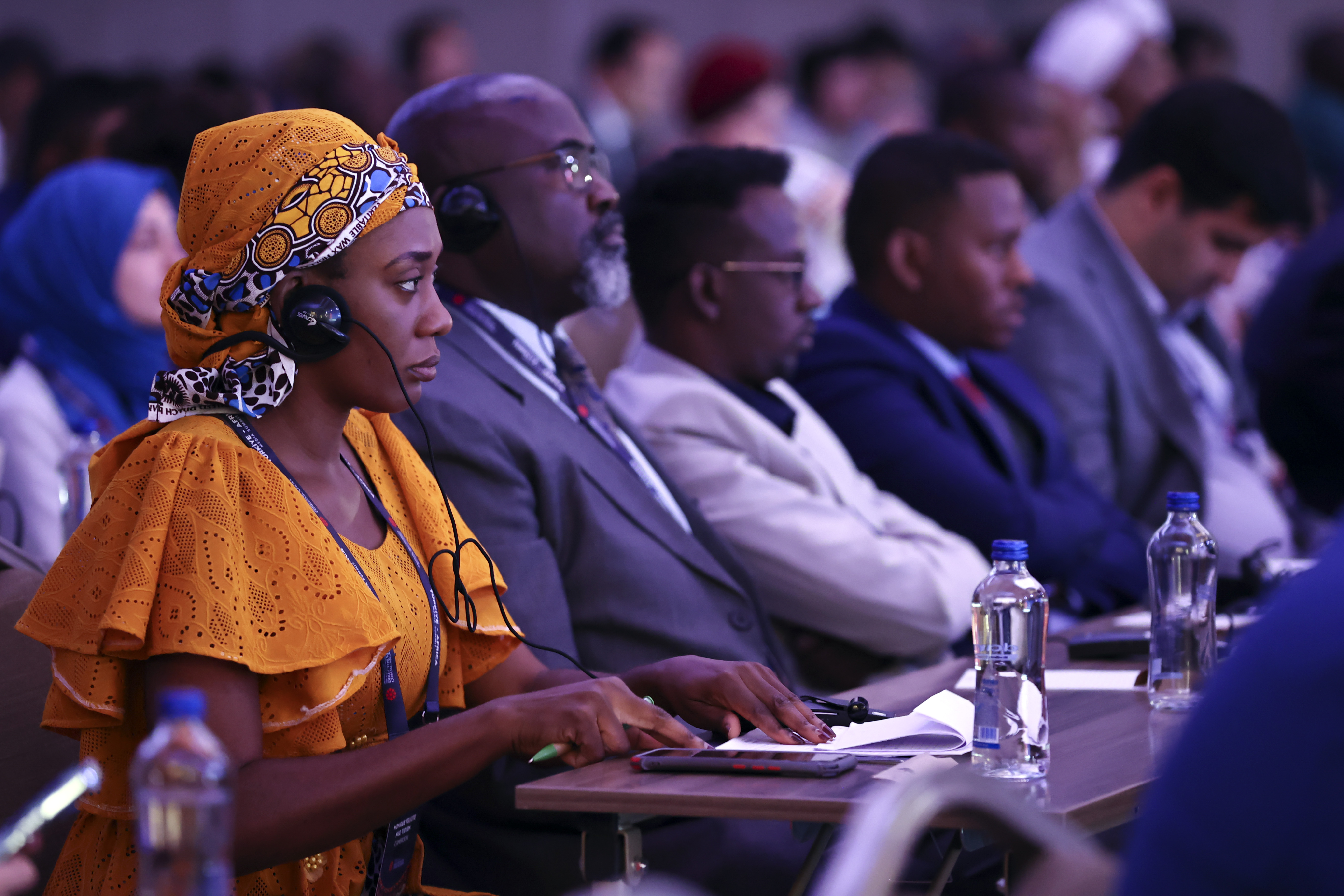
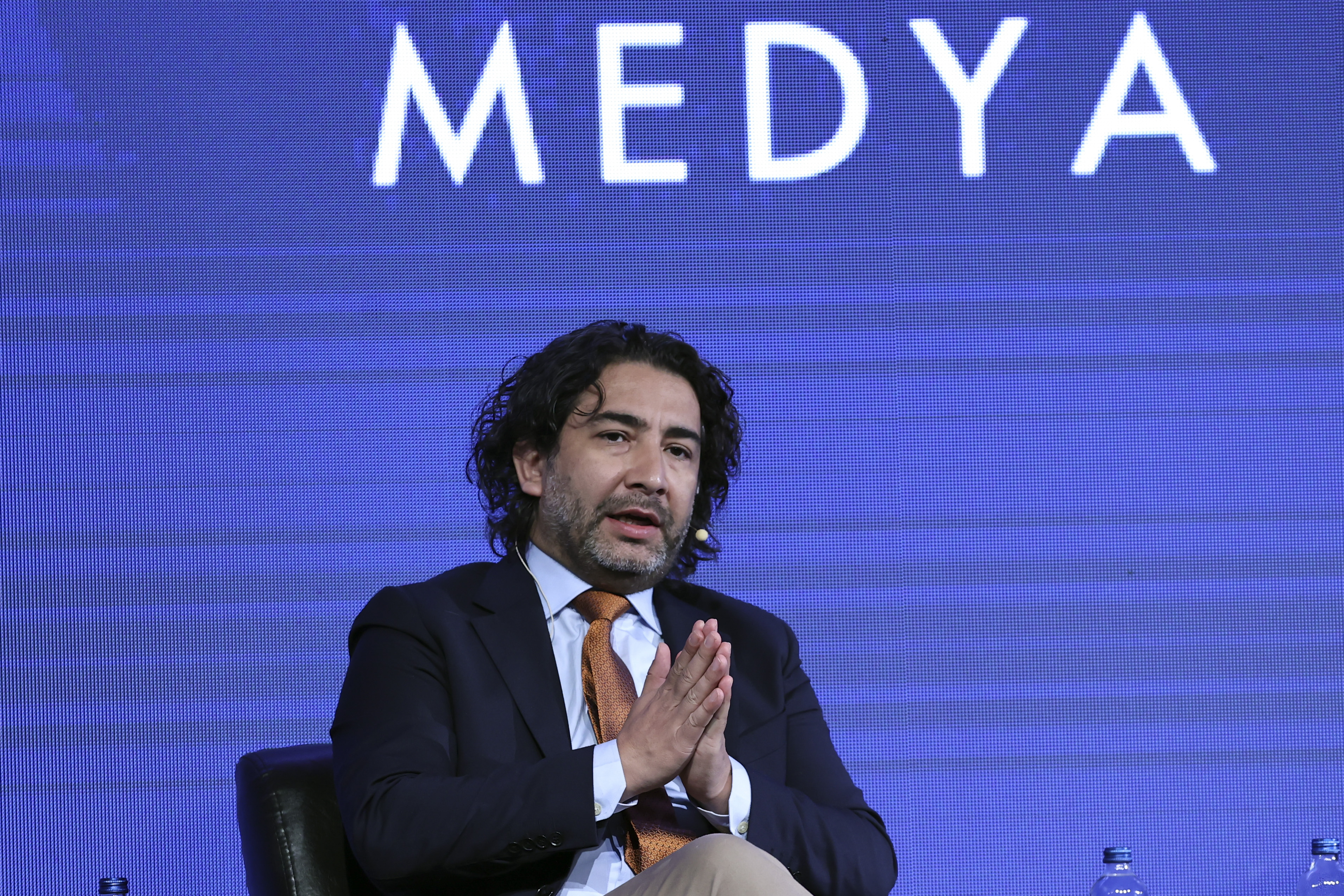
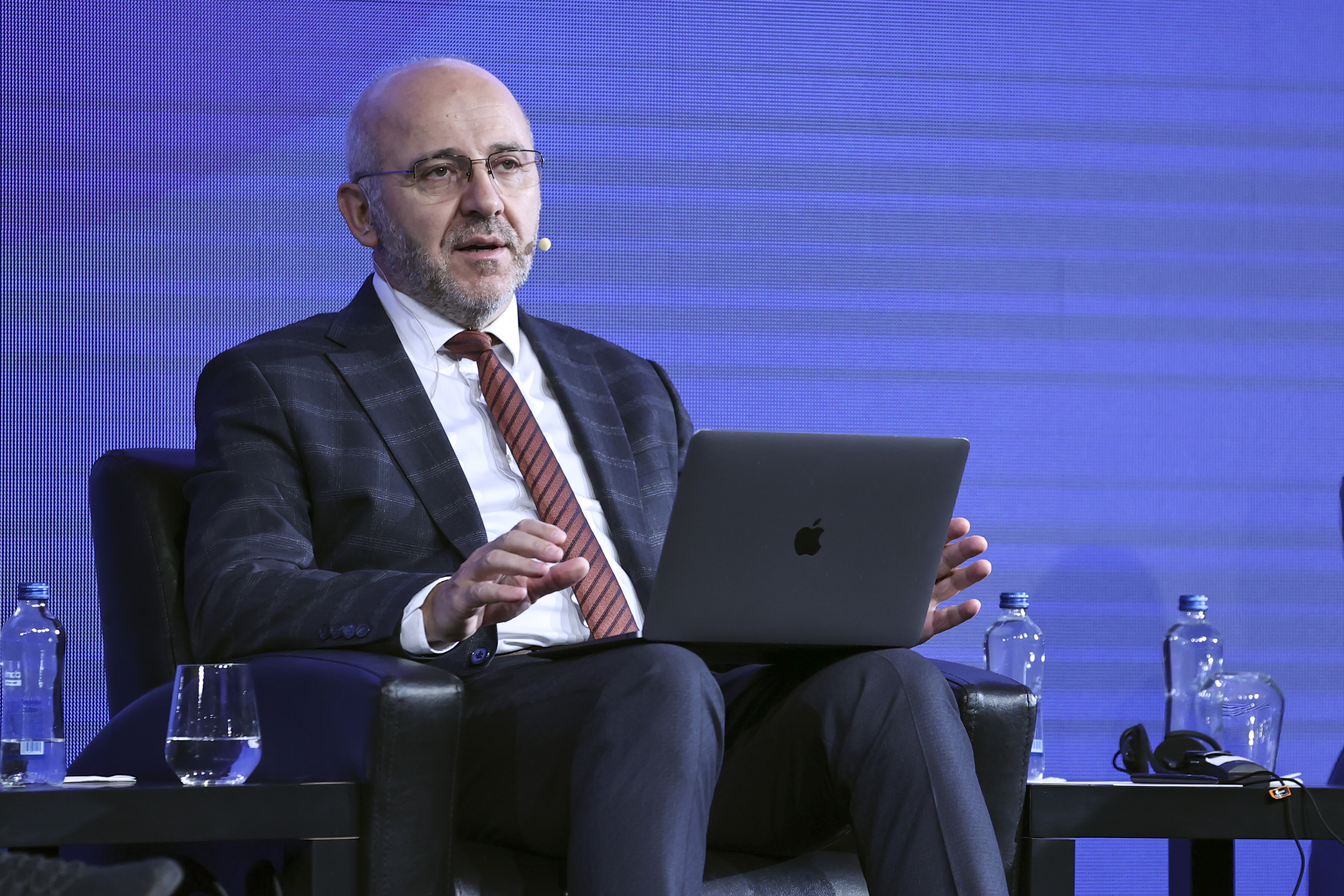
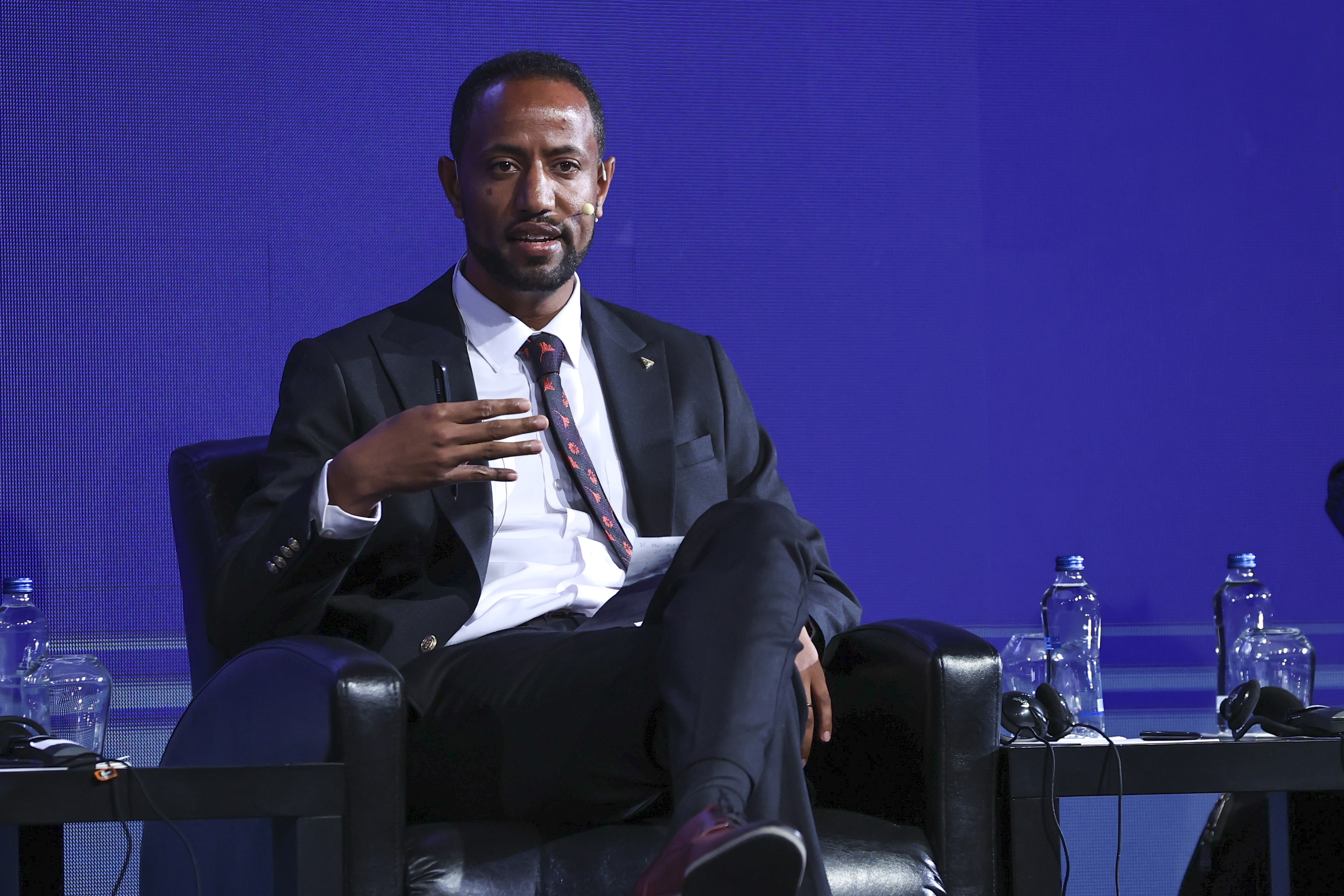
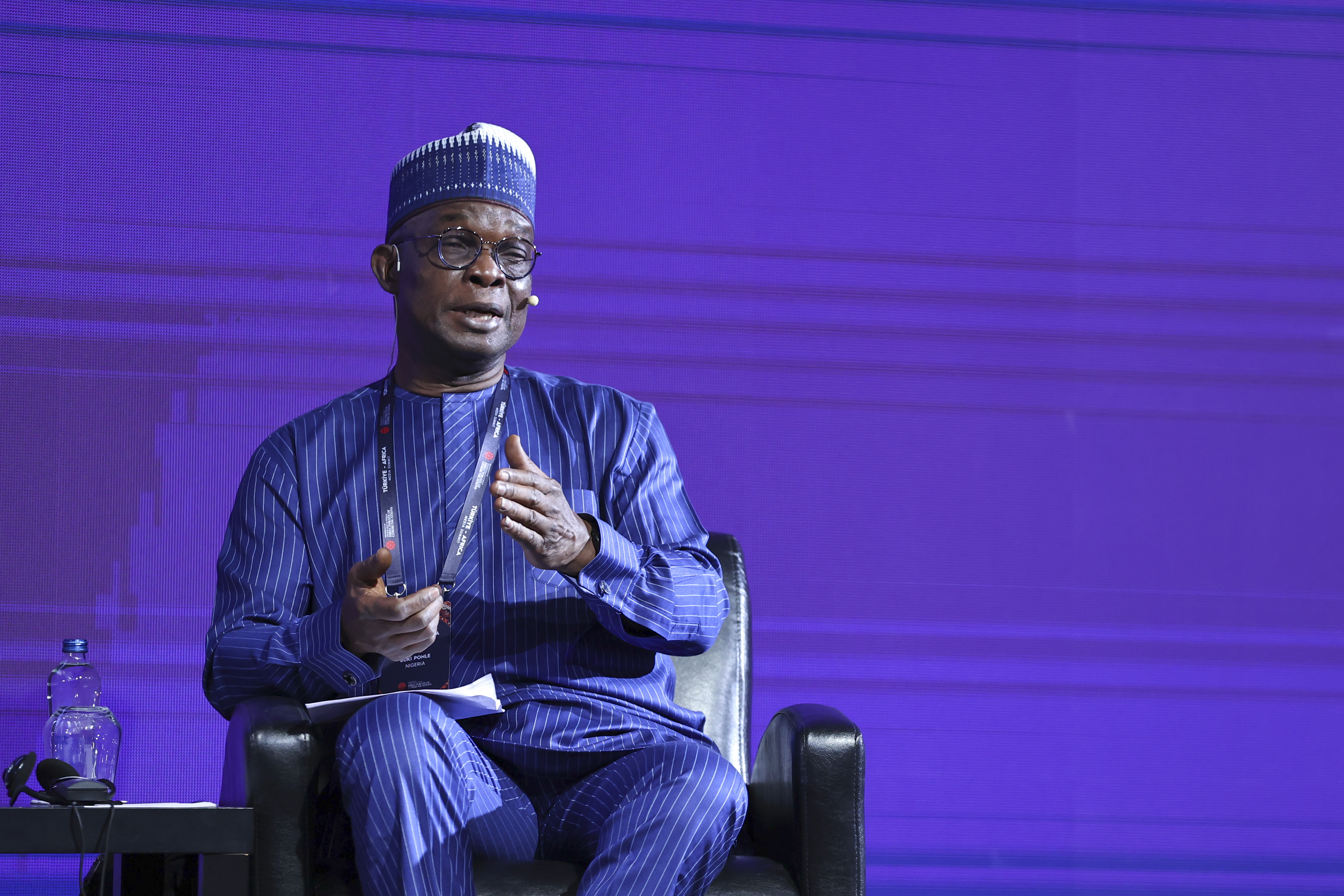
The "International (Dis)order in the Age of Constant Crisis" session was held on the second day of the Türkiye-Africa Media Summit organised by the Presidency's Directorate of Communications in Istanbul.
Head of the Public Diplomacy Department from the Directorate of Communications Oğuz Güner, who moderated the session, stated that as a result of the global crises that the world faces today, the concept of international disorder continues to be frequently discussed by experts, policymakers and the public, and that there is no accepted definition of international disorder.
Güner said that because there is no accepted definition, the debate has grown and added,
"We are talking about international order and disorder, and we are faced with a dilemma at this stage. Of course, this affects the entire world, and it also affects our daily lives. And it raises the question of whether it is a chaos? Or is it a cause or effect? In the age of permanent crises, we must look at the history of international relations while discussing international disorder. We see ongoing power struggles as well as the destructive potential of technological innovations. There are different interpretations and implementations of concepts such as peace, values, and welfare. Different states and societies define concepts such as peace, values, and welfare in different ways. These different viewpoints prevent us from developing a real and consistent model for resolving the crises in the international arena."
Güner expressed that the global COVID-19 pandemic once again exposed the fragility of global governance and global communication and went on to say,
"The pandemic has also provided an opportunity for global actors to focus on critical questions regarding the international order. Certain international structures must be created without causing a dilemma in the international system. How should we evaluate the crises? How should we interpret the changes in the international order? If we develop reform programmes and create an ecosystem, we can adapt to universal values and consolidate the world with confidence.”
Social media has benefited from globalisation
Director of the Center for Middle Eastern Studies (ORSAM) Ahmet Uysal said that there are certain indicators pointing to the lack of order. Stating these symptoms, Uysal said that the US invaded Iraq and Afghanistan without a legal basis.
Stating that Russia, one of the UN’s founding members, also has the right to veto, Uysal said, “One of the UN members violated the law once more by invading (Ukraine) and annexing territory. In Crimea, it did the same thing. Except for Türkiye and a few other countries, no one opposed.”
Stating that there is a new world order, that social media benefits from globalisation and that this media has significant resources and money, Uysal said:
“The rule of law is enforced on weak institutions, but it is ineffective in big countries. The media is unstoppable in its actions. In terms of social media, it benefits from globalisation. In the new world order, global companies now hold a supra-state status. Their income can be higher than a country’s.”
“We are in the midst of a hybrid warfare”
Research Director at the SETA Foundation in Washington DC Kılıç Buğra Kanat stated that there is an increasing reform initiative to bring a system to the international order.
Noting three major challenges on this path, Kanat said, “The first of these is a global conflict. There are two sorts of conflict. It has the potential to cause severe instability. The second aspect of a global conflict is a new superpower rivalry between the United States and China. It began as a commercial war and has since evolved into a technology war. There are also geopolitical, political, and strategic aspects to it. This has very severe repercussions in the field of technology.”
Addressing the Ukraine war, Kanat said:
“The fact that we are in the midst of hybrid warfare is a particularly important aspect of the Ukraine war. Initially, the war began as a political information war. Following that, we witnessed the cyberwar dimension in a short period of time. Russia attacked government infrastructures by targeting major intelligence networks in Ukraine. Following this, a conventional war erupted when Russia invaded Ukraine. Then, discussions of nuclear war ensued. You would expect such conflicts in the international order. These various conflicts and wars ushered in a new institutionalisation. There is no institution or consensus. No consensus exists to prevent an information war. These two issues demonstrate that it is difficult to limit such wars in the absence of a significant and powerful international institution.”
“We need institutionalisation on a global scale”
In reference to the issue of human security, Kanat said that no one discusses Covid-19 anymore but that there is an exceedingly severe omicron pandemic in some South Asian countries.
Stating that it is necessary to be prepared for a new pandemic if the warnings of the World Health Organization are to be heeded, Kanat emphasised the importance of countries’ being ready, primarily to provide masks and respirators.
Pointing out that there is a phenomenon that threatens human security in terms of climate change, Kanat said, “This is not a new threat. Over the past two years, the term ‘climate refugees’ has become more prevalent.”
Drawing attention to the welfare inequality experienced throughout the world, Kanat recalled that this is also related to Covid-19, that the UN and allied states set the Millennium Development Goals in 2010, which include eradicating poverty by 2030.
Stating that significant progress was accomplished in the first few years, but in the last two years, they saw that the funds allocated by countries for the fight against poverty decreased, Kanat concluded his remarks as follows:
“There are emerging threats in international relations. Additionally, there is something else that everyone is discussing. To address these interstate issues, we need effective coordination and cooperation. We need institutionalisation on a global scale. I hope that this pandemic, the climate crisis, the war in Ukraine, and the problem of economic recession, all these difficult issues will serve as a lesson for us, all the countries of the world, and the international community. Consequently, international organisations initiate a reform process.”