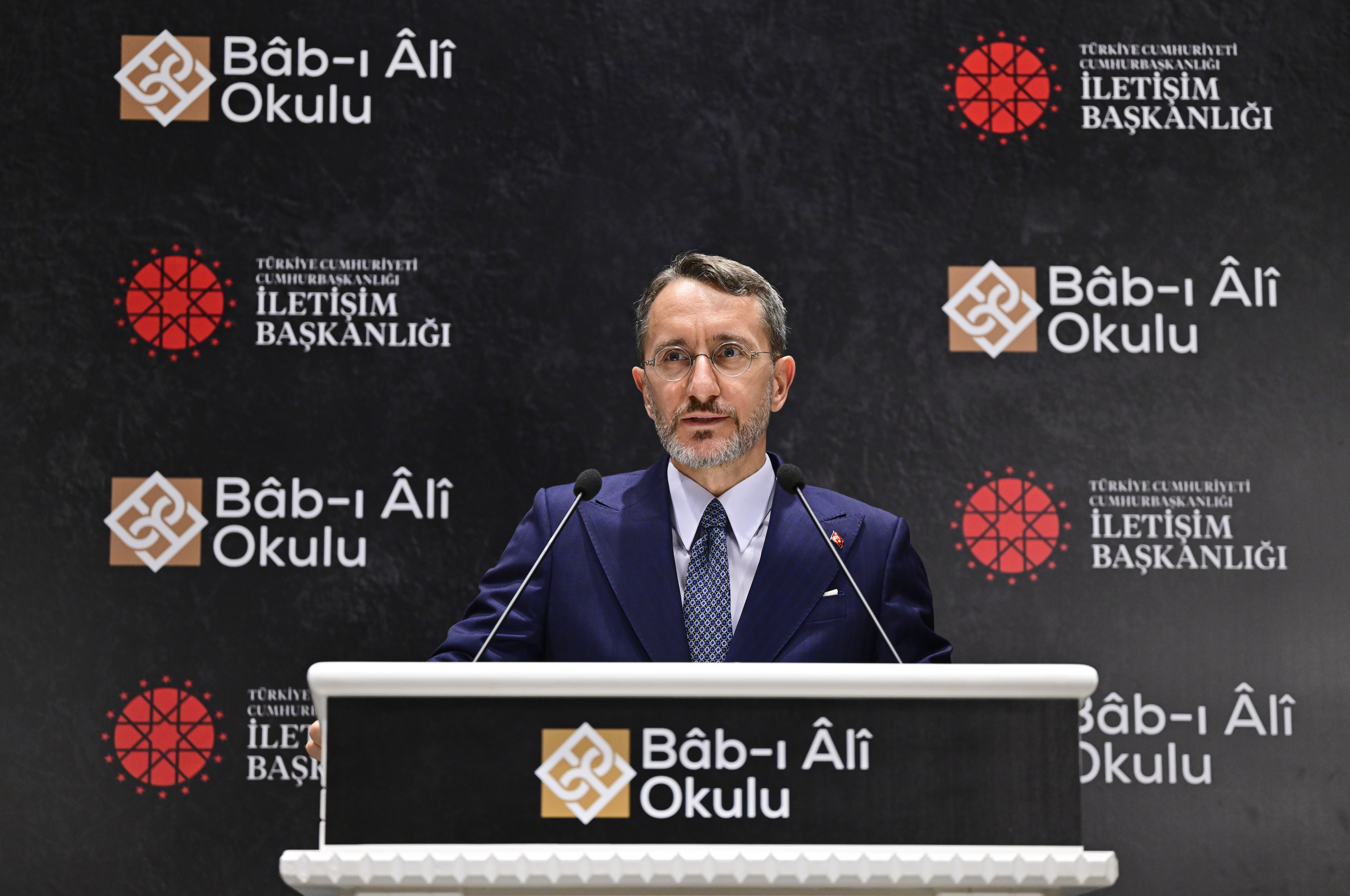
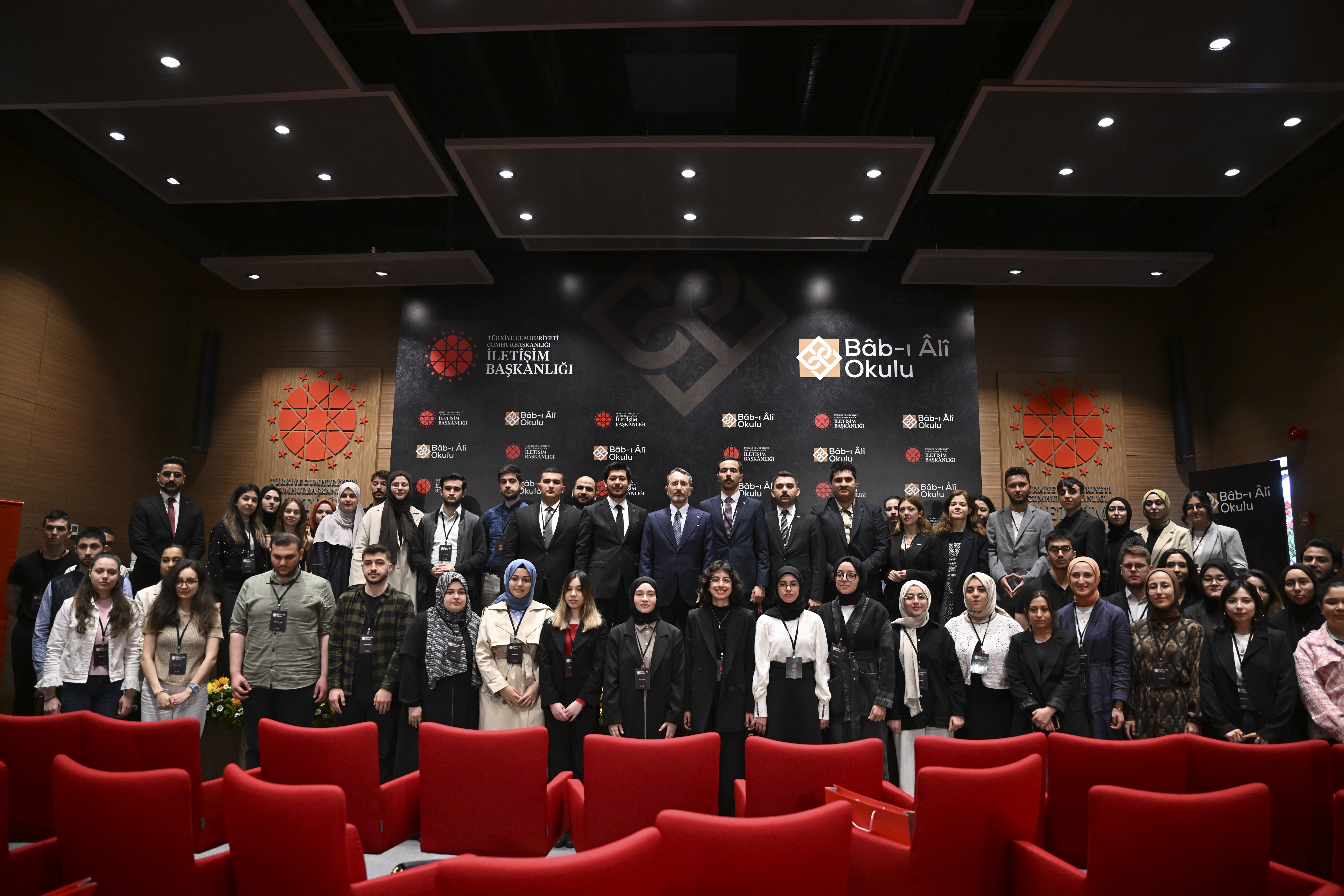
Presidency's Head of Communications Fahrettin Altun delivered an opening speech at the "Bâb-ı Âli School: Threat of Disinformation in the 21st Century and Communication Strategies" event organised by the Directorate of Communications at the Istanbul Regional Directorate Office. He stated that the Bâb-ı Âli School programme, which is organised for the second time this year, was designed as a training programme for undergraduate, graduate and doctoral students in the field of social sciences.
Highlighting the significant number of students who took part in the programme last year and successfully obtained their certificates, Head of Communications Altun expressed confidence that the newly launched programme will also appeal to curious students aspiring to specialise in the field of communication.
Referring to the opening sentences of Charles Dickens' masterpiece "A Tale of Two Cities" and quoting, "It was the best of times, it was the worst of times. It was the age of wisdom; it was the age of foolishness. It was the season of light; it was the season of darkness. It was the spring of hope, it was the winter of despair," Head of Communications Altun said, "I believe this description of Dickens reminds us all of the time we live in. Humanity finds itself in a paradoxical position, experiencing both great advancements and facing various tragedies. While advancements in informatics, artificial intelligence, and space technologies hold the potential for a promising future, humanity is currently grappling with unprecedented challenges and problems."
Head of Communications Altun highlighted that advancements in communication and media have consistently played a crucial role in shaping various optimistic and pessimistic scenarios, both in the present and the future.
Head of Communications Altun stated that the diverse benefits bestowed upon humanity by the communication and media industry in the modern era—from fundamental human interactions to democratic pluralism—is the reason why the current era is denoted by phrases like "information society" and "communication age."
Head of Communications Altun emphasised that the democratisation of communication has been increasingly discussed and that the opportunities for human interaction have increased as a result of the prevalent use of the internet since the 1990s and social media since the 2010s, and continued as follows:
"However, recent developments have demonstrated that it is imperative to discuss both the opportunities and the challenges in the emerging global communications ecosystem. Nevertheless, it was evident to us from the very beginning that mass communication mechanisms presented both opportunities and threats. In the 1960s, Marshall McLuhan, for instance, stated that the human family was being uniformed, manipulated, and directed by a single consciousness as a result of the global dissemination of information. In other words, prior to the emergence of the internet and social media, discussions surrounding the uniformity of nations characterised by diverse colours, languages, beliefs, and cultures, as well as the supremacy of a single mentality, were prevalent due to the globalisation of mass media. With the development of the digital media ecosystem and the new media order, however, such evaluations and criticisms have intensified considerably. When discussing the global ramifications of communication and media, it is now abundantly obvious that mass media distorts and obfuscates human diversity, cultural elements, and values while also standardising various ways of life and mentalities.
Disinformation is responsible for the crisis of democracy in modern societies today"
Head of Communications Altun also indicated that the digital media landscape confronts them with new threats and challenges, saying, "Undoubtedly, the most significant of these challenges is certainly the truth being undermined, weakened, and overtaken by lies. In a sense, it is a crisis of truth. Disinformation, which could be characterised as the scourge of our time, is what is primarily fuelling this crisis."
Head of Communications Altun underlined that due to this fact, the main theme of this year's "Bâb-ı Âli School" programme is "Threat of Disinformation in the 21st Century and Communication Strategies", and continued:
"Throughout the programme, we will address the role of disinformation in communication strategies, its impact on diplomatic relations, and its detrimental impacts on political and social processes. In addition, professionals in the field will offer strategies for combating disinformation. While we have been raising awareness about the threat of disinformation for a long time through projects like these, we are also seeing foreign countries and international agencies prioritising this threat and combating it. For example, the World Economic Forum has underlined that disinformation will pose a greater global threat in the future than wars, extreme weather events, and inflation. It is expected that this threat will only rise. On the other hand, the United Nations (UN) Human Rights Council has stated that disinformation has become a major threat to human rights."
Head of Communications Altun emphasised that the age we live in is not just the age of communication and information but also one of disinformation, saying:
"Recent advancements in communication and media have unfortunately facilitated the spread of disinformation to an unprecedented extent. Today, for example, artificial intelligence applications have significantly expedited the spread of disinformation. According to research, the number of AI-generated websites spreading disinformation has increased from 49 to 802 since May 2023 alone. Such an increase in disinformation activities will inevitably lead to tolls on political, social, economic, cultural, and humanitarian fronts. Disinformation is essentially an attempt to influence the course of history through both provocative content that appeals to people's emotions and radical interventions that aim to manipulate socio-political processes. With the crisis of truth it causes, disinformation is also responsible for the crisis of democracy in modern societies today."
Disinformation of "national mourning" following the passing of President Raisi of Iran
Defining democracy as "a functioning system formed by independent individuals freely participating in the political sphere and guiding political decision-making processes with accurate information," Head of Communications Altun said, "If the information sources of individuals are manipulated and individuals are influenced by false content, then we can talk about a manipulated media consumer, not a political subject. This, above all, prevents societies from developing a healthy common will for self-determination and sovereignty. And all this leads to autocratic structures making room for themselves instead of democratic systems."
Head of Communications Altun stated that examination of communication processes through national and international media revealed disinformation and fabricated news content.
Mentioning that such an example was most recently seen in the disinformation spread following the passing of President Ebrahim Raisi of Iran, Head of Communications Altun added:
"One day of mourning has been declared for the passing of the President of Iran, as has been done in the past for the passings of other leaders of other countries. Subsequently, certain media outlets began spreading false news, claiming that "National Mourning" was announced for the death of the Iranian President but not for the February 6 earthquakes. For instance, a media outlet that reported in the past as "President declared National Mourning" for February 6 posted a headline such as "Why declare the mourning now and not during the earthquake?" without hesitation. Unfortunately, a news anchor on TV repeated this lie while looking at their viewers straight in the eye. Thankfully, right during the broadcast, the editor of the program informed the anchor of our Centre for Combating Disinformation's reporting that the claim was disinformation and that our President "had declared National Mourning for 7 days" during the February 6 earthquakes, and the anchor corrected the false news. Of course, correcting this false news was a positive development. The news anchor had to correct it but glossed over it without an apology. Whereas the truth cannot be glossed over."
"With its bombardment of disinformation, Israel tried to slaughter the truth as well"
Head of Communications Altun emphasised that despite all the disinformation, they are striving to "prevent the voice of truth from being silenced, nationally and internationally" and that they are building their hope rather than losing it, adding that the students resisting the Israeli oppression in Western universities and countries declaring their recognition of Palestine are concrete signs that this hope is still young.
Underlining that Israel is using disinformation as a weapon to cover up the crimes it has been committing in Gaza for 230 days, Head of Communications Altun stated, "Having slaughtered 45 thousand children, women, and the elderly, Israel also tried to slaughter the truth with its bombardment of disinformation. Nevertheless, we have and will continue to fight strongly against Israel's disinformation policy and strategy. And at the end of the day, its strong voice is and will be victorious. Despite all the pressure, reactions against Israel's genocide continue at universities. On the other hand, despite Israel, now with a great new shame that is genocide added to its identity as an invader and occupier, and the western international system that supports Israel, Spain, Norway, and Ireland made decelerations recognising Palestine. Such developments evidently show us that, despite all the pressure and intimidation, we should never give up on the fight against disinformation until the end."
Head of Communications Altun went on to say: "Disinformation is a global issue that must be fought against in order to protect democratic systems. Hate speech and discrimination thrive in an environment where the media or political systems are dominated by disinformation. In such an environment, you can see the dissolution of civil society, ideological enmities replacing political competition, the spread of the culture of lynch, and the erosion of trust in interpersonal and inter-communal relations. Considering all these reasons, we must learn what disinformation is, recognise it, and fight against it."
"Our Türkiye Communication Model includes strategies that enable us to combat disinformation"
Head of Communications Altun stated that the steps to be taken in the fight against disinformation can be summarised in two points: "measures to be taken at the institutional level" and "what should an individual do against disinformation." Altun emphasised the importance of measures such as improving media literacy awareness at the institutional level, determining the standards of new media professions and updating the legal infrastructure according to the needs of the current media and communication ecosystem at this point.
Head of Communications Altun also pointed out that the issues to be considered at the individual level in the fight against disinformation should not be disregarded and noted:
"In this context, in order to ensure the accuracy of the news, it is crucial to check the source and reliability of the news. Again, we have to check who or what the source of the news is. A critical approach to the news, and a sceptical and curious attitude are essential. We need to check publication dates in case old news are published as new ones. When we share our content, we must ensure its accuracy. Knowing that the legal and moral responsibility lies with the user and that manufacturing, as well as spreading disinformation is illegal, can be considered a measure to be taken to avoid getting caught in the whirlpool of disinformation."
Emphasising that in this era where efforts are being made to undermine the truth, known as the "post-truth" era, fighting against this global problem at an individual and institutional level is one of the most important activities of the Directorate of Communications, Head of Communications Altun said, "Our Türkiye Communication Model, which was implemented under the leadership of our President Recep Tayyip Erdoğan, incorporates strategies that enable us to fight against disinformation with different instruments. On a national and international level, through our truth-centred publications, symposiums, panels, and workshops held by the Centre for Combating Disinformation working under our Directorate, we maintain a vigil of truth 24 hours a day, seven days a week. The Bâb-ı Âli School program should be evaluated within this framework and should be considered as an element of our struggle for the truth."
Expressing his sincere belief that the Bâb-ı Âli School program will contribute to the training of qualified media members dedicated to truth, the Head of Communications Altun congratulated those who contributed to the program and wished the program to be auspicious.