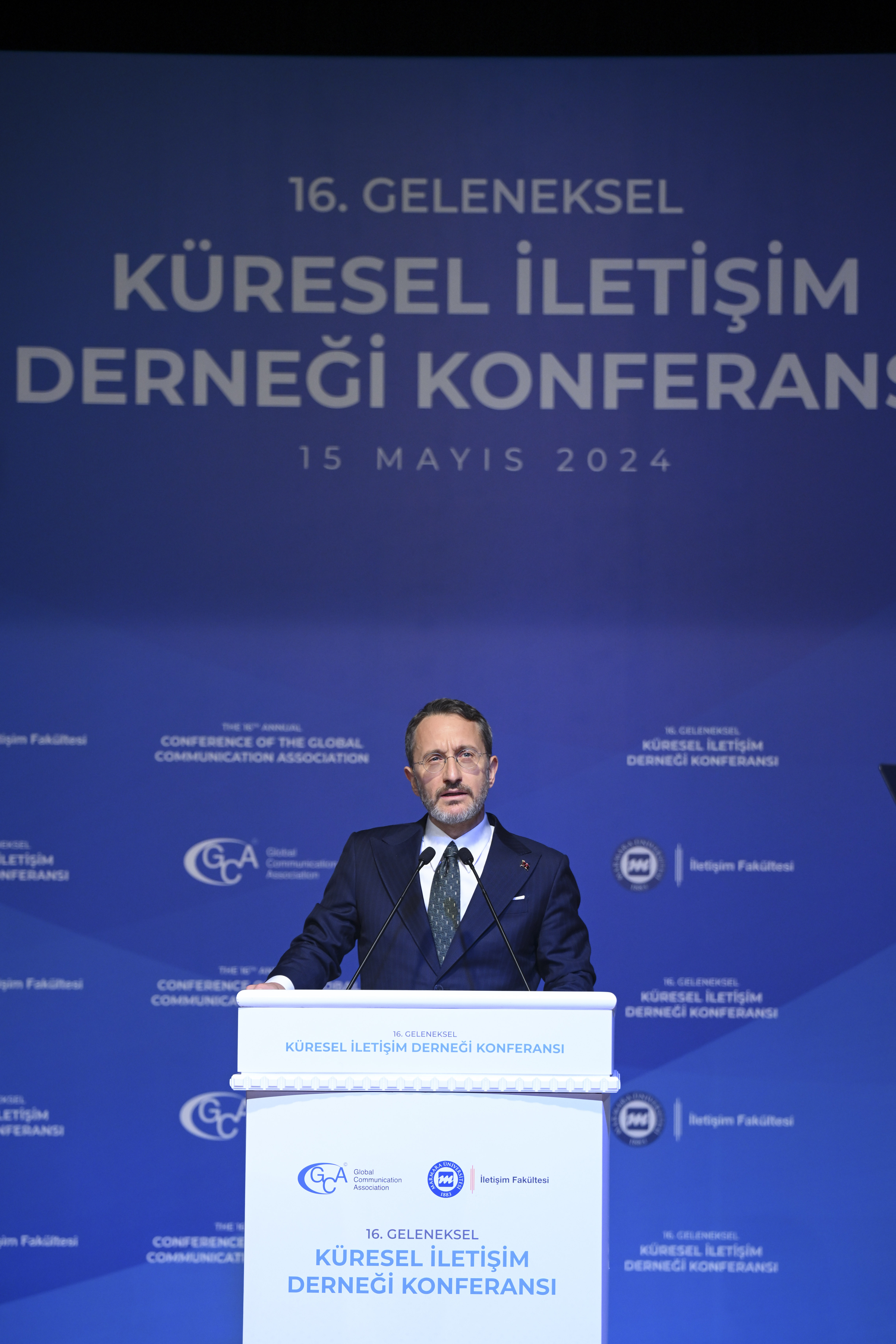
In his address to the 16th Conference of the Global Communication Association titled "The Future of Communications: Promises and Challenges," hosted by Marmara University, Faculty of Communication, Presidency's Head of Communications Fahrettin Altun underscored that the international media status quo believed it had a monopoly on establishing what to highlight and ignore.
Head of Communications Altun noted that when debating the issue of communication's future, the rapidity and intensity of digitalisation force us to consider the problem from multiple angles.
Citing that digitalisation, like any innovation, comes with its fair share of pros and cons, Head of Communications Altun stated that we should prioritise maximising efficiency by embracing digitalisation's positive aspects while minimising its negative aspects.
Head of Communications Altun stated that a communications ecosystem is needed at this juncture, in which data security is ensured; technology and social media companies, which consider themselves to be above all authorities, are held accountable under the law; disinformation can be easily identified and discredited; and the truth is prevalent.
Altun pointed out that the impact of issues such as armed conflicts, political crises, natural disasters, irregular migrations, pandemics, and economic crises has multiplied significantly in recent years due to the effects of digitalisation in media and communication. He emphasised that extensive use was made of digital channels to manipulate international public opinion throughout crises such as the recent Russia-Ukraine War, as well as Israel's heinous atrocities and genocide in Gaza.
Head of Communications Altun noted that humankind is currently going through what is known as the Frankenstein Syndrome and said:
"Today, humanity is under the tutelage of the technologies it has created with its own hands. As Frankenstein said to the scientist who created him, 'You are my creator, but I am your master!' Regrettably, the human race has been unable to devise ethical codes, policies, and strategies that adequately confront the challenges presented by these technologies. Unfortunately, humanity has been unable to build comprehensive strategies and policies to address a variety of issues, including privacy, data security, cyber threats, hybrid warfare threats, digital fascism, and media imperialism, which have been on the agenda frequently in recent years. On the contrary, many technological innovations that have increased the opportunities for societies and individuals to engage have become weapons for malignant groups' destructive activities as a result of disinformation, misinformation, and mass manipulation.
"On the global communication scene, there is now rigid stratification, even a caste system"
Drawing attention to the fact that the use of these tools facilitated the rapid dissemination of lies within the context of the new media order, Head of Communications Altun said that systematic disinformation attacks exposed specific segments of society, or even the entire international community, to the long-lasting poison of lies and that the virus of lies infects societies.
Altun noted that disinformation could even be used to conceal war crimes, massacres, and genocides as they have seen in recent months, saying, "All of this indicates that humanity is experiencing a crisis of truth. The crisis of truth is one of the main challenges threatening societies and individuals today. Unfortunately, the world system in which we live exacerbates this crisis of truth on the one hand, bringing about injustices in the international arena and in the international communication ecosystem on the other."
Highlighting that there was now rigid stratification, even a caste system, on the global communication scene, Head of Communications Altun went on to say:
"Similar to the presence of injustice in the global system, there is also injustice within the international communication system. In fact, we are discussing media imperialism that coexists with Western hegemony. This imperialist approach divides people into two groups: those who have the right to produce content and those who have to consume it. We are talking about an international media status quo that believes it has a monopoly on establishing what to highlight and ignore. According to this established order, 800 migrants drowning in the Mediterranean are not newsworthy. Because their lives are worthless in the eyes of this established order. However, the deaths of a few people during a tourist trip to the Titanic wreckage around the same time as this incident would dominate the news for days. This approach is simply not fair. However, this attitude, and more importantly, this global communication order, is currently being seriously questioned worldwide, and the desire for justice in the international system is revealing itself in the field of communication and media."
"The crisis of truth is the common problem of all of humanity, not just ourselves"
Head of Communications Altun said, "Türkiye has adopted a proactive stance in the face of humanity's problems, fighting tirelessly to overcome both the crisis of truth and global injustice in communication. Above all, President Recep Tayyip Erdoğan's fight for justice and rights under the motto 'A fairer world is possible' inspires us."
Noting that the establishment of the Presidency's Directorate of Communications in 2018 was an institutional manifestation of the importance Türkiye attached to this issue, Head of Communications Altun stated, "With the establishment of the Directorate of Communications, the Republic of Türkiye has designated communication as an independent policy and strategy-making field. Thus, Türkiye has emerged as a leading country in formulating comprehensive strategies and public policies regarding the opportunities and challenges of this field. We are making efforts to implement these strategies and policies within the framework of Türkiye's Communication Model. Türkiye's Communication Model serves as a testament to our will to adopt a proactive stance towards change, embracing and guiding it rather than hesitating from the transformative potential of emerging communication technologies, particularly digitalisation. In the field of communication and media, Türkiye aspires to be a trend-setter rather than a follower."
Head of Communications Altun continued:
"In this context, we are committed to promoting digital media literacy through campaigns and training programmes, ensuring that the public is accurately informed through our Centre for Combating Disinformation, which operates on a 24/7 basis, improving democratic participation, state-to-nation communication and the culture of negotiation with innovative tools such as CIMER, maintaining an uninterrupted flow of information and communication in crisis situations, enhancing the effectivenes of disaster communication processes, expanding our technological and human resources capacity in the field of communication and media, institutionalising a truth-oriented framework in public diplomacy and strategic communication, boosting the value of the Türkiye brand by means of national and international publishing projects, raising national and international public awareness on numerous pressing global concerns including but not limited to terrorism, xenophobia, Islamophobia, hate speech, climate change, and pioneering the establishment of bilateral and international cooperation mechanisms in each of these fields and persisting in our numerous efforts on cooperation. We are of the opinion that the crisis of truth is the common problem of all of humanity, not just ourselves, and common problems demand common solutions. For this reason, the struggle for truth and justice calls for cooperation on a global scale. We in Türkiye endorse cooperation efforts to this end."
"Greater investments should be devoted to the preservation of truth across every field than to communication technology"
Emphasising that the struggle for truth in philosophical, ethical, scientific, and political fields, particularly in communication and media, was the most solid investment, Head of Communications Altun said, "Presently, greater investments should be devoted to the preservation of truth across every field than to the implementation of advancements in communication technology. To accomplish this, our academic community, communication faculties, and media professionals bear significant responsibilities. Because the steps that we take today will dictate the way in which tomorrow is shaped. Just as Albert Camus said: 'Real generosity toward the future lies in giving all to the present.' Yes, right now. We must exert this effort, this force now."
Expressing his belief that this conference was the result of such efforts, Head of Communications Altun expressed his gratitude to each individual who contributed to organizing this significant occasion as well as the scientists who would share their experience and knowledge, and wished the conference success.
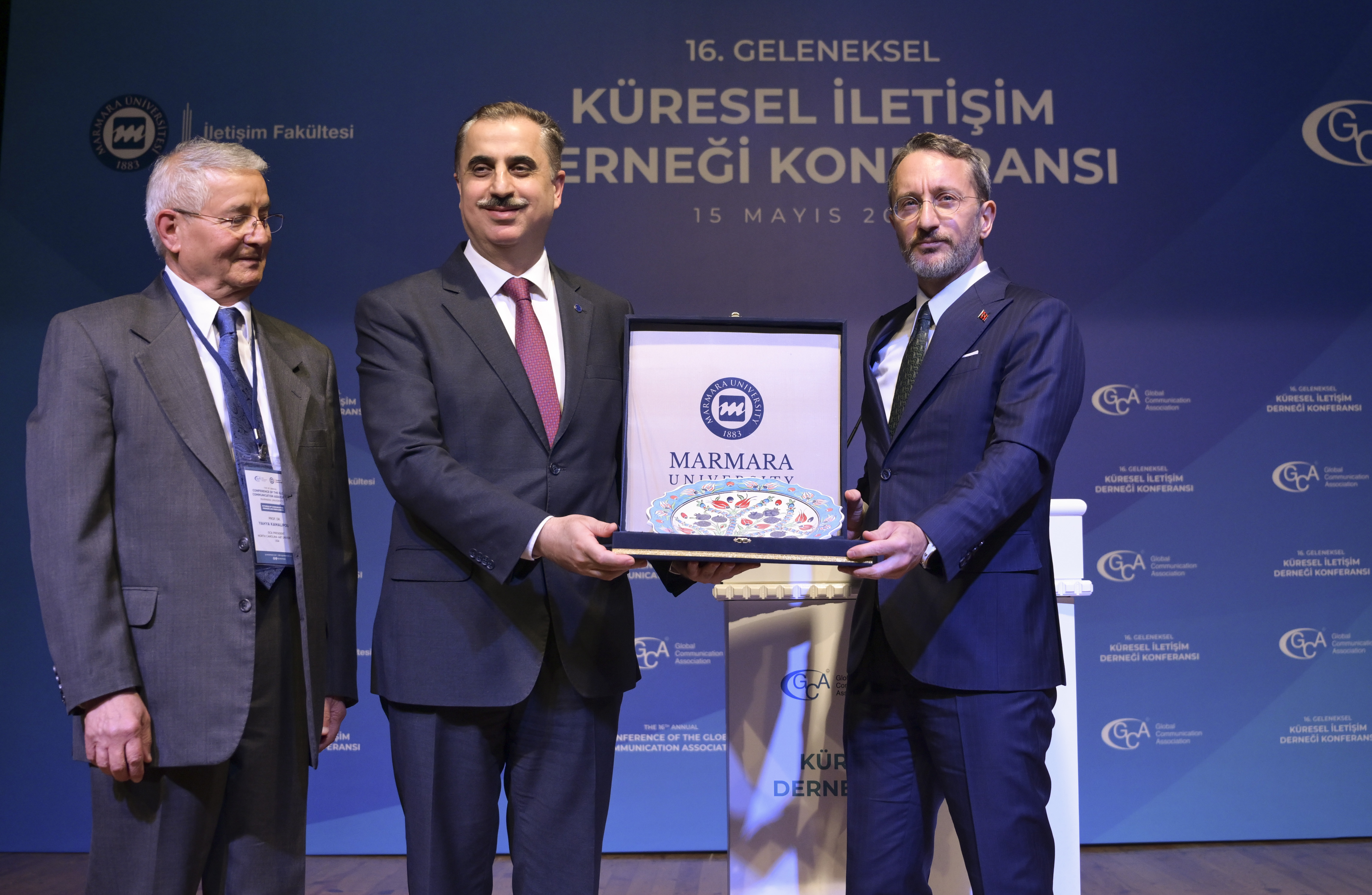
After the speeches, Marmara University Vice Rector Professor Mustafa Çelen presented gifts to Head of Communications Altun and Global Communication Association President Professor Yahya Kamalipour.
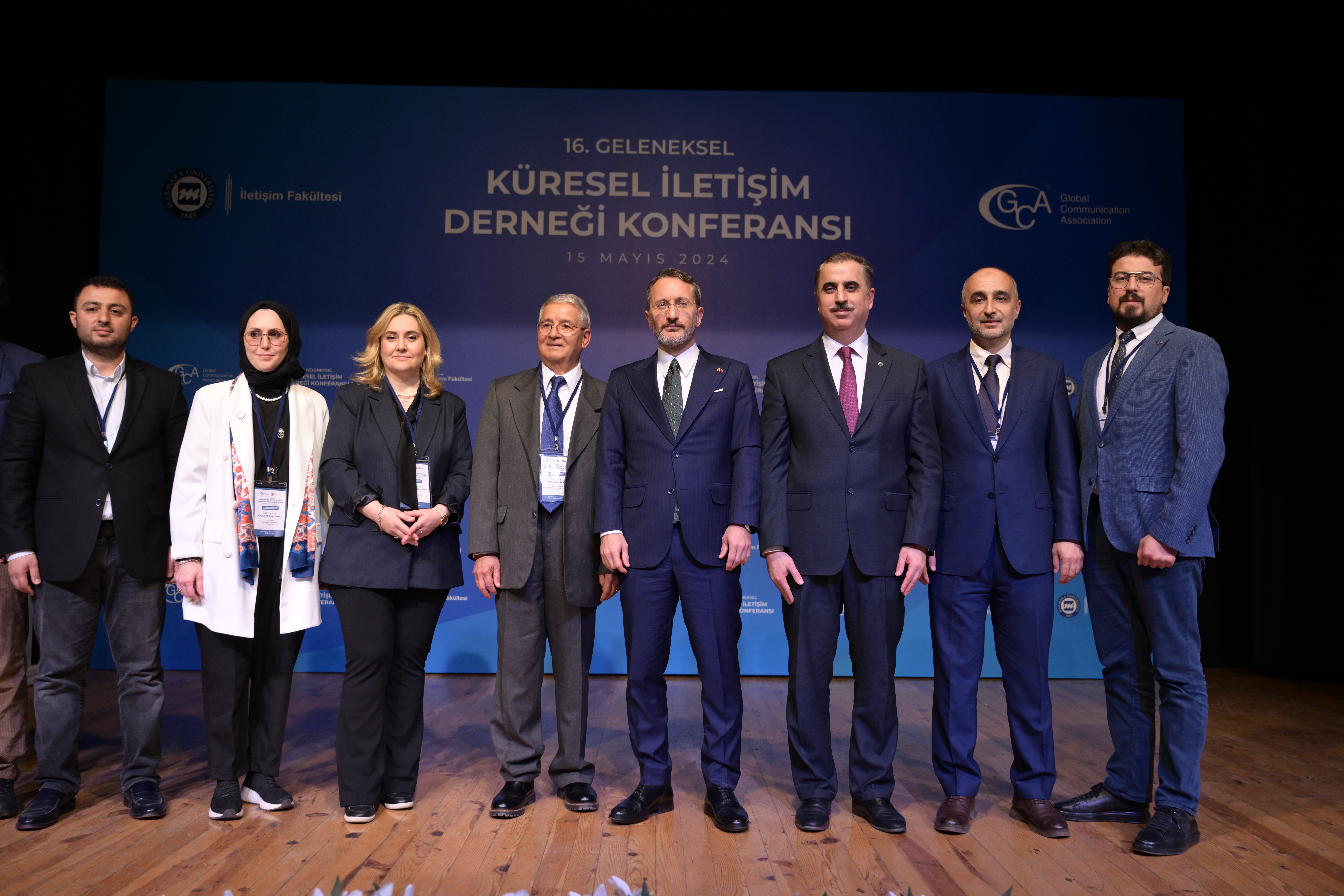
The conference's opening ceremony concluded with a family photo session featuring Head of Communications Altun and members of the conference organising committee.