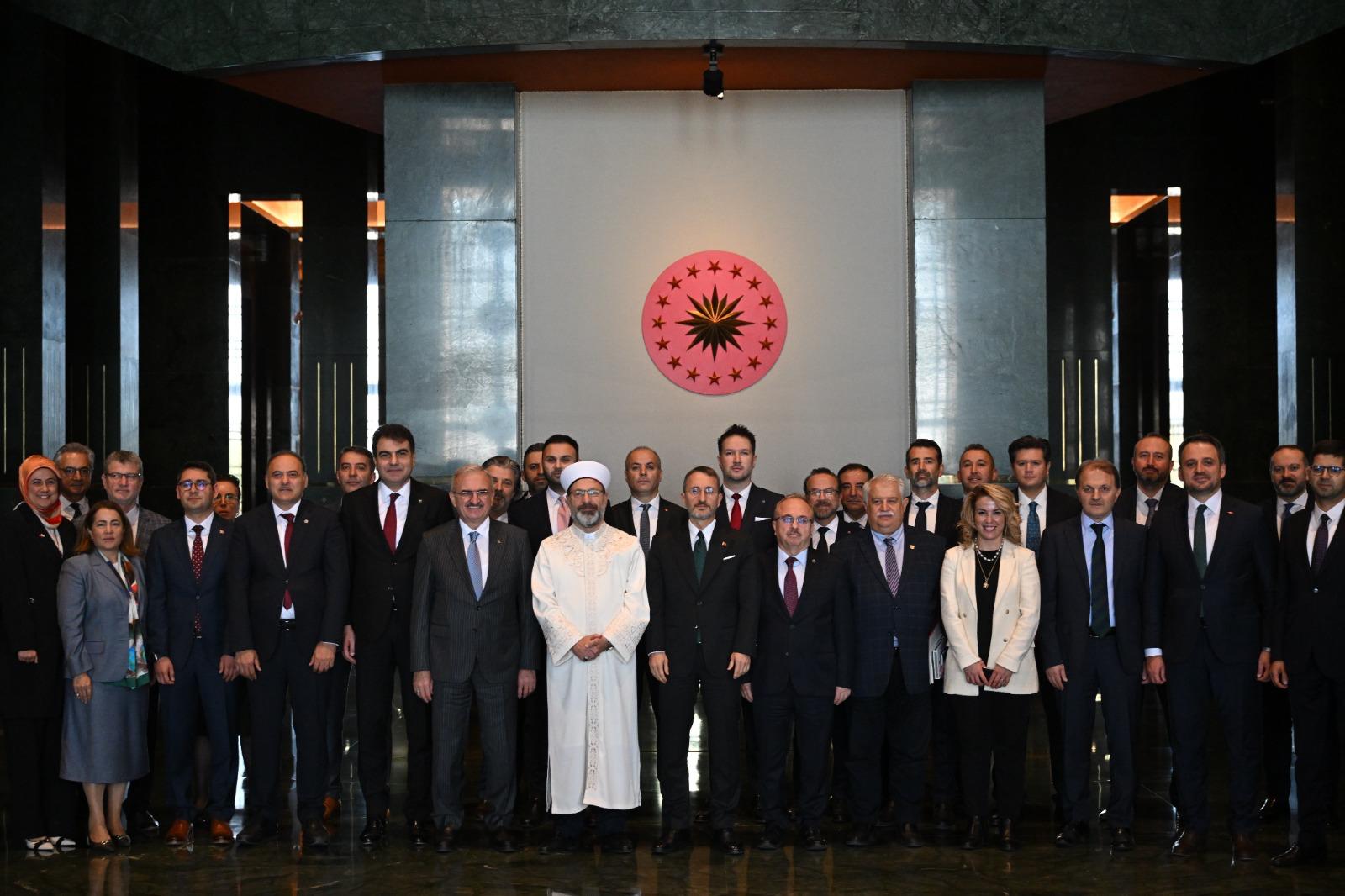
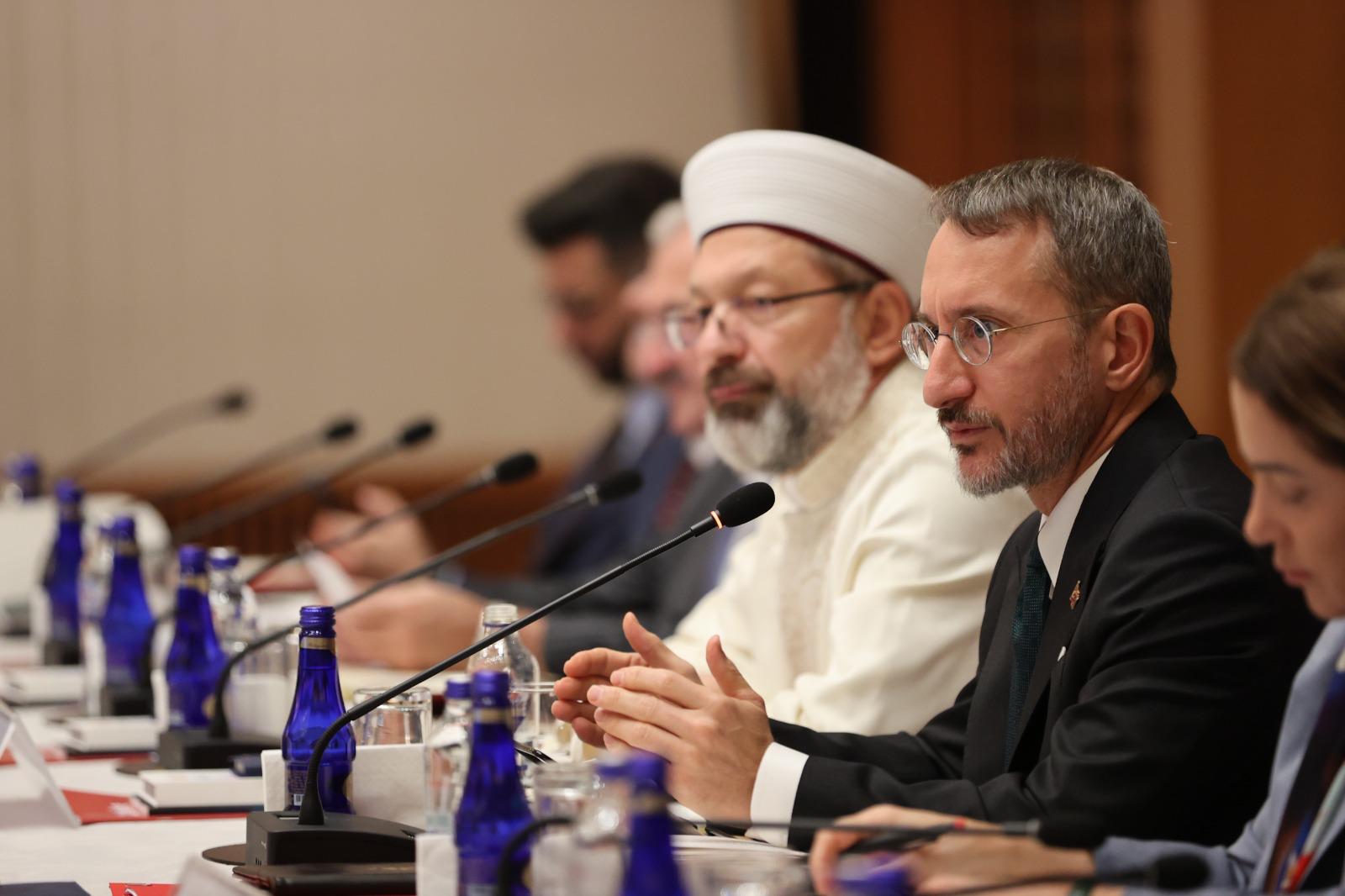
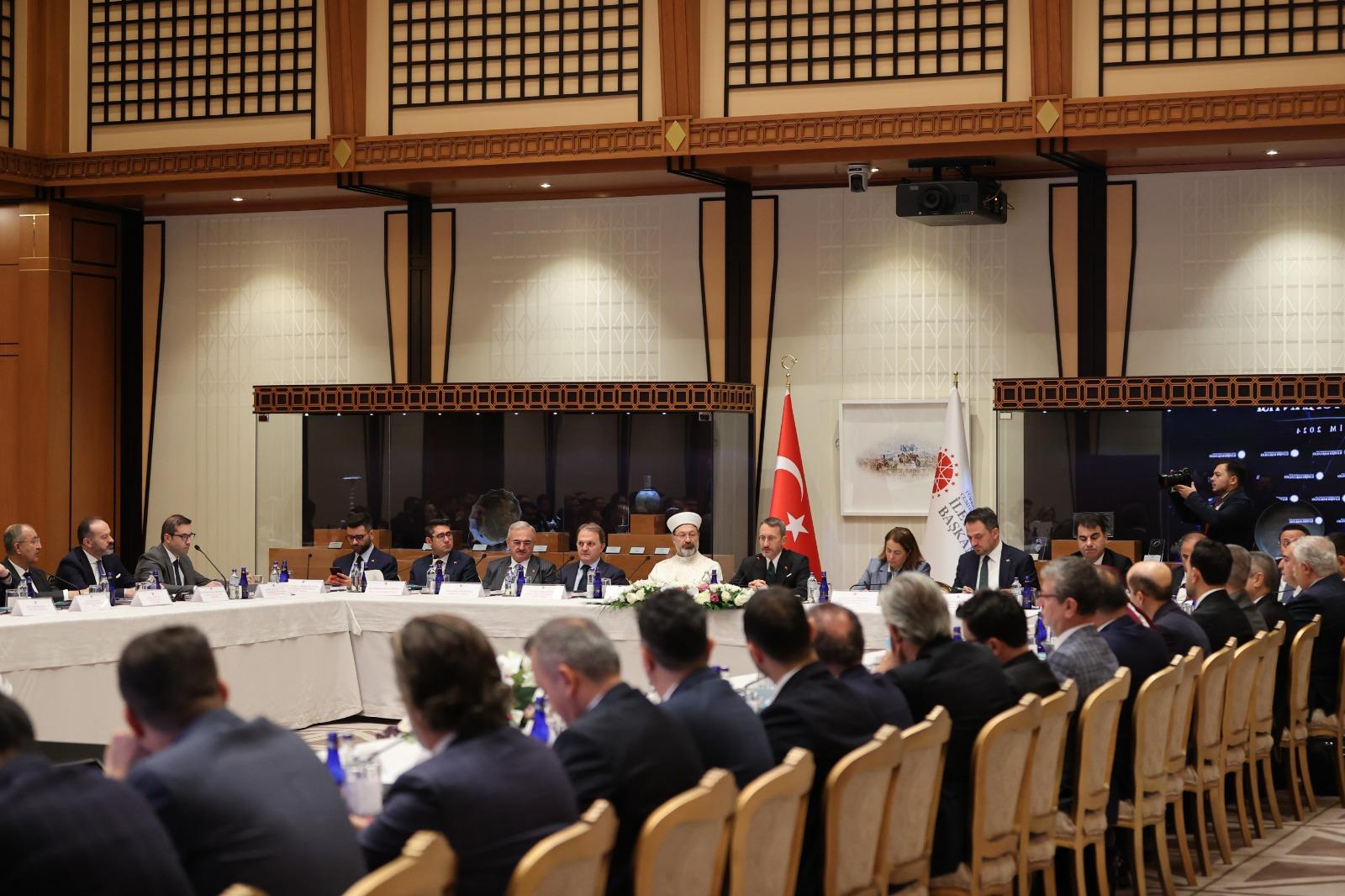
Presidency's Head of Communications Fahrettin Altun chaired the fifth meeting of the Public Diplomacy Coordination Board at the Presidential Complex.
Representatives of public institutions and various non-governmental organisations, as well as deputy ministers, directors, and deputy directors of institutions and organisations related to or affiliated with the Presidency, attended the Board's fifth meeting.
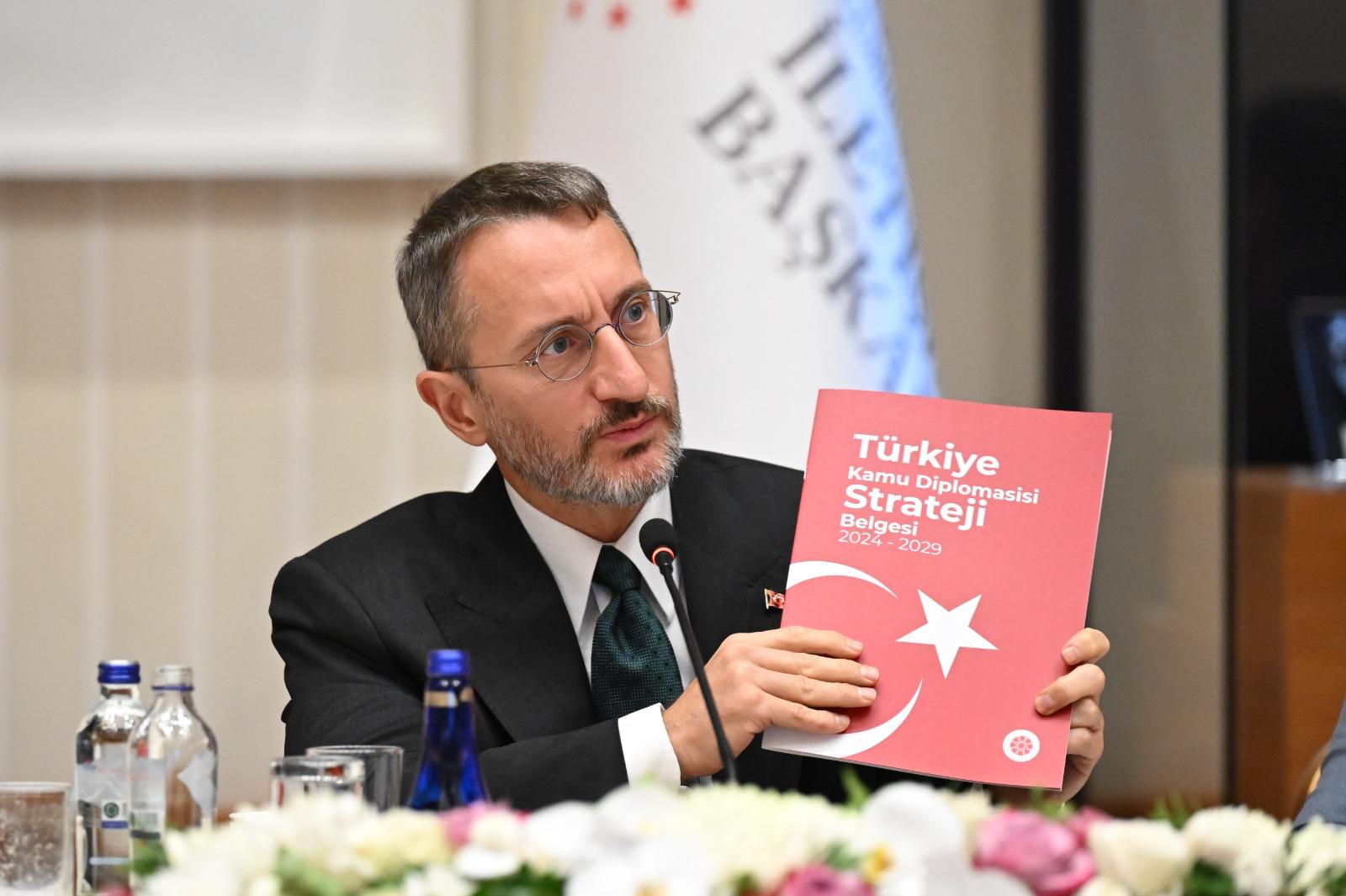
At the meeting, which focused on reviewing accomplishments in public diplomacy over the previous year, assessments were made regarding the recently developed Türkiye Public Diplomacy Strategy Document and Action Plan for the years 2024-2029.
Head of Communications Altun reiterated in the opening remarks that, as per President Recep Tayyip Erdoğan's directive and vision, the meetings have been carried out annually since the First Public Diplomacy Coordination Board Meeting on February 26, 2020.
Head of Communications Altun stated that their objective during the planning and implementation phases of public diplomacy efforts is to leverage the expertise, know-how, and capabilities of various institutions and to accurately ascertain Türkiye's potential and need in this field on a micro- to macro-scale.
Head of Communications Altun noted that with the goal of preventing duplication, increasing efficiency and effectiveness, elevating the brand value of Türkiye, and guaranteeing coordination in all endeavours, the process of effectively harnessing Türkiye's potential in a range of fields within the parameters of soft power and public diplomacy is currently underway.
Head of Communications Altun stated that Türkiye's progress in public diplomacy and soft power have been evidenced by an international study that was published at the beginning of this year.
In the "Global Soft Power Index 2024" study conducted by Brand Finance, Head of Communications Altun observed that Türkiye has moved up ten places to 18th place among 193 countries in the index ranking, which encompasses all 193 United Nations members for the first time.
Head of Communications Altun stated that Türkiye ranked 13th in the index's "influence" category, which is based on its rich cultural and heritage values as well as its effective efforts in international relations, and that, according to the data, Türkiye is one of the countries that has increased its index score the most in the last five years.
Head of Communications Altun shared the following information:
"Our country's diplomatic initiatives, efforts to resolve regional and global crises, international organisations we host, branding efforts, humanitarian aid efforts, public/private sector initiatives in the media and communication field, and effective communication strategies undoubtedly had a role in this outcome.
This achievement is a direct result of the five years of coordinated effort amongst our institutions. Carrying this achievement even further and making it persistent, sustainable, and institutionalised will require more effort on our part. Especially, making it more institutionalised is now of utmost importance."
"The KADİZ system received 9,089 project entries in total"
Head of Communications Altun emphasised that the Public Diplomacy Monitoring System (KADİZ), launched in 2022 in order to institutionalise inter-institutional coordination and cooperation, is an important step and pointed out that KADİZ has become a key tool in implementing the National Public Diplomacy Strategy Document and Action Plan.
Head of Communications Altun shared that KADİZ had 1,691 users in 2021, 2,596 users in 2022, 2,811 users in 2023, and, accounting for the first ten months of 2024, currently has 1071 registered users with 348 moderators and 723 users from 44 institutions.
Head of Communications Altun underscored that the KADİZ system received 9,089 project entries in total and said:
"When we look at the types of events by committee, cultural diplomacy received the most event entries throughout a ten-month period in 2024. Institutionally, the top three are the Ministry of Youth and Sports, the Ministry of National Education, and the Yunus Emre Institute. In terms of activity types, sports diplomacy comes to the fore. By target countries, the United States of America, Germany, and Bosnia and Herzegovina rank among the ones with the highest number of activities.
Youth, the sports community, university students, and the general public stand out as target audiences. Under the National Public Diplomacy Strategy Document and Action Plan, our institutions have conducted operations intended for 162 distinct countries. The top 15 cities with the greatest number of activities are London, Tokyo, Sarajevo, Budapest, Nicosia, Bucharest, Cologne, Baku, Dakar, Azaz (Syria), Doha, Amsterdam, Buenos Aires, Tehran, and Cairo.
"New strategy document for 2024-2029 is prepared"
Head of Communications Altun expressed their satisfaction with the increasing number of activity entries made by stakeholder institutions and underscored the critical role of the KADİZ system in profiling public diplomacy activities and formulating a more promising strategy for the future, which includes recording and evaluating public diplomacy activities, enhancing the exchange of knowledge, information, and experience on public diplomacy, and raising awareness about public diplomacy in institutions.
Head of Communications Altun went on to say:
"Over the past 10 months, as the Directorate of Communications, we have conducted international events, projects, and publications in various formats within the context of public diplomacy. Additionally, we have held meetings with 82 experts from 44 different institutions who are board members. We have found these meetings to be extremely fruitful and rewarding. One of the most significant outputs of our meetings was the expression of the demand for public diplomacy trainings by our respective institutions. Accordingly, as the Directorate of Communication, we have made presentations to a number of our institutions. In this process, we have developed a new strategy document for the 2024-2029 period that is in light of our future vision and current developments. The document was prepared with a participatory understanding that follows the developments in the field from an innovative perspective, prioritising public accessibility and comprehensibility. The achievement of our strategic goals in the field of public diplomacy depends on the establishment of profound, multi-faceted, and lasting relationships with the international public, decision-making actors, and the media. This is the primary criterion for us."
Pointing out the critical nature of building a permanent unity of goals and actions by using all tools and methods of communication and ensuring coordination among stakeholders, Head of Communications Altun reminded that a "Circular on the Coordination of Public Diplomacy Activities" was underway to this end and initial steps have been taken in this direction.
Head of Communications Altun briefed on the preparatory work for the new Strategy Document, stating that they held Public Diplomacy Evaluation and Consultation Meetings, as well as Türkiye Public Diplomacy Strategy Document Preparation Workshops, with expert-level representatives from stakeholder institutions and organisations in attendance.
Stating that they aimed to introduce a perspective that offers innovative, applicable, and realistic recommendations in the field of public diplomacy with the workshops, Head of Communications Altun said: "We have aimed to designate Türkiye's public diplomacy policies and strategies by presenting concrete observations and analyses, to ensure that cooperation and coordination activities in the field of public diplomacy are effectively conducted, and to materialise the recommendations that will strengthen Türkiye's influence, reputation, and image in the international arena through public diplomacy methods and tools."
"It is impossible for us not to be affected by crises"
Head of Communications Altun highlighted the opportunities and threats emerging in the context of public diplomacy as confronted in the production of the new strategy document, noting that Türkiye has a robust institutional infrastructure and years of experience in the field of public diplomacy.
Noting that Türkiye has extensive experience in public diplomacy across various domains, from tourism to sports, historical and contemporary culture and arts, as well as industrial and technological breakthroughs, perhaps to an extent unparalleled by any other nation, Head of Communications Altun said:
"With the breakthroughs we have made in the field of communication and media, particularly in the past decade, we have succeeded in institutionalising a qualified media network that will bolster and enhance this infrastructure and expertise. Furthermore, our country has a great diplomatic advantage and potential in terms of public diplomacy activities, as it has the third largest diplomatic network worldwide. These are our strengths, possibilities, and opportunities in terms of public diplomacy and soft power as a country. But one must not forget the other side of the coin. In the consultations we held while preparing the new strategy document, we endeavoured to take into account and reflect on potential risks and threats regarding public diplomacy. In general, current risks and threats encompass a wide range of issues, including the negative consequences of international terrorism, economic crises, diplomatic crises, an increase in Islamophobia in the West, and regional conflicts. In addition, the proliferation and acceleration of malicious conduct, such as disinformation and black propaganda, in the new media order necessitate the consideration of numerous parameters during the planning phase."
Emphasising that humanity has been experiencing a challenging and turbulent period in recent years due to political, military, and economic crises on a regional and global scale, Head of Communications Altun stated, "As a country located in the heart of the world's most vibrant geography in terms of trade, military, and politics, where different civilisations come into contact with each other, it is impossible for us not to be affected by these crises. For instance, developments that impact our economy, be it in a positive or a negative direction, also affect our public diplomacy endeavours. The same also applies to political crises and developments."
"We will continue to operate the consultation mechanism in the most efficient way"
Head of Communications Altun emphasised that terrorism, regional conflicts, and instabilities in Türkiye's close geography all have an impact on public diplomacy efforts, saying, "It is unavoidable that we should think about our public diplomacy policies and strategies by taking all of these risks and threats into account, being prepared for possible scenarios, and urgently reviewing and reconsidering them when necessary."
Head of Communications Altun emphasised the importance of identifying the mechanisms for the elimination of risks and threats, as well as the means for their establishment and implementation, during the process of formulating strategies and policies. He also noted that they will establish a strategy document for the next five years and conduct regular meetings to ensure their positions remain current in response to the risks and threats they encounter.
Stating that they are pleased with the recent steps taken by the institutions in public diplomacy, Head of Communications Altun continued:
"In this context, we find the establishment of the Directorate General of Public Diplomacy and Strategic Communication under the Ministry of Foreign Affairs significantly instrumental. I believe that with such efforts of our institutions and the culture of cooperation we have established in the field of public diplomacy, we will further expand Türkiye's soft power and sphere of influence under the leadership of President Recep Tayyip Erdoğan. We will continue to hold annual meetings as the Public Diplomacy Coordination Board. We will observe the implementation progress of the Strategy Document together and continue to operate the consultation mechanism in the most efficient way."
"Joint endeavours bear great benefit"
Directors and deputy directors of the Presidency's affiliated institutions and organisations, along with representatives of public institutions and various non-governmental organisations, then took the floor.
Head of Communications Altun, in his closing speech, extended his gratitude for all participants that enriched the meeting with their questions, opinions, and suggestions.
Head of Communications Altun drew attention to the significant projects undertaken by public institutions and pointed out that engaging in joint efforts with non-governmental organisations and the private sector bears great benefit for public institutions.
Head of Communications Altun emphasised that they are conducting public diplomacy efforts at a time when there are numerous major regional and worldwide challenges, noting:
"Especially Israel's aggression and policies of oppression create a negative atmosphere all over the world. And there is also the Israeli black propaganda specifically targeting Türkiye. Nevertheless, despite these hardships, we are confident that as long as we maintain our steadfast position as the representative of a truth alliance, this process will benefit Türkiye's public diplomacy. And we believe that we can contribute to establishing a positive global network. Regardless of the circumstances, we can strengthen Türkiye's image by advocating for the truth, justice, and conscientiousness in the international arena in this conflicted environment."
Head of Communications Altun's post
Head of Communications Fahrettin Altun shared a post on his social media account on the meeting.
In his post, Head of Communications Altun said:
"Today, we held the 5th meeting of the Public Diplomacy Coordination Board with the participation of our deputy ministers, the heads and deputy heads of relevant institutions and organisations affiliated with the Presidency, as well as representatives from public institutions and certain non-governmental organisations.
Over the past 10 months, as the Directorate of Communications, we have conducted international events, projects, and publications in various formats within the context of public diplomacy. Additionally, we have held meetings with 82 experts from 44 different institutions who are board members. We have found these meetings to be extremely fruitful and rewarding.
One of the most significant outputs of our meetings was the expression of the demand for public diplomacy trainings by our respective institutions. Accordingly, as the Directorate of Communications, we have made presentations to a number of our institutions.
In this process, we have developed a new strategy document for the 2024-2029 period that is in light of our future vision and current developments. The document was prepared with a participatory understanding that follows the developments in the field from an innovative perspective, prioritising public accessibility and comprehensibility.
The achievement of our strategic goals in the field of public diplomacy depends on the establishment of profound, multi-faceted, and lasting relationships with the international public, decision-making actors, and the media. This is the primary criterion for us.
We aimed to define Türkiye's public diplomacy policies and strategies through concrete assessments and analyses, ensure effective cooperation and coordination in the field of public diplomacy, and develop actionable proposals that will enhance Türkiye's influence, reputation, and image on the international stage through the use of public diplomacy methods and tools.
With the breakthroughs we have made in the field of communication and media, particularly in the past decade, we have succeeded in institutionalising a qualified media network that will bolster and enhance this infrastructure and expertise. Furthermore, our country has a great diplomatic advantage and potential in terms of public diplomacy activities, as it has the third-largest diplomatic network worldwide.
These are our strengths, possibilities, and opportunities in terms of public diplomacy and soft power as a country. But one must not forget the other side of the coin. In the consultations we held while preparing the new strategy document, we endeavoured to take into account and reflect on potential risks and threats regarding public diplomacy.
In general, current risks and threats encompass a wide range of issues, including the negative consequences of international terrorism, economic crises, diplomatic crises, an increase in Islamophobia in the West, and regional conflicts.
In addition, the proliferation and acceleration of malicious conduct, such as disinformation and black propaganda, in the new media order necessitate the consideration of numerous parameters during the planning phase.
I hope that the 5th meeting of our Public Diplomacy Board will bring positive outcomes, and I extend my gratitude to everyone who contributed."