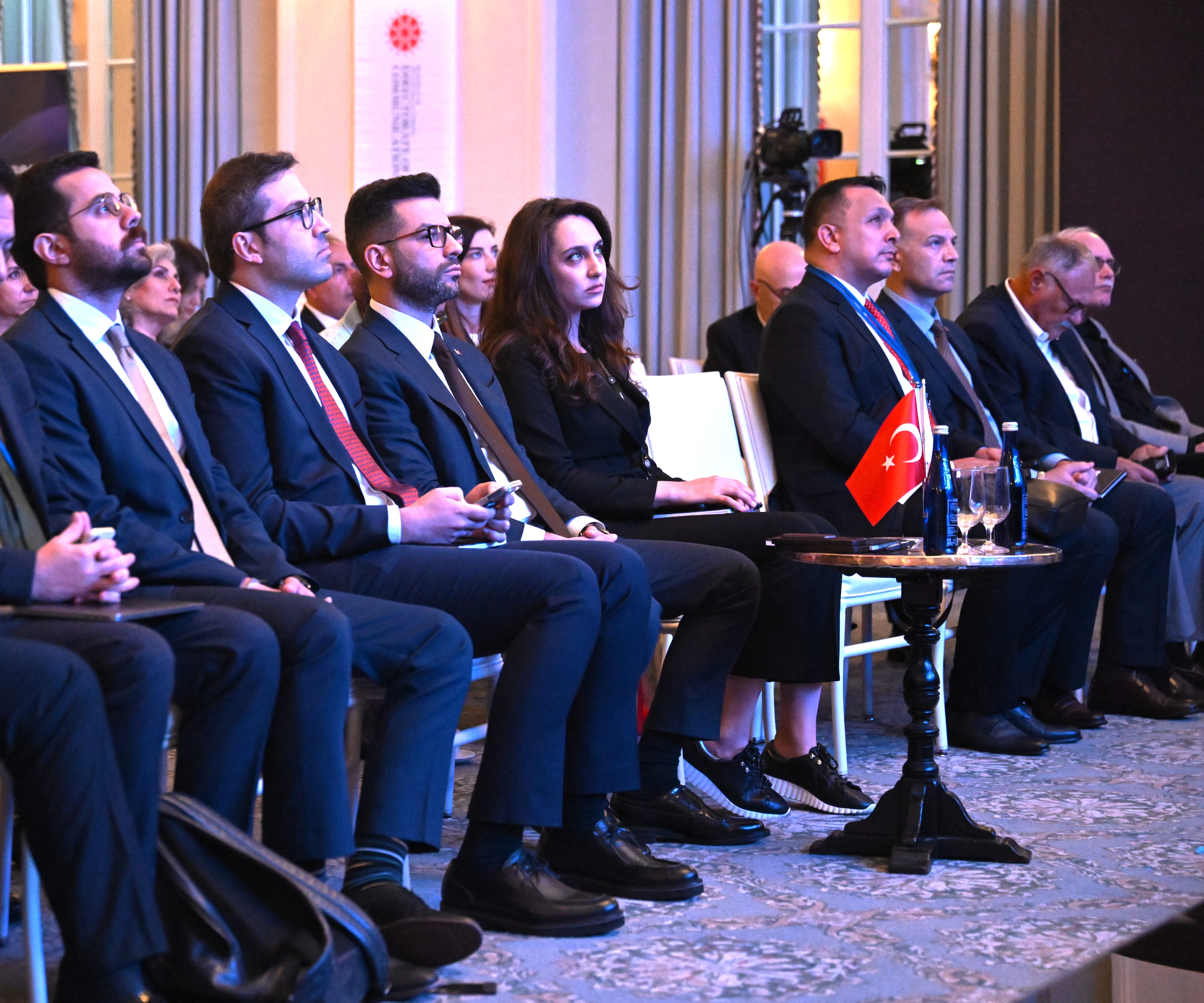
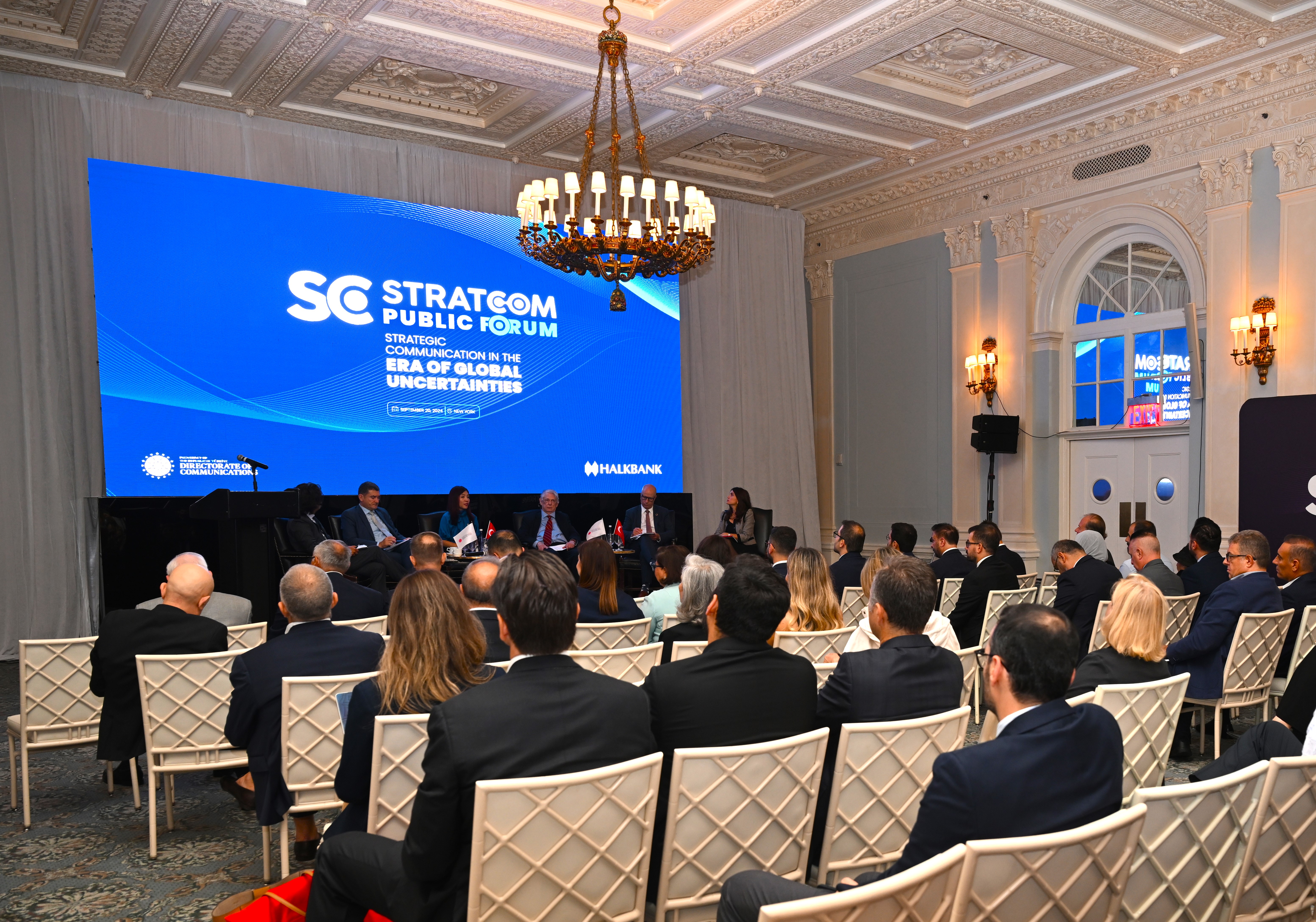
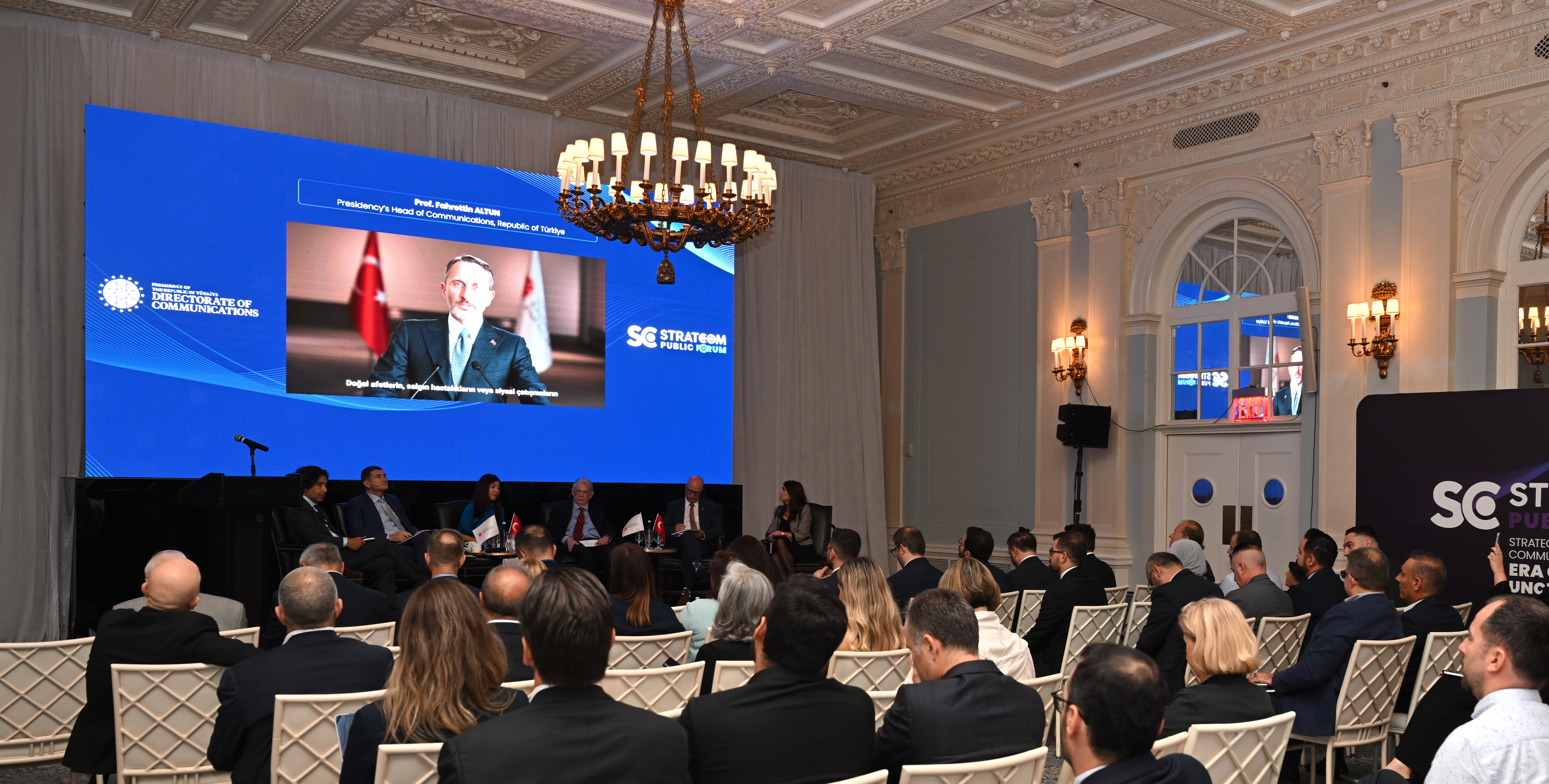
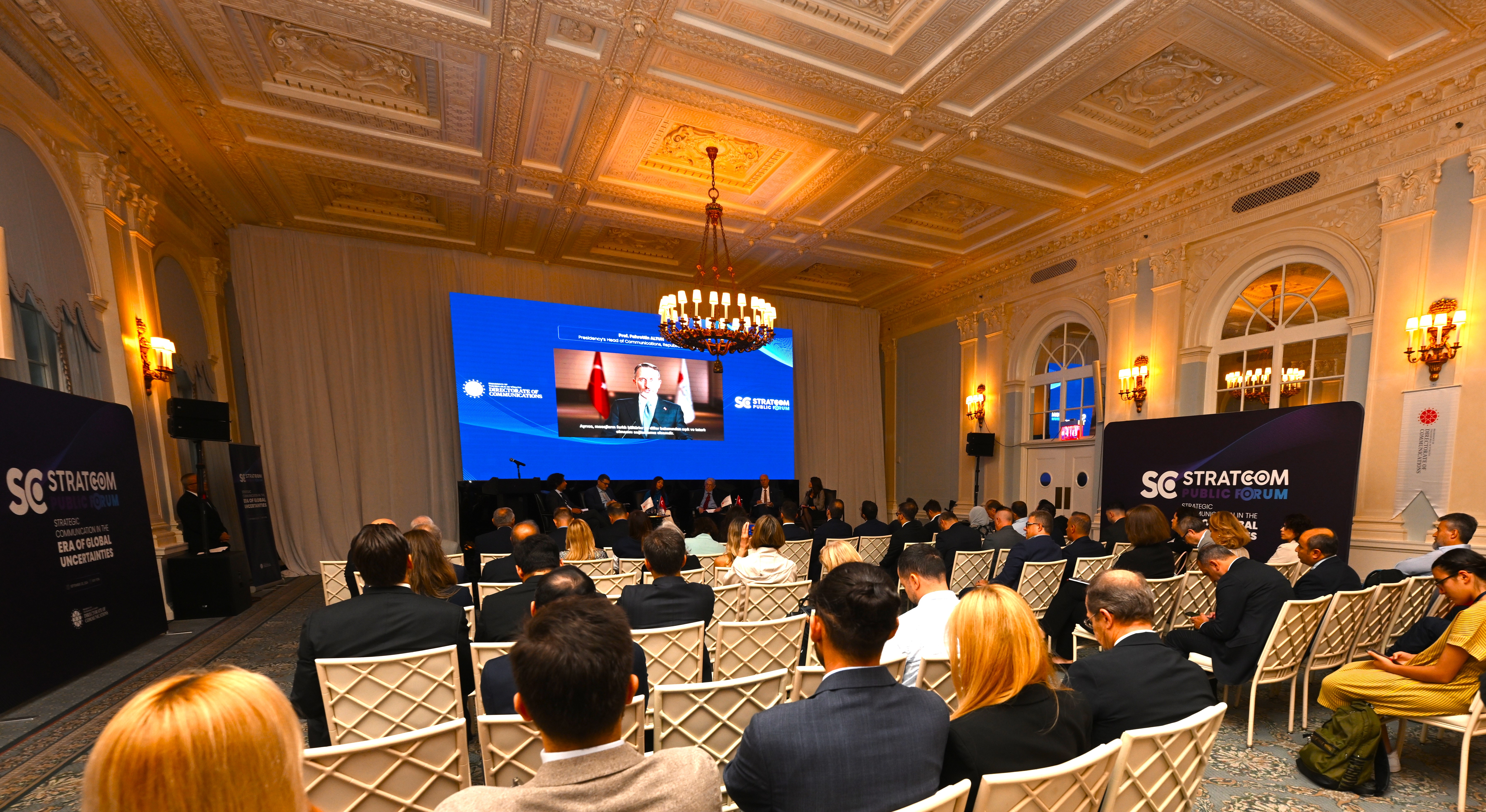
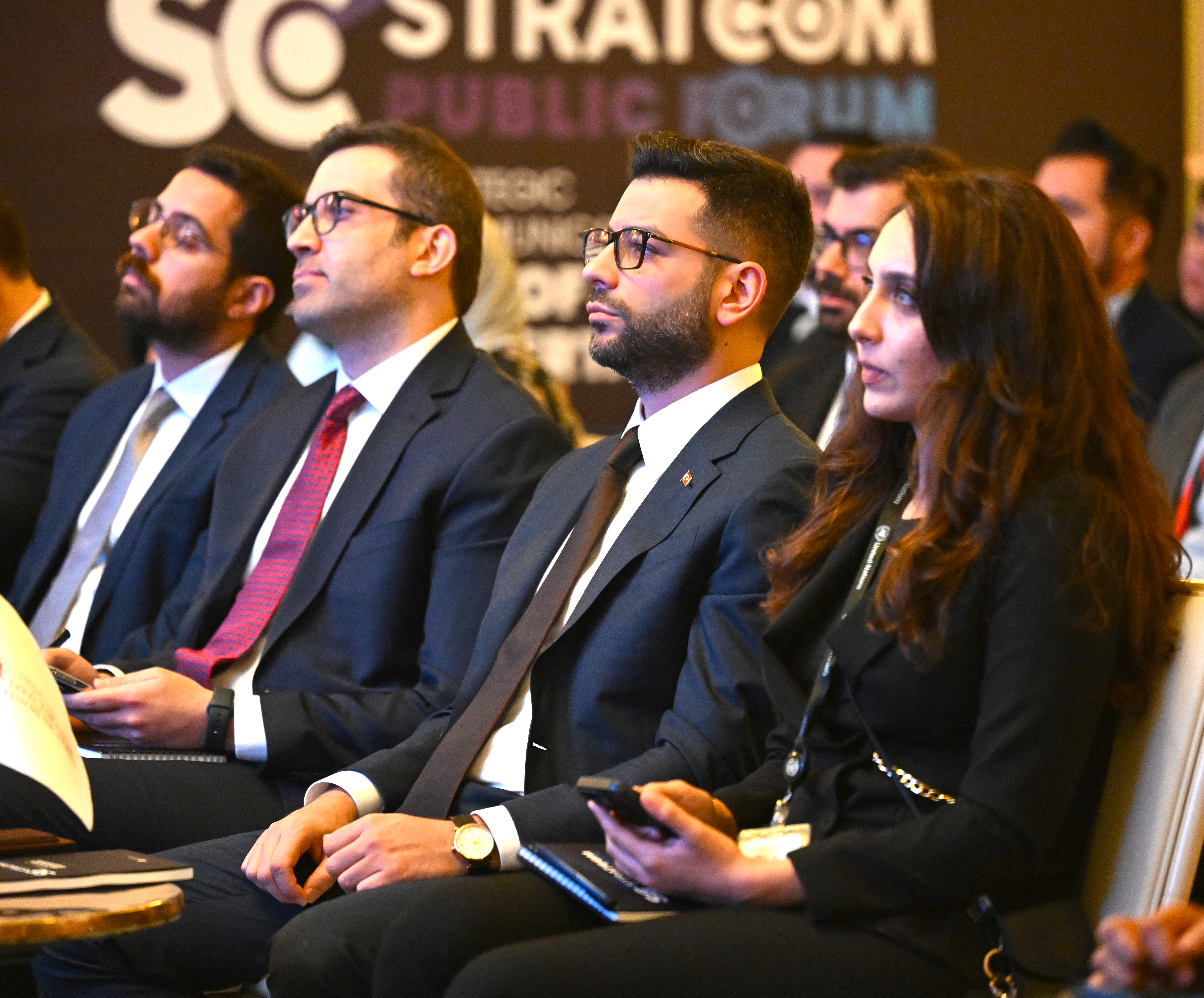
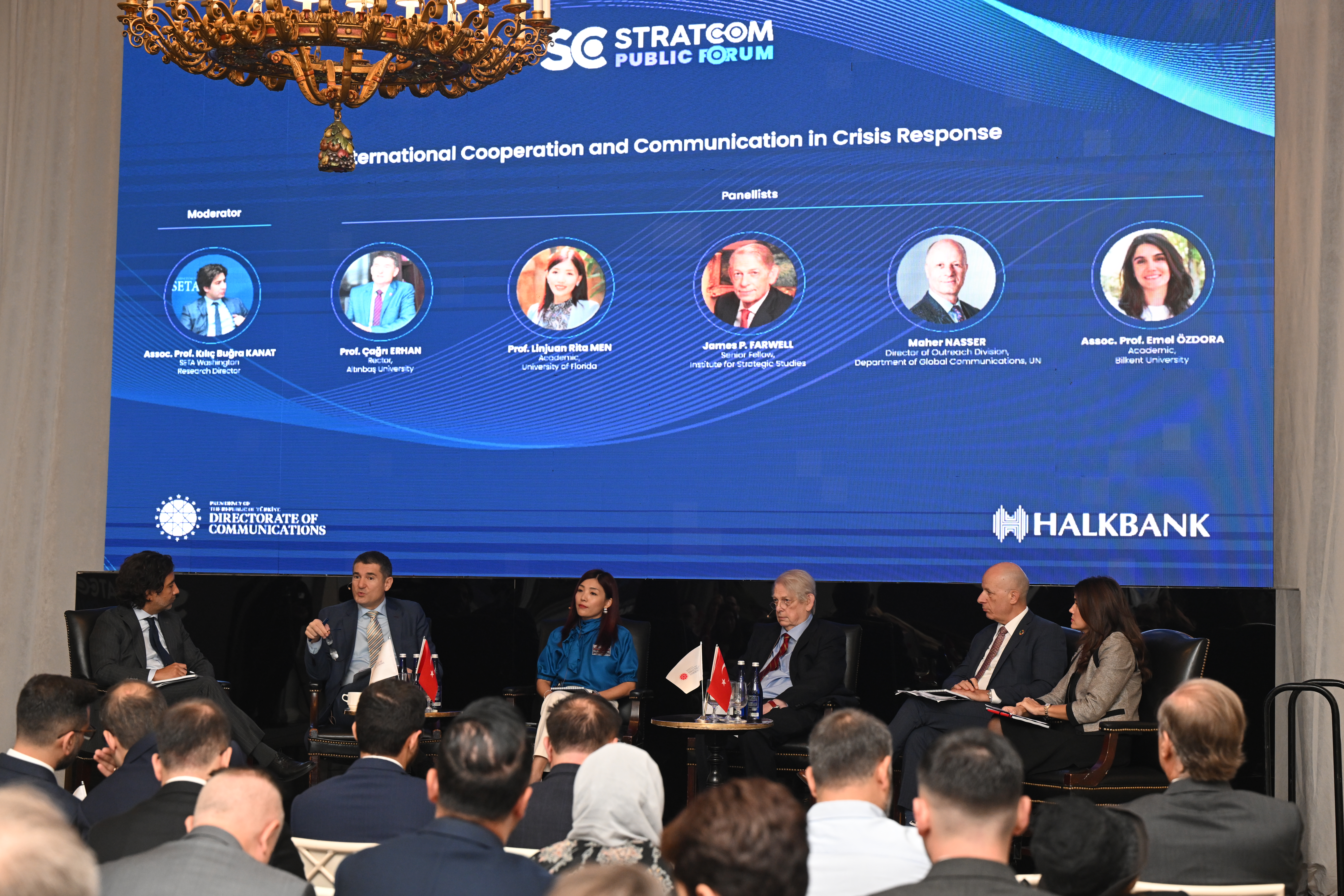
"Stratcom Public Forum", the first forum of the International Strategic Communication Summit (Stratcom Summit) overseas, was organised by the Presidency's Directorate of Communications in New York ahead of the United Nations General Assembly.
The forum, where Altun addressed the participants via video message, was attended by strategic communication experts from international organisations, civil society organisations, academics, public and private institutions and media representatives.
Pointing out that the forum will concentrate on international cooperation and communication in crisis response, Head of Communications Altun stated that in an era in which natural disasters, pandemics or political conflicts transcend borders, it is essential to coordinate responses regionally and globally.
Pointing out that establishing an effective coordination and communication process remains a significant challenge as the need for cooperation is evident, Head of Communications, Altun, stressed that one of the most important issues we must address is the complexity of coordinating the efforts of diverse international actors.
Stating that in any major crisis, governments, international organisations, non-governmental organisations, and private sector entities all try to work together, Head of Communications Altun noted that despite their shared goals, they might differ in priorities, organisational structures, and operational methods.
Head of Communications Altun stated that these differences often lead to inefficiencies and waste of resources when they are not coordinated, and he went on to say:
"To overcome these obstacles, we must establish robust frameworks for collaboration before crises emerge. We need to move beyond crisis-driven coordination. We must create lasting partnerships where expectations and processes are clearly defined. For instance, existing multilateral and intergovernmental mechanisms provide a foundation, but they must be adjusted to include new actors and emerging technologies."
"Every disaster results in communication breakdowns"
Highlighting the importance of timely and effective communication in times of crisis, Head of Communications Altun stated that in times of crisis, people at risk turn to communication channels because they are desperate for any information. In those times, identifying the right channels to send informative and accurate information becomes truly critical.
Emphasising the need for clear and consistent messages across different cultures and languages, Head of Communications Altun said: “Just as every disaster brings new challenges and it also results in communication breakdowns for different reasons. Local and cultural realities and linguistic differences can play a significant role in how we convey information. More importantly, it can determine how messages are received by people at risk. I believe that we must be prepared for these types of complexities."
"Pre-established channels of communication become critical"
Pointing out that one of the key challenges is to ensure that communication reaches all affected parties, including those in remote or digitally isolated areas, Head of Communications Altun said:
''Information overload during crises in the era of social media makes it difficult to filter accurate information from misinformation and disinformation. In this regard, pre-established channels of communication at both a local and international level become critical. Governments, NGOs, and international bodies must work together to ensure information flows smoothly and effectively.''
''Misinformation can spread like a wildfire''
Noting that social media can provide real-time updates and mobilise resources quickly, Head of Communications Altun went on to say:
''Social media can also spread misinformation like wildfire. We must ensure not only fast information flows but also accuracy. We must monitor and counteract disinformation while providing people with life-saving information. This is a big challenge for all of us since the first minutes and hours in a crisis are the most important to rely on information rapidly. These are also the times when bad actors work the hardest to confuse people and create chaos.''
Emphasising that COVID-19 and various natural disasters have demonstrated the value of swift international cooperation and the perils of disorganised efforts, Head of Communications Altun noted that identifying where these responses succeeded or faltered helps us improve future crisis management strategies.
''Relying on AI without sufficient oversight transparency or ethical guidelines could lead to problems''
Highlighting the transformative potential of emerging technologies, especially digital tools and artificial intelligence in crisis response, Head of Communications Altun said:
''For example, AI-driven data analysis allows responders to track the spread of a disease or the impact of natural disasters in real-time, leading to more information for interventions. However, with these great benefits come serious risks. Relying on AI without sufficient oversight, transparency, or ethical guidelines could lead to problems like data privacy violations, biased decision-making, or the exclusion of certain populations. As we embrace digitalisation, we must ensure that human oversight remains integral to this process.''
"We can turn it into a roadmap"
Underlining that the future of crisis response depends on our ability to increase international cooperation and effective communication, Head of Communications Altun continued:
''We must leverage both traditional methods and emerging technologies, but this requires a proactive approach that fosters partnerships, employs clear communication strategies, and fosters digital innovation. As we must meet the complexities of an interconnected and crisis-prone world, our effective response will depend on our capacity to work together. International collaboration, information sharing, and applying cutting-edge technologies thoughtfully will save lives. We can turn the lessons of the past into a roadmap for a resilient and adaptable crisis response system.''