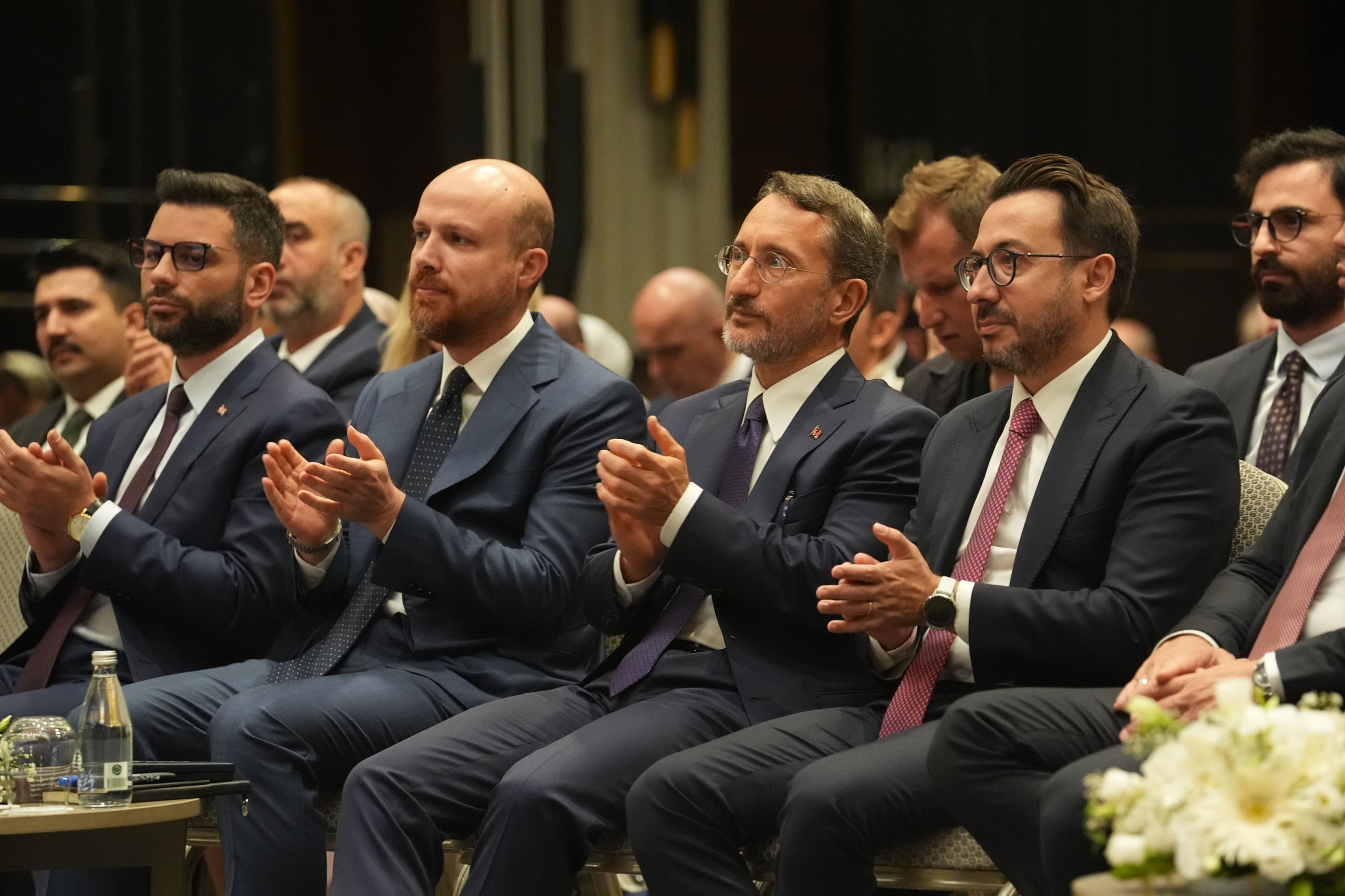
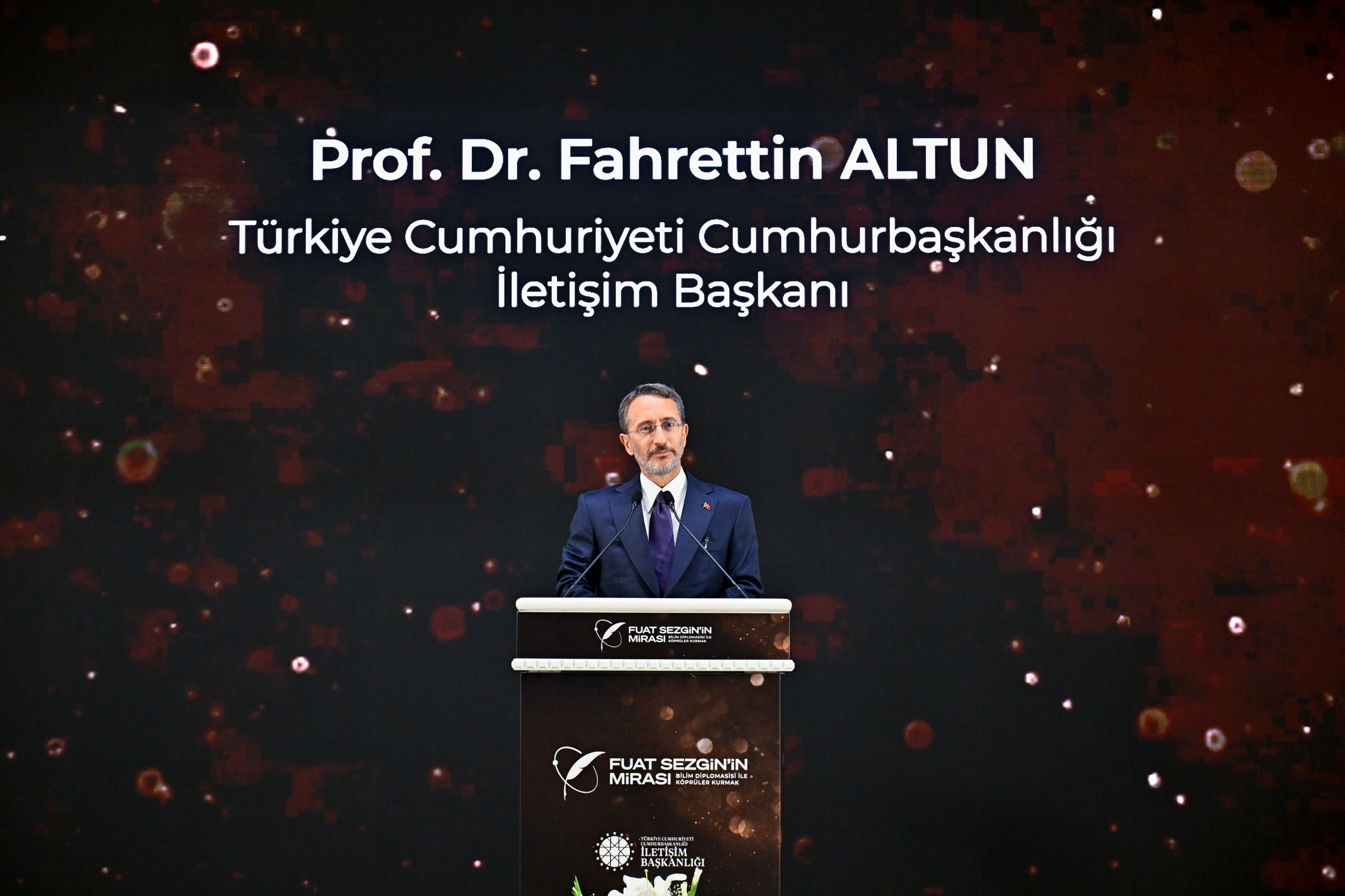
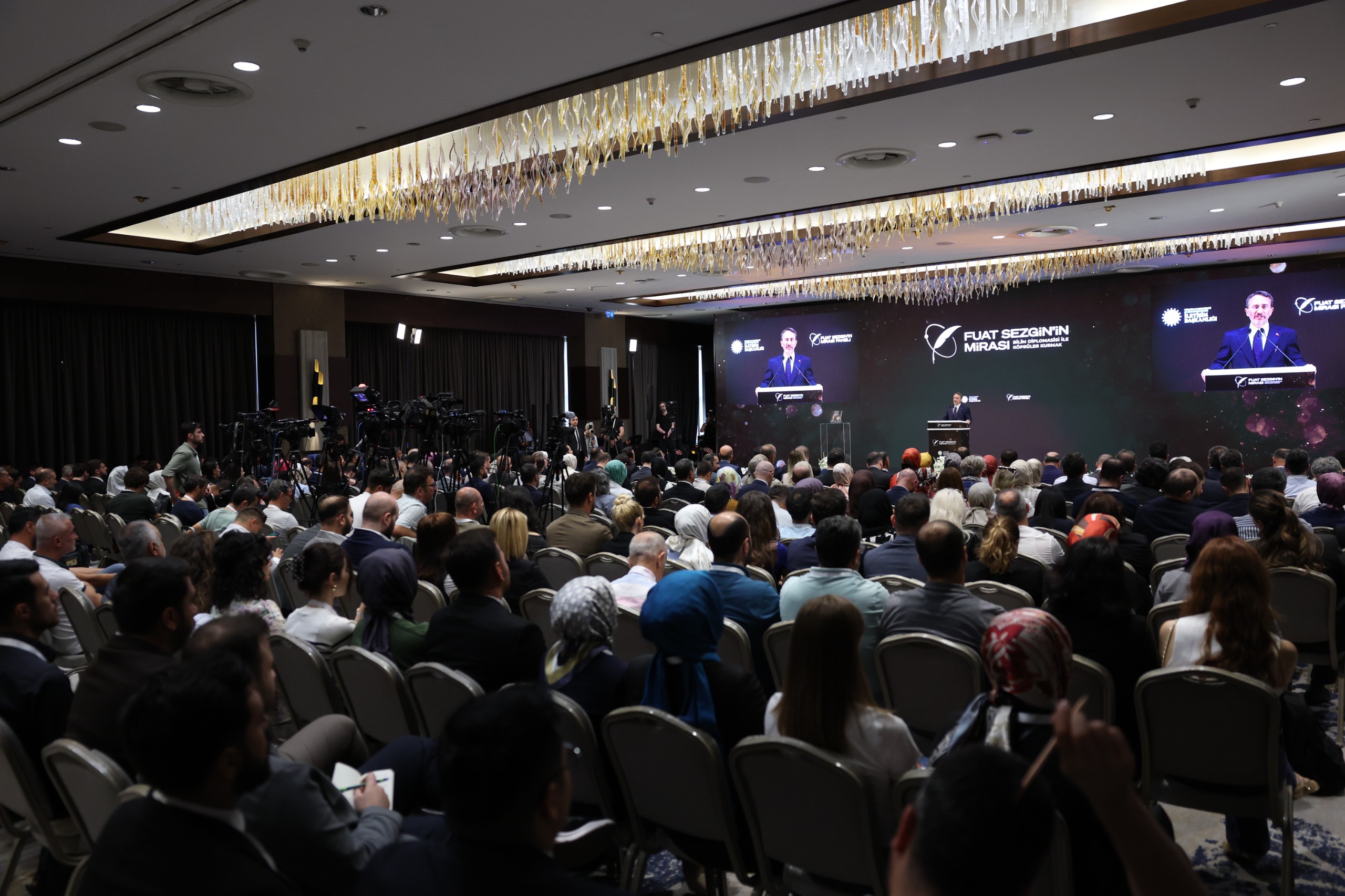
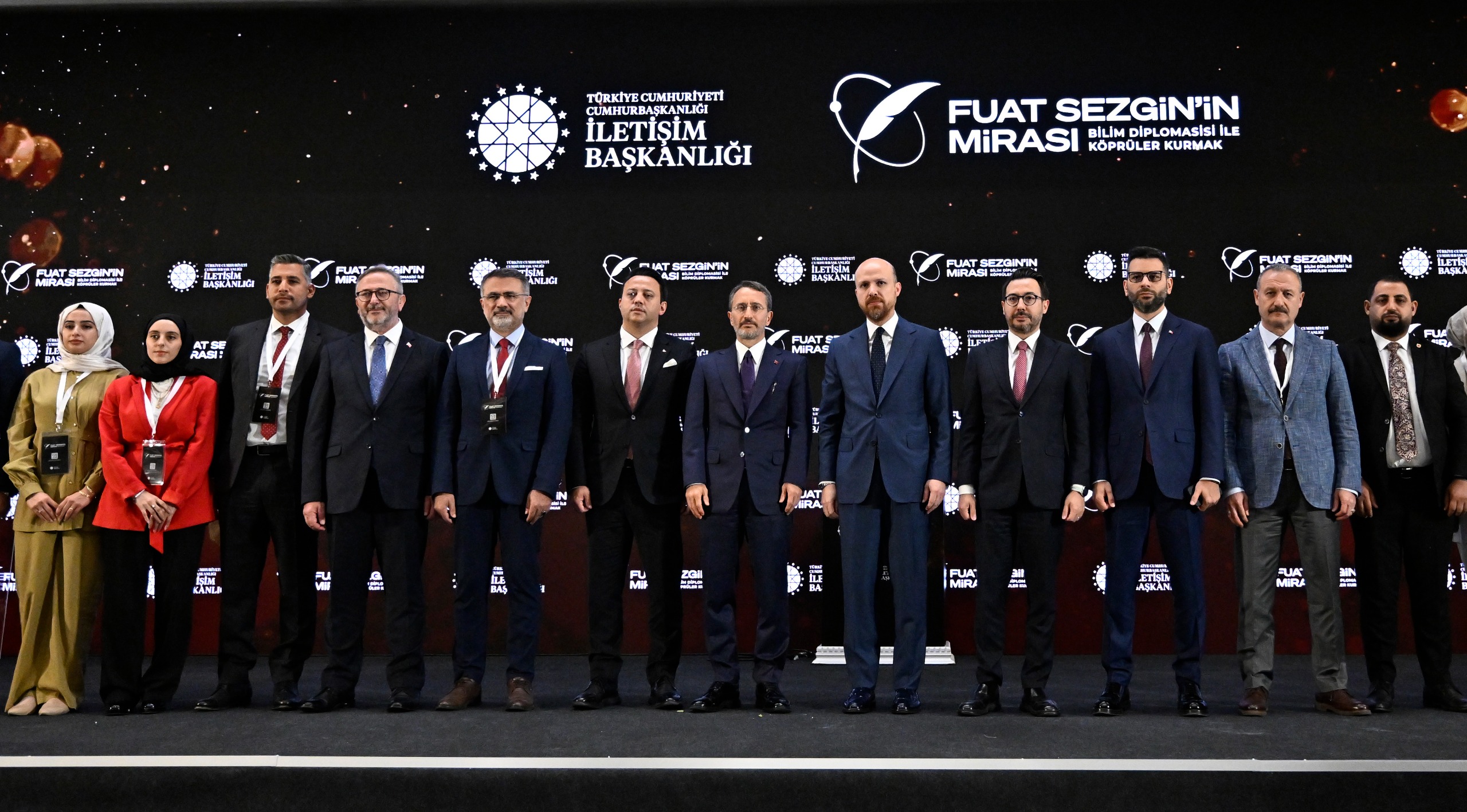
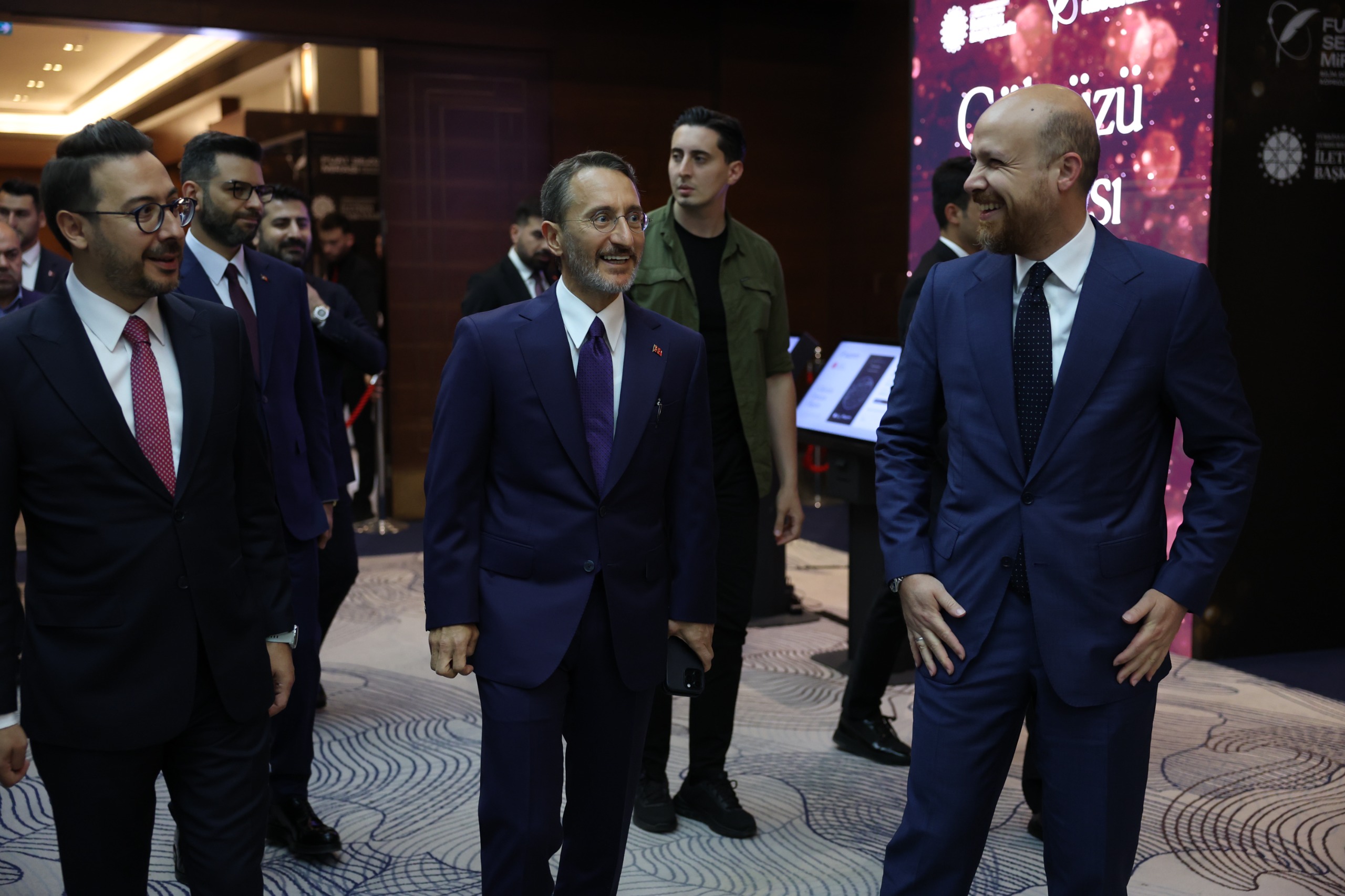
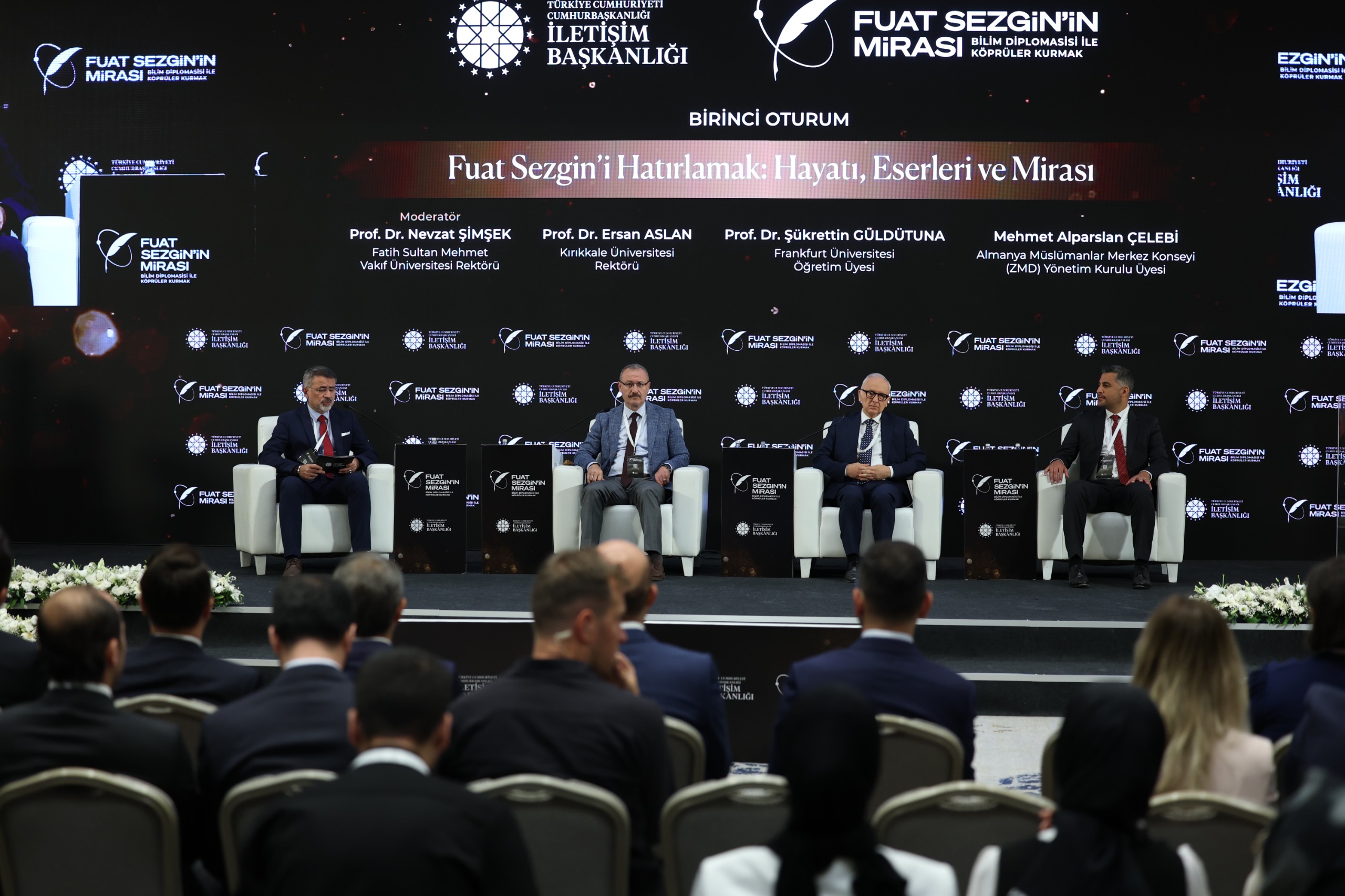
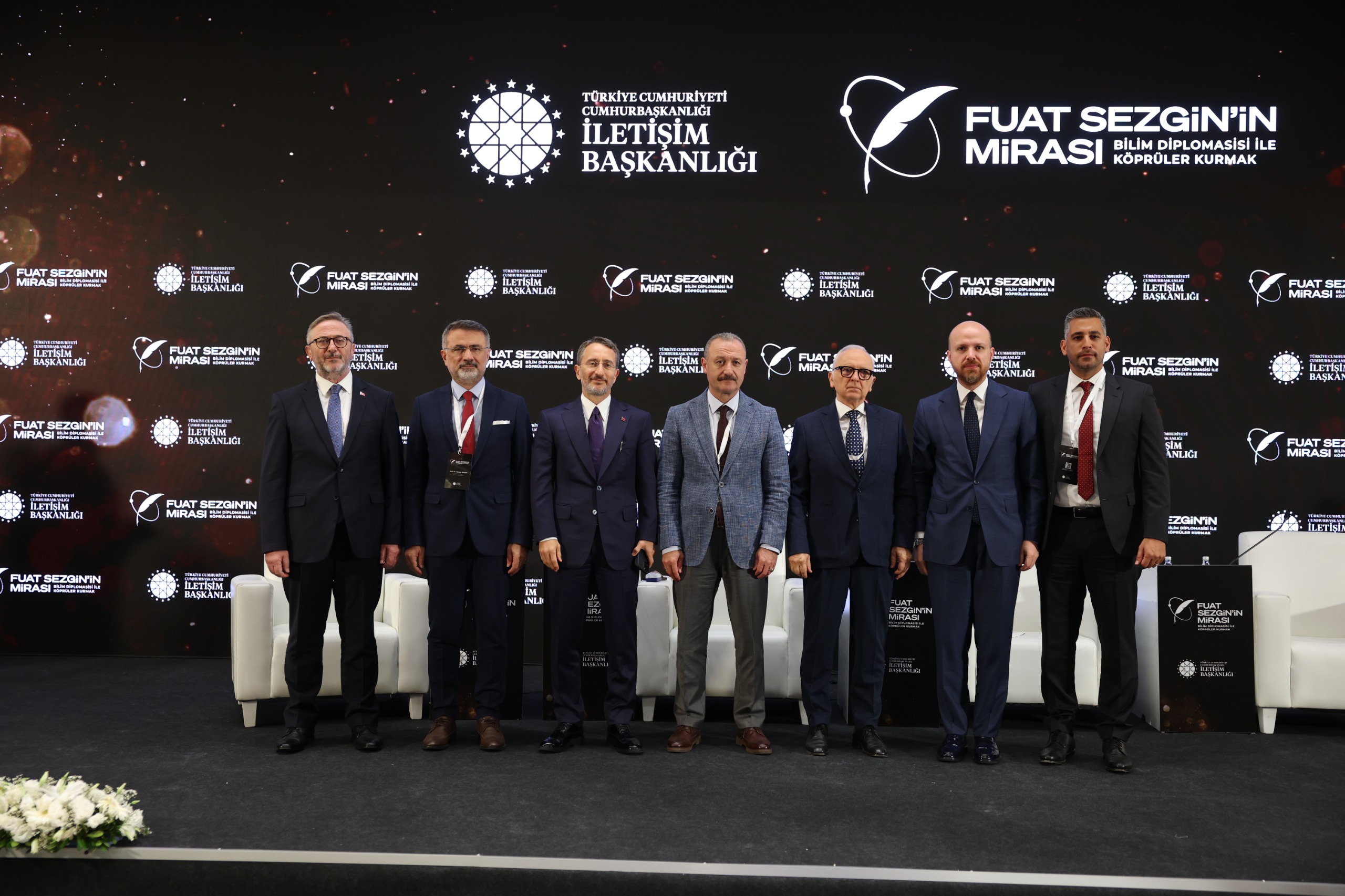
Presidency’s Head of Communications Fahrettin Altun attended the launch event and panel for the book “Fuat Sezgin's Legacy: Building Bridges through Science Diplomacy”, which was prepared for publication by our Directorate in honour of Prof. Fuat Sezgin, who devoted his life to the history of Islamic science and passed away in 2018.
In the opening remarks he delivered at the inauguration of the programme, Head of Communications Altun stated that they aim to contribute to a better understanding of Fuat Sezgin's struggle and scientific works all over the world.
Mentioning the interview with Fuat Sezgin conducted by author İhsan Fazlıoğlu and published in the Journal of Turkish Studies Literature, Head of Communications Altun said that in this interview, when asked whether Sezgin had a team that helped him in his studies in the 1940s, he replied, "There was neither a team nor money. There was nothing; there was resolve."
Head of Communications Altun stated that a mindset of unwavering resolve lies at the heart of all of Sezgin’s achievements, adding: “Fuat Sezgin’s 93-year life was marked by the tireless pursuit of realising whatever he set his mind to in the name of truth and knowledge—despite political pressure and intimidation attempts and the ideological impositions of dominant epistemic communities.
Noting that Sezgin's scholarly efforts aimed to promote the reality of Islamic sciences and to reveal the great contributions Islamic civilisation made to world science, Altun said, "While contributing to the universal scientific literature, he also served the correct understanding of Islamic civilisation. Throughout these efforts, he strove to restore the self-confidence, self-esteem, and prestige the Muslim world had come to lose. He was convinced that Muslims had lost faith in the creativity of the individual and fought hard to restore this faith."
Head of Communications Altun stated that Sezgin endeavoured to reconnect the Muslim world with the history of Islam, science, culture, and technology—fields from which it had experienced a profound rupture with the Renaissance and later through Enlightenment dogmatism—and that he achieved this not by appealing to Orientalist exoticism but by grounding it in historical and social reality.
"We are experiencing a global problem of justice"
Emphasising that the entire world is faced with a "global problem of justice," Head of Communications Altun made the following remarks:
"We are experiencing a global problem of justice; we exist in an order of oppression, in an ecosystem that runs with this problem. At the root of this situation lies the Western colonial order that has been in place since the 19th century and the 'Western dependency system' underpinning it. There are a number of ideological pillars on which this tangible situation rests. If you ask me, on top of this lies the arrogance, self-confidence and ethnocentrism the Western world assumed after the 19th century. On the other hand stands the inferiority complex and the psychology of defeat that have gripped the Muslim world from that era to the present day. This asymmetrical emotional state has resulted in the legitimisation of exploitative relations imposed on the Muslim world. Professor Fuat Sezgin's struggle, his journey of knowledge, is the struggle to deconstruct this distorted understanding, this paradigm."
Underlining that Sezgin has attained very serious achievements in this endeavour, Head of Communications Altun said, "He most certainly also acknowledges that the creativity in the Islamic world has been lost as of the 17th-18th centuries and that there has been a pause due to military, political, economic and geostrategic conditions. However, this situation does not legitimise ignoring the great scientific developments and achievements in Islamic history and civilisation, nor does it justify seeing these achievements as limited to merely transferring the so-called Greek miracle to the West through translation of the Greek heritage. On the contrary, the outstanding accomplishments of Islamic science throughout history are a critical component of the scientific accumulation of humanity and a primary source of material. This truth has been revealed in Professor Fuat Sezgin's works with meticulous attention to every detail."
Stating that "Throughout the course of Westernisation and modernisation, there have been elites who have posed enquiries such as, 'How can the Islamic world progress?'" Head of Communications Altun said, "One of the significant challenges facing these elites is their detachment from the scientific wealth of Islamic civilisation, and regrettably, they struggle with self-confidence stemming from their lack of awareness of this richness."
Stating that these elites exhibit considerable hesitation and timidity while participating in the debate, "Is Islam a barrier to progress?" Head of Communications Altun remarked, "Conversely, our elites who advocate for modernisation and Westernisation have employed Jacobin methods with a sense of tranquillity, pursued solutions through a top-down modernisation strategy, and articulated prescriptions along this axis."
Emphasising that today, if the Islamic world is to fight the injustices it faces, it must first overcome the "inferiority complex" and establish a genuine connection with its roots, Head of Communications Altun said, "On this path, the contributions and efforts of Professor Fuat Sezgin will illuminate our way. In addition to all this, I would like to emphasise the following. I believe that Professor Fuat Sezgin's work is very vital when dealing with one of the most important types of racism that plagues the world today, which is called 'Islamophobia' but manifests itself as 'anti-Islam'. Islamophobia is a new form of racism that is on the rise all over the world. In this new type of racism, there is an approach that equates Muslims and Islam with fanaticism, bigotry, and reactionism."
Stating that Sezgin's research and works serve as a guide to combat this approach with self-confidence, Head of Communications Altun continued as follows:
"Regrettably, the former Türkiye brought sorrow to Professor Fuat Sezgin. But thankfully, the New Türkiye, institutionalised under the leadership of our President Recep Tayyip Erdoğan, embraced Professor Fuat Sezgin. Regrettably, the former Türkiye expelled Professor Fuat Sezgin, an exceptional intellect, from the university following the May 27th coup d'état. Conversely, the new Türkiye offered a more conducive atmosphere for Professor Fuat Sezgin to pursue his scientific endeavours during the final years of his life and made efforts to preserve and enhance his scientific legacy following his passing. Our President declared 2019 the 'Year of Prof Fuat Sezgin.'
Emphasising that the Prof. Fuat Sezgin Foundation for the History of Islamic Science is dedicated to ensuring that Sezgin's works are read more and comprehended more effectively, Head of Communications Altun noted that numerous institutions, particularly Fatih Sultan Mehmet University, are actively contributing to this effort and that they are also fully committed to this cause.
The programme was attended by Bilal Erdoğan, member of the Board of Trustees of the Prof. Fuat Sezgin Research Foundation for the History of Islamic Science (İBTAV), Serdar Karagöz, Chairman of the Board and General Manager of Anadolu Agency (AA), İBTAV administrators, academics, writers, and representatives of the intellectual world.
Following the opening address, Head of Communications Fahrettin Altun visited and reviewed the exhibitions titled “The Heritage of Civilisation: Examples from the History of Islamic Science” and “A Life Dedicated to Science”, both curated by our Directorate. He then attended the panel session held as part of the programme.