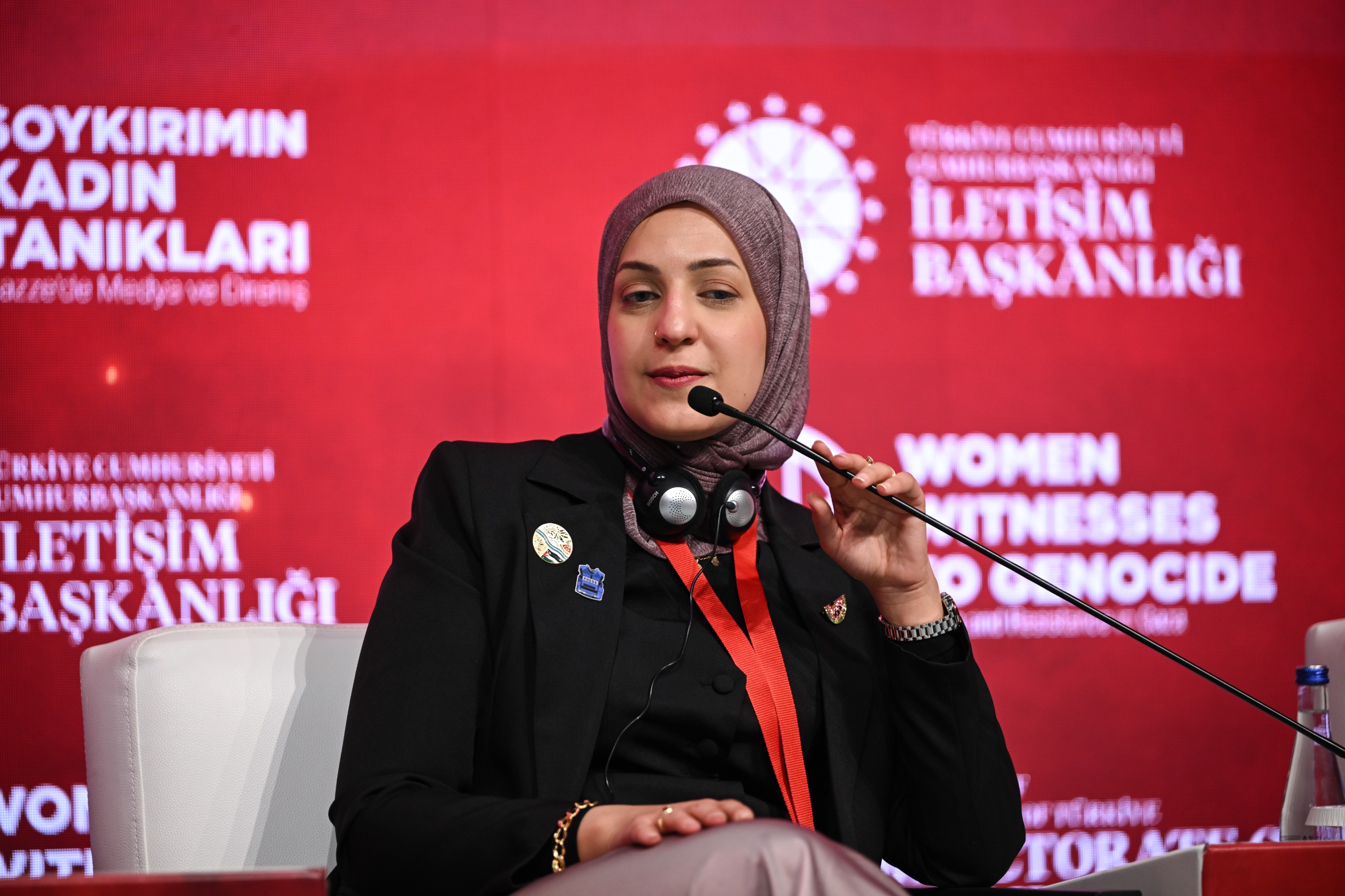
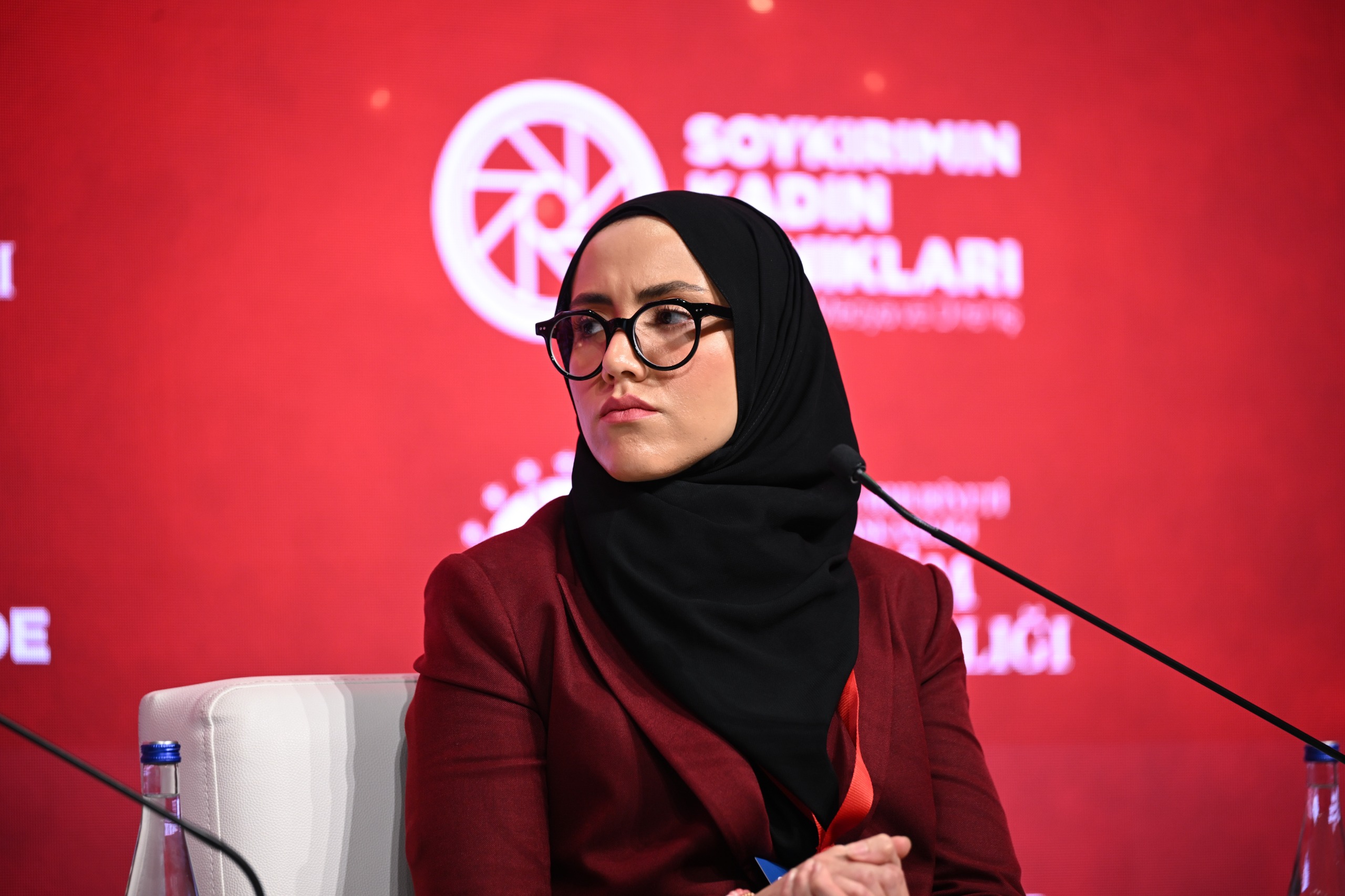
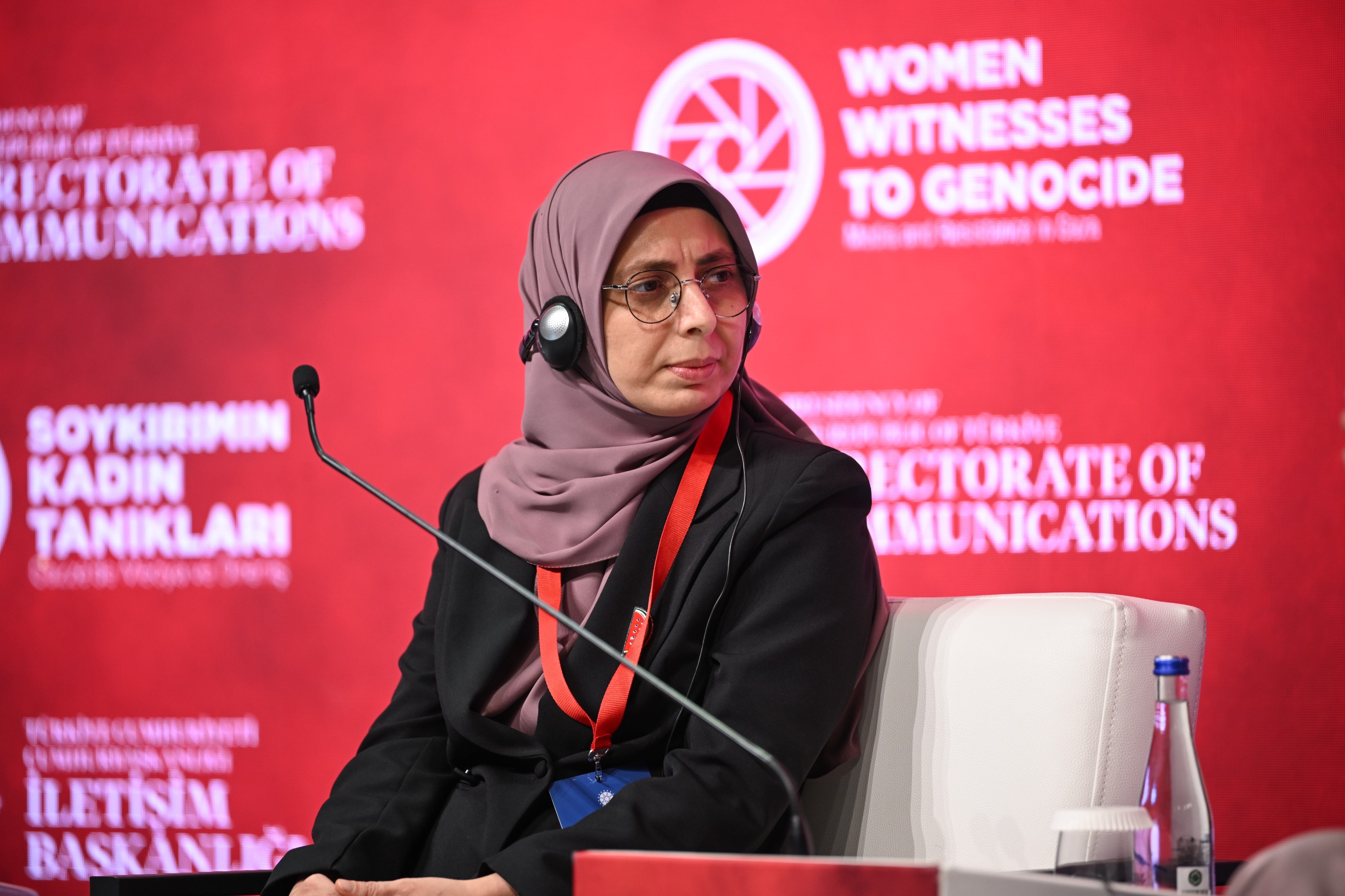
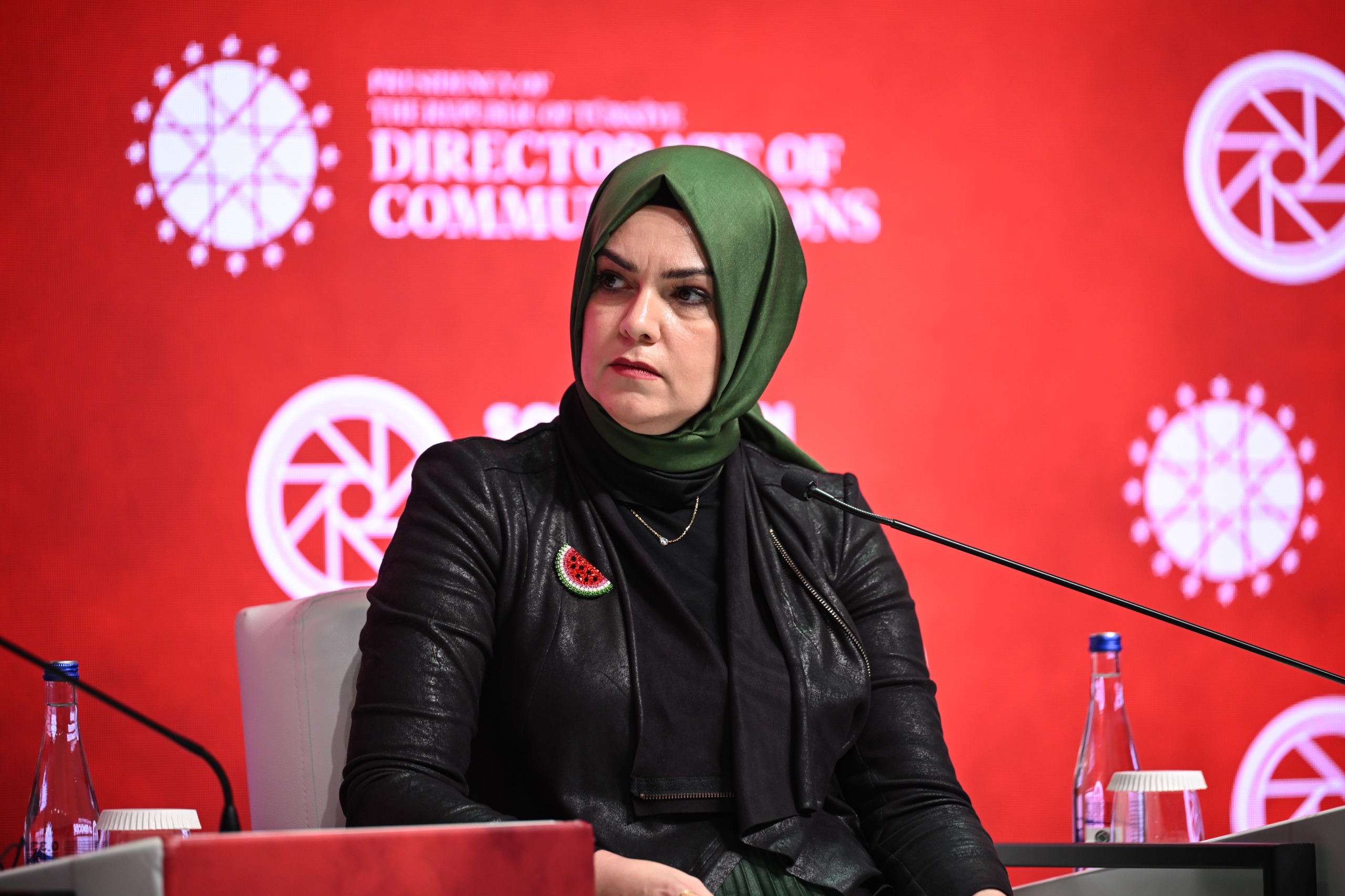
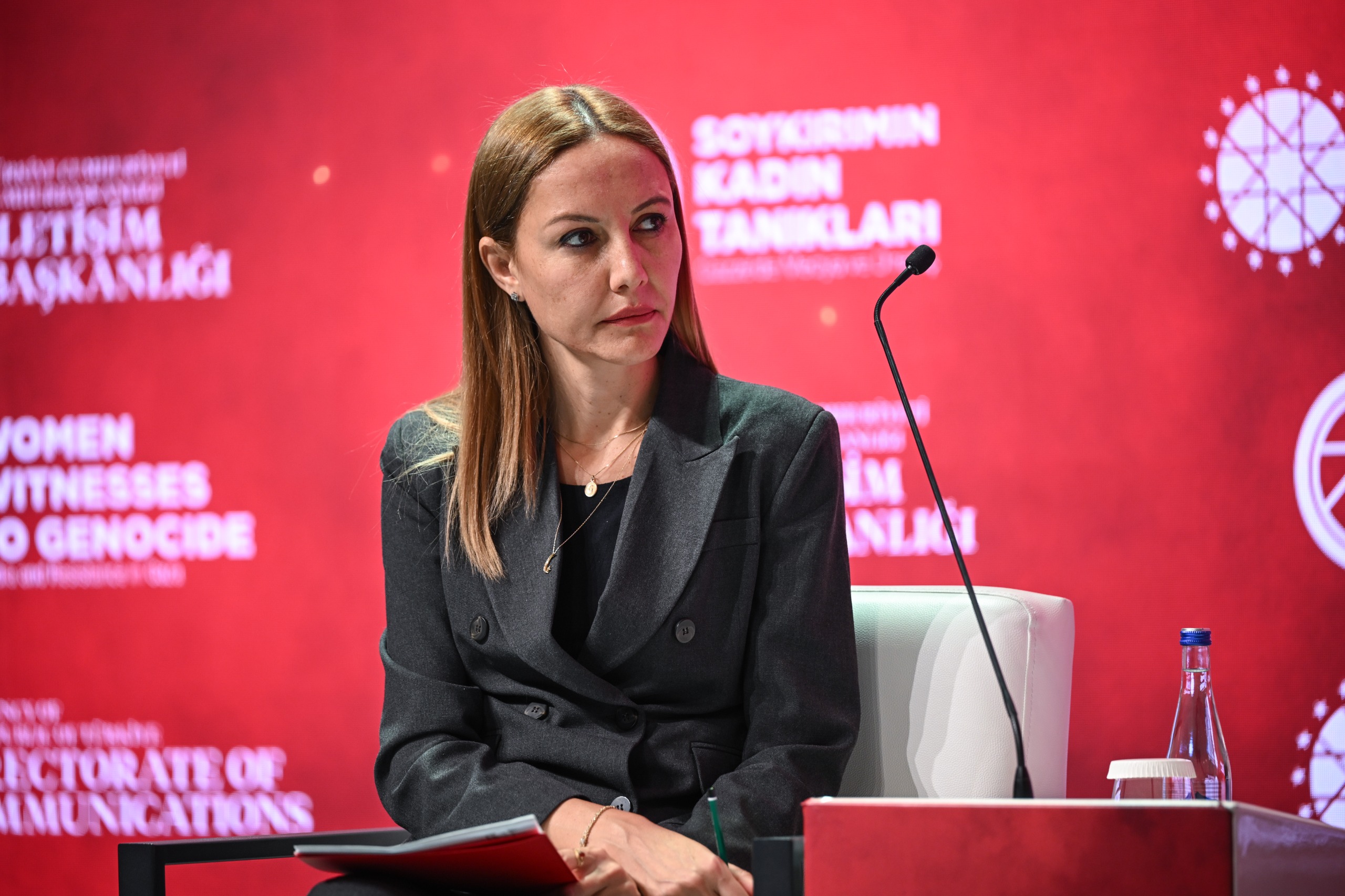
As part of the “Women Witnesses to Genocide: Media and Resistance in Gaza Panel”, organised in Ankara by the Presidency's Directorate of Communications, a session titled “Voices Defying Global Silence: The Resistance of Women Journalists in Gaza” was held.
The first session, organised at the Directorate of Communications, was moderated by Gözde Kirişçioğlu (PhD), International Media Coordinator at the Presidency’s Directorate of Communications.
The speakers at the session were Humanitarian Aid Coordinator and Director Tülay Gökçimen, Journalist Youmna El Sayed, Al Jazeera Producer Hind Touissate, and Yeni Şafak Journalist Ayşe Betül Kayahan.
El Sayed stated that she works as a woman journalist in Gaza and emphasised that, despite being a basic right, journalists in Gaza do not have the right to safety.
Pointing out that international journalists are banned from entering the Gaza Strip, El Sayed said, “Journalists are being prevented—deliberately prevented—from being the eyes and ears of the world in Gaza.”
El Sayed stressed that efforts are being made to suppress the truth of the atrocities, yet journalists in Gaza continue to stand firm.
She noted that this policy has been in place since the first week of the war and said she wants the world to hear what is happening in Gaza.
El Sayed shared that while working, she constantly finds herself asking, “Will I survive? When I return home, will I find my children as I left them?” She recounted being called by the Israeli army, being told that her house would be bombed if she did not leave, and highlighted that her family was inside the house at the time of this conversation.
“If we cannot properly convey Gaza, what is happening will fade into a weak and forgotten memory”
Gökçimen, who stated that she worked in Syria for 13 years, offered feedback on the teaser for the documentary she created on Syria.
"Those who watched the trailer said they understood why the Syrian people left their country," Gökçimen said, referring to the remarks made following the trailer's release.
According to Gökçimen, she saw firsthand how people were compelled to abandon their lands, and after 14 years, people had a greater understanding of the causes of this migration.
Gökçimen expressed fear that "if we cannot properly convey Gaza, what is happening will fade into a weak and forgotten memory," citing her experience as a mother witnessing victims torn apart by cluster bombs in Syria.
Gökçimen, who added that she felt responsible and duty-bound in such situations, noted that women journalists made Gaza's voice heard more powerfully and easily.
"We need to keep Palestine alive"
Touissate highlighted the challenges journalists in Gaza have encountered over the last two years, claiming that she witnessed the deaths of her colleagues personally.
Touissate described the difficulty she encountered when receiving the news of her colleagues' deaths, noting:
"You keep asking yourself the same question over and over, wondering if there’s a mistake; you think, ‘Maybe they’re only injured,’ and you pray to God that it isn’t true."
Touissate emphasised the importance of keeping the Palestinian issue alive, saying, "We need to keep Palestine alive. We need to accomplish this through panels and exhibitions. I am proud that we have colleagues organising these events."
In her anecdotes about the life of Palestinian journalist Najib Nassar, Kayahan said that Nassar's writings at the end of the 19th century contained warnings about Zionism.
Kayahan stated that Najib Nassar and his wife, Sadhij Nassar, battled against Zionism, and Nassar created the women's page in the newspaper. She also touched upon his studies in this field.