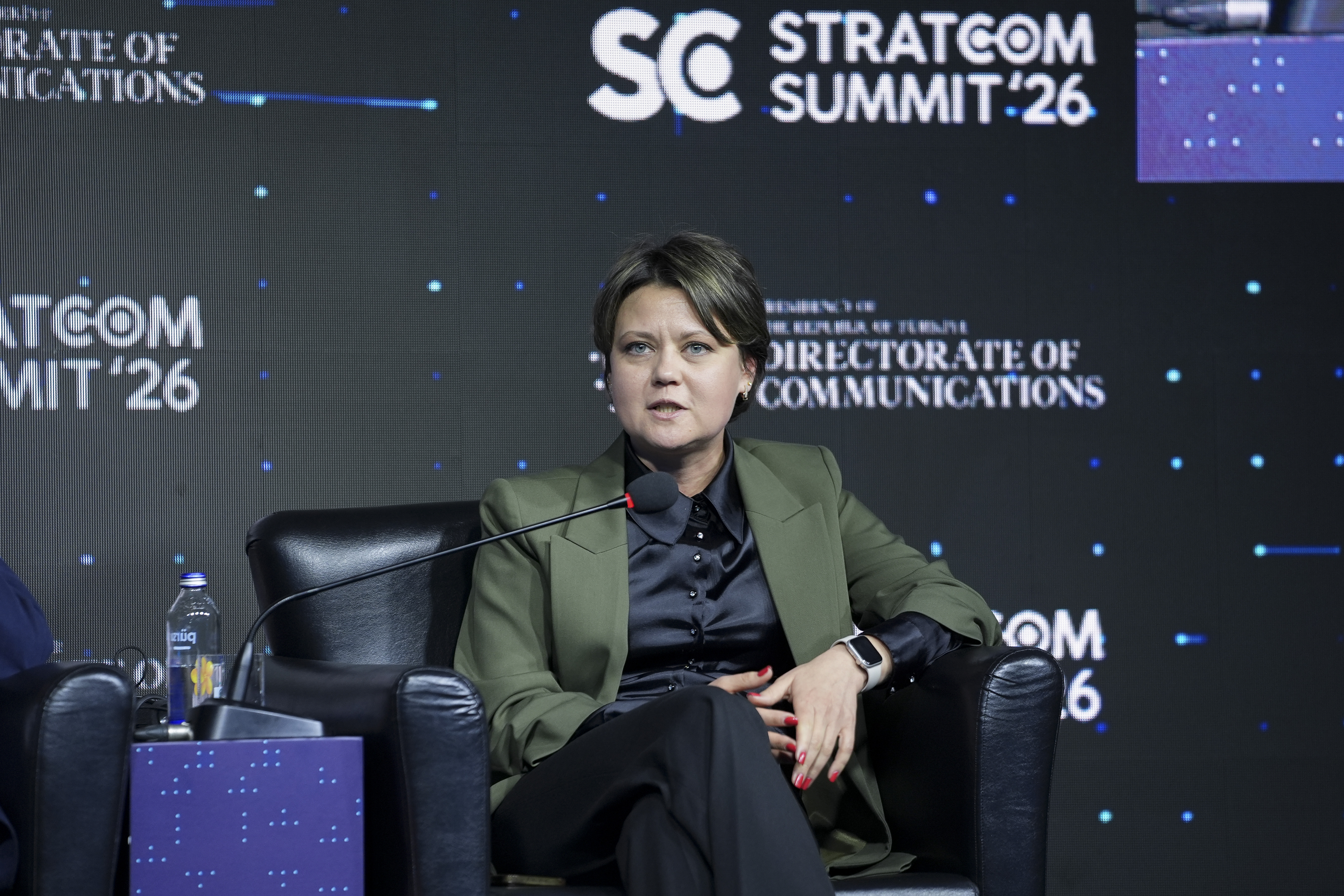
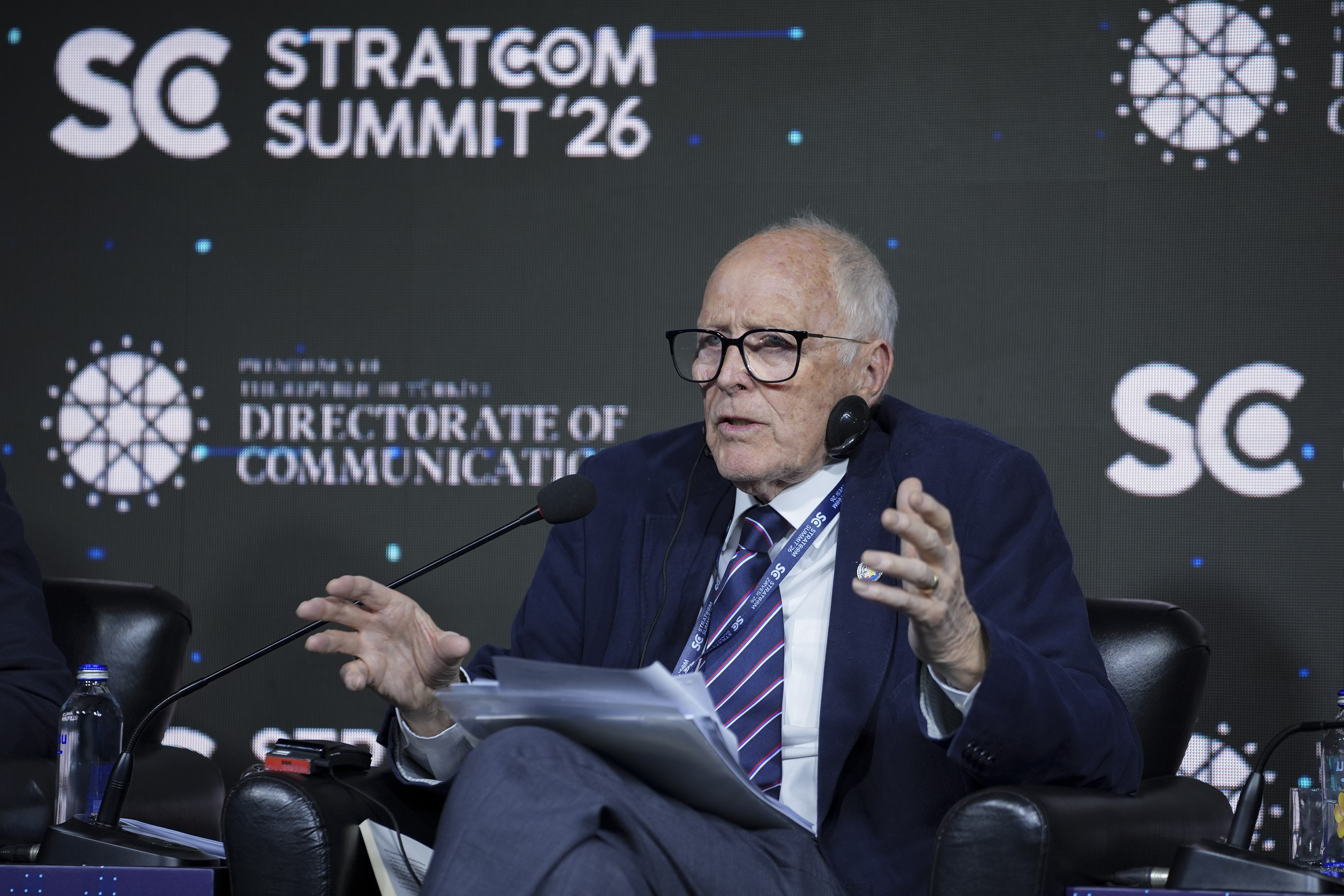
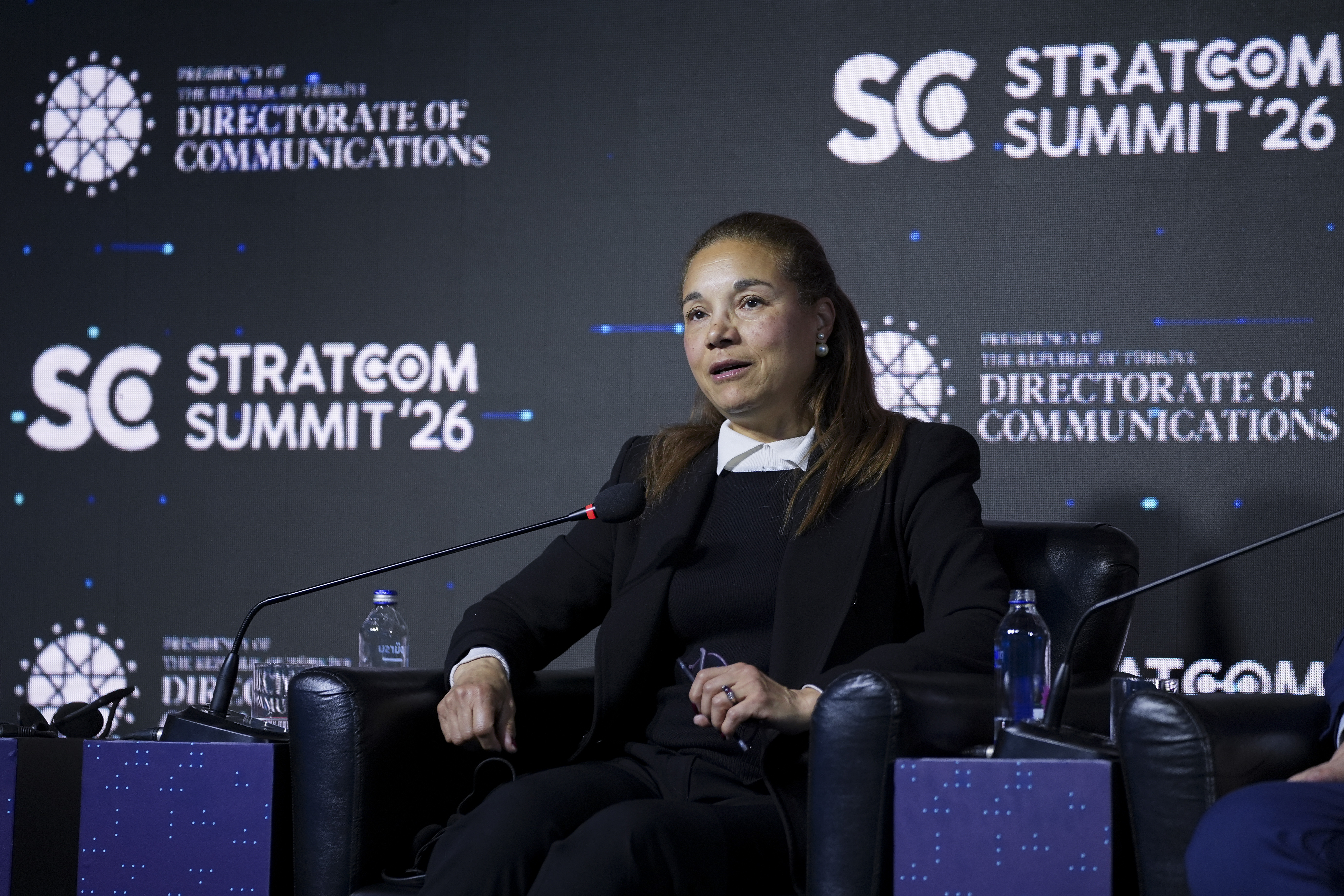
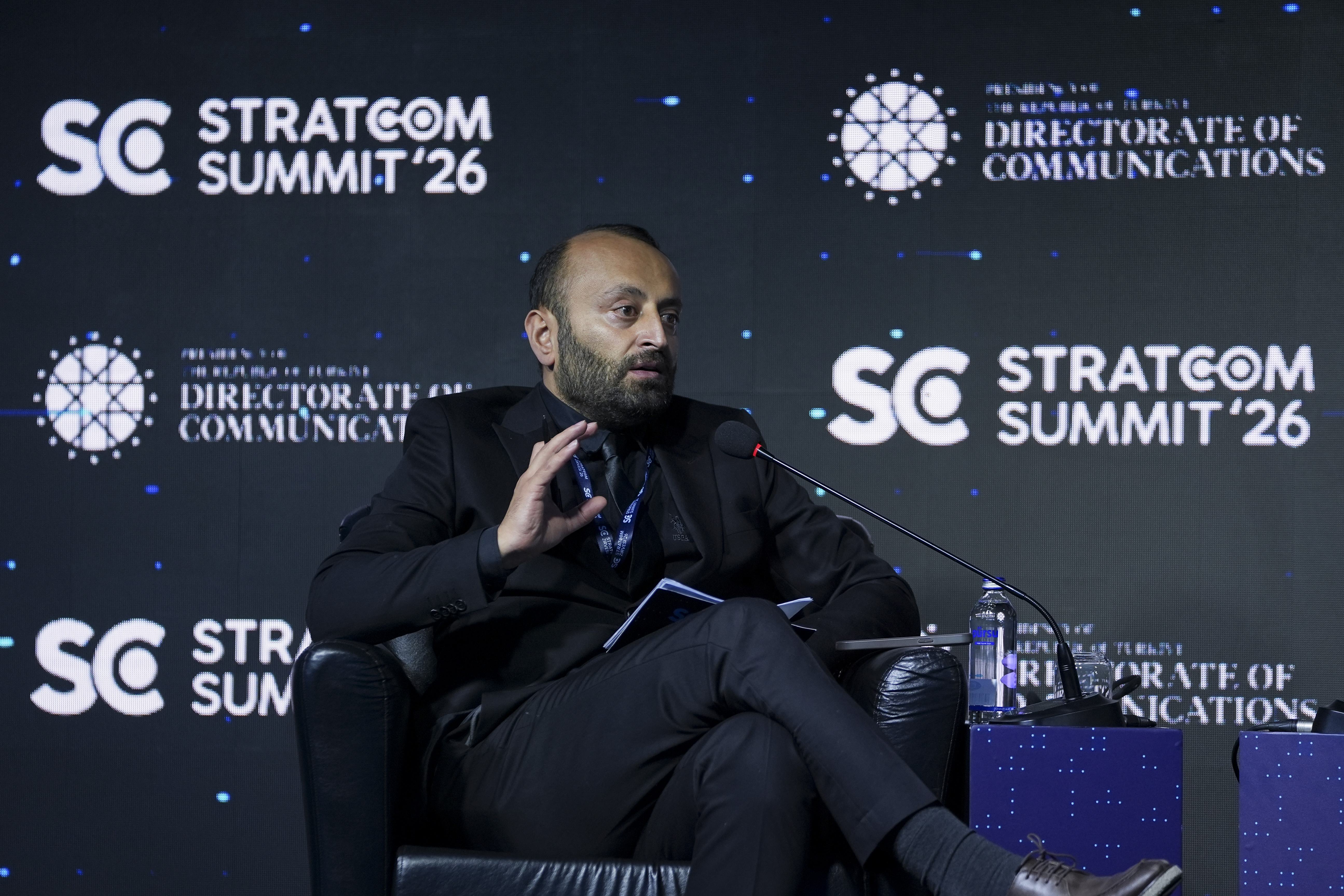
Held under the theme “Disruption in the International System: Crises, Narratives and the Search for Order,” the International Strategic Communication Summit (STRATCOM 2026) featured a panel titled “Voices of the Narrative: The Struggle for Truth on the Ground.”
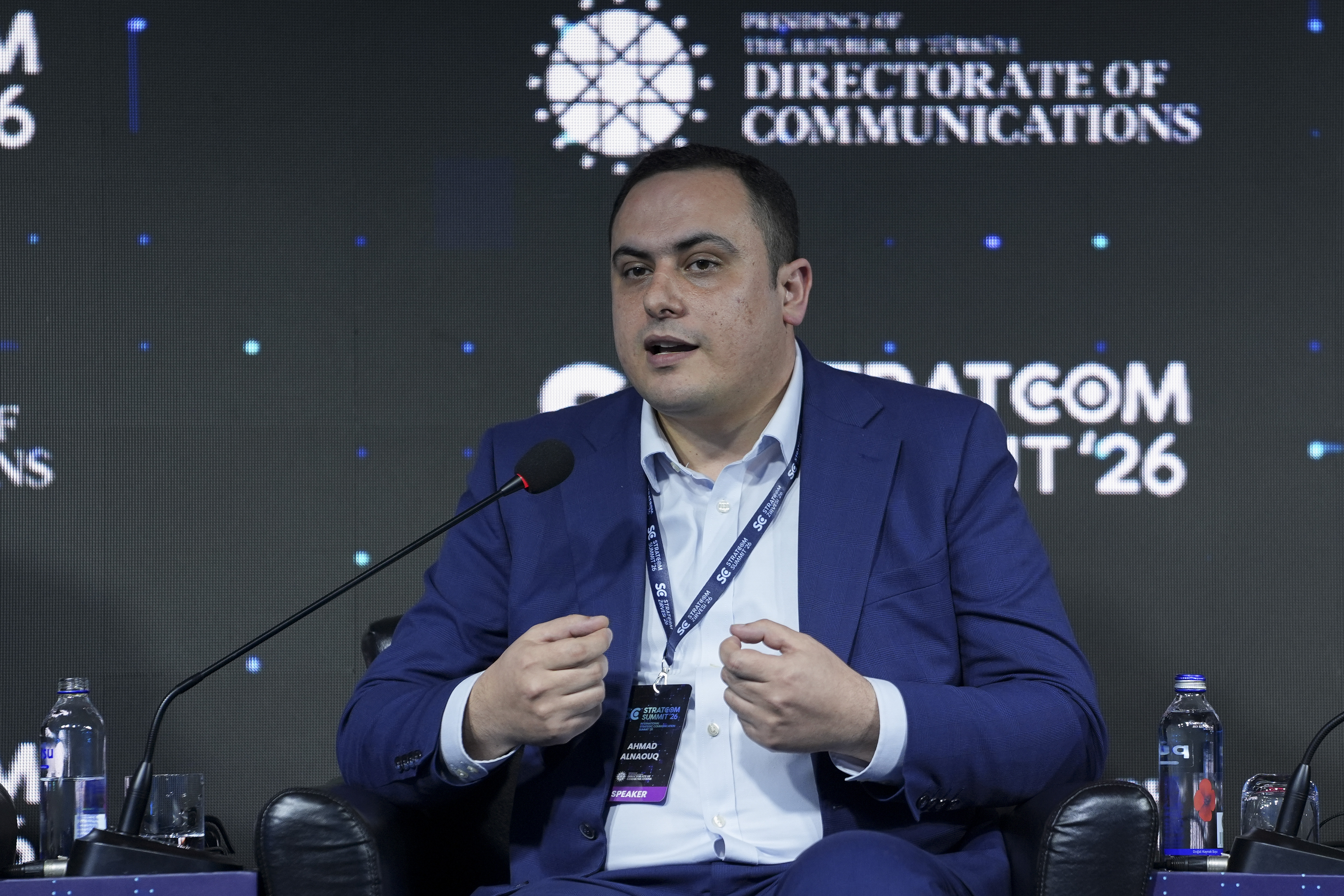
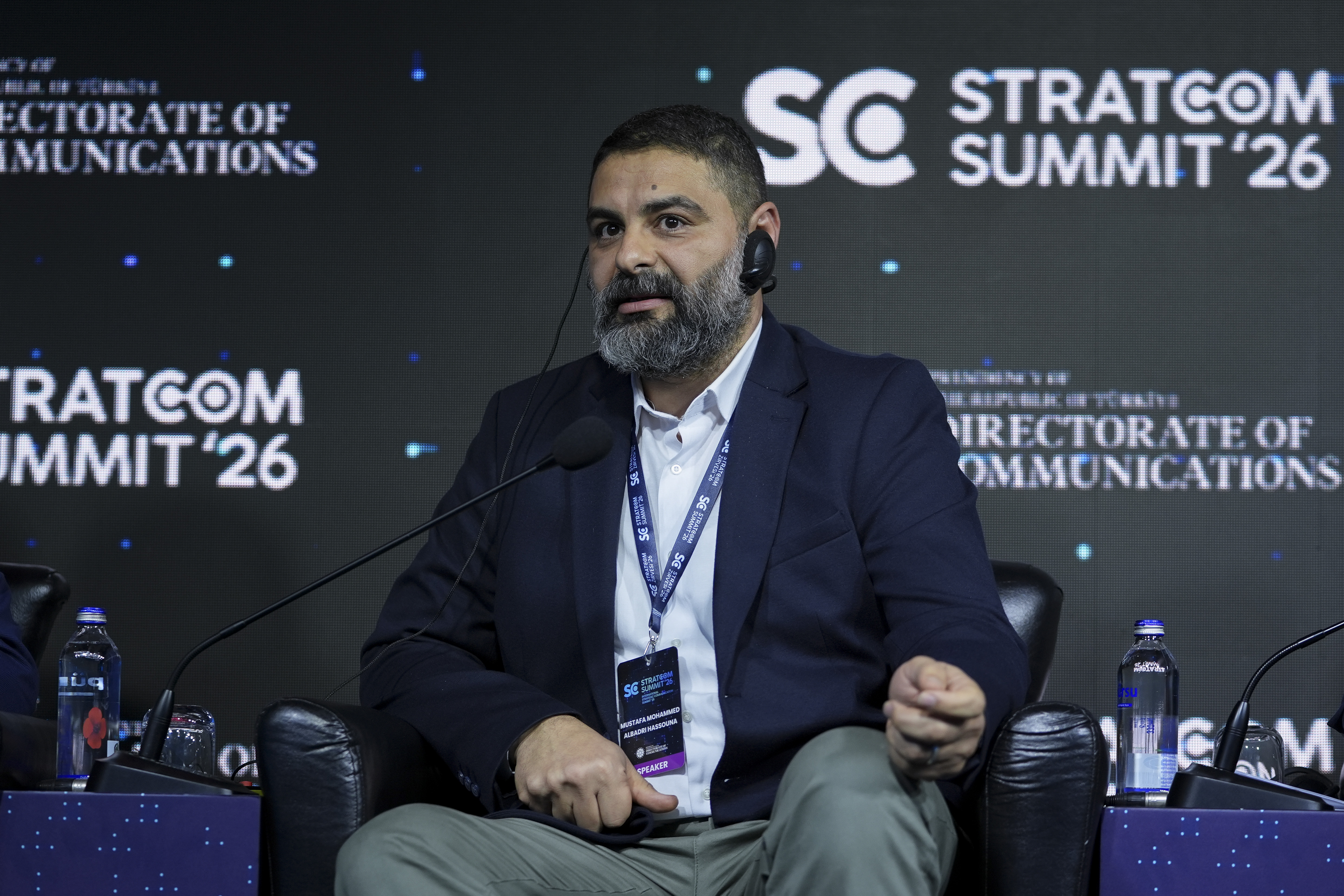
The panel featured Ahmad ALNAOUQ, Journalist and International Human Rights Advocate from Euro-Med Human Rights Monitor, Catherine FIANKAN-BOKONGA, President of the Association of Accredited Journalists at the UN (ACANU), Mustafa Mohammed Albadri HASSOUNA, Senior Photojournalist from Anadolu Agency, Chris WHITE, Freelance Journalist from the UK, and Yevgeniya GABER, Senior Fellow at Atlantic Council as speakers.
The panel titled “Voices of the Narrative: The Struggle for Truth on the Ground,” held as part of STRATCOM Summit 2026, was moderated by Turgut Alp BOYRAZ, MENA News Editor at Anadolu Agency.
Alnaouq stated that being from Gaza, as well as his identity and ethnicity, were not choices he made, saying: “Since I was born in 1994, I have witnessed nothing but horror, pain, suffering, occupation, killings, losing my brother in 2014, and my mother in 2020. I have never had any say over who I am. I did not choose Israel’s occupation of Gaza. I did not choose to live in Gaza from the very beginning.”
He noted that he decided to become a journalist after observing how the media covered the Palestinian issue and began his career at the age of 19. “This was the complete dehumanisation of the Palestinian people; it did not begin on 7 October. Long before that, from the very outset of this occupation—what they call this conflict—the Palestinian people have always been dehumanised and subjugated,” he said.
Highlighting his experience as a Palestinian journalist, Alnaouq stated that he covered the peaceful protests held by hundreds of thousands of people over nearly two years in 2018–2019 against occupation and blockade, noting that these demonstrations were met with violence by Israeli forces.
He further underlined that while covering these events, Western media often portrayed Palestinians as aggressors and Israelis as acting in self-defence, adding that Palestinians were not only killed but also misrepresented.
Emphasising that there can be no justification for the killing of his family and thousands of others, Alnaouq stated that Palestinian deaths have been reduced to mere statistics.
“We were already suffering due to the blockade before the 7 October attacks”
Hassouna noted that in the modern era, photographs captured by photojournalists play a critical role in shaping media narratives, describing photographic frames as both a major challenge and a means of conveying truth to the public during times of war.
He stated, “The International Criminal Court used photographs taken by myself and some colleagues as visual evidence of crimes committed, thereby making images an essential part of narrative accounts.”
Addressing the hardships of his profession, Hassouna emphasised that photojournalists often pay the ultimate price for their work, noting that more than 260 journalists have lost their lives in this context.
Emphasising that living in conflict environments is not a choice but a matter of fate, and that he was born into such conditions, Hassouna stated: “War has become routine for us.” One ends, another begins. The attacks of 7 October drew global attention, but we were already suffering due to the blockade before that. Even before the war, innocent people were dying.”
Hassouna added, "You must protect your life while taking photographs. There is no fuel, no vehicles, yet you must reach the crime scene. There are no roads. Even the geography of the area has been altered. Internet outages are another major challenge,” highlighting the obstacles in transmitting images to the world amid ongoing attacks.
He added that his work goes beyond journalism and constitutes a humanitarian duty.
The Reality of Information and Diverging Perspectives
Gaber stated that Ukrainians seek peace and stability in the region, noting that while Russia claims to advocate for peace and negotiations, it continues to carry out attacks on Ukrainian cities.
Emphasising that information shapes perceptions of reality, Gaber stated that whether Ukraine receives support depends on prevailing narratives.
She further noted that Russia no longer possesses the strength it once held during the imperial or Soviet eras, underlining the importance of paying attention to realities on the ground.
White highlighted that while artificial intelligence can be beneficial, it may also negatively affect journalism, noting that questions posed to AI systems can yield incorrect answers that are nevertheless perceived as accurate.
He stated that the invention of the printing press enabled the proliferation of newspapers and contributed to public awareness, warning that social media, in contrast, can be used negatively as a tool of propaganda.
Fiankan-Bokonga emphasised the importance of following diverse and opposing viewpoints in journalism, noting that they invite participants from various nationalities to press briefings.
She added that each journalist covering such briefings interprets events through the perspective of their own country and media organisation, thereby contributing to pluralism.