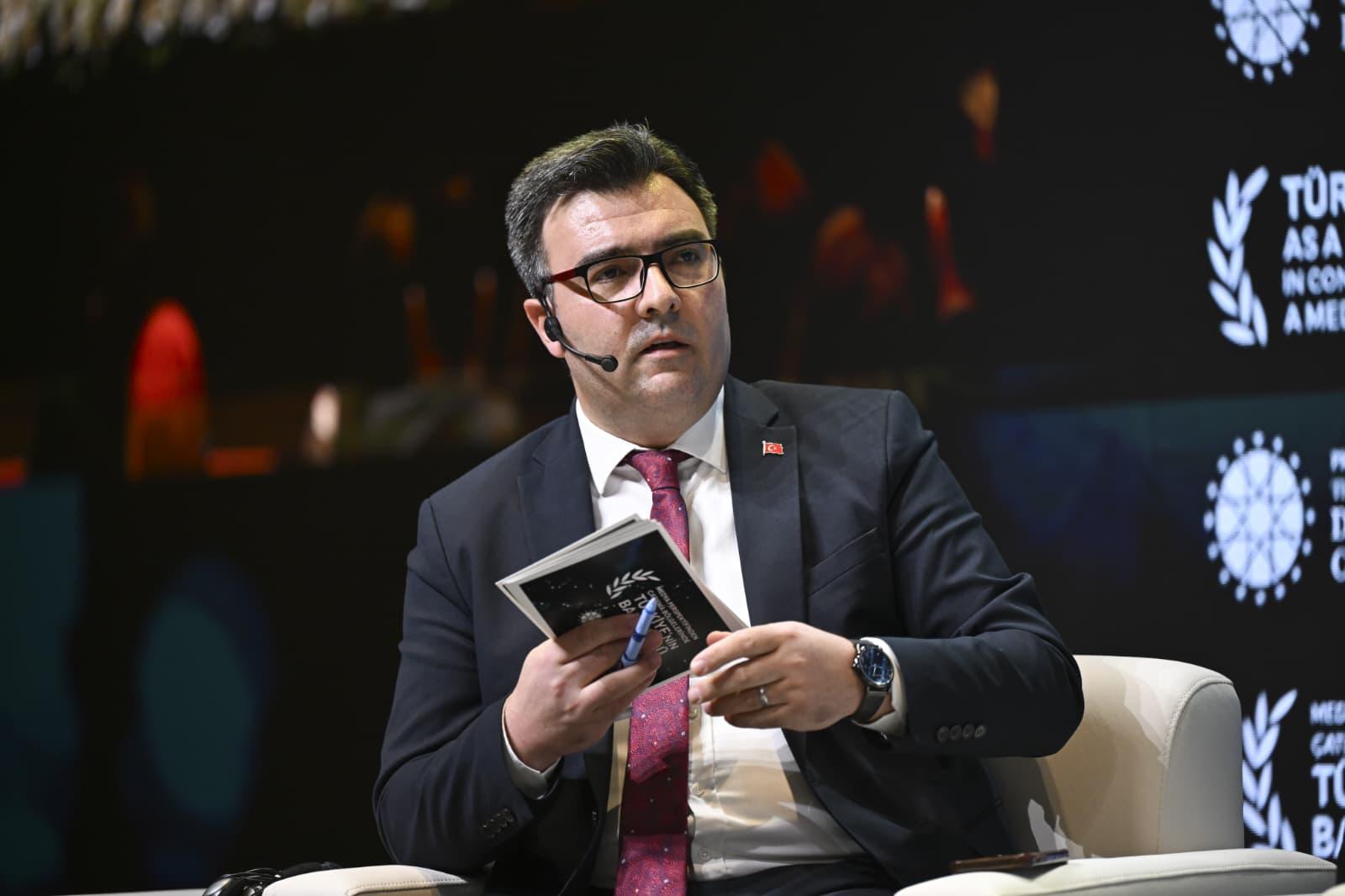
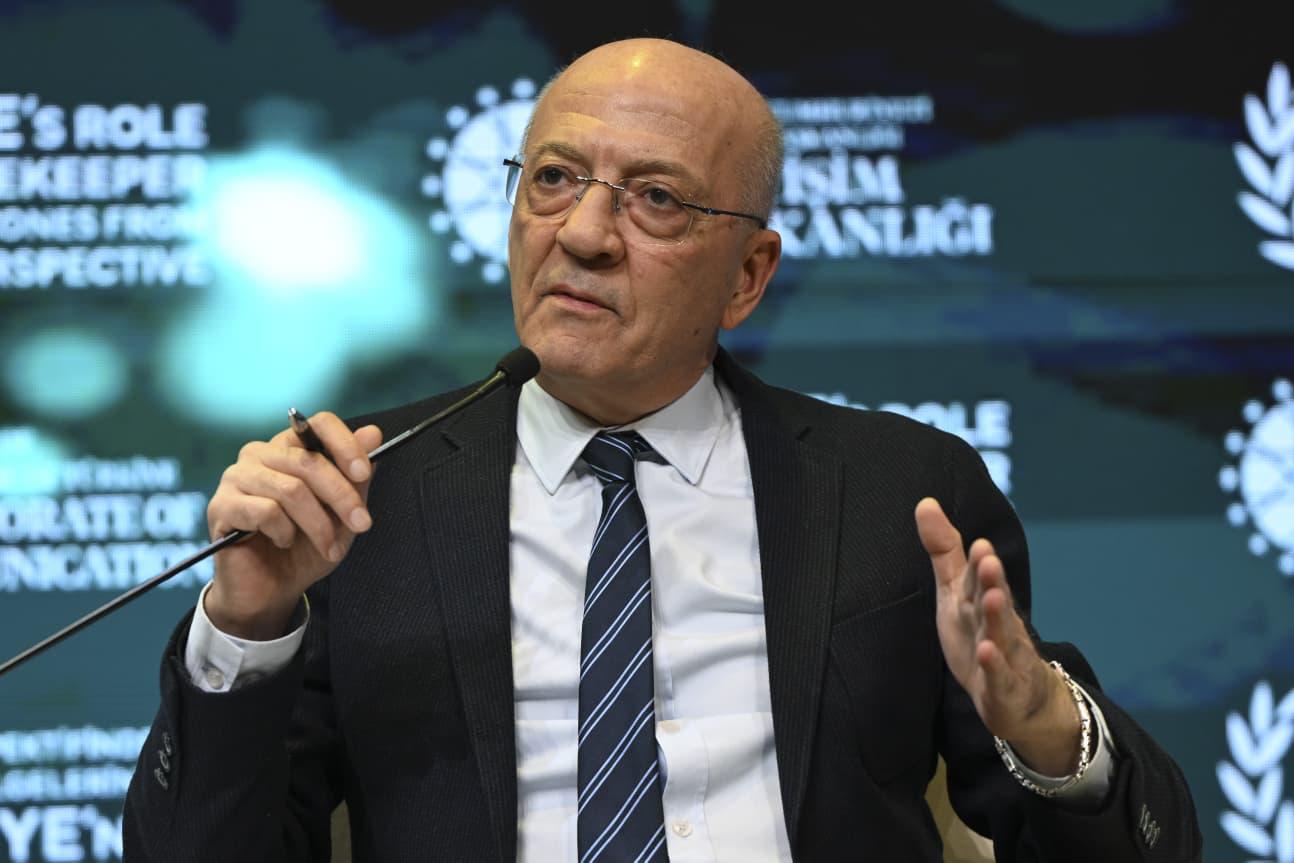
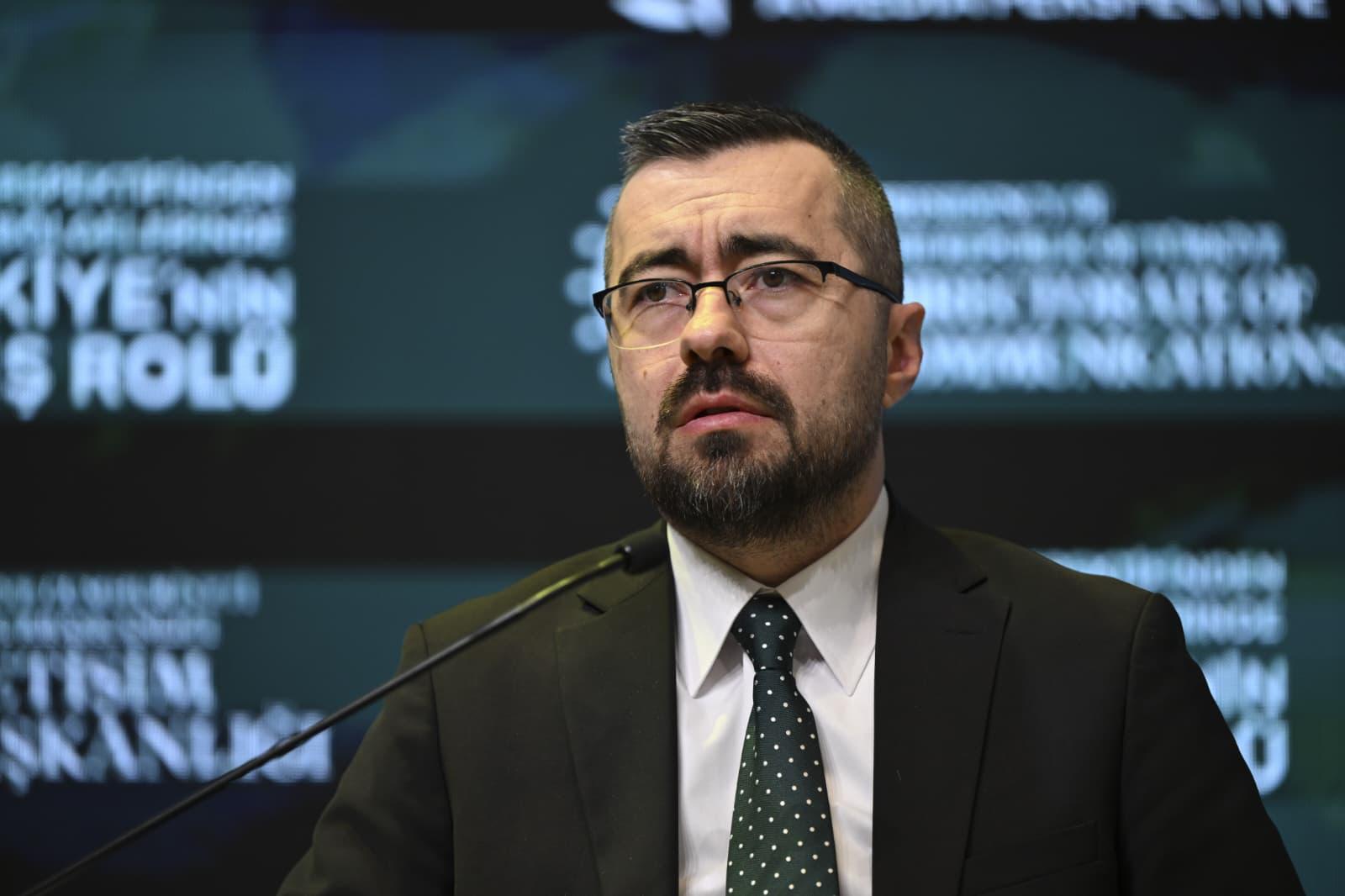
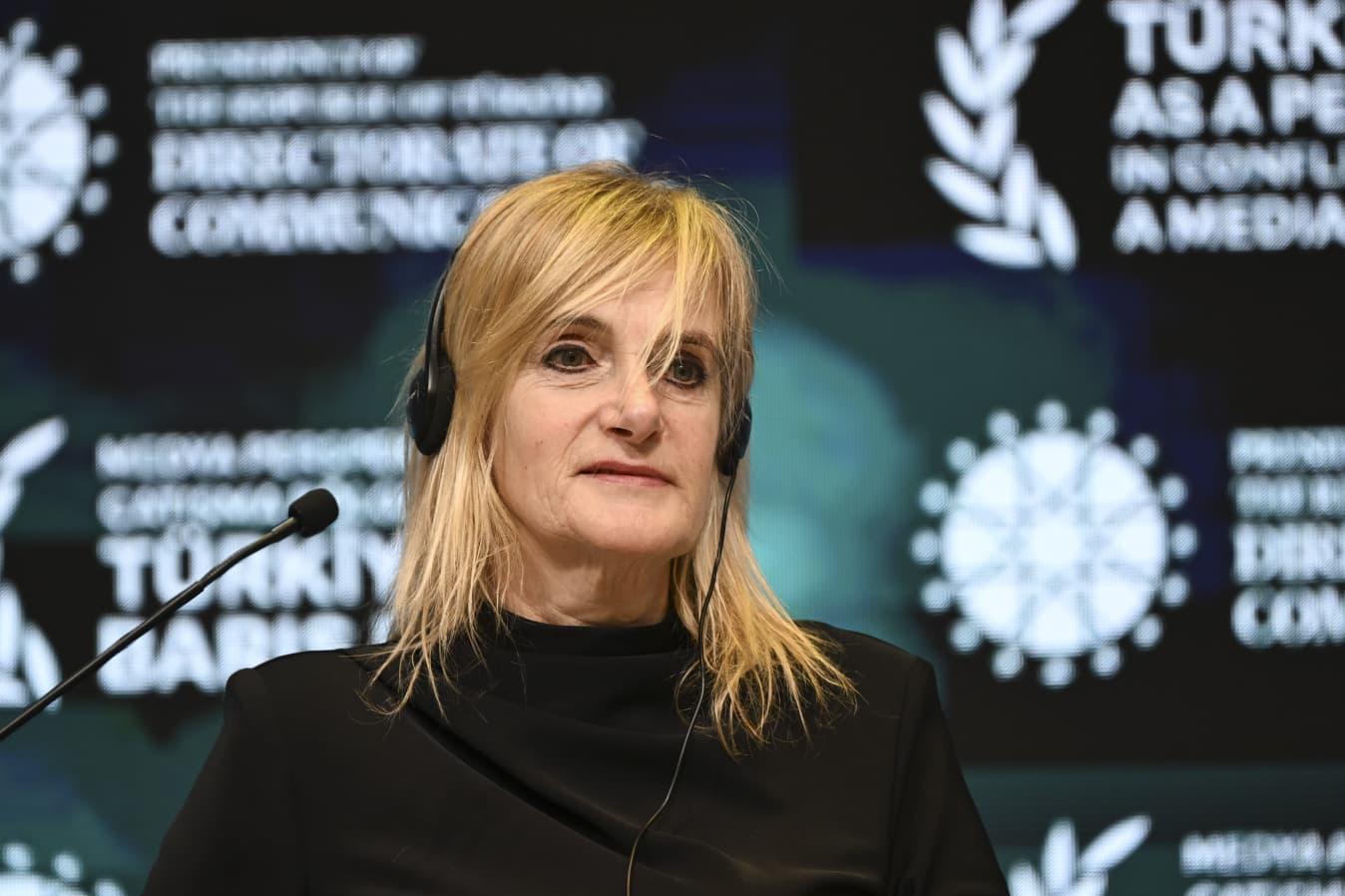
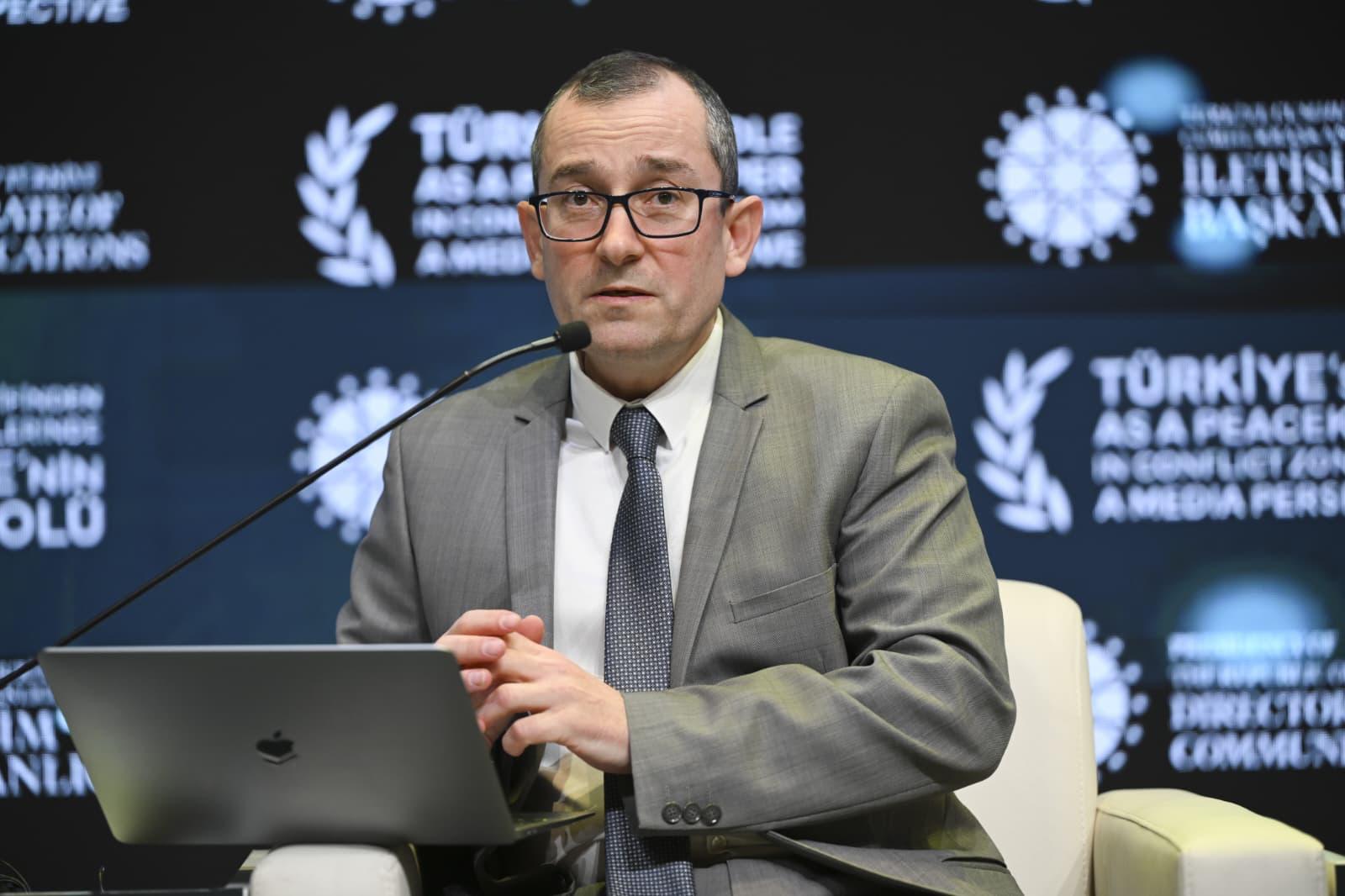
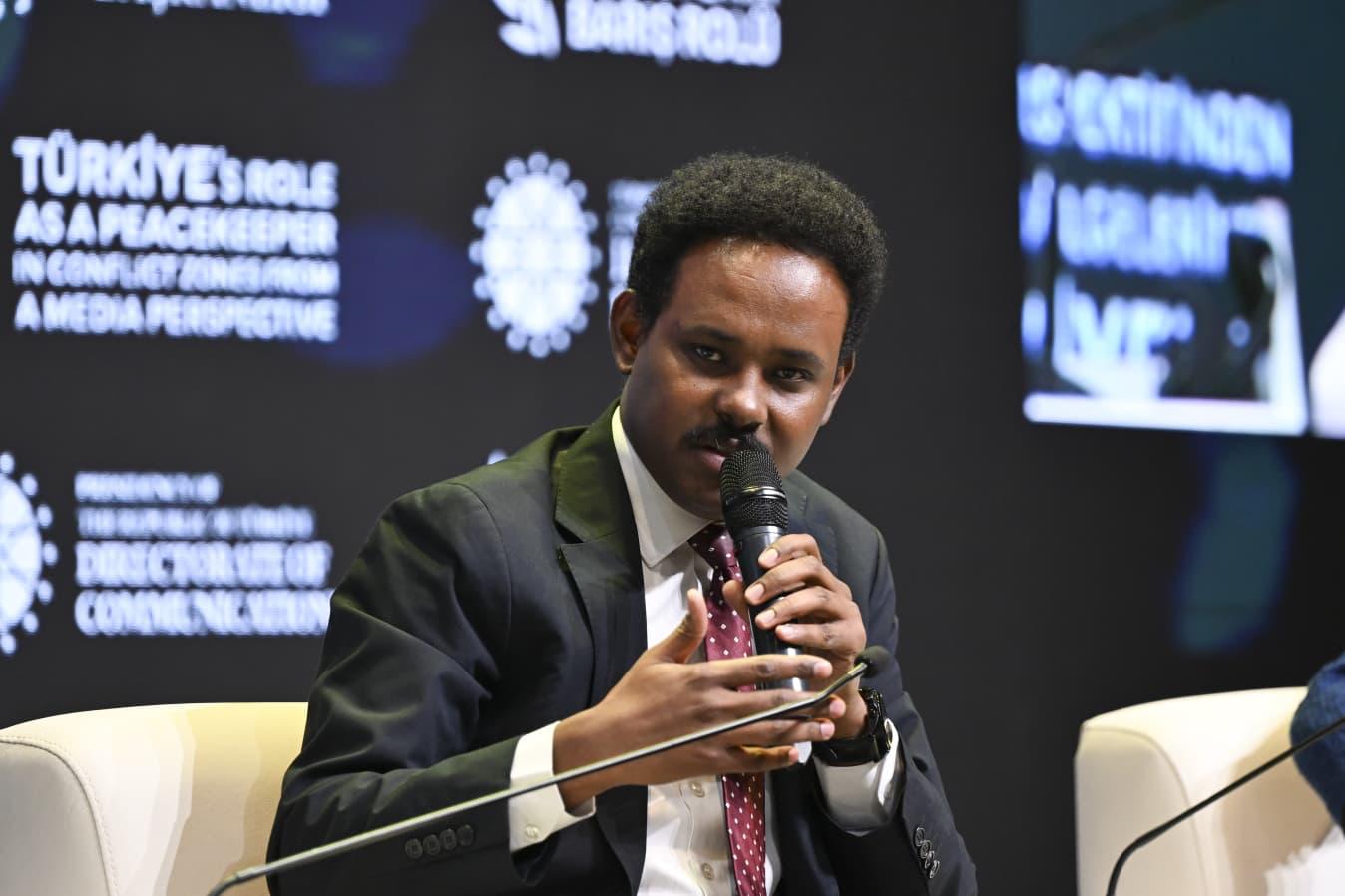
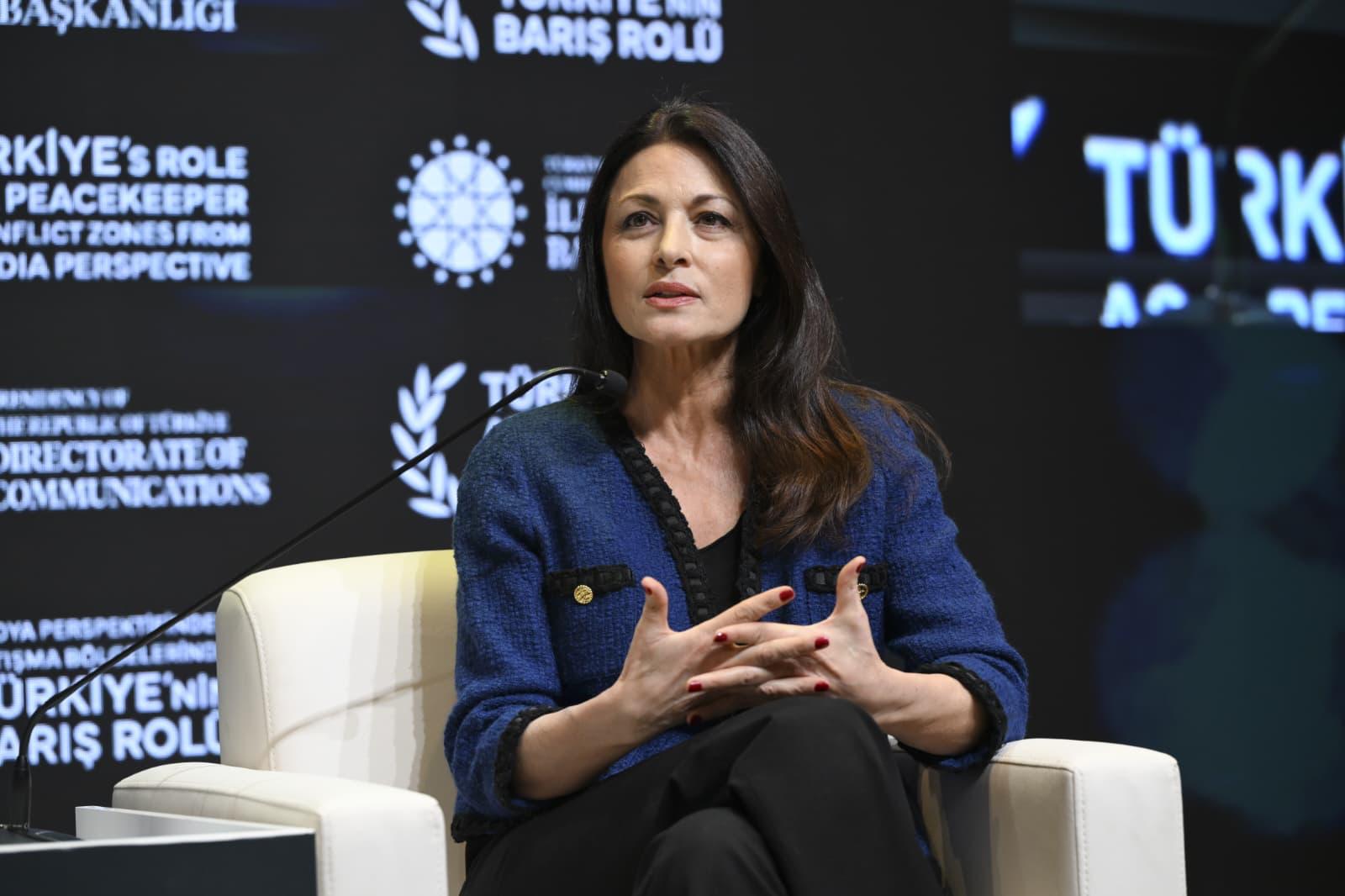
The Directorate of Communications hosted a panel titled “Türkiye’s Role as a Peacekeeper in Conflict Zones from a Media Perspective” in Ankara.
The panel was moderated by Kasım İleri, Head of the Strategic Communications and Crisis Management Department at the Directorate of Communications. Among the speakers were TRT Deputy Director General Ahmet Görmez; Anadolu Agency (AA) Foreign News Coordinator Ogün Duru; and journalists Mete Çubukçu, İbrahim Nassır, Ghida Fakhry and Rena Netjes.
Deputy Director General of TRT Görmez stated that nearly 300 of his colleagues have been martyred in Gaza by Israel to date. He further noted that the 2025 report released yesterday identified that close to 120 journalists were killed over the past year, two-thirds of whom were killed by the Israeli army.
Görmez noted that in the past, vests marked “PRESS” had served as a protective shield for journalists in conflict zones, but added, “Unfortunately, they have now begun to become a detail that turns us into targets.”
Görmez stated that a significant proportion of experienced journalists have been martyred, adding that they have begun receiving news from university students or civilians in Gaza who are carrying out similar reporting tasks.
“What matters is to deliver reporting grounded in truth and to distinguish between the oppressed and the perpetrator.”
Journalist Çubukçu highlighted the importance of shaping the language of reporting in conflict settings, alongside the physical challenges of working in such environments.
Çubukçu underlined that journalists are not activists, but stressed the importance of how certain issues are approached. He stated that he believes the media must avoid language and adjectives that fuel hatred in news reporting.
Çubukçu also shared his experiences and fieldwork during his time on duty in Bosnia and Herzegovina amid the war.
Stressing that the Turkish Armed Forces earn respect across different segments of society wherever they operate, Çubukçu said, “In Bosnia, for example, I saw that they earned the appreciation of Serbs. Turkish soldiers do not go somewhere simply to fight. They prioritise humanitarian concerns and work to restore normal life on the ground.”
Türkiye’s Role in Syria
Journalist Netjes said she had reported from the Middle East during periods of conflict and observed that coverage in Western media often diverged from realities on the ground.
During her time in Syria, she said, Arabs were driven from their villages and towns in Deir ez-Zor and Raqqa, and that the process began in Afrin when the terrorist organisation YPG displaced Arabs and Turkmens from the region.
Netjes noted that there had been local expectations for Turkish involvement in the region, adding that this process began with Operation Euphrates Shield.
Netjes stated that people in the region had expressed gratitude for Türkiye’s involvement, but that this perspective was not reflected in Western media coverage. She added, “Had Türkiye not intervened, Assad would have taken control of the area, and perhaps another one million refugees might have fled to Türkiye.”
Netjes stated that as the YPG withdrew from Afrin, explosives were planted in numerous locations, resulting in the deaths of hundreds of people, and added that these incidents were not covered in Western media.
“Türkiye is attracting greater international attention than ever before”
Anadolu Agency Foreign News Coordinator Duru stated that in recent years, Türkiye has attracted greater international attention than ever before, adding, "Türkiye’s proximity to conflict and crisis zones, as well as its influence even beyond regions where it is not geographically adjacent, significantly heightens global public interest."
Duru stated that Turkish media outlets are increasingly relied upon to provide accurate, uninterrupted and timely information and perspectives on Türkiye, free from disinformation, describing this as a test of capacity. He added, “For Turkish media, the issue has gone far beyond merely conveying global developments to a domestic audience.”
Israel’s Genocide in Gaza
Emphasising that the media play a key role not only in bringing to light realities on the ground that major powers may seek to overlook for political considerations, but also in shaping international awareness and conscience, Duru stated that documenting facts with evidence helps to curb perpetrators’ impunity and plays an important role in preventing future atrocities.
“Turkish Media Adopted a Peace-Oriented Tone to Prevent Escalation in Sudan”
Journalist Nassır stated that brutal conflicts have been witnessed in Africa and referred to the international role played by certain media actors, including those in Türkiye.
Nassır stated that among these media institutions, Anadolu Agency and TRT have produced reporting aimed at revealing the truth and fostering a better understanding of certain issues. He recalled that people in Sudan have suffered and lost their lives in the war.
Stating that “all of this was being portrayed as a civil war,” Nassır underlined that Turkish media adopted a peace-oriented tone in order to prevent further escalation of the conflict in Sudan.
Nassır stated that coverage in the Turkish media had evolved to a point where the situation in Sudan was being conveyed by Sudanese voices themselves. He also emphasised that the map published by Anadolu Agency regarding the situation in Sudan significantly altered the overall framework of the discussion.
Western Media Narratives Built on Falsehoods
Journalist Fakhry recalled that in the late 1990s, inspections were being carried out in Iraq regarding weapons of mass destruction, and that she travelled to Baghdad with the then Secretary-General as part of mediation efforts. She said, “This showed me how the Western media narrative was built on flawed assumptions and, in some cases, outright falsehoods.”
Fakhry pointed out that the invasion of Iraq was in fact “illegal,” adding that she travelled to Iraq with a group of journalists in the summer of 2003 following the occupation of the country.
Fakhry stated that journalists were asked why they were not reporting on the hospitals and schools built in Iraq, adding that they responded by pointing out that daily bombings were taking place and that these developments required prominent reporting.