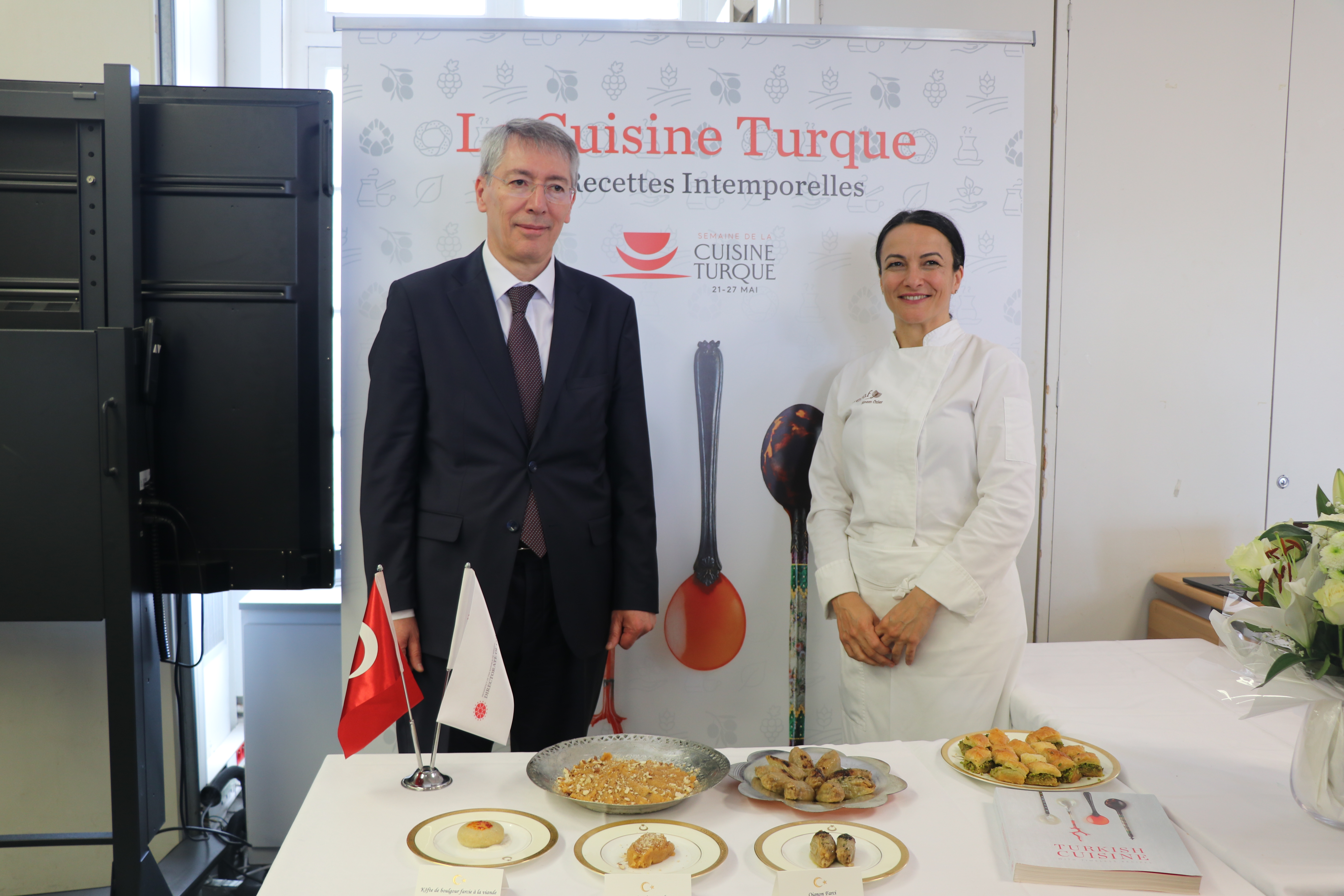
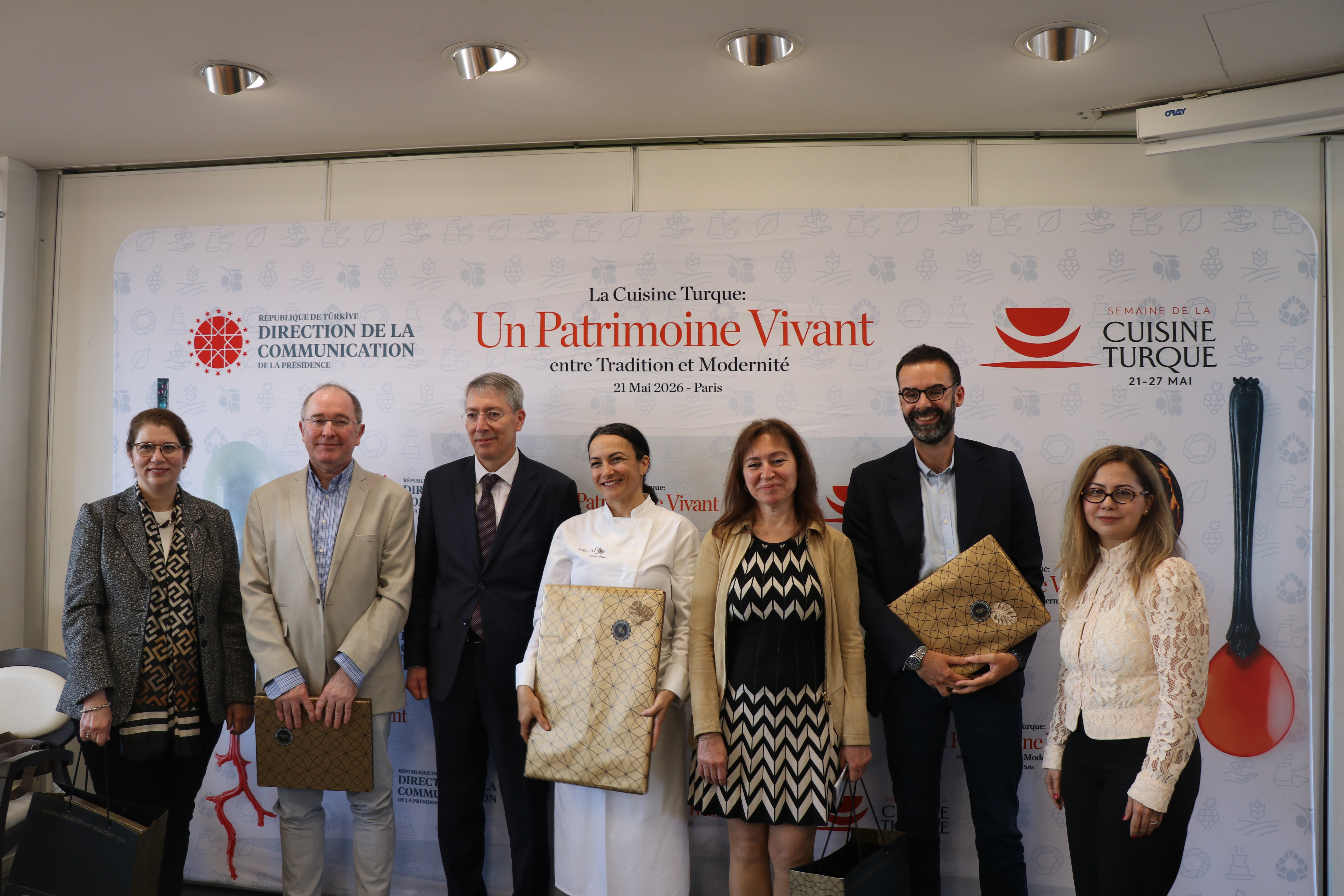
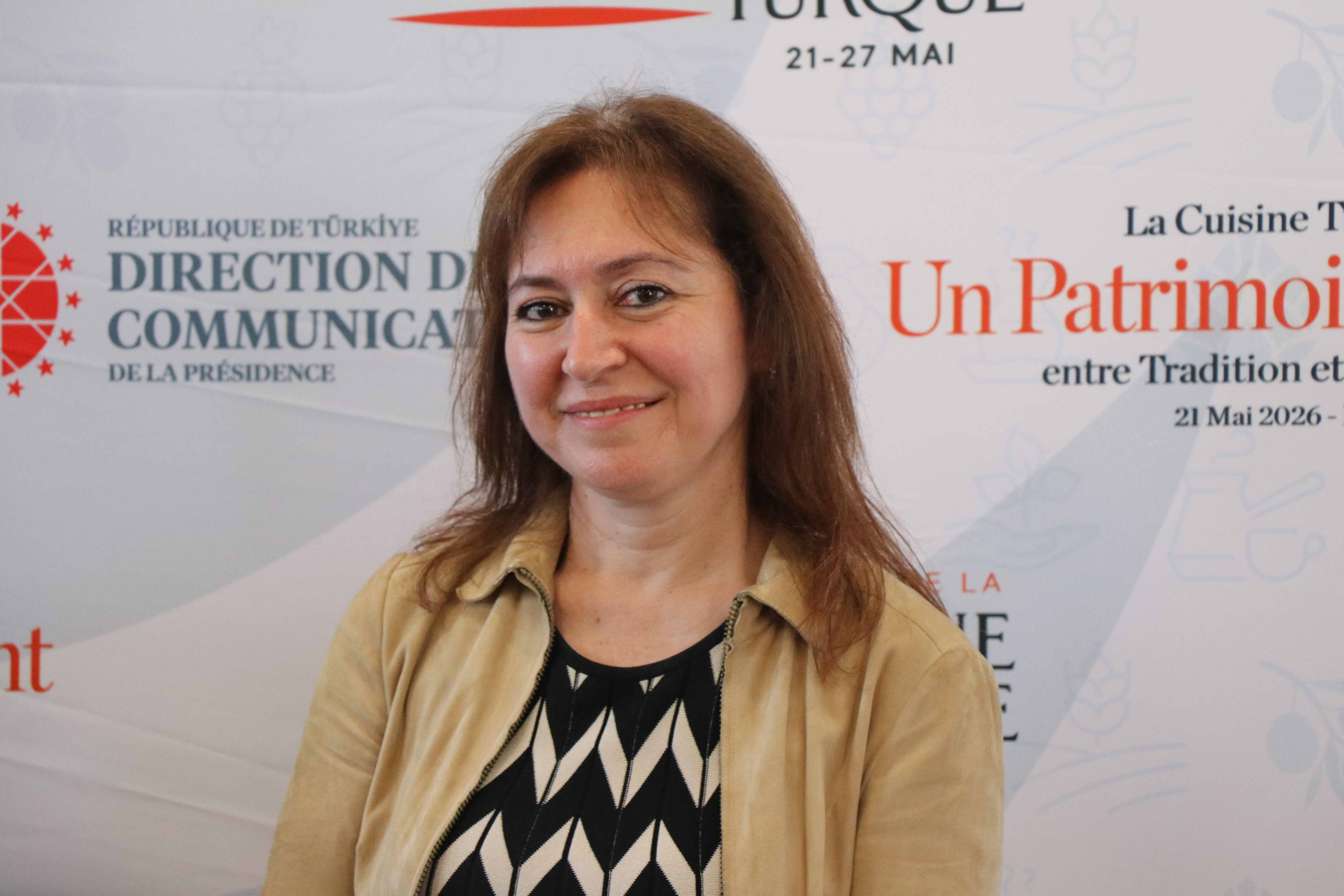
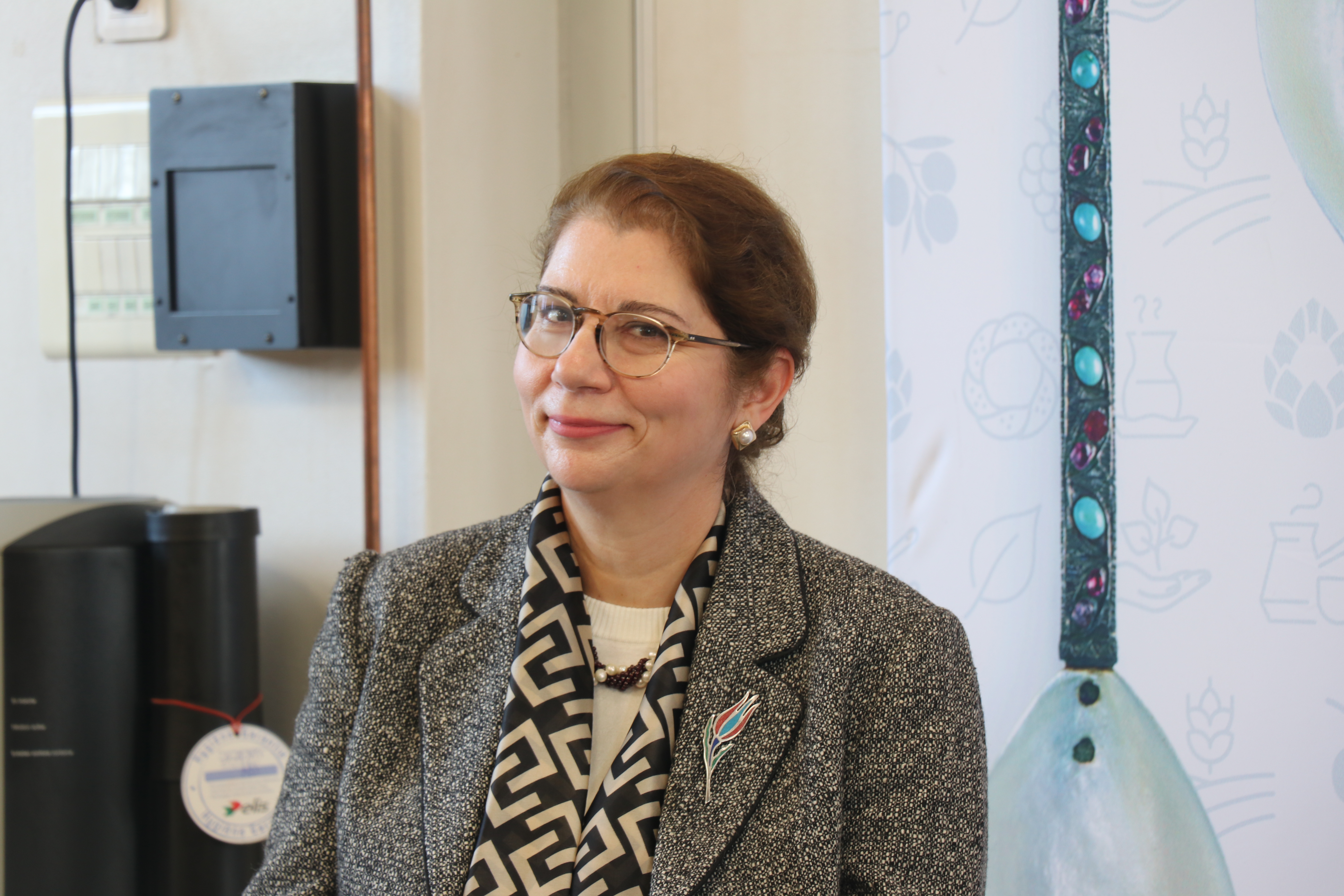
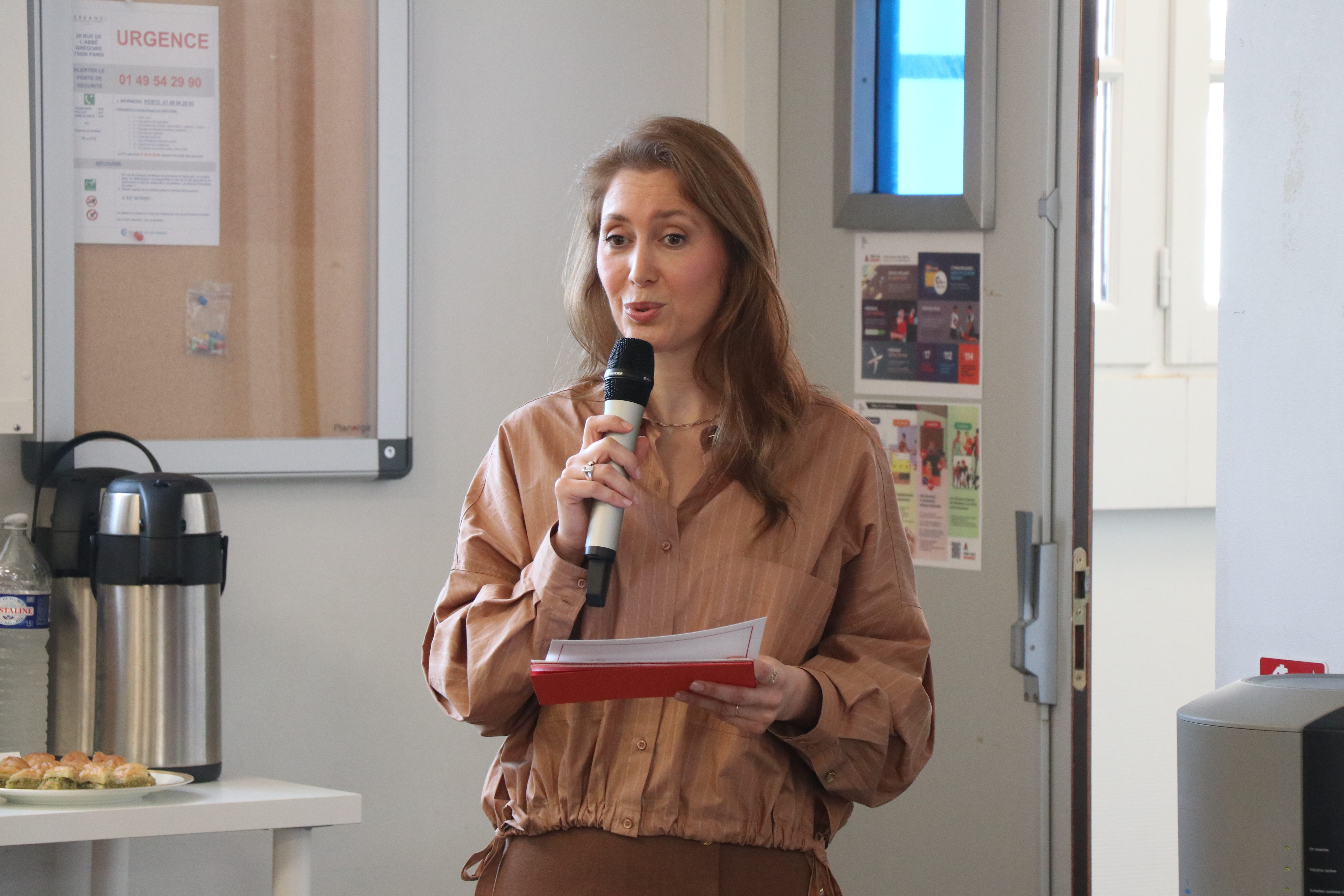
The Directorate of Communications held an event titled ''Turkish Cuisine: A Living Heritage Between Tradition and Modernity'' in Paris, the capital of France, on the occasion of Turkish Cuisine Week. The event was organised at Ferrandi, the gastronomy and hospitality school in Paris.
The Turkish Cuisine Week, organised under the auspices of First Lady Emine Erdoğan, is being celebrated from 21 to 27 May this year, with the theme “The Heritage Table”.
The event, which began with a roundtable discussion on Turkish cuisine, continued with a workshop demonstrating the preparation of helva, soğanlı dolma (stuffed onions) and içli köfte (stuffed meatballs). As part of the workshop, the guests were served delicacies from Turkish cuisine.
The event was attended by Türkiye’s Ambassador to Paris, Yunus Demirer; Türkiye’s Consul General in Paris, Kerem Yılmaz; Press Counsellor of the Embassy of Türkiye in Paris, Özge Kodaz; and Assoc Prof Zeki Eraslan, President of the Atatürk Cultural Centre under the Presidency of Atatürk Supreme Council for Culture, Language, and History, as well as numerous invited guests.
At the opening of the event, Local Secretary at the Communications Counsellor’s Office of the Embassy of Türkiye in Paris, Şelale Sarıtaylı-Alvado, said, ''Turkish cuisine is more than a culinary art; it is a reflection of history, a shared memory, a body of knowledge passed down from generation to generation, as well as a deeply rooted culture of sharing.''
The panel was moderated by Prof Suna Timur Ağıldere, a faculty member in the Department of Gastronomy and Culinary Arts at the Faculty of Fine Arts, Design and Architecture of Başkent University, who noted that Turkish Cuisine Week is celebrated in May both in Türkiye and at Turkish representations abroad.
Ağıldere said, ''This year’s theme, 'Turkish Cuisine: A Living Heritage Between Tradition and Modernity', encourages us to reflect on our rich culinary heritage, which continues to inspire and renew itself.''
''Coffee very clearly came to France directly from Türkiye''
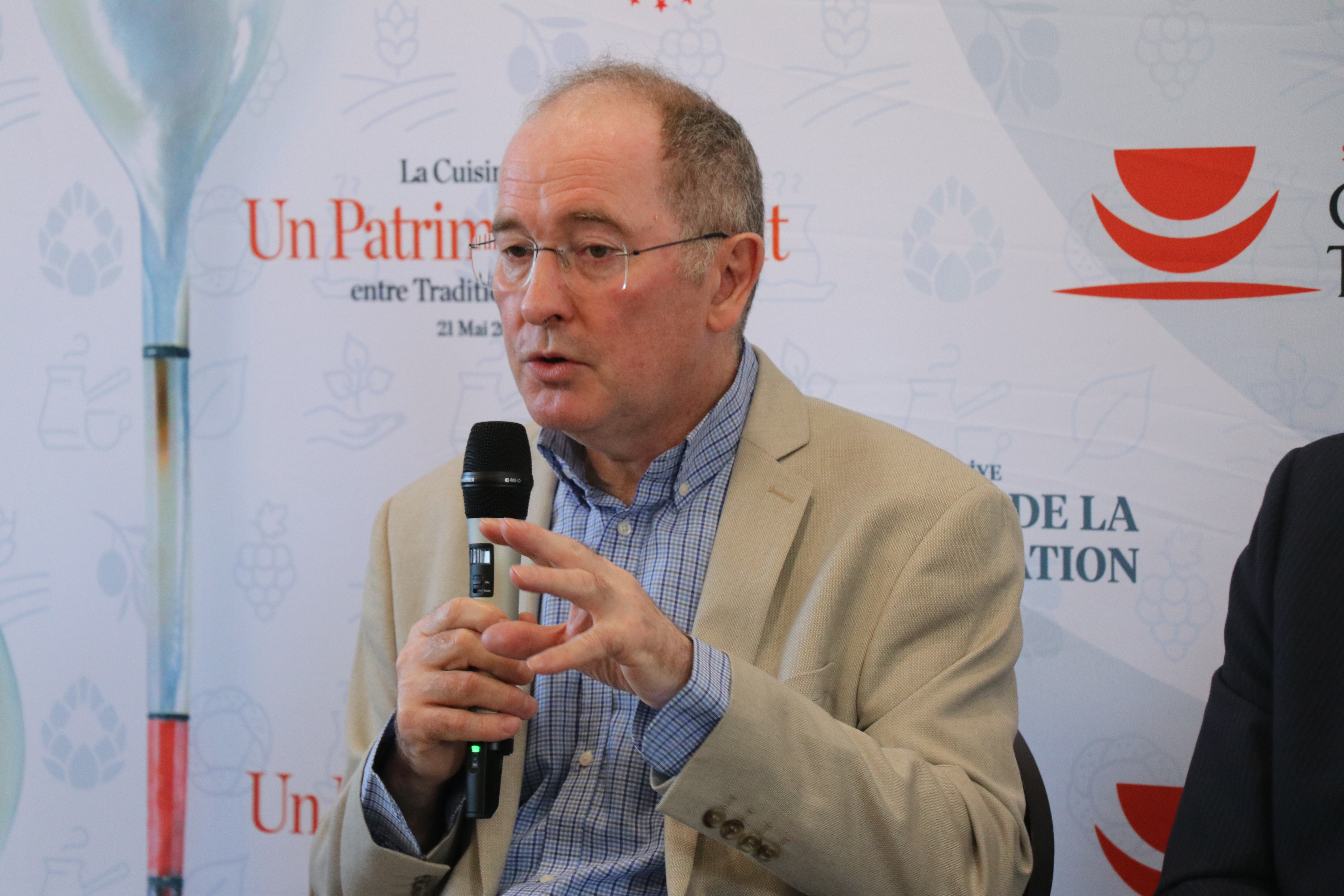
Historian Patrick Rambourg, who works in the field of gastronomy, underlined that gastronomic diplomacy has a history as old as humanity itself, noting that in ancient times, kings and emperors of different countries held banquets either to resolve tensions or to express gratitude to those who had assisted them in times of war.
Pointing out that throughout history, French chefs travelled to different parts of the world and returned to their country with elements of various culinary traditions, Rambourg noted that when examining 17th-century French cookbooks, he came across the term ''à la turque''.
Rambourg said of the renowned 19th-century French chef Urbain Dubois, ''Even just looking at his book 'Cuisine de tous les pays' (The Cuisine of All Countries), I found the term à la turque in approximately 17 recipes.''
Stating that in the 16th and 17th centuries coffee, hot chocolate and tea—referred to as ''exotic beverages''—arrived in Europe, Rambourg stated, ''Coffee very clearly came to France directly from Türkiye. First, French travellers to Türkiye began documenting, from the 16th century onwards, places where coffee was consumed — the predecessors of the cafés we know today in France. The product later makes its way to France, where it becomes deeply embedded in society, particularly from the 17th century onwards."
Referring to accounts regarding Ottoman Envoy Süleyman Ağa, who is credited with introducing coffee to the high society of Paris in the 17th century, Rambourg characterised him as an early practitioner of gastrodiplomacy through coffee.
Highlighting the strong resonance the event generated at the time, Rambourg remarked, "Of course, this contributed in one way or another to projecting a more favourable image of Türkiye, or rather the Ottoman Empire at the time.
"Gaziantep is the nation’s gastronomy capital"
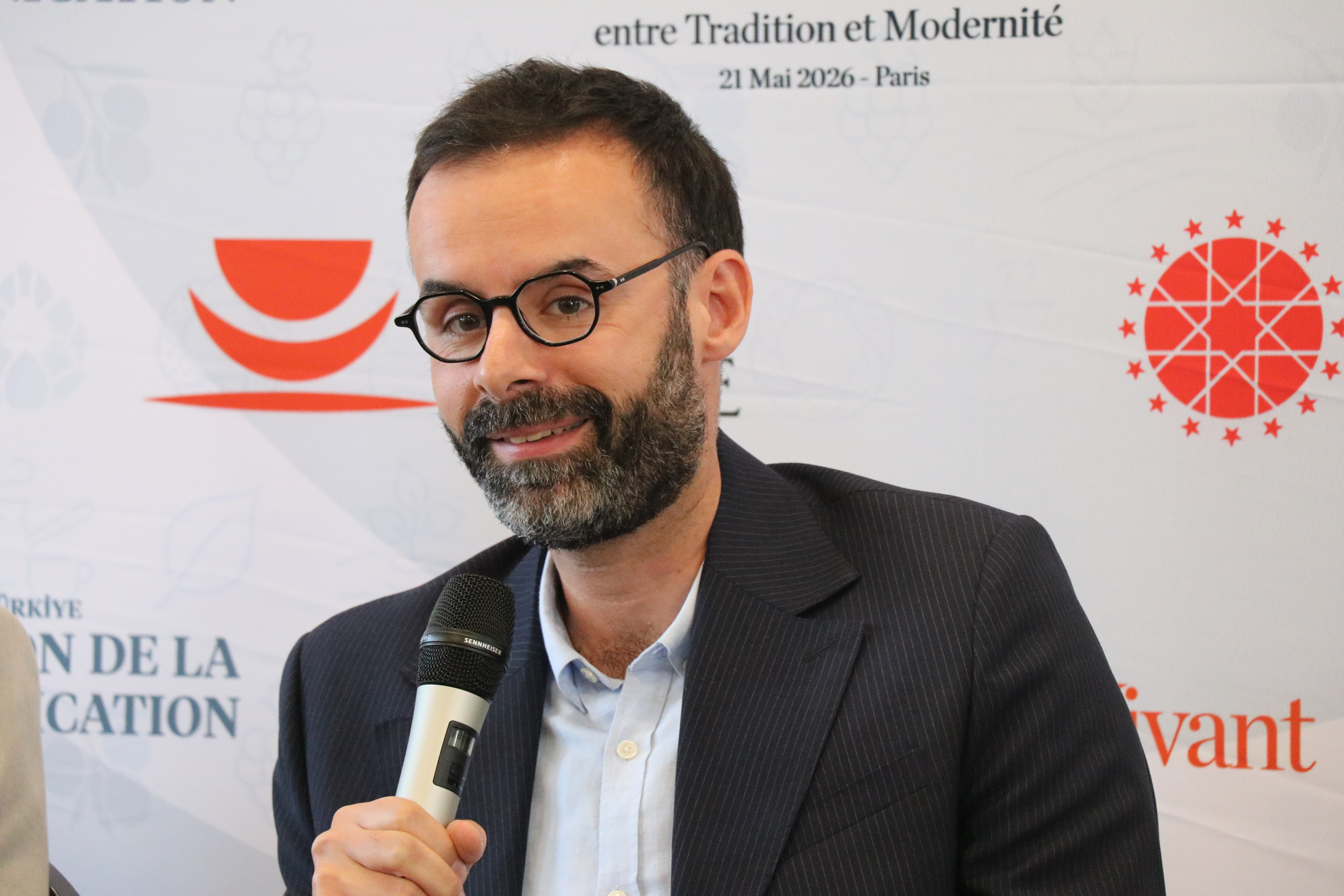
Geographer Pierre Raffard, who has been studying Turkish cuisine for two decades, referred to Gaziantep as the "nation’s gastronomy capital."
Raffard pointed out that each region of Türkiye has its own distinctive cuisine, highlighting the diversity of Turkish gastronomy.
Reflecting on the evolution of Turkish cuisine through diverse influences over a long period, Raffard said, "It is a matter of geography—just look at a map and see where Türkiye stands. It is a country, a civilisation, and an ancient empire standing at the crossroads of various cultures and empires."
Raffard underlined that the Turkish diaspora could play an important role in promoting Turkish cuisine and emphasised that there are outstanding Turkish chefs who could serve as international ambassadors of Turkish cuisine.
"We focus on promoting our existing values and enhancing their visibility"
Turkish chef Sinem Özler emphasised that Turkish society is fortunate in terms of its culinary heritage. Özler noted the ongoing efforts in Türkiye to pass on both Turkish and Anatolian cuisine to younger generations, and underlined that Türkiye, by virtue of its geographical position, is among the first countries to be influenced by new trends.
"This is why we focus initially on promoting our existing values and enhancing their visibility," Özler remarked, elaborating that their mission is to introduce Anatolian cuisine to a global audience.
Özler explained that they present the dishes as they are, without changing them or blending them with fusion or molecular gastronomy, stating, "We do our best to stay faithful to recipes drawn from historical sources, while simply incorporating contemporary techniques into their preparation."
"One cannot think of culture apart from its cuisine"
Turkish engineer and chef Esin Fakılı explained that she transitioned into the culinary sector after working in the automotive industry for 32 years.
Fakılı said she aims to promote the diverse flavours of Anatolia, noting that in French perception, Turkish food is primarily associated with kebab and döner. Pointing to the outstanding heritage of Turkish cuisine, Fakılı stated, "When we introduce a new dish, the French who discover it are in fact becoming acquainted with Turkish cuisine and culture. In my opinion, one cannot think of culture apart from its cuisine."
In the final segment of the panel, Ambassador Demirer asked the panellists about the reasons behind the extensive use of yoghurt in Turkish cuisine.
Responding to the question, Raffard said, "'Yoğurt' (yoghurt) is an ancient Turkish word, dating back to the early Turkic nomads of Central Asia at the start of the first millennium. This, I believe, sheds light on why yoghurt holds such importance for the Turkish people.”