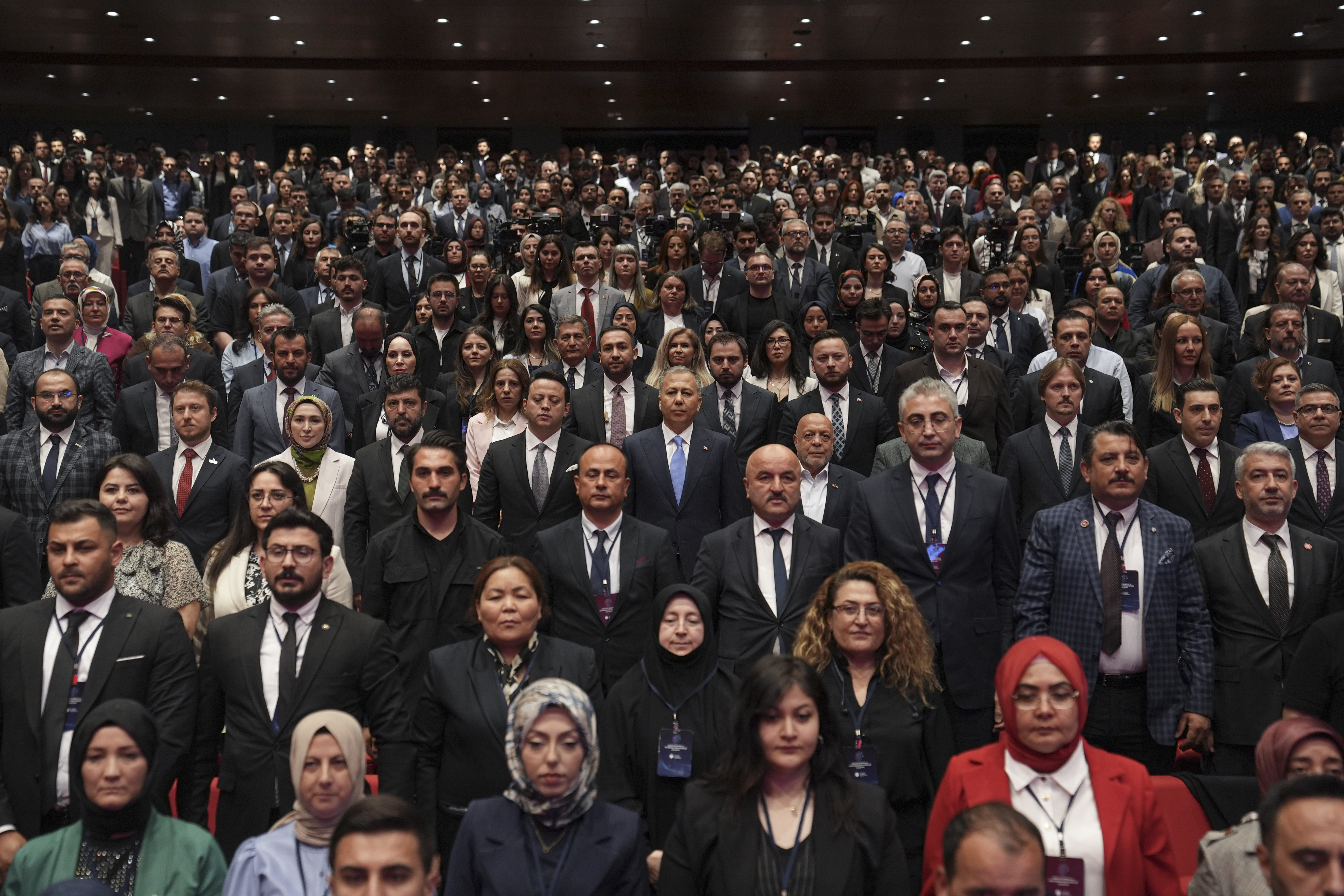
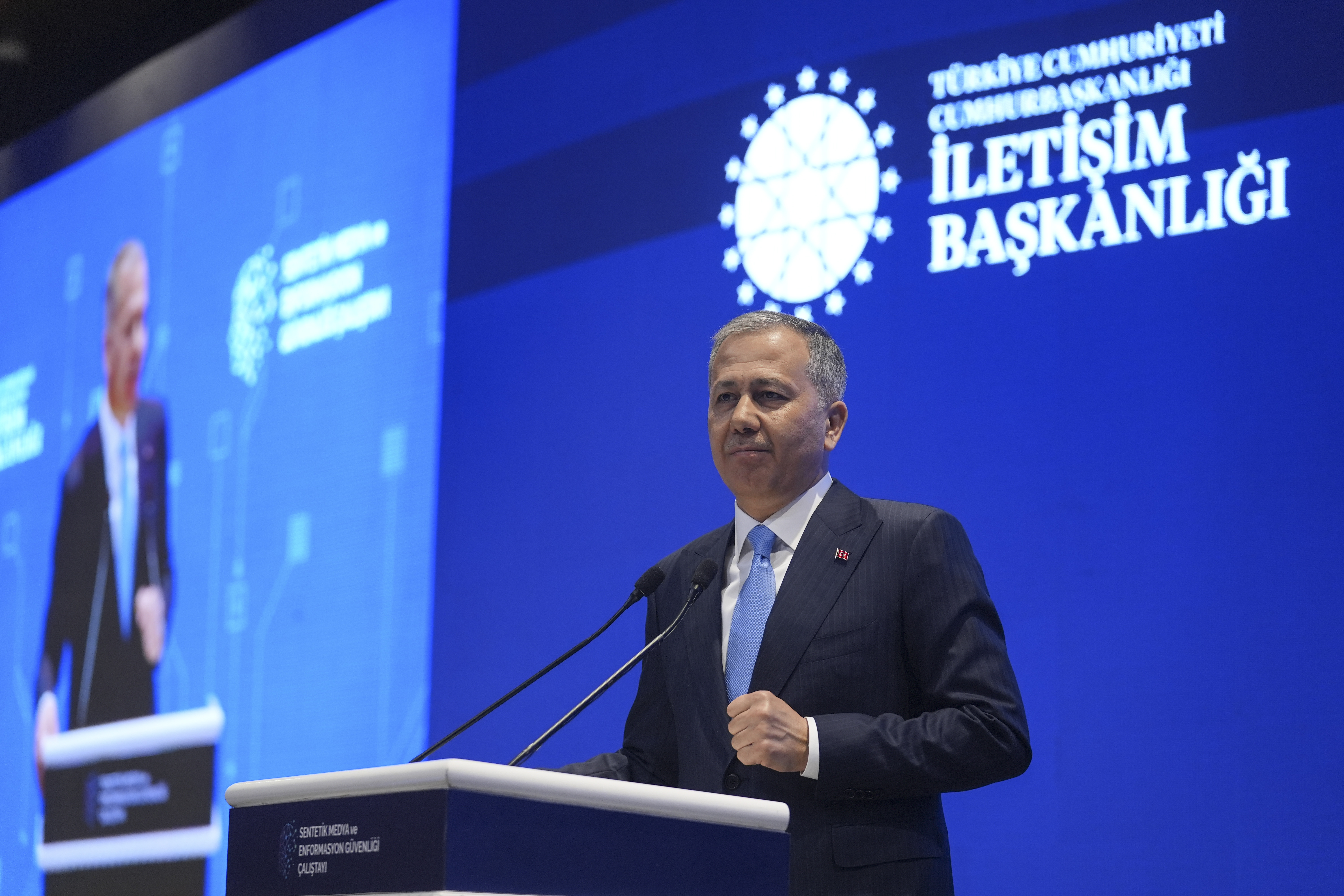
The Directorate of Communications organised the "Synthetic Media and Information Security Workshop," which was attended by Minister of Interior Ali Yerlikaya.
In his opening address of the workshop, Minister Yerlikaya pointed out the significance of the concept of "synthetic media," referring to it as artificially generated video, audio, image, or text content that is fake but appears genuine.
Minister Yerlikaya stated that synthetic media is not merely a topic of technology but also an area that is open to provocation, where reality, security, and social peace are put to the test. He also noted that the opportunities brought by the digital age also offer conveniences.
"It is imperative to foresee the risks that may be encountered and to pay regard to the fine line between opportunity and threat while taking advantage of the potential and power of synthetic media. In the hands of malicious individuals, the opportunities offered by artificial intelligence and synthetic media can turn into a weapon that manipulates societies, violates the rights of individuals, and threatens public order," said Minister Yerlikaya.
Minister Yerlikaya emphasised that this situation elevates the risk of manipulation and disinformation and stated that fake videos, audio recordings, and images generated using artificial intelligence are no longer pieces of digital fiction but a threat that can lead to very concrete results in the real world.
Minister Yerlikaya noted:
"This method allows for the generation of 'original' content similar to human creativity and even beyond. A study published in Science Magazine in 2023 revealed that fake news spreads six times faster than real ones on social media. In the same year, a study from Stanford University demonstrated that 68% of participants cannot correctly distinguish deepfake videos from authentic ones. These results clearly demonstrate that we are facing not only a technical problem but also a crisis of perception management and security. Content generated through these technologies has the potential to harm the reputation of individuals, state leaders, institutions, and even nations. Misleading voters with fabricated audio recordings during election periods, provoking the public with fake videos that trigger social unrest, or manipulations aimed at our security forces... These concepts are no longer theoretical threats but real cases that we encounter and may encounter in practice. As the Ministry of Interior, we possess a strong structure working 24/7 to detect and prevent the spread of synthetic content with our cybercrime units within the Turkish National Police and the General Command of Gendarmerie. We meticulously examine reports made on digital platforms and take swift actions, especially against content aiming to disrupt the public order and to incite panic."
Pointing out that efforts on the security forces' part alone would not suffice in this struggle, Minister Yerlikaya emphasised the need to reinforce the legal infrastructure, enhance social awareness, and ensure international cooperation.
Recalling that the European Commission, in its report published in 2024 with the title "Artificial Intelligence and Disinformation," pointed out the need for states to develop "common ethical principles on synthetic media," "control mechanisms," and "technological balancers," Minister Yerlikaya said, "As Türkiye, we are also committed to strengthening both the legal regulations and institutional capacity in this regard."
"Do not take all content for face value"
Minister Yerlikaya made a call to the youth, urging them, "Do not take all the content you are exposed to in the digital world at face value. Question it, and always look into the source. Remember that digital literacy is one of the most important civic responsibilities of our age.
Yerlikaya explained that synthetic media has accelerated many innovations in content creation while simultaneously posing a threat to freedom of expression, as evidenced by the incidents unfolding in Gaza."
Minister Yerlikaya went on to say:
"Attempts have been made to silence the voice of our Palestinian brothers and sisters in the murky vaults of the digital realm. The story of Gaza, the truth of Gaza, has been suppressed by erecting barriers against human dignity and conscience. As can be seen in the reports published by our Directorate of Communications, the visibility of pro-Palestine posts was partially or entirely removed during the humanitarian tragedy unfolding in Gaza. Instagram, YouTube, and TikTok have frequently censored calls for aid and images of the genocide in Gaza, claiming that they "violate their content policies." Posts crying out the tears of Palestine and the screams of the oppressed have been chained by algorithmic shackles, imprisoned in digital dungeons. Amnesty International and Human Rights Watch, in their statements and reports, highlighted the censorship of pro-Palestine social media posts and the suppression of pro-Palestine voices. A similar situation was, in fact, observed in 2017 during the Myanmar army's genocide against the Rohingya Muslims. The "Independent Investigative Mechanism for Myanmar" established under the United Nations stated that the social media platform Facebook did not share the human rights violations against Rohingya Muslims. The United Nations has expressed that Facebook's failure to take sufficient measures against hate speech played a pivotal role in 'fuelling genocide.' It is evident from these examples that synthetic media has evolved into a new instrument reinforcing the information dominance of those social media platforms striving to establish global hegemony."
"Cybersecurity is a vital necessity"
Pointing out that security has undergone a significant transformation throughout history, Minister Yerlikaya remarked, "For example, in the Middle Ages, standing armies, castles, and city walls were the symbols of security. The construction of the modern state, however, has institutionalised and systematised security as one of the reasons for the state's existence. Over time, the rapid spread of globalisation and the blurring of borders have confronted the world with numerous security threats, risks, and types of crime. These developments, therefore, have also transformed the understanding of security."
Noting that the global growth in information technologies and the increased communication opportunities have moved many activities previously conducted offline to the online environment, Minister Yerlikaya underscored that cybersecurity has become a vital necessity.
Drawing attention to the fact that cybersecurity is an indispensable element of both internal and external security, Minister Yerlikaya stated:
"Technological advancements and digitalisation have confined and isolated us behind glass screens while simultaneously setting the stage for new forms of crime, such as online fraud, illegal betting, online child abuse, and cyberbullying. It has also fuelled digital addiction. By generating digital forms of organised crime, it has elevated security threats to a global scale. As the Ministry of Interior, we are currently demonstrating the same unwavering resolve in combatting cybercrime as we do in our fight against terrorism, drug dealers, and those who pose a threat to the peace of our citizens."
"Access to 27,304 social media accounts has been blocked"
Stating that they safeguard Türkiye's high interests in the cyber domain, which has become the most defining security element of the modern world, Minister Yerlikaya said, "Our President's words, 'We will make our country a brand in cybersecurity,' have set our goal on this path. In line with this goal, we are conducting an effective fight against cybercrimes. We are enhancing prevention in the fight against cybercrimes, just as we do in combating crimes against public order. During our term, we identified 237,753 accounts involved in criminal activities, blocked 21,214 URL addresses, and restricted access to 112,854 social media accounts as part of our struggle in the cyber domain. In the first four months of this year, access to 27,304 social media accounts and 6,765 URL addresses has been blocked."
Minister Yerlikaya stated that information security is a strategic priority for public administration, pointing out its critical role in the functioning of public institutions, decision-making processes, administrative legitimacy, and maintaining trust between citizens and the state.
Minister Yerlikaya noted that the press and public relations directors of the governorships of 81 provinces who had been in Ankara to attend the in-service training seminar organised by the Ministry of Interior's Department of Training were also present at the event and continued as follows:
"Both institutional communication and information security constitute important topics in our in-service training seminar. Establishing information security refers to the protection of accurate information and the prevention of the spread of misinformation. It is a matter of building trust. Information security is not just a technical issue but a strategic area directly concerning public order, social peace, and national security. Because in modern times, threats appear not only at our borders but also on our mobile phones, social media feeds, and digital screens. A society guided by misinformation loses its ability to make sound decisions. This targets not only individuals but also democracy and the legitimacy of the state."
Minister Yerlikaya emphasised that the Ministry regards the fight against disinformation as an integral part of public order, counterterrorism efforts, and cybersecurity.
Explaining that the Ministry defines its duties in this field not only as tracking digital crimes but also as providing accurate information to the public and enhancing society's resilience against perception management operations, Minister Yerlikaya said, "We know that information is the most powerful weapon of our age. Ensuring the safety of this weapon is the shared responsibility of public authorities, media organisations, academia, and individuals. The most effective response to information pollution is a robust legal system, digital literacy, and social awareness."
Minister Yerlikaya noted that the efforts made by the Directorate of Communications in this era of historic transformations in communication technologies are a reflection of the effort to make the Century of Türkiye a "Century of Communication," and said:
"The steps implemented to coordinate government communication, establish unity in discourse, and reinforce the communication ties between the state and the nation are of great importance. At a time when lies, distortions, and manipulations are besieging understandings and clouding minds, Prof Fahrettin Altun and his team's struggle for truth is pioneering the formation of a new, transparent, and conscientious media ecosystem. In this context, we support the communication efforts and initiatives to be undertaken in coordination with the Directorate of Communications, with all the institutions and organisations affiliated with our Ministry of Interior."
On the other hand, Presidency's Head of Communications Fahrettin Altun was unable to attend the workshop due to the passing of his uncle Nurettin Altun.
"New Media and Risks in the Age of Artificial Intelligence"
The first session of the "Synthetic Media and Information Security Workshop," organised by our Directorate and titled "New Media and Risks in the Age of Artificial Intelligence," was held.
The panel discussed the potential for artificial intelligence to replace humans, how it works, and the associated risks and opportunities.
During the panel moderated by Aslan Değirmenci, the Digital Media Coordinator of the Presidency's Directorate of Communications, speakers included Buğra Ayan, Head of the Department of Information Technologies of the Directorate of Communications, Doğukan Gezer, Editor-in-Chief of GZT, and Assoc. Prof Betül Ay from the Fırat University Department of Computer Engineering.
During the panel discussion, Aslan Değirmenci, the Digital Media Coordinator for the Directorate of Communications, remarked, "How can we discuss artificial intelligence as a domain of freedom when the proprietors of social media platforms lead the charge of digital fascism?" Değirmenci emphasised the notable changes and transformations occurring in the media sector, highlighting the role of artificial intelligence in cinema, sports news, and weather forecasts. He raised concerns about the associated risks, stating, "While you are completely unaware, your password is captured by artificial intelligence, a post is made from your account, and it is deleted ten seconds later."
Aslan Değirmenci went on to say, "Artificial intelligence can deliver spectacular outcomes by learning from big data sets and analysing specific patterns. Natural language processing and machine learning have also enabled the development of systems capable of sentiment analysis and human behaviour predictions. However, these algorithms draw conclusions merely based on data and do not truly experience emotions.
News is more than simply information; it is also a narrative. This is where human emotional intelligence and intuition come into play — and they can outmatch artificial intelligence. Human judgement is essential for in-depth analysis and investigative journalism. Artificial intelligence, on the other hand, struggles to grasp historical and cultural context. Artificial intelligence can never fully understand the human dimension of events. It may use inaccurate or callous language regarding sensitive matters."
GZT Editor-in-Chief Doğukan Gezer, one of the speakers, highlighted that trust in content, information, and truth has begun to wane with the rise of artificial intelligence, noting, "The prevalence of anonymous content has also emerged as a major threat due to the lack of specified sources."
Head of the Department of Information Technologies of the Directorate of Communications, Buğra Ayan, stated in his address, ''We are working on extracting all threads of work from the Directorate of Communications and transferring them to artificial intelligence.'' Ayan said that by vectorising the contents, they rendered them usable— not only for humans but also for artificial intelligence.
Deputy Head of the National Intelligence Academy (NIA), Assoc. Prof Yenal Göksun also addressed the panel on 'New Media and Risks in the Age of Artificial Intelligence.'
Göksun said that artificial intelligence feeds on humans and recognises and reads them extremely well, which is frightening.
Göksun argued that artificial intelligence is highly sensitive to human psychological needs and tendencies, pointing out that a lot of data, including digital footprints and credit card spending, is processed into more valuable information through machine learning.
Noting that this situation poses a vulnerability, Göksun said, "States that are more adept at controlling and utilising artificial intelligence are at a higher level in the information hierarchy, which enables them to conduct more effective operations and interventions against other countries."
Göksun explained that, from a security and intelligence standpoint, such actions fall under the category of "covert actions," which are meant to influence hostile and rival countries, cause political and economic crises, exacerbate polarisation by fuelling social and cultural disputes, and undermine those countries.
Göksun remarked that the Cold War-era concept of 'destructive actions' is being revisited with artificial intelligence.
In the panel, Assoc. Prof Betül Ay, a faculty member of the Department of Computer Engineering at Fırat University, delivered a presentation on the transition from typesetting and typewriter technology to "Artificial General Intelligence" using the "Intelligence Ladder" framework.
Session titled "Information Security and Strategic Communication"
The second session of the "Synthetic Media and Information Security Workshop," titled "Information Security and Strategic Communication," was moderated by journalist and writer Nil Gülsüm Gül, who stated that information security is not merely a technical issue but also a critical component of social stability and national security.
Speaking at the session, Head of the National Cyber Incident Response Centre Mahmut Esat Yıldırım said, "The target of a cyberattack is the information environment. If the public is not accurately informed, attackers may create an atmosphere of panic."
In his speech, Head of the Anti-Cybercrime Department of the General Directorate of Security Salih Gözüm stated that, with the transformation of digital media into synthetic media, they are now facing a process that was expected ten years down the line.
Head of the Department of Strategic Communication and Crisis Management of the Presidency's Directorate of Communications Assoc. Prof. Bora Bayraktar said in his speech, "Constant communication between the state and the nation is one of the critical factors in times of crisis. Türkiye's Communication Model contributes to this."