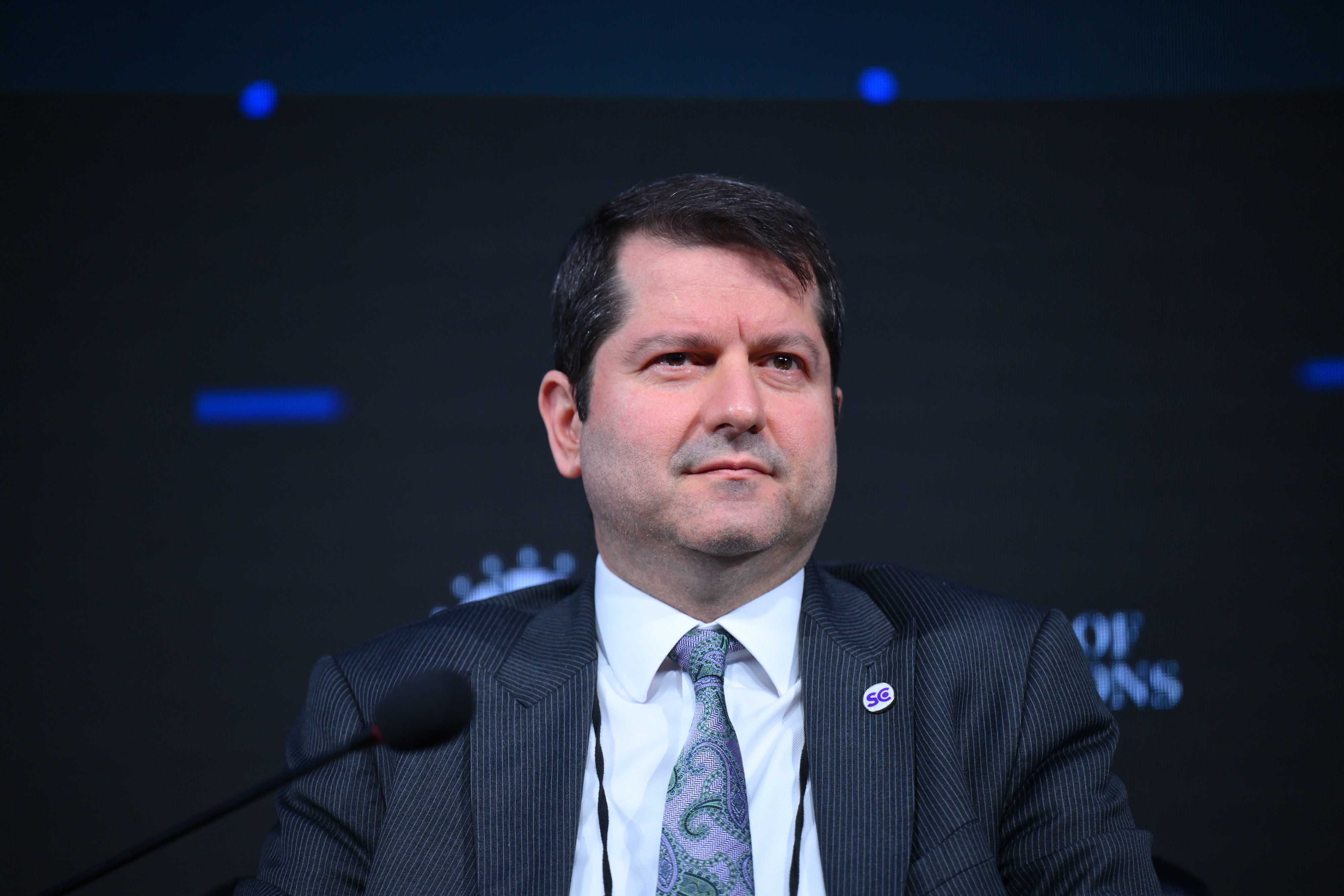
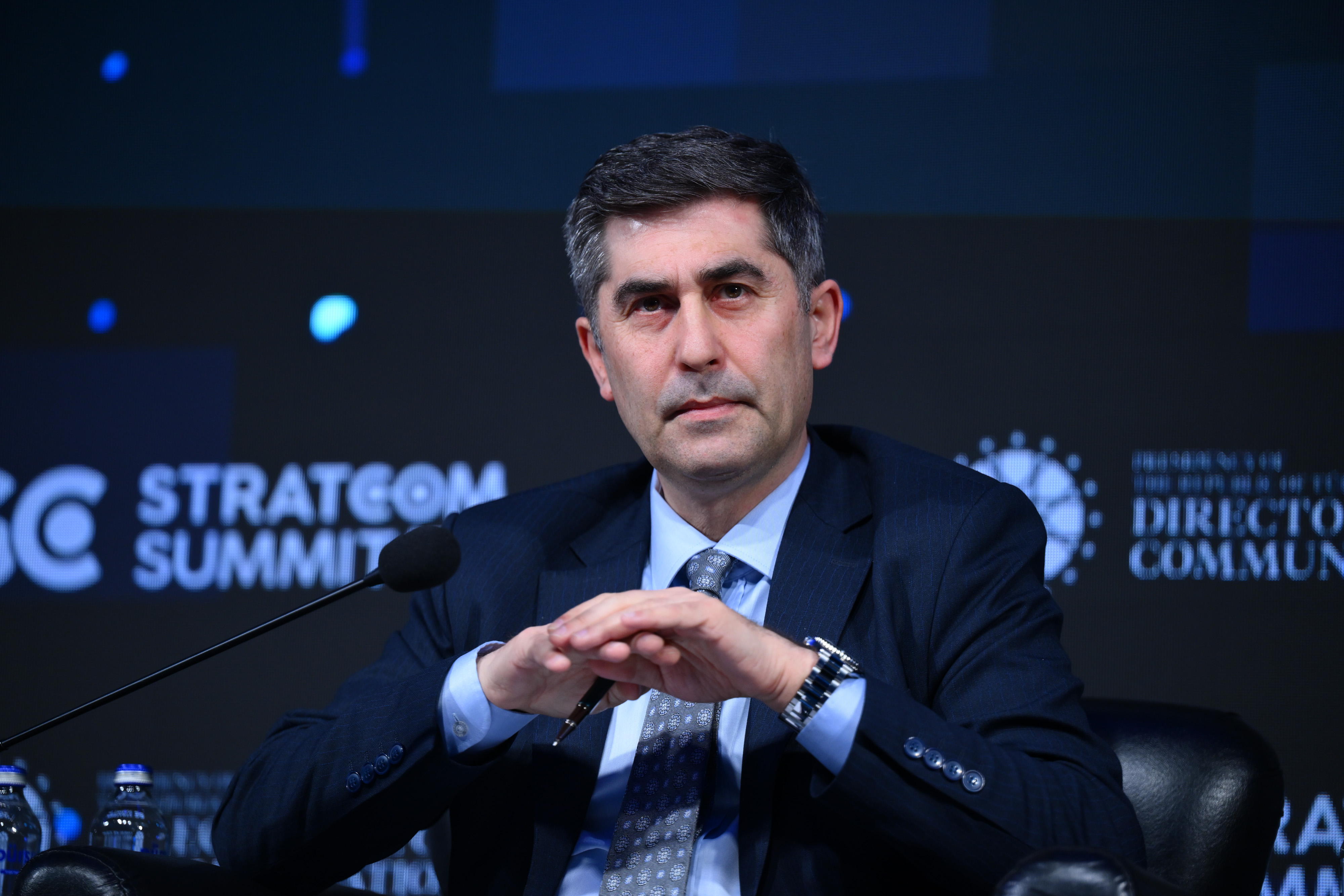
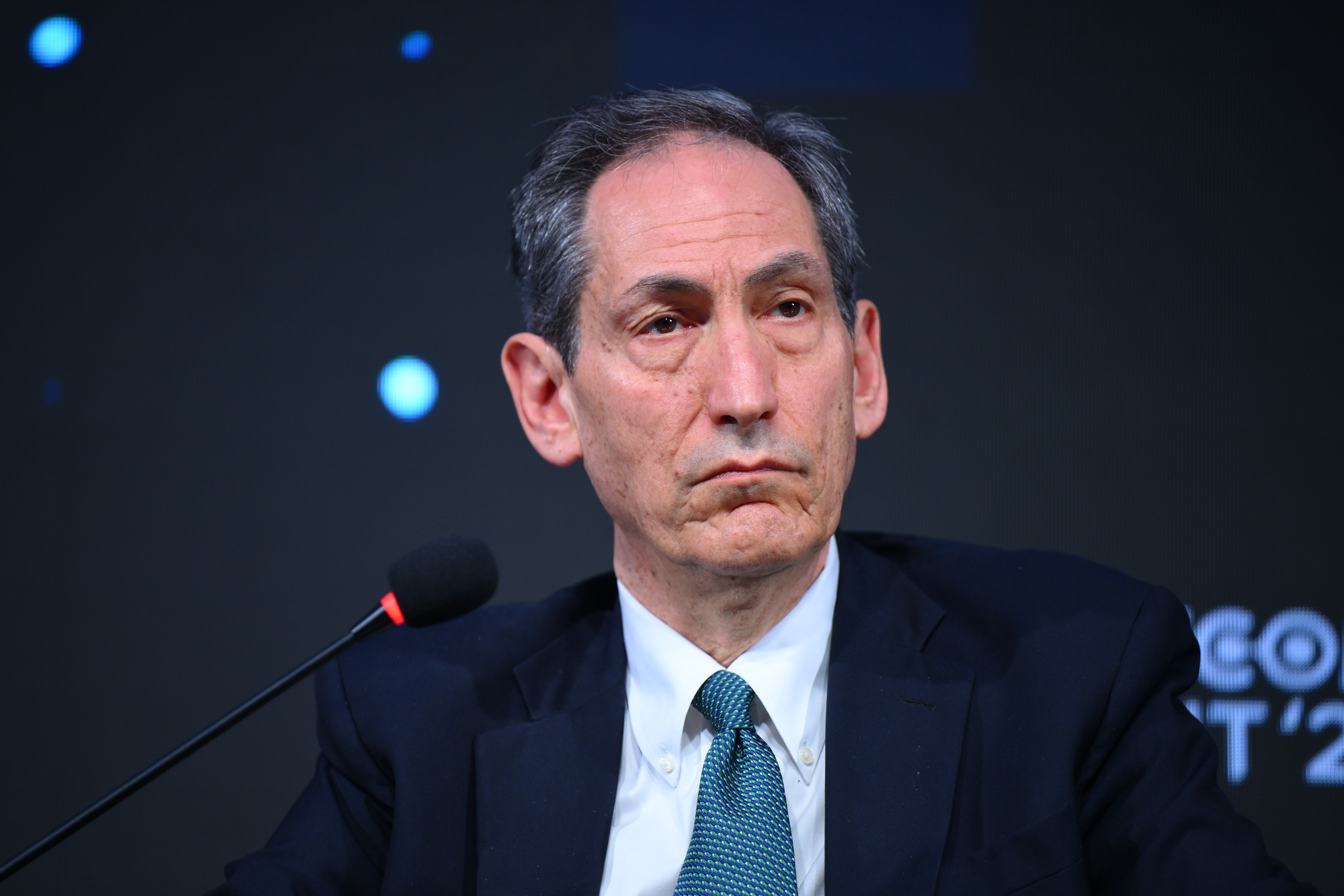
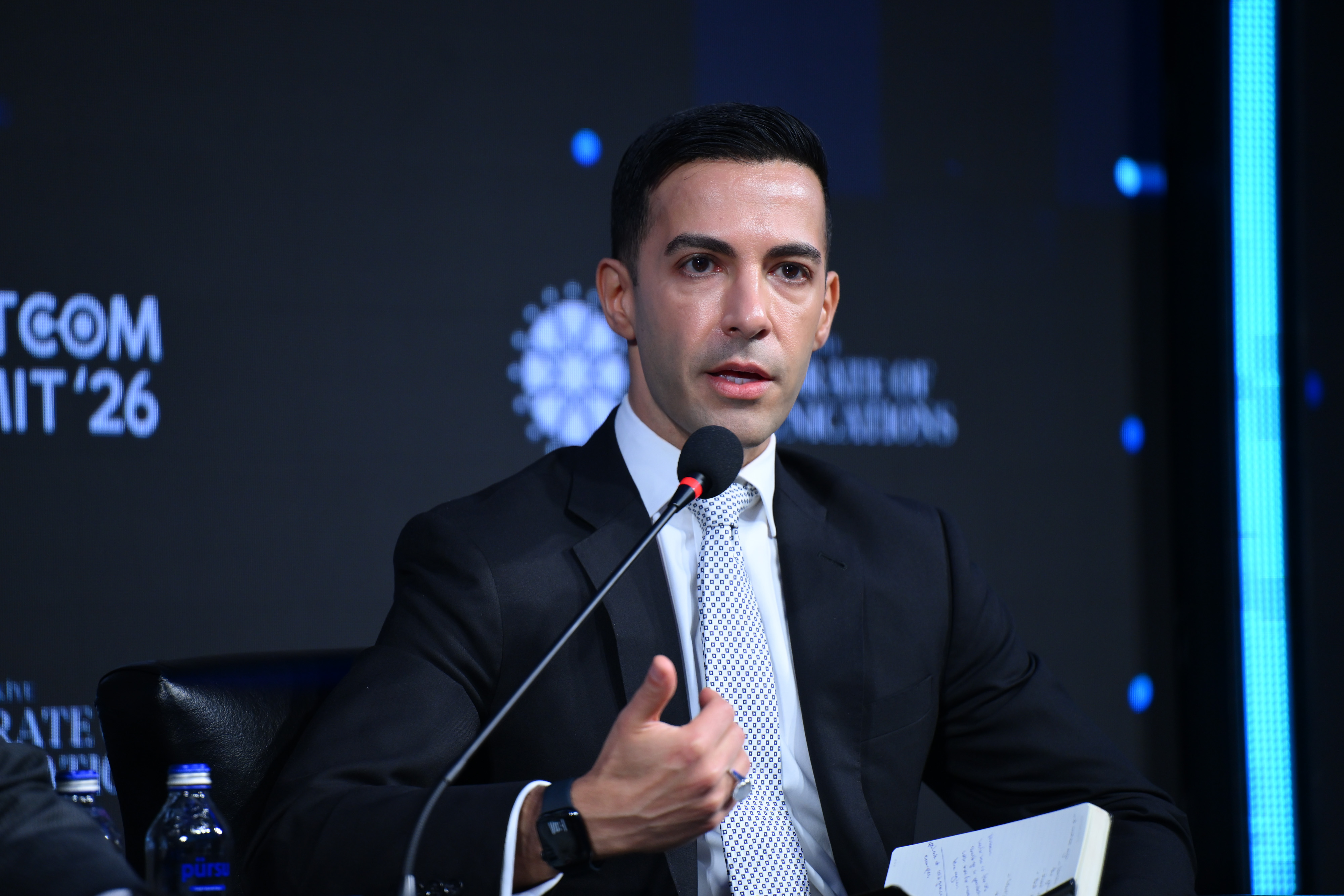
As part of the International Strategic Communication Summit (STRATCOM) 2026, the panel titled "From Regional Tensions to Global Fractures: Strategic Implications of the Iran War" was held.
The International Strategic Communication Summit, organised by the Presidency's Directorate of Communications in İstanbul, is ongoing.
The panel, moderated by Dr. Kadir Üstün, Washington Coordinator of SETA, featured Dr. Ali Vaez, Crisis Group’s Iran Project Director and Senior Adviser; Dr. Hakkı Uygur, Vice President of the National Intelligence Academy; Jon Alterman, Senior Fellow at the Zbigniew Brzezinski Chair in Global Security and Geostrategy at the Center for Strategic and International Studies (CSIS); and Prof. Murat Yeşiltaş of Ankara Social Sciences University as speakers.
Expressing his gratitude to the Directorate of Communications for the invitation to the summit, Vaez noted that this was his first time at STRATCOM.
Referring to the U.S. decision to withdraw from the 2015 nuclear agreement with Iran, Vaez stated, “(U.S. President Donald) Trump threw the deal in the trash.”
Vaez noted that the issue is not simple from Iran’s perspective, emphasising that all centrifuges in Iran have been monitored from the very beginning.
Vaez highlighted the importance of a win-win approach in negotiations, stating, “Iran just wants to bargain.”
Alterman also expressed his pleasure at participating in STRATCOM.
Alterman noted that what needs to be examined is whether there is a trust relationship between the U.S. and Iran, stating, “There is a principle, but the idea of trust was not part of it.”
Regarding the war that began with U.S.-Israel attacks on Iran, Yeşiltaş said, "This is a strategic nightmare."
Yeşiltaş, noting from the outset that the war would not remain confined to the U.S.-Israel and Iran, stated that Türkiye’s priorities are to avoid the war and prevent Gulf countries from becoming involved.
Yeşiltaş, noting that recent events have caused some issues in the strategic infrastructures of the Gulf countries, stated, “If this turns into a Gulf war, it could lead the situation in a different direction.”