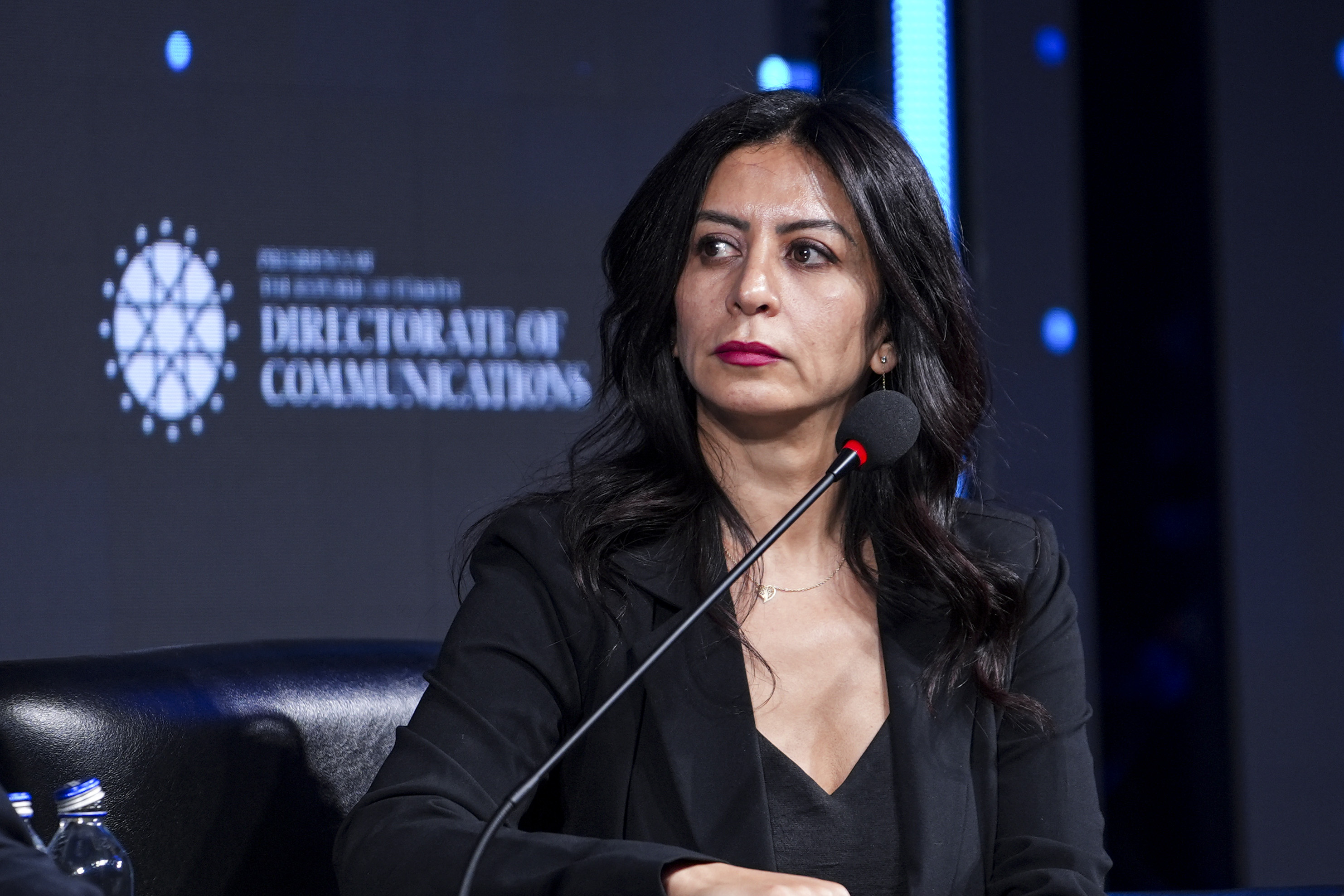
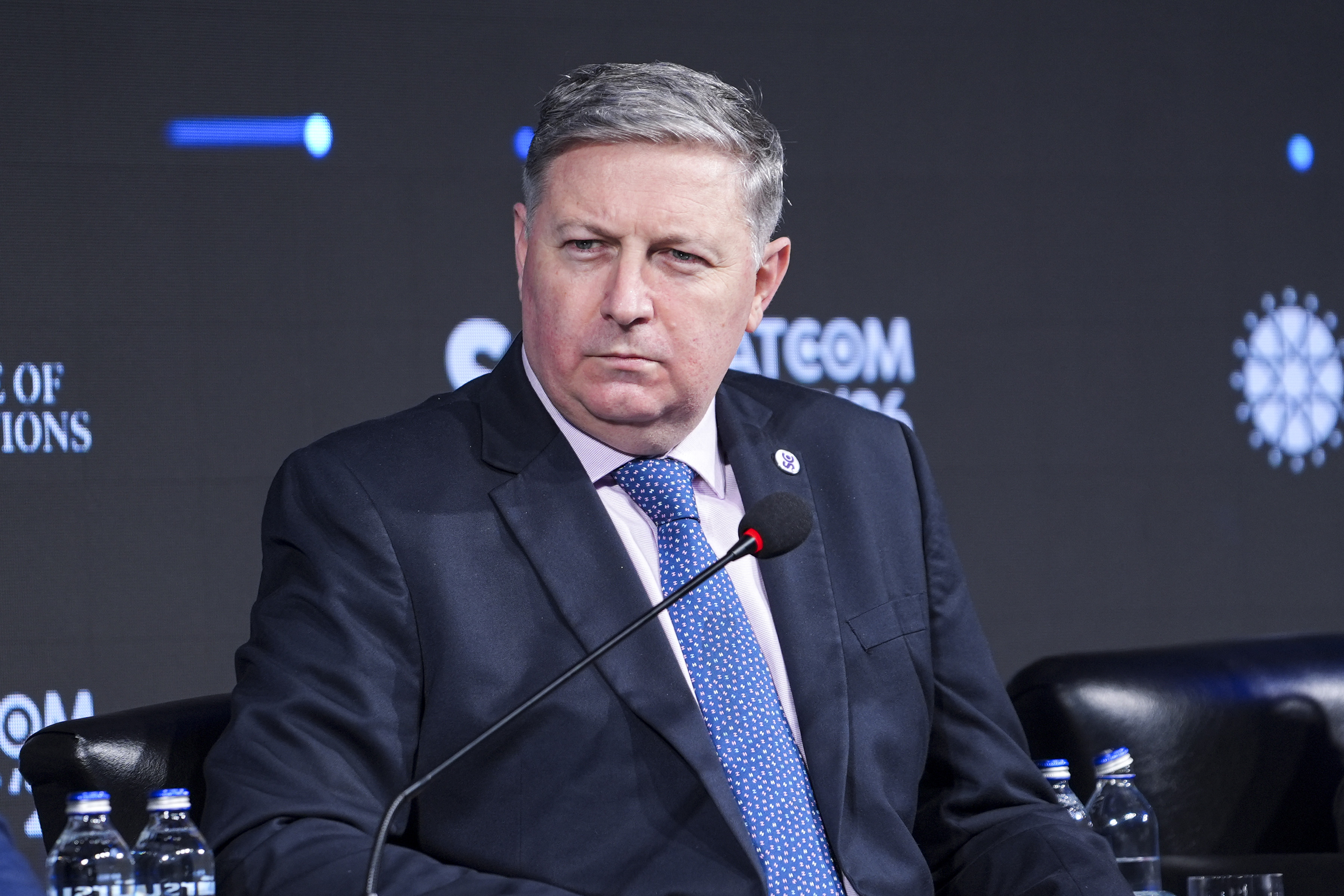
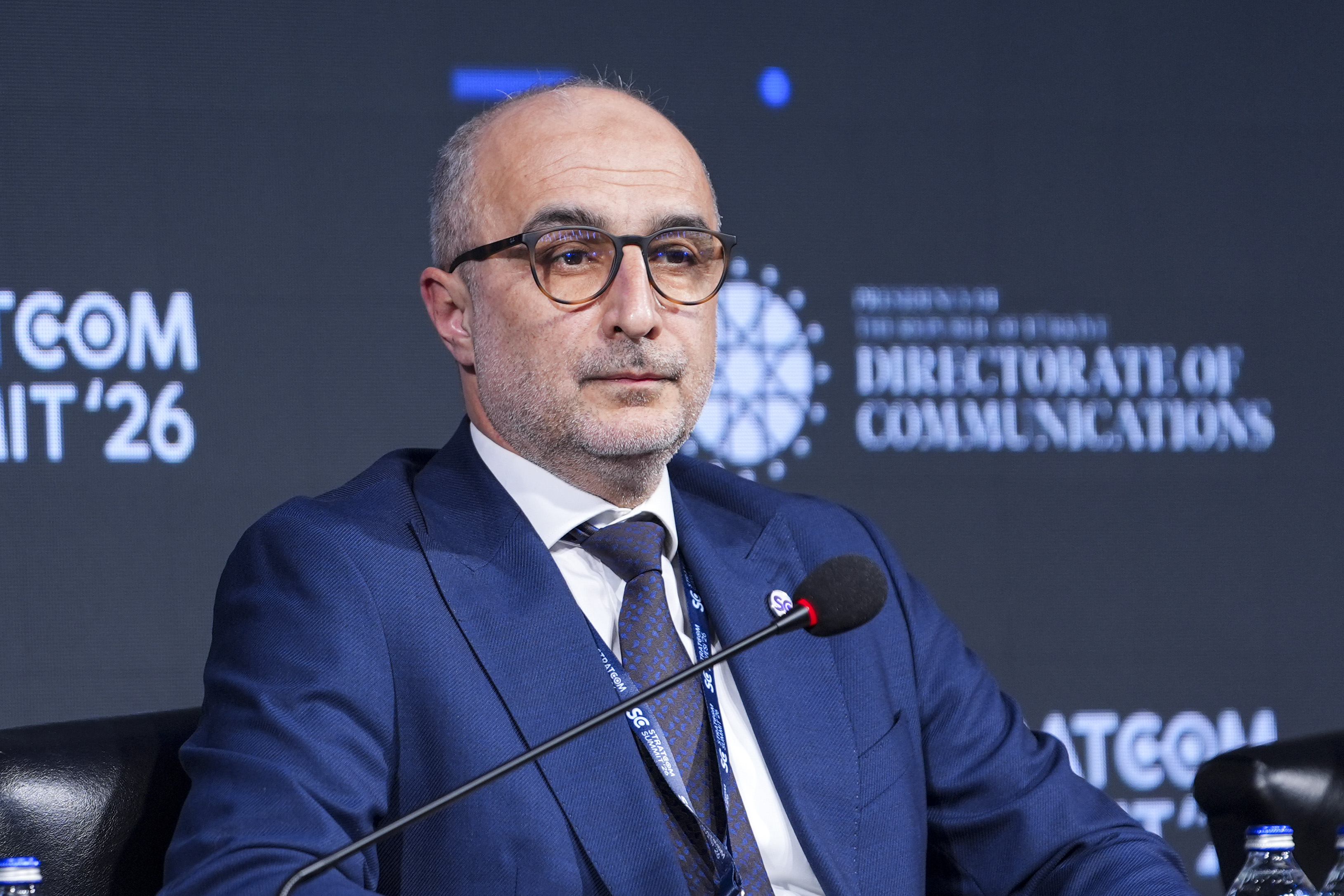
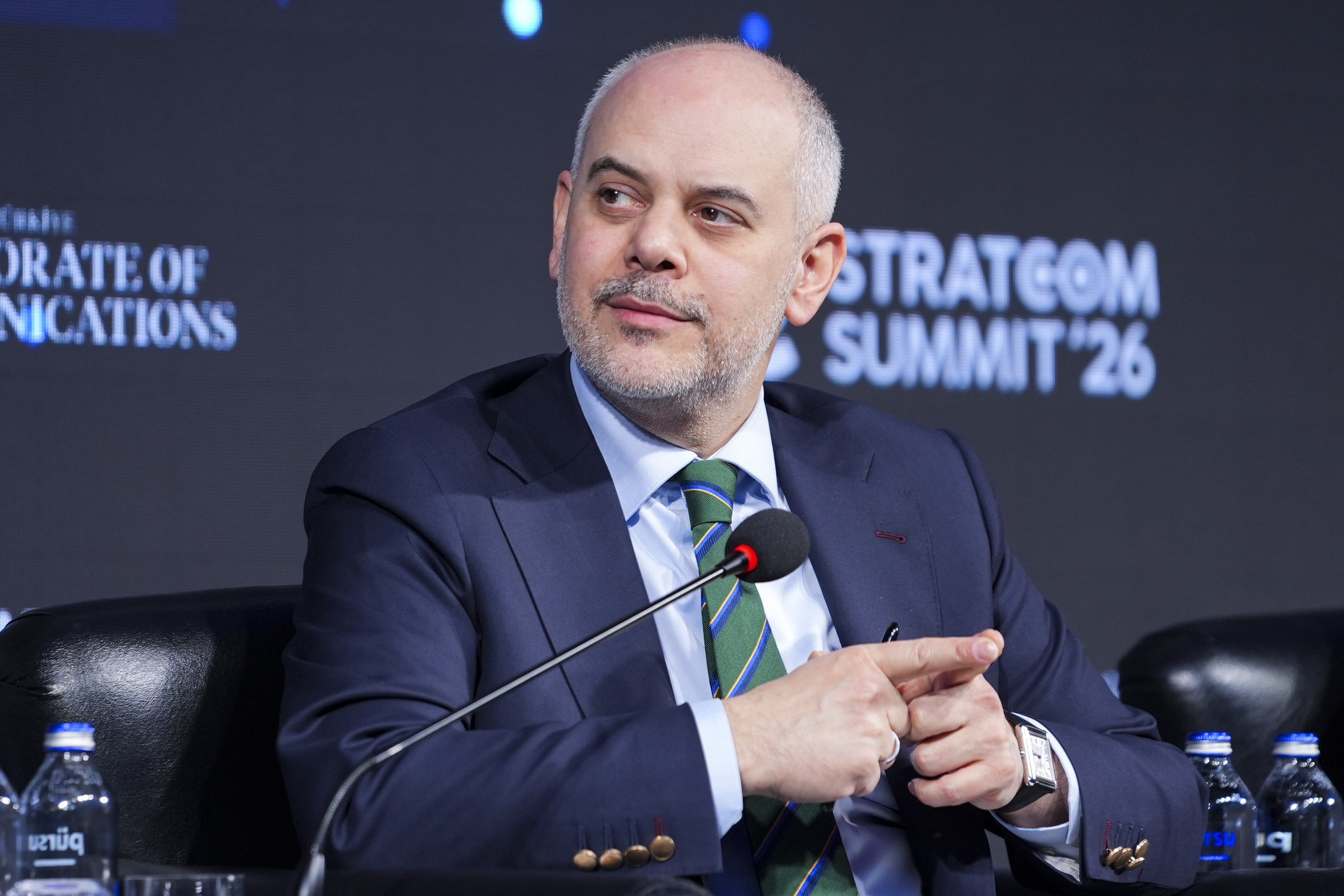
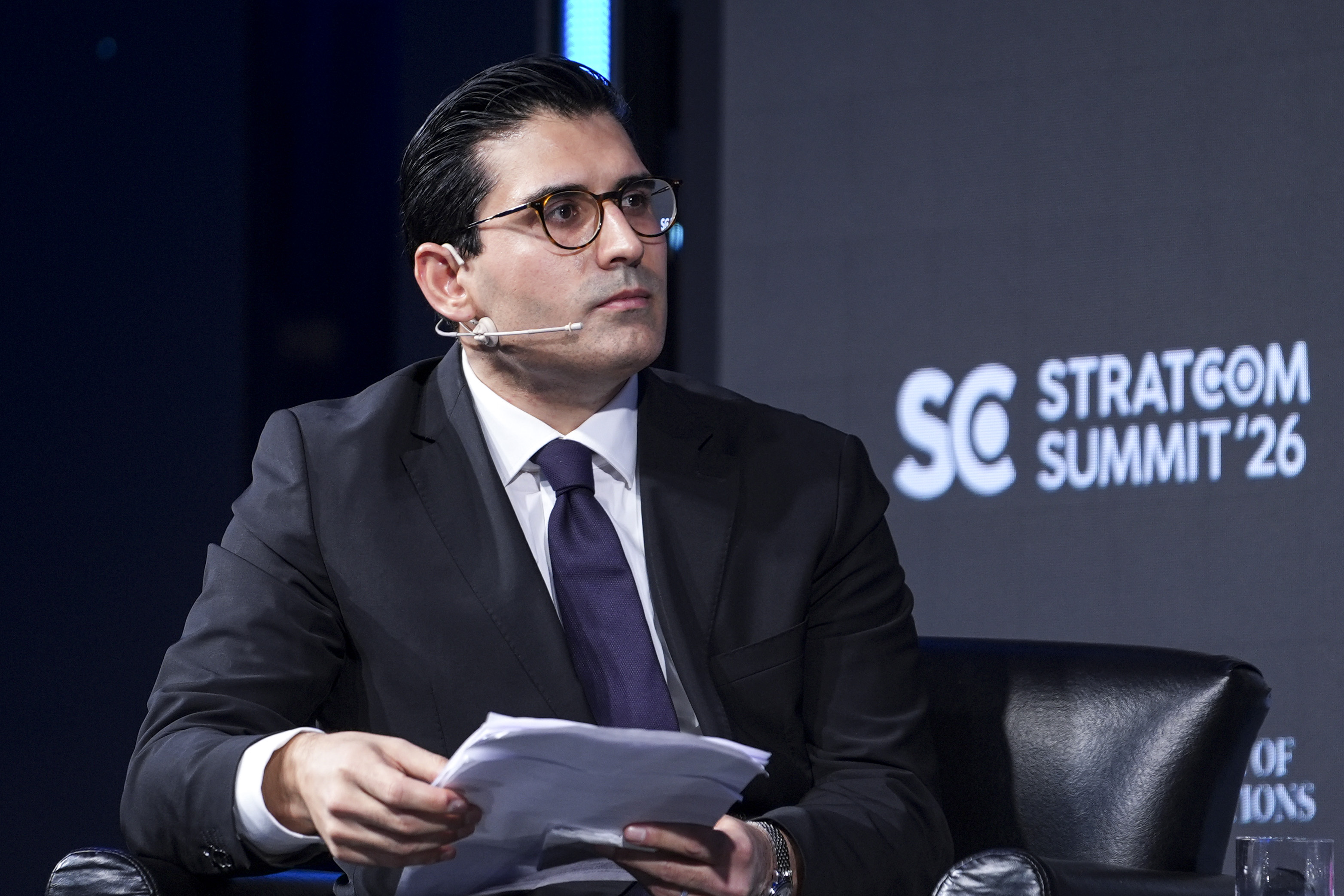
Held under the theme “Disruption in the International System: Crises, Narratives and the Search for Order”, the International Strategic Communication (STRATCOM 2026) Summit featured a panel titled "Strategic Communication in the Age of Uncertainty: Crises and New Balances".
Speakers on the panel included Chief Adviser to the President on Foreign Policy and Security Ambassador Akif Çağatay Kılıç, Dean of the Faculty of Communication at Marmara University Mehmet Emin Babacan, Founder of the Malaysia Crisis Management Centre Nordin Abdullah, and President of the Centre for International Policy Nancy Okail (PhD).
Founder of the Malaysia Crisis Management Centre Abdullah stated that the balance of “conflict and resolution” in traditional storytelling has broken down in today’s global crises, saying, “In the stories we tell our children, there is always a conflict followed by a resolution. However, what we see today, as in the Iran crisis, is that while conflict exists, there is no guaranteed resolution. We do not know when a solution will emerge.”
Referring to the Israel/US–Iran tensions, Abdullah illustrated strategic communication tactics, arguing that while Iran has taken significant steps in targeting energy supply chains, its primary strategic manoeuvre has been to use American media against US policymakers responsible for attacks on its territory.
Highlighting the transformation in the structure of actors in modern information warfare, Abdullah underlined the growing influence of the private sector and individual actors: “The main players in this game are no longer just governments. We must understand that the process is largely driven by the private sector. We are faced with an extraordinary spectrum of capabilities—from some of the world’s largest organisations to three individuals working from a house in Ukraine with a laptop.”
Abdullah also emphasised that strategic communication plays a critical role in attacks targeting supply chains, stating, “Non-democratic structures and non-state actors are using NGOs and communication tools as weapons to target specific supply chains. We must now be prepared not only for physical attacks but also for these sixth-dimension attacks targeting minds.”
“Strategic communication must be grounded in honesty, credibility and accountability”
President of the Centre for International Policy Okail drew attention to the disparity in global responses to crises across different regions, stating that while the world closely followed and supported protests in Iran, it remained silent when 168 children were killed in a single attack during US and Israeli strikes in the same country.
Pointing out that military solutions have not made the world safer, Okail said, “According to 2024 data, 2.7 trillion dollars were spent on military expenditures globally. But has this made us safer? There are currently 61 active conflicts across 36 countries. While trillions are being spent, people do not feel they are living in a stable world. If strategic communication is to serve global security, it must first be grounded in honesty, credibility and accountability.”
Arguing that narratives constructed by leaders lose their effectiveness in the face of rising costs of living and civilian casualties, Okail added, “No matter how sophisticated or dominant a message you construct, that narrative ultimately encounters its limits when confronted with reality. When people see rising prices and civilian deaths, the impact of the message fades. As in the COVID-19 period, even if countries try to manipulate figures, people experience the truth in their daily lives.”
“The values humanity has accumulated over centuries are undergoing a profound test”
Dean of the Faculty of Communication at Marmara University Babacan emphasised that the values accumulated by humanity over centuries are undergoing a profound test, stating, "When we look at Gaza, Ukraine, and most recently the Iran–Israel–US war, we are witnessing a period in which the positive values humanity has built—such as democracy, human rights and freedom—are losing their meaning. Everything we knew from the 20th century has now given way to a vast void.”
Criticising the past communication approaches of regional countries, including Türkiye, Babacan said that the time has come to articulate their own narratives. Prof. Babacan said:
“In the past, we adopted a position shaped by an orientalist perspective towards ourselves. However, the mission imposed on us by history and reality now requires us to assume a far more proactive role. Our effort to develop our own conceptual framework is not limited to our national borders but extends to our broader geography of affinity.”
Babacan also noted that digitalisation has transformed the very definition of society, stating, “With the rise of artificial intelligence, genetics and robotics, fundamental existential questions—such as the place of humanity in this universe—remain unresolved. Our minds are deeply unsettled; we are faced with a narrative of society and humanity that many of us struggle to fully comprehend.”