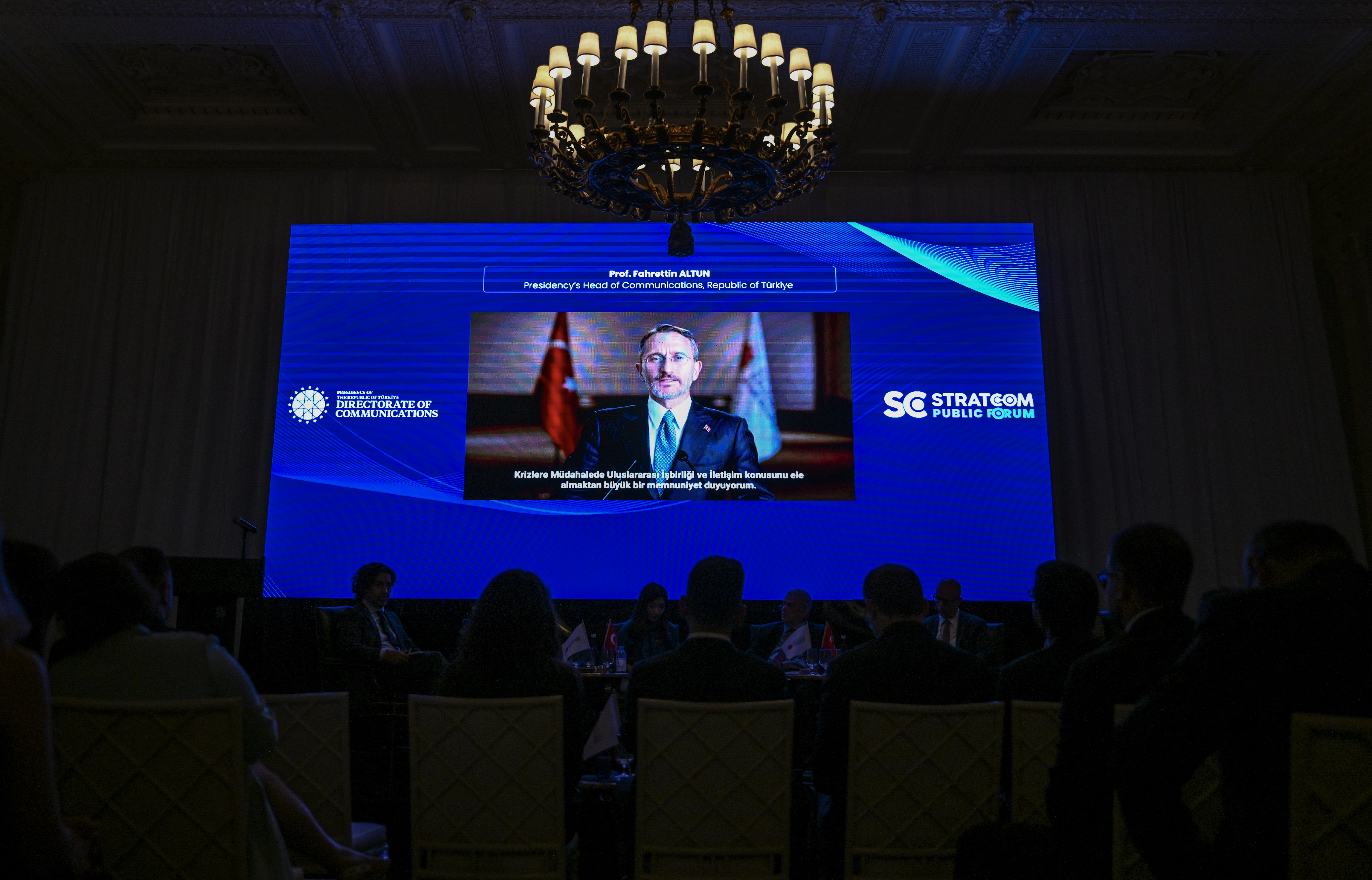
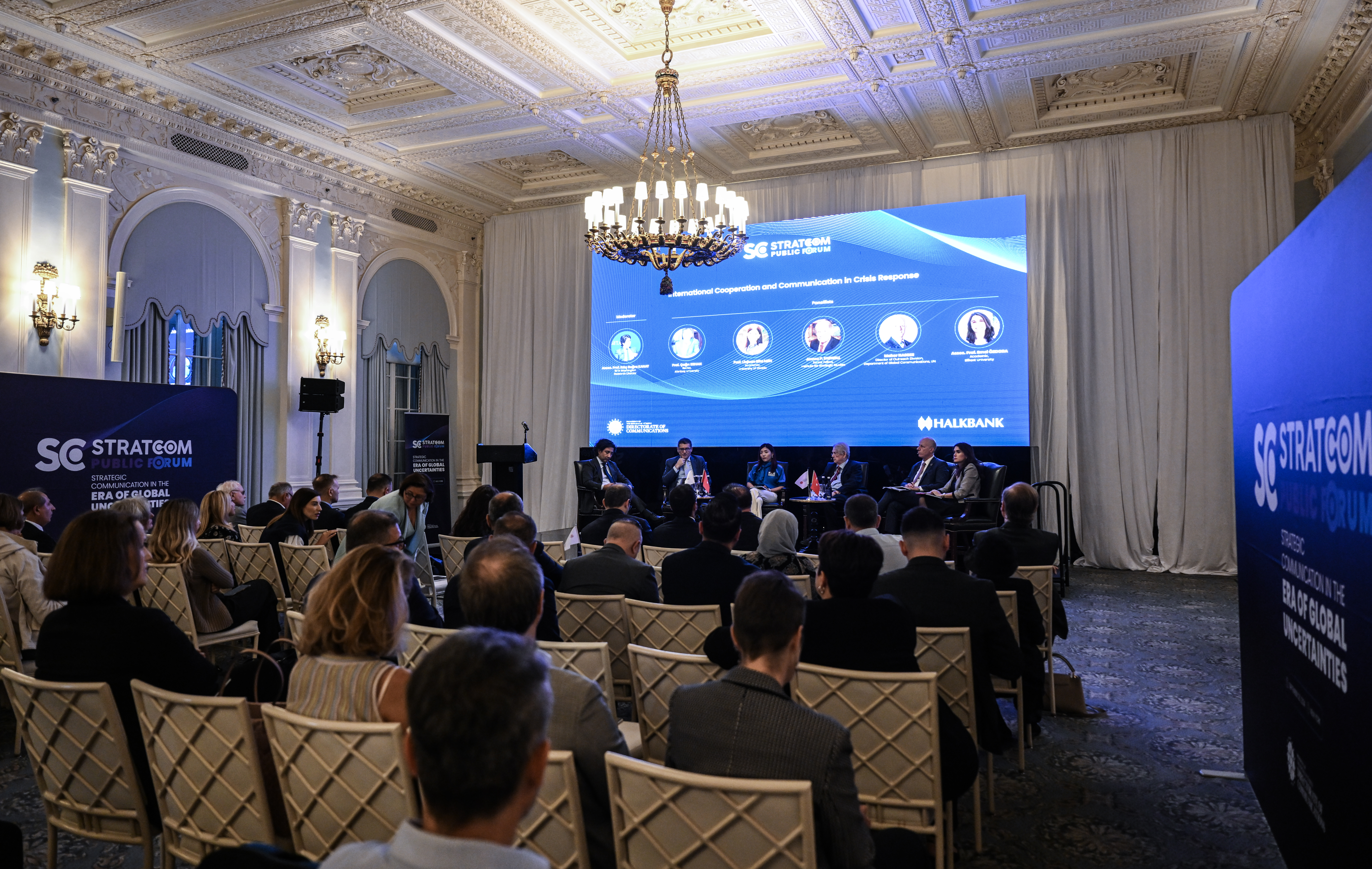
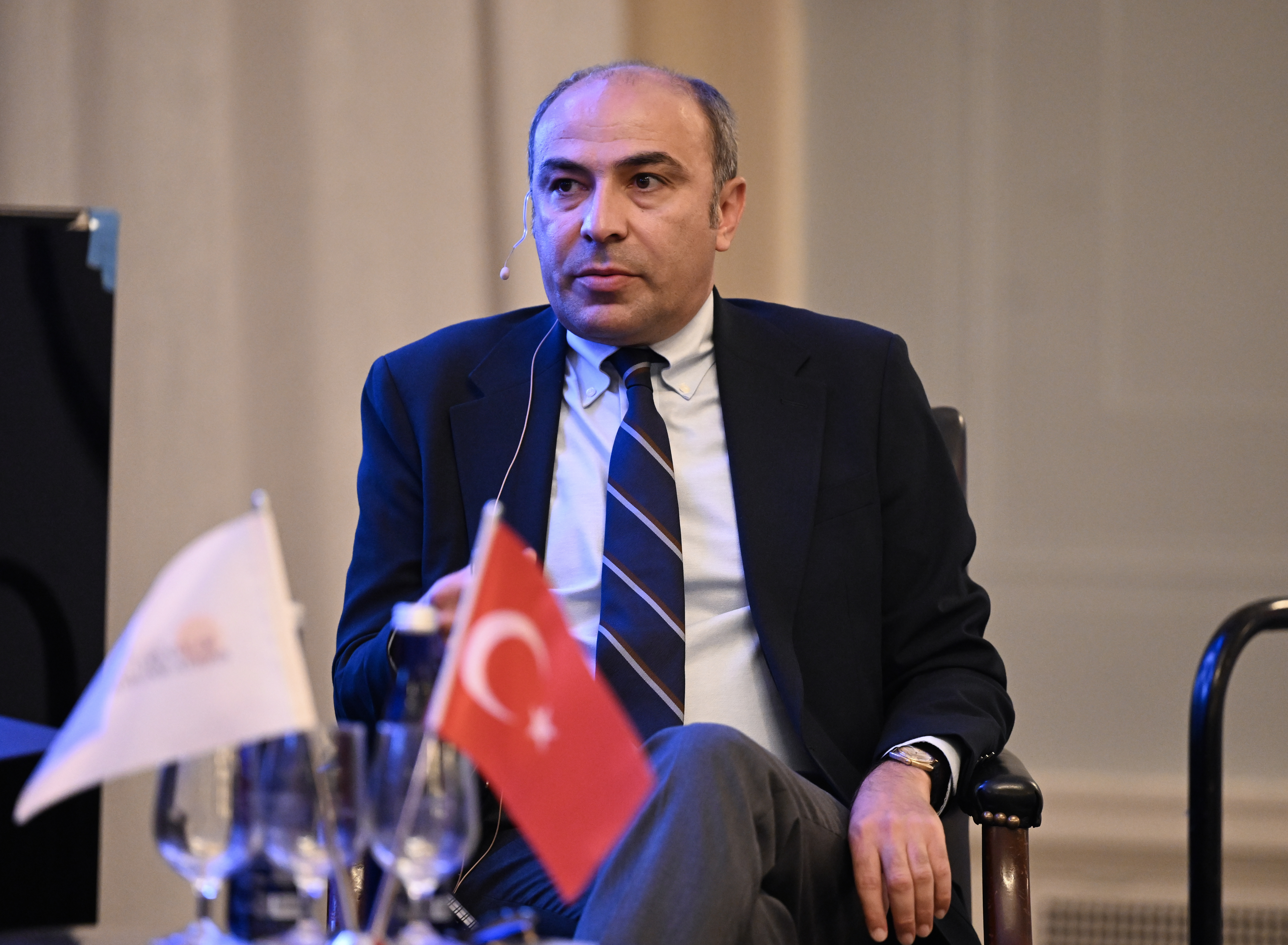
The Directorate of Communications organized the "Stratcom Public Forum," the first international event of the Strategic Communication Summit, in New York, where a thorough discussion of strategic communication's role in the face of global uncertainties took place.
At the panel held at the New York Yale Club, with the theme "Strategic Communication in the Era of Global Uncertainties," experts and academics discussed current issues in strategic communication and crisis management approaches and shared their experiences with examples.
In her opening speech delivered via video, United Nations (UN) Under-Secretary-General for Global Communications, Melissa Fleming, said that the UN is fighting for more peaceful, sustainable, and humane societies on a healthier planet.
Fleming emphasised that certain powers are trying to shape the world for their own interests, adding, "Unfortunately, these forces use tools at their disposal to create obstacles such as hate speech, misinformation, deliberately derailing meaningful discussions, polarising communities, and eroding trust in institutions worldwide."
Later on, Associate Professor Kılıç Buğra Kanat, Research Director at the SETA Foundation in Washington, moderated the summit's first session titled "International Cooperation and Communication in Crisis Response."
The first speaker, Prof. Çağrı Erhan, Rector of Altınbaş University, pointed to the ongoing genocide in Gaza, the refugee crisis in Syria, global warming, pandemics, and earthquakes, saying, "We are holding this panel at a time when we are facing disasters unprecedented in human history in the 21st century."
In his speech, Erhan mentioned Türkiye's crisis management efforts during the pandemic and earthquakes, stating that with the institutional structures it established, Türkiye has effectively shared this experience with over 100 countries abroad, in addition to its own domestic efforts.
Professor Linjuan Rita Men from the University of Florida highlighted that in times of crisis, such as the COVID-19 pandemic, it is essential for states and international organisations to unite on a common ground.
James P. Farwell from the Institute for Strategic Studies highlighted that the most important thing to do when dealing with crisis management in the context of international relations is to build trust by investigating and telling the truth.
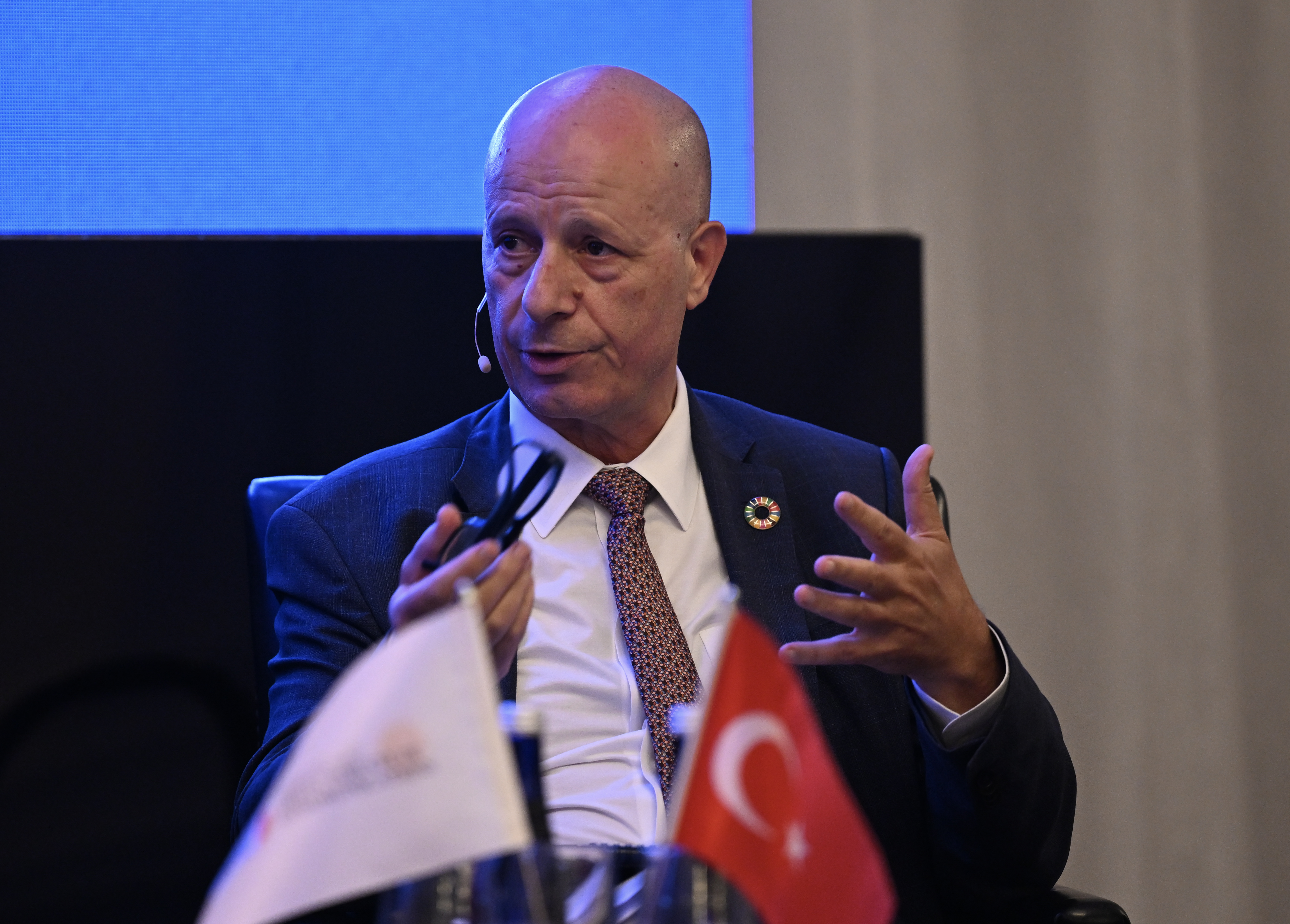
Maher Nasser, Director of Outreach Division at the UN Department of Global Communications, noted that in an era of global uncertainties, a principled approach and communication during crises help build trust between parties, but added that disinformation on social media makes this difficult.
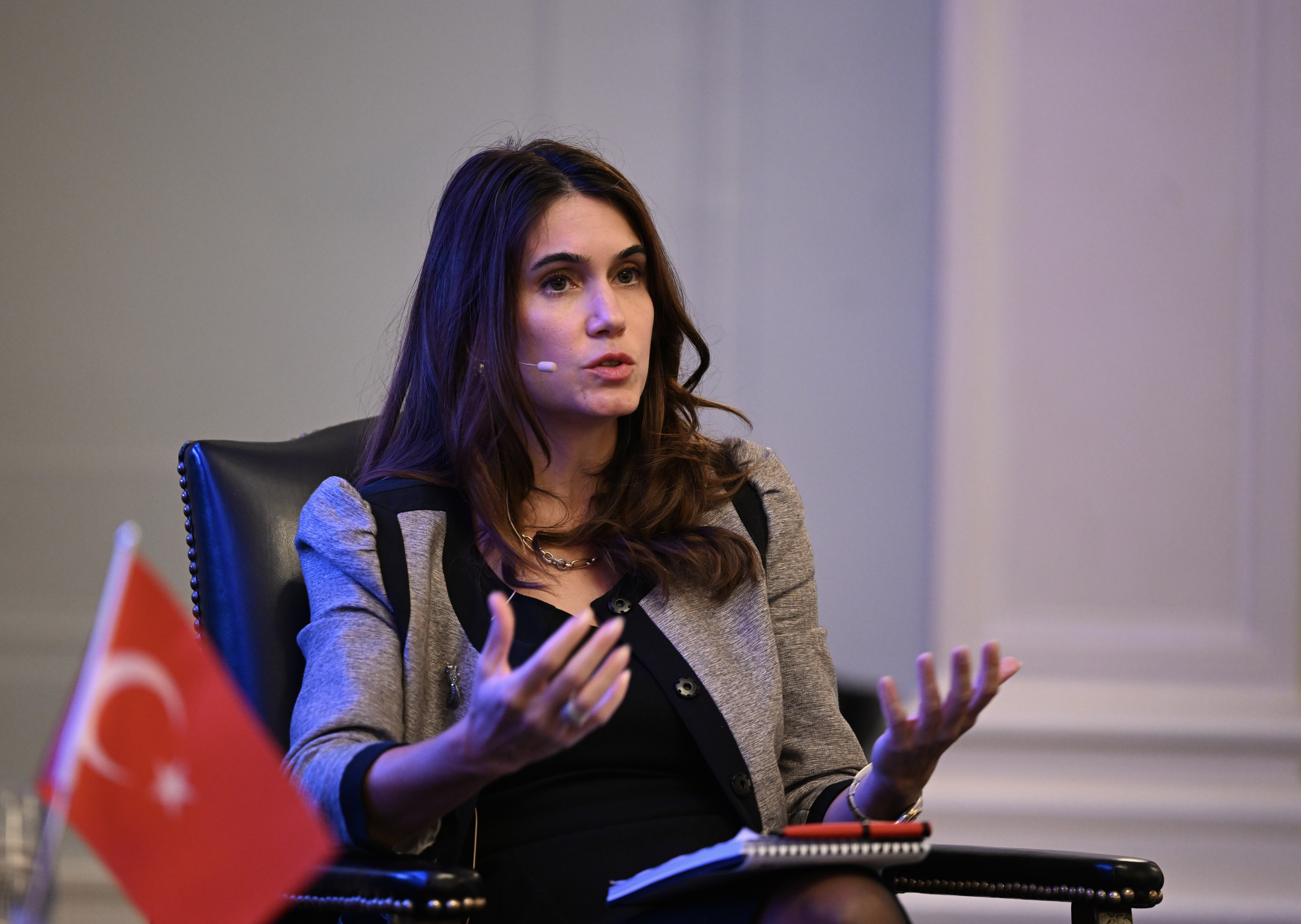
Associate Professor Emel Özdora from Bilkent University, in her presentation, emphasised the need for countries and organizations to use technological capabilities to prepare for uncertain global crises, stating that during a crisis, it is essential not only to share accurate and fast information but also to empathize with the emotional states of societies, and after the crisis, conduct systematic evaluation through measurement and analysis.
"With globalization, the world has moved beyond our control"
In the second part of the panel called "The Role of Strategic Communication in Building Global Peace", moderated by Associate Professor Oğuz Güner, Head of Public Diplomacy Department of the Presidency's Directorate of Communications, the role of strategic communication in contributing to global peace in the era of global uncertainty was discussed.
Professor Karen Freberg from the University of Louisville noted that strategic communication is a global industry and profession, emphasizing that everyone must fight against fake news, misinformation, and disinformation in this context.
Associate Professor Gaye Aslı Sancar Demren from Galatasaray University highlighted how the concepts of risk and security have significantly changed for both individuals and societies in the modern age, stating, "Means of communication, global climate crises, and pandemics play a role in shaping our cultural fears. With globalisation, the world has now moved beyond our control."
Former President of the Turkish Coalition of America, G. Lincoln McCurdy, drew attention to the communication problem between the U.S. and Türkiye, saying, "Although the two countries are NATO allies and work together in many parts of the world, they have a significant communication problem, and the main reason for this is the U.S. Congress."
McCurdy emphasised that if the communication problem between the two countries is not resolved, peace, stability, and prosperity will not be achieved in the Middle East, the Caucasus, or the region in general, stressing the need for a strong U.S.-Türkiye alliance.
Pointing out that the U.S. Congress is dominated by certain groups that do not favour Türkiye, McCurdy suggested that the Turkish-American community should more actively participate in local and national politics to solve this issue.
The final speaker of the panel, İdris Kardaş, Coordinator of the Centre for Combatting Disinformation at the Presidency's Directorate of Communications, discussed Türkiye’s efforts against disinformation on the international level.
As an example, Kardaş mentioned that they had exposed nearly 300 lies and pieces of disinformation related to Israel's genocide in Gaza, saying, "As the Republic of Türkiye, we are fighting for truth both for our country and for humanity."