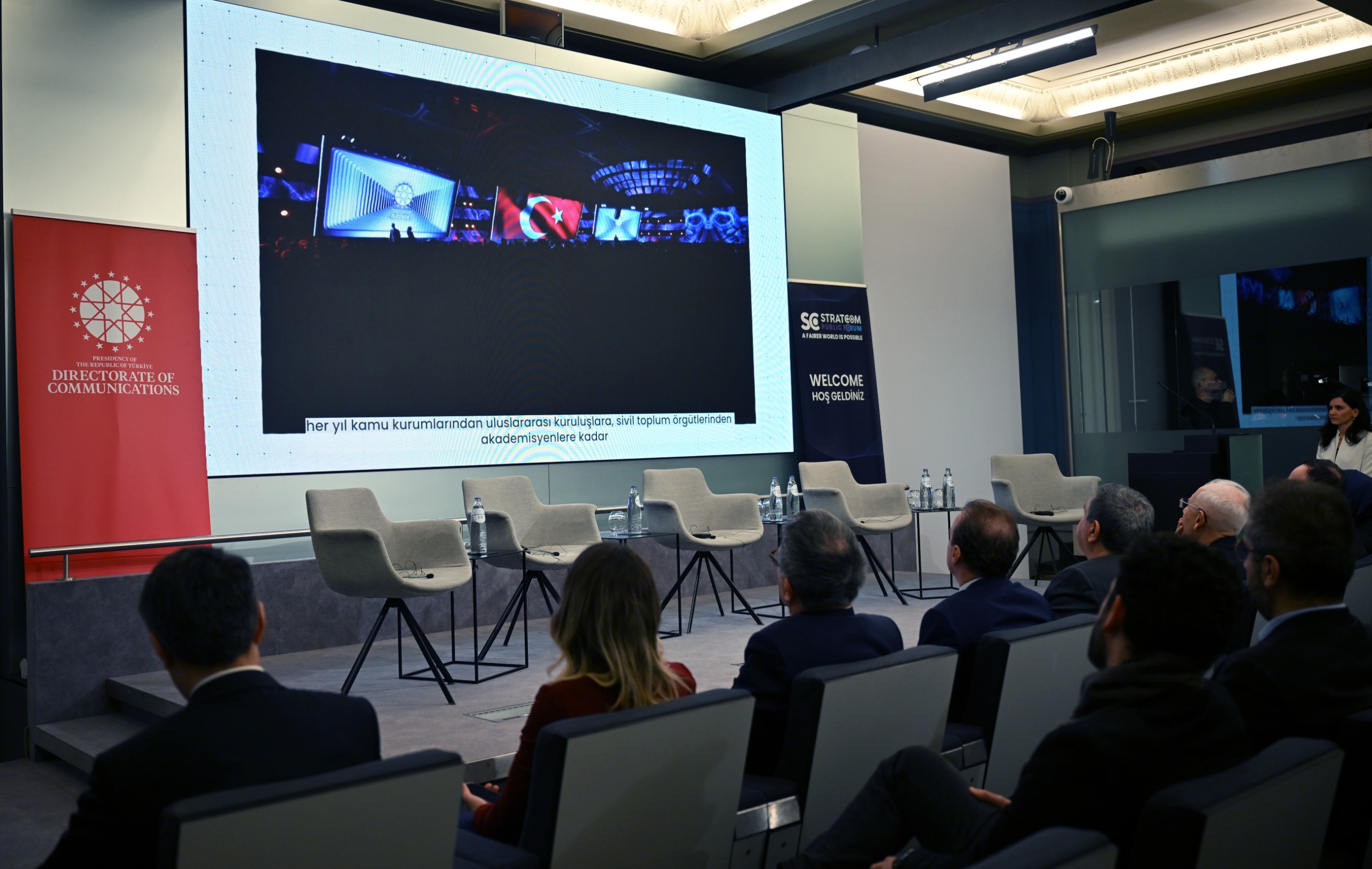
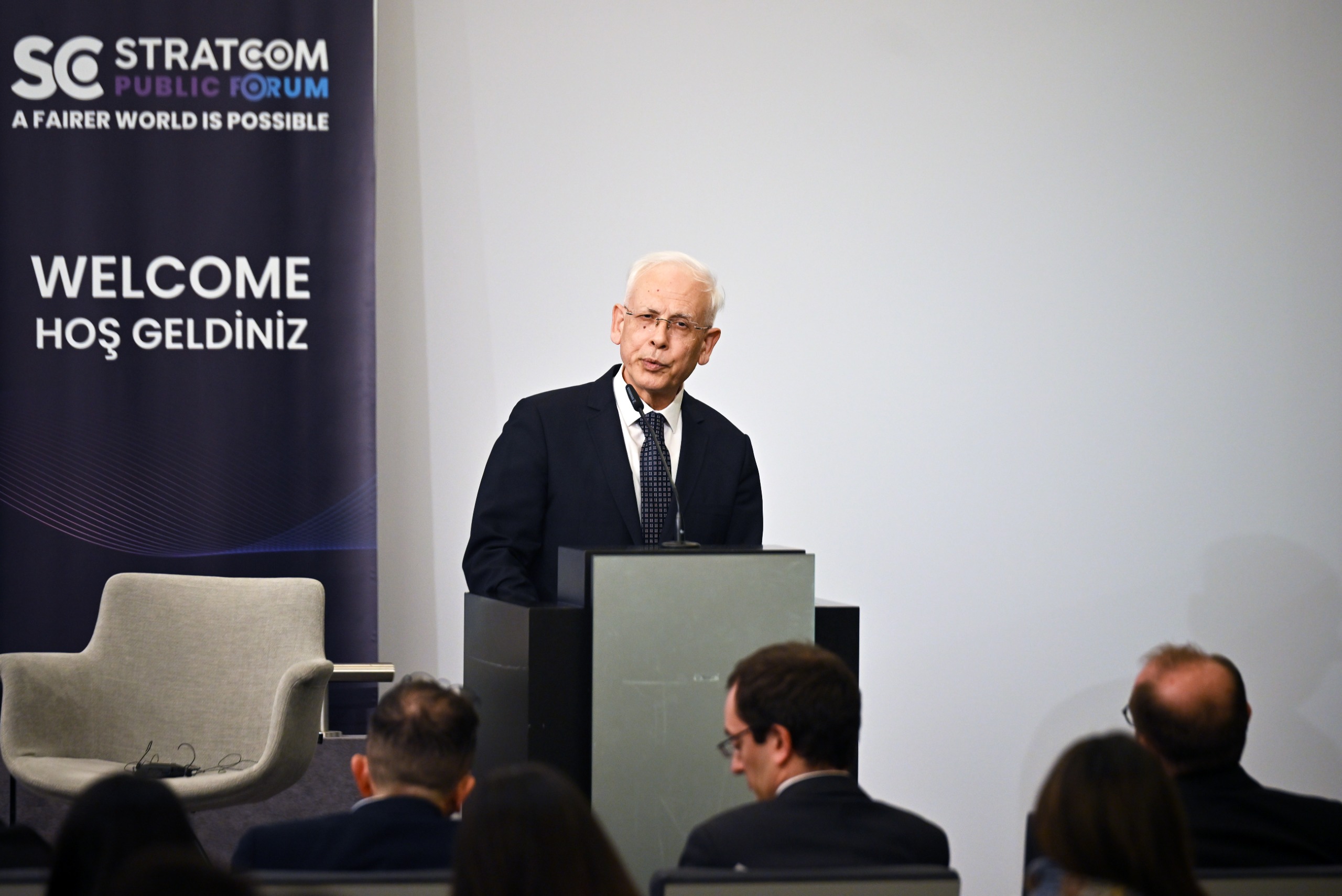
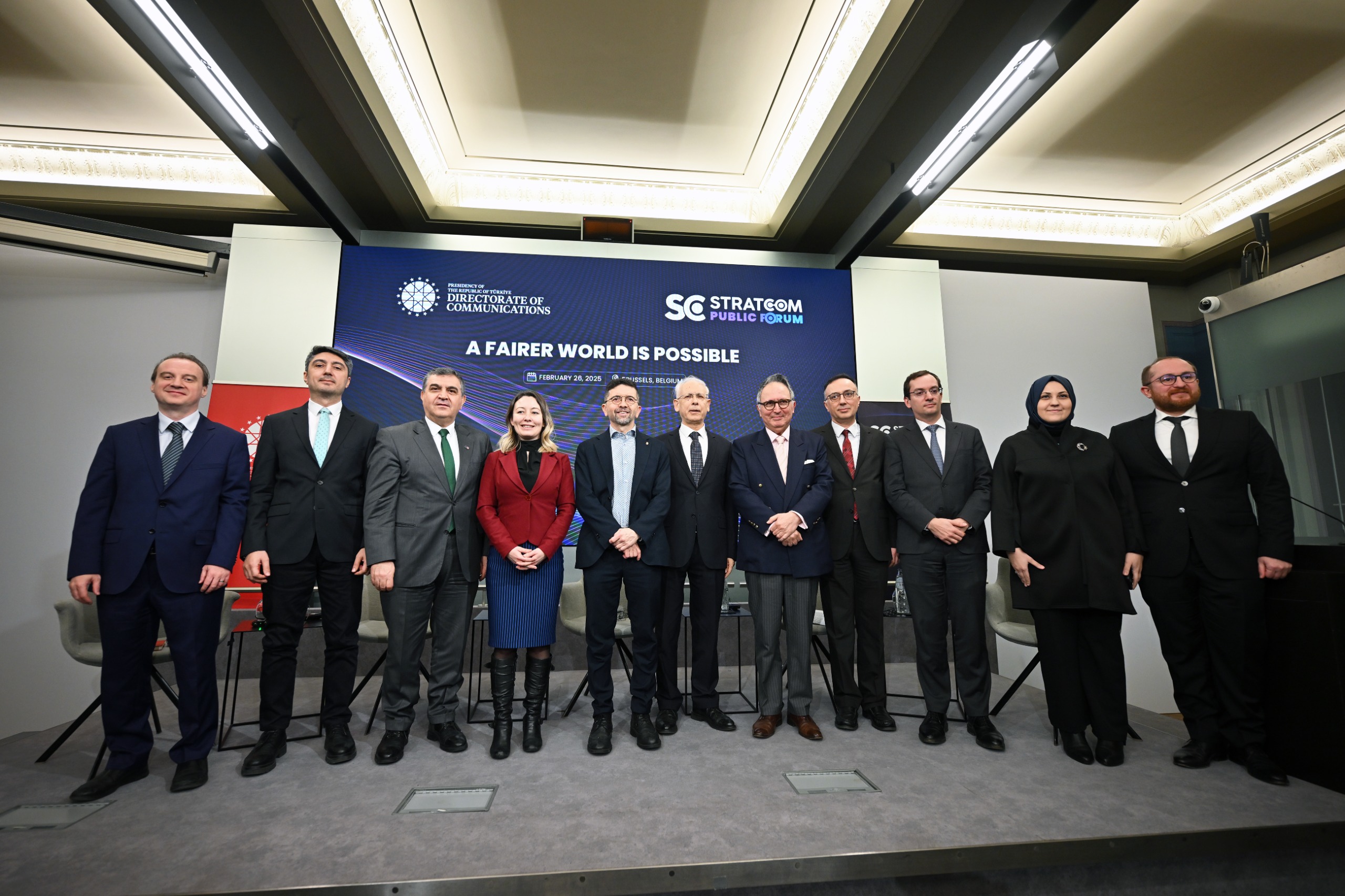
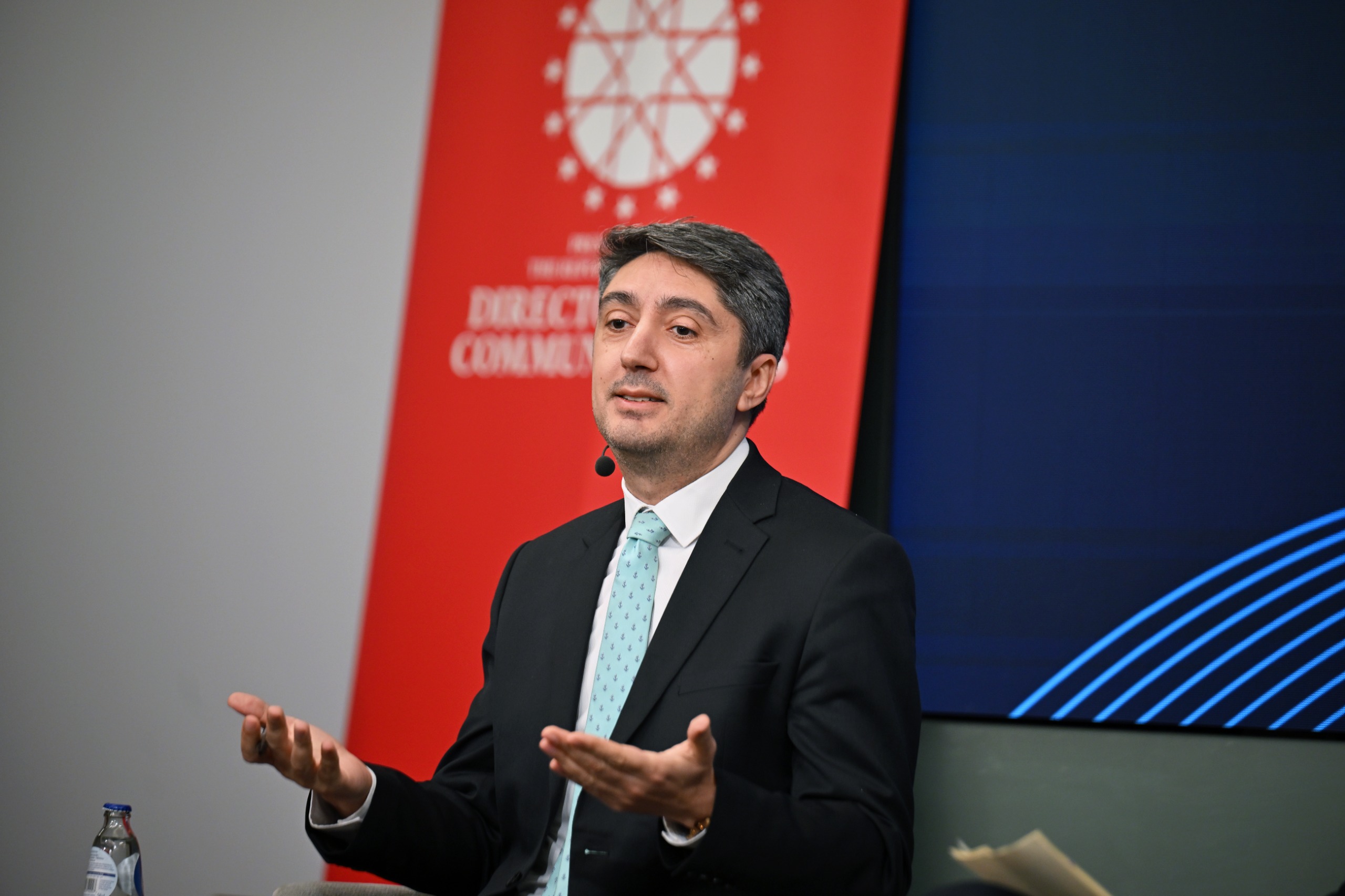
In Brussels, the capital of Belgium, a panel titled "Stratcom Public Forum: A Fairer World is Possible" was organised by the Directorate of Communications of the Presidency of the Republic of Türkiye and the Turkish Embassy in Brussels.
Ambassador of Türkiye to Brussels Bekir Uysal, Permanent Delegate of Türkiye to the EU Ambassador Faruk Kaymakcı, academicians, human rights defenders, journalists, representatives of EU institutions, international officials, representatives of non-governmental organisations, students from various universities in Belgium, and many other guests attended the panel at the Residence Palace in Schuman, where the European Union (EU) institutions in Brussels are located.
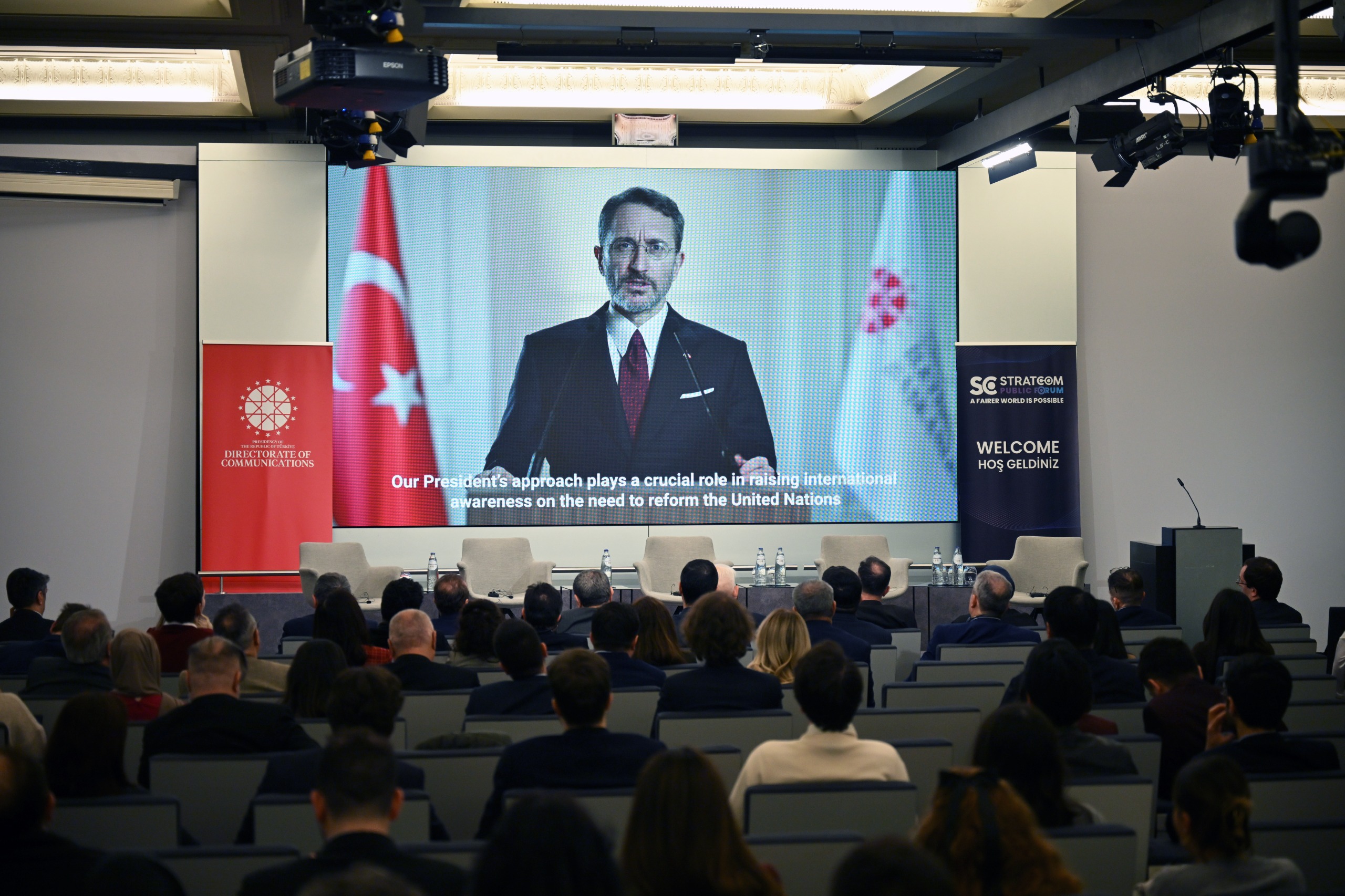
The panel began with a video message from the Presidency's Head of Communications Fahrettin Altun.
Türkiye is a strong advocate for multilateralism
Ambassador of Türkiye to Brussels Uysal delivered the panel's opening speech, expressing his pleasure to be present at this meaningful event organised by the Presidency's Directorate of Communications and saying, "We will listen to the exchange of views on how to achieve the fairer order that the majority of the world's population calls for. I would like to thank the Directorate of Communications for bringing such a critical issue to our agenda.''
Uysal stated that under the current world order, "it is obvious that no country can overcome the modern-day challenges alone" and continued, "Global issues such as pandemics, climate change, conflicts, terrorism, poverty, and other pressing problems can only be successfully overcome through cooperation and solidarity."
Noting that millions of people in Palestine continue to suffer the consequences of international law violations and international humanitarian law, Uysal went on to say:
''Mismanagement, the growing threat of terrorism and external interference, and the effects of climate change are having an adverse effect on millions of people in Africa, resulting in mass deaths, internal displacement, migration, and hunger and famine. Active multilateralism is therefore not a choice but a necessity, along with the protection of international law, respect for human rights, and the rule of law. Türkiye has long been an avid advocate of multilateralism, believing it is essential for a better, more equal, resilient, and sustainable world."
Stating that the United Nations (UN) is ''where any genuine attempt to revive multilateralism must begin,'' Uysal noted the following regarding the reform needed at the UN:
"Türkiye supports all efforts to make the UN more relevant and fit to face the complex challenges of our century. Addressing the critical issue of Security Council reform is of vital importance in this regard. Türkiye wants to see a more democratic, representative, transparent, effective and accountable Council. The use of the veto is one of the most urgent issues to be addressed. We are confident that the Security Council will be more representative and responsive if we increase the number of elected seats and the ability of all Member States to serve on the Council."
Ambassador Uysal, recalling President Recep Tayyip Erdoğan's statement, "The world is bigger than five," said, "The idea of a 'fairer world' is supported in various segments of the world, particularly by developing and least developed countries. In this context, it is important to note that reform should address shortcomings rather than reinforce what already exists. Even if it is not a solution to all injustices in the world, a decision to be taken in this direction would be a significant start."
"One of the solutions is, of course, Türkiye's EU membership"
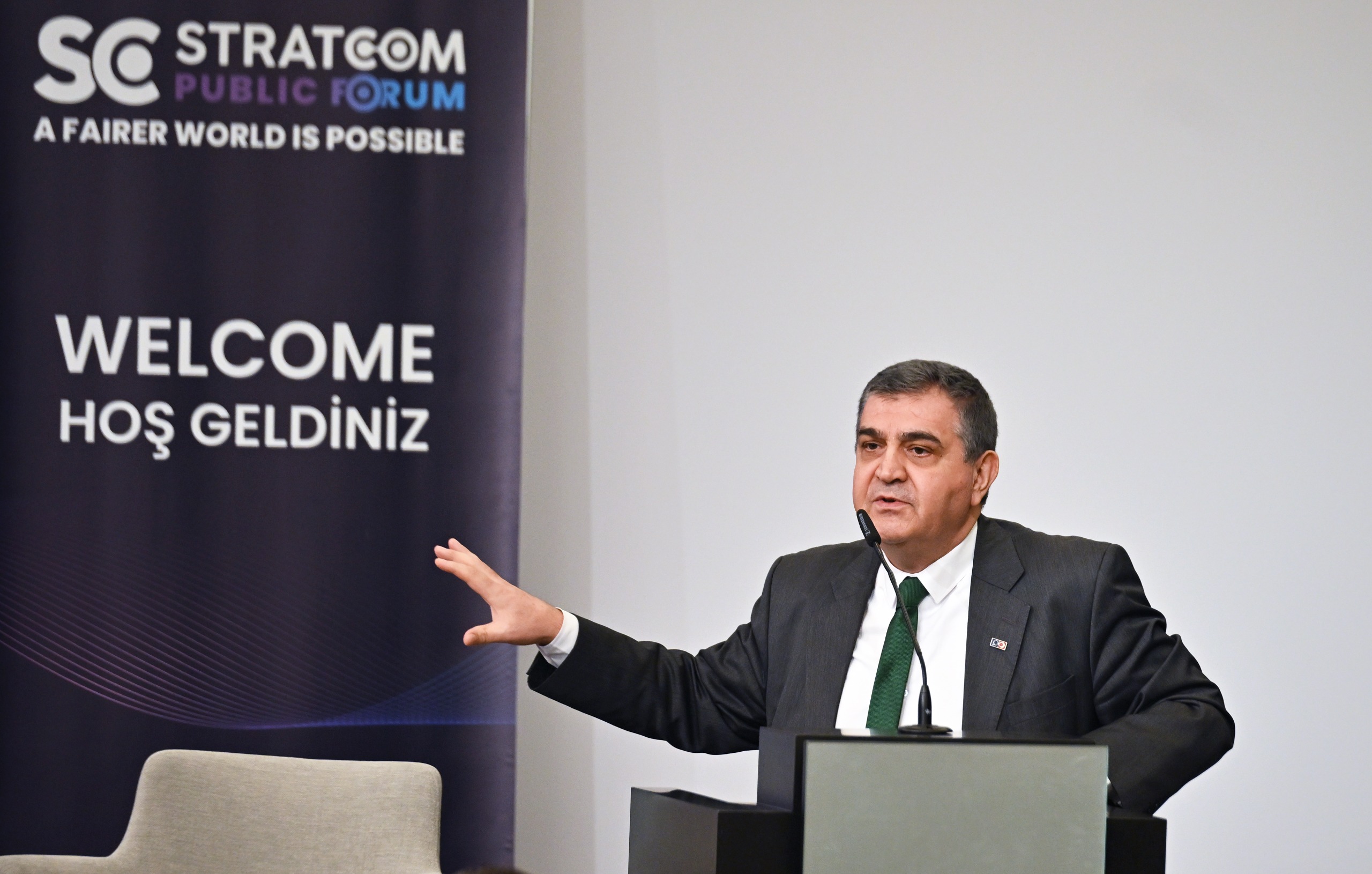
Permanent Delegate of Türkiye to the EU Ambassador Faruk Kaymakcı said that the EU could become a global player on the world stage with Türkiye's participation.
Stating that he would try to relate the A Fairer World is Possible discussion to the EU, Kaymakcı said that the EU could be a source of inspiration for a fairer world with both its assets and commitments.
Pointing out that there is a similar veto right in the EU as in the UN, Kaymakcı noted that this situation creates problems in determining foreign security and defence policy.
Kaymakcı stated that the EU has found different ways of decision-making as a precaution against the problems that may arise from the use of the veto and adjusted the representation in the European Parliament (EP) according to the population; thus, a more balanced system is functioning within the EU compared to the UN.
Noting that the EU can contribute to "a fairer world," Kaymakcı said, "This is also a question of whether the EU should be an actor to create a fairer world, whether the EU should have greater authority, whether the EU should take quick decisions, and whether the EU should be more effective."
Stating that Türkiye's EU membership is of great importance in this direction, Kaymakcı said, "One of the solutions is, of course, Türkiye's EU membership. As I have already mentioned, this could be a great asset for the EU. I have consistently maintained that Türkiye's membership is the most challenging, the most contested, the most debated, and the most questioned. The EU and Europe will only become a global player on the world stage and contribute to a fairer world when this occurs, as it will be the most useful and meaningful accession."
Expressing the need for equal access, equality, participation, diversity and democracy, which are among the fundamental principles of justice and equity, Kaymakcı said:
"We need equal access, without barriers. We need equality. We need diversity. We must respect diversity, and we must include everyone. We need participation. And finally, we need a rules-based system, namely democracy. Of course, in a chaotic world, it may appear a bit naive to discuss democracy; however, I believe that it is the ultimate solution, especially in the digital age."
Emphasising that democracy should not be "manipulated" by information and digital technologies, Kaymakcı said, "Democracy should be able to respond to the needs of societies, and I think this is one of its key components. Türkiye is doing its best to bring justice to the UN system, and we hope that Türkiye's EU membership will help to strengthen the EU and contribute to global peace and justice."
The world is changing rapidly
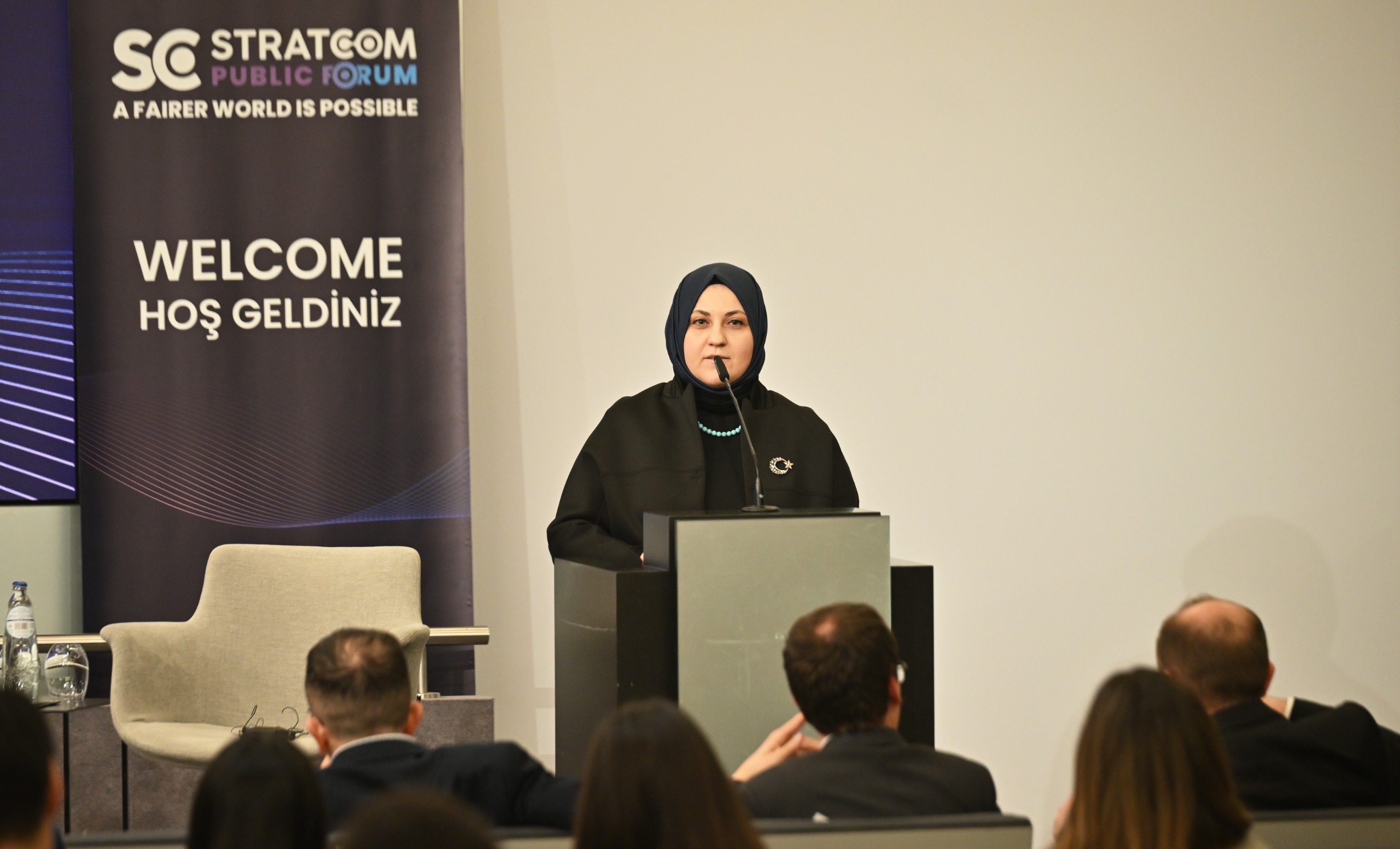
Speaking at the opening of the programme, Şeyda Bilen, Communications Counsellor at the Turkish Embassy in Brussels, stated that the world "is changing at an unprecedented pace" and that international institutions aiming to protect peace and justice must evolve accordingly.
Expressing that the event was organised to discuss ways for international organisations to address global crises more effectively, Bilen said, "International organisations were founded on the promise of collective action and global stability. However, history has repeatedly provided us with painful reminders of where this promise has fallen short, such as in Bosnia and Rwanda in the 1990s or in Palestine today."
Noting that she was pleased to see the participation of international relations students, whom she described as the future policy makers for a fairer world, Bilen emphasised that the students in attendance were "the generations that will shape international governance."
The Century of Türkiye Photography Exhibition was also showcased to the participants within the framework of the event.
In the panel moderated by Prof. Selver Şahin from Boğaziçi University, the topic of how to achieve a fairer world was addressed.
Assoc. Prof. Hüseyin Alptekin from the National Defense University emphasised the importance of fair distribution of economic resources and said that the policies imposed by organisations such as the International Monetary Fund (IMF) and the World Bank (WB) often constitute interference in countries' internal affairs and that these should be egalitarian.
Noting that justice is not merely a concept but requires concrete actions and egalitarian mechanisms, Alptekin expressed that in today's world, it is essential to assess the definition of justice, the extent of its delivery to various recipients, the method of resource distribution, and the mechanisms for ensuring security.
Alptekin articulated the perspective that not all laws serve the cause of justice and underscored the importance of addressing the privileged positions maintained by certain advantaged parties to foster a more equitable system. Pointing out that the veto power of the 5 permanent members of the United Nations (UN) Security Council is one of the biggest obstacles to the vision of a fair world, Alptekin said, "We cannot talk about a fair world when the 5 permanent members of the UN have veto power and can veto whatever they want, while others do not have this right. The veto right must be abolished immediately. And if it is going to stay, every country should have this right."
Alptekin emphasised the importance of fair distribution of economic assets to ensure justice in the world, stating, "The IMF and World Bank's debt programs should be arranged in a way that does not interfere with countries' internal affairs. Their policies should be egalitarian and less interventionist." Expressing the necessity of law to stop, punish, and prevent wrongdoing actors from repeating their actions, Alptekin stated that a fair world can only exist within a legal framework.
The jurisdiction of the International Criminal Court should be increased
"The International Criminal Court could become a structure that imposes sanctions on states in addition to individuals by increasing its jurisdiction," said Alptekin. Pointing to the importance of democracy for a fair world, Alptekin stated that "a table offering a chair to everyone needs to be established."
The world has shifted toward a bipolar system that included the US and China
Maurizio Geri, a political analyst from the think tank German Marshall Fund, pointed to the increasing instability and conflicts in certain regions of the world, saying, "The direction the world is heading reminds us of very dark periods."
"To establish a more just order, it is necessary to work with universities in the academic field," said Geri, adding that the current order has an archaic structure and cannot represent everyone. Geri noted that the conditions of the post-World War II period have disappeared, and the world has shifted toward a bipolar system that included the US and China. Geri said, "Türkiye is right to advocate for multipolarity in such a period," and underscored the importance of countries entering into close cooperation.
UN failed to establish a fair system
Retired Belgian ambassador Raoul Delcorde said: "The EU has failed to build a fairer system. Europe has failed to become a global actor and a strategic player in international relations." Delcorde indicated that he dedicated 35 years to diplomatic service and expressed his pleasure to speak at the meeting organised under the slogan "A Fairer World is Possible".
Delcorde noted that multilateral diplomacy has strengths and weaknesses, emphasising that trust is crucial in this context.
Delcorde remarked that the EU is not currently in a position to dictate the world's future through its partnerships and cooperation, stating, "We need to accept that Europe has failed. Multilateralism is over. The actions of the US, Russia, and China disregard the principle of multilateralism. The new age in the world is characterised by carnivores. Europe lacks the power to deal with them," he said. Delcorde highlighted the rise of a system that fails to address crises within the UN structure and emphasised that in order to establish itself as a global player, Europe must take action to integrate poor and vulnerable nations into the international organisations of which it is a member.
Organisations lack sufficient resources
"The UN and Bretton Woods lack sufficient resources to deal with the complexities of the 21st century," said Alberto Turkstra, one of the directors of the Brussels-based Diplomatic World Institute. Turkstra highlighted the decline of multilateralism, stating, "The old world is dying, and the new world is struggling to be born."
Stating that the world has become unrecognisable in the 80 years since the UN was founded, Turkstra said that many crises are occurring simultaneously and geopolitical tensions are at an all-time high. Turkstra noted that the Bretton Woods system had become an advocate of "austerity" policies that resulted in poverty and inequality and that no progress had been made on debt restructuring.
Turkstra highlighted that the Shanghai Cooperation Organisation and BRICS are advancing with their institutions, urging the West to approach them without bias.
Turkstra emphasised that the West must acknowledge legitimate demands; failing to do so could lead to deeper global divisions.
The panel was followed by the screening of the documentary "Devrim" about the life and painting style of the artist Devrim Erbil.