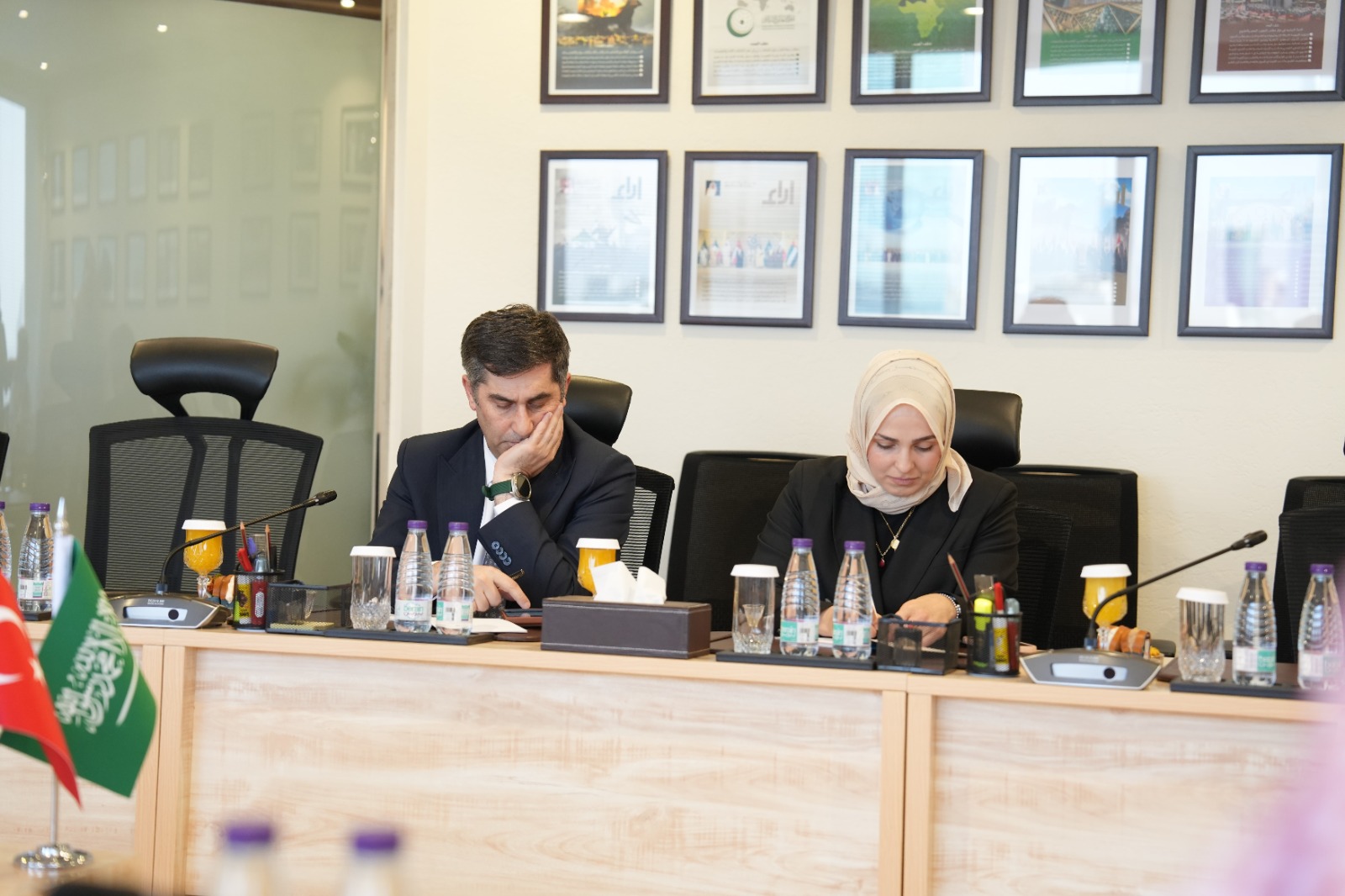
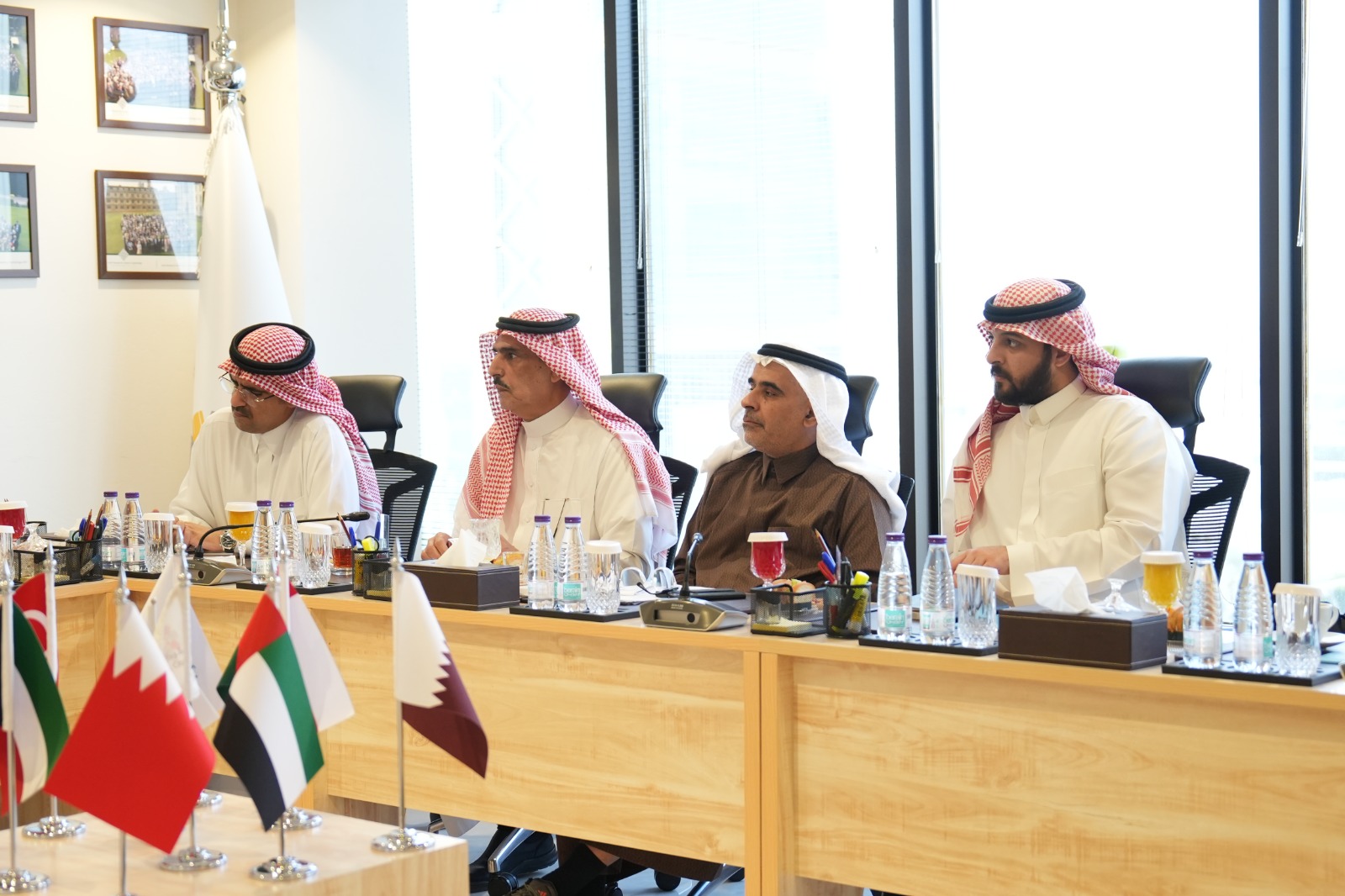
On 3 February, the "Roundtable Meeting on Regional Security and Stability: Shared Responsibilities in the Islamic World" was held in Riyadh in collaboration with the Presidency's Directorate of Communications and the Gulf Research Centre (GRC) think tank.
The meeting, focusing on the multidimensional security challenges confronting the Islamic world recently, combined strategic analyses, academic assessments, and policy-focused perspectives concerning the Middle East and Gulf region. The roundtable stressed that regional security challenges must be handled not solely through military measures but also through political dialogue, humanitarian considerations, and the strengthening of mutual trust.
The meeting, moderated by Prof. Kılıç Buğra Kanat, Member of the Presidential Security and Foreign Policy Council, was attended by Prof. Murat YEŞİLTAŞ, Faculty Member at the Department of International Relations at Social Sciences University of Ankara; Betül Doğan Akkaş, Faculty Member at the Department of International Relations at Ankara University; Dr Abdulaziz Sager, GRC Founder and Chairman; Dr Ahmed Sager, GRC Vice President; GRC Senior Advisors Prof. Saleh Al-Khathlan and Abdulaziz Alageel; and Dr Awadh Albadhi, Advisor at King Faisal Centre for Research and Islamic Studies, as speakers.
During the meeting, discussions focused on how cooperation between Türkiye and Saudi Arabia could contribute to regional security and stability while also addressing ongoing military operations in Gaza, rising tensions in Syria and Lebanon, and the impact of these developments on the regional security architecture. Within this framework, Syria served as the clearest case through which the concrete and structural aspects of regional instability were evaluated.
Referring to Syria’s political restructuring and the role of regional actors in this process, Prof. Murat Yeşiltaş noted that a sustainable and lasting order could only emerge through an inclusive political framework that embraces all local elements, emphasising that Türkiye has supported this vision from the very beginning. Highlighting the vital importance of regional support, Prof. Yeşiltaş stressed that Syria's reconstruction, both in terms of security and the economy, is impossible without the consent and contribution of crucial actors, such as Saudi Arabia.
GRC Founder and Chairman Dr Abdulaziz Sager pointed out that the growing uncertainties in the international system have exacerbated security challenges in the Islamic world. Noting that foreign interventions have been inadequate in resolving regional crises, Dr Sager said that ongoing instability, particularly in Syria, continues to jeopardise the security of not only the affected country but also the entire region. Dr Sager further said that concrete cooperation mechanisms and a sense of shared responsibility developed throughout the Islamic world would enable the establishment of lasting regional stability, rather than being left to the agendas of global actors.
In her speech, Asst. Prof. Betül Doğan Akkaş argued that the "Arab solutions to Arab problems" approach no longer aligns with the realities on the ground and that current crises are exceeding the capacity of the Arab world. Asst. Prof. Aktaş said that letting the crises in regions such as Palestine, Syria, and Yemen evolve unchecked would make enduring peace impossible and emphasised that, consequently, it is essential to involve more international powers that adopt a constructive approach rather than an interventionist attitude in resolution processes.
In the meeting addressing the phenomenon of Islamophobia that has intertwined with security discourses in recent years, the effects of Islamophobia on international relations, social cohesion, and diplomatic processes were examined, and the political and strategic consequences of this trend for the Islamic world were discussed. It was stated that strengthening bilateral dialogue and coordination between the countries could enhance the capacity to develop joint solutions that promote peace, stability, and security in the Gulf region and the broader Middle East.
The meeting, which brought together academic insights with policymaking processes on a single platform, emerged as a consultative forum contributing to the development of a shared security vision in the Islamic world. In this framework, the roundtable meeting was regarded as a significant step in terms of fostering a sense of shared responsibility for the establishment of regional security and stability, as well as in strengthening multilateral cooperation mechanisms.