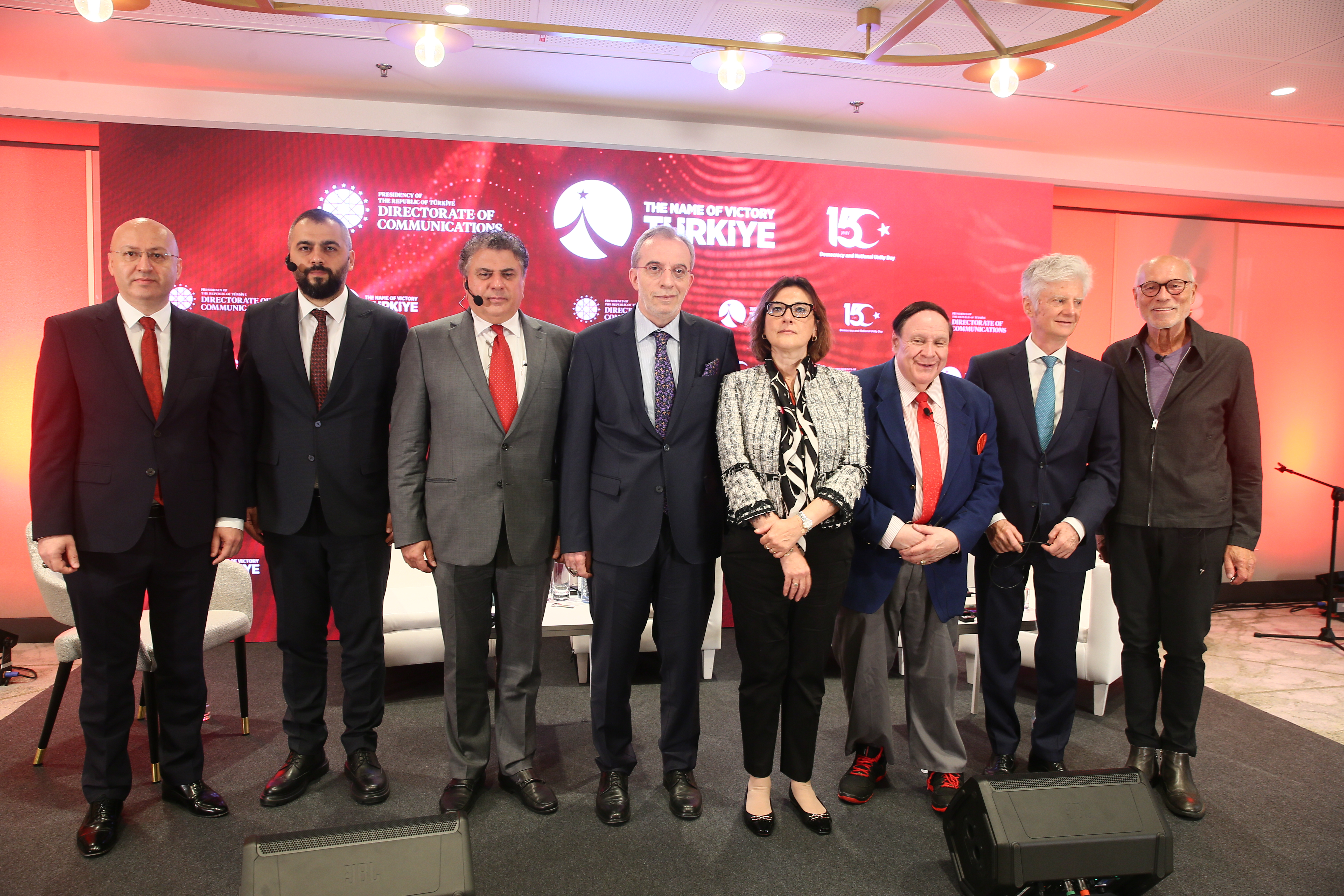
As part of the July 15 Democracy and National Unity Day events, the first panel in the series titled “The Name of Victory: Türkiye" was organised in Vienna, the capital of Austria.
The event, which garnered the interest of many academics, journalists, politicians, and diplomats, focused on the coup attempt by the Fetullah Terrorist Organisation (FETO) on the night of July 15, 2016, which targeted the constitutional order, and the resistance of the Turkish people.
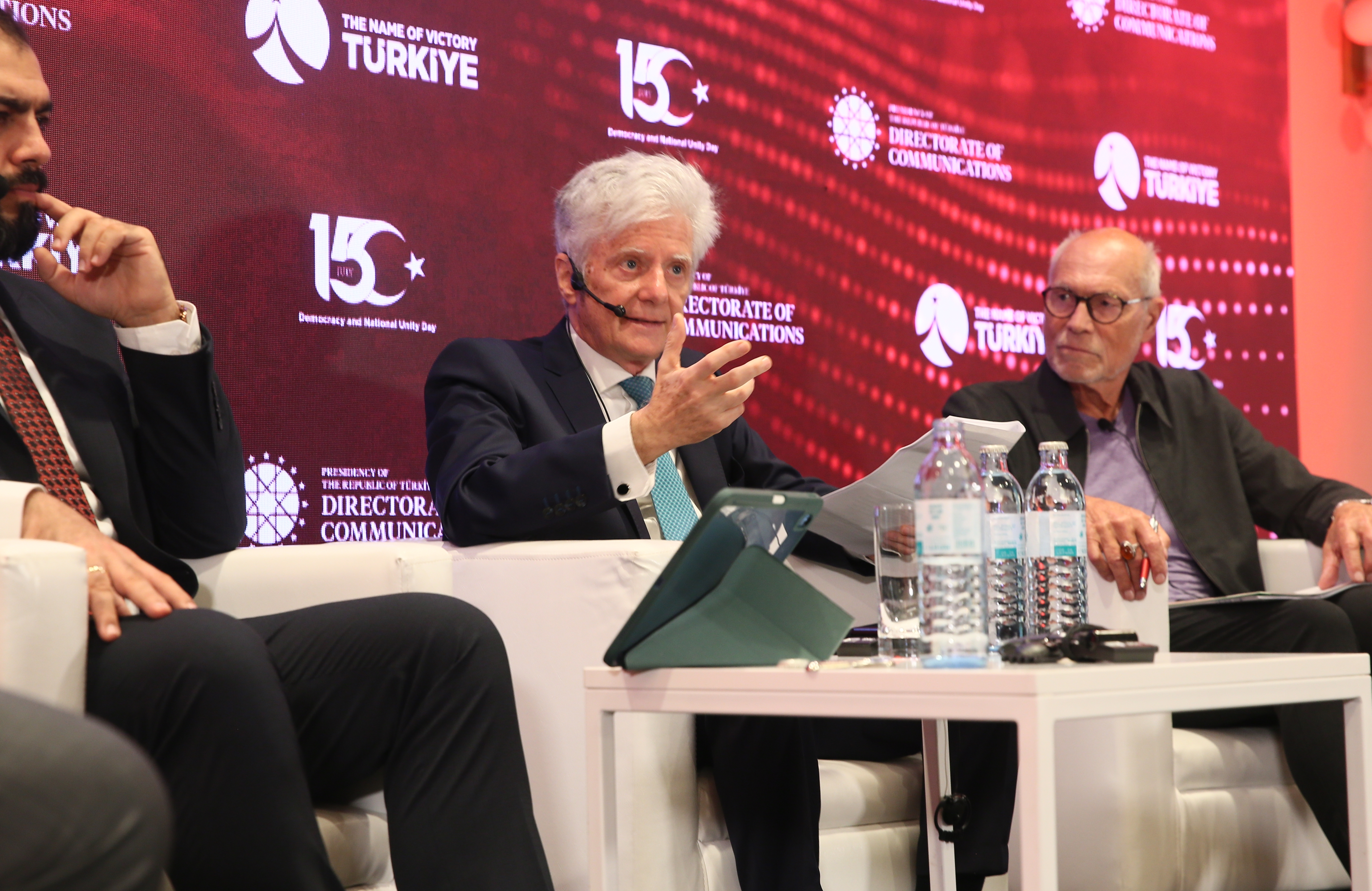
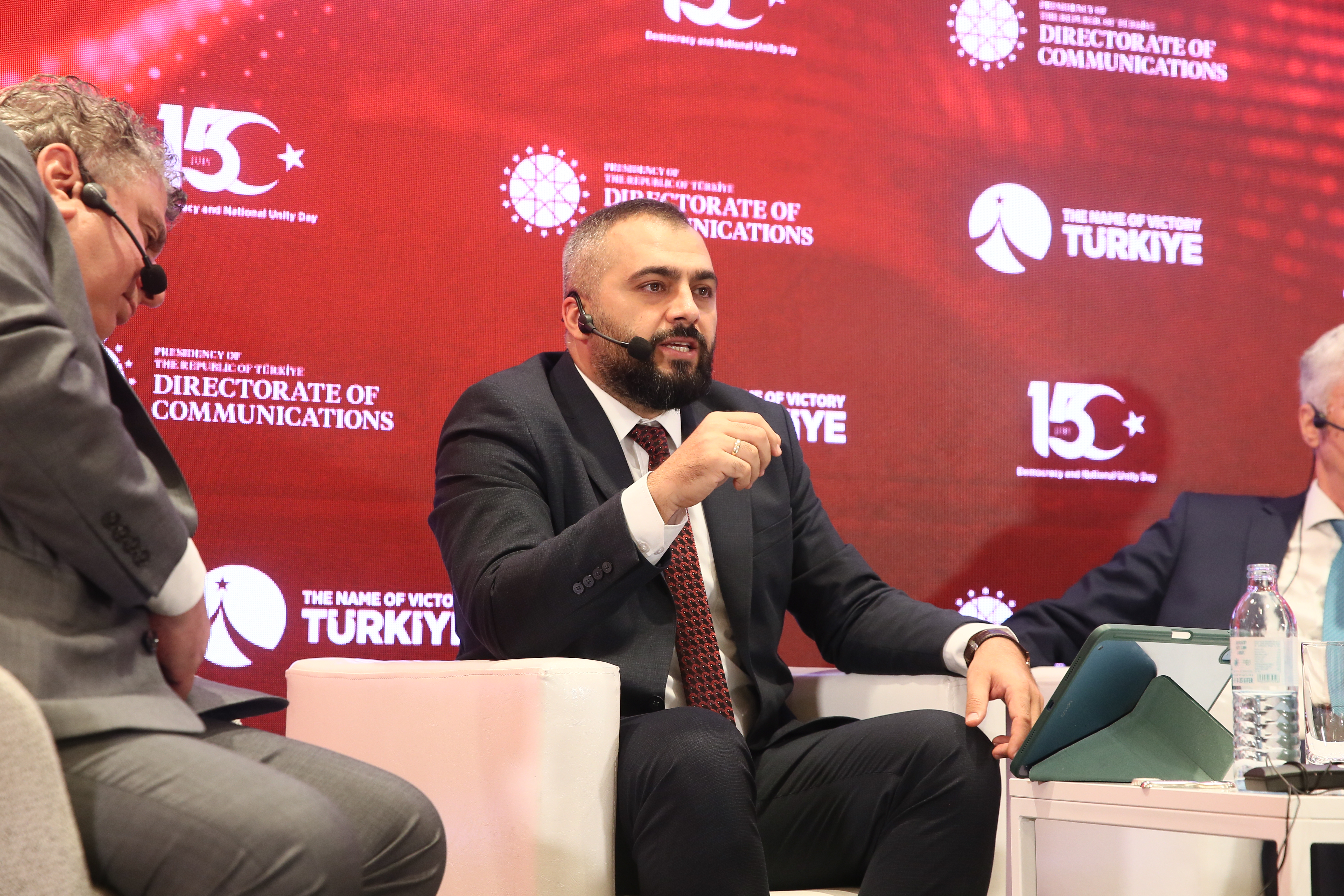
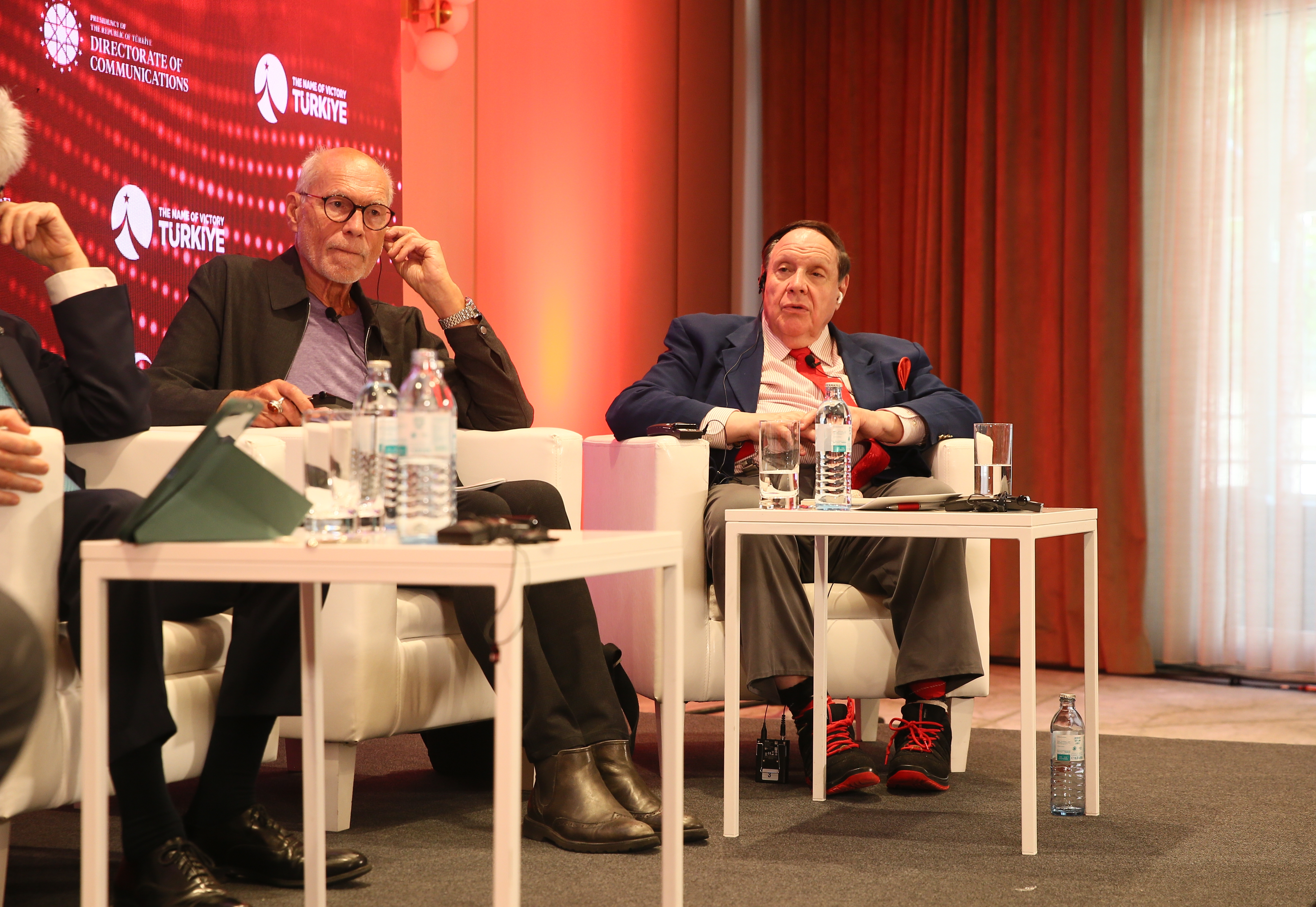
The first session of the panel series held in Vienna, which began with an opening speech by Türkiye’s Ambassador to Austria, Dr. Gürsel Dönmez, and featured the screening of the July 15-themed video “For the Love of Türkiye,” was moderated by Prof. Mustafa Kibaroğlu, Minister Plenipotentiary at the Turkish Permanent Mission to the United Nations (UN) Office in Vienna and a faculty member at MEF University, with speakers including Assoc. Prof. Burak Güneş from Kırşehir Ahi Evran University, retired diplomat Dr. Klaus Wölfer, President of the European Society for Education and Communication (ESEC) Prof. Thomas Bauer, and retired diplomat Dr. Harvey Dzodin.
Türkiye's Ambassador to Vienna began his opening speech by greeting the guests in the hall. Ambassador Dönmez continued his speech by emphasising that the attack on democracy and national unity on the night of July 15 was overcome by the Turkish people's unprecedented resistance and resolve. Ambassador Dönmez expressed that the august Turkish nation possesses a strong will for unity and solidarity, and he concluded his speech by expressing his honour and pride in being a member of this nation.
Prof. Mustafa Kibaroğlu, who moderated the panel, began his speech by wishing mercy upon all those martyred during the FETO-led coup attempt on July 15, 2016, and expressing his gratitude to the veterans. Kibaroğlu, who described the coup attempt as not a national crisis but rather an event that forced the world to confront the fragility of democratic systems, the power of civil resistance, and the growing complexity of non-state threats in an interconnected world, briefly introduced the panellists and then gave the floor to Harvey Dzodin.
Harvey Dzodin, who delivered the first speech of the panel, said that the coup attempt on July 15, 2016, left one of the deepest impressions on his memory. Recalling that Türkiye experienced many military interventions in the past, Dzodin emphasised that the 2016 coup attempt took place in a digital age, in an environment where social media and citizen participation were high.
Dzodin stated that the coup plotters attempted to seize control of traditional media platforms by following the classic scenario of the 20th century but ultimately failed to silence Türksat, private broadcasters, and mobile communications. Continuing his speech with the words, "New media exposed the lies of the coup plotters," Dzodin noted that the violence witnessed by the public had undermined FETO's rhetoric of "peace."
Dzodin remarked that the most critical moment that changed the course of that night occurred when President Erdoğan connected to CNN Türk via video link and called on the people to take to the streets and said that this call was not only symbolic but also triggered actual resistance and that the people thwarted the coup in the streets. Dzodin said, "At that moment, President Erdoğan became not only the leader of the armed forces but also the leader of the entire Turkish nation."
In his speech, Dzodin also drew attention to today's technological threats, stating that artificial intelligence-supported disinformation could manipulate elections and public opinion. Citing an example from an election in Slovakia to illustrate how deepfake content could alter results, Dzodin argued that such content should be detected in real time and reported to the public.
Noting that new media literacy should be part of education, Dzodin underscored the importance of cooperation between many sectors and civil society in combating disinformation.
"If today's technologies had been available in 2016, the coup attempt would have taken place not only in the streets but also in a digital environment where reality, trust, and legitimacy could be destroyed and rebuilt with artificial intelligence codes," said Dzodin, emphasising the need for constant vigilance, cooperation, and strategic investment to defend the public sphere.
Dr. Klaus Wölfer, who spoke next in the panel, shared his observations and assessments of the treacherous coup attempt that took place in Türkiye on July 15, 2016, with the public. Wölfer, who stated that he witnessed the coup attempt firsthand while serving as Austrian Ambassador in central Ankara, highlighted the lessons that can be learnt about relations between the European Union and Türkiye.
Ambassador Wölfer pointed out that he was with his family at the official Austrian Embassy residence in the heart of Ankara during the coup attempt and shared details of the night it took place.
Describing the events that unfolded around 21:00 on the night of the coup, Wölfer recounted that his 14-year-old daughter started crying in fear when she spotted military aircraft flying low over Ankara. Ambassador Wölfer remarked that he tried to reassure his daughter by saying, "The Turkish Air Force is conducting exercises as a precaution against possible threats"; however, upon turning on the television, they discovered that major bridges in İstanbul were closed by military units and that a military coup had commenced in both the capital and İstanbul.
Stating that he attended an extraordinary General Assembly meeting in the Grand National Assembly of Türkiye 30 hours after the coup attempt began, Ambassador Wölfer highlighted that he witnessed the complete repulsion of the coup 12 hours later. Wölfer emphasised that this experience illustrated the significance and gravity of witnessing a military coup attempt in Europe, particularly in the 21st century, and that significant lessons should be gleaned from this incident to enhance the relationship between the EU and Türkiye.
Prof. Thomas Bauer then took the stage and presented a comprehensive assessment of the transformation in contemporary media structures and its effects on democratic societies, focusing on how digitalisation transformed public communication and the tensions between media and democracy within a theoretical framework.
Bauer underlined that modern societies' relationship with media could not be reduced to merely technical or communicative dimensions. He argued that the media evolved from a mere tool for information dissemination to a space where individuals could realise their identities, roles, and goals. Summarising this transformation by stating, "Media is an environment in which we exist and realise ourselves," Bauer emphasised the need to approach the media's impact on democratic functioning from a multifaceted standpoint.
Highlighting that in an era where the media redefined the concepts of trust, power, and responsibility, traditional journalistic structures are likewise undergoing a transformation, Bauer additionally touched on current and critical issues such as trust in media, news source responsibility in times of crisis, and citizens' media literacy, drawing attention to the risks and responsibilities associated with these areas.
Indicating that media literacy in a democratic society is not limited to merely knowing about technological tools, Bauer said that this competence should also include understanding the language, culture, and habits of the media. Remarking that striking a healthy "balance between giving and receiving" in people's relationship with the media is critical to the strengthening of democratic culture, Bauer concluded his speech by emphasising the importance of leaving an effective and functional media system for future generations.
Assoc. Prof. Burak Güneş, the panel's final speaker, stressed that the coup attempt of July 15, 2016, should be viewed not only as an armed uprising but also as a multifaceted attack on the Republic of Türkiye's institutional structure, democratic legitimacy, and position in the international legal order. Güneş remarked that the attack targeted not only specific institutions but also constituted an organised intervention against the will of the people and the constitutional order.
In his speech, Güneş also indicated that the coup attempt could have created a context vulnerable to international intervention, adding that if the public authority collapses, the legitimacy of foreign intervention may become a subject of debate. Güneş said, "I would like to address the three factors that prevented all of this: strong leadership, the people's power, and a state bureaucracy acting with state wisdom," adding that this possibility had been ruled out.
Güneş said that President Recep Tayyip Erdoğan's appeal to the people on the night of the coup restored trust in the government's ability to function and ensured that both the people and state institutions took decisive action, adding that this joint response was crucial in putting an end to the attempt. He said, "The Turkish military and police, protecting their homeland, republic, and democracy, have set an exceptional example of struggle against the coup plotters," referring to the coordinated resistance of the military, police, intelligence units, and the public against the coup plotters.
He also noted that, compared to previous military interventions, this time the people took to the squares and physically resisted the coup plotters, indicating that democratic consciousness spread throughout society. Güneş stated that July 15 became a symbol of the nation's determination to uphold democracy.
Assoc. Prof. Burak Güneş concluded his remarks by emphasising that the Republic of Türkiye would never fall under the tutelage of terrorist organisations and that the will of the people would prevail under all circumstances.
Taking the floor again after the panellists, moderator Mustafa Kibaroğlu shared his experiences on the night of July 15, 2016, remarked that his impression that this attempt would not succeed from the first moments of the coup attempt was confirmed later during that night, and concluded the panel session by thanking all participants.
As part of the programme, a photo exhibition themed around July 15 was opened, followed by the screening of the film “15/07: Break of Dawn.”