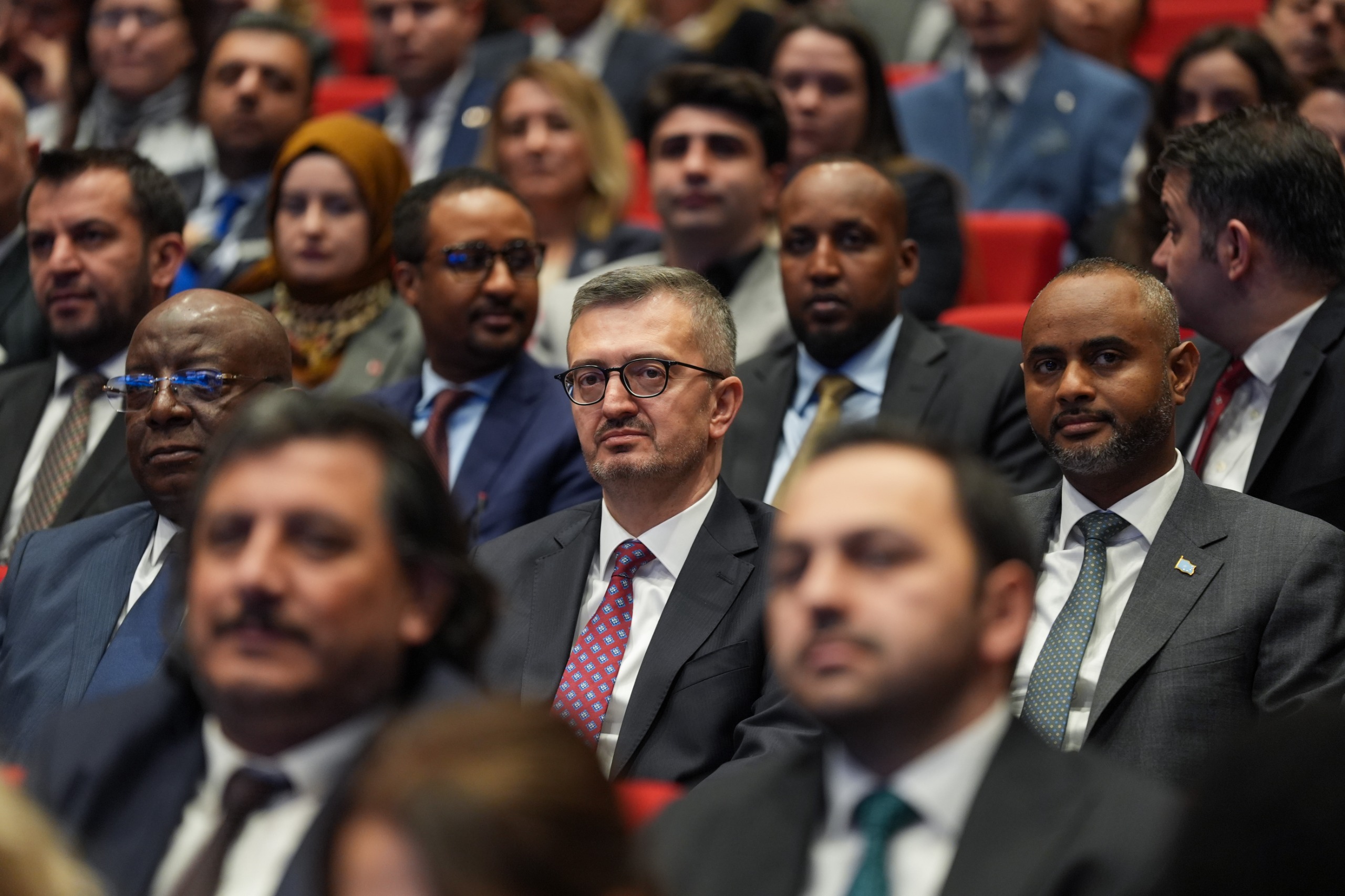
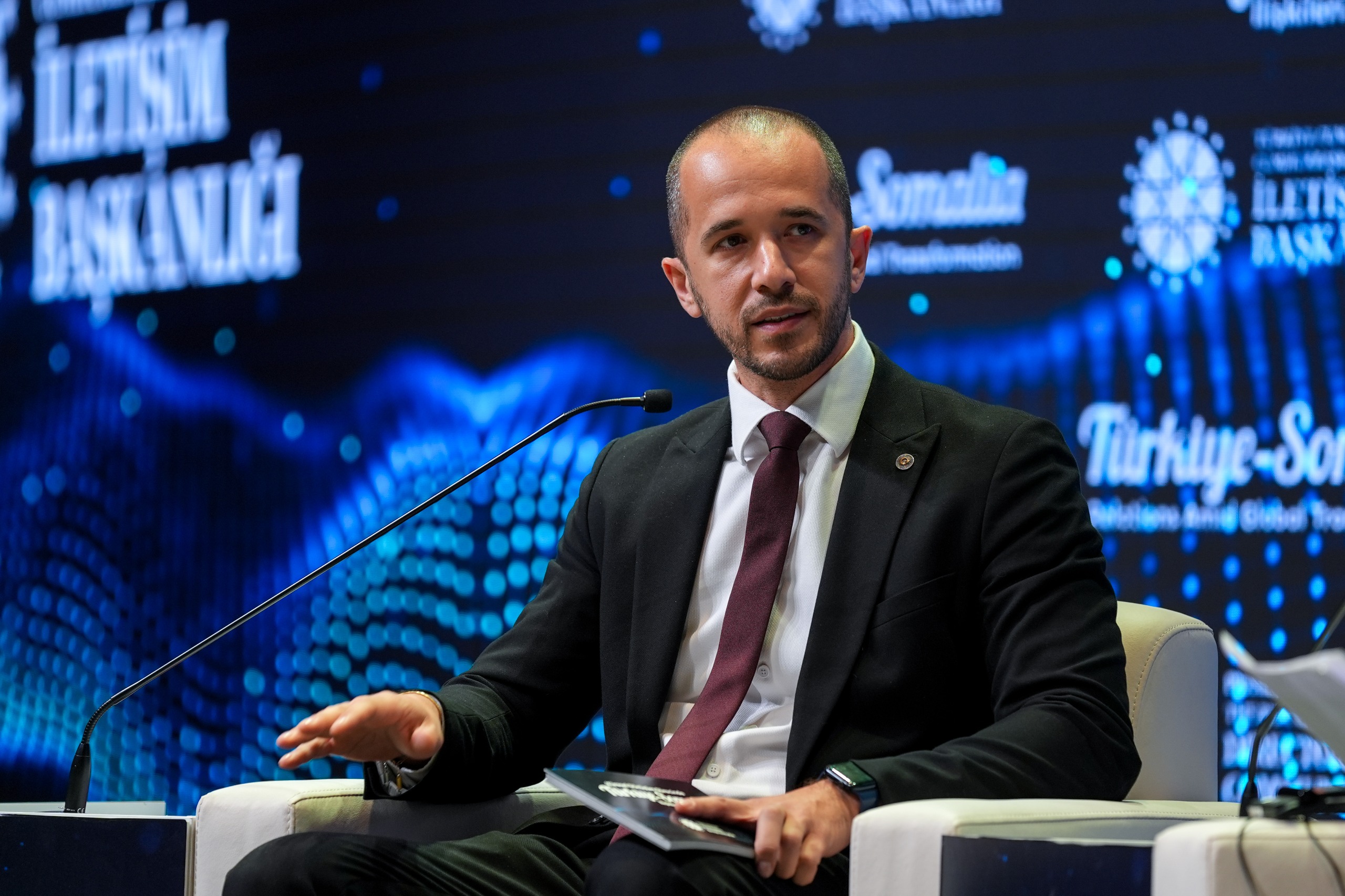
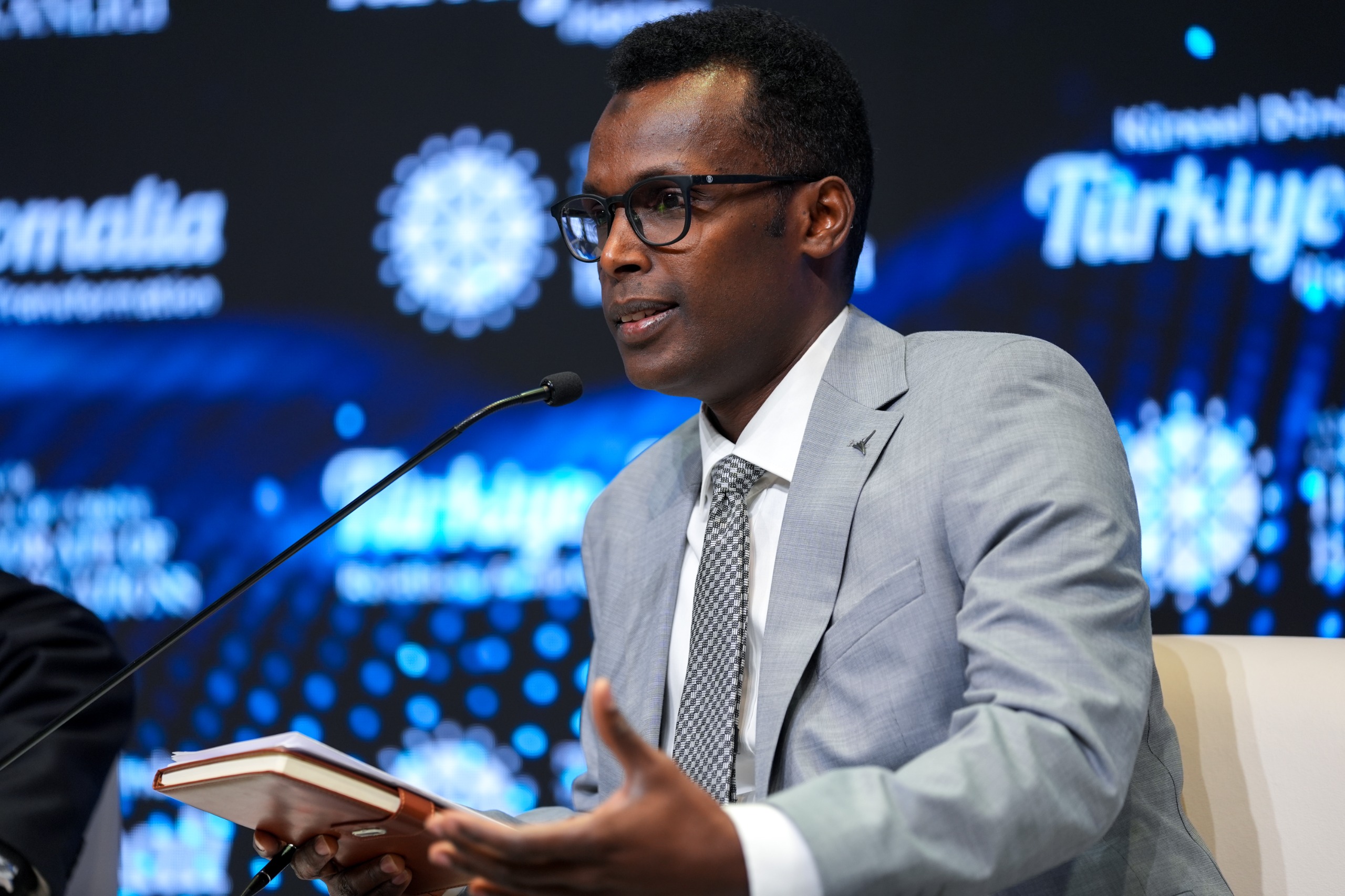
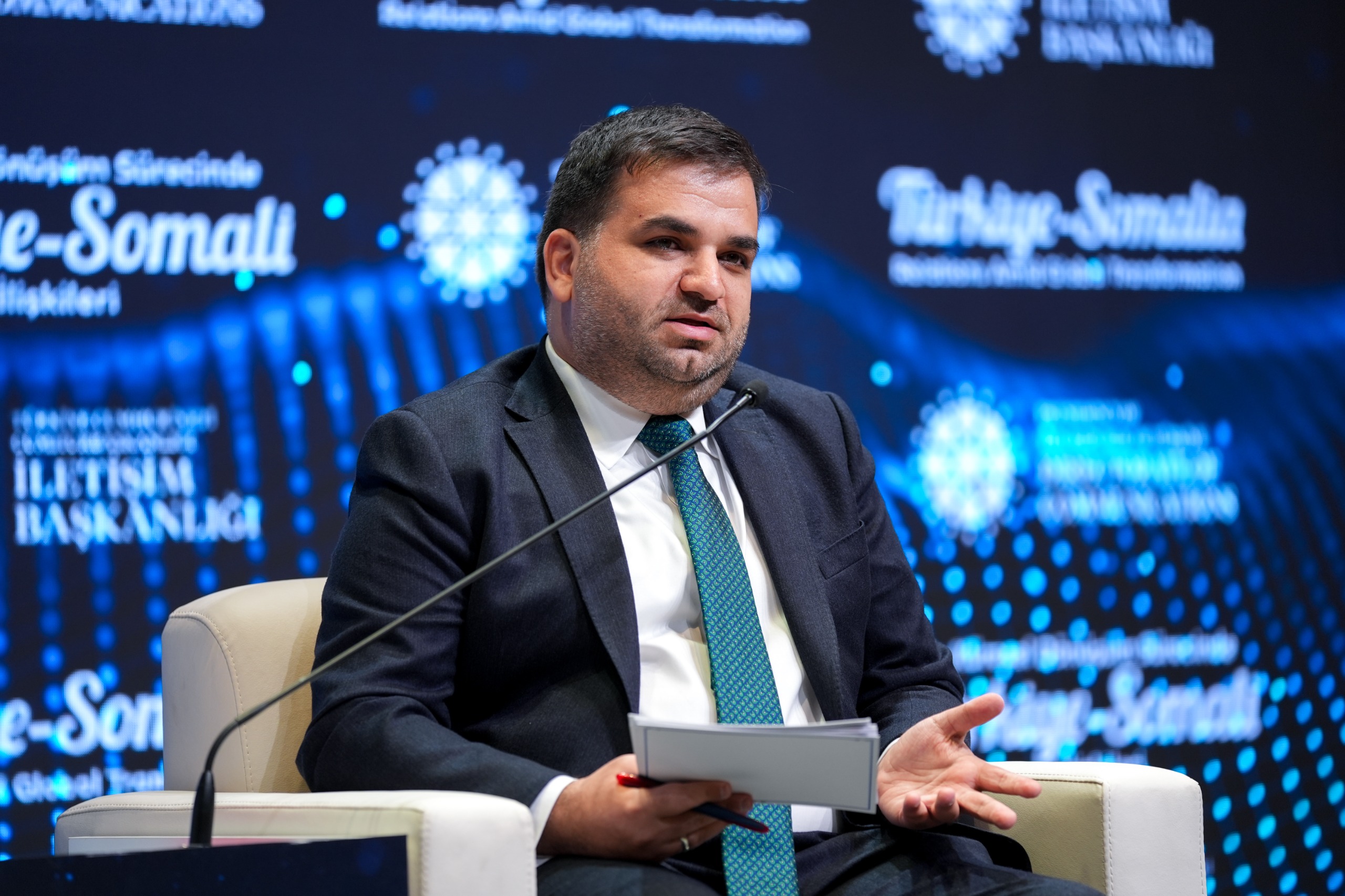
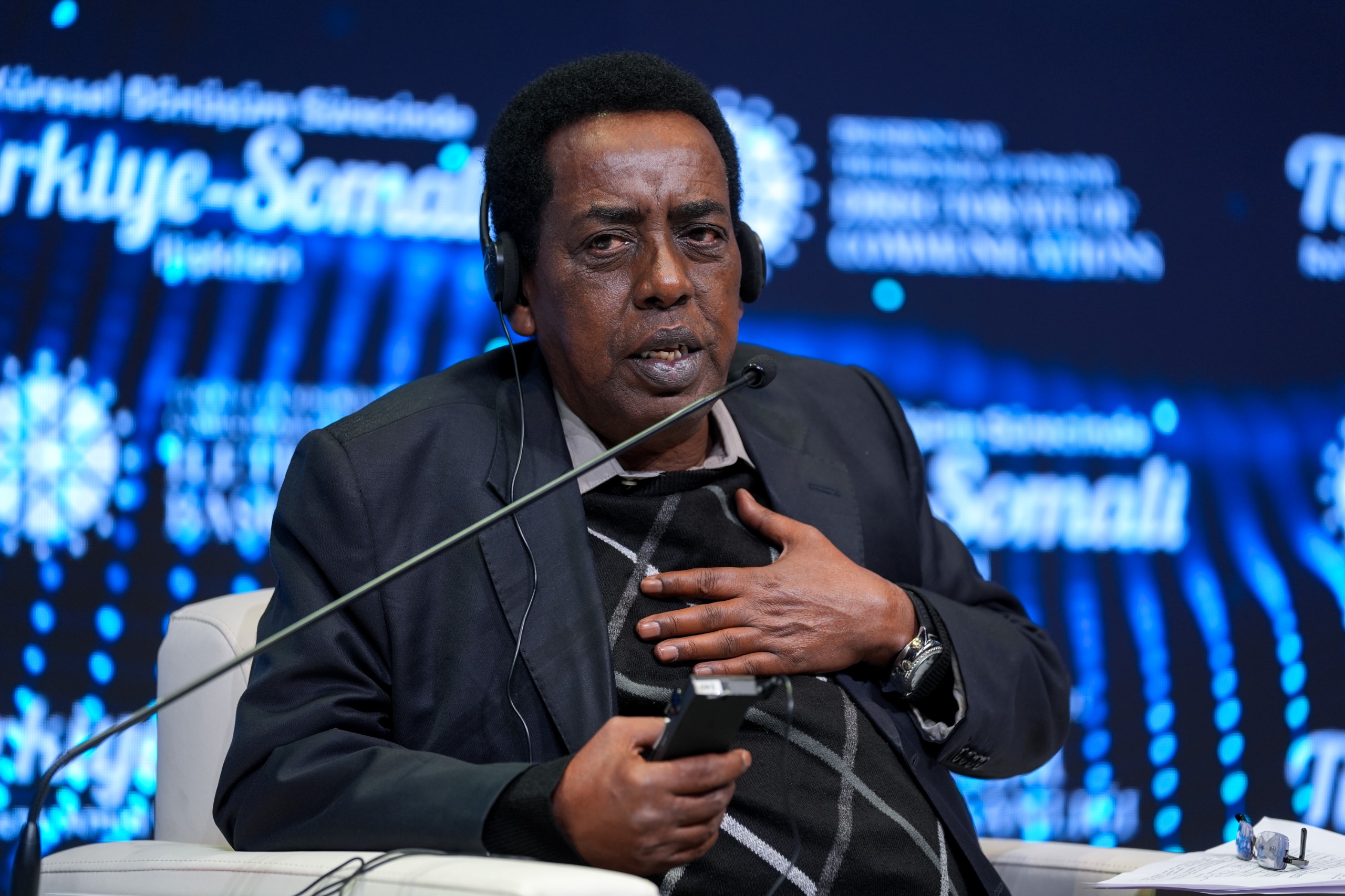
The Presidency's Directorate of Communications organised a panel entitled “Panel on Türkiye–Somalia Relations Amid Global Transformation” in Ankara on 25 February 2026. During the panel, political, economic and strategic transformations unfolding at the global level were addressed, and the current state of relations between Türkiye and Somalia, their future outlook and potential areas of cooperation were comprehensively evaluated. The panel provided an opportunity to exchange views on further enhancing diplomatic, economic and humanitarian ties between the two countries.
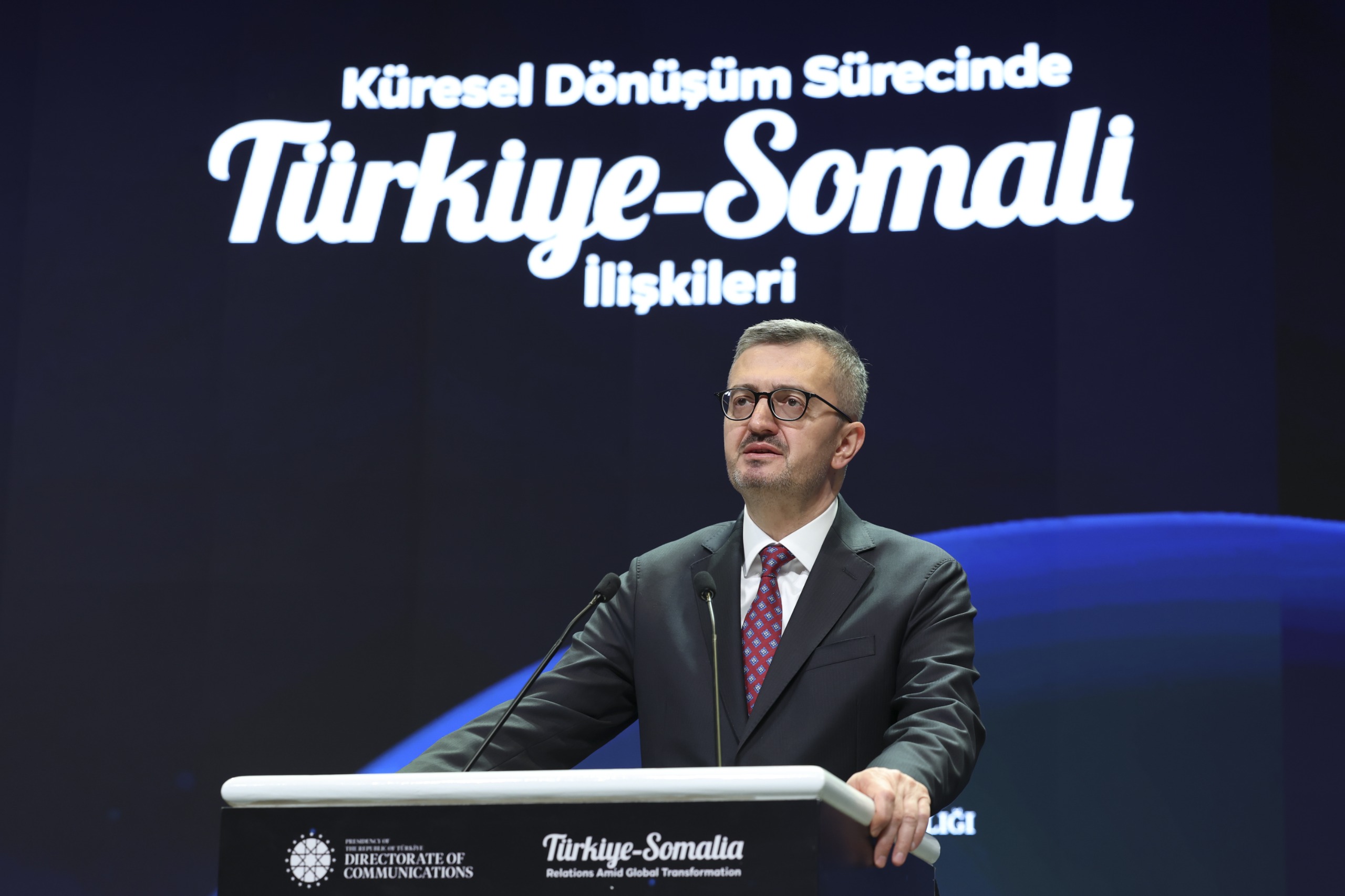
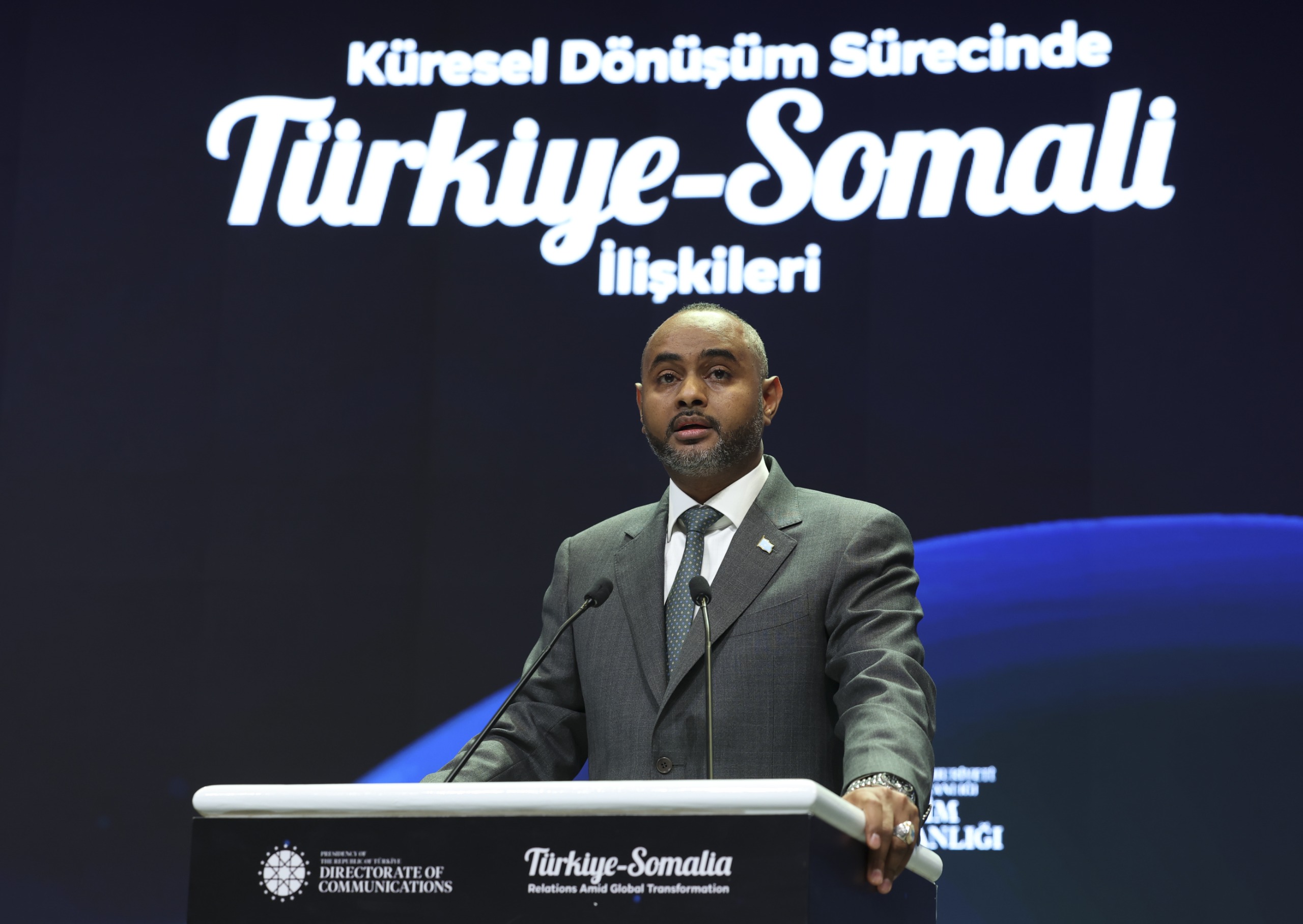
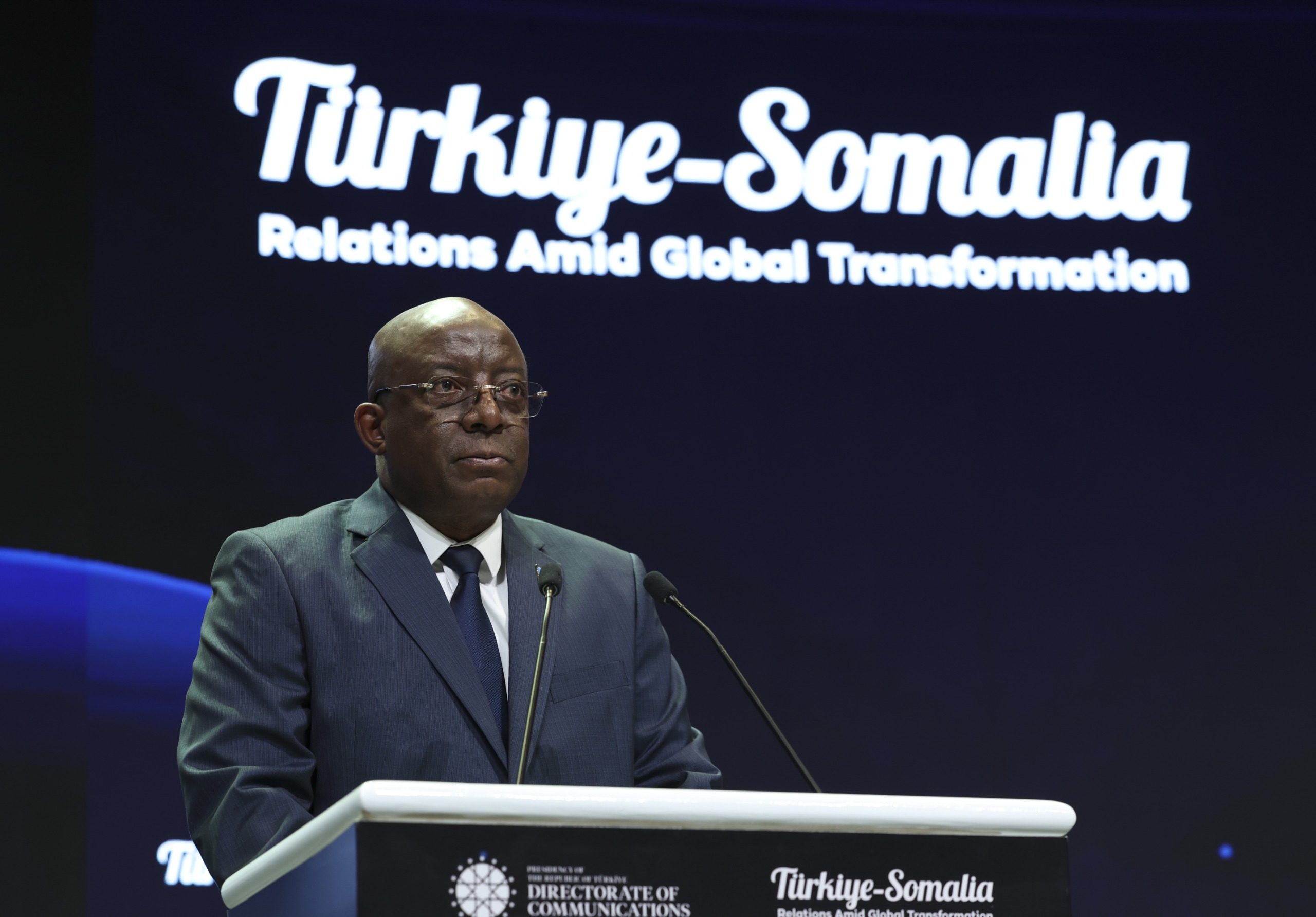
The event, which commenced with a video screening, featured opening remarks delivered by Prof. Burhanettin Duran, the Presidency's Head of Communications; Abdulkadir Mohamed Nur, Minister of Ports and Maritime Transport of the Federal Republic of Somalia; and Daud Aweis Jama, Minister of Information, Culture and Tourism of the Federal Republic of Somalia.
In his remarks, Head of Communications Duran highlighted the 60th anniversary of diplomatic relations between Türkiye and Somalia, noting that, following the launch of the African Initiative in 2005, bilateral relations have since acquired a multidimensional, strategic framework. Emphasising that Africa is not merely a diplomatic arena for Türkiye but a "kindred geography” shaped by deep historical and humanitarian ties, Head of Communications Duran underlined that Somalia stands at the very centre of this vision. He further stated that the 2011 visit of President Recep Tayyip Erdoğan to Mogadishu constituted a watershed moment not only in bilateral relations but also in the eyes of the international community, demonstrating Türkiye’s solidarity in concrete terms by engaging directly on the ground during a time of crisis.
Head of Communications Duran said that Türkiye's Africa policy is built on the values of equality, mutual respect, and shared benefit, and it has chosen a vision of co-production and co-growth in investment, trade, technology, education, infrastructure, and the defence sector. He added that the expansion in the number of embassies on the continent from 12 in 2005 to 44, as well as the increase in trade volume to 40 billion dollars, demonstrate this dedication and that ties have gained significance via tangible projects carried out on the ground. Head of Communications Duran emphasised the role of the Recep Tayyip Erdoğan Training and Research Hospital in Mogadishu and the TURKSOM Military Training Base in capacity building, stating that the defence and economic cooperation framework agreement signed in 2024 has advanced relations to a strategic level. Head of Communications Duran stated that Türkiye's support for Somalia's sovereignty and territorial integrity is principled and steadfast and that the relationship in energy, maritime, food security, and digital transformation will strengthen even further.
Nur, the Minister of Ports and Maritime Transport of the Federal Republic of Somalia, began his remarks by expressing condolences for our courageous pilot who was martyred in the F-16 aircraft crash in Balıkesir and offering sympathies to his family and our cherished nation. Nur emphasised that they have always regarded Türkiye as a sincere and trusted friend, citing the profound history shared by Türkiye and Somalia.
Minister Nur said that the genuine transformation between the two nations commenced with President Erdoğan's visit to Mogadishu in August 2011; this action constituted both a political and a moral declaration of intent, and through this visit, President Erdoğan reminded the international community of a hadith of the Prophet Muhammad: "He is not a believer whose stomach is filled while his neighbour goes hungry." Stating that Türkiye’s approach is shaped not by geopolitical calculations but by humanitarian responsibility and moral solidarity, Minister Nur noted that the embassy opened in Mogadishu paved the way for other countries to return to Somalia. Emphasising that relations reached the level of a strategic partnership with the agreement signed on 8 February 2024, Nur underlined that a new era has begun—one in which not only aid but also joint production, shared security, and shared development define the agenda.
The Minister of Information, Culture and Tourism of the Federal Republic of Somalia, Jama, also stated that relations have evolved beyond symbolic solidarity into an institutionalised and structured long-term partnership. He recalled that President Erdoğan’s visit to Mogadishu in 2011 broke the country’s international isolation and left a profound mark on the collective memory of the Somali people. Minister Jama noted that security, defence, infrastructure, maritime cooperation, and energy exploration activities constitute the main pillars of the partnership. He further stated that cooperation with Türkiye in the fields of the blue economy and maritime security has ushered in a new era for Somalia, which possesses one of the longest coastlines in Africa. Highlighting that seismic surveys in the energy sector are critical for economic independence, Minister Jama stressed that this partnership carries a sustainable development perspective. He also added that Türkiye’s principled stance regarding the Somaliland issue has reinforced mutual trust and that success should ultimately be measured by improvements in the living standards of Somali citizens.
Following the opening remarks, the panel session was moderated by Dr. Tunç Demirtaş, Foreign Policy Researcher at the SETA Foundation. The panel featured Prof Yahya Amir Hagi Ibrahim, Faculty Member at Somaville University in Somalia; Yasin Bashir Sh. Ibrahim, Executive Director of The Peninsula Research and Policy Studies Center; and Ebuzer Demirci, Researcher at the Secure Futures Lab at the University of Toronto.
Demirtaş stated that Somalia’s geostrategic position in the Horn of Africa holds critical importance for maritime trade and regional security. He noted that the humanitarian assistance process initiated by Türkiye in 2011 has since evolved into a multidimensional strategic partnership encompassing military cooperation, energy, technology and infrastructure investments. Demirtaş emphasised that safeguarding Somalia’s sovereignty and territorial integrity is vital not only for regional stability but also for the broader international security architecture. He further underlined that investments in education and human capital, particularly programmes such as Türkiye Scholarships, constitute the foundation of long-term development. He concluded his remarks by stating that Türkiye–Somalia relations continue to advance and deepen on the basis of mutual trust, institutional capacity-building and sustainable development.
As the first speaker of the panel, Prof. Yahya Ibrahim stated that historical ties dating back 500–600 years, along with the solidarity inherited from the Ottoman era, have forged an enduring collective memory. He noted that the 2011 visit of President Erdoğan went beyond humanitarian assistance and constituted a strong endorsement of Somalia’s sovereignty and political legitimacy. Ibrahim added that this shared history should be rendered more visible both in Türkiye and in Somalia. Ibrahim recalled that Somali identity is not confined solely to the present state borders but also encompasses the broader Somali communities across East Africa. He emphasised that, through its “win–win” approach, Türkiye has adopted a balanced posture between Somalia and Ethiopia, thereby making a tangible contribution to the de-escalation of regional tensions. Yasin Ibrahim stated that progress in the fields of health, education and the economy has been tangibly felt in everyday social life, emphasising that Türkiye’s investment in human capital in particular constitutes the element of highest strategic value for Somalia’s future.
Taking the floor thereafter, Yasin Ibrahim stated that at a time when many countries fled Mogadishu on security grounds, the visit of President Erdoğan fundamentally transformed international perceptions, underscoring the transformative impact of Türkiye’s risk-embracing approach. He stated that what fundamentally distinguishes Türkiye from other actors is its delivery of assistance directly through Somali state institutions and its adoption of a non-impositional, egalitarian model. Ibrahim stated that the Somali people’s affection for Türkiye rests on three fundamental pillars: support for Somalia’s sovereignty, cooperation in the fight against terrorism, and the utilisation of natural resources for the benefit of the Somali people. He further noted that Somali youth educated in Türkiye will, in the future, constitute the strongest bridge of this strategic partnership. Yahya Ibrahim further noted that this model paves the way for genuine economic independence by reducing Somalia’s reliance on external assistance.
The final speaker of the panel, Ebuzer Demirci, stated that Türkiye distinguishes itself from other actors by simultaneously advancing its historical ties, delivering humanitarian assistance, and investing in infrastructure. Referring to the contribution of Turkish Airlines flights, port development projects and the TURKSOM Military Training Base to strengthening Somalia’s state capacity, Demirci emphasised that seismic surveys and drilling activities in the energy sector constitute a strategic priority for Somalia’s national interests. Concluding his remarks, he stated that Somalia can no longer be characterised as a failed state, highlighting that the country has made significant progress in the areas of security and institutionalisation.
The panel addressed the multifaceted dimensions of Türkiye–Somalia relations, spanning security, economy, humanitarian assistance and public diplomacy, and featured comprehensive assessments of the roles the two countries may assume within the regional and international system amid the ongoing process of global transformation. The panel concluded with a strong emphasis on the shared resolve to further deepen mutual cooperation.