A panel entitled “The Impact of New Communication Technologies on the Family” was held by the Presidency’s Directorate of Communications.
The panel commenced following the opening remarks delivered by Minister of Family and Social Services Mahinur Özdemir Göktaş and the Presidency’s Head of Communications Burhanettin Duran. The session was moderated by Prof. Sefer Kalaman, Faculty Member at Ankara Yıldırım Beyazıt University.
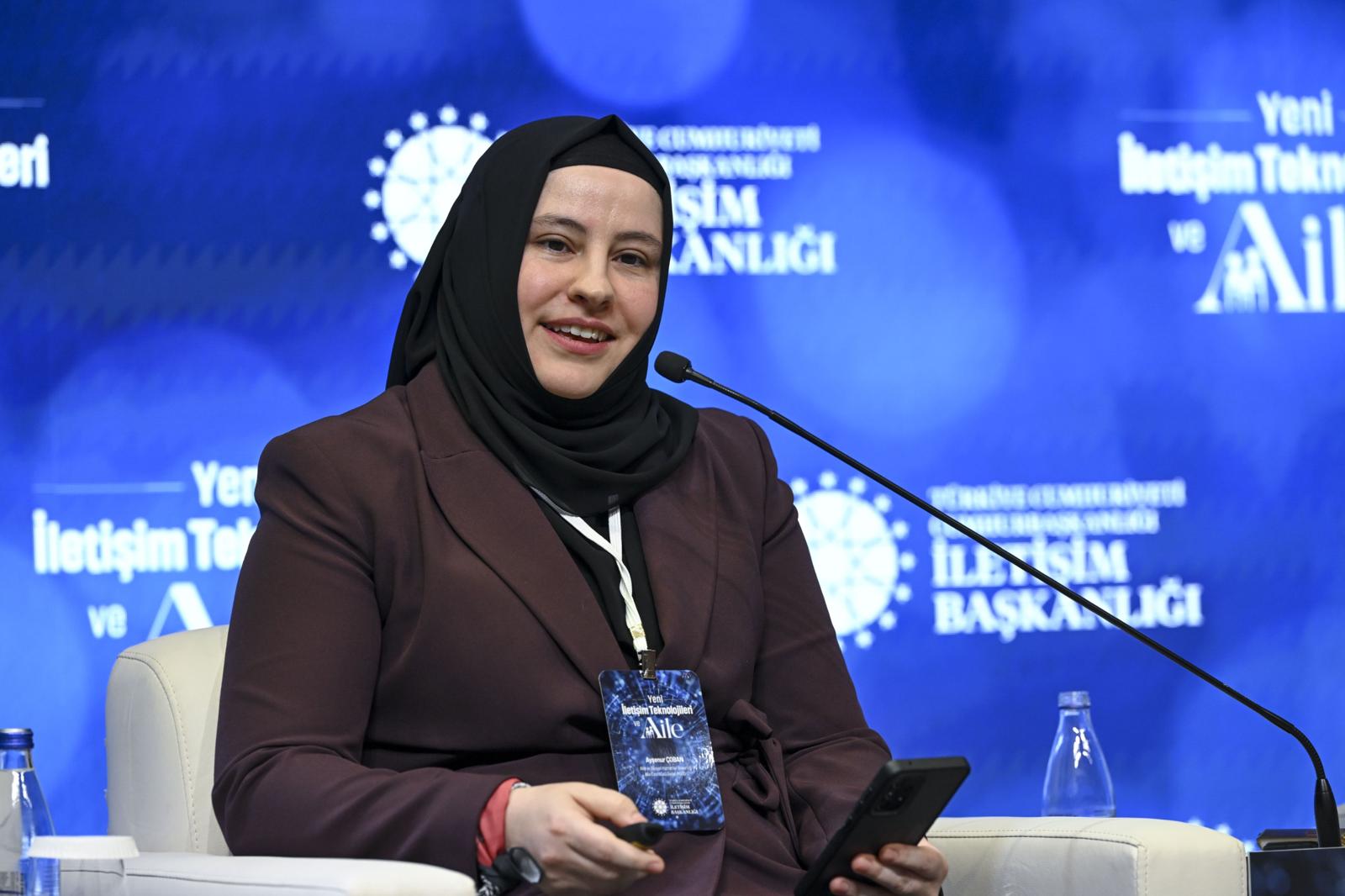
Speaking at the panel titled “The Impact of New Communication Technologies on the Family,” Ayşenur Çoban, Director General of the Family Institute of the Ministry of Family and Social Services, stated that while it has traditionally been understood that people shape and direct technology, the balance is increasingly shifting towards a position in which technology shapes people.
Noting that Türkiye’s family and population structure has undergone a profound transformation, Çoban pointed out that the total fertility rate, which stood at 6.38 in the 1960s, had declined to 1.42 in 2025.
Stating that this represents the lowest level ever recorded in the history of the Republic, Çoban said: “While some countries reached this level over a much longer period, we have arrived at it within a very short span of approximately 60 years. As our President has described it, this has now become an ‘existential threat’. This is because the issue of population affects every area, from production and social security to healthcare, defence, and cultural continuity.”
Çoban also stated that, according to the Turkish Statistical Institute (TÜİK), the internet usage rate among adults exceeded 91 per cent in 2025, while approximately 9 out of 10 children aged 6-15 use the internet, and 3 out of 4 use mobile phones.
Noting that the proportion of children using social media reached 66 per cent in 2024, Çoban said: “Twenty-five per cent of children report spending less time with their families due to the amount of time they spend in front of screens.”
Drawing attention to the risks posed by artificial intelligence and social media platforms for children, Çoban stated, “These platforms are becoming spaces that remain outside the field of vision of parents. Risks such as contact with strangers, unmonitored content, age-inappropriate posts, and in-game purchases accompany this reality. At times, these are even environments where adults can approach our children by pretending to be children themselves.”
“We have launched the Clean Screen movement”
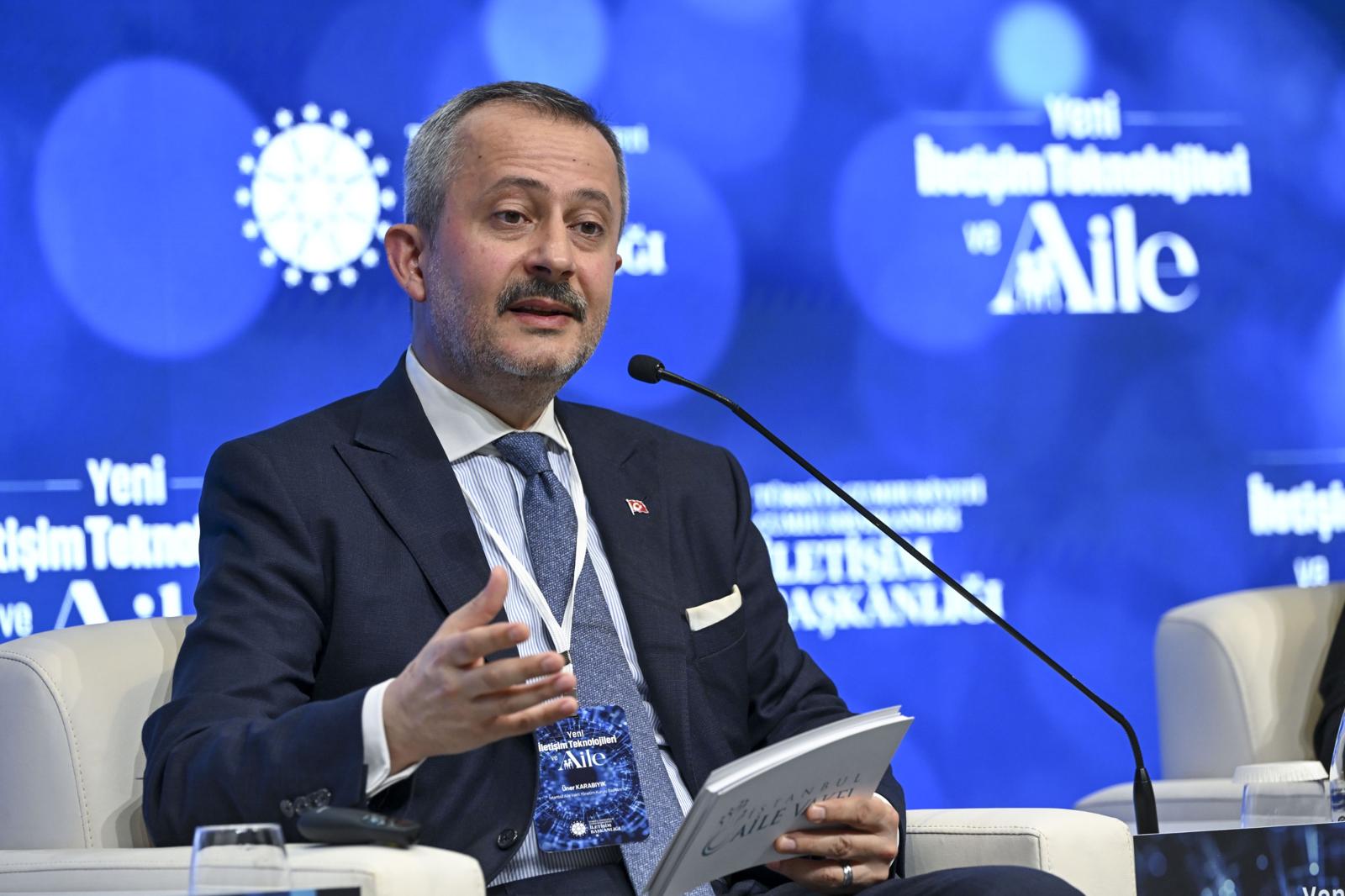
Üner Karabıyık, Chairman of the Board of Trustees of the Istanbul Family Foundation, also addressed the panel, stating that the world in which children live is changing rapidly.
Highlighting children’s use of technology, Karabıyık said: “Today, when you enter a child’s room, you find yourself living in an age where a small screen in their hands can exert a greater influence than their family, neighbourhood, school, and even the country in which they live. A child’s screen no longer just provides information; it also provides direction. We need to ask what this means for the family. This is precisely the issue on which we must focus.”
Pointing out that some young people with a weakened sense of belonging may become more inclined to seek their future in other countries rather than in their own, Karabıyık stated that they had launched the “Clean Screen” movement and emphasised that this is a major issue that cannot be left solely to the responsibility of parents.
Underlining that every step taken to strengthen the family is also a major step towards strengthening the future, Karabıyık stated that a family-oriented perspective is needed in every field, from education and media to digital regulations and urban policies.
“The content needs to be controlled rather than the duration”
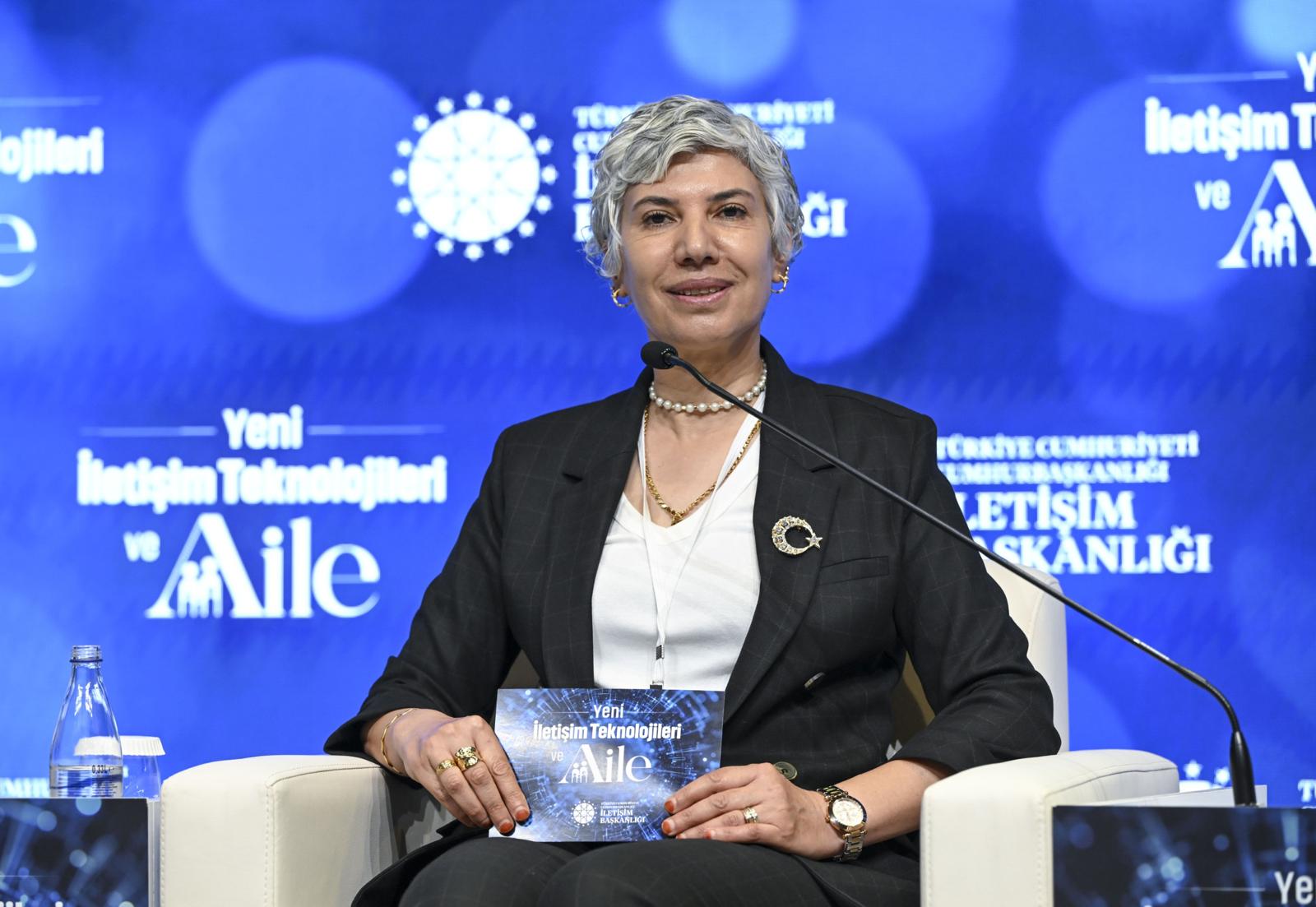
Prof. Zülfiye Acar Şentürk, Dean of the Faculty of Communication at Yozgat Bozok University, stated that technology has now become a tool that dominates family communication.
Noting that families often approach the supervision of their children through a restrictive mindset and by attempting to control screen time, Prof. Şentürk cautioned: “Rather than the duration, it is the content that needs to be controlled.”
Stating that one of the most important responsibilities of parents is to know which websites their children visit, Şentürk highlighted the need to protect children from cyberbullying.
İsmihan Yılmaz, Coordinator of TRT Çocuk Channel, also delivered a speech during the panel.