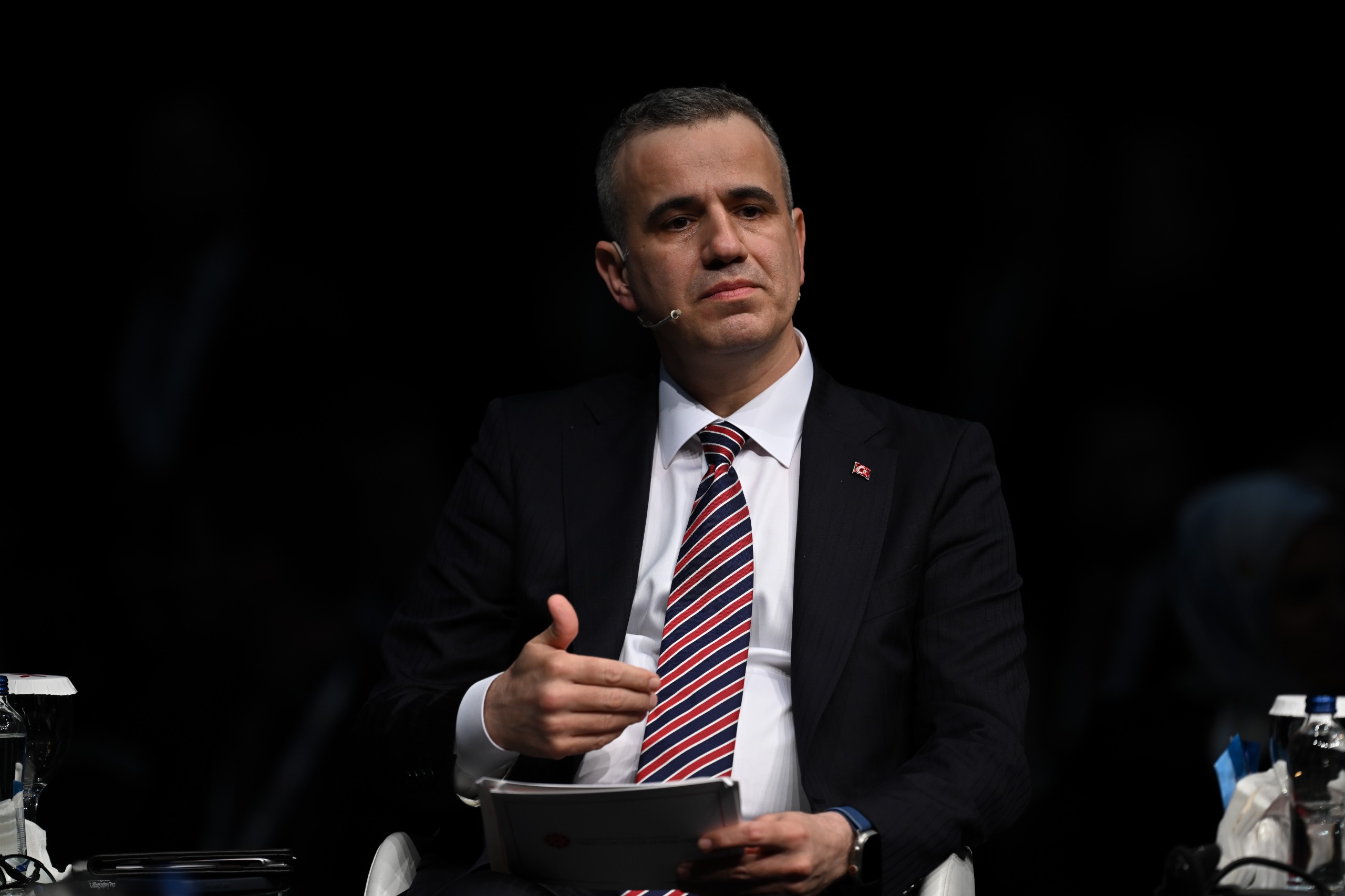
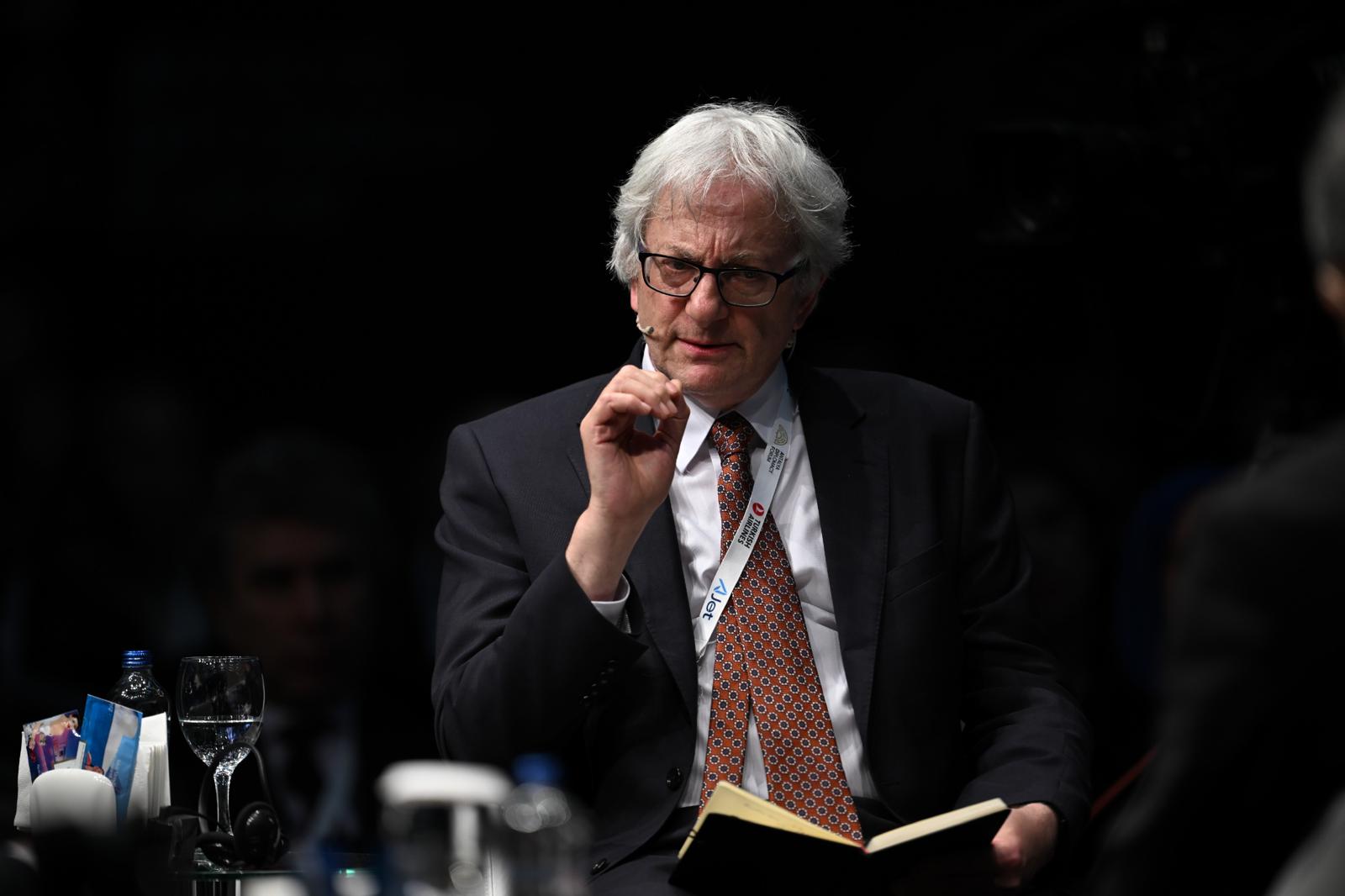
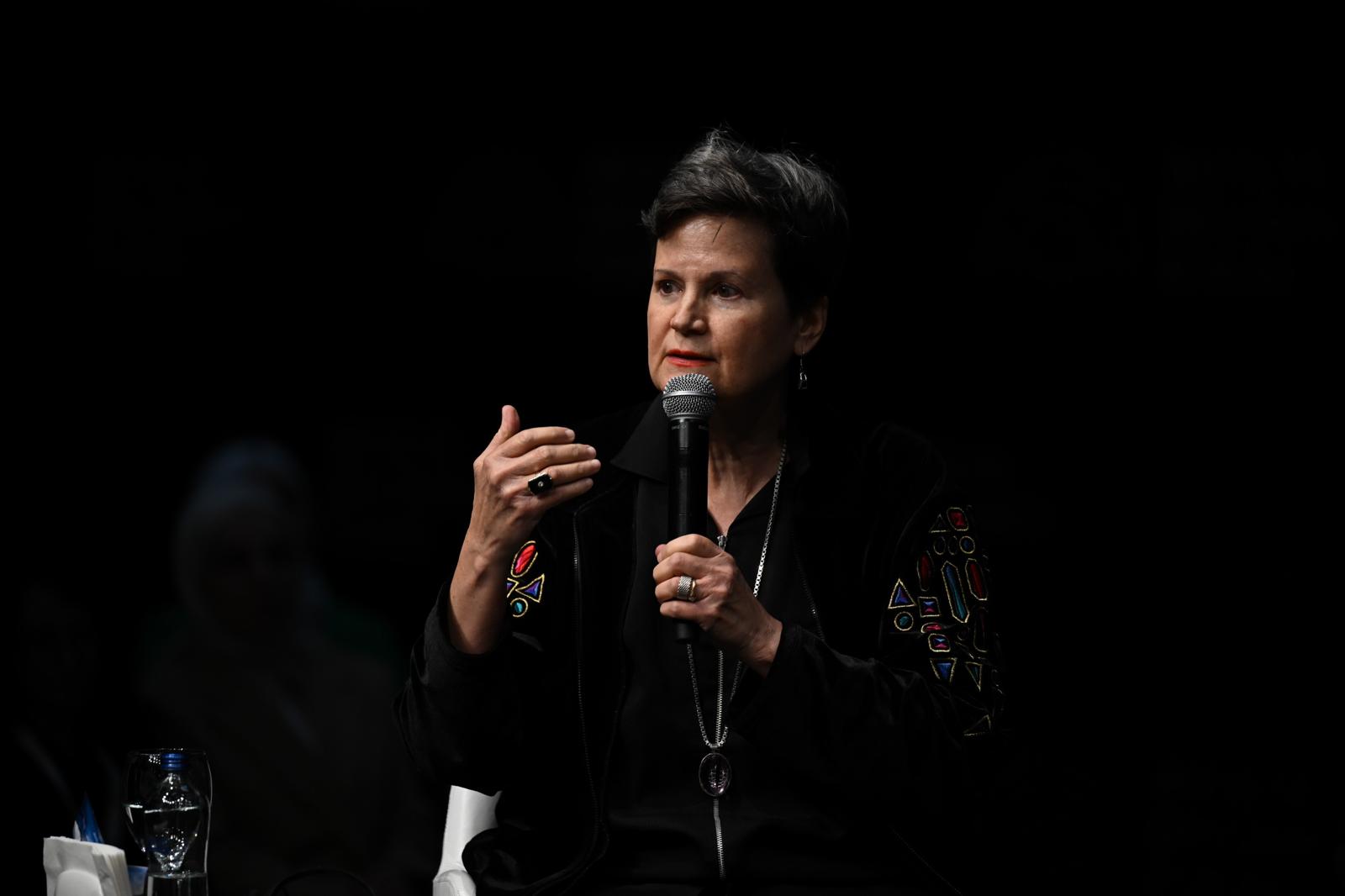
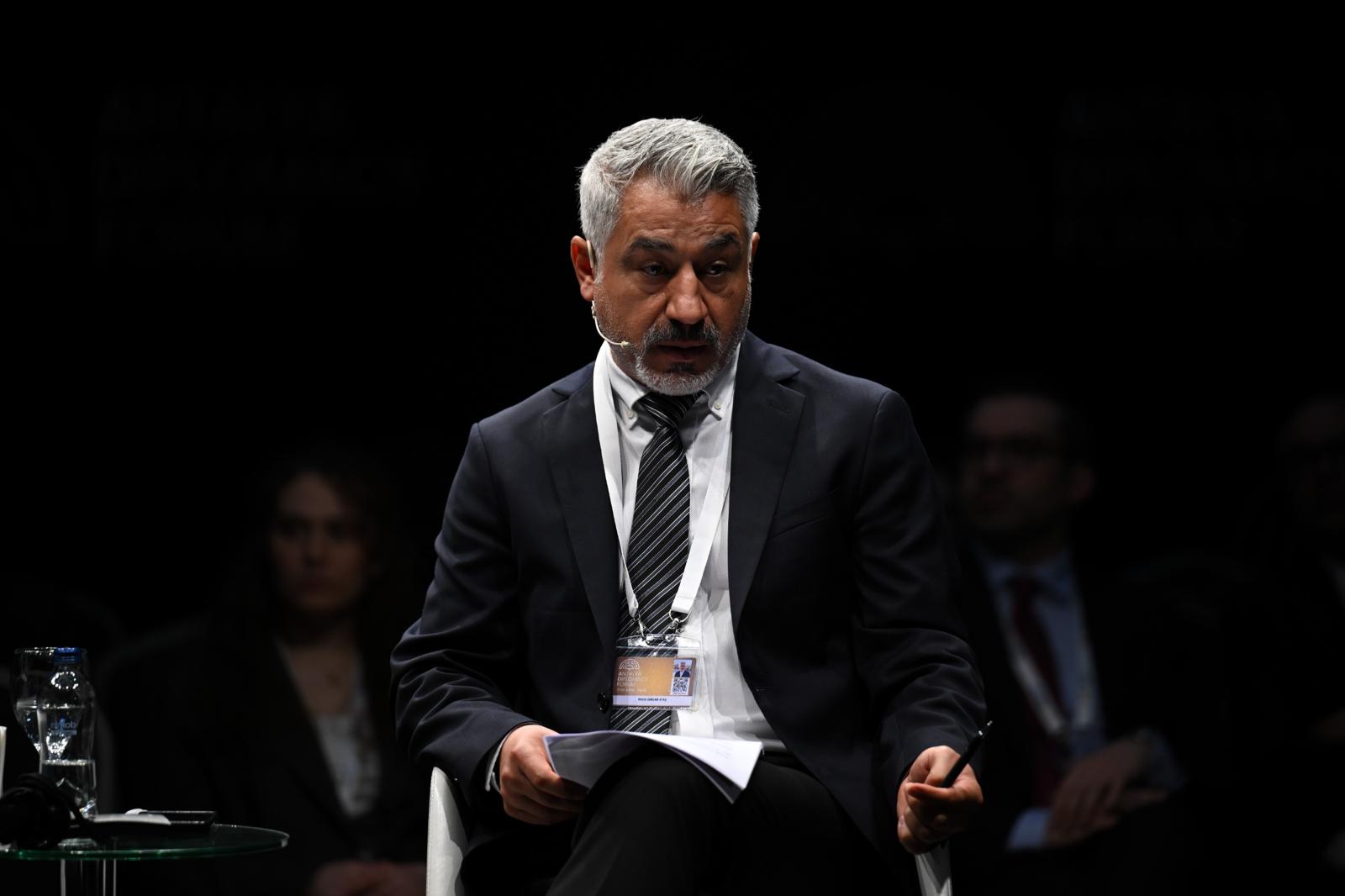
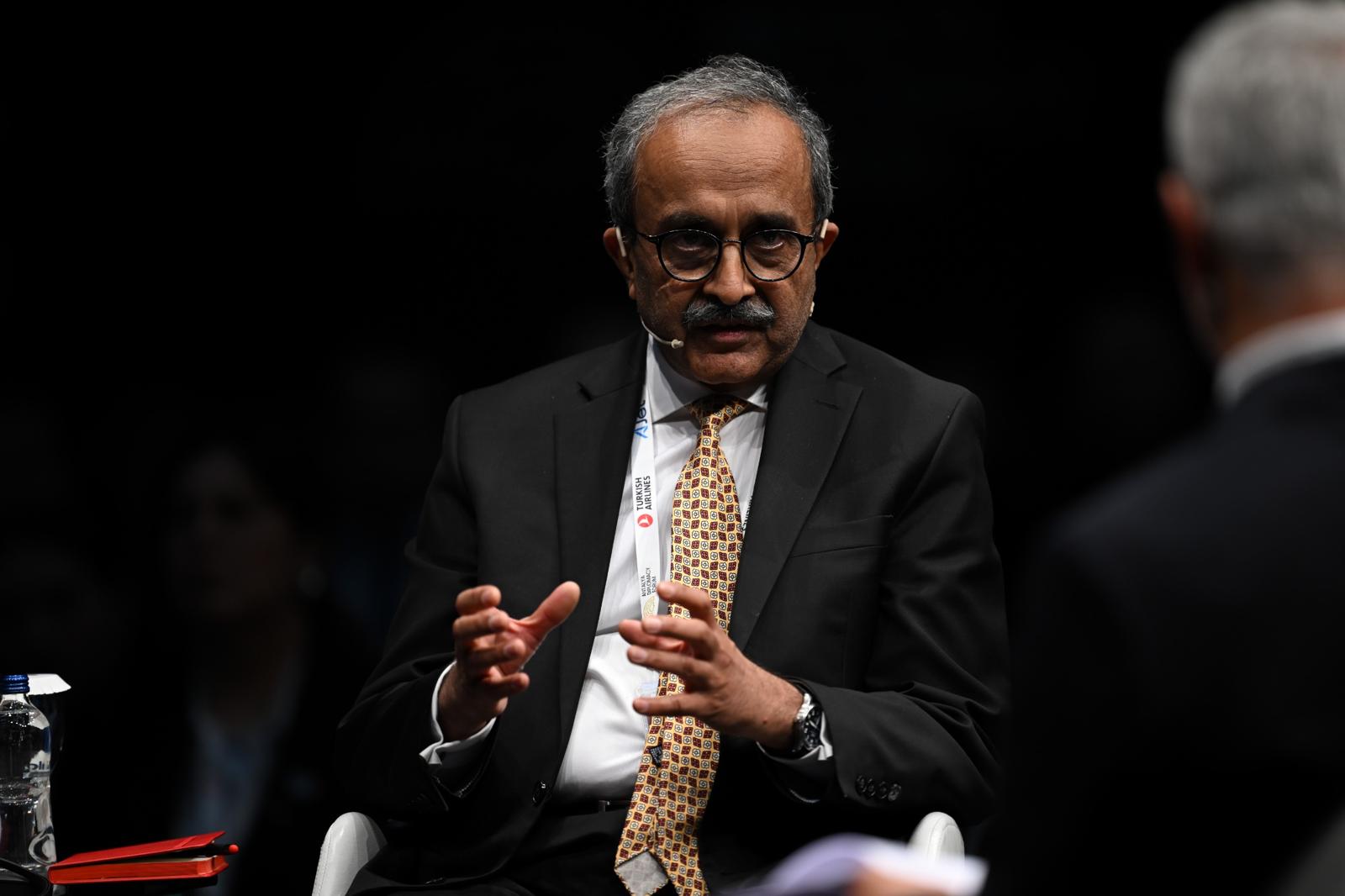
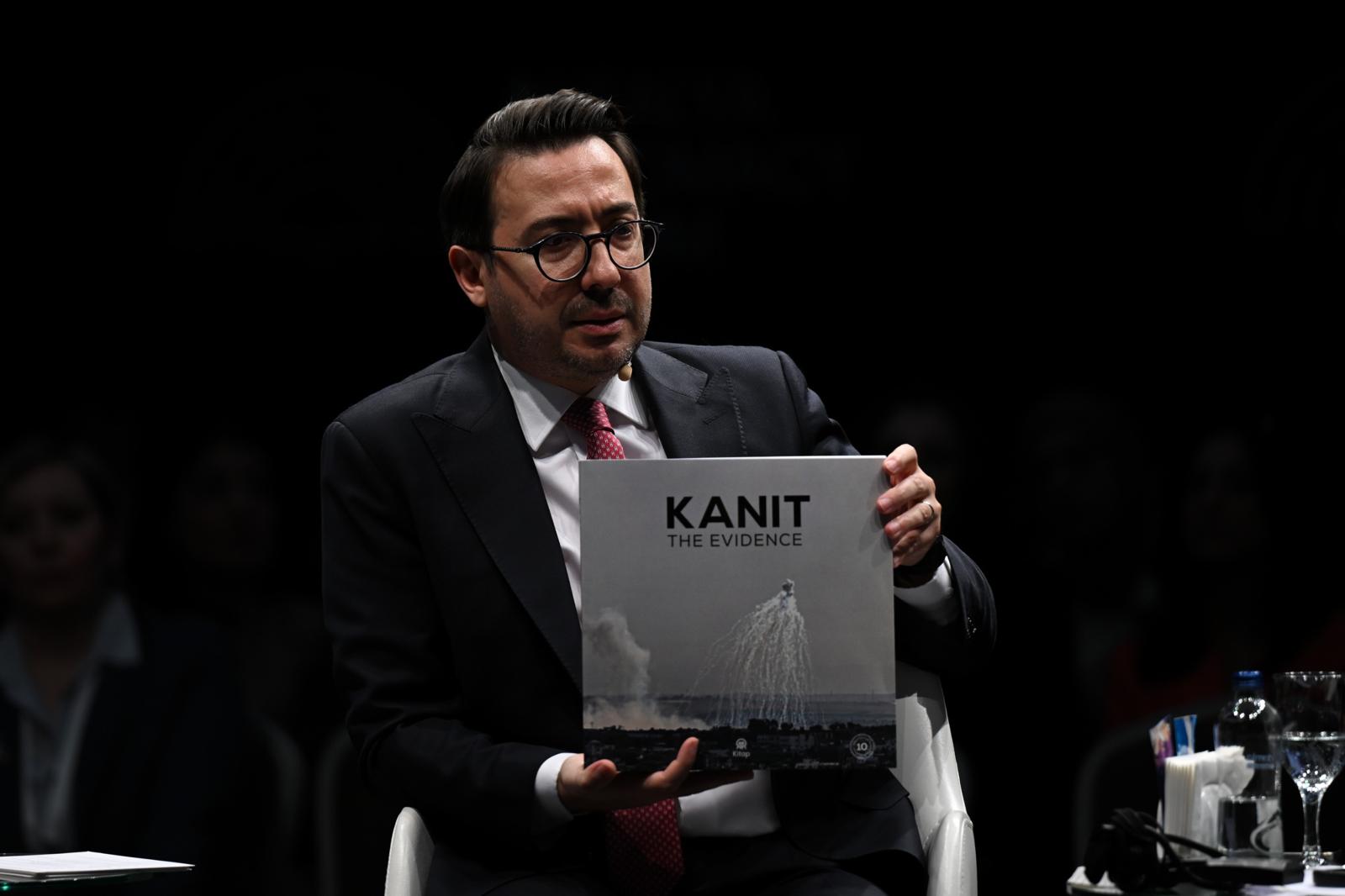
A panel titled “Strategic Communications for Managing Uncertainties” was held as part of the Antalya Diplomacy Forum (ADF) 2026.
Moderated by Senior Correspondent at Al Jazeera English TV, Resul Serdar Ataş, the panel featured the Chairman of the Board of Directors and Director General of Anadolu Agency (AA), Serdar Karagöz, Deputy Head of Communications Ferhat Pirinççi, Director of the New York Office of the United Nations Environment Programme, Jamil Ahmad, Visiting Distinguished Professor at TÜBİTAK in the field of Science Diplomacy and Mediation, Nancy Snow, and Co-Founder and Co-Editor-in-Chief of Middle East Eye, David Hearst.
Chairman of the Board of Directors and Director General of Anadolu Agency (AA), Serdar Karagöz, said that both Anadolu Agency and Al Jazeera had pursued principled journalism during the genocide in Gaza and paid a very heavy price.
Stressing that what is happening in Gaza goes far beyond a conflict, Karagöz described it as an outright genocide, stating, “During this genocide in Gaza, Anadolu Agency lost two of its colleagues, while Al Jazeera lost 14. Unfortunately, they were killed by the Netanyahu government. This is an extremely heavy price to pay for quality journalism.”
"This goes far beyond a conflict; this is an outright genocide", said Karagöz, adding, “Since October 2023, more than 70,000 people have been killed and nearly 200,000 injured. But these are not mere numbers—we are talking about real people here: mothers, children, grannies and grandpas. We are talking about entire families. Two-thirds of those killed in Gaza are women and children. They are killing people without discrimination.”
Karagöz also underlined the scale of destruction in Gaza, noting that 88 per cent of the area has been damaged and 92 per cent of homes destroyed, adding that “there is almost no housing left standing".
He further stated that even cemeteries have been destroyed, saying that history is being erased, families are being wiped out, and that an entire city is being removed from the map along with its cemeteries.
Drawing attention to what he described as an imbalance in global media coverage, Karagöz said, “This is a clear imbalance. Imbalance in reporting, imbalance in journalism. An interesting study analysed 50,000 news articles from outlets such as Le Monde, the BBC, Der Spiegel, and The New York Times. It showed that the Israeli narrative appears far more frequently. This is not a surprise. Furthermore, they examined the New York Times headlines from 2023 to 2025 and discovered that 'Israelis' were referenced almost 1,900 times, while 'Palestinians' featured approximately 10 times. They do not want to discuss Palestine. This is another strategic and editorial decision. They say 'Gaza' but refuse to mention 'Palestine'."
Karagöz noted that the double standard is deepening and that language use is at the heart of the problem, pointing out that when Israel attacks, the terminology used is quite clear, with direct and precise terms like 'Hamas attack', 'militant', and 'massacre' chosen.
"Our response to a crisis must be well-planned."
According to the Presidency's Deputy Head of Communications, Ferhat Pirinççi, strategic narration need not contradict reality or ethical ideals; rather, they should be pursued simultaneously.
Pirinççi said, "We, as the Directorate of Communications of Türkiye, are attempting to defend the truth while simultaneously constructing a robust, coherent, and proactive strategic communication or proactive narration. Because, particularly in highly polarised crisis situations, the public becomes more vulnerable and sensitive. As a result, we are working to make communication more inclusive, balanced, and sensitive for all parts of society."
Pirinççi emphasised that the most crucial balance in crisis intervention is struck between speed and coordination, saying, "We must respond to a crisis quickly but also accurately and precisely. And we are not the only ones involved in this game. There are many actors. For example, in Türkiye, a military or societal incident affects numerous ministries, governorships, and other institutions. Therefore, we must ensure coordination as much as possible and be as fast as possible in our response. Thus, this should be a well-structured, well-coordinated, and well-planned response."
According to Pirinççi, they established a coordination mechanism with relevant ministries and governorships, particularly with President Recep Tayyip Erdoğan, because there was public concern about a potential refugee influx towards Türkiye prior to the US-Israel attack on Iran and in the early stages of the war.
Noting that they facilitate the work of journalists at the border and that there are over three hundred international and Turkish journalists at the Van Başkale border crossing, Pirinççi said that concerns regarding a potential wave of migration have been alleviated by sharing daily transit data with the public.
Pirinççi emphasised that state institutions must inform the public rather than merely influence them, pointing out that a lack of information creates a vacuum for disinformation.
Adding that the Directorate of Communications employs standard operating procedures and early warning systems, Pirinççi said that they utilise AI-powered monitoring mechanisms on social media platforms and that, by analysing the impact of local incidents at both the city and national levels, they have adopted a proactive rather than a reactive approach.
Pirinççi announced that the Presidency’s Directorate of Communications will organise a joint event with the Munich Security Conference and SETA, saying that an alternative public diplomacy forum will be held in tandem with the summit due to the cancellation of NATO’s public diplomacy forum for this year.
Pirinççi said that the Directorate of Communications is planning various events not only in Türkiye but also across several NATO member states, adding that this remains a main item on the institution’s agenda, with preparations already well underway.
Strategic communication, environmental diplomacy, and global information ecosystem transformation underpinned
The Director of the New York Office of the United Nations Environment Programme, Jamil Ahmad, emphasised the urgency of combating the climate and environmental crisis, noting that an effective communication strategy is also critical.
Adding that the United Nations conducts its communications through a multi-layered strategic ecosystem, Ahmad pointed out that this structure encompasses a broad process that progresses from the production of scientific evidence to policy development and then to the informing of public opinion.
Dr Nancy Snow, the TÜBİTAK Visiting Distinguished Professor of Science Diplomacy and Mediation, said that today the boundaries between "information", "propaganda", and "reality" are becoming increasingly blurred.
Addressing today's transforming media landscape, Snow highlighted the influence of social media and short-form content on global perceptions, adding that certain young actors are able to utilise digital platforms to disrupt traditional patterns of political communication.
Noting that governments are making significant investments in public diplomacy, Snow pointed out that the direct communication of leaders has nonetheless become dominant in the global information flow and that this situation has both facilitated and transformed the production of counter-narratives.