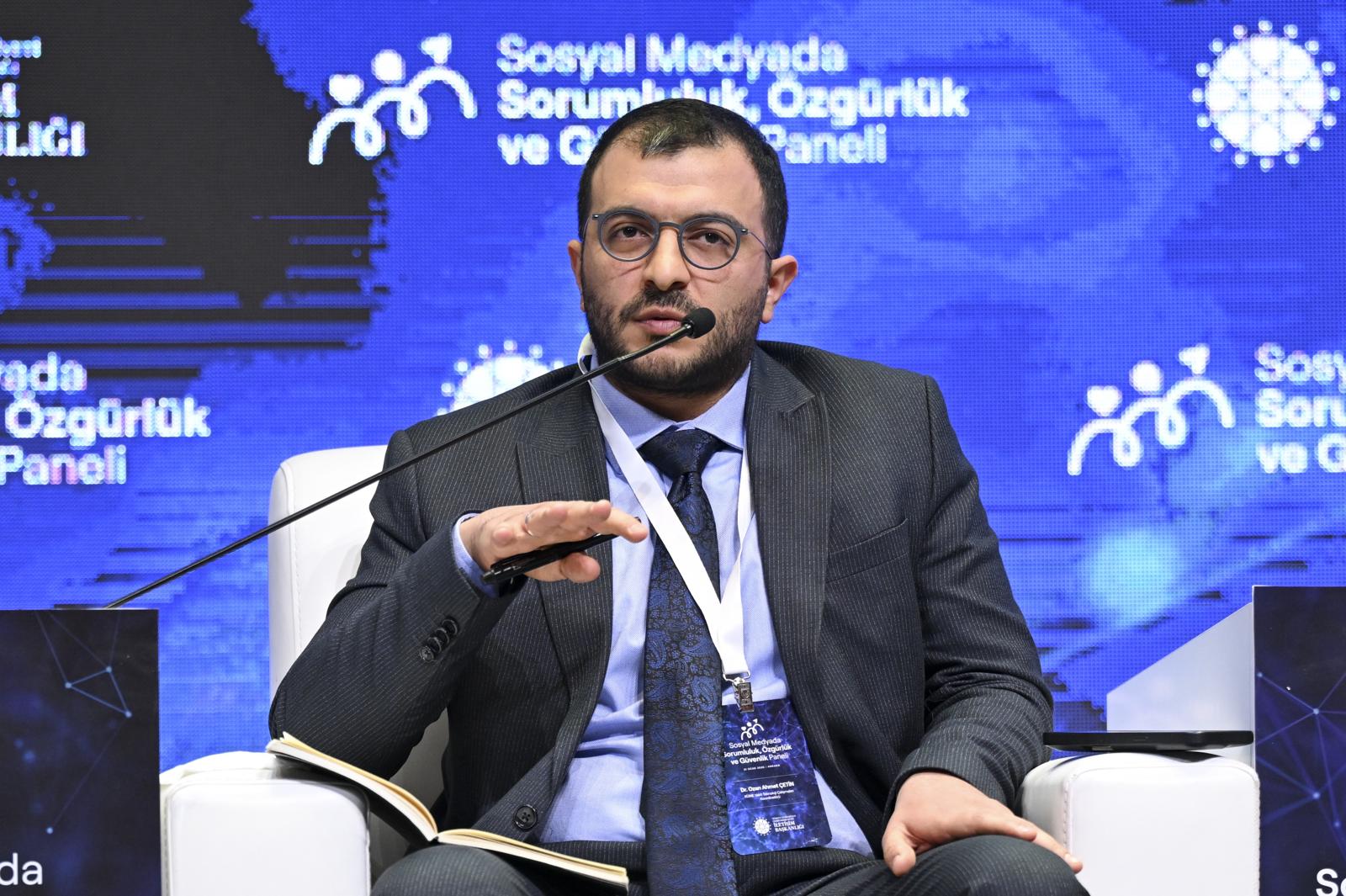
The Presidency's Directorate of Communications organised a panel on "Responsibility, Freedom, and Security in Social Media".
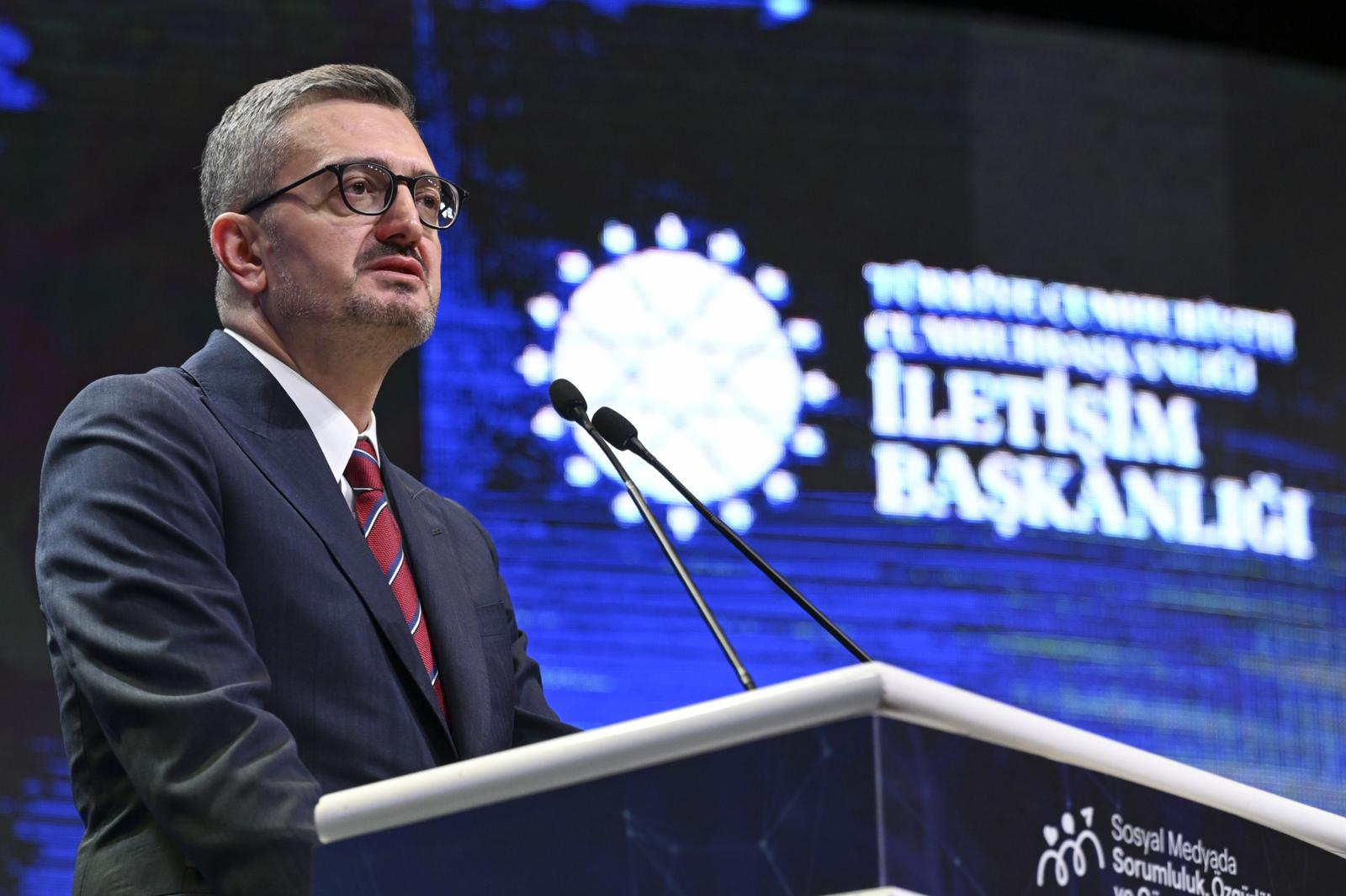
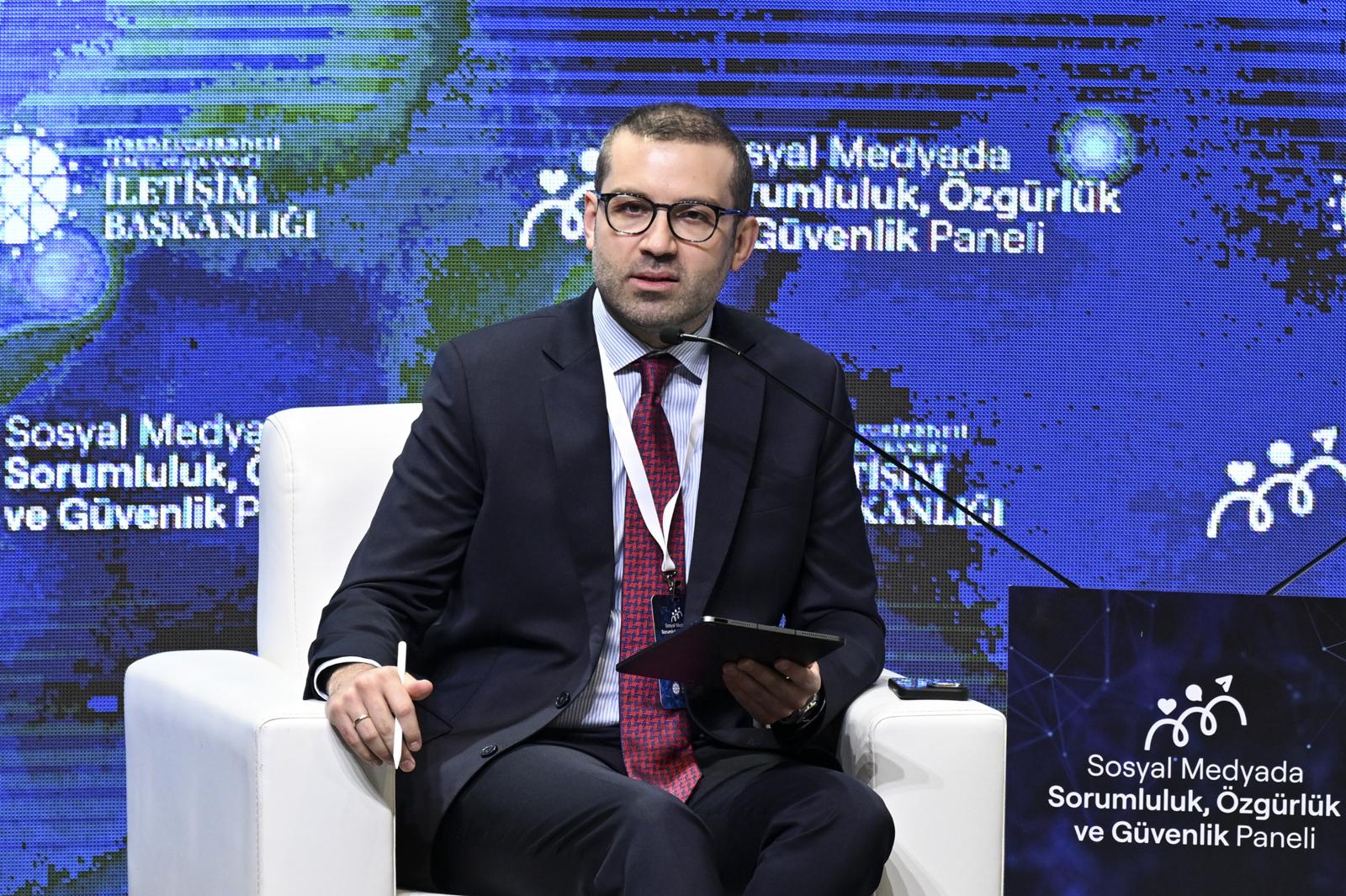
The panel, moderated by Head of the Public Diplomacy Department of the Directorate of Communications Oğuz Güner, took place in the Conference Hall of the Directorate and began with opening remarks by the Presidency's Head of Communications Burhanettin Duran.
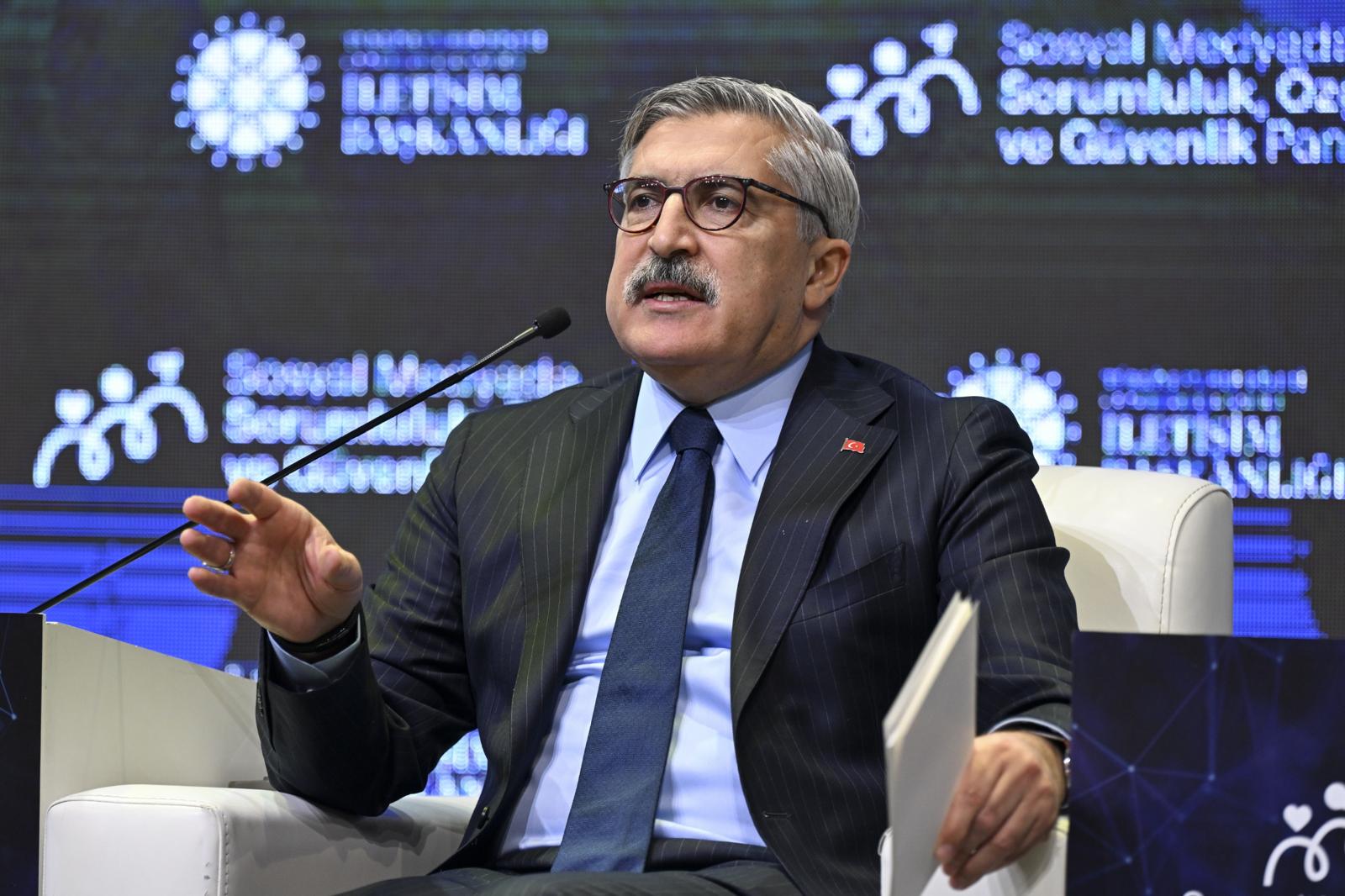
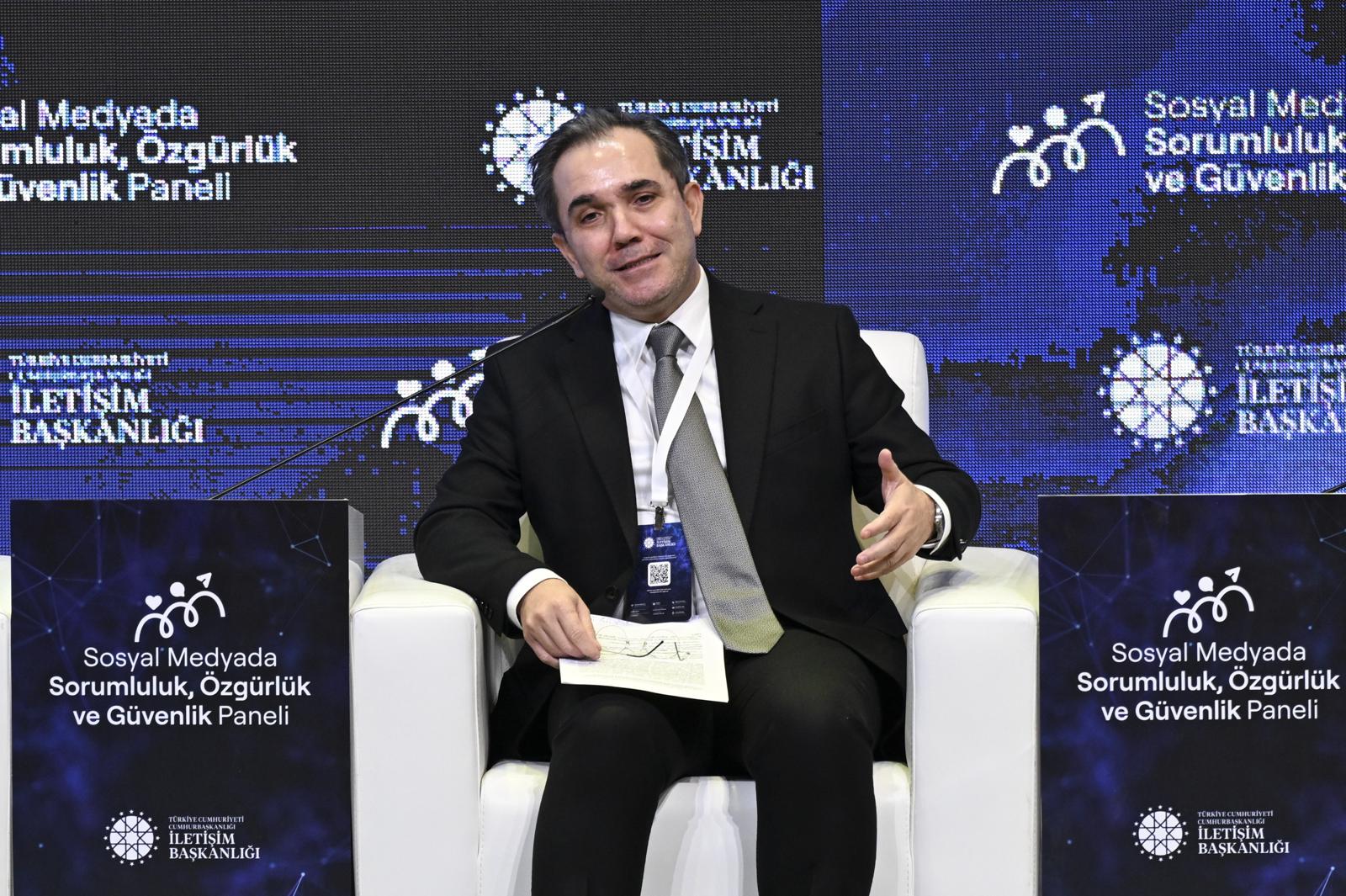
The panel hosted AK Party Deputy Chairman and Founding Chair of the Grand National Assembly of Türkiye's Digital Media Commission, Hüseyin Yayman, Dean of the Faculty of Communication at Ankara University, Prof. Fatih Keskin, Culture and Heritage (KÜME) Foundation Technology Studies Coordinator, Ozan Ahmet Çetin, and GZT Editor-in-Chief Doğukan Gezer as speakers. In his remarks, Yayman denounced yesterday’s attack on the Turkish flag by YPG/SDF supporters along the Nusaybin–Qamishli border.
Yayman stated that in Türkiye, a citizen spends an average of 7 hours online and 3 hours on social media every day, adding, "This emphasises the importance of maintaining social, family, and public order, beginning with the individual's healthy upbringing. The AK Party considers safeguarding women, the family, and children to be a red line. The maintenance of social order is essential."
Yayman declared that digital addiction has evolved into a "national security issue", noting that studies conducted under the leadership of President Recep Tayyip Erdoğan on online gambling and betting, which undermine families and disrupt social order, have reached their final stages.
"Digital copyright has evolved into a national security issue affecting 86 million citizens"
Yayman emphasised that transnational digital companies capturing a significant portion of the advertising revenue pie in Türkiye through non-transparent algorithms has resulted in considerable issues, saying, "Safeguarding the family, the individual, and society, and maintaining public order are crucial and essential endeavours. At this point, both our attitude and decision-making process are crystal clear. The issue of digital copyright is no longer simply about a newspaper or television; it has evolved into a national security issue for Türkiye and its 86 million citizens."
Yayman stated that morning shows and series with unclear content have created a new situation that undermines social order and family structure, adding that they would take the necessary responsibility in this regard.
Dean of the Faculty of Communication at Ankara University Prof. Keskin underlined that digital technology and social platforms present considerable issues, particularly for youngsters, due to "optimised intense stimulation", adding that digital security is a societal and institutional issue as much as an individual one.
Stating that restricting children's use of social media is on many countries' agendas, Prof. Keskin said that in Türkiye, it is also necessary to explain to children and families why such measures are needed.
KÜME Foundation Technology Studies Coordinator Ozan Ahmet Çetin stated that the widespread adoption of artificial intelligence has ushered in a period of transformation and that social media will be the field most profoundly affected by this change.
GZT Editor-in-Chief Gezer said that restrictions are needed to reduce disinformation in digital media and boost reader trust in news reporting.
The Presidency's Head of Cyber Security, Ümit Önal, stated that the significant advancements in wireless communication technology every decade have driven breakthrough innovations, profoundly influencing economies and societies.
Önal emphasised that the key concepts of the 2020s are artificial intelligence, social media, and cyber security, noting that individuals have now become active participants in the virtual realm.
Önal stated that the extremes of human nature, along with technological advancements, will culminate in a daunting level of threat, with a substantial fraction of these risks comprising social engineering attacks targeting individuals.
"Many data are collected and processed"
Önal stated that information systems provide attackers with extensive opportunities, adding that this has made institutions and states, alongside individuals, potential targets.
Stating that vast amounts of data are collected and processed by various actors, Önal said that large-scale data are generated and stored digitally in areas such as business supply chains, production and marketing processes, climate change, environmental pollution, and the quality of land and water resources. Önal went on to add:
"In other words, we live in a sophisticated ecosystem in which huge volumes of digital data are generated and processed by various actors across practically every aspect of economic and social life. The most sensitive data generated through the senses will be added to the behavioural data already being collected. Moreover, we will have effectively handed over, by our own hands, the very senses that shape our character. Every piece of data that is collected has the power to influence individuals and societies. We should not forget that today there is a level of control over our lives, our confidential data, and our private relationships with others that has never existed before."
Önal stated that the most significant platforms will be privacy and personal data protection, adding, "With the increasing delegation of activities to algorithms and the rapid integration of artificial intelligence applications into our lives, humanity has entered an era in which the light is brighter than ever before, but the darkness is also deeper than ever."
"Deepfake-supported attacks on the rise"
Önal noted that deepfake-supported social engineering attacks are on the rise and warned that audio and visual content that is indistinguishable from reality could lead to serious societal problems in the coming period.
Emphasising that fake video and audio recordings generated using artificial intelligence in the names of individuals with strategic influence can result in reputational damage, public misinformation, and even diplomatic crises, Önal said:
"People can be made to appear as if they have visited places they never went to or said things they never said. At the same time, this also creates a basis for claiming that a real video is fake. For this reason, when considered together with social media, deepfake emerges as a new problem with the potential to cause major public reactions and violence. Fake news, particularly during sensitive situations such as wars, fires, earthquakes, or protests, can provoke anger within society.
While deepfake technology may offer benefits in areas such as education, art, and entertainment, it can also be used for exploitation, sabotage, election manipulation, erosion of trust in institutions, intensification of social divisions, threats to national security, denial of truth, and the weakening of journalism. Unfortunately, in our communications and on digital platforms, we are rapidly moving toward a zero-trust principle. We may soon need to begin phone conversations with a security question whose answer is known only to the intended recipient. On the other hand, turning deepfake into deeptruth is also possible through artificial intelligence. Therefore, artificial intelligence can simultaneously be a threat, a target, and a solution."
Chairman of the Information and Communication Technologies Authority (BTK), Ömer Abdullah Karagözoğlu,
stated that the digital world is no longer a “side street” but has become the “main avenue”, noting that children are now walking right in the middle of this avenue. Addressing how responsibility, freedom, and security can coexist and be balanced on social media, Karagözoğlu made the following remarks:
"This issue does not present itself as a simple dilemma of ‘ban or allow.’ We see it as a matter of establishing a balance that protects our children while also expanding freedom. In Türkiye, 77.3 million people use the internet, meaning it touches nearly every aspect and segment of life. There are 58.5 million active social media users, corresponding to 66.7 per cent of the total population. The average daily time spent on social media is 2 hours and 43 minutes. And the average number of social platforms used each month is 7.6."
Stating that such a large digital crowd cannot remain safe on its own, Karagözoğlu said that as the crowd grows, so do misinformation, manipulation, cyber risks, privacy violations, and harmful content encountered by children.
“Rules must be understood, embraced, and implemented”
Pointing out that children no longer remain on a single application, Karagözoğlu emphasised that algorithms do not merely present content but also shape behaviour, influence emotions, and set agendas. Referring to regulations concerning access to social media platforms for children under the age of 15, he stated:
"Regulating social media access for children under 15 based on supervision and limitation goes beyond a technical restriction; it represents a holistic public policy aimed at protecting children within the digital ecosystem. However, there is a very critical balance here. Public debates reflect this clearly: the need to protect children, freedom of expression, personal data protection, the state’s authority over digital oversight, and the responsibilities of platforms... A balance must be established among all these elements."
Karagözoğlu likened social media to a flowing river, stating that their goal is not to build walls in front of the river but to properly define its course.
Drawing attention to the fact that Türkiye has 80.7 million mobile phone users, Karagözoğlu noted that digital interaction is constantly experienced through the screens in people’s pockets.
He concluded by saying, "This means that setting rules alone is not sufficient; the rules must be understood, embraced, and implemented. An effective communication approach is essential to ensure that policies aimed at protecting children are correctly understood by the public, that social support is built, and that the risks of disinformation are reduced."