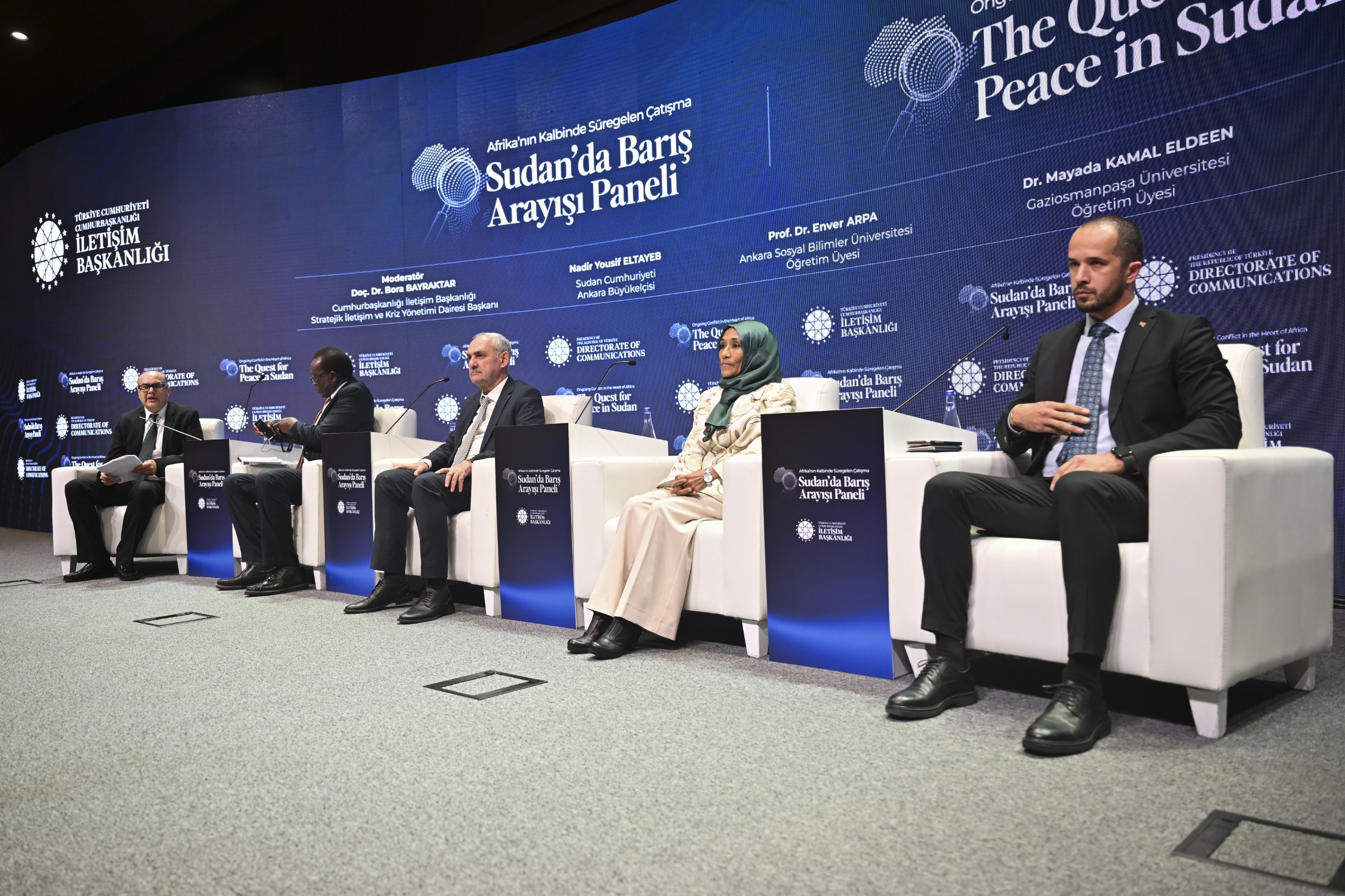
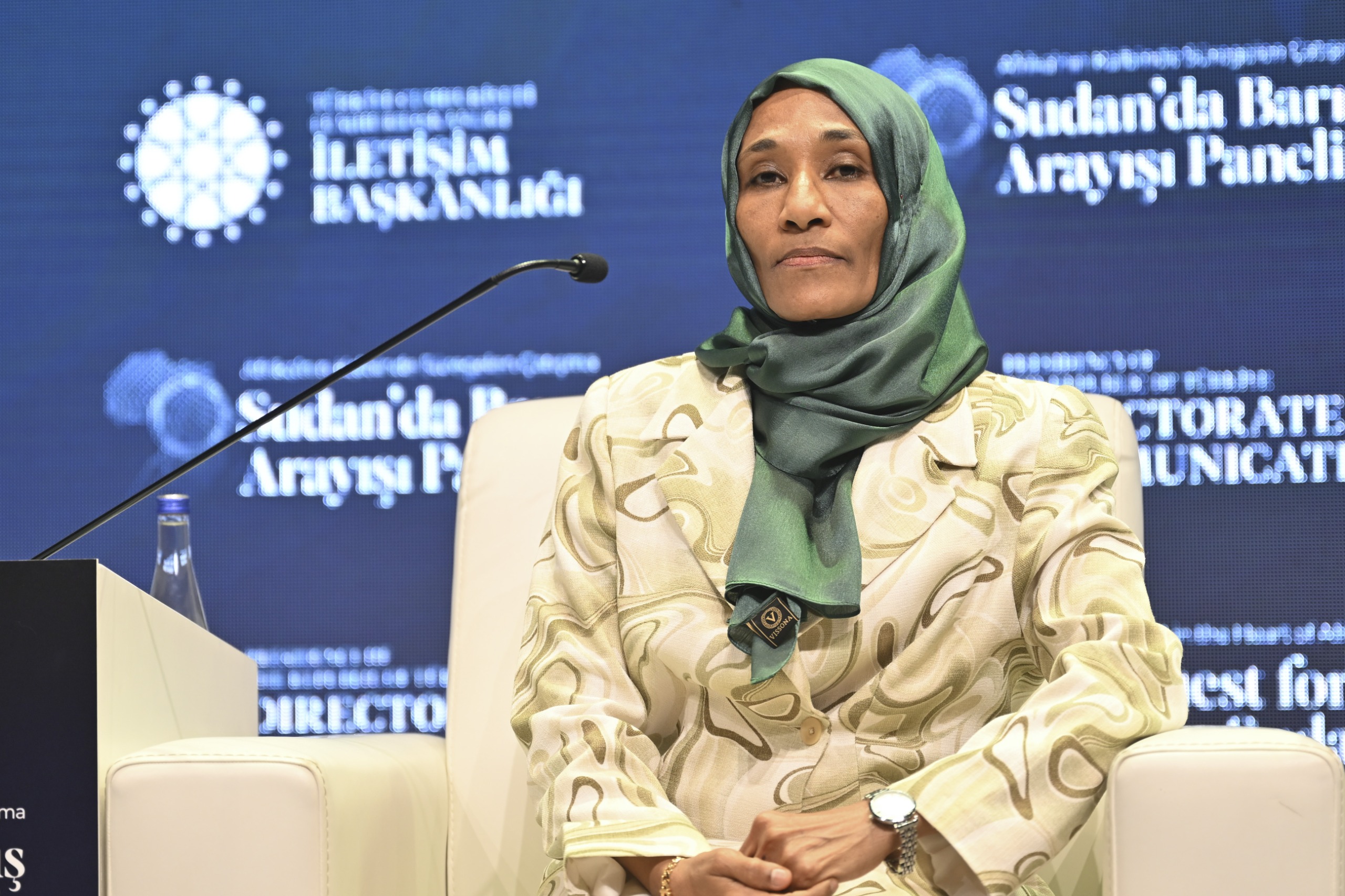
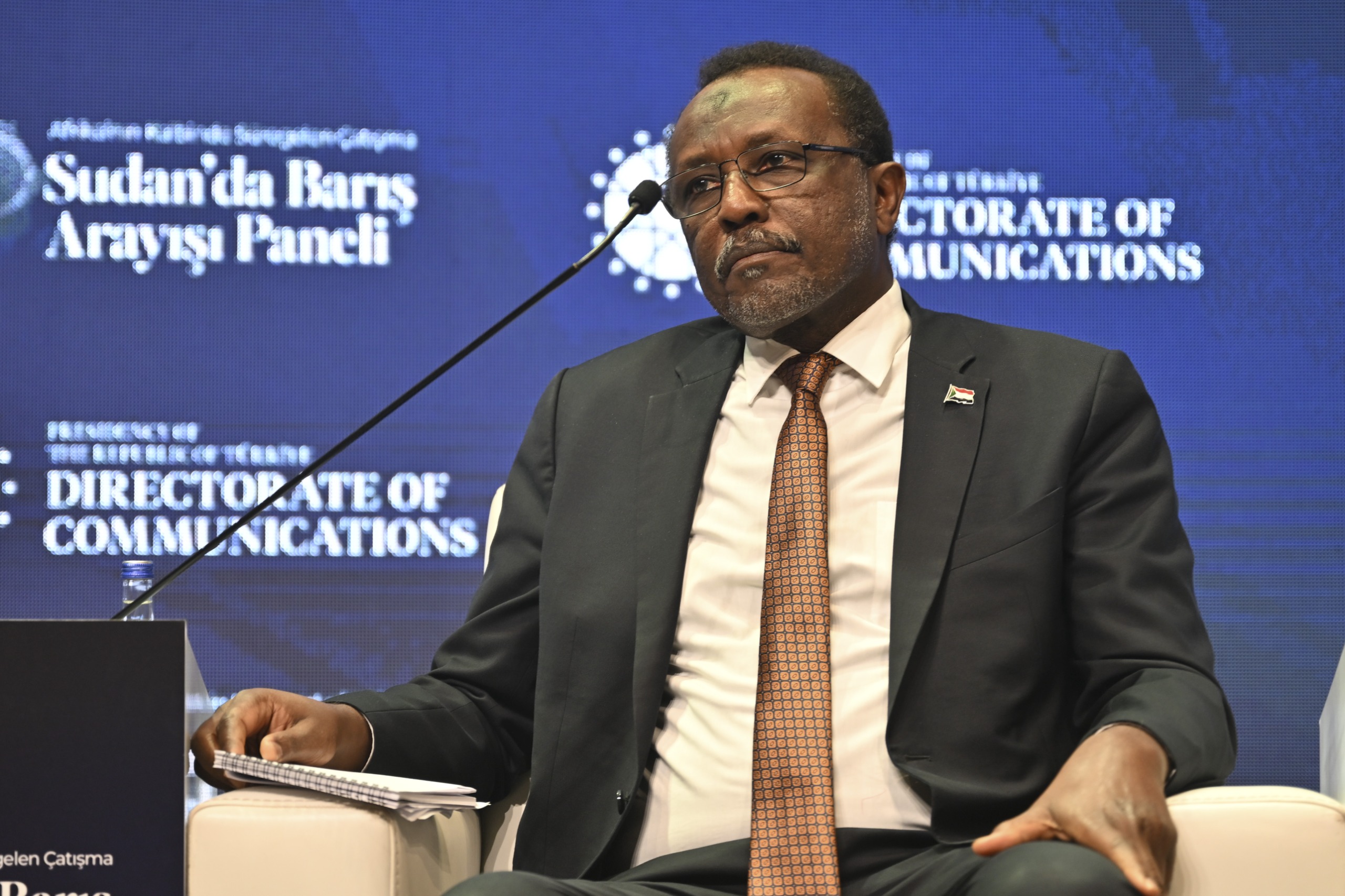
The Presidency’s Directorate of Communications organised a panel titled the “Ongoing Conflict in the Heart of Africa: The Quest for Peace in Sudan” on December 4, 2025.
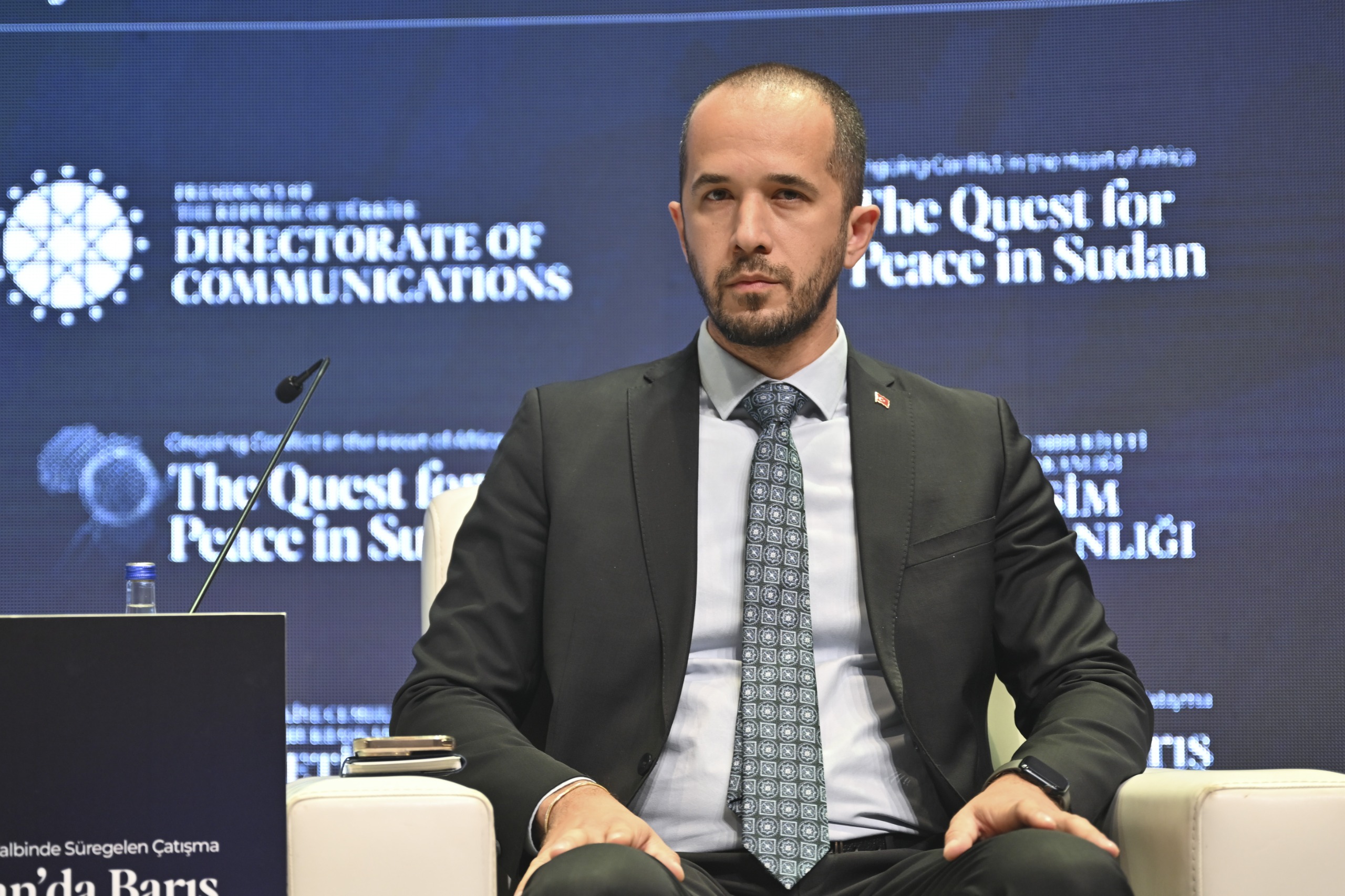
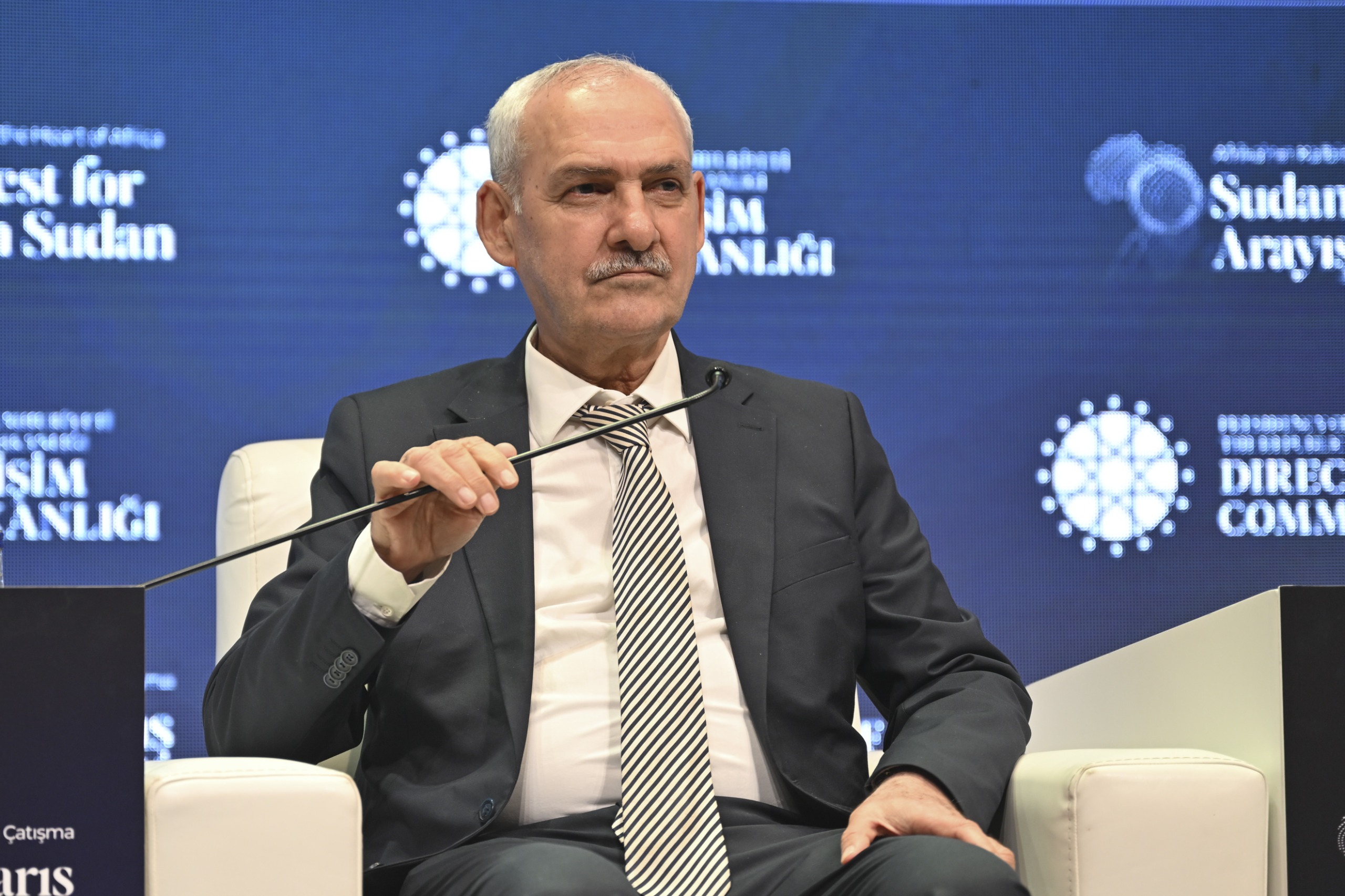
Held at the Conference Hall of the Presidency’s Directorate of Communications, the panel brought together Ambassador Nadir Yousif Eltayeb of the Republic of Sudan to Ankara; Prof. Enver Arpa, Faculty Member at Ankara Social Sciences University (ASBÜ) Faculty of Theology; Mayada Kamal Eldeen (PhD), Faculty Member at Tokat Gaziosmanpaşa University; and Tunç Demirtaş (PhD), researcher at the Foundation for Political, Economic and Social Research (SETA).
In his opening speech, Presidency's Head of Communications Prof. Burhanettin Duran began his remarks by highlighting that the current era is marked by deepening chaos, conflicts, and humanitarian crises on a global scale. Head of Communications Duran stated that tragedies in various parts of the world make it imperative for the international community to unite around a shared conscience and highlighted that the war that broke out in April 2023 between the Sudanese Armed Forces (SAF) and the Rapid Support Forces (RSF) left an estimated 31 million people in need of humanitarian aid, displaced 9 million people within the country, and forced 3 million Sudanese to seek refuge in neighbouring countries. In this framework, he stated, "In Sudan, where the world's largest displacement crisis is unfolding, 19 million students lack access to education," adding, "the war must end and peace should be restored in a manner consistent with the will of the Sudanese people." Head of Communications Duran also noted that during the crisis, disinformation, manipulation, and propaganda distorted the reality on the ground and that the RSF, in particular, engaged heavily in information warfare to legitimise its own narrative. Noting that the Presidency's Directorate of Communications will persist in its endeavours to make the outcry of the Sudanese people heard and to support the efforts for peace, Head of Communications Duran concluded his remarks by recalling President Erdoğan's words, "The people of Sudan should be assured, Türkiye is by their side."
Attended by diplomats, media representatives, academics, executives from public institutions, and experts, the panel on "Ongoing Conflict in the Heart of Africa: The Quest for Peace in Sudan" discussed human rights violations in Sudan, their impact on regional security, and the role of diplomatic initiatives in restoring peace.
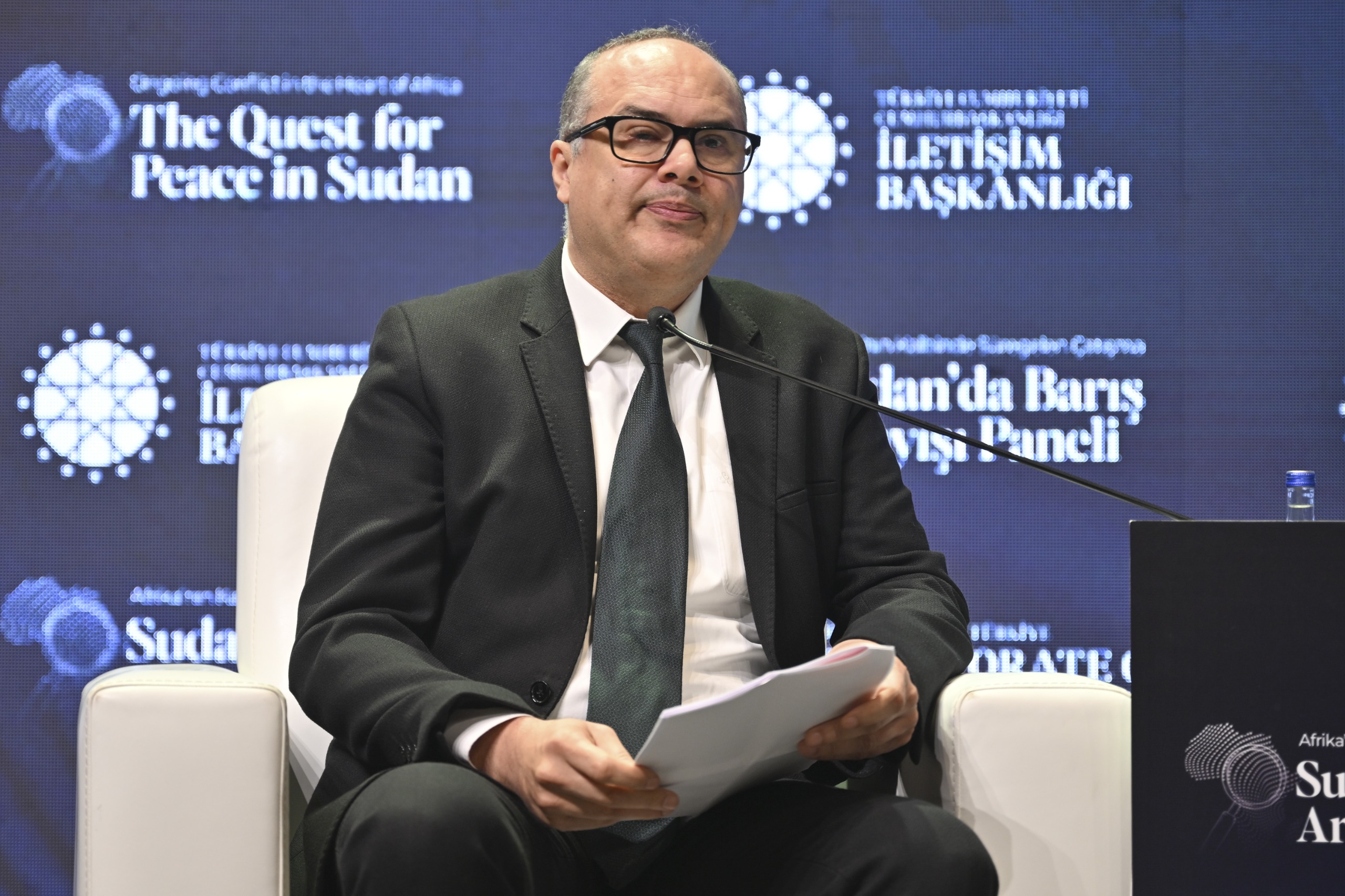
Assoc. Prof. Bora Bayraktar, Head of the Department of Strategic Communication and Crisis Management of the Presidency's Directorate of Communications, moderated the panel.
In his address, Sudan’s Ambassador to Ankara, Eltayeb, thanked Türkiye for its strong response to the developments in Sudan.
Eltayeb stated that the background of the attacks must be accurately understood, with terrorist groups waging an insurgency targeting civilians and pursuing no ideological or political aim beyond looting. He said that the international community fell short regarding Sudan, emphasising the significance of President Erdoğan's call for reform of the international system. He also stressed that the United Arab Emirates must end its support for the RSF.
Providing an overview of the RSF’s formation and its clashes with the Sudanese army, Eltayeb noted that the RSF devastated civilian infrastructure in the capital, Khartoum, and looted civilian property.
Regarding the RSF, Eltayeb said, “Unfortunately, this militia continues to exist due to the support it receives from the United Arab Emirates. These mercenaries possess highly modern equipment.”
Expressing their discontent with the international community’s neglect of Sudan, Eltayeb underscored that the UN Security Council (UNSC) had failed to reach a decision despite clear evidence.
Prof. Arpa, a Faculty Member at the Ankara Social Sciences University Faculty of Theology, noted that once the RSF realised it could not take over the entire Sudan, it shifted its focus to the Darfur region in an effort to preserve its power. He stressed the strategic importance of El Fasher, which has come under RSF control. Arguing that the RSF could not have built a strong military structure on its own, Prof. Arpa emphasised that the militia has received backing from the Gulf and Western countries.
He further stated that the developments in Sudan have surpassed the scope of a civil war and have become a full-fledged stage of terrorism, driven by both internal and external factors.
Prof. Arpa drew attention to the severity of the violence in Sudan, at least as grave as in Gaza, with millions facing the threat of starvation.
Prof. Enver Arpa remarked that the RSF has steadily changed into a lawless terrorist organisation, that it is impossible to shift power using irregular paramilitary forces, and that the above-mentioned capacity cannot be sustained without external help.
Sudan becomes a battleground for global and regional power struggles
Faculty Member Mayada Kamal Eldeen (PhD) from Tokat Gaziosmanpaşa University remarked that, although the RSF initially sought to control the entirety of Sudan, it now appears to be settling for the Darfur region, which has become the epicentre of the conflict.
Highlighting the insufficient attention and concern shown by the international community for the war in Sudan, Eldeen stated that while some regional actors support Sudan’s Transitional Sovereignty Council, others back the RSF.
Reiterating the urgent need for genuine peace in Sudan, she recalled that previous rounds of peace talks had failed to produce results.
Eldeen further noted that the war in Sudan constituted a grave humanitarian disaster when methods such as famine, rape, and blockade are utilised as weapons, stressing that the international public has not shown sufficient attention in Sudan. Stating that the RSF demanded 10 years for integration into the army, and the war began when the government expected two years, Eldeen said that for the first time in Sudan's history, the civil war has spread to 11 states, including the capital, Khartoum.
SETA Researcher Tunç Demirtaş (PhD) noted that the crisis in Sudan has evolved into a theatre of global and regional strategic competition, stressing that Darfur has recently become one of the most prominent hotspots in this geopolitical struggle.
Pointing out that the crisis affects not only Sudan but also the Horn of Africa, the Sahel region, and global trade, Demirtaş underlined that the activities of the RSF are contributing to regional instability.
He emphasised that Türkiye has emerged in recent years as a pivotal mediator in regional crises, adding that President Recep Tayyip Erdoğan has been the staunchest supporter of peace in Sudan.
Stating that Türkiye has stood by the people of Sudan since the beginning of the war, Demirtaş concluded by noting that Türkiye, alongside regional partners such as Qatar, plays an essential role in efforts to end the crisis affecting Sudan.
Demirtaş also stated that Sudan's situation has evolved into a global, regional, and geopolitical crisis, rather than just a civil war. He emphasised that Sudan is essential to the Horn of Africa, the Sahel region, European security, and international trade, underscoring that the crisis in Sudan cannot be considered simply as a local security crisis.