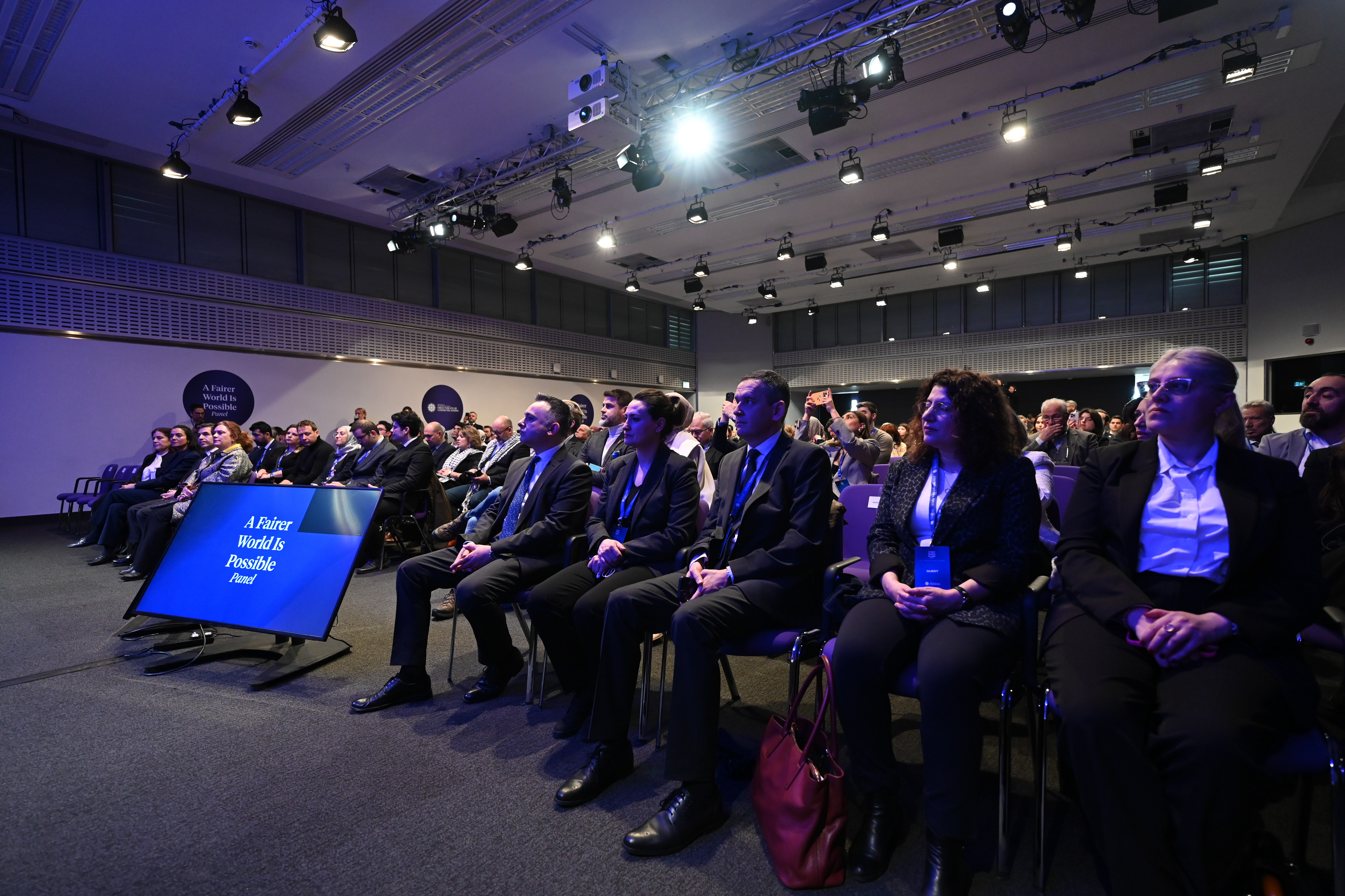
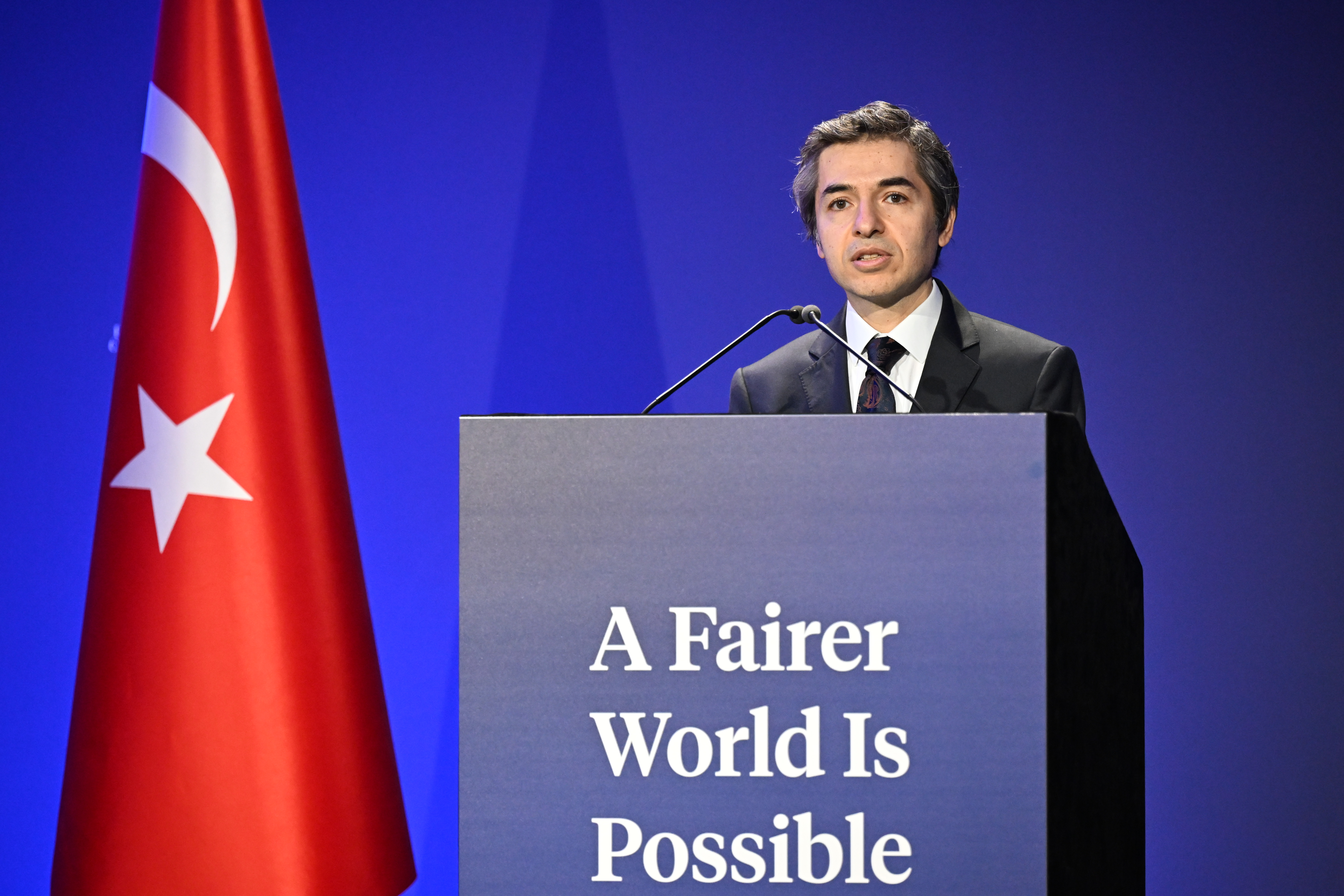
The panel titled "Stratcom Public Forum: A Fairer World is Possible" was held by the Presidency's Directorate of Communications at the Queen Elizabeth II Centre across from the UK Parliament.
The panel was attended by the Ambassador of Türkiye to the UK, Osman Koray Ertaş, members of the UK Parliament, academics, human rights advocates, journalists, international officials, representatives from non-governmental organisations (NGOs), and numerous distinguished guests.
Ambassador Ertaş expressed gratitude to the Presidency's Head of Communications Altun for organising the event during his introductory remarks. Ertaş indicated that the world is undergoing fundamental transformations and that the international order established following World War II is being paradoxically put to the test by the very actor who designed it.
Ambassador Ertaş added, "Even though the most recent developments may appear surprising to some, the truth is that we did not arrive at this juncture overnight. The political and economic structures that were established post-war are failing to navigate the current challenges."
Ertaş recognised that this system has been struggling to guarantee justice, stability, and security for nearly two decades, citing the global response to the COVID-19 pandemic, one of the most significant crises in modern history, as indicative of this failure. Ertaş recalled that the United Nations Security Council (UNSC) took 100 days to adopt a resolution while millions of lives were endangered, indicating a broader dysfunction.
Ertaş emphasised that we are regressing to a world in which the outcomes are determined by power rather than justice.
"Gaza represents the intersection of Zionist colonialism and Western imperialism"
Emeritus Professor Avi Shlaim at the University of Oxford addressed the panel's first session on "Human Rights and Palestine: The Search for Justice in Today's World," moderated by journalist Ghida Fakhry.
Shlaim characterised the events in Gaza simply as "genocide," asserting that Zionism operates on the rationale of eradicating the native population.
Shlaim cited the American philosopher and linguist Noam Chomsky in his interpretation of the Israeli usurpation of Palestinian territories as "the most extreme form of imperialism," noting, "Following the Balfour Declaration in 1917, the Palestinian populace endured oppression under Zionist colonialism while simultaneously experiencing Western imperialism. Later on, the United States also became involved in the situation. Gaza represents the intersection of Zionist settler-colonialism and ruthless Western imperialism."
Shlaim emphasised that Britain was the origin of the Palestinian issue, stating, "No government in Britain has acknowledged this historic responsibility. The Nakba took place in 1948. Three-quarters of the Palestinian population ended up as refugees. There is a country being wiped off the map here. The Nakba is an ongoing process that began in 1948."
Shlaim noted that, despite the International Court of Justice's (ICJ) ruling finding Israel's conduct in the Palestinian territories unlawful, no countermeasures have been implemented against Israel.
Pointing out the disconnect between Western governments and their nations, Shlaim said, "Governments are pro-Israel and one-sided. The US government is an accomplice to Israel's war crimes in this case. Britain is not any different. There is a disregard for Palestinian demands. It is also unlikely that governments in the West will abruptly change their stances."
In reference to the Western support that Israel receives, Shlaim said, "Israel is a significant asset and a valuable instrument for the West. Israel is regarded as an 'island of democracy' surrounded by authoritarian states. This is the reason why it has garnered sympathy and support from the West. Given the current situation, Israel is not a democracy; it is an apartheid state."
Shlaim noted that civil society movements are strengthening despite Western support for Israel, predicting that governments will be compelled to heed these non-violent movements.
"The West was the last to adopt the right course of action"
President of the US/Middle East Project, Daniel Levy, noted during the panel that the notion of "ending the Nakba" is a perspective that is widely acknowledged among several political circles.
Levy argued that this amounts to ethnic cleansing, adding that "Israelis have learnt experience. They enjoy pure impunity. This impunity has been granted to them along the way. Pragmatic perspectives have vanished. Non-Israeli actors are also accountable in this regard."
Levy observed that Israel has been further encouraged by the present circumstances and stressed that the impunity of Israel and its enablers must be prioritised for resolution.
"For the past 15 months, it has been evident that impunity is without bounds. We are at point zero. This signifies the collapse of the international system,” stated Levy, stressing the lack of an alternative order.
Levy noted that all institutions are being disregarded and that Israelis have to consider twice before planning their international sports events or travels abroad.
Explaining how some sports clubs wish to conduct their games without audiences, while certain Israeli authorities prefer to avoid trips to specific countries, Levy stated, "We do not live in a unipolar world. Regardless of our actions in the West, our expectations are different. Western governments are last to catch up with us. The West was also the last to adopt the right course of action in relation to the apartheid in South Africa."
Levy also criticised the Western media, observing that Western media outlets responded favourably to Israeli requests to refrain from sending out reporters to Gaza.
Levy emphasised how Western media also undervalues citizen journalism, noting, "At this point, establishing accountability will be challenging. This is met with resistance; however, we must draw inspiration from the fortitude of a people."
"People fear that if they take part in Palestinian protests, they will lose their jobs"
Baroness Shaista Gohir, a member of the House of Lords in the UK Parliament, stated that parliament members are underinformed on the situation in Gaza and that the suffering of the Palestinian people is under-represented.
Gohir emphasised that the attendees of Gaza meetings are frequently the same individuals and that educating individuals about Palestine would make a significant difference.
Noting that there are numerous individuals in society who are hesitant to discuss the situation in Gaza openly, Gohir stated, "People are apprehensive about discussing it at work. Because they fear that they will lose their jobs. People are too nervous even to admit they are participating in protests. There is a perception that supporting the Palestinians is the same as supporting Hamas.
People are afraid of losing their jobs if they partake in Palestinian protests."
"I witnessed total destruction, chaos, and terror"
Among the panellists was Dr. Birsen Gaskell, an anaesthesia specialist who was stationed in Rafah for approximately three weeks during the Israeli attacks on Gaza.
Referencing her visit to Gaza with Doctors Without Borders (MSF) in February 2024, Gaskell said, "When I heard that children were being treated without anaesthesia, I could not believe it; it could not be possible. I was astounded by the information and, as a result, decided to travel to Gaza to serve."
Stating that she was shocked by what she saw upon entering Gaza, Gaskell added, "I witnessed total destruction, chaos, and terror."
Gaskell noted that under Israeli attacks, the vast majority of Gazans were forced to evacuate to Rafah and Khan Younis, and she was there when Khan Younis was entirely destroyed.
"Fundamentally, UN Security Council needs reform"
Former Minister of International Relations and Cooperation of South Africa, Naledi Pandor, spoke at the second session of the panel titled "Rebuilding Global Justice: The Impact of UN Reform on Human Rights."
In her speech, Pandor criticised the structure of the United Nations (UN).
Pointing out that the same attention given to Ukrainian citizens during the war with Russia is not paid to Rohingya Muslims or Palestinians despite their dire conditions, Pandor indicated that there is severe inconsistency and inequality in the global system.
Pandor highlighted that oppressed communities in various parts of the world do not enjoy the full protection of the UN Charter and added:
"I believe that freedom and a fair world are possible. I have lived my life believing in that. However, it is imperative for us to reform the UN to restore it to what it was when we, as South Africans enduring the atrocities of apartheid, fought for freedom. The UN was a body that cooperated closely with our liberation organisations. We have successfully registered apartheid as a crime against humanity at the UN; however, we have yet to achieve acknowledgement of what Israel is doing today by oppressing the Palestinian people and denying them fundamental freedoms."
"Palestinians are not treated the same as Ukrainians"
Former member of the UK Parliament, Tasmina Ahmed-Sheikh, criticised the international community's hypocritical stance on Ukraine and Gaza.
Stating that people are dying in both cases, Ahmed-Sheikh said, "Some people's lives are valued more than others. Migrants from Ukraine are cared for and given accommodations, but Palestinians do not get the same treatment."
Ahmed-Sheikh explained that there is a need for reform at the UN. Advocating that permanent membership needs not to be changed but expanded, Ahmed-Sheikh added, "If international courts issue arrest warrants and then it is said, 'It doesn't matter,' what value will these courts have? Their words must carry weight; otherwise, countries will exploit them to further their own interests."
"The UN's credibility is undermined due to its support for Israel"
Former Secretary General of the Muslim Council of Britain (MCB), Zara Mohammed, also mentioned the remarks delivered by the Western government officials: "Israel has the right to self-defence."
Noting that the UN is legally responsible for bringing peace, Mohammed said, "But funds of those who work for peace are withdrawn. For example, UNICEF has statistics, but they are not considered credible. 'These are terrorists,' they say. The UN's credibility is undermined due to its support for Israel."
Drawing attention to Israel's targeting of hospitals in Gaza, Mohammed said, "Where is international law? Where is the UN? Where are the resolutions? What is the point of them? Votes are cast; however, countries such as the US either abstain or vote in line with their own interests. In the end, the superpowers are doing nothing. The International Criminal Court (ICC) issues the arrest warrant, but they then argue, "Israel has the right to self-defence." How can we take institutions such as the UN seriously?"
Mohammed stated that an institution must undertake the responsibility of coordination within the global order while supporting UN reform.
"They are imposing obstacles because we are influential"
During the third session of the panel titled "Truth in the Digital Age: Media, Human Rights, and Disinformation," journalist Rahma Zein addressed the discourse that traditional media employs regarding Israel, including the assertions that "Israel is the only democratic country in the Middle East" and "Israel has the right to self-defence."
Zein said that these statements are "a product of the constantly running public relations mechanism," adding, "On social media, everyone sees what Israel is, what an apartheid state it is."
Stating that those who speak out against injustice are called "activists" as part of a public relations campaign, Zein added, "If you say children should not be killed, you are not an activist; you are a human being. We should genuinely be happy because they are imposing obstacles on us because we are influential (on social media). It is not in their (social media companies') interest that we exist and that we are aware of our power."
Explaining that journalists in Gaza broadcast the injustice without fearing it, Zein continued, "Fearing the injustice is worse than the injustice itself. It is even worse when what needs to be talked about is left unspoken. Palestine has taught us not to wait for thought leaders to speak."
"Traditional media could not control the narrative because of TikTok"
Producer and actor Reshad Strik argued that social media is also manipulated by Zionist groups.
Strik explained that when competition emerges against existing social media organisations, efforts are made to suppress it, referencing the example of famous media investor Rupert Murdoch's acquisition of Sky Sports due to a dispute.
"The Zionist lobby comes together, surrounds, and dismantles through lobbying," Strik said, citing TikTok as an example, adding, "TikTok has tremendous power. What it accomplished has changed the world. A new generation noticed what was occurring in the world around them. Following October 7, they could follow the events through the platform. They saw the conditions. Traditional media could not control the narrative because of TikTok."
Sirk stated that the real concern should be Meta, the owner of Facebook and Instagram, and US billionaire Elon Musk, mentioning the censorship imposed on him at X.
Noting that it was not possible to talk about Palestine and Zionism during his time in Hollywood, Strik shared that a female casting agent from a renowned management agency told him that she was first suspended from her job for reposting a post that did not mention Israel and then got demoted and was forced to apologise.
"Zionism has such a strong global hold, and it must come to an end," Strik remarked, pointing out the numerous challenges and black propaganda faced by Muslim actors.
"Mainstream media tried to distract us from the genocide in Gaza"
Speaking at the panel, Digital Broadcaster Muhammad Jalal expressed that he sees no difference between President Donald Trump of the US and former President Joe Biden; Trump tells lies while Biden polishes his lies with disinformation.
Indicating that disinformation covers the lies today, Jalal said that digital and alternative media stand against the disinformation and narratives disseminated by the mainstream media.
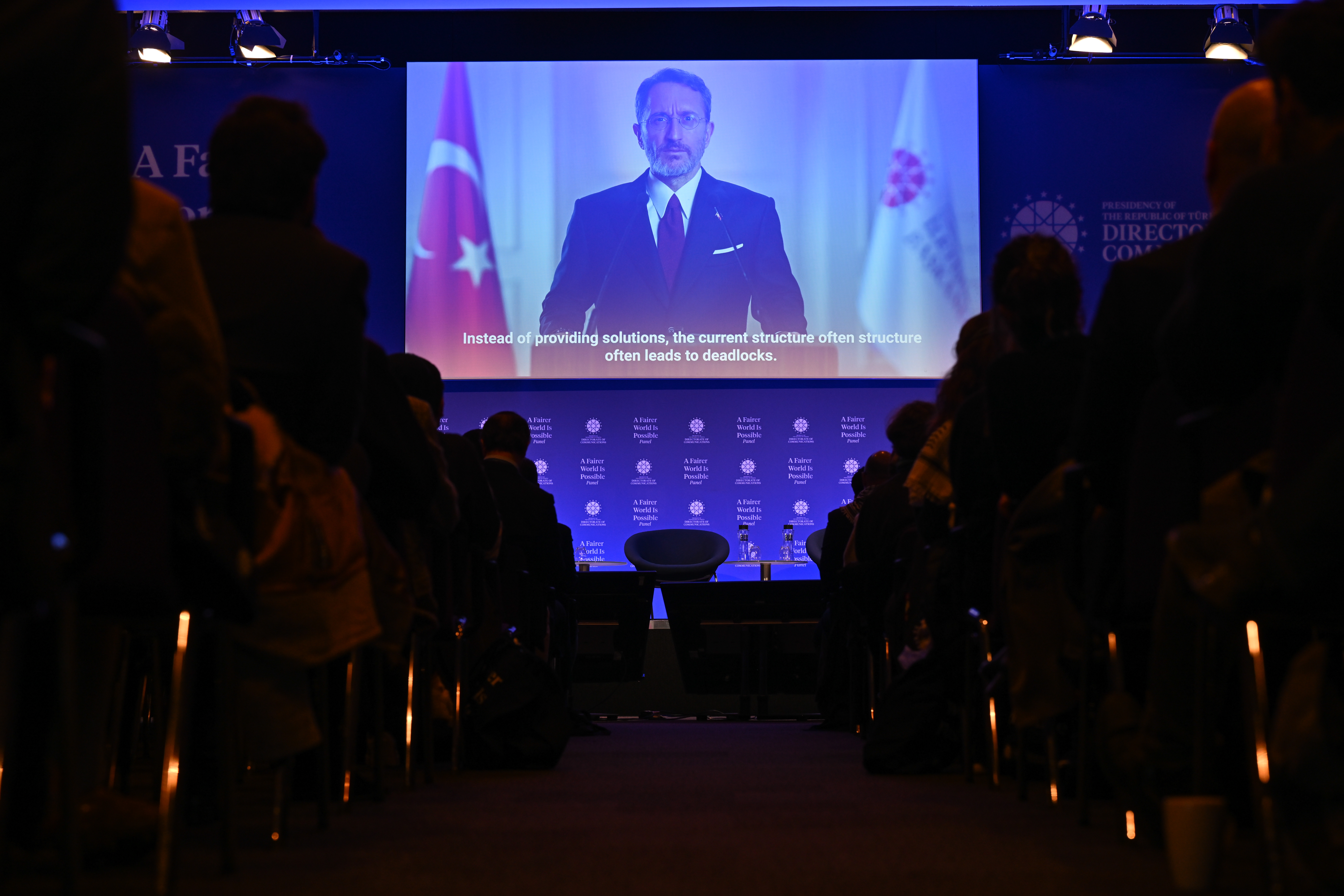
Head of Communications Fahrettin Altun addressed the participants of the panel via video message. In his remarks, Head of Communications Altun stated that humanity faces major global challenges and underlined that the failure of the UN Security Council, where the whole world is not represented, to ensure international justice hurts the global conscience.
Head of Communications Altun further added, "We have once again been reminded of the pressing need for the values represented by President Erdoğan's mottos 'The world is bigger than five' and 'A fairer world is possible.'"