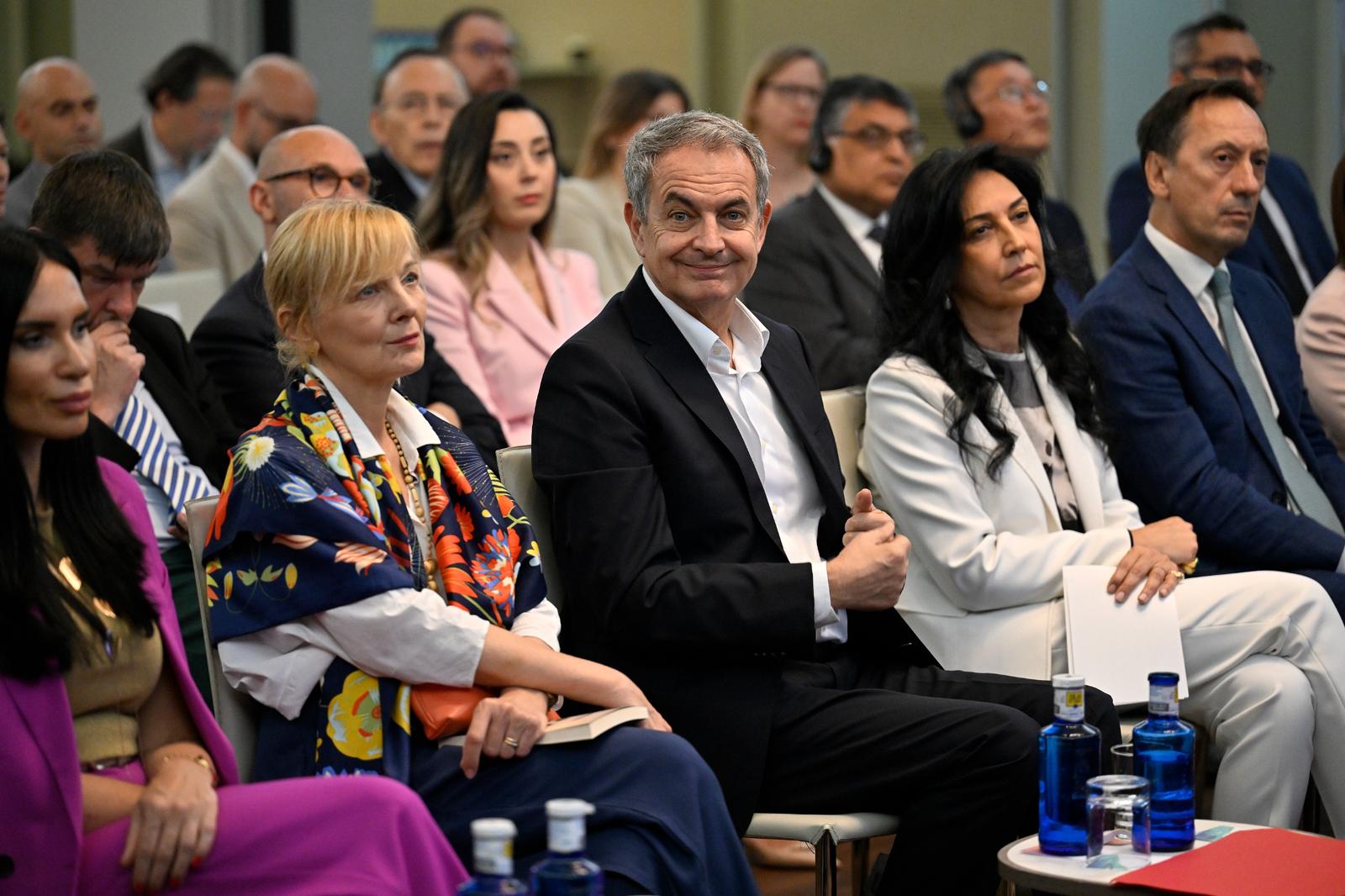
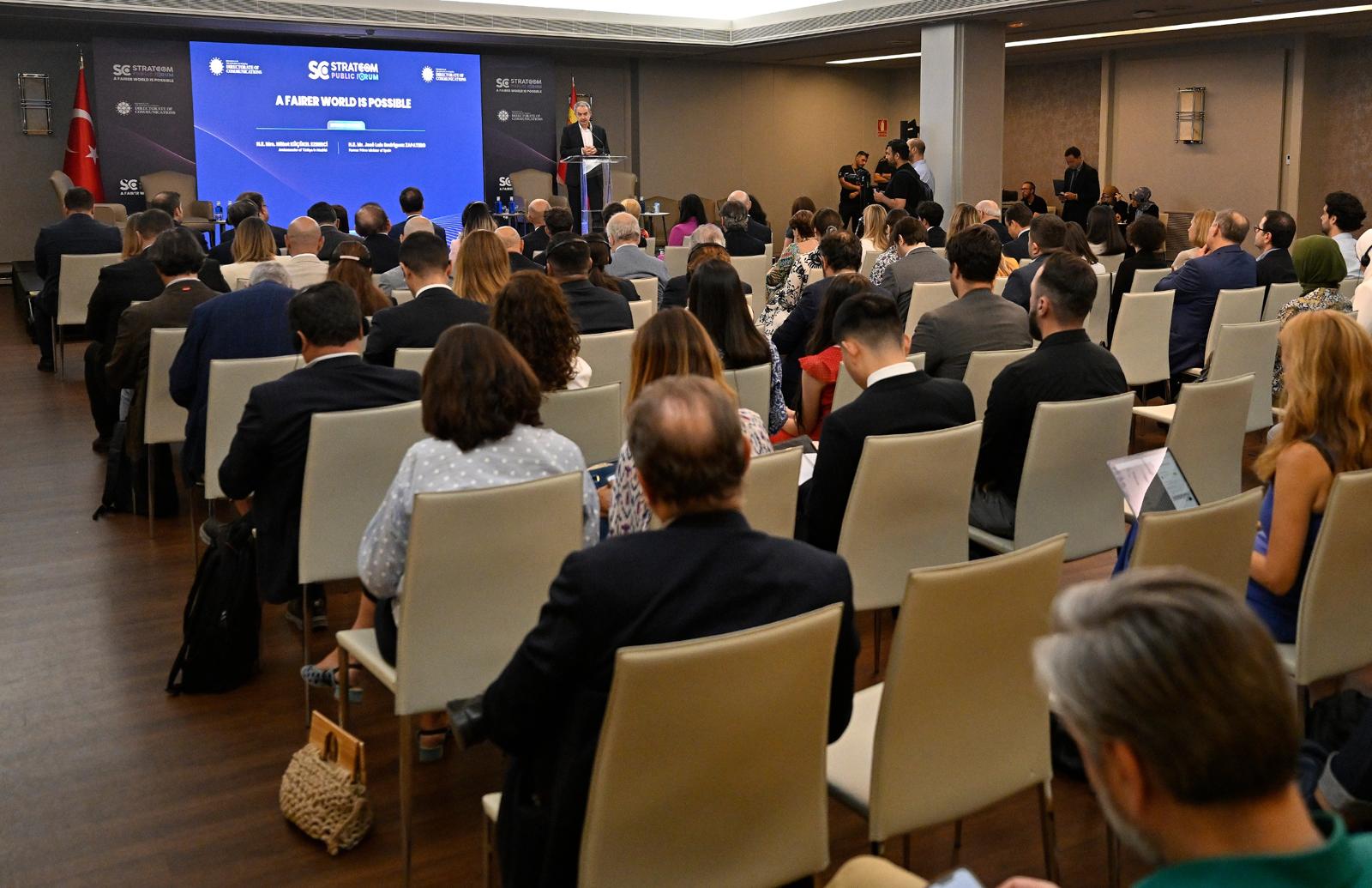
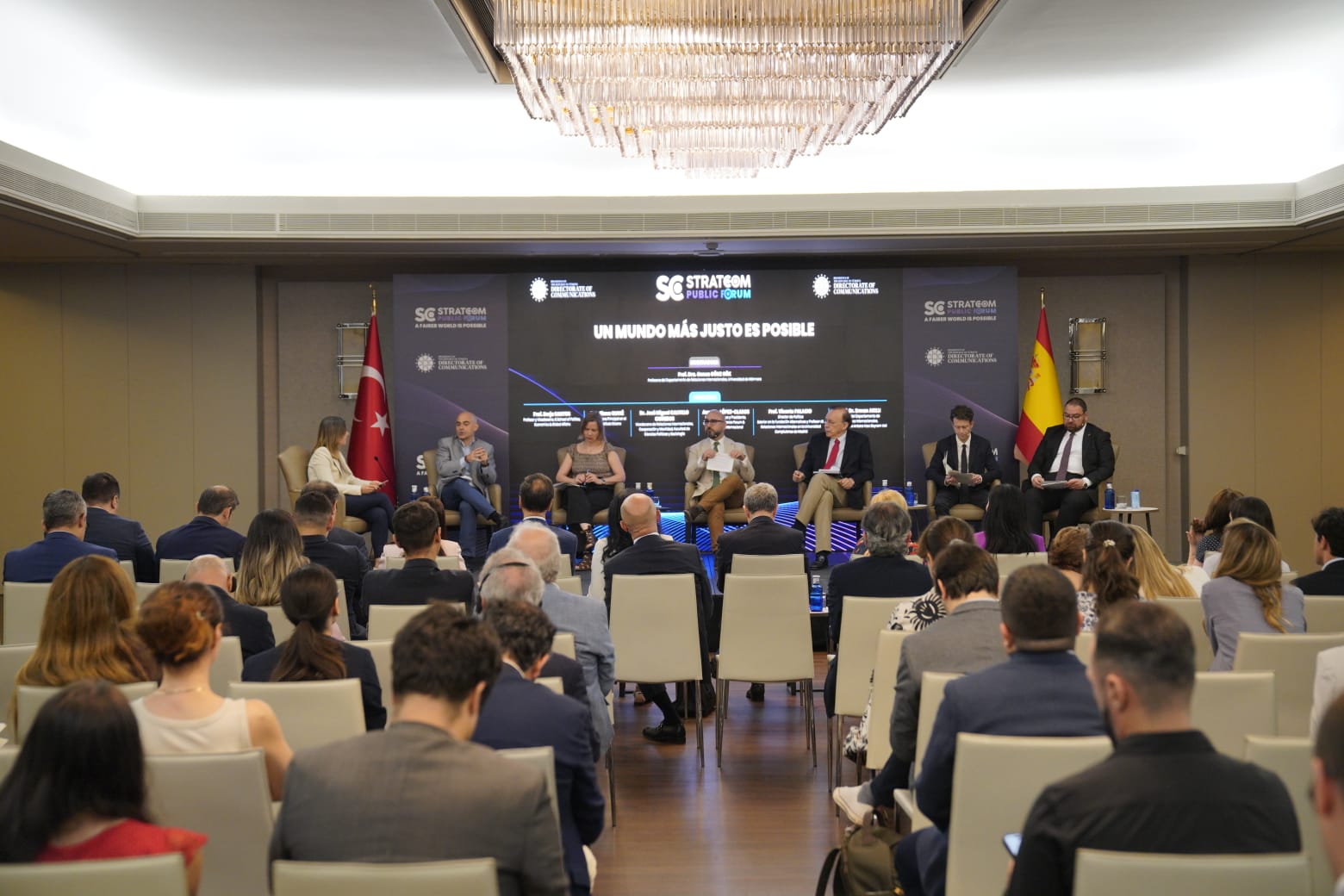
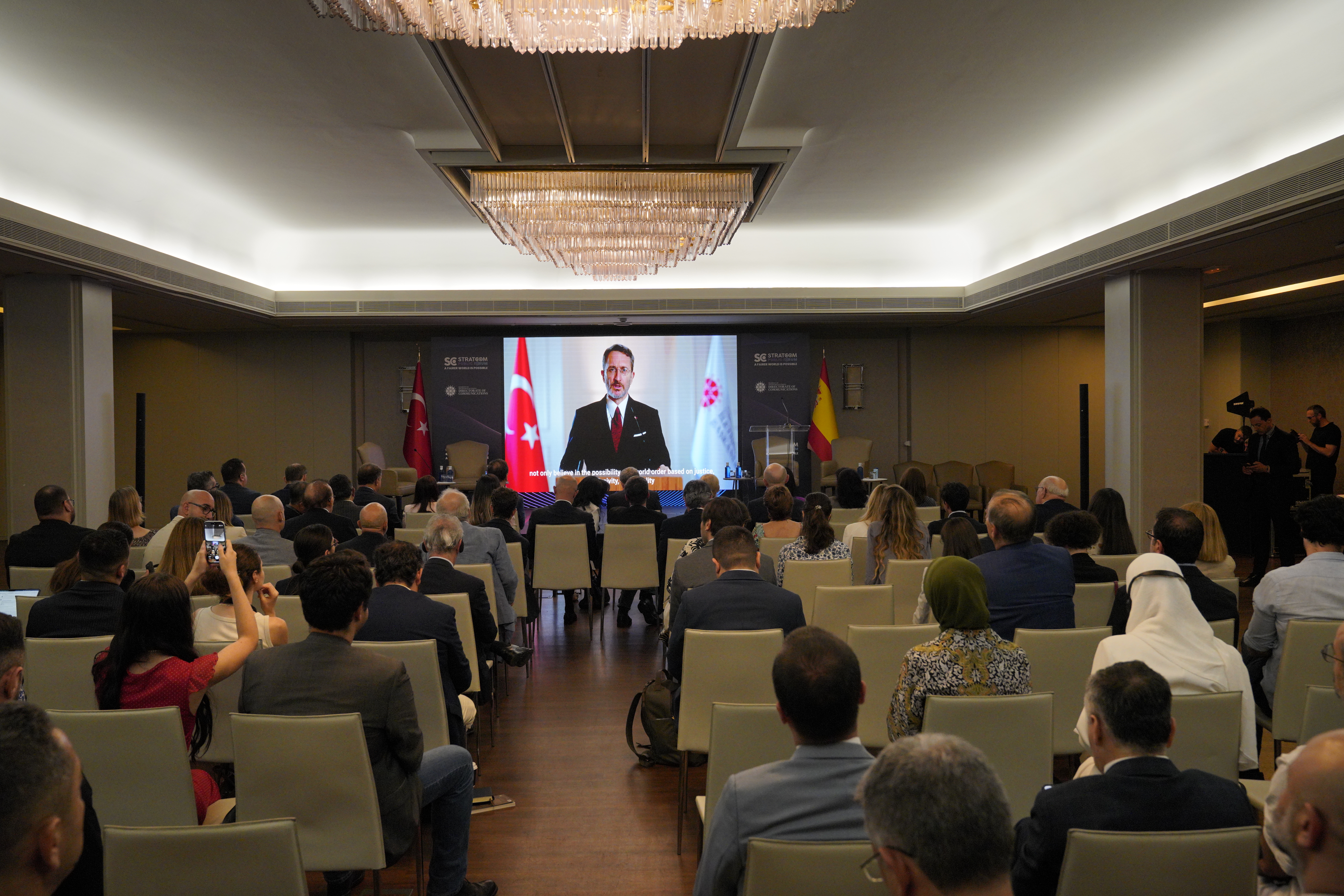
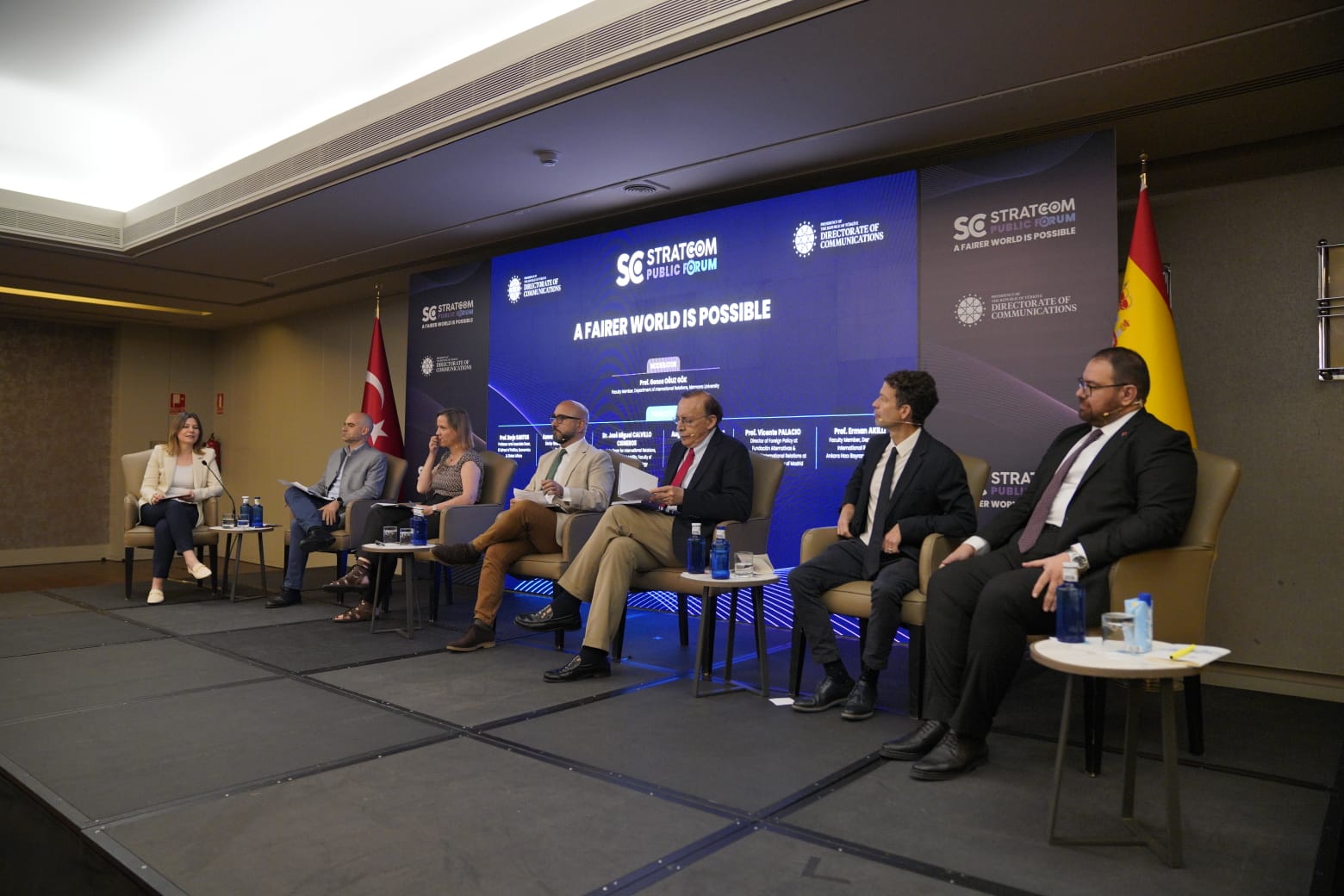
The Directorate of Communications organised a panel titled "A Fairer World is Possible" in Madrid, the capital of Spain.
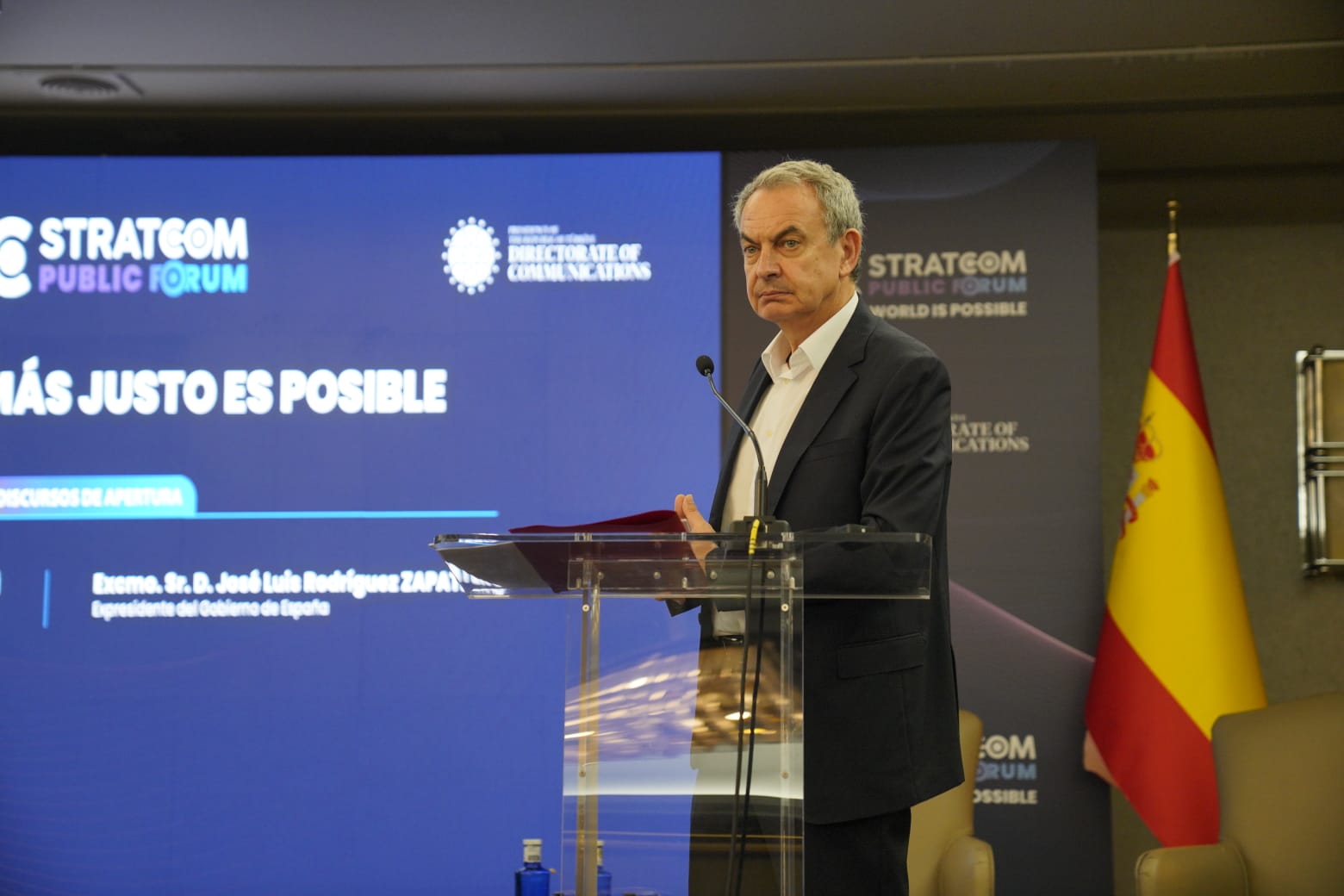
José Luis Rodriguez Zapatero, former Prime Minister of Spain, delivered the panel's opening remarks.
Zapatero highlighted that Türkiye's admission to the European Union (EU) would have been most appropriate during the time when relations were at their most favourable, particularly in 2005 and 2006, when enthusiasm was notably high. He also expressed that the failure to achieve this was an oversight, noting, "Had Türkiye been a member of the EU, the conflicts we are presently facing might have been averted. Israel could not have launched attacks on Gaza, and Russia could not have declared war on Ukraine. Türkiye's EU membership has historically been important, remains important, and will continue to be so in the future."
Zapatero claimed, "Ukraine's hope and greatest guarantee in the face of Russia's invasion is the EU," adding, "The EU is a political community of peace. It is the sole institution that has expanded and disseminated itself without the use of military force. With Türkiye's accession, the EU will gain historical significance and political insight."
"What happens in Gaza will alter world history"
In his statement, Spain's former Prime Minister, while emphasising that Israel's genocide in Gaza was inexcusable, stated, "The Jewish genocide altered the course of world history. What happens in Gaza will also alter world history. It is only a matter of time."
Declaring that "the brutality in Gaza must be halted," Zapatero asserted that "the Spanish government has taken the appropriate stance by officially recognising the State of Palestine, opposing Israel's actions in Gaza, and spearheading the ceasefire resolution for Gaza that was adopted by the UN General Assembly."
Zapatero said, "The brutality in Gaza must be halted."
What are NATO's motivations for increasing its defence expenditures?
Zapatero strongly criticised NATO Secretary General Mark Rutte and U.S. President Donald Trump's plan to increase NATO member countries' defence expenditures to five percent of Gross Domestic Product (GDP) and noted that Spanish Prime Minister Pedro Sanchez also supported statements against increasing defence expenditures.
Emphasising that he is categorically opposed to increasing defence expenditures to five percent of GDP, Zapatero noted that boosting military expenditures at a time when development and cooperative aid to developing nations does not even reach 0.5% will simply deepen inequalities. "Peace can be achieved without the use of weapons. Eventually, this movement will commence," Zapatero said and added:
"On what expenditures will the defence budget be allocated? Where will the missiles that have been procured be launched? Why do NATO countries, which make up 14 to 15 per cent of the global population, spend so much on defence? Could someone please explain? Is this the legacy of peace, democracy, and cultural harmony that we aspire to pass on to future generations? My answer is 'no'."
"Islamophobia created an invisible enemy"
Zapatero stressed the necessity of increasing concrete initiatives for establishing global peace and breaking silence, adding, "Islamophobia has created an invisible enemy. Mistakes were made. Look at the situation in the Middle East. More than one million people died, half of whom are civilians, in Afghanistan, Iraq, Syria, Yemen, and Libya. Why? Is it so that Israel could wipe out Gaza right now? Unfortunately, this is the situation."
Zapatero cited the Russia-Ukraine War, the conflict sparked by Israel's attack on Iran, and Israeli genocide in Palestine as indicators of the critical period the world is facing and went on to say:
"Perhaps this is the end of this critical period. I hope this is the end of it. Because this situation cannot last much longer or progress further. The spirit of peace and cooperation will triumph. It has always been like this in history. Critical periods bring change."
Arguing that "the U.S., as one of the greatest democracies in history and the leading global power, is currently in a very deep crisis," Zapatero reaffirmed his steadfst optimism in the face of the emerging right-wing ideology, which he described as "denialist, anti-democratic, anti-human rights, and anti-Europe." Noting that Europe must always be vigilant against the threats ahead by drawing from its history and that "peace is a beginning, but justice is a gradual process," Zapatero continued, "Europe must engage in self-criticism. Nazism and Stalinism were born in Europe. This is no trivial matter. We must always keep this in mind."
Turkish Ambassador Küçükel argues that the UN reform is essential
Speaking at the opening session of the panel, Nüket Küçüker Ezberci, Türkiye's Ambassador to Madrid, cited President Recep Tayyip Erdoğan's statement, "The world is bigger than five," stressing that "we are living in a time of rapid and complex global developments, and it is essential for the UN to undergo reform to meet pressing needs."
Ambassador Ezberci emphasised the strong collaboration between Türkiye and Spain, highlighting their active engagement on various matters, especially in support of Palestine.
Video message from Presidency's Head of Communications Altun displayed at panel session
In the video message displayed at the panel, the Presidency's Head of Communications Fahrettin Altun argued that the UN has drifted away from its core mission of ensuring peace and security and suffers from a lack of inclusiveness.
Head of Communications Altun pointed out that the UN must become more inclusive, transparent, and accountable through a reform within the framework of justice and equality.
During the panel session, which brought together academics, diplomats, politicians, and economists to reflect on opportunities and challenges in establishing a fairer, inclusive, and supportive international order, Spanish and Turkish intellectuals discussed topics such as multilateralism, human rights, the need for reform in the UN, and the UN's inability to solve international issues, particularly the Russia-Ukraine war and the genocide in Gaza.