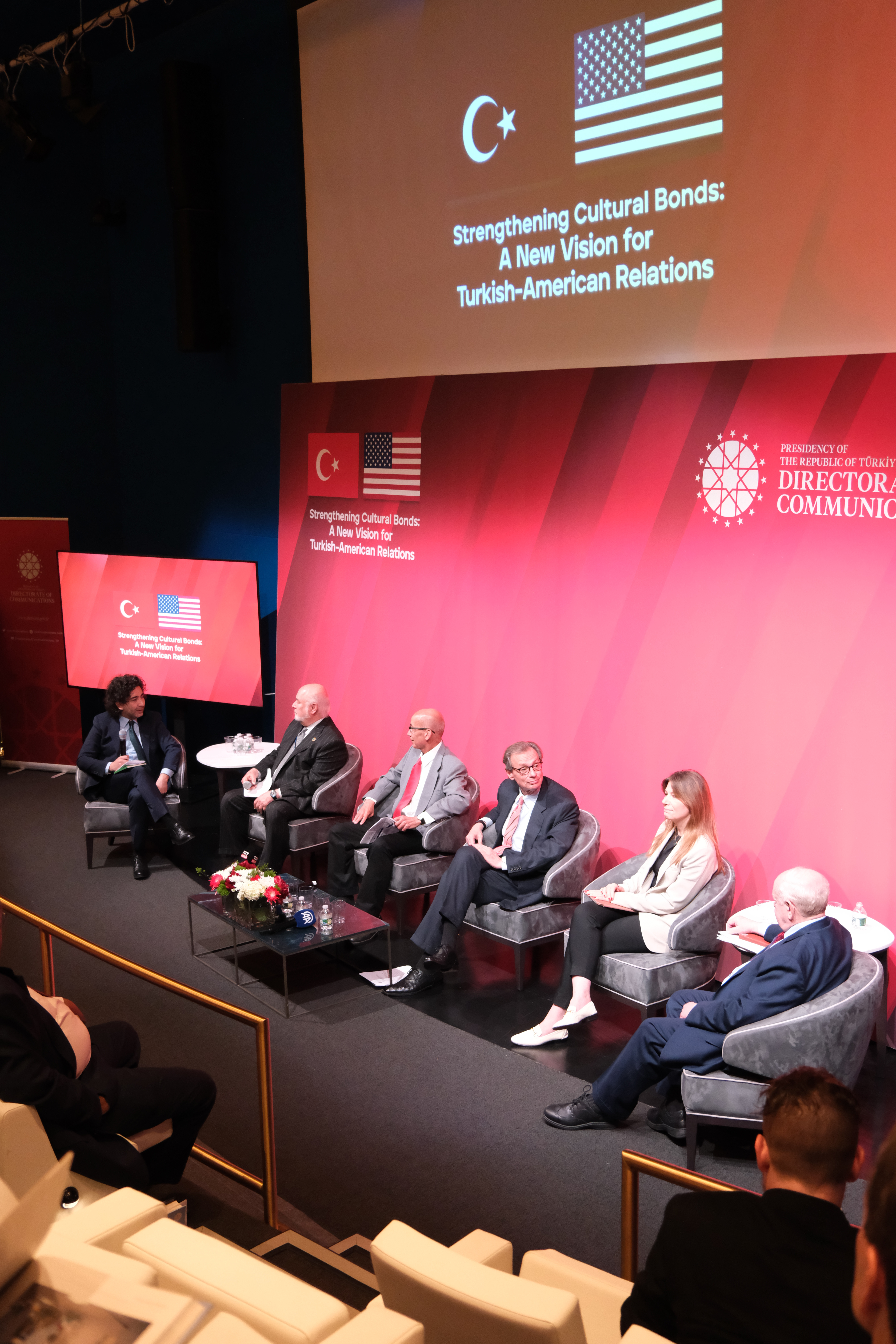
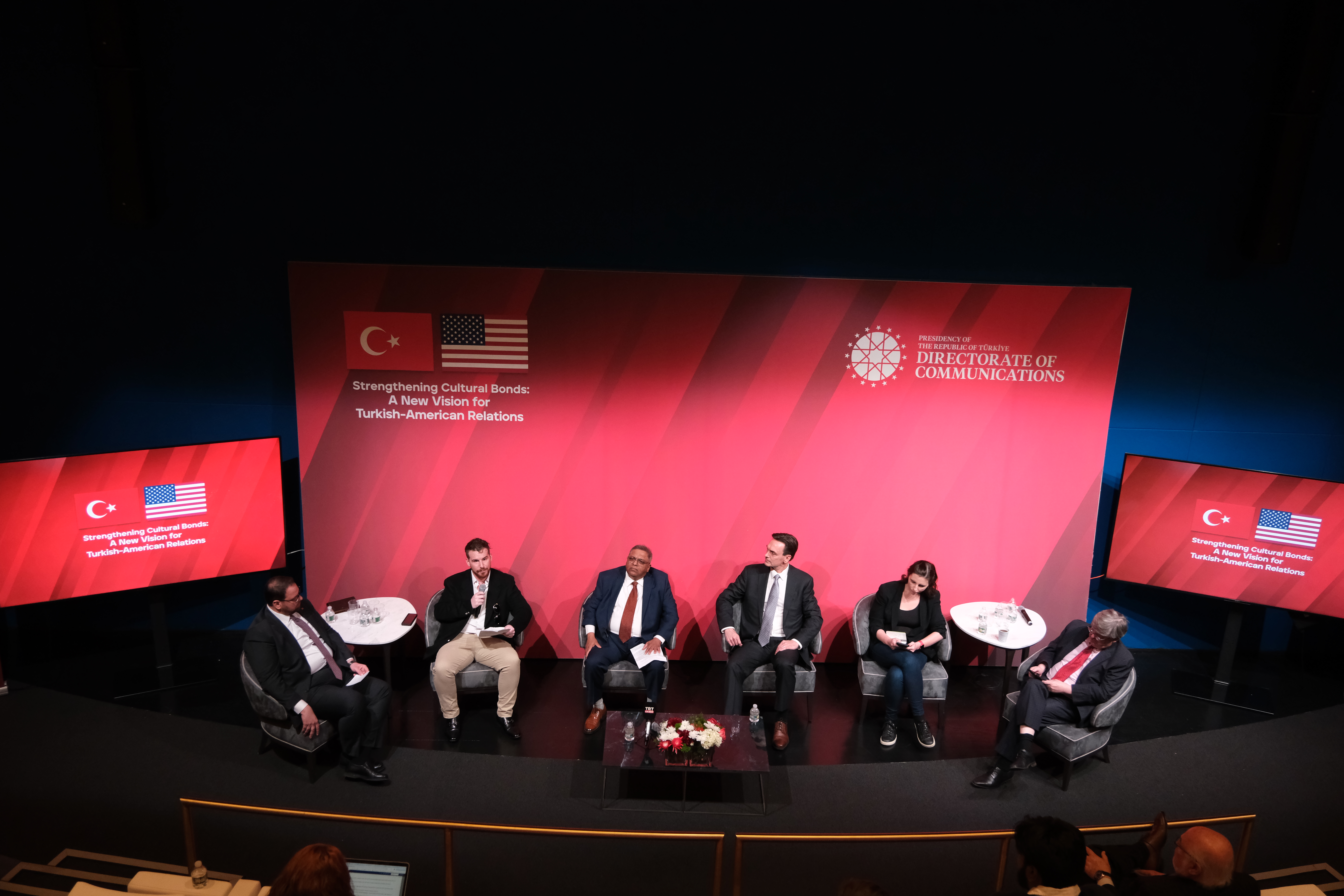
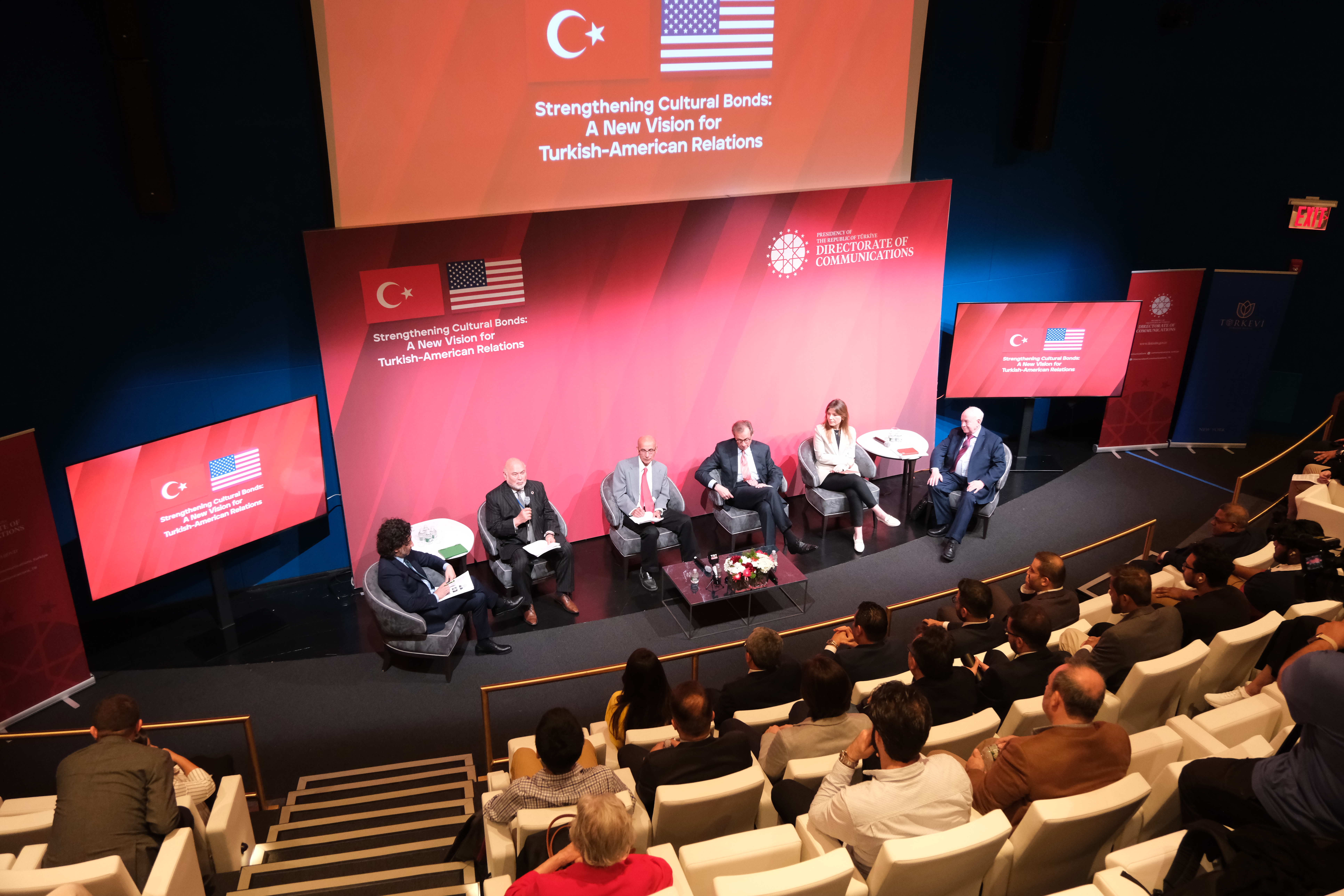
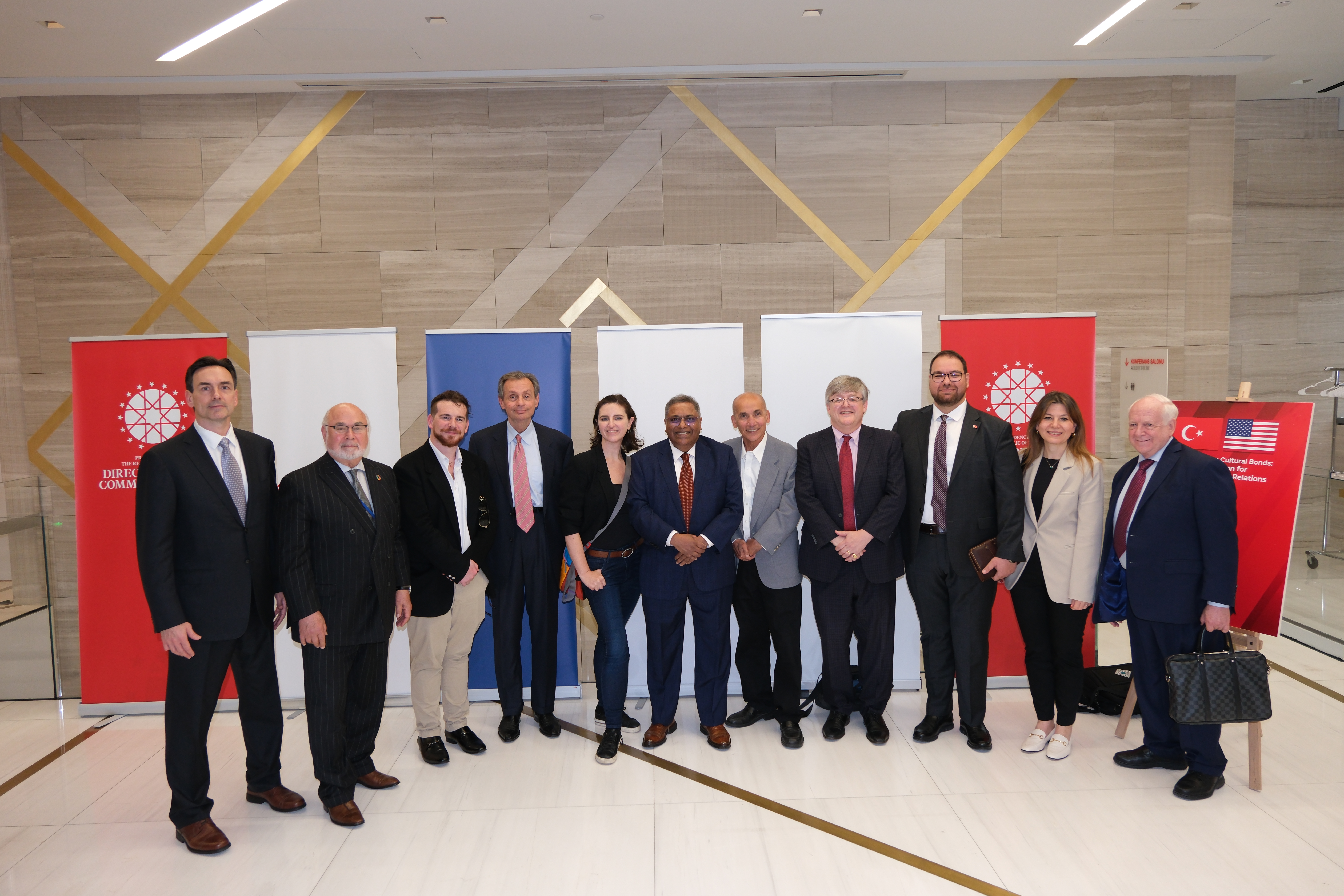
In a panel organised by our Directorate at the Türkevi in New York, Turkish and American academics and representatives from non-governmental organisations assessed the current state of relations between Türkiye and the United States, as well as the future of relations in the cultural context.
In the panel titled "Strengthening Cultural Bonds: A New Vision for Turkish-American Relations," Türkiye's Ambassador to Washington Sedat Önal, Türkiye's Permanent Representative to the United Nations (UN) Ambassador Ahmet Yıldız, Vice Head of Communications Associate Professor Çağatay Özdemir, Türkiye's Consul General in New York Reyhan Özgür, representatives of diplomatic missions, academicians and many other participants were present.
In his video message to the panel, the Presidency's Head of Communications Fahrettin Altun said, "We strongly believe that the relationship between Türkiye and the US holds potential to develop peace, security, and prosperity-based approaches to regional and global concerns while adhering to the tenets of alliance and strategic partnership."
The participants were shown a video about the history and current state of Turkish-American relations.
"The most famous poet in America is Rumi and his messages are still relevant"
In the first part of the panel titled "Strengthening the Transatlantic Relations: Past and Present" and moderated by Associate Professor Kılıç Buğra Kanat, Washington Research Director of the Foundation for Political, Economic and Social Research (SETA), Jonathan Granoff, President of the Global Security Institute, stated that Mevlana Celaleddin Rumi was the most famous "poet" in the US and highlighted the two countries' strong cultural ties.
National identities may serve to forge bridges or to construct walls, Granoff said, adding that Mevlana touched the heart of humanity and that his core messages remain relevant today.
Prof. Gawdat Bahgat from the National Defense University stressed that while he had an official post in the US government, his opinions did not represent those of the US government, adding, “Türkiye and the US need each other.”
Noting that Iran and Israel cannot play major roles in the Middle East, but Türkiye has the capacity to do so, Bahgat expressed that Türkiye and the US shared similar views on many Middle Eastern issues and that neither country wishes to witness a war in the region.
Bahgat emphasised the significance of student exchange programmes in fostering mutual understanding between the two nations.
"Education builds peace"
"Education builds peace," said Paolo von Schirach, the President of the Global Policy Institute, highlighting the relevance of fostering educational ties between the two nations.
Von Schirach stated that while the US aimed to enhance its educational relations with many countries, students frequently encounter visa barriers, a situation that contradicts the country's general policy and stands as a problem that needs to be solved.
Von Schirach explained that Türkiye and the US were both affected by global developments, that international relations were undergoing a period of "turbulence," and that US-China relations are at the heart of this turbulence.
Observing that US-China ties had descended into an “existential struggle,” von Schirach contended that the overall Chinese leadership is strongly influenced by the belief that the West lost its supremacy. Von Schirach said that the issue of “who is the friend of the US?” was on the table in this setting, which would eventually have an impact on bilateral relations with the US.