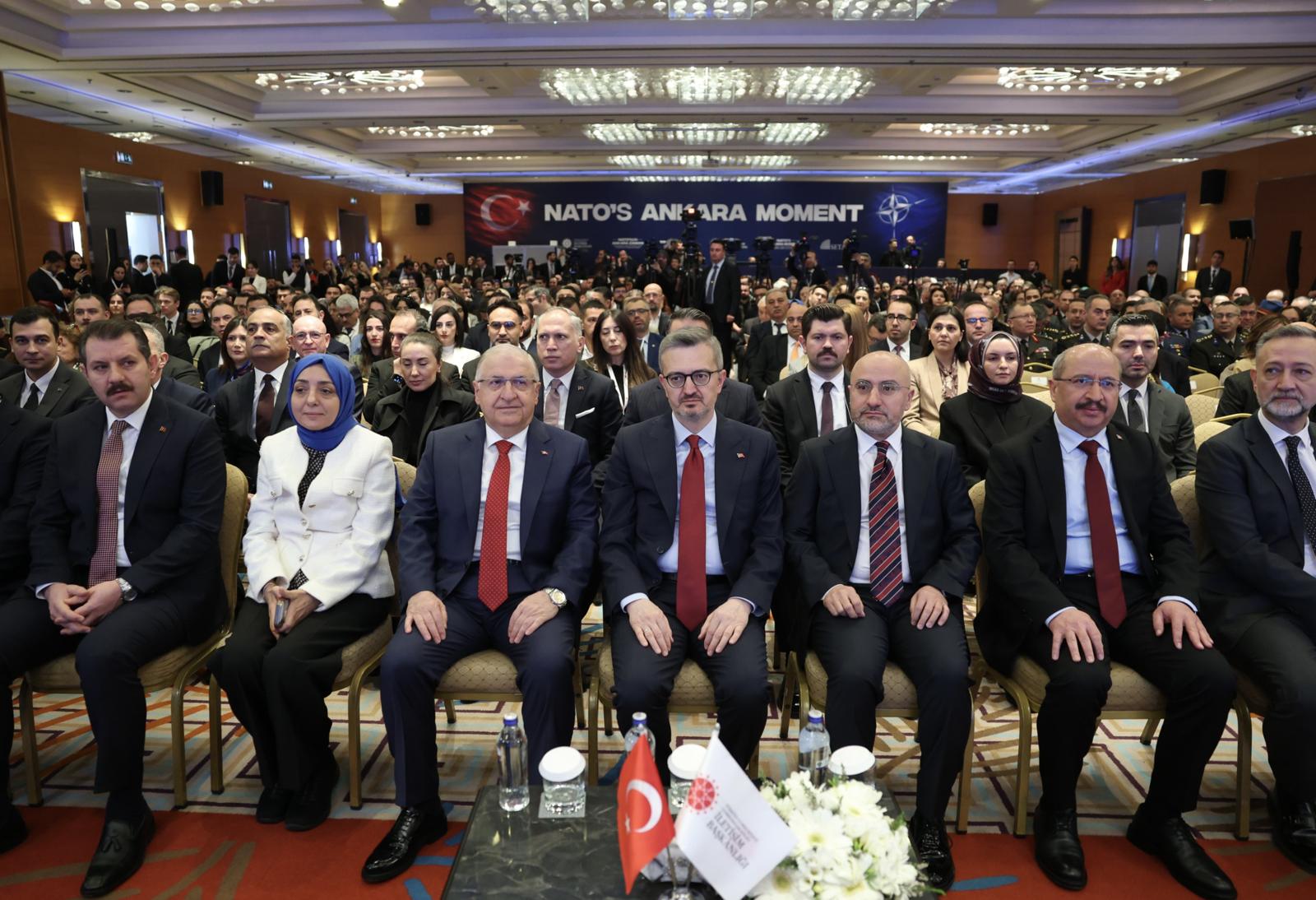
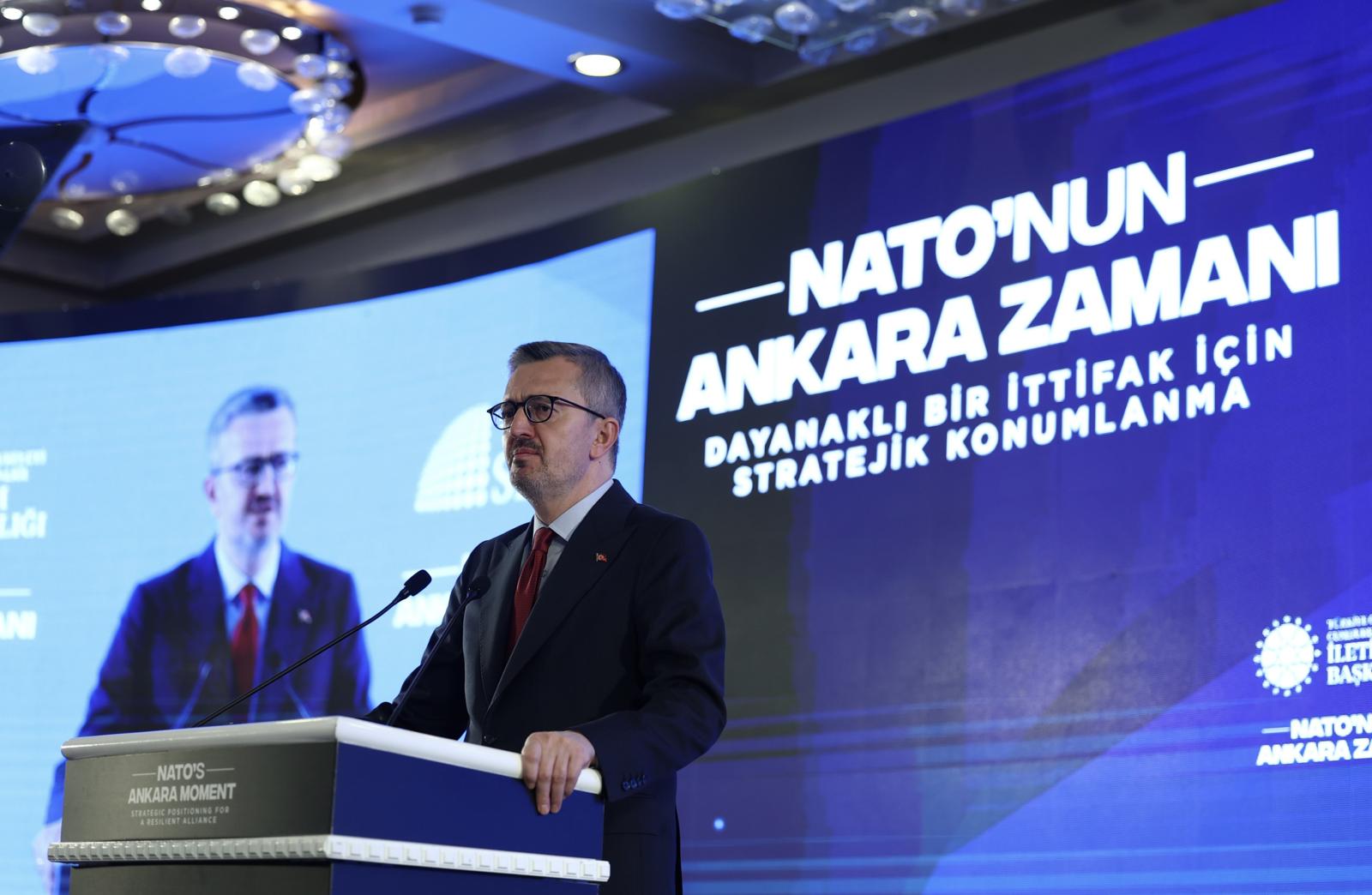
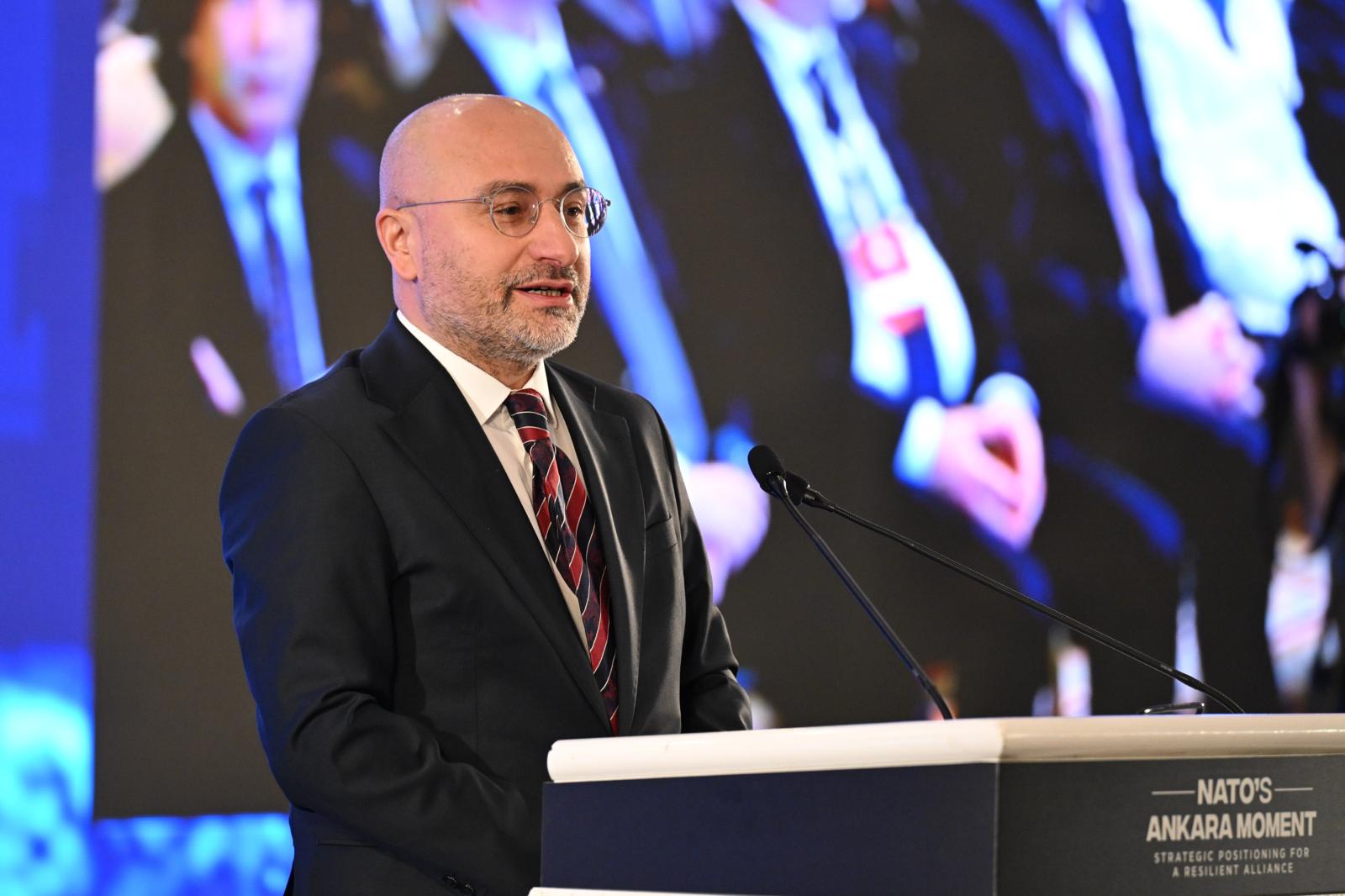
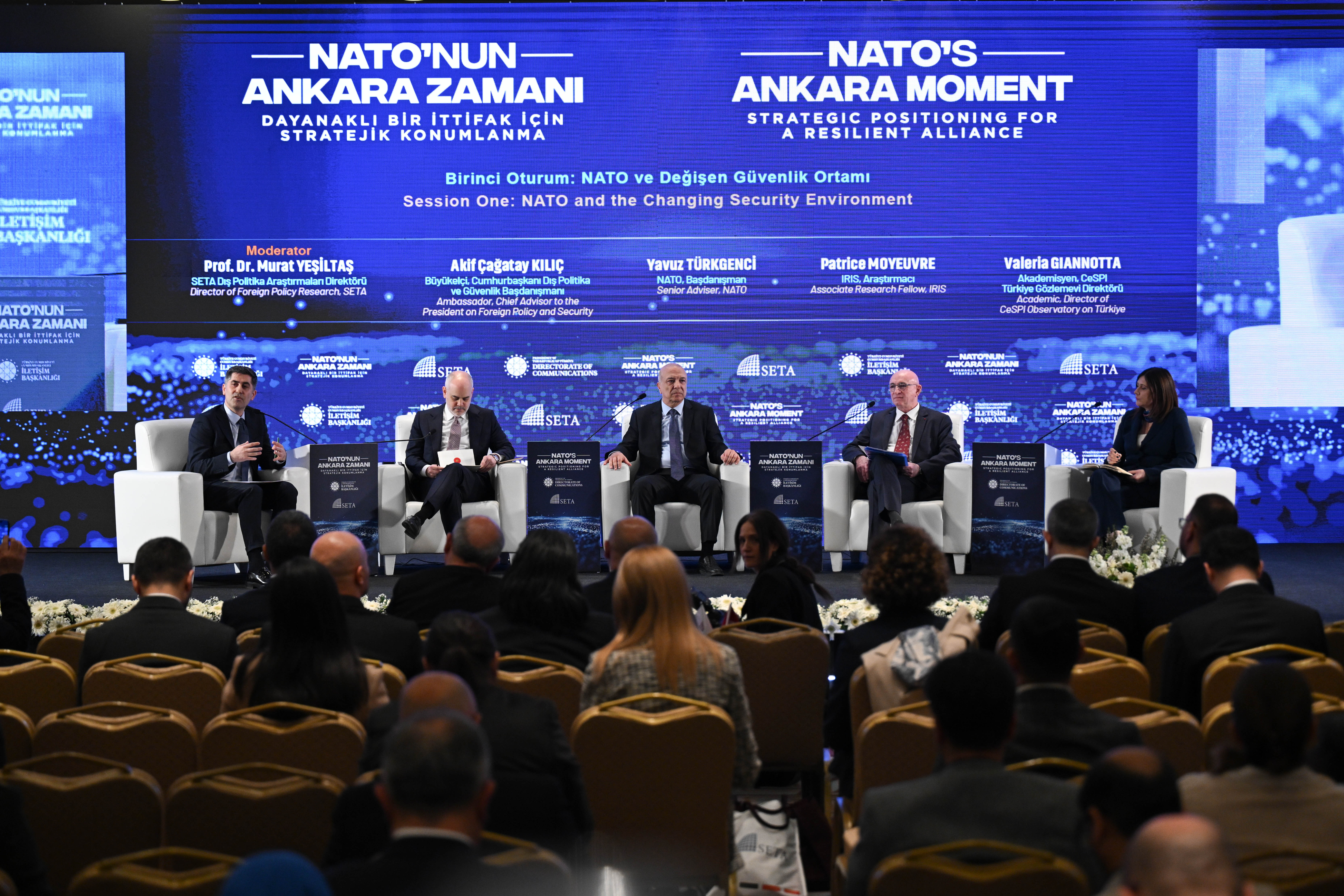
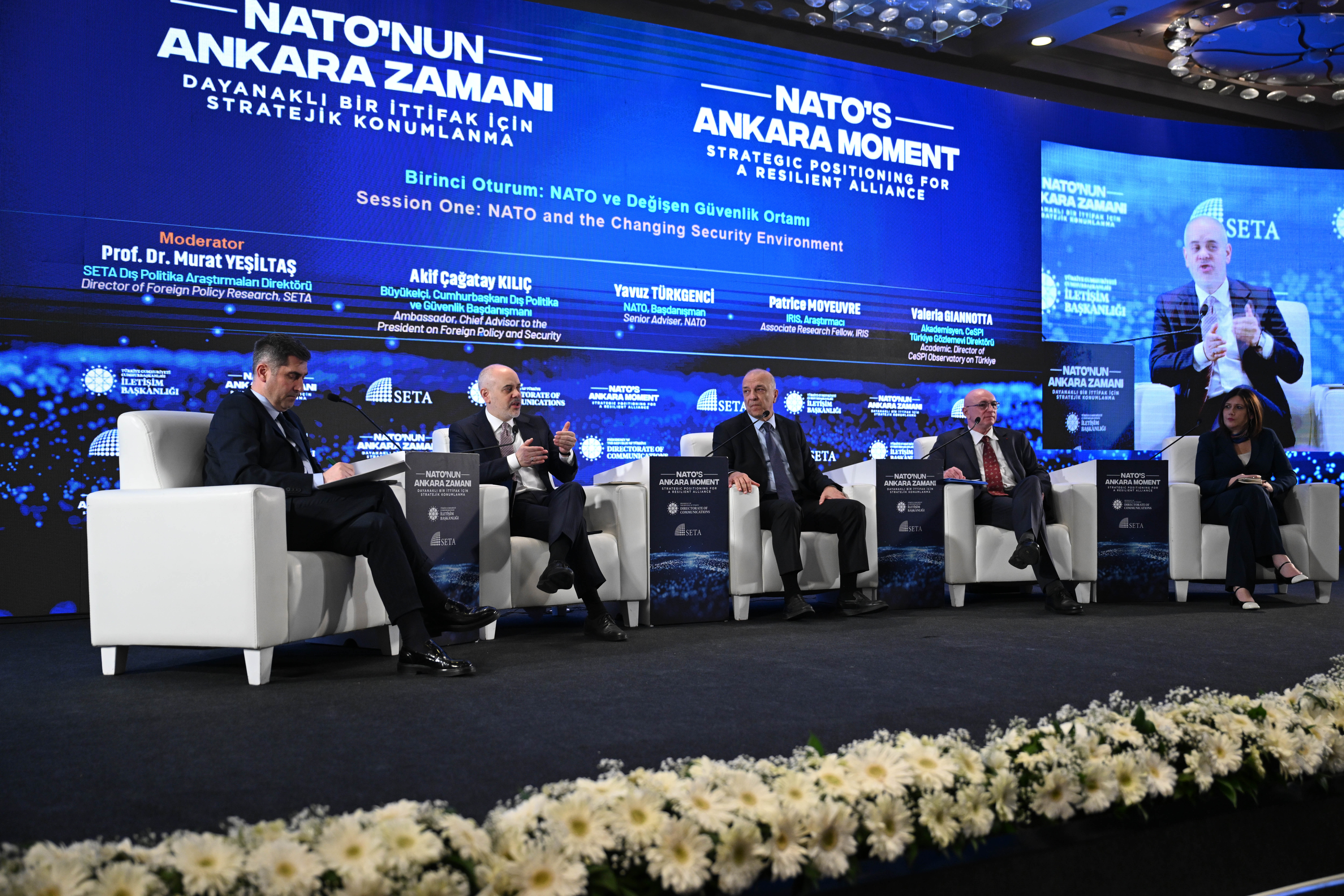
The conference titled ‘NATO’s Ankara Moment: Strategic Positioning for a Resilient Alliance’ was held in cooperation between the Directorate of Communications and the Foundation for Political, Economic and Social Research (SETA).
The event was attended by Minister of National Defence Yaşar Güler, Head of Communications Burhanettin Duran, Deputy Minister of Foreign Affairs Ambassador Levent Gümrükçü, and General Coordinator of SETA Foundation Prof. Nebi Miş, Anadolu Agency Editor-in-Chief and Deputy Director General Yusuf Özhan, as well as numerous guests.
The event began with a video presentation highlighting NATO's importance.
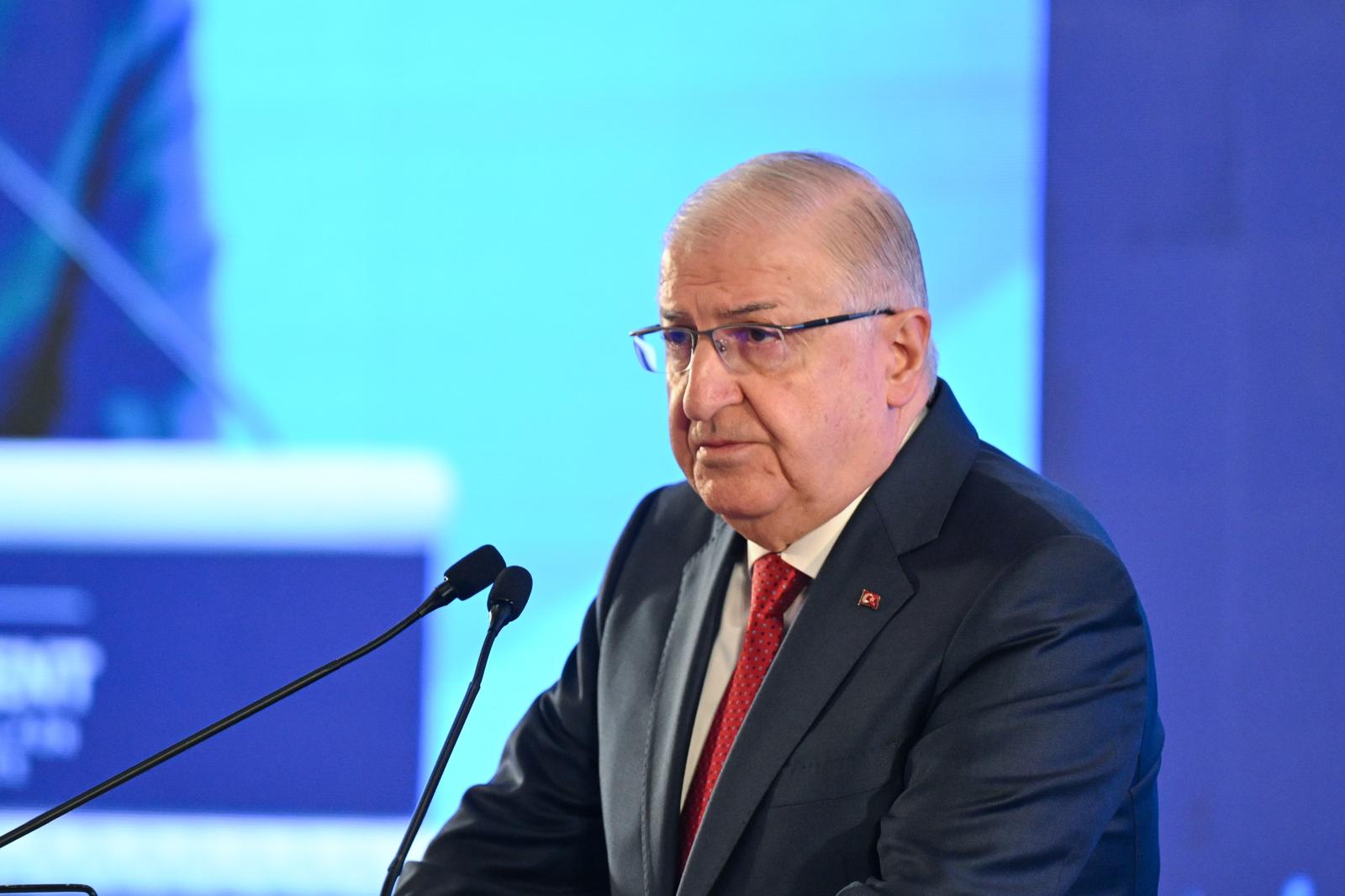
In his remarks, Minister of National Defence Yaşar Güler stated that the world is going through a sensitive period in which security paradigms are rapidly evolving in response to rising risks and threats.
Güler noted that, in an environment marked by uncertainty and unpredictability at both global and regional levels, there has been an increase in conventional threats, cyberattacks and nuclear risks, stating: ‘Regional conflicts, terrorism, hybrid operations and proxy wars are becoming increasingly widespread. The potential of energy security to intensify conflicts, the pronounced impact of trade wars, and the capacity of the space race to create a new arena of competition are among the key security issues in the period ahead."
"Türkiye is one of the leading countries shaping NATO’s security architecture"
Minister of National Defence Yaşar Güler also noted that the command of NATO naval operations and missions in the Mediterranean and the Aegean has been consistently assumed by Türkiye at various times.
Noting that Türkiye will assume NATO Air Policing duties first in Estonia this year and then in Romania subsequently, Güler stated: "Through all these activities and contributions, Türkiye once again demonstrates that it is one of the leading countries shaping NATO’s security architecture—not only in the field but also through our commanders and staff officers, who serve in NATO’s planning and decision-making mechanisms with a high level of professionalism and a strong sense of responsibility."
“Türkiye can further contribute to Europe’s security and defence”
Emphasising that expectations from the Ankara Summit, in order for NATO of the future to deliver a multidimensional security ecosystem, primarily include reaffirming Allies’ commitment to Article 5, Güler continued:
“Allies must clearly demonstrate the progress they have made in fulfilling their defence spending commitments and the military capability targets allocated to them; increase defence production capacity; strengthen an innovative and sustainable defence industrial ecosystem; identify areas of cooperation that will facilitate the attainment of new capability targets; and approve the defence and deterrence posture to be presented to our leaders. We also expect at the summit that the European Union will abandon security approaches that exclude non-EU NATO Allies—particularly our country—and return to a position that supports NATO. We assess that this approach by the European Union would otherwise cause greater harm to Europe’s security and resilience than the reduction of US forces in Europe."
“Ensuring Allied security is our fundamental principle”
Güler stated that citizens from all walks of life agree with Türkiye's reasonable, rational, and constructive approach in the war between Iran, the US, and Israel under the leadership of President Recep Tayyip Erdoğan. He also stated, "Our country's progress in the domestic and national defence industries is appreciated and regarded as critical to our survival. Recent surveys clearly show this situation. Protecting our survival, upholding international law, respecting our sovereign rights, and guaranteeing allied security are our core values as Türkiye."
In his speech, SETA General Coordinator Nebi Miş said that the event was organised at a very important time. Miş stated, "On the one hand, crises are deepening in a multidimensional manner, and on the other hand, we are in a war environment in our region where, even if a ceasefire is declared, the possibility of long-term peace remains uncertain. Furthermore, discussions about NATO's future are intensifying in the context of the Ukraine-Russia war and the Iran-Israel-US war."
Miş said "Türkiye will host one of the most critical summits in NATO history in July," and added that today's programme will focus on how security and defence architectures are being reshaped.
"NATO is facing an unprecedented test"
Miş emphasised that the world is experiencing a multidimensional security crisis in which military and non-military threats are intertwined, and uncertainty is growing. Pointing out that the international system is effectively being subjected to a comprehensive stress test, Miş said,
"NATO is facing an unprecedented test. Russia’s attack on Ukraine has deepened threat perceptions, particularly along the Alliance’s eastern flank. Diverging approaches in the context of intervention in Iran have also brought intra-Alliance cohesion debates back to the fore. In this period, reinforcing the principle of collective defence and preserving the strategy of extended deterrence have become more vital than ever. In this context, the Ankara Summit, to be hosted by Türkiye on 7–8 July 2026, represents not merely a matter of geographical hosting but a critical juncture that will shape NATO’s future. The responsibility resting on Türkiye is therefore considerable. For more than 70 years, Türkiye has been among the countries contributing most extensively to the Alliance’s operations and missions."
"NATO and the Evolving Security Environment" Session
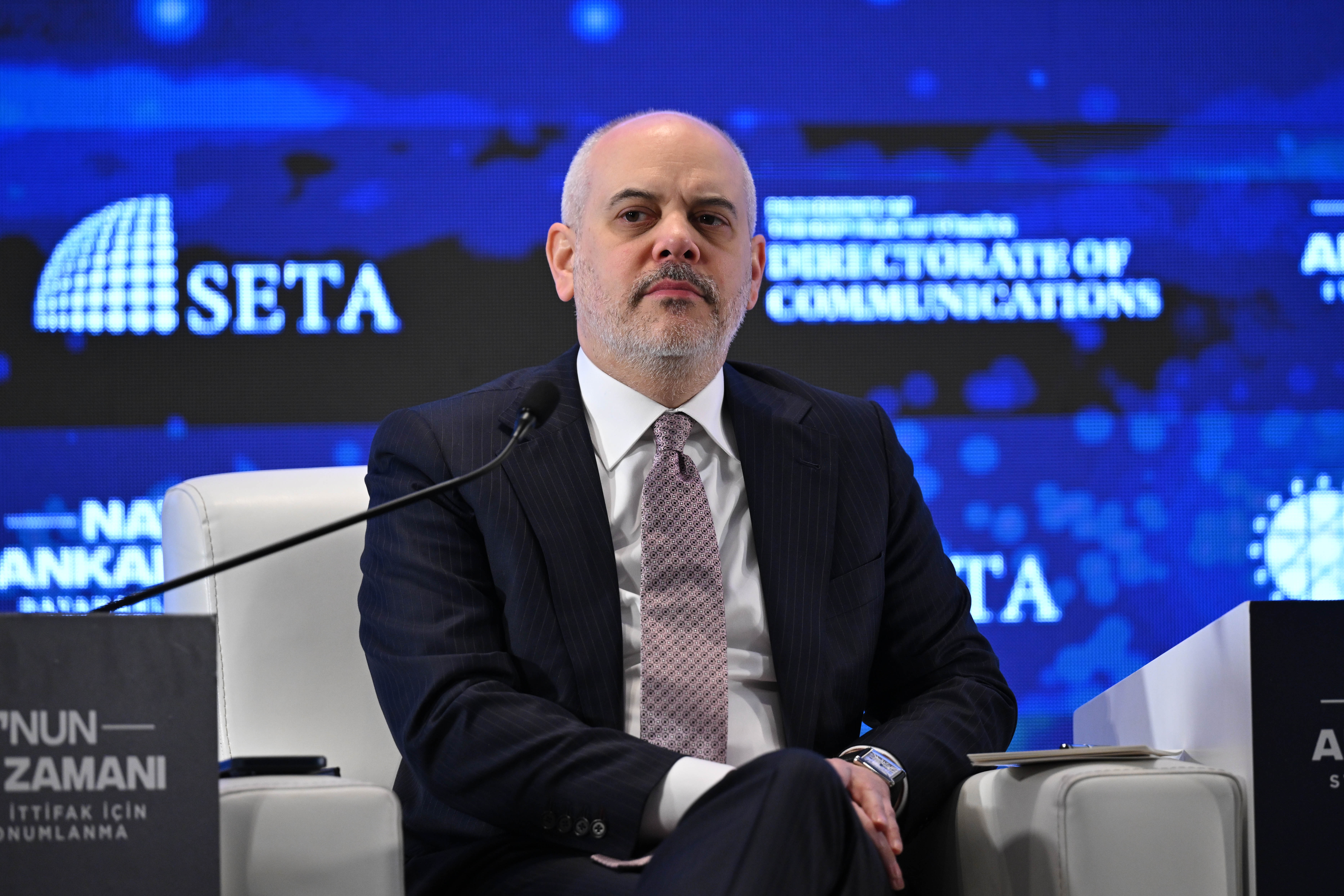
At the conference's session on "NATO and the Evolving Security Environment," Akif Çağatay Kılıç, Chief Advisor to the President on Foreign Policy and Security, highlighted that the Second World War marked a significant turning point for the world, with the use of the atomic bomb revealing the dangers facing humanity.
Kılıç emphasised the significance of this period in shaping the world's current state, as well as the reasons and process behind NATO's establishment.
Kılıç underscored that NATO is an organisation founded, developed, and shaped by humans based on past experiences and that it should change, adapt, and evolve.
Kılıç pointed out that NATO is a defence organisation founded on certain political values and stated, "Future events are unpredictable. We must also keep in mind that political issues inextricably link to the military problems we face."
Kılıç stated that following the dissolution of the Soviet Union, NATO’s assumption that "everything would be fine from then on" did not yield the expected results over time, and emphasised that we are now faced with new challenges and tests.
"Türkiye supports cohesion among NATO allies"
Kılıç recalled NATO’s past mistakes, particularly its military intervention in Libya, and stated:
“Despite its shortcomings and mistakes, NATO is an organisation where different countries and perspectives can come together. It is an organisation where countries can engage with one another without resorting to war. Even when we ultimately criticise it, we must exercise great caution. We have experience and gains achieved through NATO. Even if we do not agree, we are at a level where we can communicate with one another. We need to carry this forward into the future and ensure it is not lost.''
Pointing out that NATO’s leading European members have a strategy aimed at excluding Türkiye from initiatives to enhance its defence and deterrence capabilities, Kılıç noted:
"Türkiye supports cohesion among NATO allies. It does this without regional discrimination. However, we are now facing a new security architecture, particularly in Europe. Europe is not enhancing its defence capacity and infrastructure. Türkiye is both NATO’s southern flank and the EU’s southern flank. We are not an EU member, but we are a kind of partner, very close to membership. We are a cornerstone when it comes to the security of the European continent.''