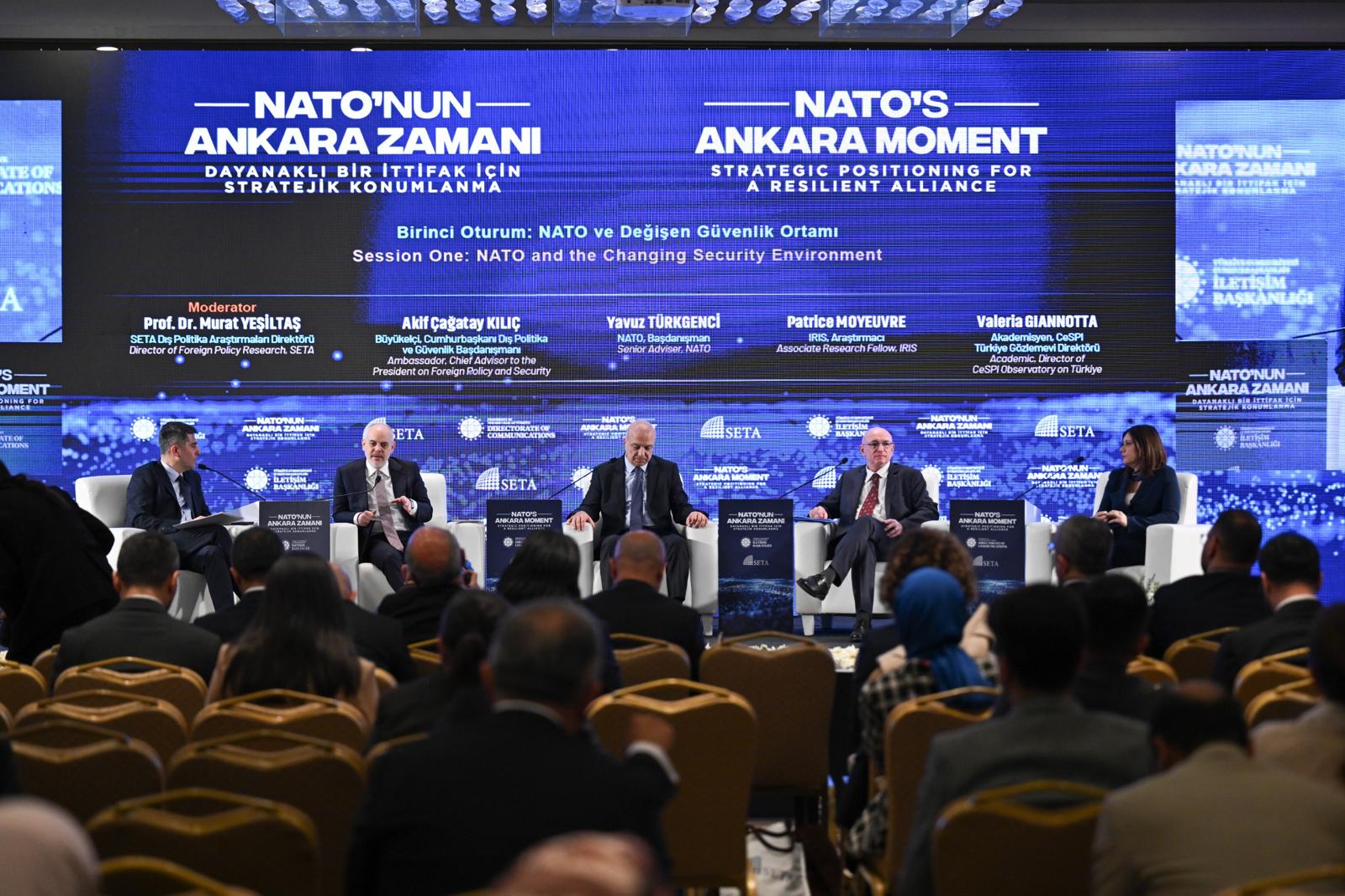
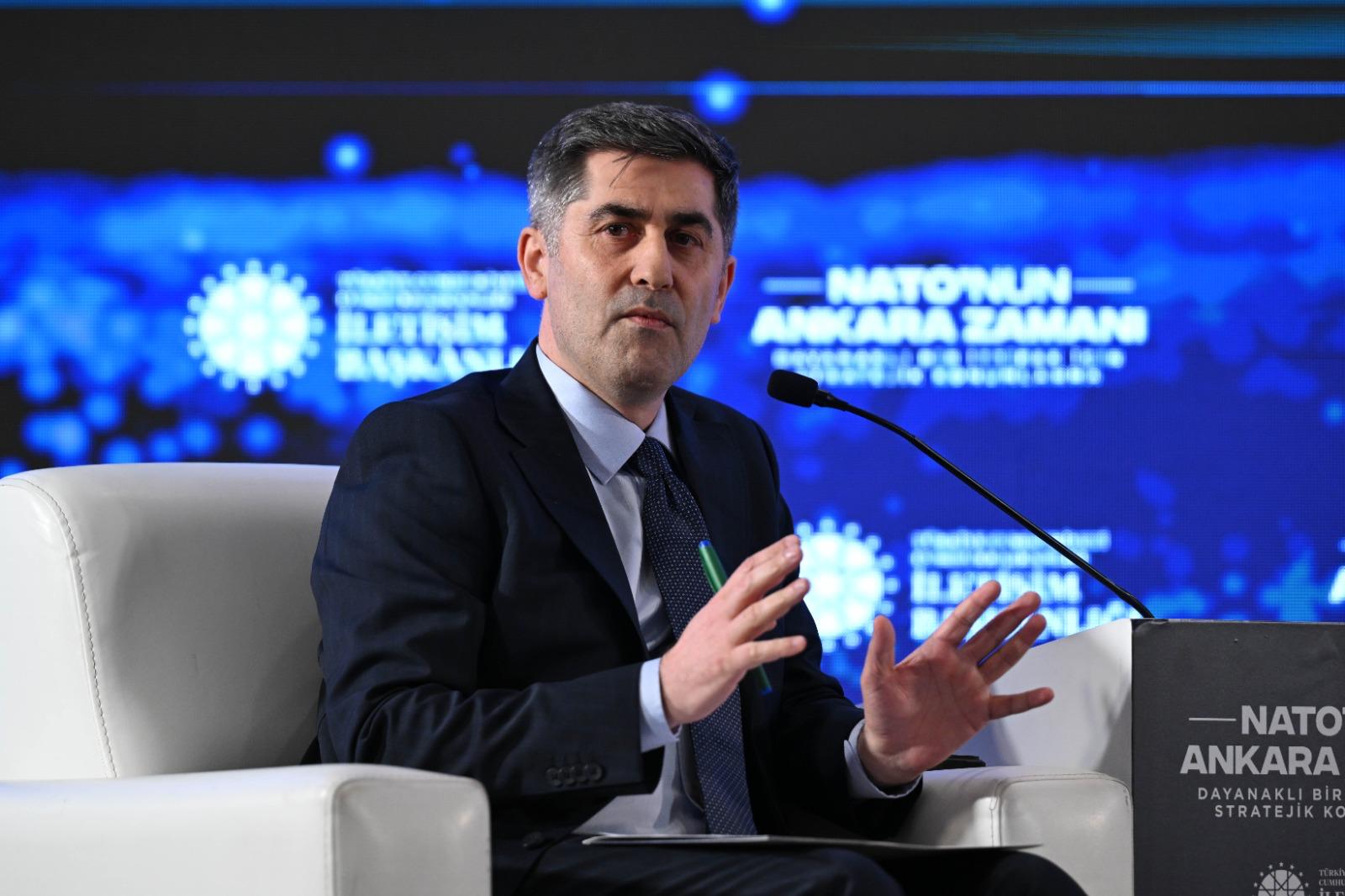
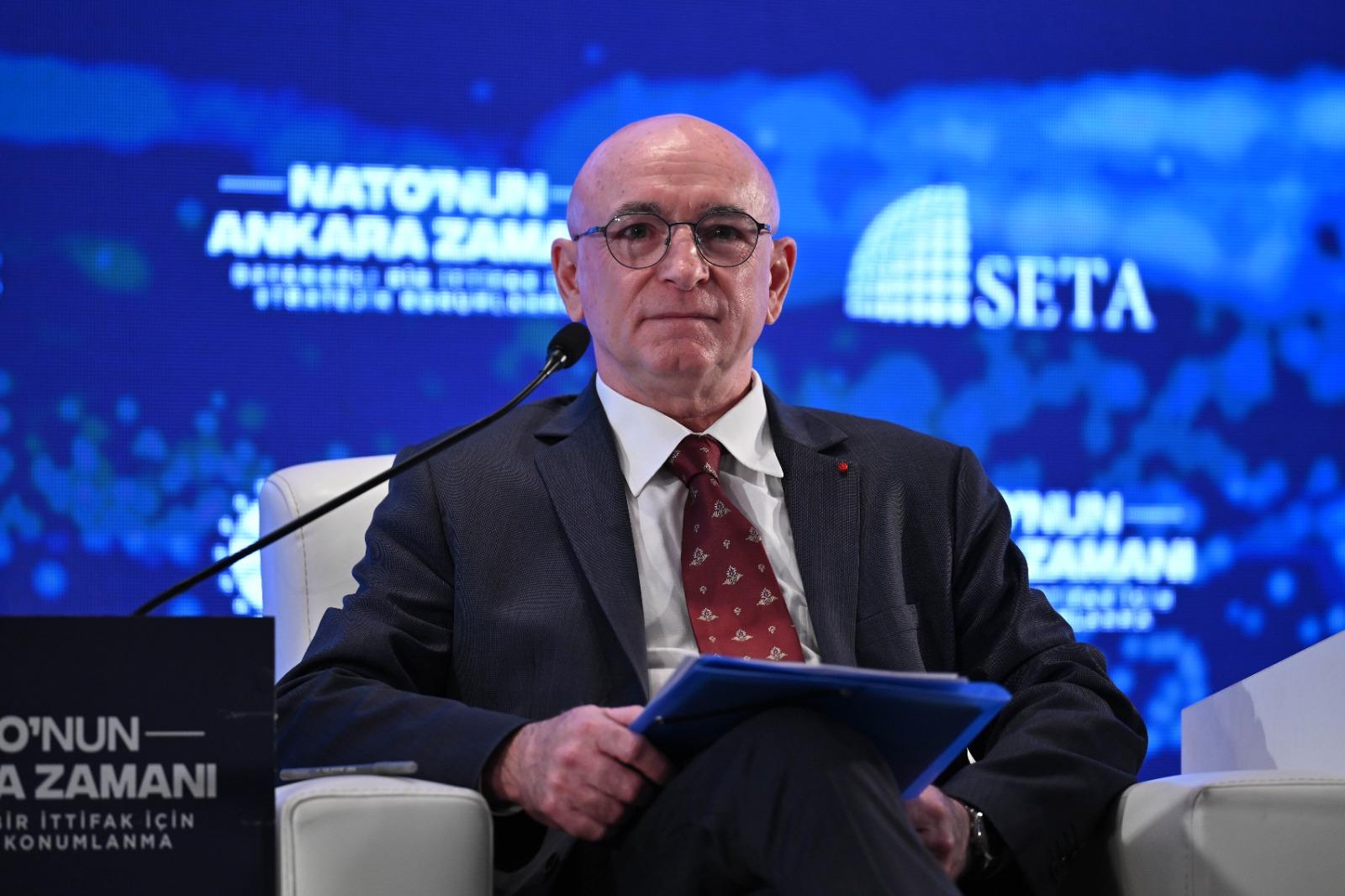
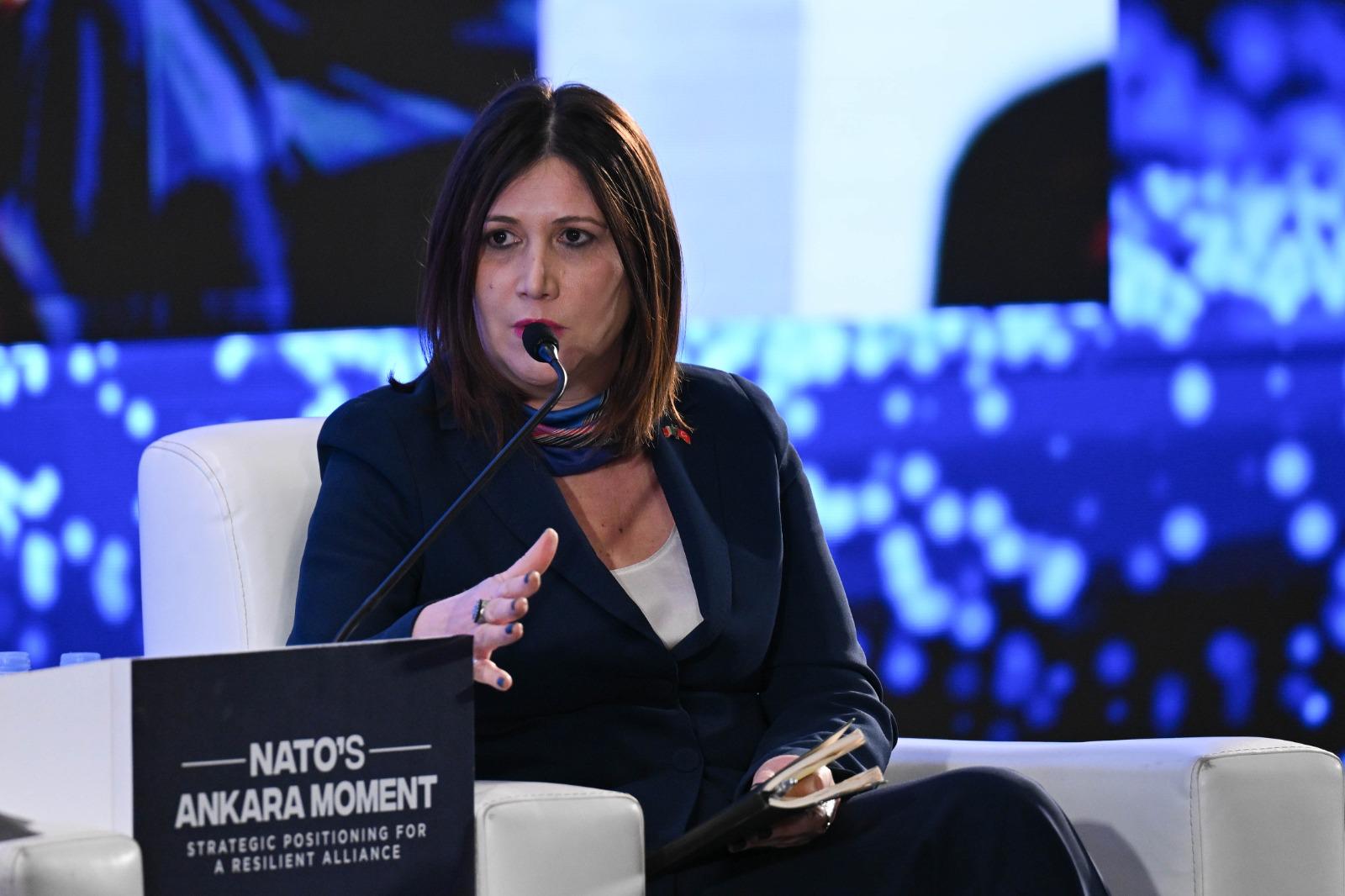
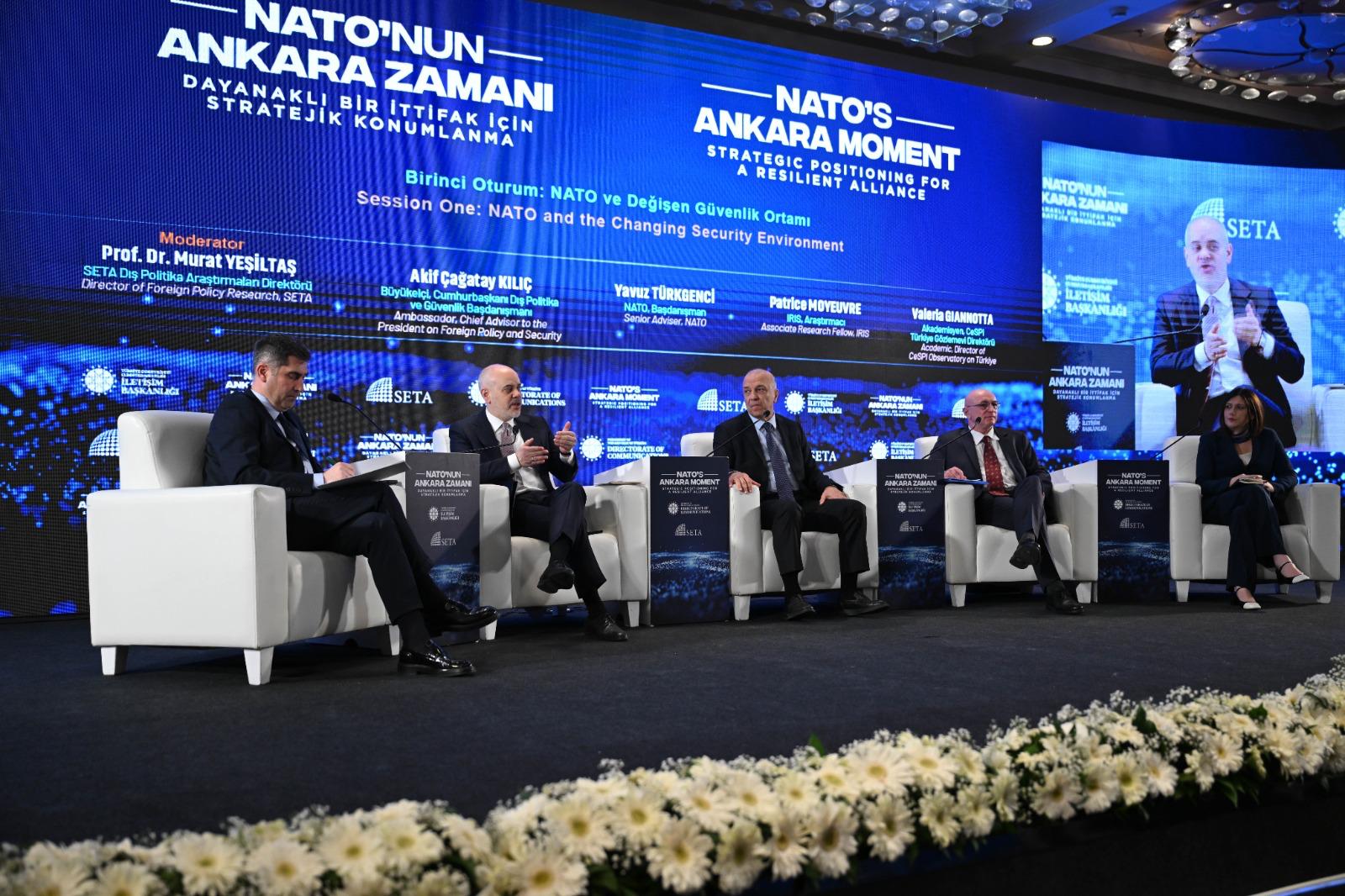
A panel titled ‘NATO and the Changing Security Environment’ was held as part of the conference ‘NATO’s Ankara Moment: Strategic Positioning for a Resilient Alliance’, organised in Ankara in cooperation with the Presidency’s Directorate of Communications and the Foundation for Political, Economic and Social Research (SETA).
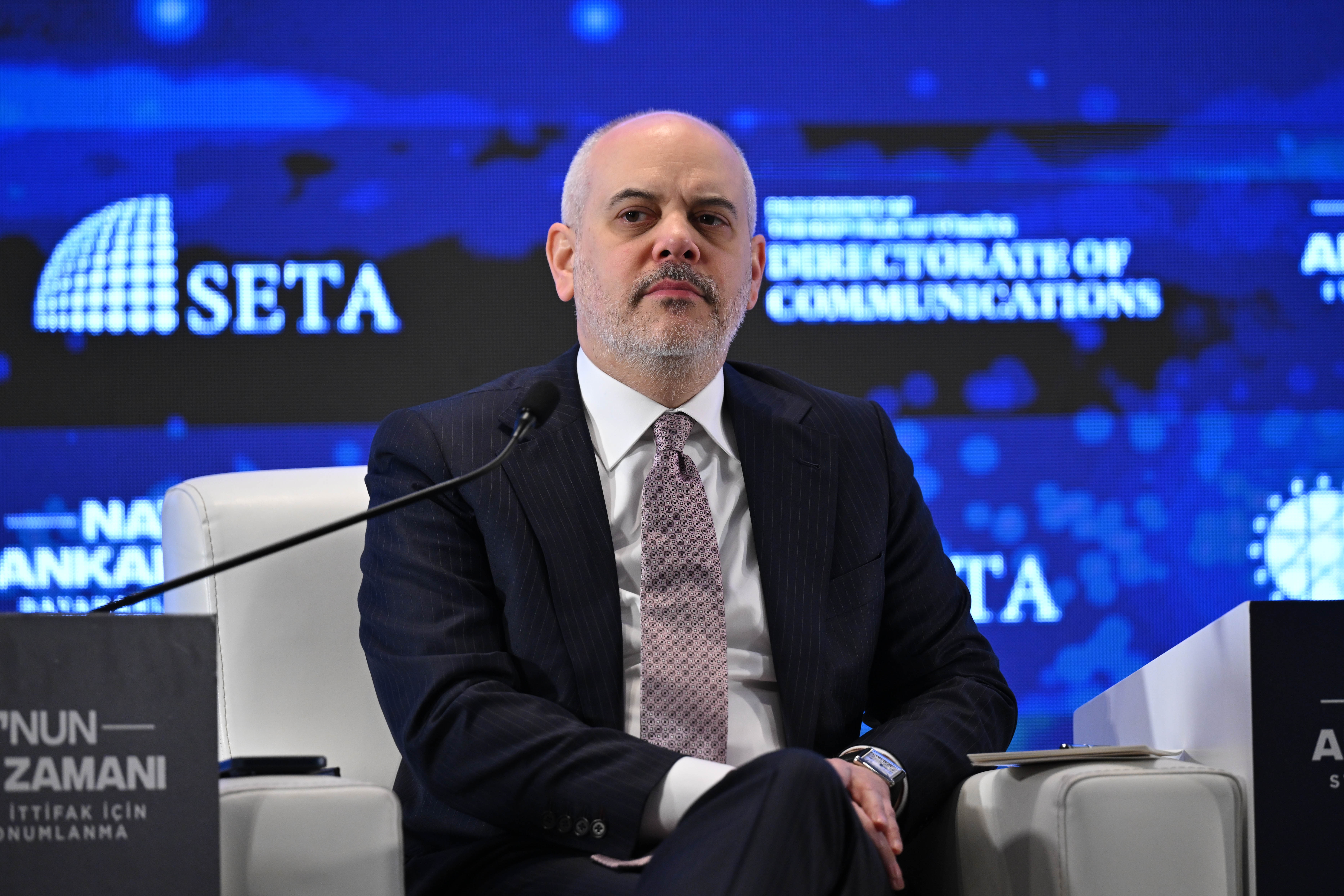
The panel, moderated by Prof. Murat Yeşiltaş of Ankara Social Sciences University, featured Chief Advisor to the President on Foreign Policy and Security, Akif Çağatay Kılıç; Academic Director of the Türkiye Observatory at the Centre for International Political Studies Dr. Valeria Giannotta; Associate Research Fellow at the Institute for International and Strategic Relations (IRIS) in France, Patrice Moyeuvre; and Dr. Yavuz Türkgenci as speakers.
Speaking at the conference's session on "NATO and the Changing Security Environment," Akif Çağatay Kılıç, Chief Advisor to the President on Foreign Policy and Security, highlighted that the Second World War marked a significant turning point for the world, with the use of the atomic bomb revealing the dangers facing humanity.
Kılıç emphasised the significance of this period in shaping the world's current state, as well as the reasons and process behind NATO's establishment.
Kılıç underscored that NATO is an organisation founded, developed, and shaped by humans based on past experiences and that it should change, adapt, and evolve.
Kılıç pointed out that NATO is a defence organisation founded on certain political values and stated, "Future events are unpredictable. We must also keep in mind that political issues are inextricably linked to the military problems we face."
Kılıç stated that following the dissolution of the Soviet Union, NATO’s assumption that "everything would be fine from then on" did not yield the expected results over time, and emphasised that we are now faced with new challenges and tests.
"Türkiye supports cohesion among NATO allies"
Kılıç recalled NATO’s past mistakes, particularly its military intervention in Libya, and stated:
''Despite its shortcomings and mistakes, NATO is an organisation where different countries and perspectives can come together. It is an organisation where countries can engage with one another without resorting to war. Even when we ultimately criticise it, we must exercise great caution. We have experience and gains achieved through NATO. Even if we do not agree, we are at a level where we can communicate with one another. We need to carry this forward into the future and ensure it is not lost.''
Pointing out that NATO’s leading European members have a strategy aimed at excluding Türkiye from initiatives to enhance its defence and deterrence capabilities, Kılıç noted:
"Türkiye supports cohesion among NATO allies. It does this without regional discrimination. However, we are now facing a new security architecture, particularly in Europe. Europe is not enhancing its defence capacity and infrastructure. Türkiye is both NATO’s southern flank and the EU’s southern flank. We are not an EU member, but we are a kind of partner, very close to membership. We are a cornerstone when it comes to the security of the European continent.''
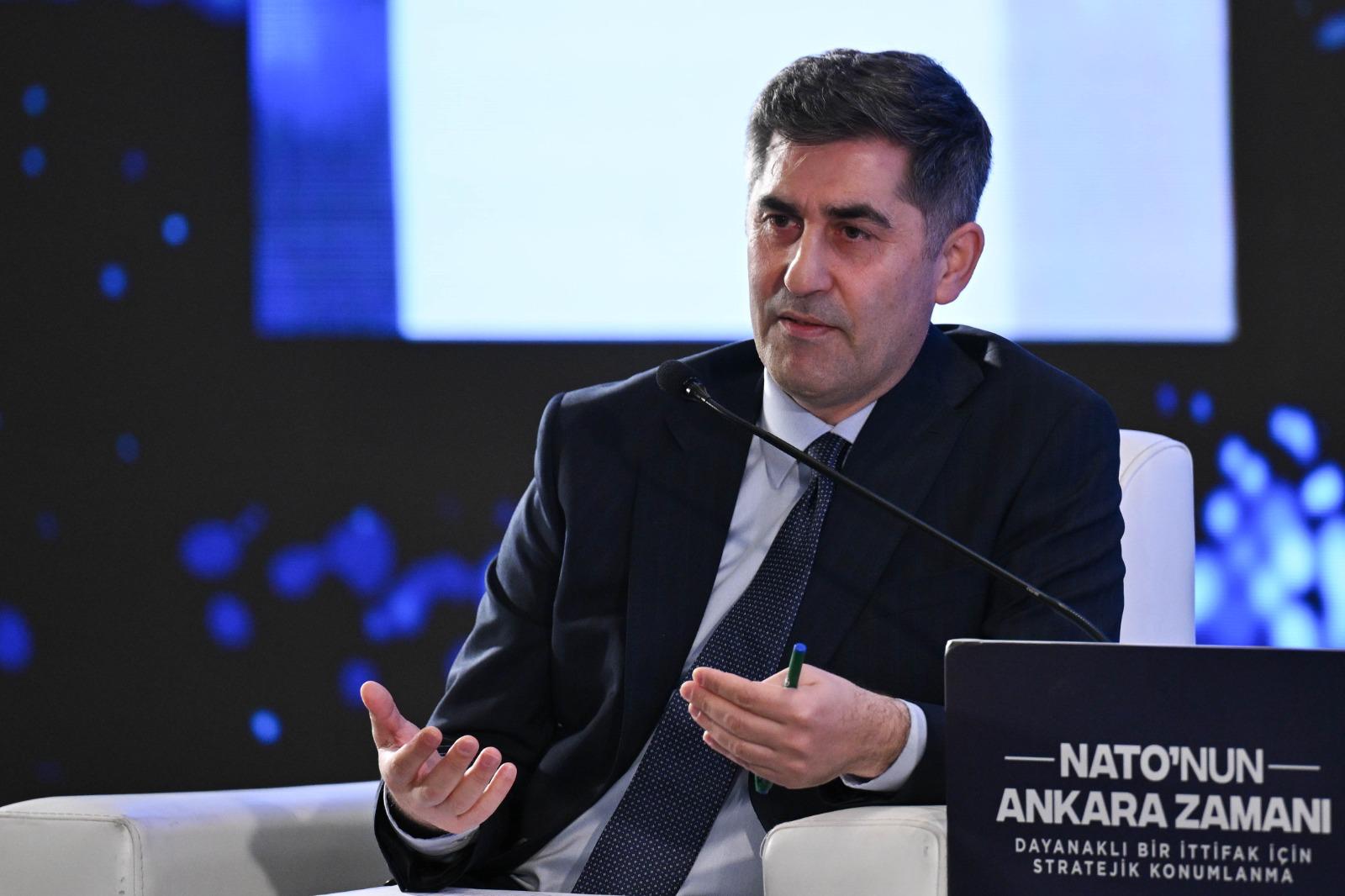
In his remarks, Dr. Yavuz Türkgenci noted that NATO has faced various challenges over more than seven decades and has ultimately succeeded in addressing them.
Türkgenci cited the ongoing debate over NATO’s capacity to maintain its course, emphasising that the Alliance has formulated seven strategic concepts that provide insight into how the organisation has reached its present state.
Emphasising that NATO has consistently sought to address problems by formulating concepts for evolving issues, Türkgenci noted that the organisation continues to encounter the same challenges.
Türkgenci highlighted that NATO's new concept, which was published following the Russia-Ukraine War, is a direct response to the war, saying, "I believe that a new annex or document may be published in Ankara to accommodate NATO's evolving circumstances."
Remarking that NATO is equipped with various instruments and that defence planning is crucial beyond the strategic concept, Türkgenci highlighted that NATO is an organisation that adapts to changing circumstances.
"There are areas where violence is escalating, posing specific challenges to NATO"
In her speech on changes in the security environment, Giannotta said, "I think it is a transformation rather than a temporary crisis."
Giannotta noted that the international situation is changing, stating that a multipolar system exists and that there are wars to be faced, in addition to other challenges.
Stating that "There are areas where violence is escalating, posing specific challenges to NATO," Giannotta emphasised the importance of the USA’s central role.
Giannotta assessed that challenges may lead to some security changes and noted that NATO remains in a position of defence and deterrence.
Referring to discussions within the NATO bloc, Giannotta said that countries such as Italy place importance on NATO’s southern flank and noted that a rupture has emerged following Israel’s war.
Giannotta stated that restoring NATO to a strong position is linked to its relationship with the USA, while also emphasising the importance of Europe pursuing its own strategy.
She also noted that there is also ongoing discussion within NATO over defence spending.
"It is very easy to destroy, but very difficult to build"
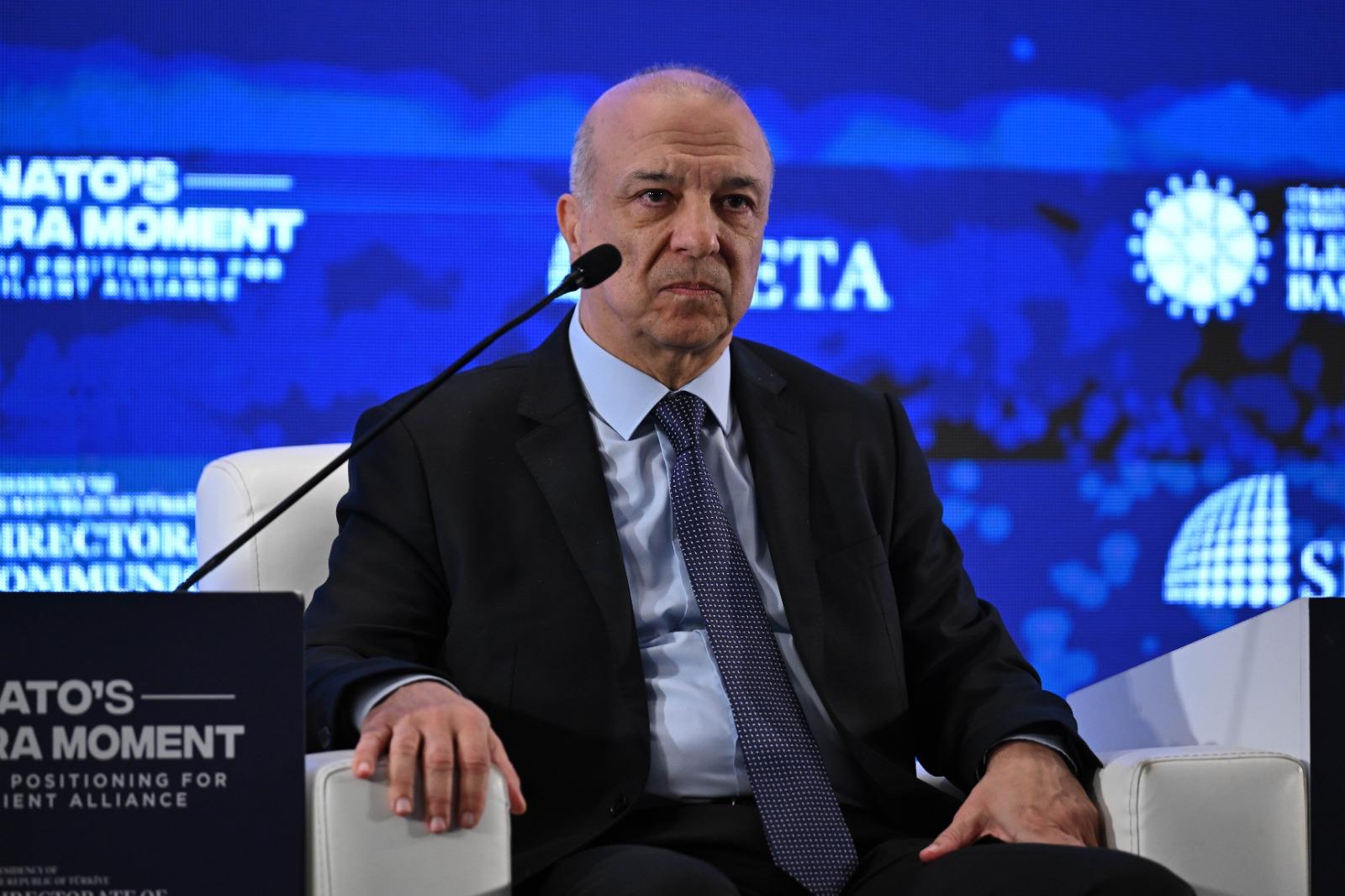
Moyeuvre recalled that when the Soviet Union collapsed in 1991, there was a prediction that NATO would cease to exist.
Later, it was thought that NATO was needed and that it has persisted in that vein, Moyeuvre said, adding, "NATO has not collapsed, and I think all governments experienced a moment of awareness."
Moyeuvre stated that one of the reasons NATO remains standing is political, noting, "It is very easy to disrupt but very difficult to build, especially when we are talking about something that works."
Emphasising that NATO represents a turning point for dialogue, Moyeuvre noted that it fosters trust among countries and helps prevent conflict.
Moyeuvre assessed that NATO stands as the sole organisation capable of planning and executing its plans, stating, "When we consider the capacity aspect, it is the only organisation that can recognise numerous countries. NATO possesses the capacity to shape and integrate. They can plan missions together. This is something that no other organisation is capable of doing.
Moyeuvre stated that "NATO continues to be an extremely reliable and stable organisation."