Head of Communications Altun said, "As one of the countries most involved in NATO missions and operations, Türkiye has, over the years, served as a key for peace and justice both in its immediate region and globally, putting forth intense diplomatic efforts in this direction. "
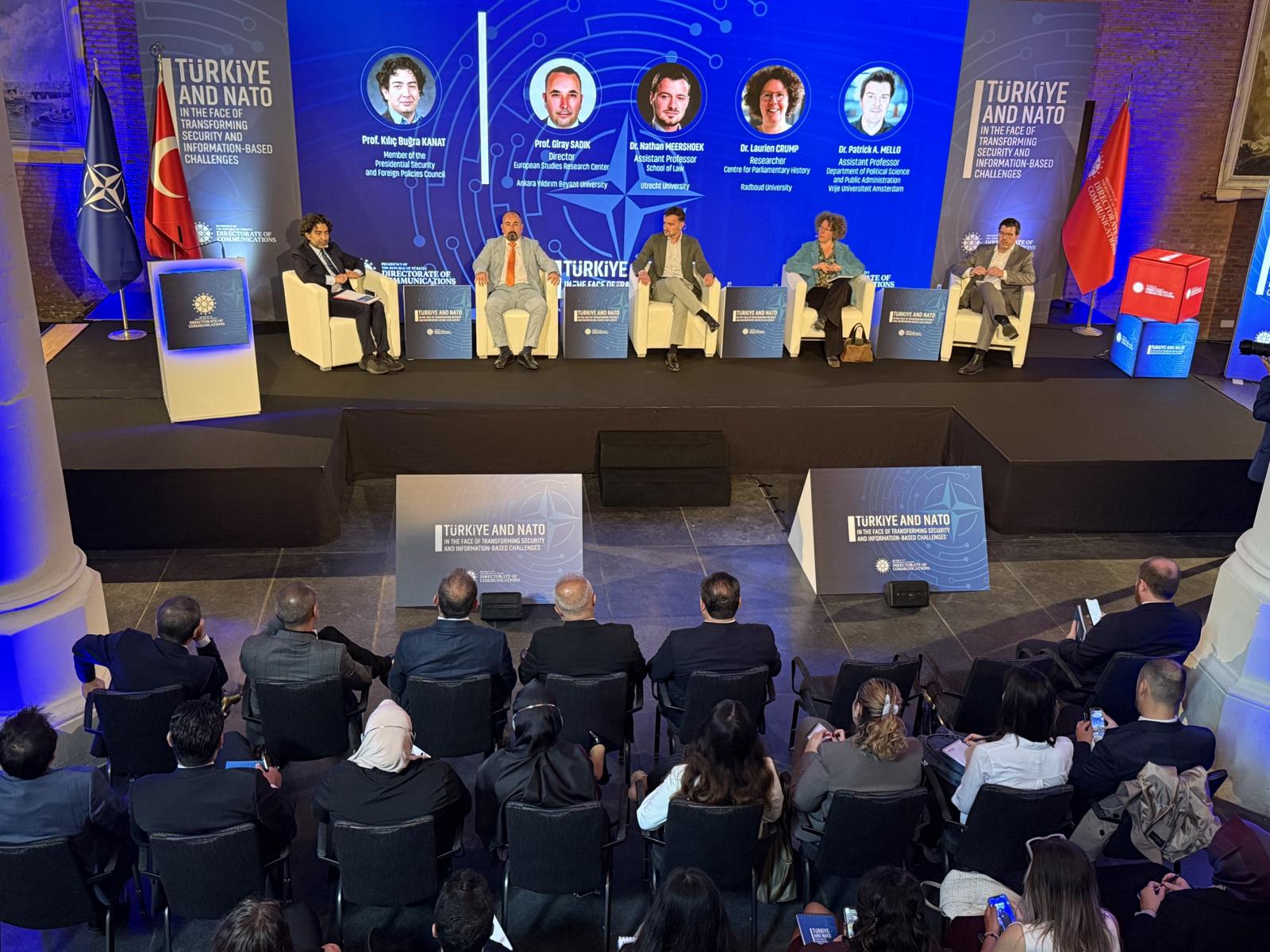
Prior to the NATO Summit, our Directorate held a panel titled "Türkiye and NATO in the Face of Transforming Security and Information-Based Challenges" in Amsterdam, the capital of the Netherlands.
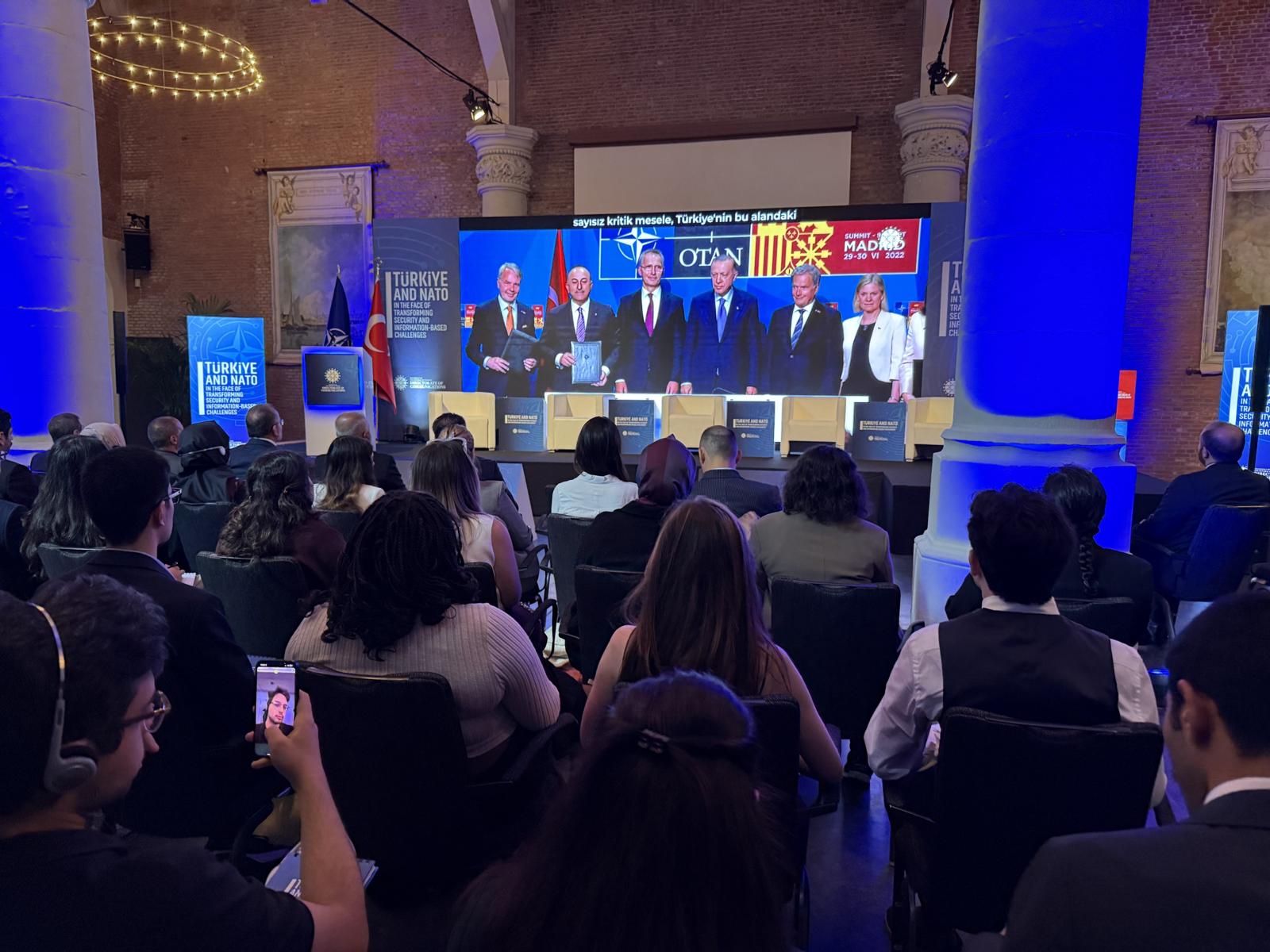
During the event, the Presidency's Head of Communications, Fahrettin Altun, addressed the participants via video message and emphasised that NATO has been the most effective security alliance in guaranteeing regional and global security since its inception. Head of Communications Altun emphasised that the alliance has always been able to adapt to changing conditions during and after the Cold War and that it has played an essential role in guaranteeing security and stability not just in the Euro-Atlantic region but also on a global scale.
Head of Communications Altun underlined that the global system is undergoing a complete process of change and transformation, stating that severe disruptions have occurred in a variety of domains and power balances have shifted.
Noting that the challenges on the security axis have diversified and that the measures to be developed to address these challenges are not restricted to military components, Head of Communications Altun said that he saw one of the most serious security concerns in recent years as information manipulation and meddling by foreign players in NATO's strategic communication approach. Head of Communications Altun noted:
"Over the last decade, we have seen the growth of technology-based hybrid threats, information manipulations, and disinformation as incredibly critical challenges. There is a growing need to develop new strategies and policies rooted in communication, media, and technology to address these threats that have become global security challenges. Strengthening the Alliance’s capacity to confront such challenges has become both essential and inevitable. Consequently, strategic communication and public diplomacy are playing an increasingly prominent role in the security approaches of allied countries.
These areas are of great importance not only for the construction of effective narratives and the affirmation of truth but also for strengthening solidarity and cooperation among NATO member states. Developing a shared perspective in strategic communication and public diplomacy is a vital component of our collective pursuit of security and the future of our Alliance. Together with our allies, we can develop more effective and innovative communication strategies to enhance our collective security."
"Our country is also a key contributor to the Alliance's efforts"
"As one of the countries most involved in NATO missions and operations, Türkiye has, over the years, served as a key for peace and justice both in its immediate region and globally, putting forth intense diplomatic efforts in this direction." Head of Communications Altun underlined that Türkiye has stood out not only in military terms but also in the fields of combating disinformation, strategic communication, and crisis communication, drawing on its extensive experience in these areas.
Head of Communications Altun said, “Our country is a key contributor not only at the national and international levels but also to the Alliance’s efforts in this regard, thanks to its transparent, truth-oriented, and proactive communication approach."
Highlighting that Türkiye can collaboratively develop more effective and innovative communication strategies with its allies to strengthen collective security amid increasing information-based threats, Head of Communications Altun added that they are open to cooperation and mutual exchange of experiences in this regard.
Panel on "Türkiye and NATO in the Face of Transforming Security and Information-Based Challenges"
The panel was attended by Prof Giray Sadık from Ankara Yıldırım Beyazıt University, Laurien Crump, PhD, from the Centre for Parliamentary History, Radboud University, Nathan Meershoek, PhD, from the School of Law, Utrecht University, and Patrick A. Mello, PhD, an expert on international security from the Vrije Universiteit Amsterdam, as well as representatives from Turkish institutions in the Netherlands, international officials, academicians, journalists, and other guests.
Prof Kılıç Buğra Kanat moderated the panel, which addressed various topics.
"Türkiye supports its military power with strategic communication"
Prof Giray Sadık, from Ankara Yıldırım Beyazıt University, said that Türkiye, the largest NATO member state in Europe, bolsters its military force through strategic and robust communication.
Prof Sadık emphasised that actions speak louder than promises, stating that the NATO Summit will be held in Türkiye next year.
Prof Sadık stated that communication—already essential in times of peace—becomes even more critical during periods of conflict, especially in the face of hybrid threats. He added, “Hybrid threats undermine peace and security through disinformation and manipulative tactics.”
Turkish companies' contribution to EU's defence architecture
Nathan Meershoek, PhD, from Utrecht University, explained how NATO's decision to allocate five per cent of member countries' gross domestic product (GDP) to defence spending would be implemented in Europe and how it would impact European security needs.
Meershoek said that EU member states supplied substantial ammunition and military equipment to Ukraine during the Russia-Ukraine conflict, adding, "The primary contribution originates from the US, and Ukraine remains significantly reliant on the US arms supplies in its conflict with Russia."
Meershoek noted that Turkish companies' inclusion in the EU's defence architecture would be contingent on agreements to be reached between Türkiye and the EU.
Meershoek outlined the EU's decision-making mechanism and Hungary's opposition, particularly to the EU's decisions to support Ukraine, and noted that the EU is facing challenges with its decision-making systems, and efforts are being made to construct a policy independent of the United States and establish an independent security policy for the EU.
"Türkiye is more successful than European countries in avoiding double standards"
Laurien Crump, PhD, from the Centre for Parliamentary History, Radboud University, stated that contemporary events are reminiscent of extremist rhetoric of the 1930s, claiming that populism and authoritarianism have turned many countries inward.
Crump stated that Türkiye plays a significant role in the EU's security architecture, saying, "We are at a very critical threshold historically, and NATO needs to be more united than ever. Türkiye's role in this is crucial."
Crump stated that, unlike Türkiye, the Netherlands was unable to take a consistent stance on Gaza and Ukraine, saying, "Türkiye is more successful than many European countries in avoiding double standards."
"No sanctions against Israel is a double standard"
Crump said: "Europe sanctioned Russian President Vladimir Putin on the grounds of violating international law yet took no action against Israel, which committed far more severe violations and undermined international law entirely. This is a textbook example of double standards.”
Noting that the genocide taking place in Gaza is being largely ignored by the international community, but that Türkiye is making significant efforts to end it, Crump stated that Türkiye can serve as an effective mediator in resolving regional conflicts and added that Ukraine and the Middle East should not be treated as separate issues and that NATO risks losing credibility by making such distinctions.
Crump noted that NATO countries, apart from Türkiye, have remained muted in their criticism of Israel and said, “Türkiye is demonstrating a consistent stance in this regard, especially when compared to other NATO members.”
Regarding the future of NATO, Crump emphasised that other NATO countries, apart from Türkiye, should adopt a more active stance in the Ukraine negotiations and noted that Türkiye holds a highly strategic, important, and strong position on the Ukraine issue — a fact that is well recognised by all parties.
"Iran is acting in accordance with the law"
Crump pointed out that while the EU hesitates to impose sanctions on countries like Israel, which it considers an ally, it swiftly and collectively imposes sanctions on countries such as Russia and Iran, which it does not regard as allies, and added, “Considering the air strikes carried out by Israel and the United States today, it is Iran that is acting in accordance with the law.”
Pointing out that Western policies toward the Middle East have been marked by numerous double standards, Crump said that the years-long civil war in Syria, the occurrence of war crimes, and the failure to respond decisively to the refugee crisis are among the clearest examples.
"Germany increases defence spending"
Patrick A. Mello, PhD, from Vrije Universiteit Amsterdam, said that following the Russian-Ukrainian War, Germany's defence spending and policies have undergone significant changes.
Mello stated that Germany is now investing more in air power, plans to purchase F-35 fighter jets from the United States, and is deploying additional troops to missions on NATO’s eastern flank, particularly in Lithuania.
Mello stated that Germany has been assigned a role contributing more than other EU member states to the European Union’s security architecture. He added that since 1964, Germany’s defence spending had declined similarly to other countries, but this trend is now changing, and defence expenditures are expected to increase.
Mello explained that Germany continues to develop the use of the Taurus weapon system but has not yet considered supplying it to Ukraine, noting that anti-war movements are gaining strength within Germany.
Mello pointed out that while Europe aims to strengthen itself militarily, it is becoming increasingly dependent on the United States. He stated that it would be healthier for the EU to develop defense policies independent of the U.S.
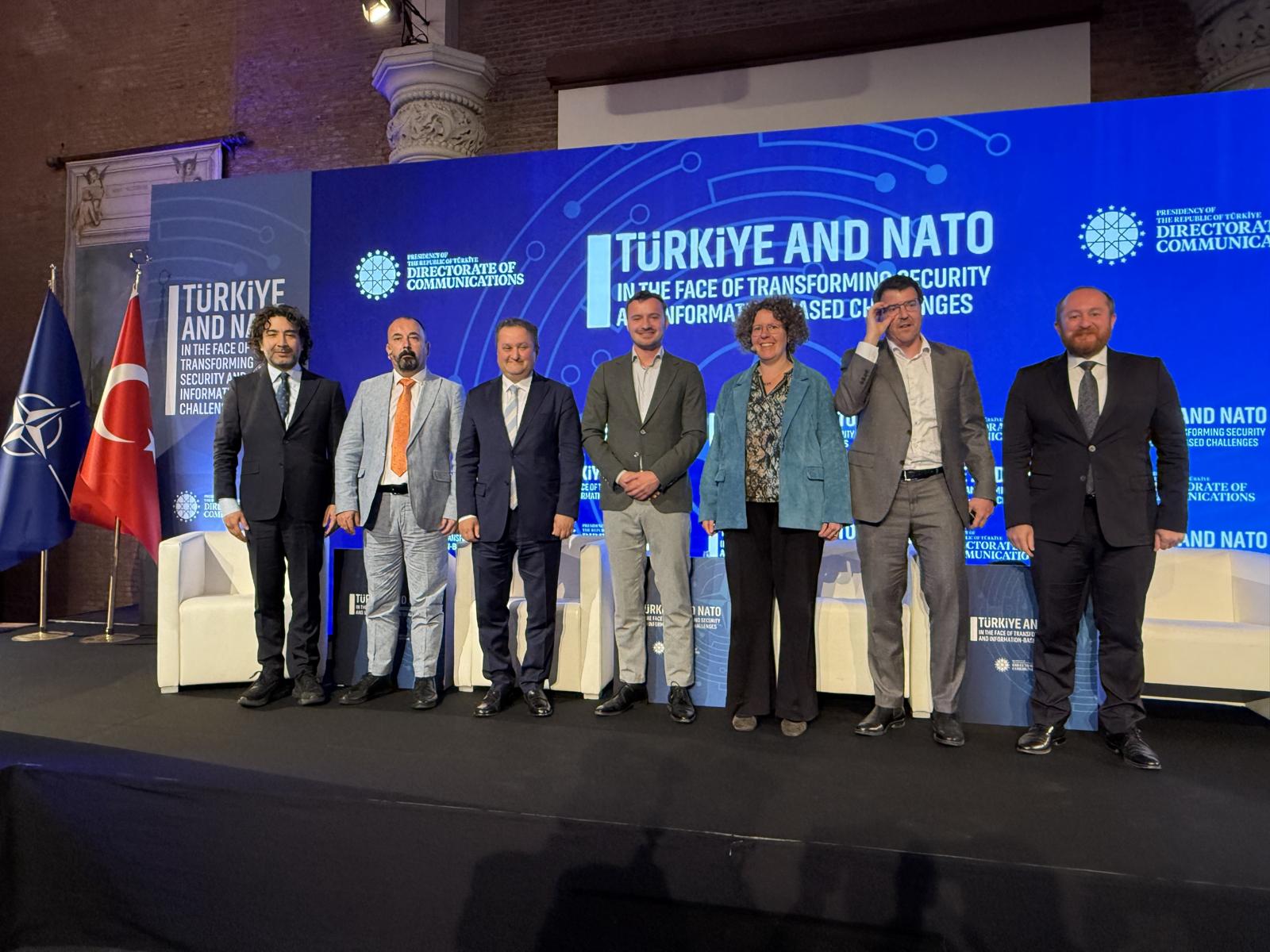
The panel concluded with a group photo.