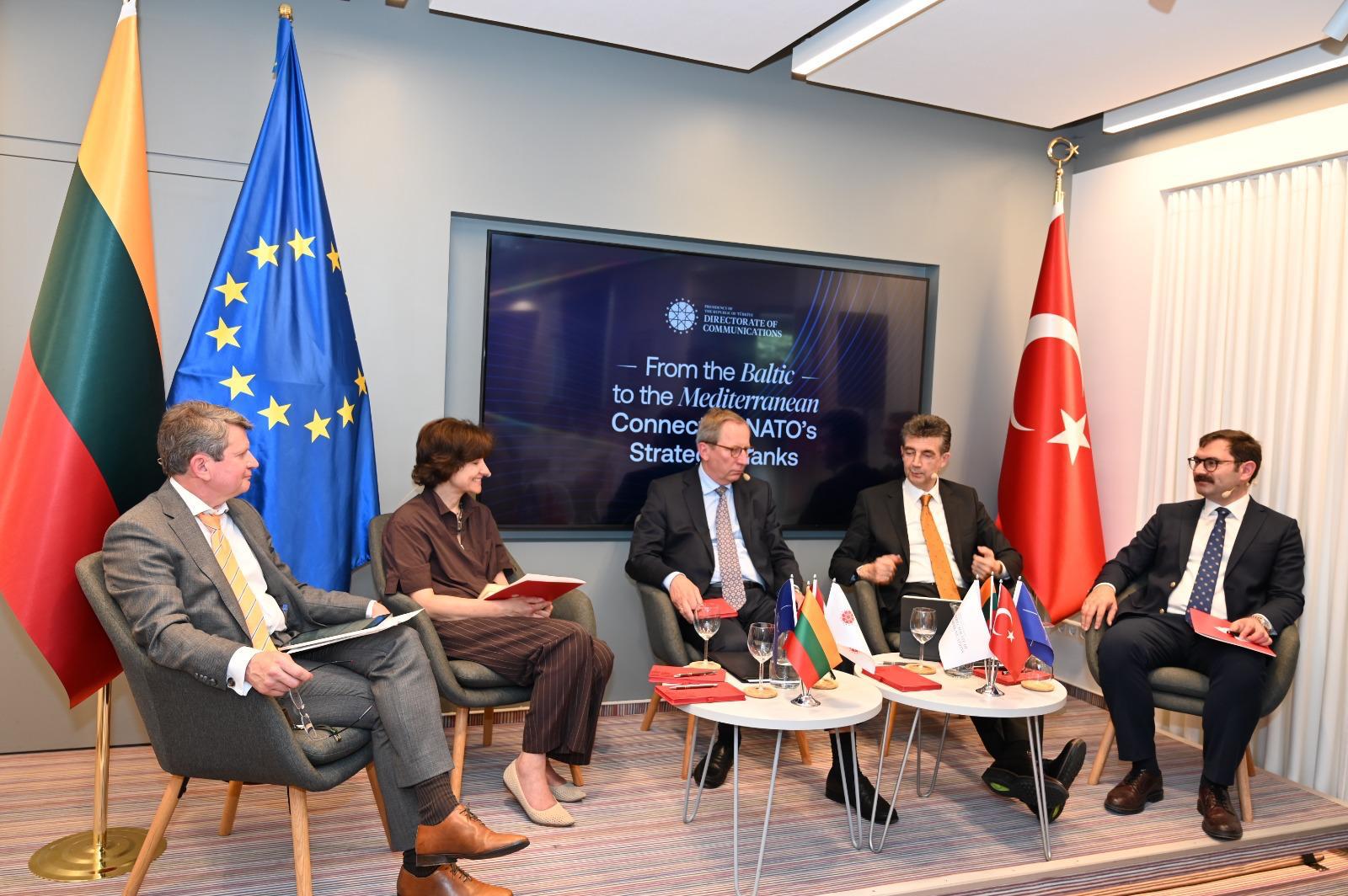
The Directorate of Communications organised a panel discussion entitled "From the Baltic to the Mediterranean: Connecting NATO's Strategic Flanks" in Vilnius, the capital of Lithuania, in collaboration with the Geopolitics and Security Studies Centre (GSSC).
Ahead of the NATO Heads of State and Government Summit, which will take place in Ankara on 7–8 July 2026, the Directorate of Communications of the Republic of Türkiye has been organising NATO-focused programmes in the capitals of NATO member states. This series of programmes, carried out in collaboration with think tanks in the respective countries, was held in Madrid, Paris, London, Warsaw, Washington, Rome, Brussels, Helsinki, Berlin, The Hague and Sofia, respectively.
The eleventh instalment of the programme series took place on 1 July 2026 in Vilnius, the capital of Lithuania, in collaboration with the Geopolitics and Security Studies Centre (GSSC).
The first part of the programme featured a panel entitled "From the Baltic to the Mediterranean: Connecting NATO’s Strategic Flanks". Moderated by GSSC Deputy Director Vytautas Leškevičius, the panel featured Chief National Security Adviser to the President of Lithuania Deividas Matulionis; Vice Minister of Foreign Affairs of Lithuania Audra Plepytė; Member of the Presidency's Council of Security and Foreign Policies Prof. Mehmet Akif Kireçci; and Faculty Member of the Middle East Institute of Sakarya University and SETA Foreign Policy Researcher Dr. Mustafa Caner, who shared their assessments.
During the panel discussion, the current challenges facing NATO in the changing global security environment, the Alliance’s 360-degree security approach, the strategic importance of the Baltic and Mediterranean regions within the Euro-Atlantic security architecture, and the interconnectedness between these two security belts were discussed in detail. The panel also addressed the implications of the Russia-Ukraine conflict on European security, the impact of developments in the Middle East on global security and energy supply, hybrid threats, cyber security, the transformation of the defence industry, and assessments regarding the strengthening of NATO’s deterrence and defence capabilities. While highlighting Türkiye’s strategic position within the Euro-Atlantic security architecture, its military and civilian responsibilities within NATO, and its constructive role in the management of regional crises, participants also shared their expectations regarding the NATO Heads of State and Government Summit to be held in Ankara, as well as their outlook on the future of the Alliance.
GSSC Deputy Director Vytautas Leškevičius, who moderated the panel, drew attention to NATO’s ongoing adaptation to the evolving security environment in recent years and stressed that the Baltic and Mediterranean security regions cannot be assessed independently of one another. Leškevičius stated that the panel, organised ahead of the NATO Heads of State and Government Summit to be held in Ankara, would contribute to strengthening strategic dialogue among Allied countries and noted that it provided an important platform for developing a shared perspective on the future of NATO.
Member of the Presidency's Council of Security and Foreign Policies Prof. Mehmet Akif Kireçci noted that the international security environment has changed significantly since the end of the Cold War, stating that Russia’s renewed power projection, China’s rise, and the continuing instability in the Middle East have reshaped NATO’s security agenda. Prof. Kireçci drew attention to Türkiye’s strategic position at the intersection of Europe, the Black Sea, the Caucasus and the Middle East , and emphasised its role in the Euro-Atlantic security architecture, citing its military capabilities, defence industry advancements, counter-terrorism experience, and contributions to regional crisis management. Kireçci also stressed that, in the face of hybrid threats, disinformation, and next-generation warfare technologies, the Allies should develop a shared understanding of the threats they face and strengthen their strategic solidarity.
Dr. Mustafa Caner, Faculty Member of the Middle East Institute of Sakarya University and SETA Foreign Policy Researcher, noted that security threats cannot be confined to geographical boundaries, adding that developments in the Middle East have direct implications for energy security, maritime trade routes, and the global economy. Caner highlighted the importance of NATO adopting a comprehensive approach to the security of the Baltic and Mediterranean regions and noted that Türkiye’s efforts to de-escalate regional crises, support diplomatic solutions, and promote stability make an important contribution to the Alliance’s security.
Deividas Matulionis, Chief National Security Adviser to the President of Lithuania, underscored that Türkiye is a strategically important and reliable NATO Ally, and stated that the NATO Heads of State and Government Summit to be held in Ankara would serve as a key platform for the adoption of important decisions that will strengthen the Alliance’s unity and solidarity. Stressing the importance of addressing the Russia threat, terrorism, and hybrid threats within the framework of NATO's collective approach to security, Matulionis indicated that increasing defence spending and bolstering deterrence capabilities would be among the Summit's key priorities.
Audra Plepytė, Vice Minister of Foreign Affairs of Lithuania, said that NATO's 360-degree security approach must be embraced not only by decision-makers but also across all segments of society. Noting that Türkiye’s strong military capabilities, growing defence industry, and constructive role in addressing regional crises are of great importance to NATO, Plepytė expressed confidence that the Ankara Summit would produce significant outcomes in strengthening defence capabilities, enhancing defence industrial cooperation, and reinforcing solidarity among the Allies.
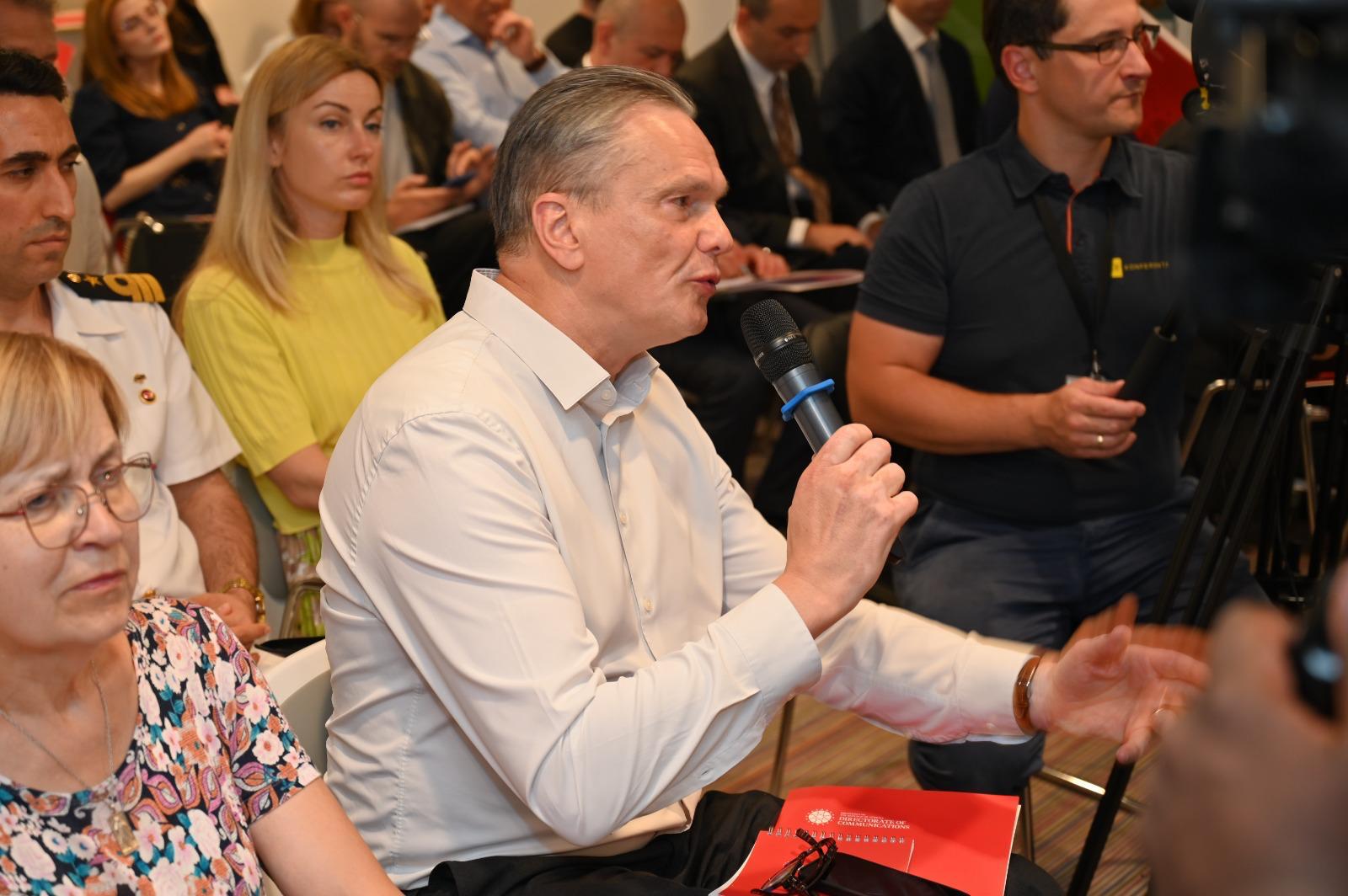
The second part of the programme included a press conference with journalists and members of the press at the Embassy of the Republic of Türkiye in Vilnius. The meeting covered the agenda of the NATO Heads of State and Government Summit to be held in Ankara, Türkiye’s strategic role within NATO, its contributions to the Euro-Atlantic security architecture, and assessments of current regional and global developments.
During the meeting, which included questions from members of the press, participants held in-depth discussions on evolving threat perceptions in the international security environment, the current security challenges facing NATO, developments in the Middle East, diplomatic efforts to preserve regional stability, Türkiye’s approach to security risks in its neighbourhood, and its contributions to Euro-Atlantic security. Furthermore, members of the press were briefed on Türkiye's approach to establishing regional peace and stability based on international law, as well as expectations regarding the NATO Heads of State and Government Summit to be held in Ankara.
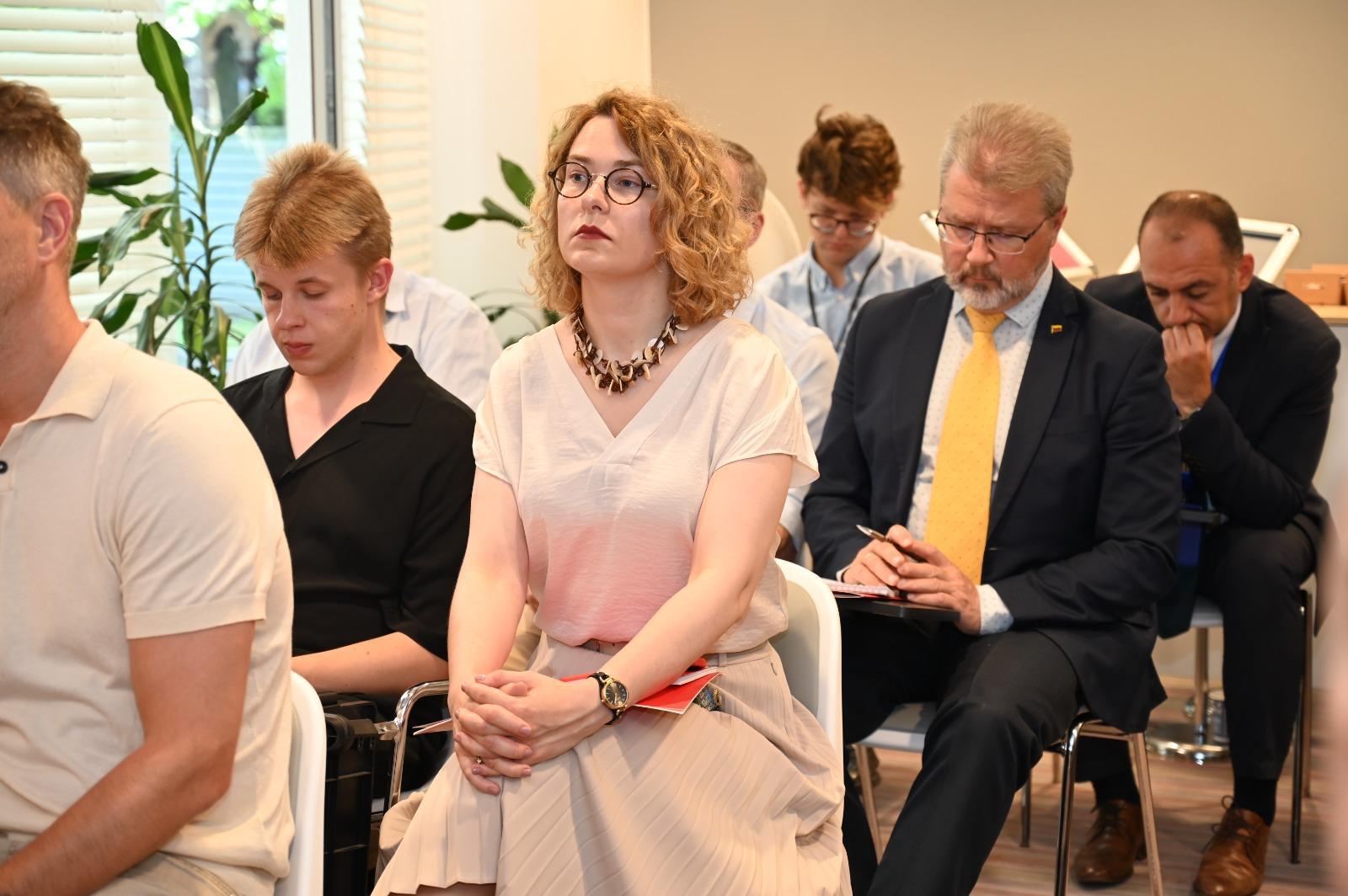
The event brought together representatives of diplomatic missions in Lithuania, public institutions, academia, think tanks, security and foreign policy circles, and members of the international media, contributing to the presentation of Türkiye’s priorities to the international public ahead of the NATO Heads of State and Government Summit to be held in Ankara.