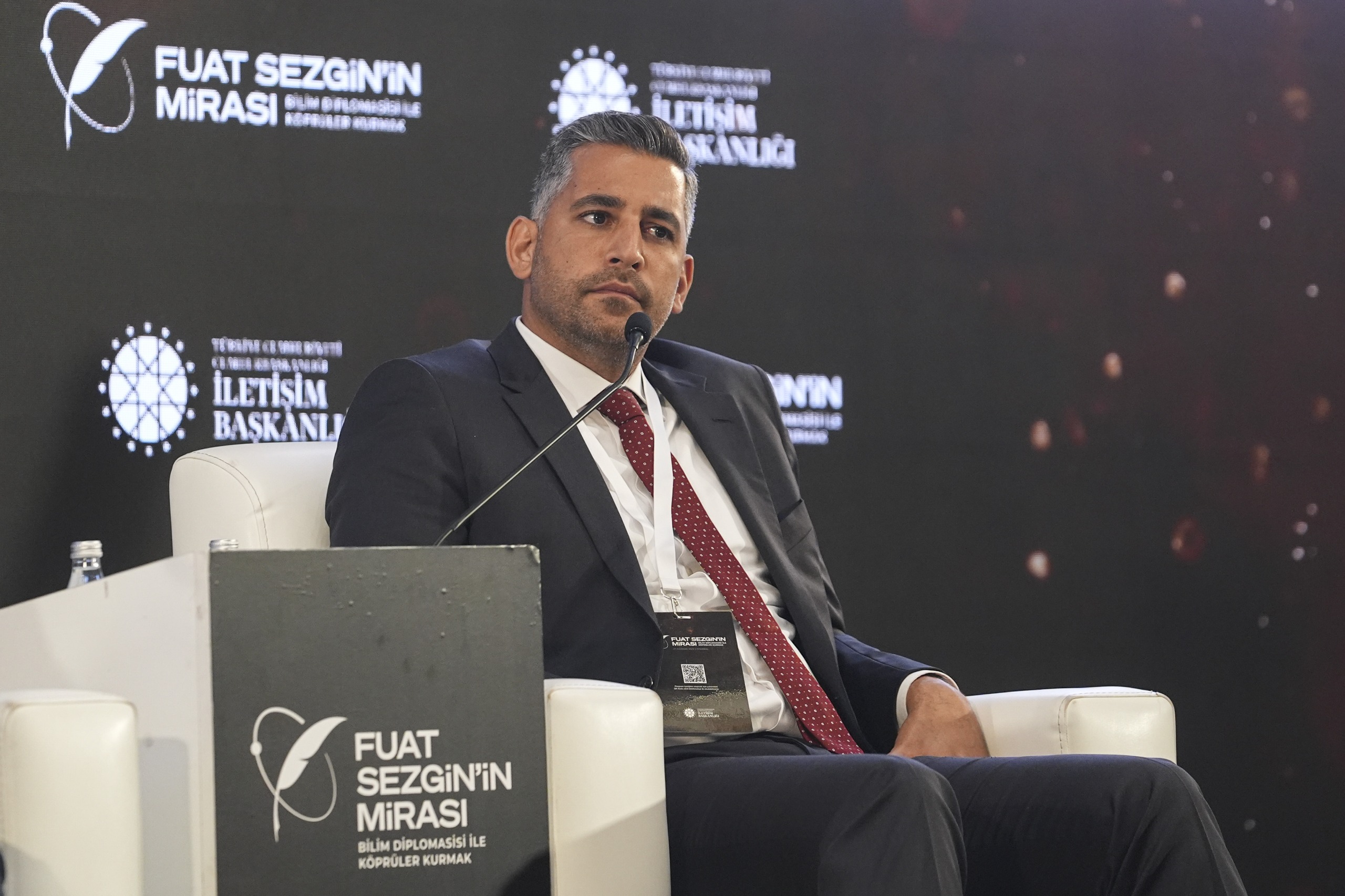
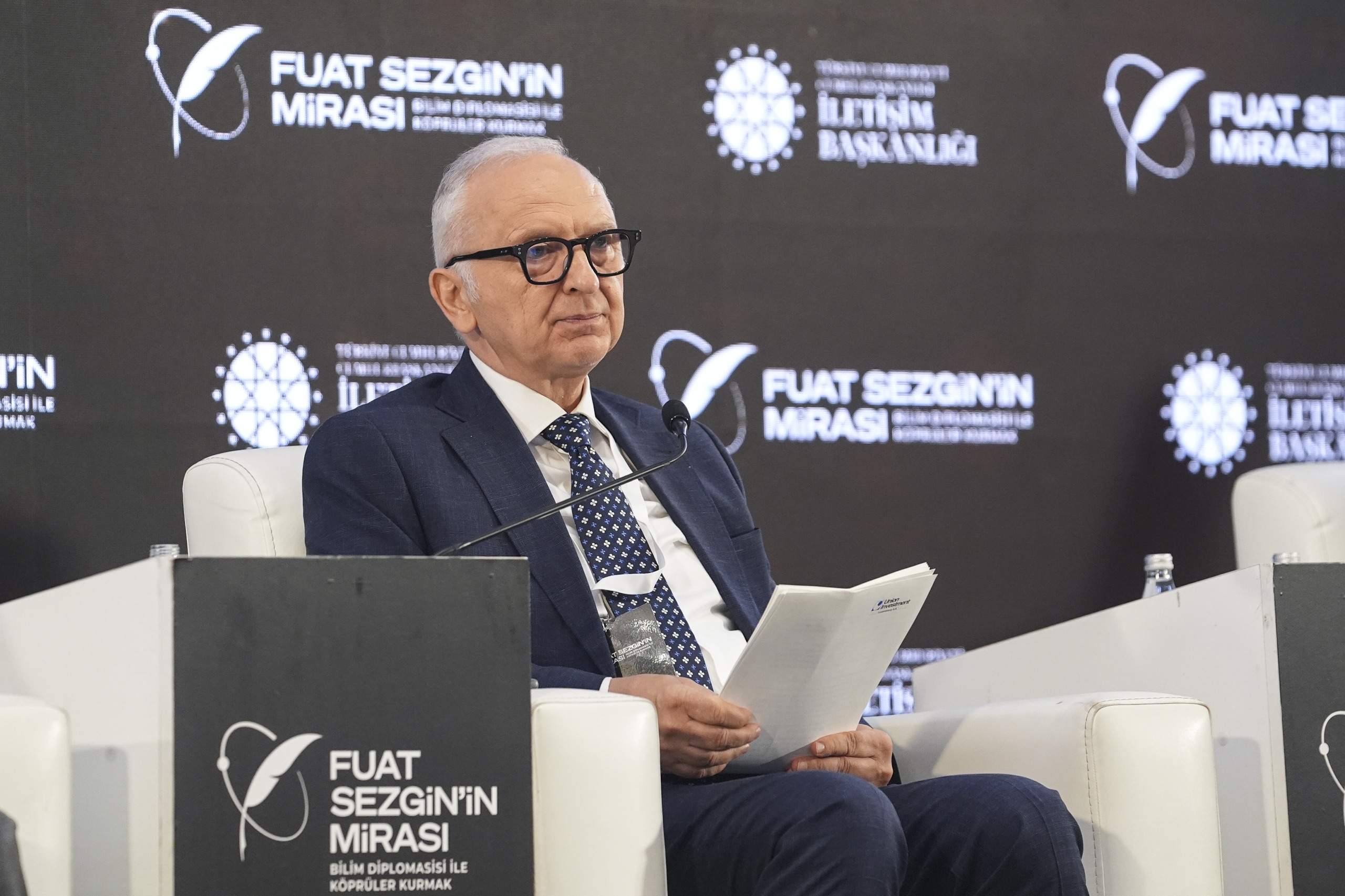
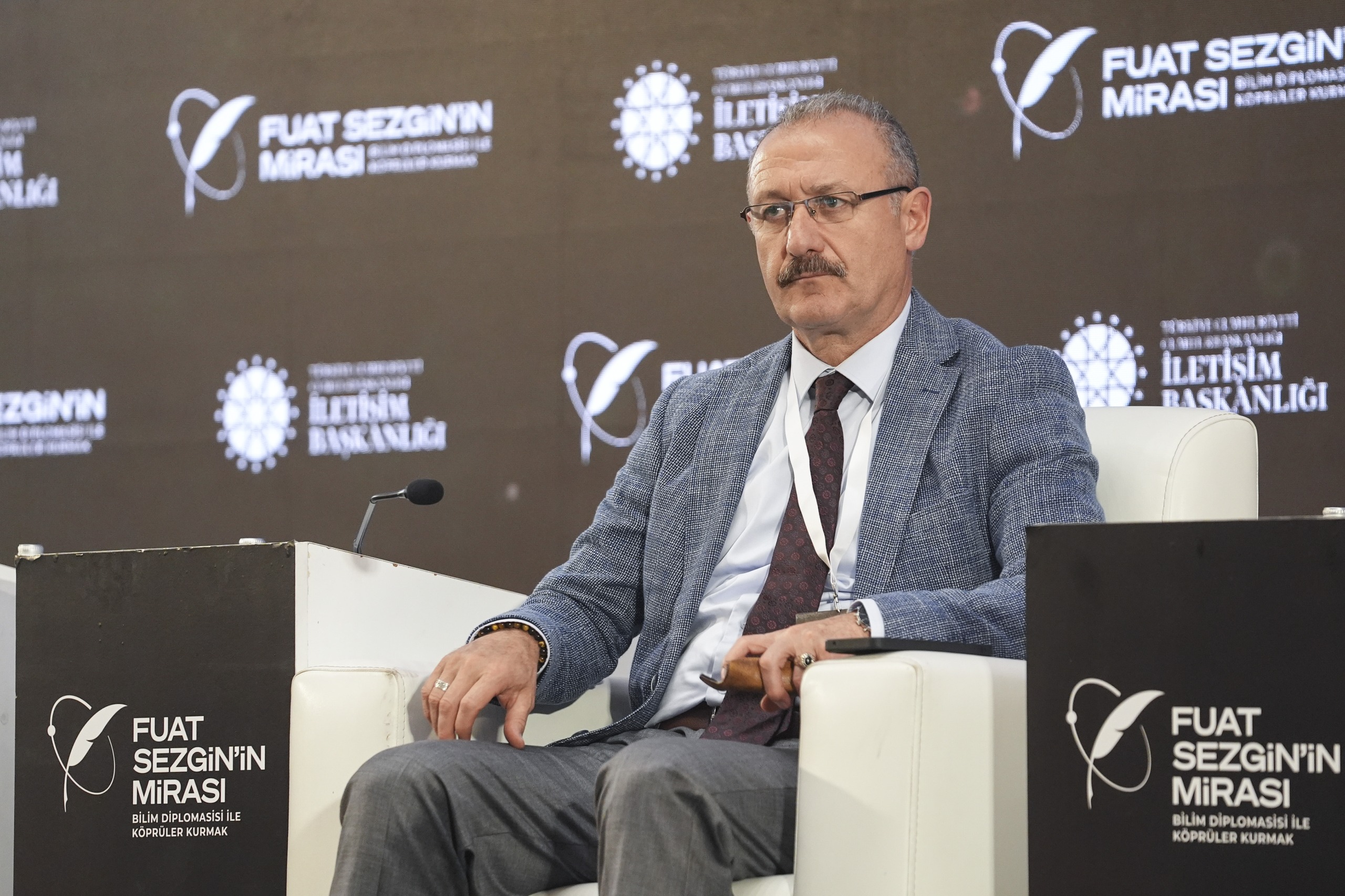
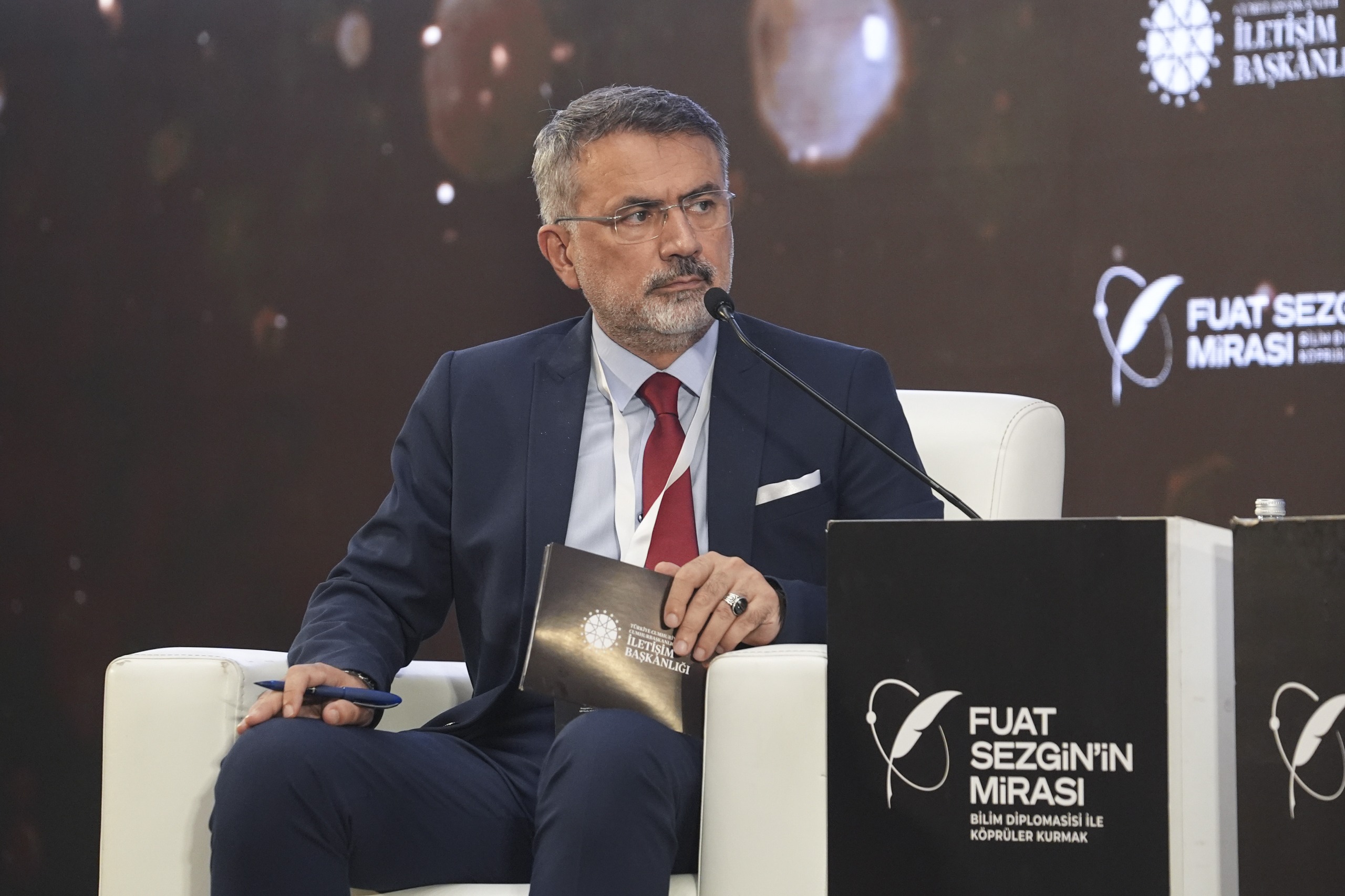
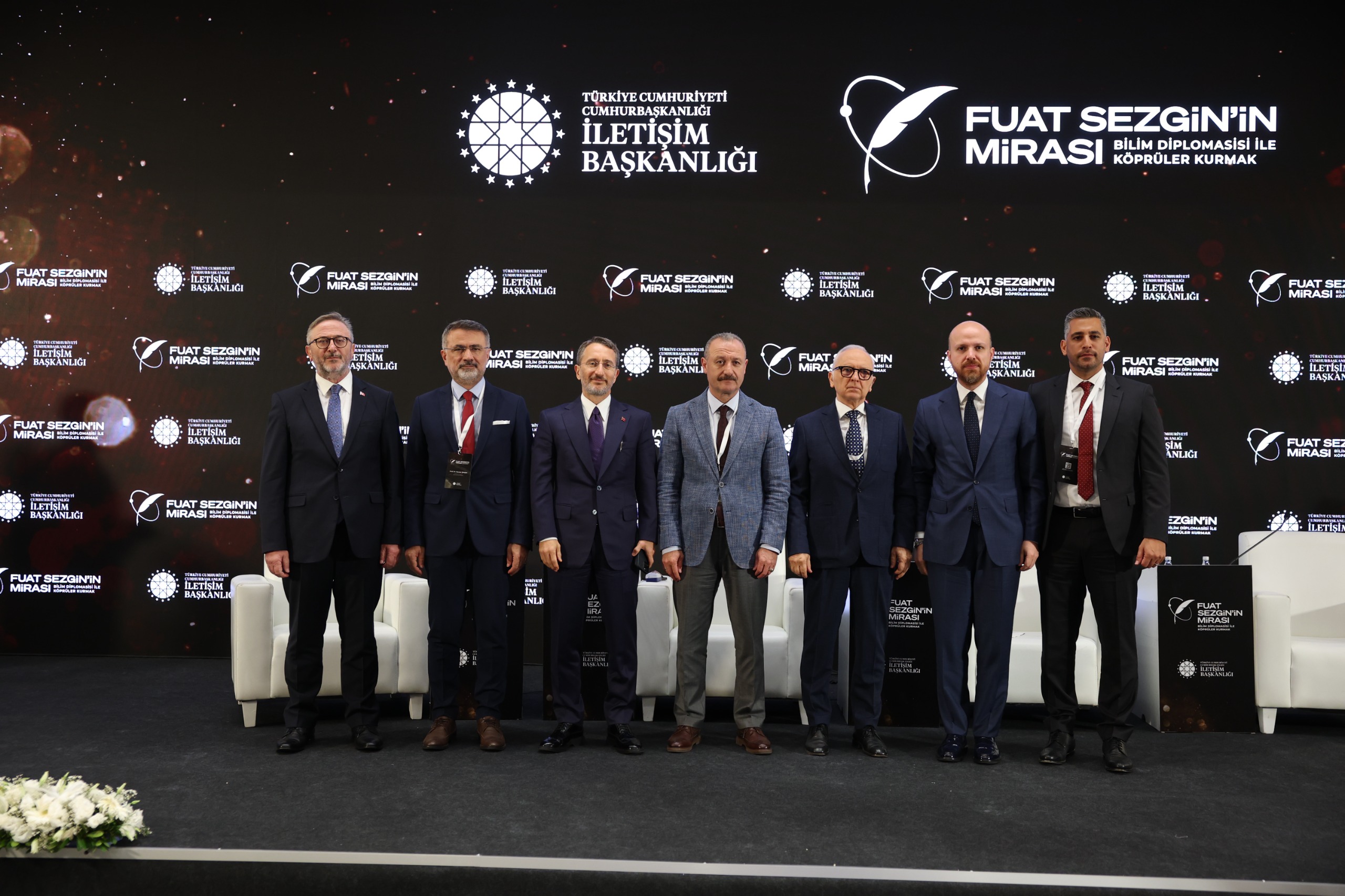
The first session of the panel, titled “Fuat Sezgin’s Legacy: Building Bridges through Science Diplomacy,” organised by the Directorate of Communications, has been held.
The panel was held at a hotel, where the life and works of Prof. Fuat Sezgin, one of Türkiye's most prominent scholars in the history of Islamic science, were discussed.
The session titled "Remembering Fuat Sezgin: His Life, Works, and Legacy," moderated by Prof. Nevzat Şimşek, Rector of Fatih Sultan Mehmet Vakıf University (FSMVU), featured Prof. Ersan Aslan, Rector of Kırıkkale University, Prof. Şükrettin Güldütuna from Frankfurt University, and Mehmet Alparslan Çelebi, Executive Board Member of the Central Council of Muslims in Germany (ZMD).
"Sezgin's scholarly legacy is a paradigm-shifting expanse"
Prof. Ersan Aslan emphasised that world civilisation is built through the contributions of all civilisations, and Sezgin dedicated his life to showcasing the role of Islamic heritage in that global legacy.
Aslan remarked that he had been alongside Fuat Sezgin during the final five years of his life, stating, "Sezgin's scholarly legacy is a paradigm-shifting expanse. He explained our civilisation's contribution to global science. Among his greatest legacies are the 17-volume "History of Arab-Islamic Sciences" and the work titled "Science and Technology in Islam." Through these two monumental works that encompass his life’s work, our late scholar sought to show how world civilisation was shaped and what role Muslims played in its development. “We do not discourage our visitors from touching the work written by Fuat Sezgin in our museum — on the contrary, we say ‘Go ahead, touch it.’ World civilisation has been built through the contributions of all nations,” he said.
Aslan noted that Prof. Sezgin often emphasised that Muslims should not feel inferior, quoting his words: 'You can do it—because you once did it.'
"Intelligence alone, without analytical thinking, was not enough"
Prof. Şükrettin Güldütuna, who spent 38 years with Sezgin, believed that the content of his 17-volume work, 'History of Arab-Islamic Sciences', would inspire a revival and resurgence within the Muslim world. This was the ultimate purpose of all his efforts. Intelligence alone, without analytical thinking, was not enough to achieve this goal. Above all, it demanded an inner strength rooted in faith in Allah and reliance on Him. This spiritual power gave him the strength to work every day, including holidays, at the institute he established in Frankfurt until the end of his life."
Prof. Güldütuna shared that Sezgin readily welcomed young people who came to meet him, always taking the time to speak with them, and went on to share the following:
"I can still hear his words: 'Islamic culture and religion have made a great contribution to the foundation of Western civilisation.' Prof. Sezgin explained that the Western portrayal of these advancements as the Renaissance is a fabrication. Since Western civilisation is rooted in Islamic civilisation, he used to say that we should not regard the West as a foreign or separate culture but rather benefit from the knowledge it has brought. At that time, he advised us to learn foreign languages, read extensively, and seize the opportunity to read books in other languages. Professor Fuat Sezgin used to say: “There is no excuse for not working. If someone who spent 20 years in prison was still able to write a book, how can we, living in such comfortable conditions, have any excuse not to work? Working is a divine duty.”
"I stood next to him for 5 hours, and the professor didn’t even notice me during that entire time"
ZMD Board Member Mehmet Alparslan Çelebi shared that he met Professor Sezgin during his university years, following his father's advice. He said: “When I first approached the professor, he was extremely busy. He even somewhat brushed me off. But my father told me, ‘Just stay by his side; serve the professor.’ I stood next to him for 5 hours, and he did not even notice me during that entire time. He was working so intensely. That journey continued. I went to Professor Fuat’s institute every day and sat there. Eventually, he accepted me, and we became like a big family. We stayed together until his passing. One of the greatest influences my professor had on me was his meticulousness regarding a sense of belonging and commitment to Türkiye.”
Çelebi also stated that he himself played a role in bringing Fuat Sezgin’s books from Germany to Türkiye, and said:
“In 2017, Professor Fuat Sezgin was awarded the Hessen Prize. However, when a Jewish participant was also nominated for the same award, he refused to accept it, saying: ‘I cannot accept this award because I stand with my Palestinian brothers and sisters.’ In Germany, such a stance truly means paying a price. Professor Sezgin never compromised his principles, and he encouraged us to do the same.”
Two separate exhibitions opened
The other session, titled “Science Diplomacy Beyond Borders Through Fuat Sezgin’s Legacy of Islamic Science,” was moderated by Coşkun Yılmaz, PhD, President of the Manuscripts Institution of Türkiye.
As part of the event, the openings of two exhibitions were also held: “The Inheritance of Civilisation: Examples from the History of Islamic Science” and “A Life Dedicated to Knowledge.”