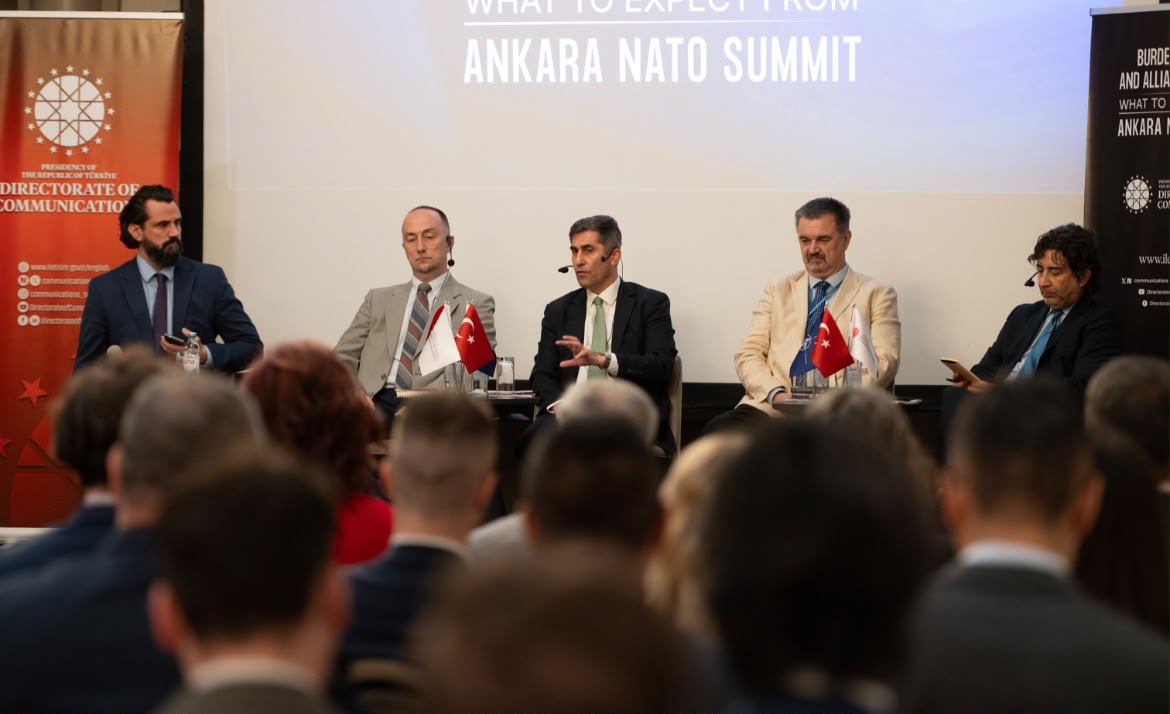
The Directorate of Communications organised a panel titled “Burden Sharing and Alliance Cohesion: What to Expect from Ankara NATO Summit” in cooperation with the Institute for Development and International Relations in Zagreb.
The Presidency's Directorate of Communications has been organising NATO-themed events in the capitals of various NATO allies ahead of the NATO Heads of State and Government Summit scheduled to take place in Ankara on 7–8 July 2026. The different stages of the series of programmes, carried out in cooperation with think tanks and institutions in the respective countries, were held successively in various capitals such as Madrid, Paris, London, Warsaw, Washington, Rome, Berlin, Brussels, Helsinki, The Hague, Sofia and Vilnius.
The thirteenth and final event in the programme series was held on 2 July 2026 in cooperation with the Institute for Development and International Relations (IRMO) in Zagreb. The opening remarks of the programme were delivered by Nurdan Erpulat Altuntaş, the Ambassador of the Republic of Türkiye to Zagreb, Croatia, while the Presidency's Head of Communications, Prof. Burhanettin Duran, addressed participants via video message.
The panel programme titled “Burden Sharing and Alliance Cohesion: What to Expect from Ankara NATO Summit” was moderated by Expert Advisor Krševan Antun Dujmović from the Institute for Development and International Relations.
At the panel, Vice‑Rector of the Zagreb University of Defence and Security and Member of the Council for Civilian Oversight of Security and Intelligence Agencies Prof Gordan Akrap; Presidential Security and Foreign Policy Council Member and Social Sciences University of Ankara Faculty Member Prof. Murat Yeşiltaş; Research Adviser at the Institute for Development and International Relations Sandro Knezović; and Presidential Security and Foreign Policy Council Member and Penn State University Faculty Member Prof. Kılıç Buğra Kanat took part in the panel as speakers.
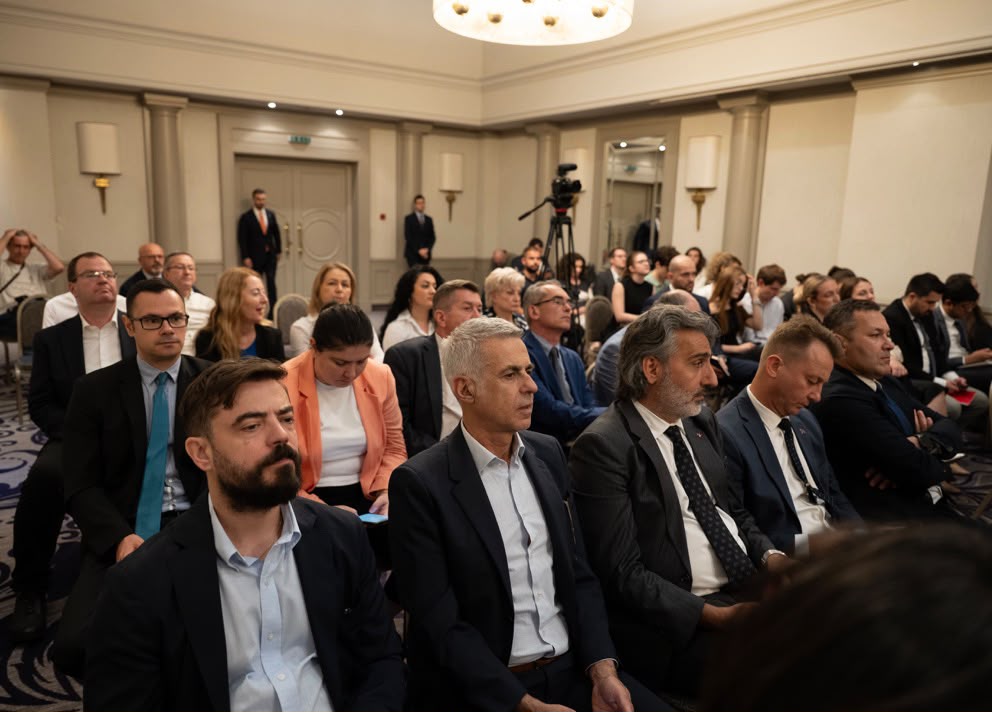
The panel attracted strong interest and participation from ambassadors of other countries serving in Zagreb, as well as diplomatic and military representatives, academics, and members of the press.
During the panel discussion, the focus was placed on NATO’s current security agenda and the joint security measures that could be implemented in response to emerging threats within the evolving international system ahead of the Ankara Summit. Additionally, expectations regarding the upcoming meeting in Ankara were explored. Furthermore, the discussion covered the Euro-Atlantic security architecture, the impact of the Russia-Ukraine War on the Alliance, and regional security developments while emphasising the need for a stronger, more versatile, and comprehensive Alliance through burden-sharing.
Following the panel programme, a meeting was held in the Yunus Emre Institute hall at the Embassy of the Republic of Türkiye in Zagreb, attended by members of the press and graced by the presence of Nurdan Erpulat Altuntaş, Ambassador of the Republic of Türkiye to Zagreb. During the meeting, questions from the press regarding Türkiye–NATO relations, Türkiye's role within the Alliance, current international issues, and the 36th NATO Summit of Heads of State and Government, to be held in Ankara on 7–8 July, were answered.