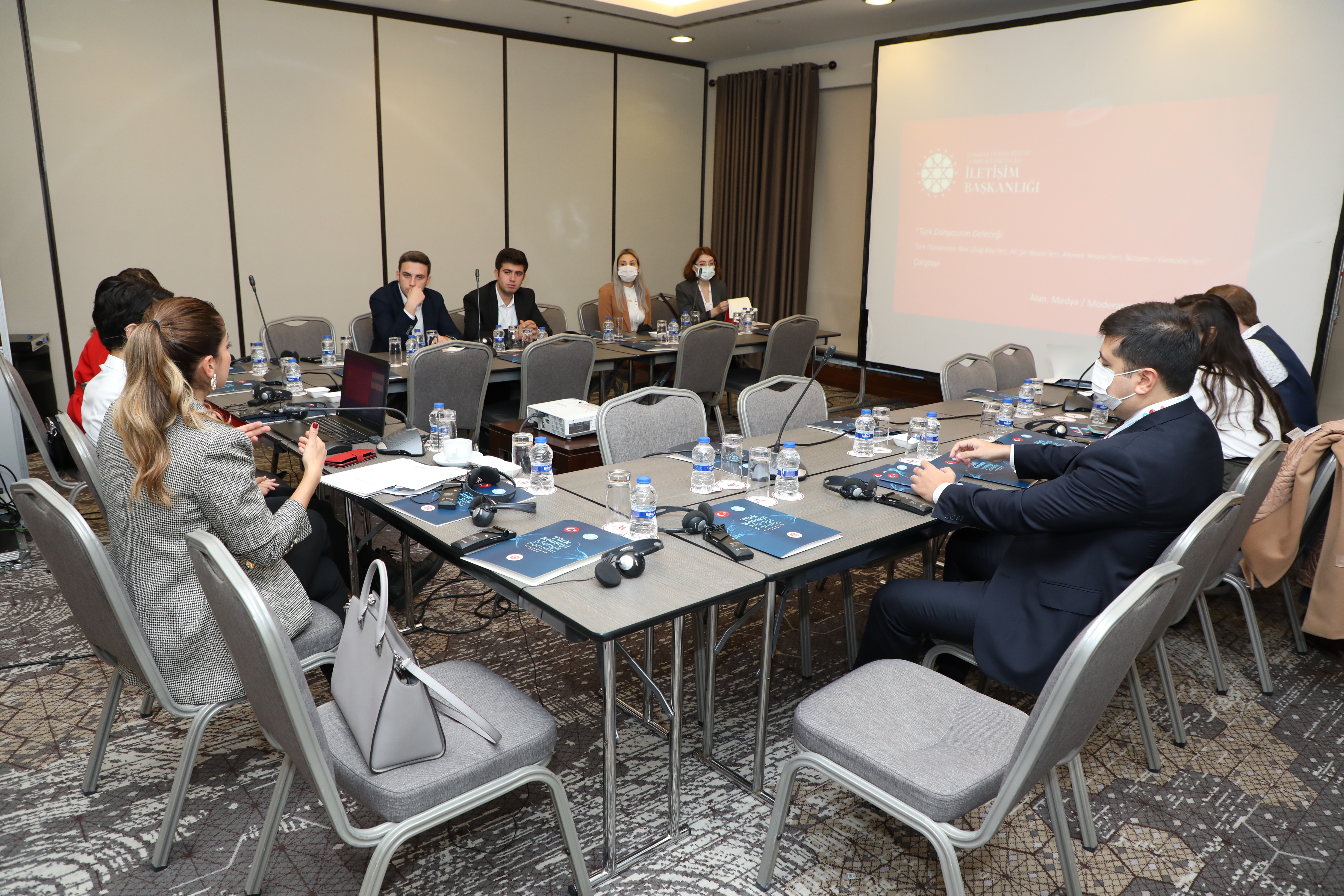
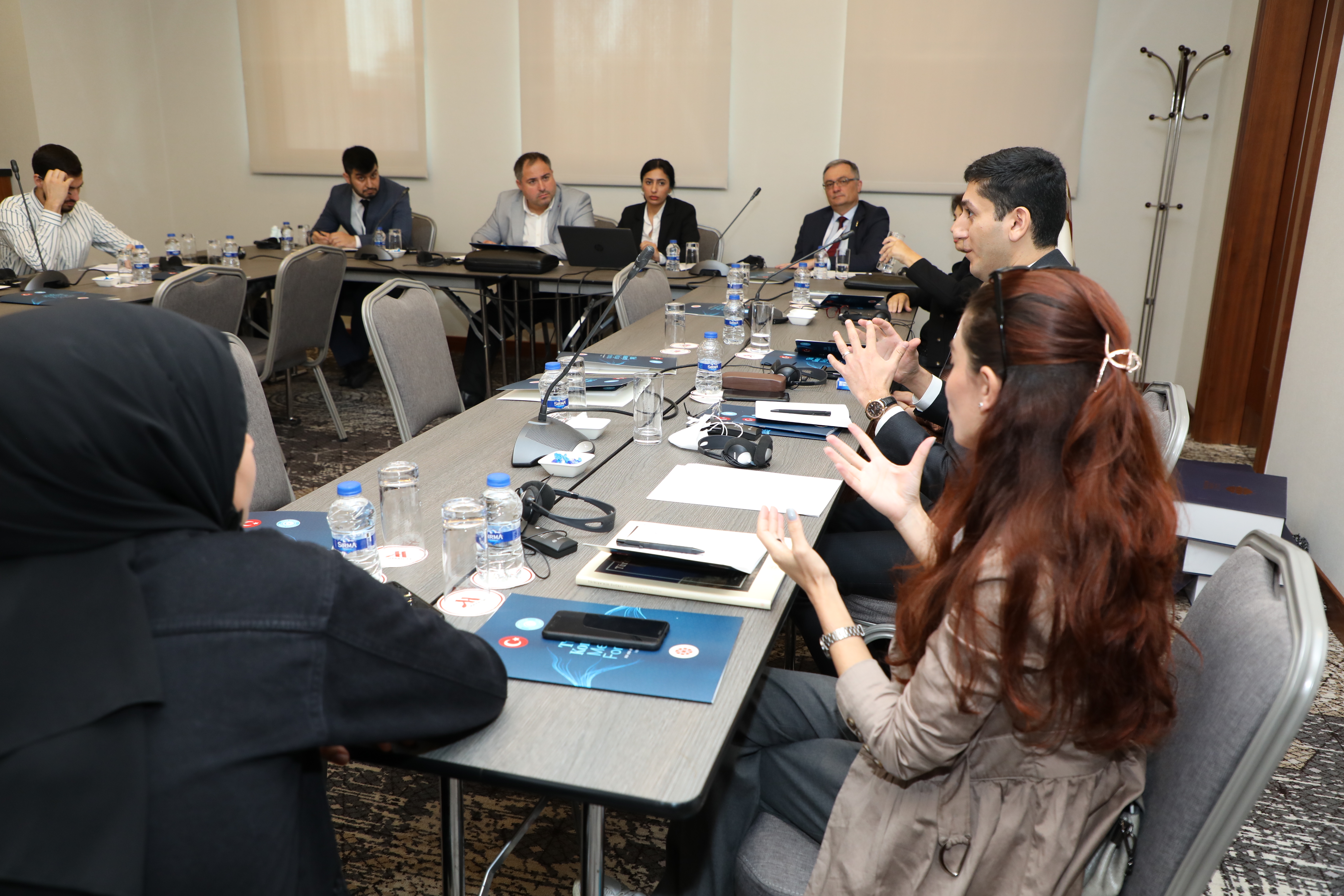
Various workshops were held on the second day of the "Turkic Council Media Forum", hosted by the Presidency's Directorate of Communications, with the theme of "Deep-Rooted Past, Strong Future".
Under the title "The Future of the Turkic World: New Ulugh Begs, Ali-Shir Nava'is, Ahmad Yasawis of the Turkic World", workshops on "science", "culture and arts", "media", "sports", international relations" and "new media" were held.
In the workshops, Anadolu Agency (AA) News Academy Director Dr. Bora Bayraktar chaired the international relations table, T3 Foundation Board Member Alper Güzel chaired the science table, TRT Avaz Foreign Relations and Corporate Communications Officer Gökçen Oğan chaired the media table, World Ethnosport Confederation Board Member Mustafa Eröğüt chaired the sports table, NTV Foreign Relations and Foreign News Coordinator Ahmet Yeşiltepe chaired the new media table and Author Halil İbrahim İzgi chaired the culture and arts table.
The International Relations table issued a declaration
In the declaration issued at the end of the workshop by the International Relations table, the participants identified the following as the important problems of the Turkic world:
"There is a serious lack of communication and knowledge between the Turkic states. In addition, there is the challenge of geographical connectivity. Regional and global powers are disturbed by the cooperation between Turkic states and peoples, and are causing problems. There are severe issues with economic collaboration, and there is insufficient cooperation in the defense field. The absence of a united Turkic diaspora is a serious handicap in defending our causes. One of the issues is the situation of Turks living in Balkan countries in Europe, families going to countries such as Germany and France as immigrants, and their children not being engaged enough. Issues like Karabakh and the TRNC, as well as the difficulties faced by Turks living as minorities in different states of the world such as the North Caucasus, China, Iraq, and Iran, are not sufficiently addressed. Climate, ecology, environment, and water issues in the Turkic world do not receive enough attention."
The declaration noted that proposals were presented for the solution of communication and connectivity problems and the establishment of a common goal and future, and said, "We consider it important to expand studies in the fields of education, media and communication, and to increase interaction and solidarity in the fields of economy, defence and politics among the Turkic states."
Solution proposals and recommendations
The solution proposals listed in the declaration were as follows:
"The Turkic Council's website should include more visual and informational content about countries. Academic articles should be written. Content for TV series and movies should be created. Türkiye's channels, such as TRT World, Arabi, TRT1, and TRT2, which broadcast in both foreign languages and Turkish, should be included in the systems of Turkic states. A student exchange scholarship (Orhun) like Erasmus should be made more widely available and financially supported. Türkiye and Turkic states should concentrate on soft power and provide access to content related to each other. A joint research fund should be established, and they should be made available to PhD students for field research as part of their academic studies. Non-governmental organisations should be integrated into these studies. Existing tourism projects should be expanded so that people may learn more about one another. Steps should be taken to facilitate trade. Free Trade Zones should be developed between Turkic states. Steps should be taken to facilitate trade in logistics, customs and visa applications. The Turkic Business Council should be more visible and effective. The Budapest Business Forum's activities should be encouraged. The establishment of a Turkic Development Bank should be considered. The establishment of a Turkic Investment Bank should be considered. Efforts should be exerted on customs and visa-free travel."
In the declaration, which urged the establishment of a joint shopping site that would appeal to the Turkic world and holding of events like Teknofest in the Turkic world, the following was noted:
"Workshops can be organised to spark children's interest in the defence sector. Establishing a Collective Security Organisation of Turkic States can be discussed in the long run. The format of the Turkish Armed Forces can be presented as an example for other countries. Military students and teachers should be exchanged, and it is possible to ensure that the National Defence University participates actively in military exchange programmes. The establishment of a joint lobby of Turkic states in major capitals, particularly in Washington, the inclusion of information about Turkic states and their problems in school curricula following a joint study, the involvement of Turkish people in local politics in Europe and the United States, and the transfer of the experiences in Europe to the United States and other countries in this regard, raising awareness about FETO in lobbying and responding to their negative activities, keeping issues such as Karabakh and TRNC on the agenda in national and international media, conducting academic researches on the effects of climate change on the Turkic world and publishing their results can be ensured."