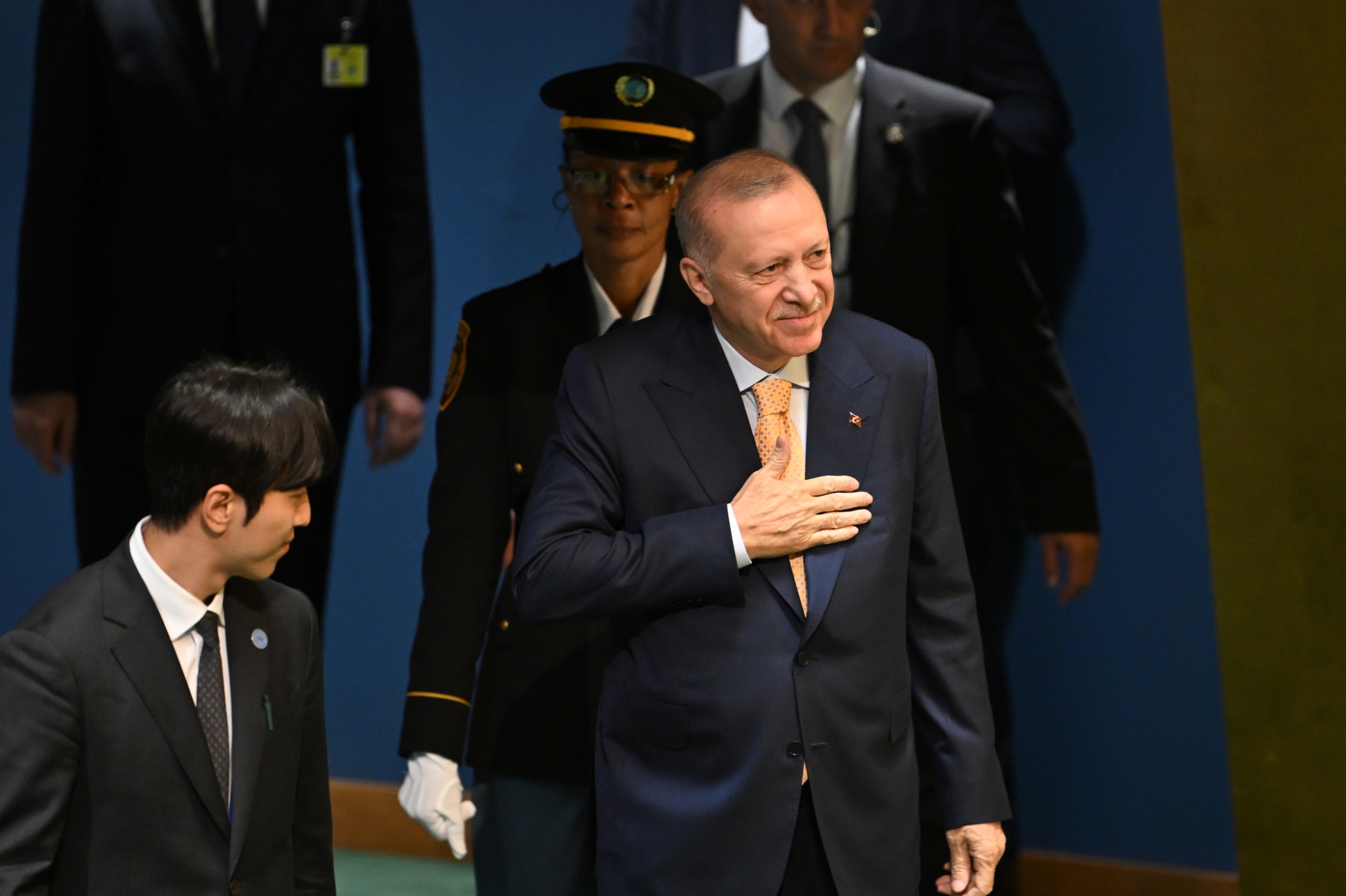
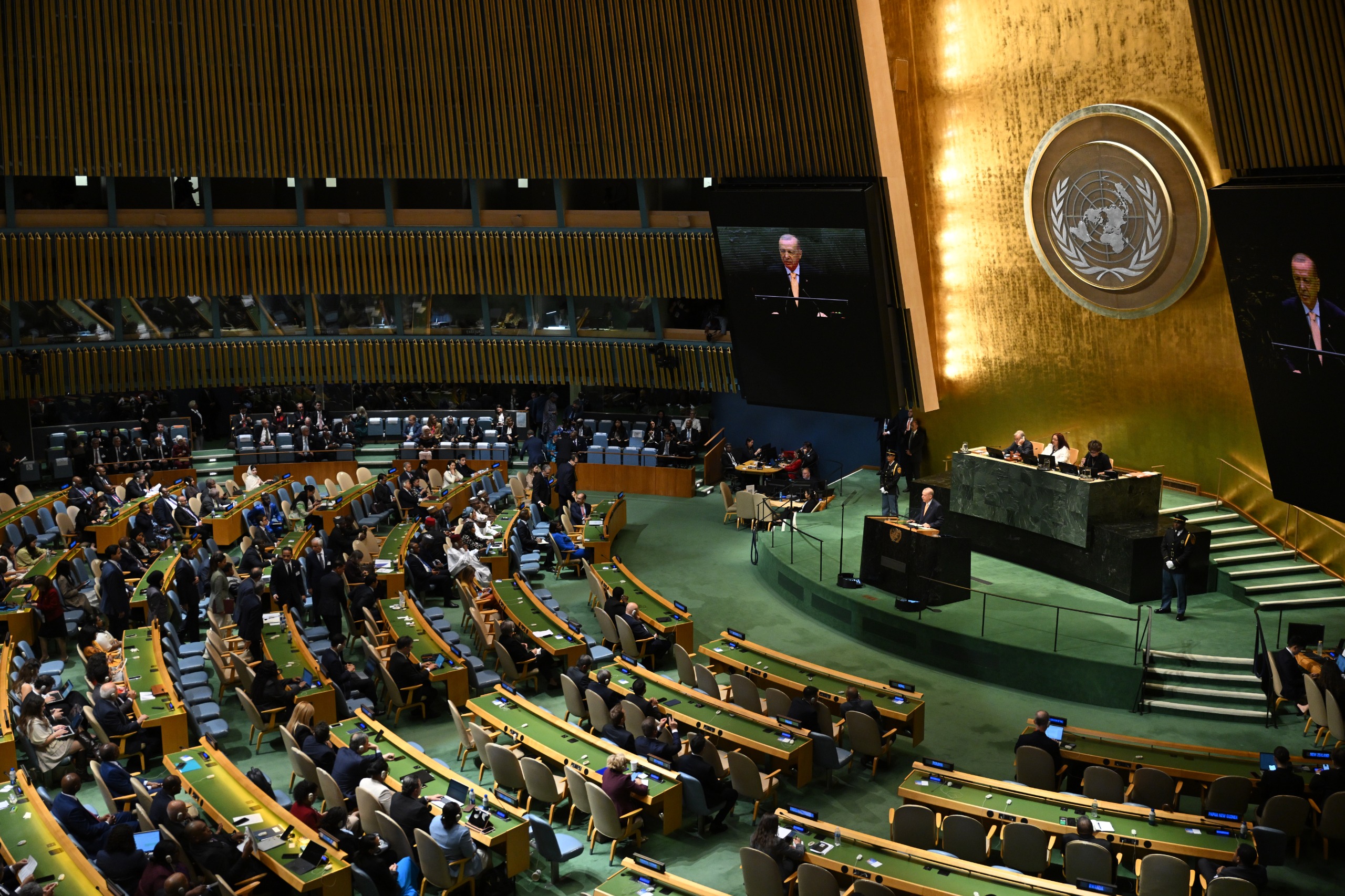
Addressing the 81st session of the United Nations General Assembly, President Erdoğan said: “We are compelled to change the current understanding where international law is applied differently to the strong and the weak. Let us not forget that an international system where wrongdoers get away with it and, worse still, where impunity has become the norm, is doomed to decay.”
President Recep Tayyip Erdoğan addressed the 81st session of the United Nations General Assembly in New York.
President Erdoğan said: “Let’s recognize that a system in which the will of more than 190 countries is subject to the whims of five countries is neither fair nor capable of fully establishing trust. The Security Council must absolutely be reformed in accordance with the principle that ‘the world is bigger than five.’
While we must keep pace with rapidly advancing technology, we also bear the arduous yet noble responsibility of building a fairer order. At this point, I want to share with you here some basic principles: First and foremost, we are compelled to change the current understanding where international law is applied differently to the strong and the weak. Let us not forget that an international system where wrongdoers get away with it and, worse still, where impunity has become the norm, is doomed to decay.
Second; at every stage where the international will is obstructed in resolving crises, we must use regional ownership to open a new path. As Türkiye, in every instance, such as the Black Sea Grain Corridor, where we have acted upon this principle, we have achieved result; we contributed both regional and global security. Third; we must absolutely reestablish an approach that places cooperation and open diplomacy at the center of relations among states. History has shown us, through bitter experiences, that there is no winner in a political approach built upon mistrust. Fourth; we must jointly build a new paradigm that offers solutions to the increasingly deepening income inequalities around the world. We believe that the path to this lies in joint development, solidarity and connectivity. Societies connected to one another through roads, trade, energy networks and joint production will eventually be united in peace and stability as well. Finally, by reasserting a human-centered understanding of technology, we must prevent new barriers to be erected between those who possess technology and those who do not. It must be understood that techno-polarization and digital hegemony serve neither the interests of the United Nations-centered system nor those of the states that constitute its core.”