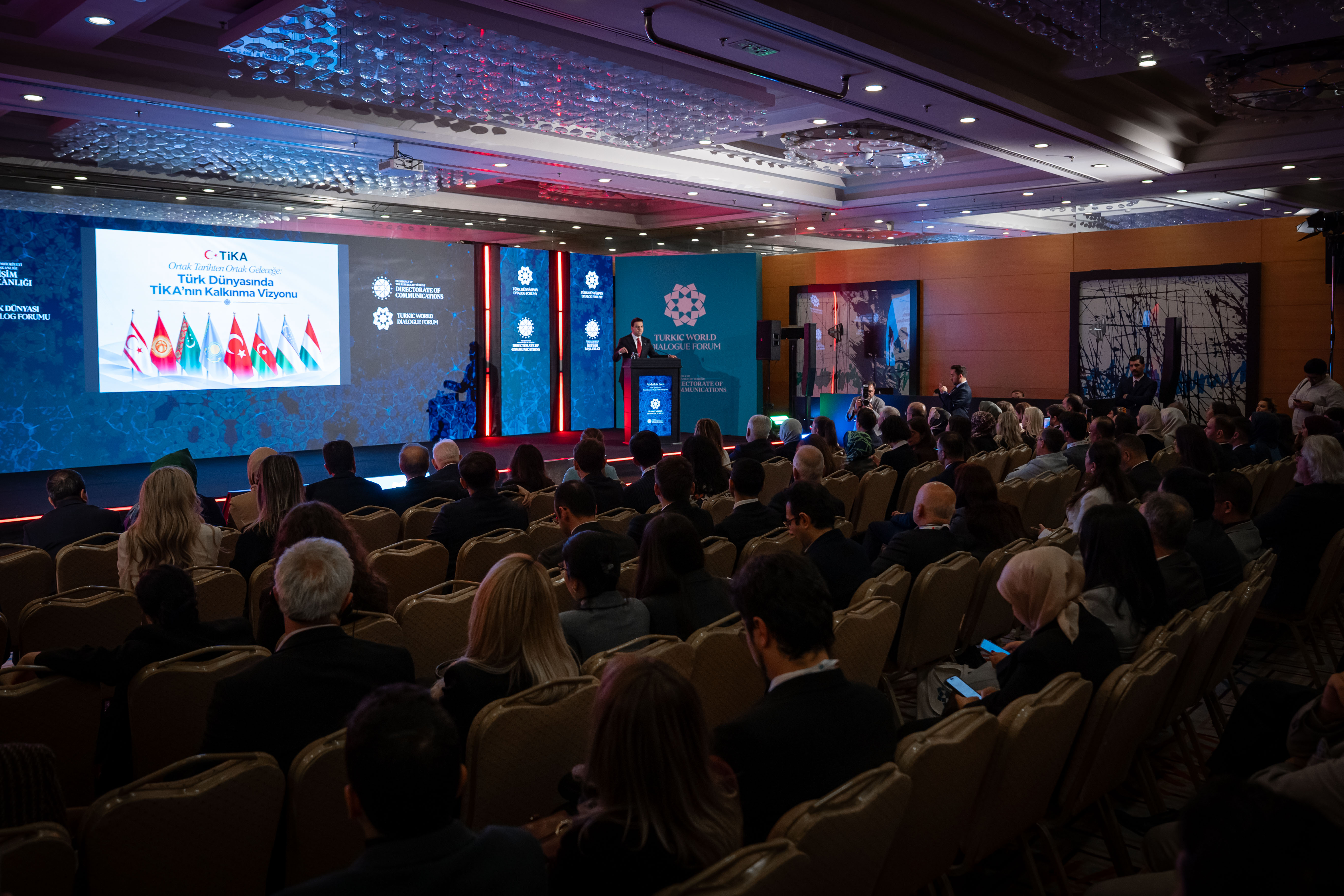
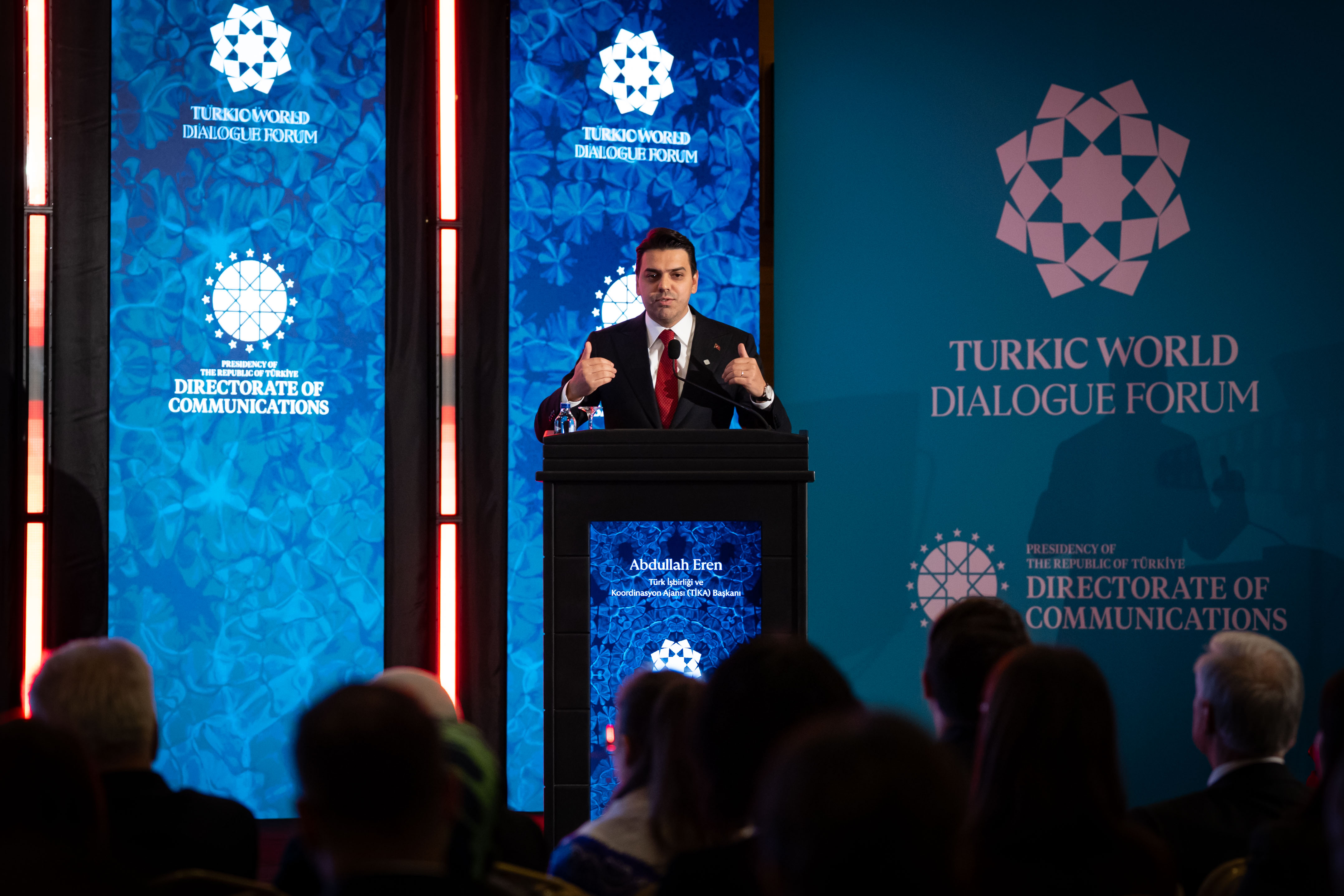
The President of the Turkish Cooperation and Coordination Agency (TİKA), Abdullah Eren, delivered a presentation entitled “From a Common History to a Common Future: TİKA’s Development Vision in the Turkic World” at the “Turkic World Dialogue Forum”, organised by the Directorate of Communications.
Speaking at the Turkic World Dialogue Forum, Eren said that, since gaining independence, the Turkic states have made significant progress in strengthening political stability, enhancing economic resilience, and developing institutional structures. Presenting data on the economic development of the countries of the Turkic world, Eren noted that per capita national income in Azerbaijan and Kazakhstan had increased significantly since 1993.
Highlighting the significant increase in per capita national income in Kyrgyzstan and Uzbekistan over the same period, Eren noted that these developments reflected the progress the countries had made in their respective development trajectories. Eren recalled that TİKA was founded in 1992 to strengthen relations with the countries of the Turkic world, noting that its early efforts centred on meeting fundamental infrastructure and development needs before gradually broadening its scope. Noting that TİKA, which opened its first offices in countries across the Turkistan region, now operates through 57 offices in 53 countries, Eren said the Agency carried out projects not only across the Turkic world but also in Africa, the Asia-Pacific region and Latin America.
Development cooperation with the Turkic states
Eren noted that the Turkic states now had their own development agencies and well-established institutional capacities, emphasising that, for this reason, TİKA used the term “development cooperation” rather than “development assistance” in its relations with these countries. Noting that TİKA’s operations were not limited to physical projects such as schools, hospitals and infrastructure, he emphasised that strengthening the institutional capacities of public bodies, sharing technical expertise and transferring Türkiye’s institutional experience were also important components of the development process. Eren stated that, in the Turkic world, TİKA had implemented more than 100 projects aimed at developing administrative and civil society capacities, approximately 1,300 projects in education, over 1,000 in the preservation and restoration of cultural heritage, 700 in healthcare, and around 400 in agriculture and livestock farming, adding that the Agency had also undertaken more than 3,000 humanitarian assistance projects. Pointing out that TİKA based its project development efforts on the needs and development strategies of the countries, Eren said that its priorities included supporting the development of Turkish-language education at universities in Kazakhstan and promoting young people's access to employment through vocational training in Kyrgyzstan.
"What matters most is our societal resilience"
Eren emphasised that cooperation among the countries of the Turkic world could not be assessed solely in terms of economic indicators, adding, “But what matters most here is our societal resilience. Societal resilience in the Turkic world is built on our shared history, our shared memory and our shared experiences. The most recent of these is, in fact, Karabakh and its liberation, which has united us all together."
Highlighting the importance of sharing Türkiye’s development experience with other parts of the world, Eren noted that the economic potential, young populations and strategic energy corridors of the countries of the Turkic world could be harnessed more effectively through joint initiatives. Eren stated that strengthening institutional cooperation among the countries and expanding joint projects would contribute to the Turkic world’s future development goals. Noting that TİKA undertook projects aimed at both developing existing administrative infrastructure and transferring Türkiye’s experience, Eren briefed participants on the content of projects implemented across different countries and sectors, as well as the relevant data.
"The capacities of countries where TİKA projects are implemented have also grown"
Citing examples of projects implemented across the Turkic world, Eren emphasised the importance of the institutional capacity of the countries concerned, explaining that responsibility for managing the projects is ultimately transferred to the respective country once project implementation and the relevant administrative procedures have been completed. Eren explained that TİKA’s counterparts in the Turkic world had developed their institutional capacities and were now implementing more professional projects, adding that they had begun to take greater ownership of the projects undertaken. Providing an overview of TİKA’s restoration projects in several countries across the Turkic world, Eren emphasised that the Agency was there to assist the Turkic states whenever they faced difficulties due to natural disasters or other crises. Underscoring Türkiye’s distinctive position within the Islamic and Turkic world, Eren said Türkiye needed a strong human resource base and an in-depth understanding of all regions.