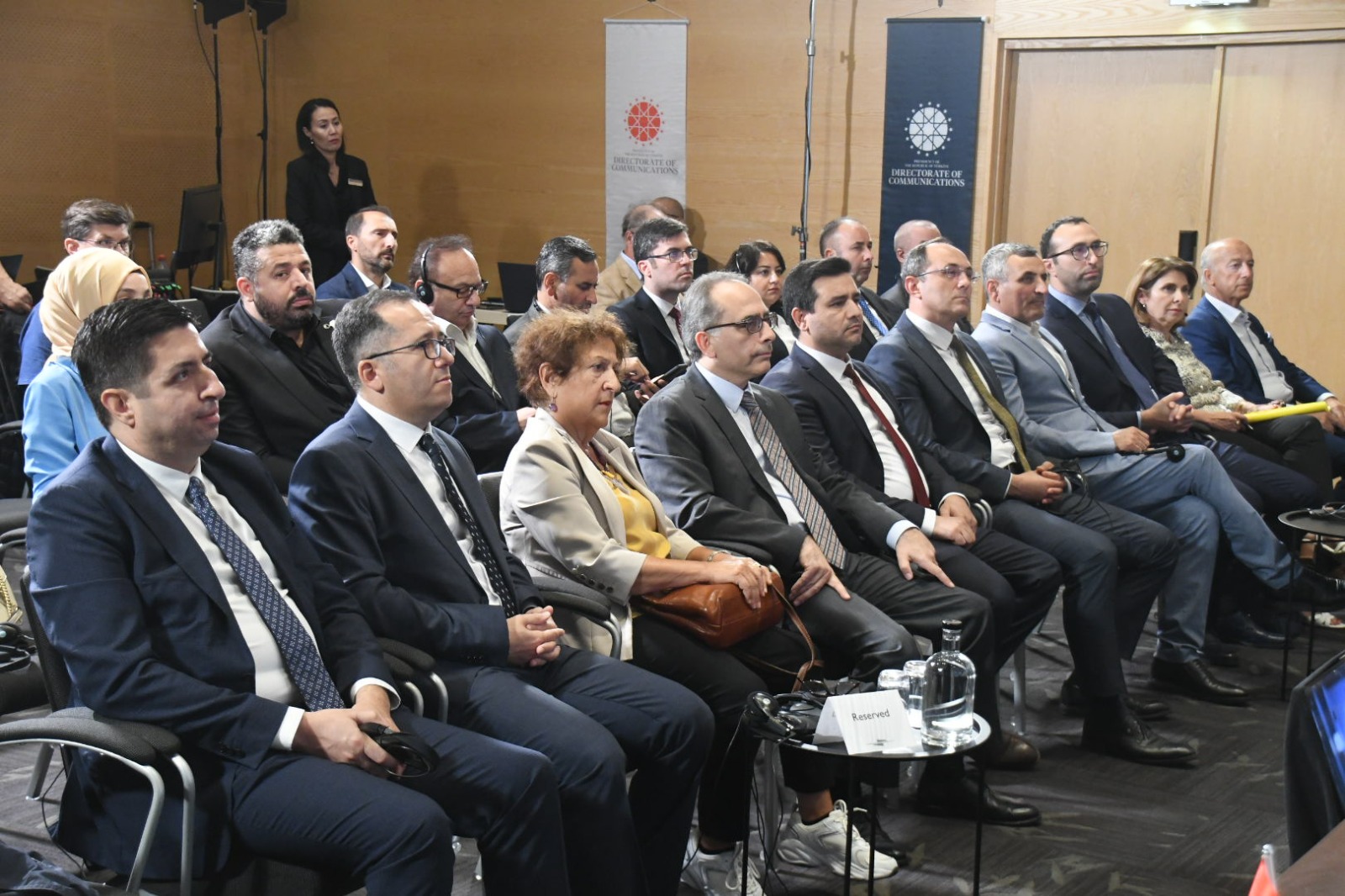
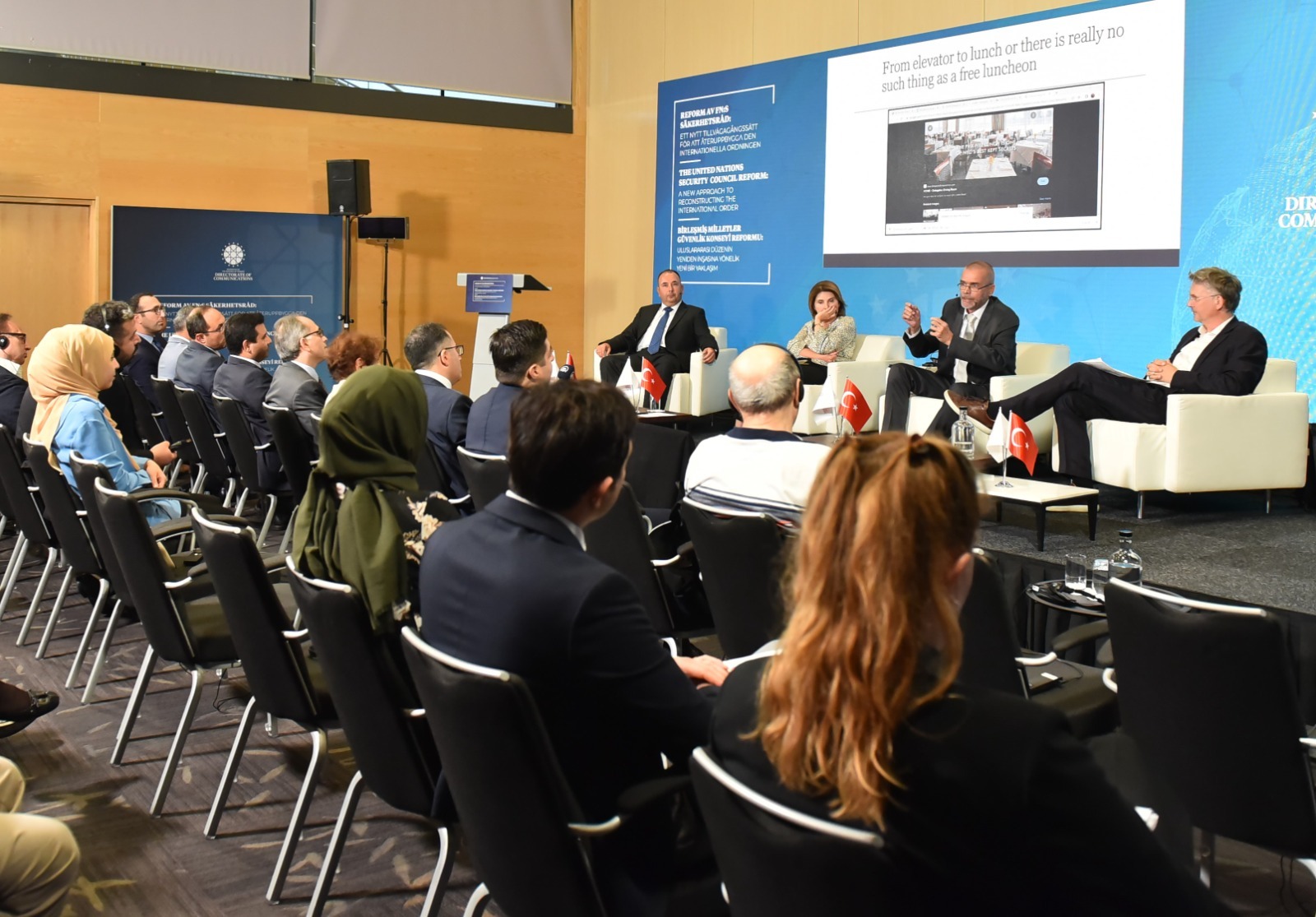
The Presidency's Directorate of Communications held the panel titled "United Nations (UN) Security Council Reform: A New Approach to Reconstructing the International Order" in Stockholm, the capital of Sweden.
Faculty Member Prof. Özden Zeynep Oktav from Istanbul Medeniyet University, Department of International Relations, Political Science Expert Prof. Hans Agne from Stockholm University, and Journalist-Analyst Klaus Jurgens participated in the panel, which was moderated by Prof. Giray Sadık, Director of the European Studies Research Centre.
The panel featured numerous guests, including Yönet Can Tezel, the ambassador of Türkiye to Stockholm.
"We should not avoid the public criticism of the UN's reform"
In his address, Political Science Expert Prof. Hans Agne from Stockholm University concluded that a system where the UN is made more democratic globally and the organisation treats all people equally will result in better functioning.
Agne argued that public criticism of the UN should not be avoided during discussions about its reform and that such criticism is necessary for international organisations.
Agne added:
"I believe it is generally a good idea to increase the UN Security Council's accountability to the General Assembly. It's a good idea for several reasons, including the fact that it provides a means of including or representing more people from around the world in policy-making process."
"The motto 'The world is bigger than five' is a defence against the permanent membership mechanism"
In her speech, Faculty Member of Istanbul Medeniyet University International Relations Department Prof Oktav also discussed the reasons for Türkiye's demand for reform in the UN system and underlined that Türkiye, under the leadership of President Recep Tayyip Erdoğan, adopted the motto "The world is bigger than five".
Oktav noted, "This motto contains a number of implications. It is a defence against the permanent membership mechanism. It is a call to reform the UN Security Council to make it more representative, accountable and transparent."
Oktav also mentioned the famous "Stigma Theory" of political scientist Rebecca Adler-Nissen in her speech and went on to say:
"According to Adler-Nissen, stigmatised countries such as Türkiye contribute significantly to the Western-centred system since Ankara reveals the flaws of the current UN-based system and NATO. In other words, Türkiye makes a substantial contribution to the continuation of the current system; otherwise, the system will collapse."
"Not only the UN, but also the EU should sit down and assess"
One of the panellists, journalist-analyst Klaus Jurgens, also criticised the "elitism and arrogance" he saw in these institutions during his time in office at the UN and the EU.
"Not only should the UN structure be reformed, but perhaps the EU should also sit down and review how we will become a multicultural, multi-faith, inclusive organisation," Jurgens added.
Jurgens stated that he had many contacts in Türkiye's diplomatic missions throughout his time in New York and Brussels, adding, "I have never seen anything like this before. I have seen diligent people that defend their country yet are always eager to listen to someone else. This is an entirely new approach to diplomacy."
The veto system will be debated and diplomacy will intervene at this point, Jurgens said in reference to Türkiye's proposal to reform the UN's organisational structure.
In his closing remarks, panel moderator Prof. Sadık remarked that the panellists voiced their shared views on reconsidering the structure of the UN Security Council for any comprehensive UN reform, as well as the veto power to be more inclusive and fair to satisfy global demands.