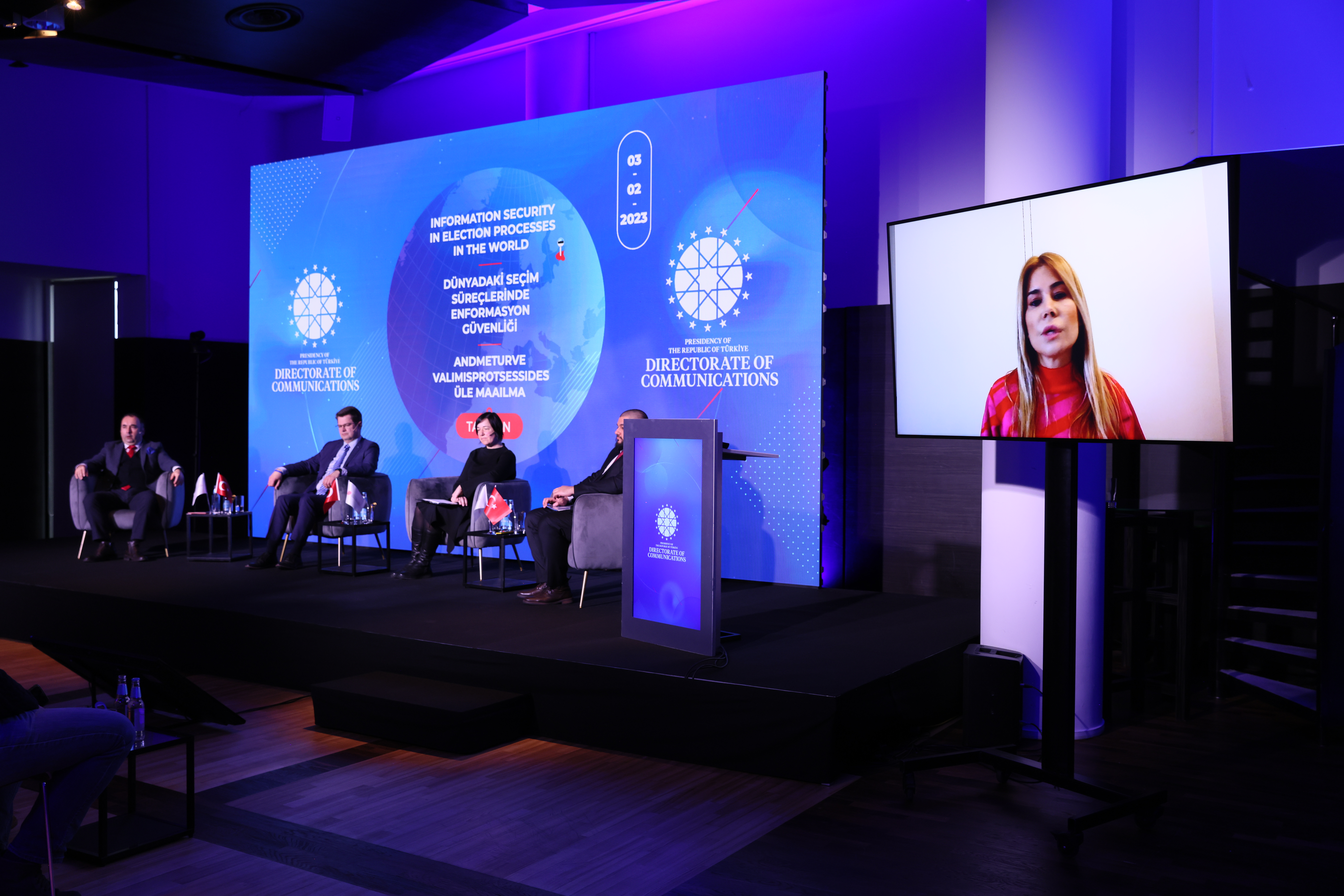
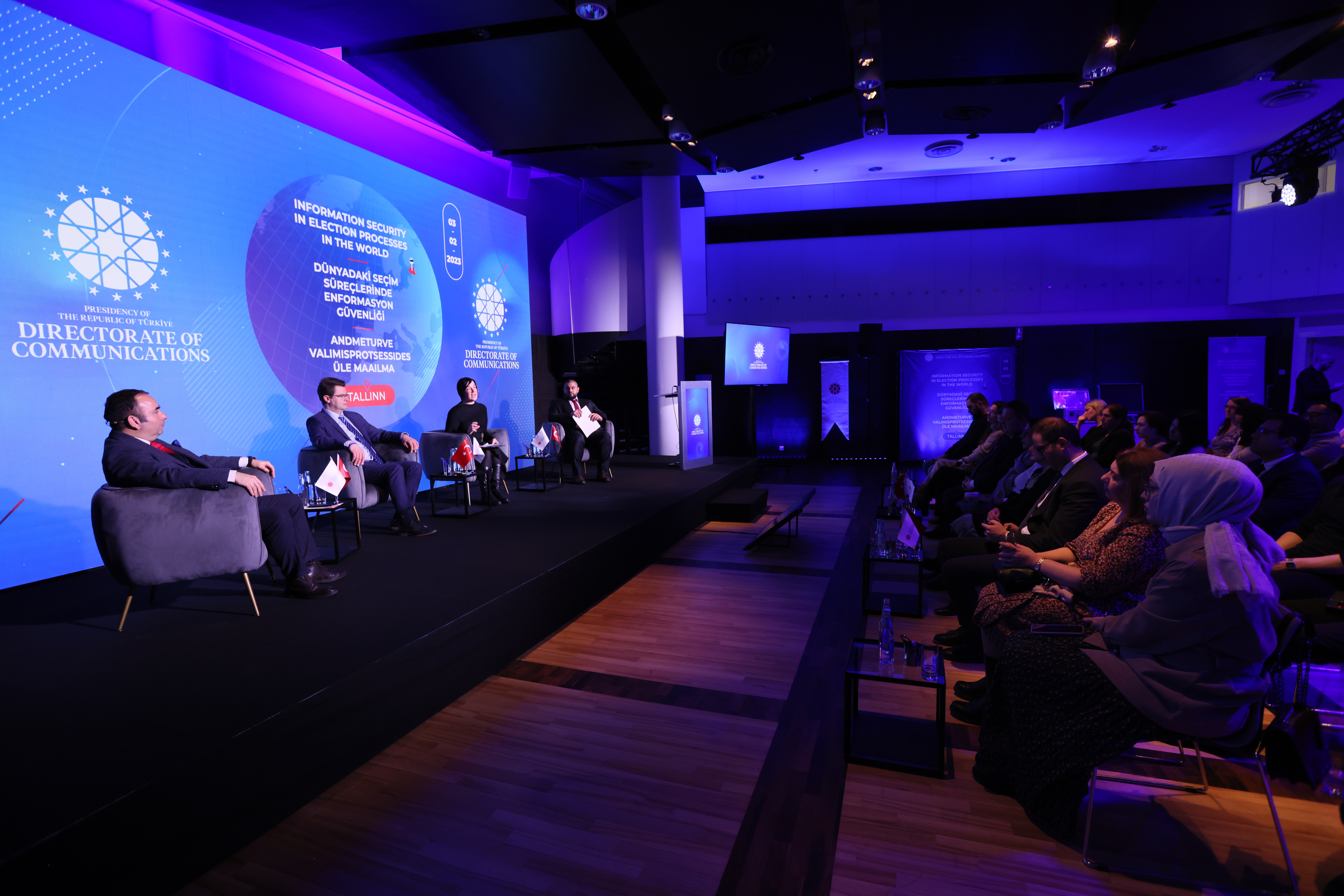
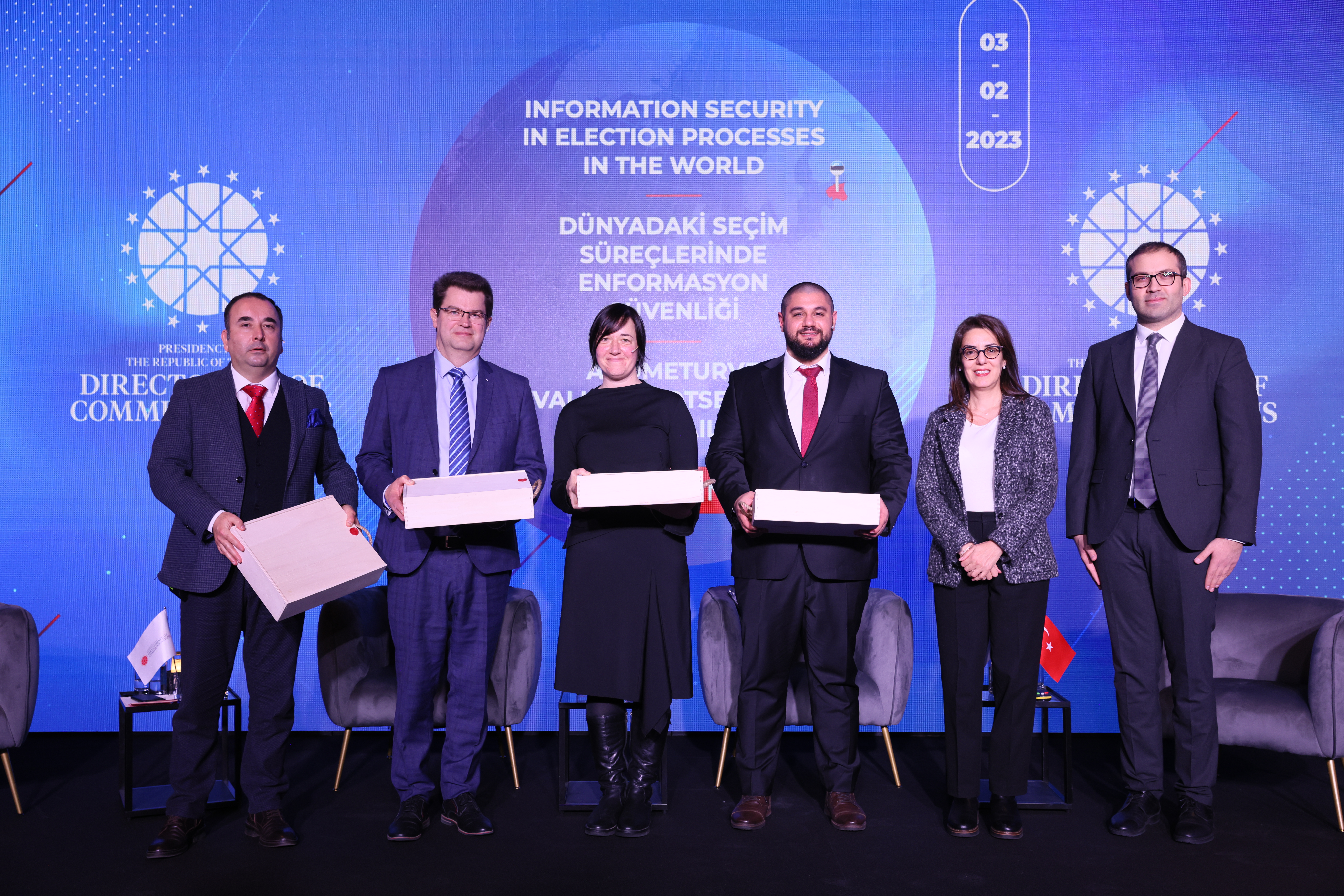
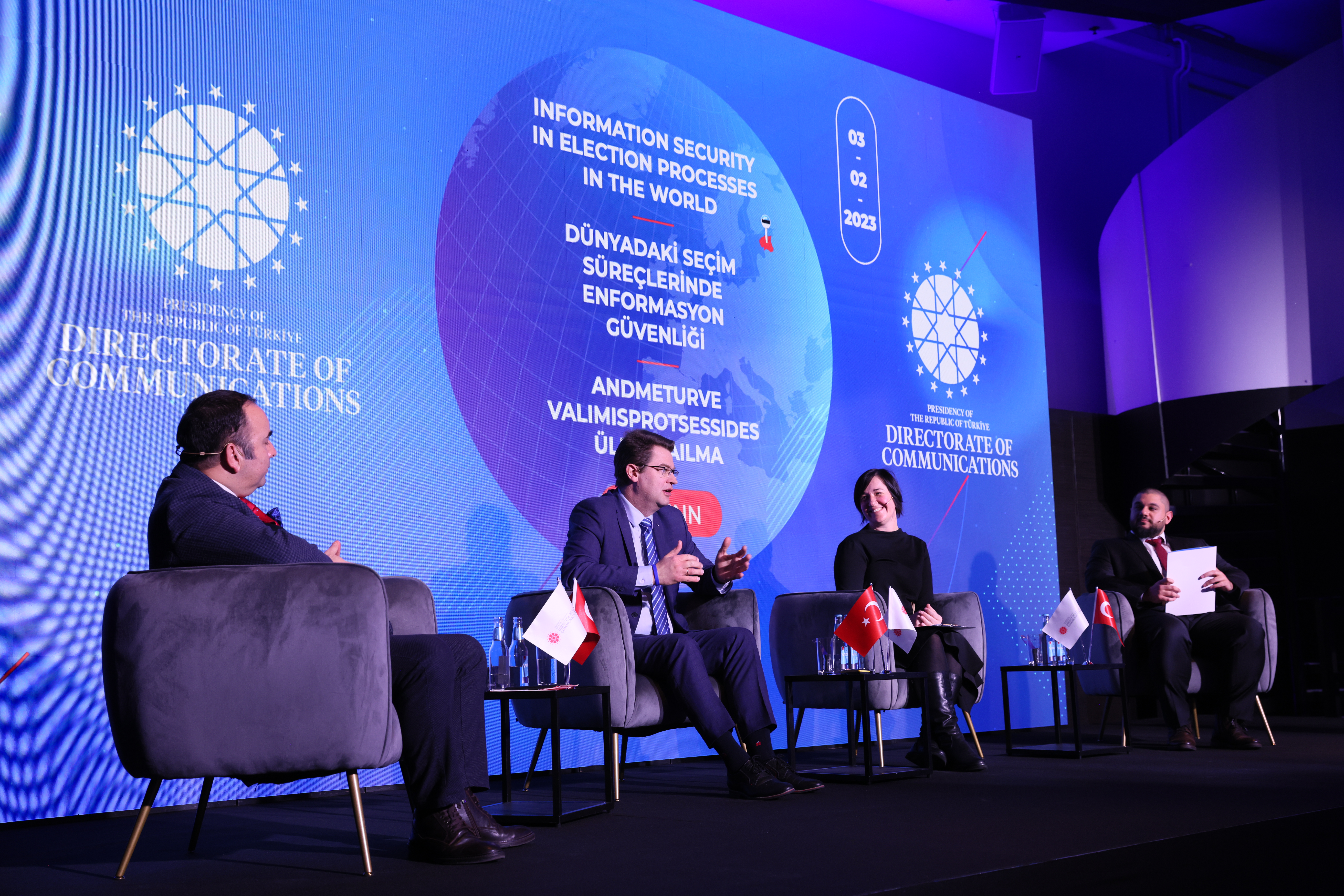
The Presidency's Directorate of Communications held the second panel in a series on "Information Security in Election Processes in the World" in Tallinn, the capital of the Republic of Estonia. The panel series intends to enable expert panellists to discuss issues such as bringing up the fact that black propaganda, which harms democracy by occupying the agenda, is a problem not only in Türkiye but globally, as well as how to ensure the security of the process for fair and free elections, how to prevent information pollution, and the significance of the role played by the free press in this process.
The panel hosting experts in their respective fields was attended by the Ambassador of the Republic of Türkiye to Tallinn Başak Türkoğlu and many distinguished guests, including bureaucrats, academics, members of the press, representatives of think tanks and non-governmental organisations, as well as many people from international organisations, and universities.
Director of Communications Fahrettin Altun delivered the panel's opening remarks via video message, calling attention to the establishment of the necessary conditions for the elections, which are the prerequisites for democracy, to produce fair, free, and pluralistic outcomes and the dangers of disinformation, a huge threat to global security and stability, which the public experiences, sometimes consciously and sometimes due to incomplete information flow, particularly during election periods. In his message, Director of Communications Altun stressed the importance of combating disinformation for the functionality of democratic institutions, citing the arguments that several western countries have had during their election processes over the past few years.
Prof Giray Sadık, a faculty member at Ankara Yıldırım Beyazıt University, moderated the panel, which began after Director of Communications Altun's remarks. Marko Šorin, a member of the Estonian Centre Party (Riigikogu), the Estonian Parliament and the Estonia-Türkiye parliamentary group, Assoc Prof Ece Baban, a faculty member at Fenerbahce University, Külli Kapper, the Foreign News Editor for Postimees and İzzet Yalın Yüksel, a junior research fellow at Tartu University, discussed election security, the fight against disinformation, and the role of the press in free and fair elections.
Giray Sadık, the panel's moderator, stressed that information security is one of the most pressing issues of our time and noted that it would play a crucial role in the upcoming elections in several countries, including the Netherlands, Spain, and Pakistan. He then gave the floor to the panellists after emphasising that the diversity of the speakers on this panel would bring a new perspective to the discussion.
Marko Šorin, the first panellist to speak, addressed the topic from an Estonian perspective and argued that Estonians acquired abilities such as reading between the lines, exploring the sources of news, and clearly recognising disinformation via their past experiences. On the other hand, Šorin emphasised that due to the fact that Estonia is a small country with a difficult language to learn, it has a natural barrier against disinformation attempts that may originate from external sources.
Panelist Külli Kapper addressed the issue of election laws and emphasised that it is essential that people's political rights are guaranteed by law so that everyone can vote. Subsequently, she stated that the open and transparent election system and the ability of international observers to monitor the election process without hindrance are election security guarantees. Lastly, Kapper discussed the issue of transparent consideration and follow-up of the elections by different audiences, stating that conducting the elections openly and transparently, and evaluating concerns about the elections in a way that the media and non-governmental organisations can monitor, can prevent disinformation during election processes.
The next speaker on the panel, İzzet Yalın Yüksel, addressed the issue from an academic perspective and started his speech by emphasising that disinformation not only tries to harm accurate information but also to manipulate the information itself. Yüksel added that terrorist organisations utilise disinformation practices such as deception, concealing information, and misinforming the public to interfere with the system and that social media is a significant channel for this. On the other hand, he said that disinformation efforts could be prevented through measures such as counterpropaganda, making the dissemination of disinformation costly through legal means, and especially promoting media literacy. Furthermore, he said that Estonia has enhanced its media literacy and provided an alternative perspective by arguing that media literacy is one of the reasons why Estonia is less susceptible to disinformation.
Ece Baban, the final speaker of the panel, discussed the distinctions between concepts such as disinformation, manipulation, information pollution, and misinformation and stated that the actors who are using them primarily target a large number of target audiences and that, with the advancement of technology, disinformation activities have intensified more than ever in recent years. She added that these efforts were actually utilised to influence the masses in a new psychological war and that the first step of the disinformation process is concealing the source of the message, which ultimately leads to the people thinking the disinformation to be accurate. Baban stated that these actions also exacerbate polarisation and ideological fragmentation and emphasised the significance of enhancing media literacy to prevent them.