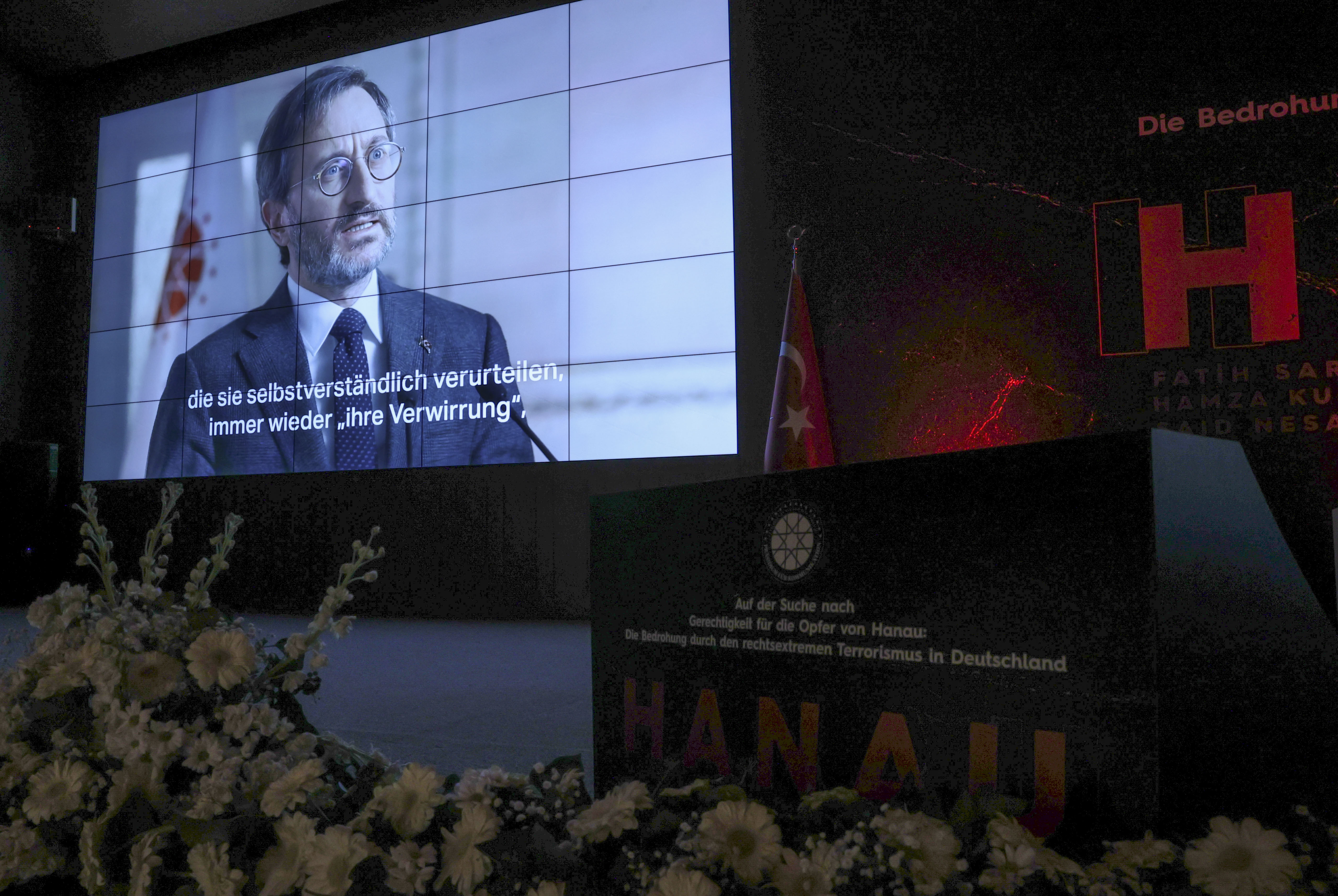
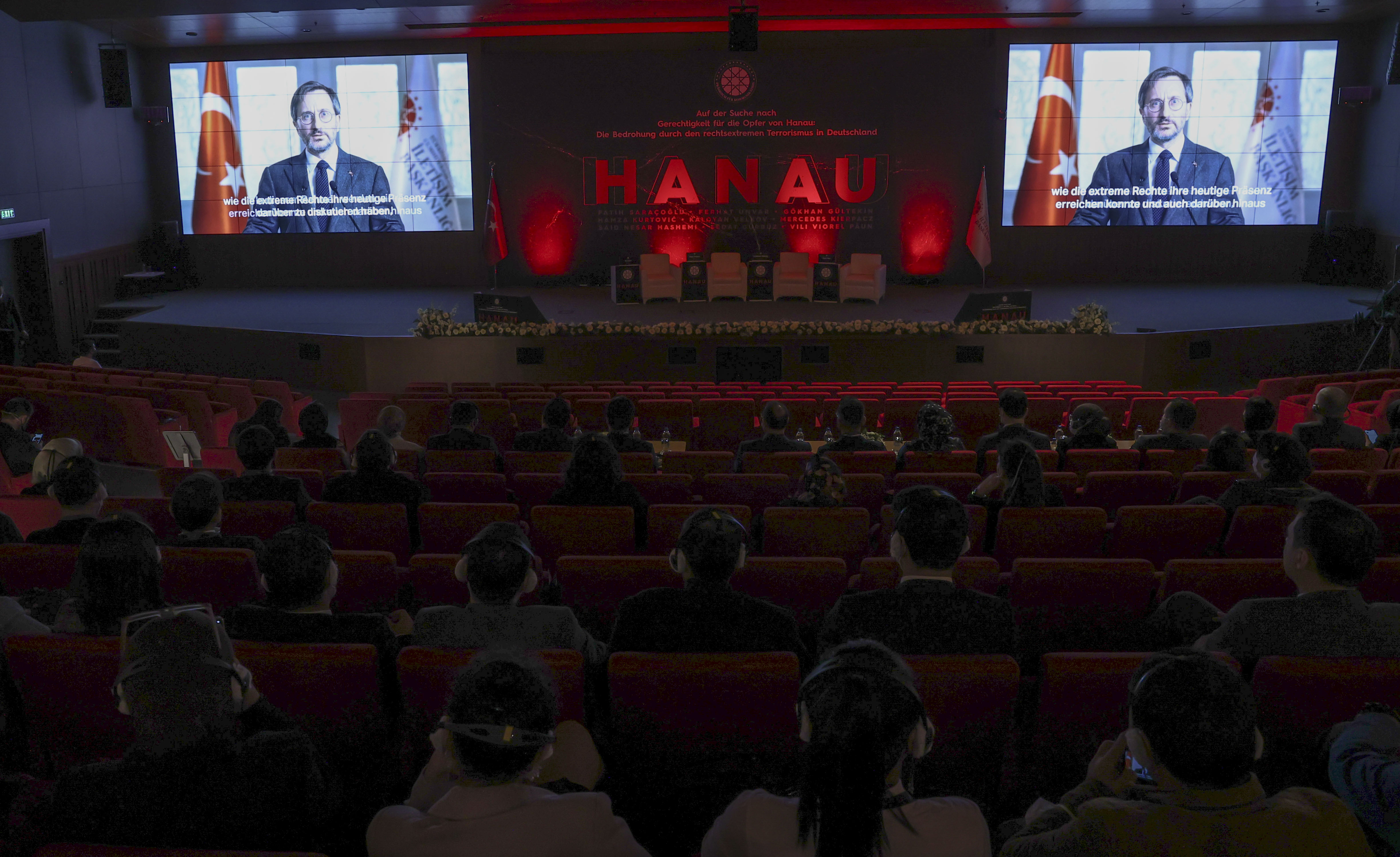
During a panel held in the Directorate of Communications Conference Hall on the occasion of the second anniversary of the Hanau attack, brief accounts of individuals who lost their lives in the attack were shared, and a film of interviews with their families was shown.
Presidency's Director of Communications Fahrettin Altun sent a video message to the panel, which featured journalist Klaus Jürgens as one of the speakers, addressing the audience with his assessment on the rise of the far-right in Germany.
Jürgens stated that during Germany's split into east and west, both sides made derogatory statements about one another and that it was erroneous to attribute extremist tendencies solely to this division.
Jürgens noted that they encountered the far-right discourse not only on the street but also occasionally in academic settings and that the benefits of multiculturalism should be communicated to future generations in order to prevent xenophobia.
Racism is a poison
Academician Muhterem Dilbirliği also emphasised the toxic nature of racism, stating that former German Chancellor Angela Merkel acknowledged the presence of this poison in German society in her post-attack statement.
Stressing that racist attacks occurred in the 1990s as well, Dilbirliği said that while the federal government chose not to attend the victims' funerals at the time, there are variations in the governments' discourses today.
He added that investigations into such attacks revealed that security units were acting irregularly and that Germany's Constitutional Court prepared a report explaining these circumstances.
Citing the newspaper headlines indicating a growth in extreme right-wing tendencies inside the army, Dilbirliği stated that complaint units were established in many states and that racism in the police was requested to be investigated.
Lawyer Fatih Zingal argued that the police could have saved the victims if the right action had been taken in Hanau. Zingal talked about the decisions and practices of the police at the time of the incident.
Claiming that the families of the victims were not asked for permission to conduct autopsies and that the information obtained subsequently was not disclosed to the public even two years after the incident, Zingal opined that these incidents undermined the public's trust in justice.
Zingal noted that racist attacks persist in various forms and that incidents must be recognised as a social rather than an individual issue to eliminate discrimination and racism.
The media chooses its language based on the perpetrator's profile
TRT Deutsch Editor-in-Chief Kaan Elbir analysed the language and perspective adopted by the German media in such incidents.
Underlining that if the perpetrator of the incident had an immigrant background, German media automatically used terms such as "Islamic terrorism", Elbir pointed out that some media outlets regarded these as opportunities to blame the Qur'an and Islam.
Expressing that he feels as if he has been attacked when he sees such terms in use, Elbir emphasised the importance of the language used in the media in such incidents, recalling that when it was discovered that the perpetrator was a white racist, it was claimed that he was a member of the Russian mafia or mentally unstable, with no mention of xenophobia.