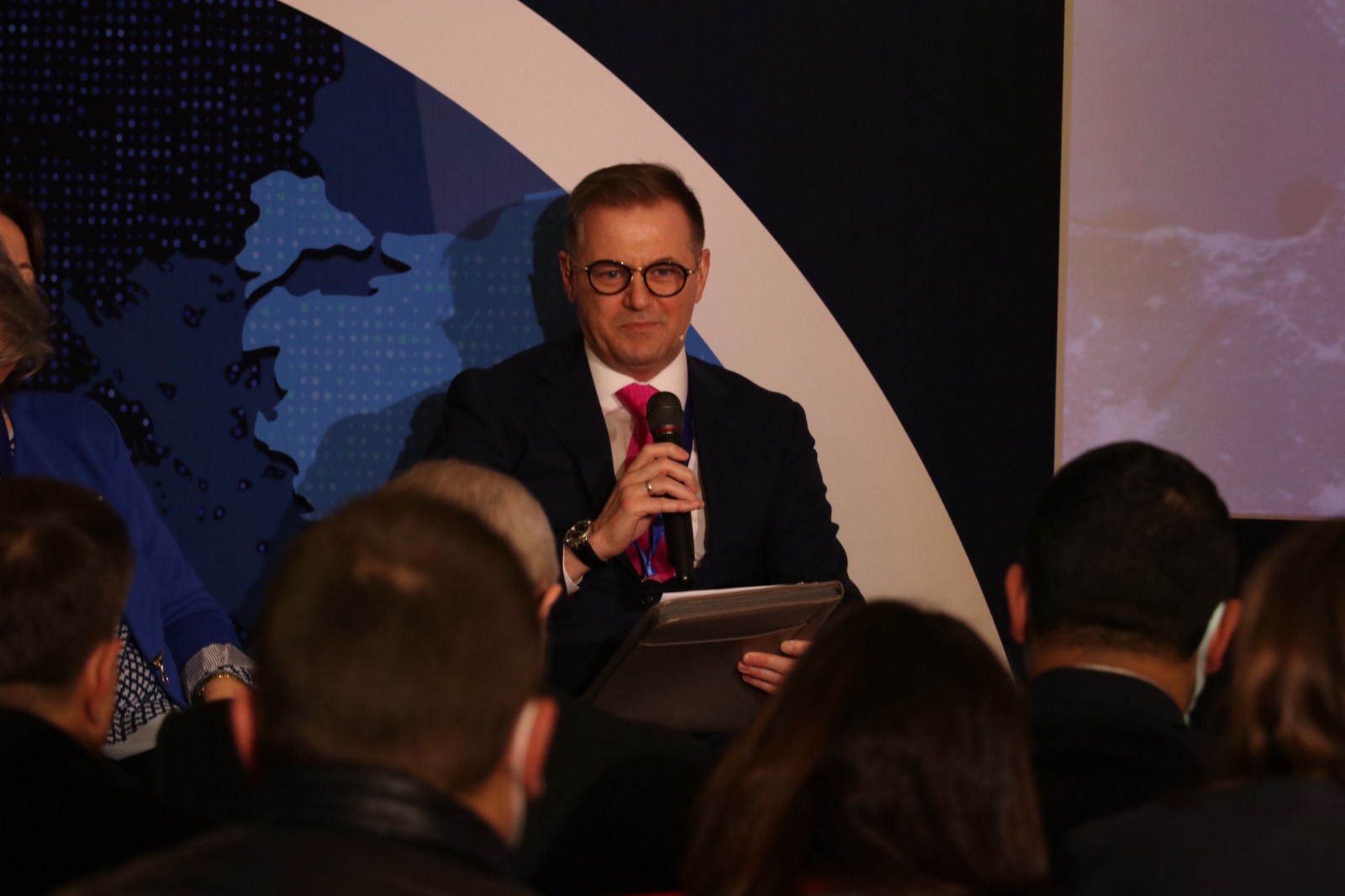
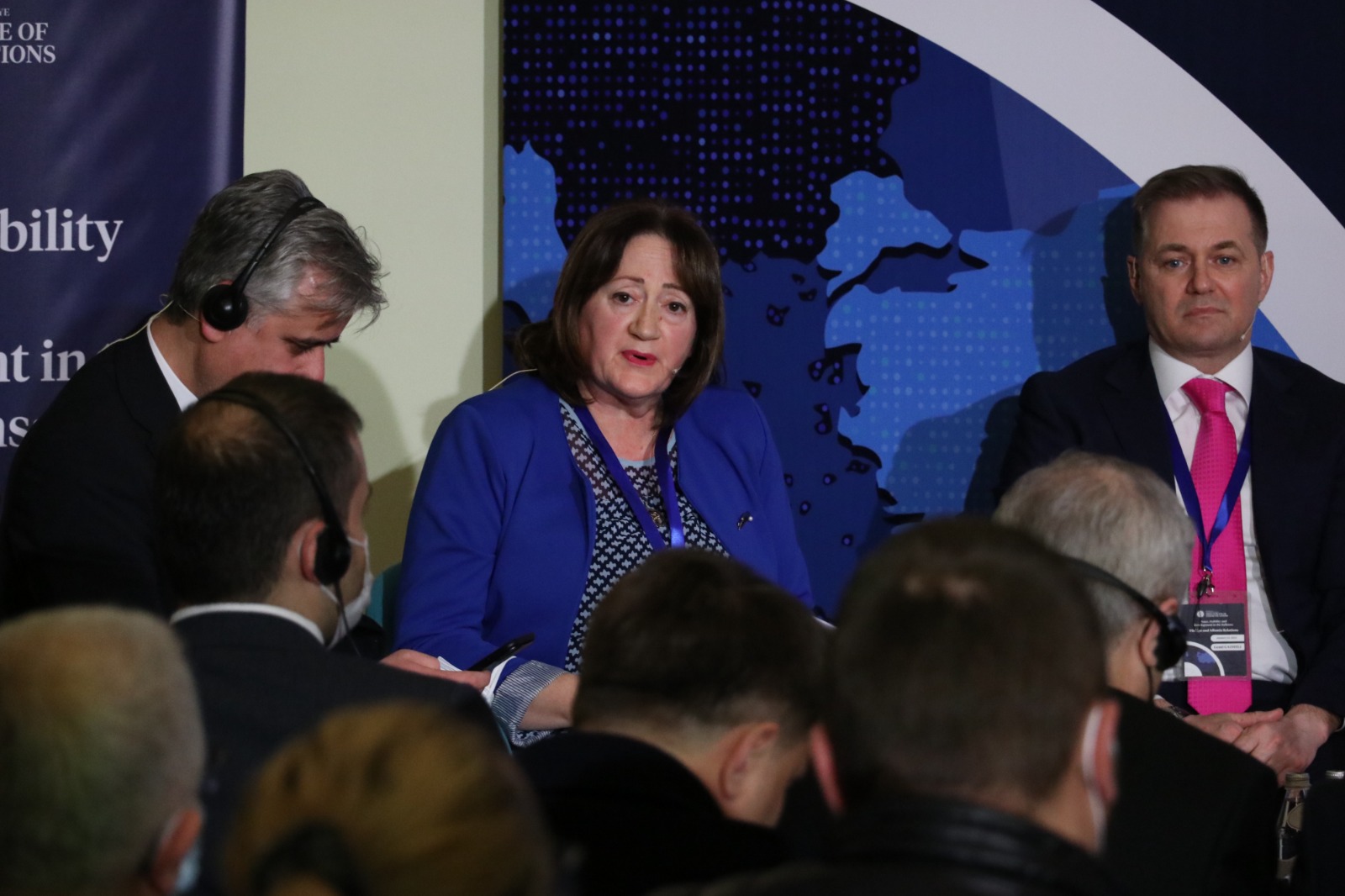
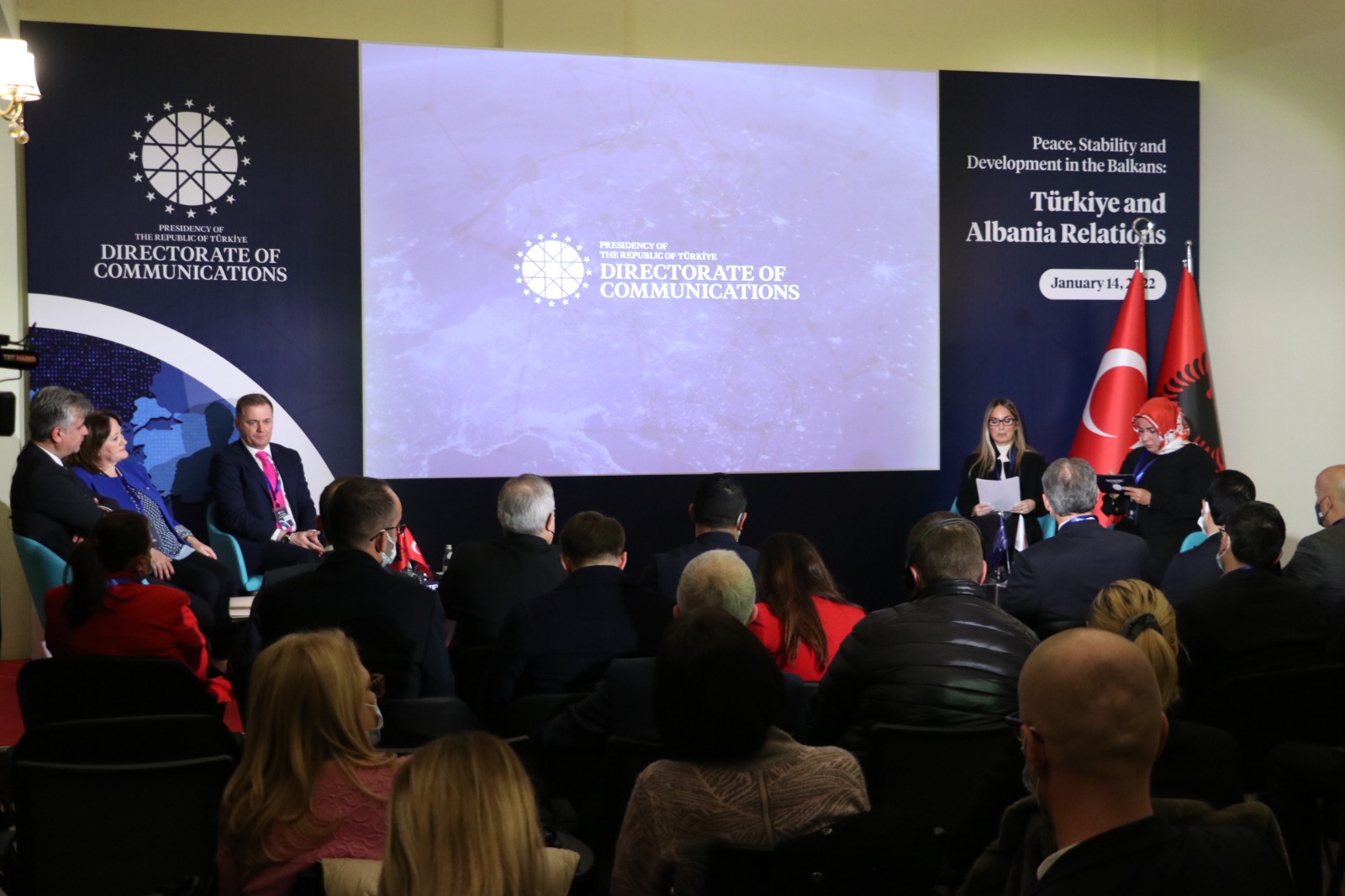
The Presidency’s Directorate of Communications held the “Panel on Relations between Türkiye and Albania: Peace, Stability and Development in the Balkans” in Tirana, Albania's capital.
The panel, held at the University of New York Tirana operating under the Turkish Maarif Foundation and moderated by the Member of TRT Board of Directors and journalist Meryem İlayda Atlas Çetin, was attended by the Ambassador of Türkiye to Tirana Murat Ahmet Yörük, Head of the Public Diplomacy Department of the Directorate of Communications Oğuz Güner, General Director of the Turkish Maarif Foundation in Albania Mesut Özbaysar, as well as researchers and journalists from Türkiye and Albania, and representatives from different institutions of both countries.
In his speech, General Director of the Albanian Customs Administration and former Ambassador of Albania to Ankara, Genti Gazheli, highlighted the Turkish companies operating in the country and underlined that the two nations' relationship was founded on a robust legal framework.
Gazheli said, "Türkiye is a strategic partner of Albania. There is a strong political will to further strengthen bilateral relations in a variety of areas of cooperation, especially commercial exchange and economic relations."
Director of European and Balkan Research Institute at the University of New York Tirana Prof. Lindita Latifi Xhanari said that the relations between the two countries in the fields of education and culture intensified in recent years.
Latifi said that the natural result of the contact between different nations throughout history had been the interaction of their cultures and languages, and she added, "The relations between Albania and Türkiye in the fields of history, language, literature, culture, ethnography and religion, which have existed and continue to exist for centuries, are undeniable."
Faculty Member at İstanbul Commerce University Prof. Hasan Basri Yalçın stated that the relations between Türkiye and Albania were unique and underlined that Türkiye was a very good friend of Albania.
Yalçın said, "We have seen several strategic partnerships and numerous agreements have been signed between our nations in the past. Our President's visit on Monday will open up new avenues for friendly relations. The more friends each country has, the better."
Haliç University Faculty Member Assoc. Prof. Aylin Ünver Noi, on the other hand, underlined that Albania and Türkiye have traditionally friendly relations and historical-religious considerations contributing to this long history of good relations.
Noi said, “Türkiye supports Albania's EU accession. Türkiye also strongly supported Albania's NATO membership. Mutual cooperation between Albania and Türkiye is being built by NATO as a factor of stability in the Balkan region. Türkiye has always provided military training to Albanian military personnel in a variety of fields, including security, logistics, armed forces modernisation, and Albanian army infrastructure. Albania and Türkiye also held joint military exercises.”
Moderator Çetin stated that the event was held in a timely manner in terms of President Erdoğan's visit to Albania on January 17th and said, “Our President will inaugurate the housing for earthquake victims. This inauguration is an indication of the level of sincerity and close cooperation between the two countries.”
Ambassador Yörük, who spoke at the end of the panel, said that President Recep Tayyip Erdoğan and Albanian Prime Minister Edi Rama had established an unprecedented chance for collaboration and partnership.
Stating that the relations between the two countries had formed and improved organically over hundreds of years, Yörük said, "Türkiye and Albania are natural allies. This has been shown via several incidents throughout centuries. Turks and Albanians are not simply political and humanitarian brothers and sisters; they are intertwined, like nails and flesh."
During the panel, the two countries' relations, developments in the Balkans, Türkiye's Balkan strategy, economic cooperation, and the two countries' contribution to stability in the Balkans were reviewed.