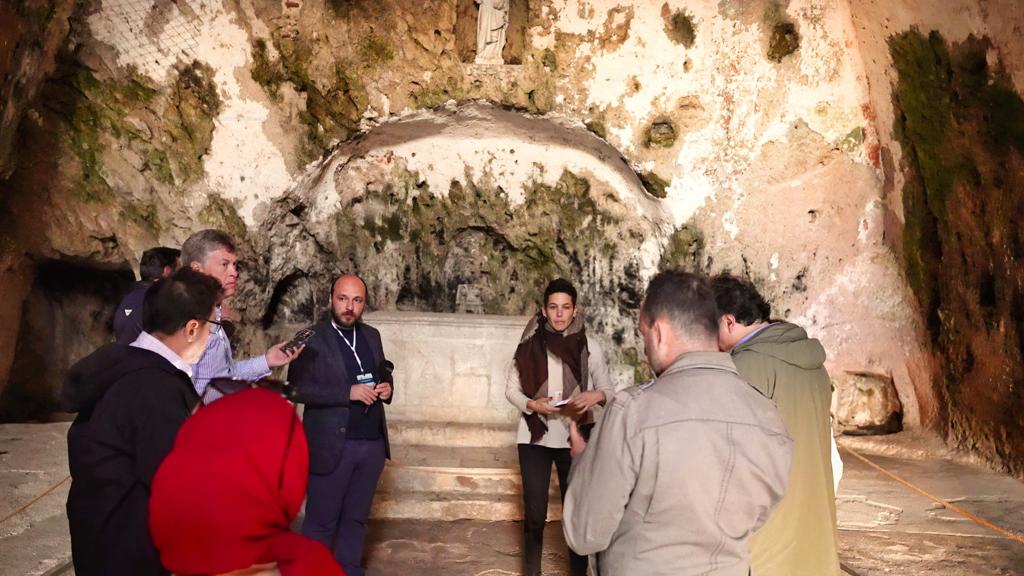
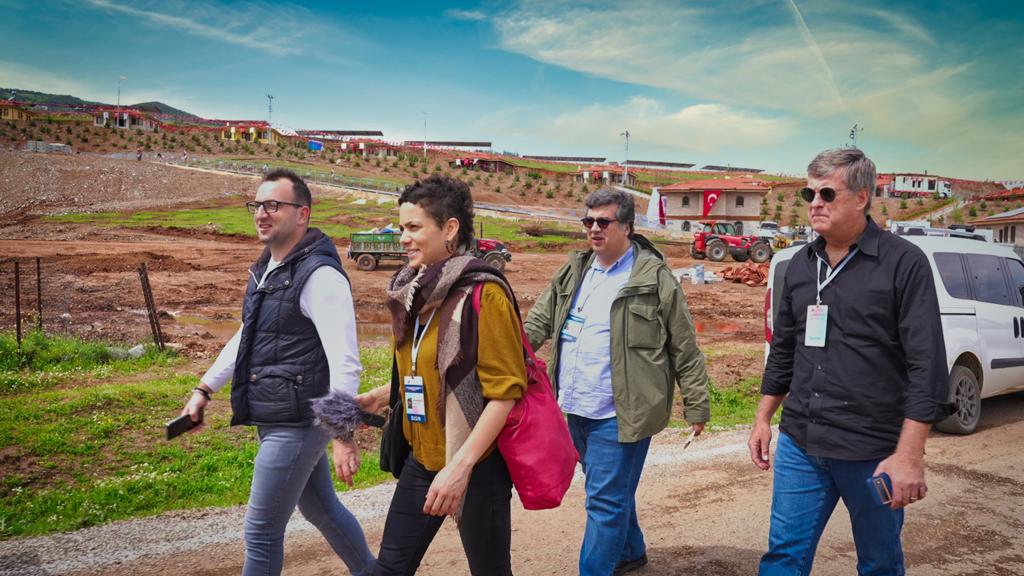
Under the coordination of the Presidency's Directorate of Communications, a press tour was organised for foreign journalists within the scope of the "After the Major Anatolia Earthquake Project".
Following the earthquakes in Kahramanmaraş on February 6, international media organisations were invited to Türkiye in order to examine the efforts in the quake-stricken region and provide accurate and reliable information to the world.
Journalists from Greece, Italy, Portugal, the Czech Republic, the United States, France, and Germany analysed the earthquake region as part of the After the Major Anatolia Earthquake Project, which aims to disseminate information about the search and rescue, humanitarian aid, and reconstruction efforts following the earthquake.
Foreign journalists attended the delivery ceremony of houses held in Gaziantep's Nurdağı region. Journalists visited the container city in Nurdağı and were briefed on how the need for temporary housing was met.
Later, the journalists went to Adana and Hatay, where they were briefed on Türkiye's post-earthquake logistics and humanitarian assistance, visited the region's military bases, and examined the military infrastructure and coordination.
Journalists who visited a relief platform in Hatay assessed the social support mechanisms and projects implemented by Türkiye during this challenging time.
In this way, the world press drew attention to these accomplishments in the international arena by highlighting Türkiye's effective and rapid response to the earthquake.
In the panel, foreign search and rescue professionals shared their experiences in earthquake zones
Foreign professionals who arrived in Türkiye for search and rescue operations following the Kahramanmaraş earthquake on February 6 shared their experiences in the earthquake zone with the attendees of the "Stratcom Panel-6: Heroes Without Borders" panel held in the Directorate of Communications Conference Hall.
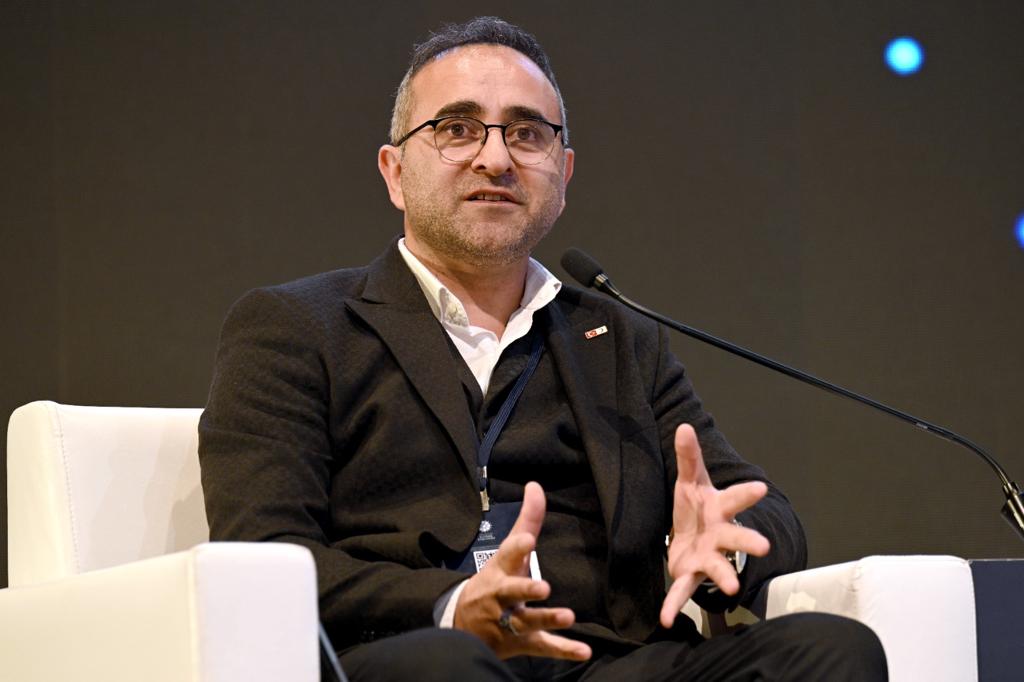
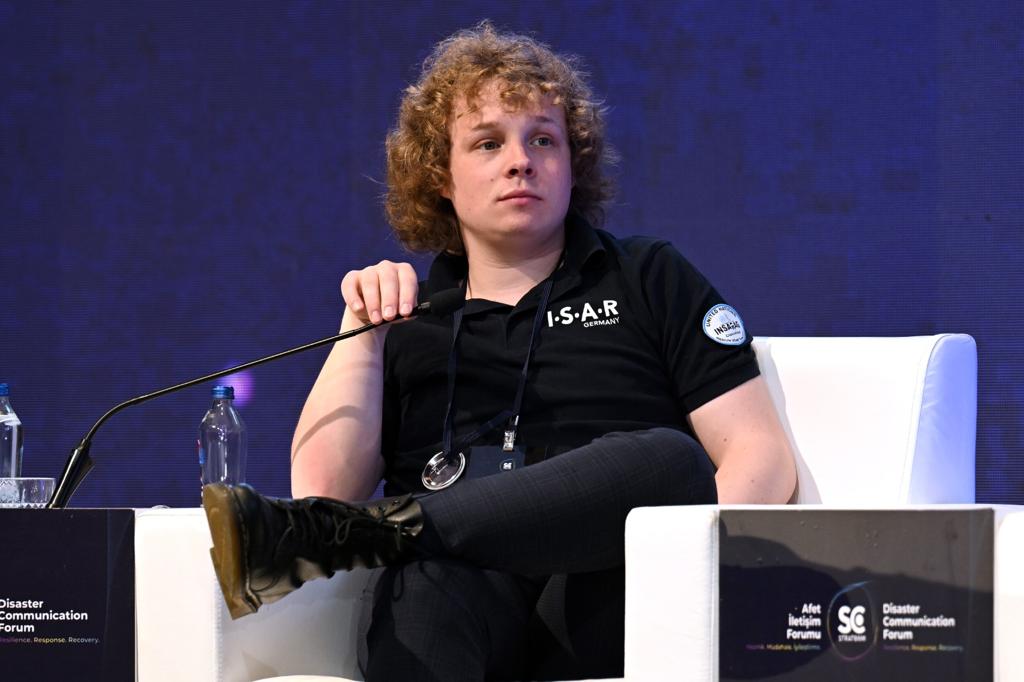
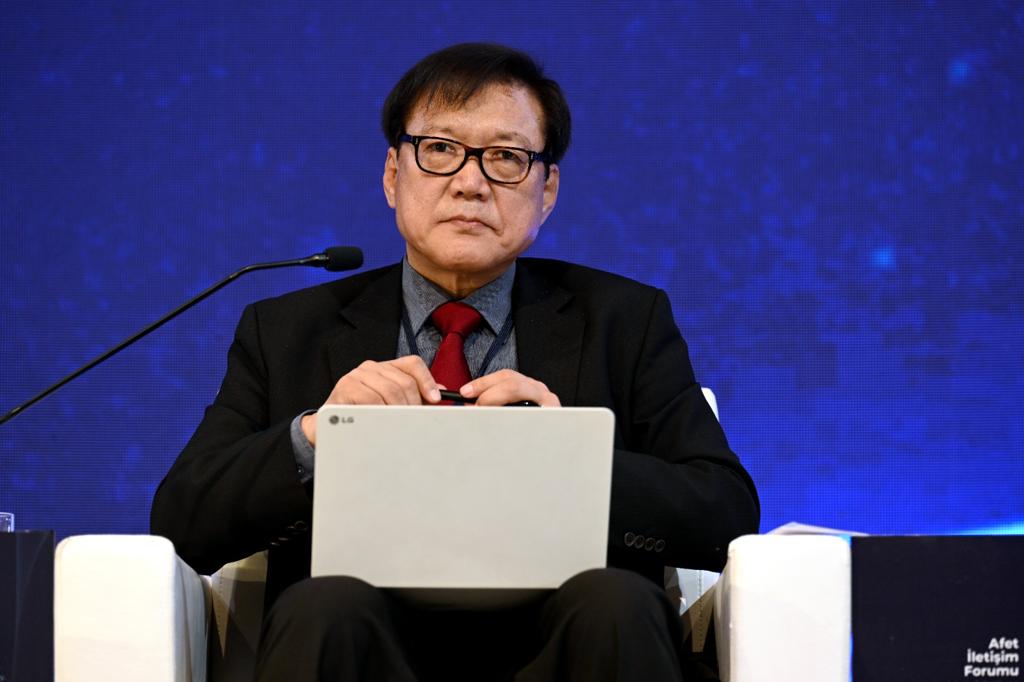
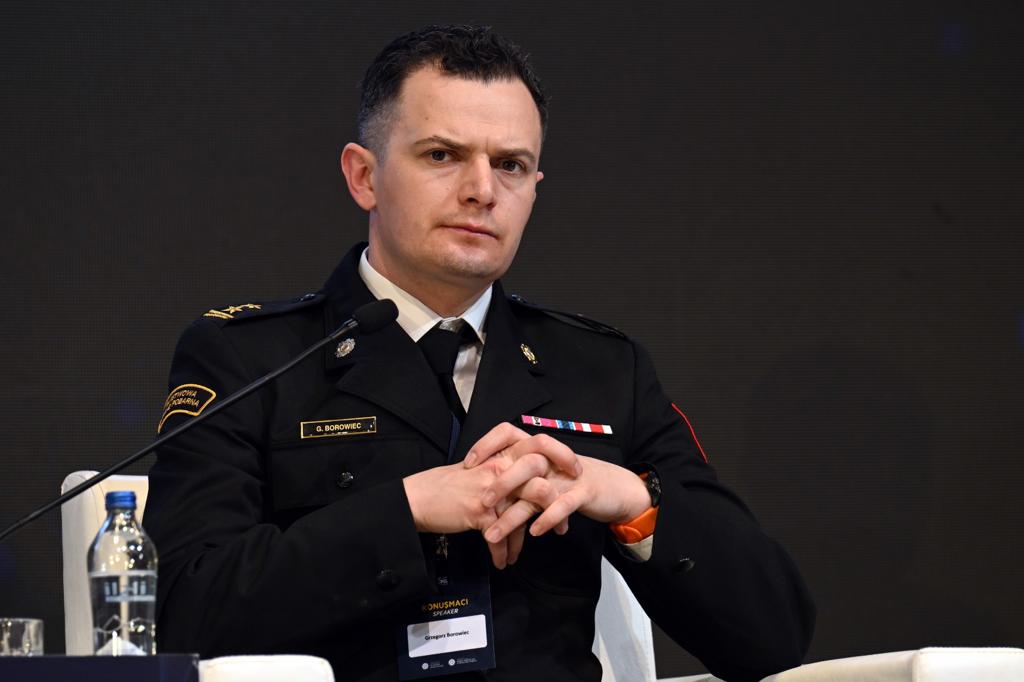
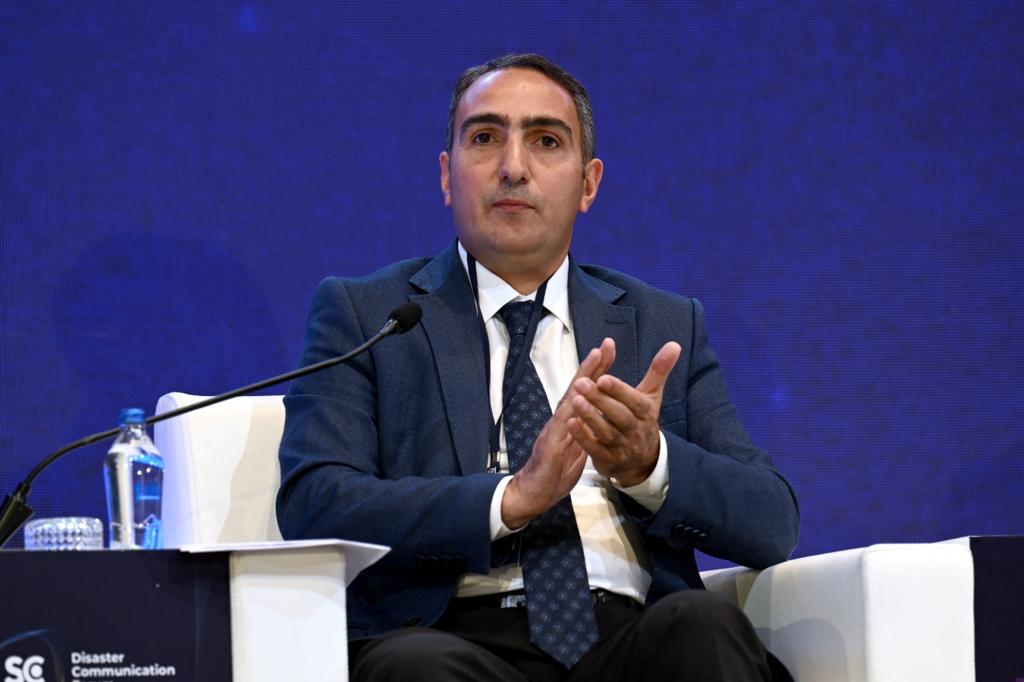
In the panel moderated by Director General for Disaster Management and Climate Change at the Turkish Red Crescent İbrahim Özer, Spokesperson for the International Search and Rescue (ISAR) Germany Paul-Philipp Braun, CEO of the South Korean S&RT Kim Jin Man, Deputy Director at the Poland Urban Search and Rescue (USAR) Grzegorz Borowiec, Deputy Director of the Main Operations Department at the Ministry of Emergency Situations of the Republic of Azerbaijan Alesker Aliyev and Communications Director at the USAR Spain Juan Manuel Gómez Rama talked about their experiences in the earthquake-stricken region.
Braun, who stated that he heard about the Kahramanmaraş earthquake in Germany through a phone alert in the early hours of the morning, stated that when he noticed that the number of dead and injured was high according to the initial official figures, he prepared his bag and joined the search and rescue team organised by the regional fire department in Germany.
Stating that as one of the first international search and rescue teams to arrive in the region, they were directed to Hatay and were shocked by the atmosphere and destruction they encountered there.
Braun noted that one of their unforgettable memories is the tragic story of 40-year-old Zeynep, whom they pulled out of the rubble 104 hours after the earthquake but died a few hours after she was rescued.
Noting that the rescue efforts lasted about 60 hours, Braun stated that it was a very impressive act of her sister Zübeyde to go under the rubble with them and provide Zeynep with morale.
Braun stressed that the warm hospitality they received and the optimism they witnessed during the search and rescue efforts in the earthquake region, despite the limited means, were highly remarkable, and said, "As the international search and rescue team, we gave them hope. We are grateful that they have given us the opportunity to exert all of our efforts to save them and give them hope."
Communications Director at the USAR Spain Rama emphasised the significance of communication in search and rescue efforts, saying, "Our job is to save lives, and effective communication is required to do this."
Rama indicated that information collection and effective contact with the media, other organisations, and people in the field are critical to fulfilling their purpose, noting that a large part of the training they received was on the significance of communication in field operations.
Rama emphasised that the most emotional moments that affected them throughout their missions were when people who had lost their homes and families shared meals with them by offering assistance, despite the fact that they were in need of assistance and were expected to be desperate.
"Coordinated cooperation has saved many lives"
Deputy Director of the Main Operations Department at the Ministry of Emergency Situations of the Republic of Azerbaijan Alesker Aliyev expressed gratitude for the organisation of the programme that allows for the sharing of experiences and memories and stated that strategic communication and coordinated cooperation in search and rescue efforts saved many lives.
Aliyev stated that the search and rescue team was dispatched to Kahramanmaraş by order of Azerbaijan's President Ilham Aliyev immediately following the earthquake disaster and shared information that a team of 760 Azerbaijanis took charge of the search and rescue and humanitarian aid efforts in Türkiye.
Aliyev said that the Azerbaijani search and rescue team saved 53 people from the wreckage, 17 of whom were children, and that over 3,000 injured individuals were treated in the region's two field hospitals.
Aliyev emphasised the importance of logistics and health support to volunteers and officials involved in search and rescue activities, saying that the Azerbaijani medical response team also worked to reduce the hazards that volunteers might experience in the field.
While aftershocks were the most difficult challenge they faced during their work, Aliyev noted that effective communication with the people of the region and media members affected by the tragedy was critical to their success.
Deputy Director at the Poland Urban Search and Rescue (USAR) Grzegorz Borowiec emphasised three key criteria in the operations of the search and rescue team in such "unspeakable" disaster conditions in his presentation.
Boroviec said, "The first of them is time. We have a very limited amount of time to help people. Every life saved subsequently becomes a miracle."
Borowiec noted that the second most important aspect of the rescue efforts is the materials used and the logistical support required to transport them to the field, but that due to the size of the tragedy, providing the said facilities was also challenging.
Borowiec remarked that the third most crucial aspect of the search and rescue activities is effective communication and that proper communication is critical in order to guide operations to the correct location and spread them as widely as possible.
Borowiec stated that the working conditions were extremely challenging because of the extent and severity of the disaster, adding, "In fact, we never expected so many people could be saved from this destruction."
Borowiec noted that there were emotional moments throughout the efforts and that they had to make difficult decisions, saying, "Sometimes you have to say stop. Otherwise, you risk endangering more individuals."
Kim Jin stated that they travelled to Türkiye following the earthquake and that the Turkish Embassy in Seoul greatly assisted them before moving to the region.