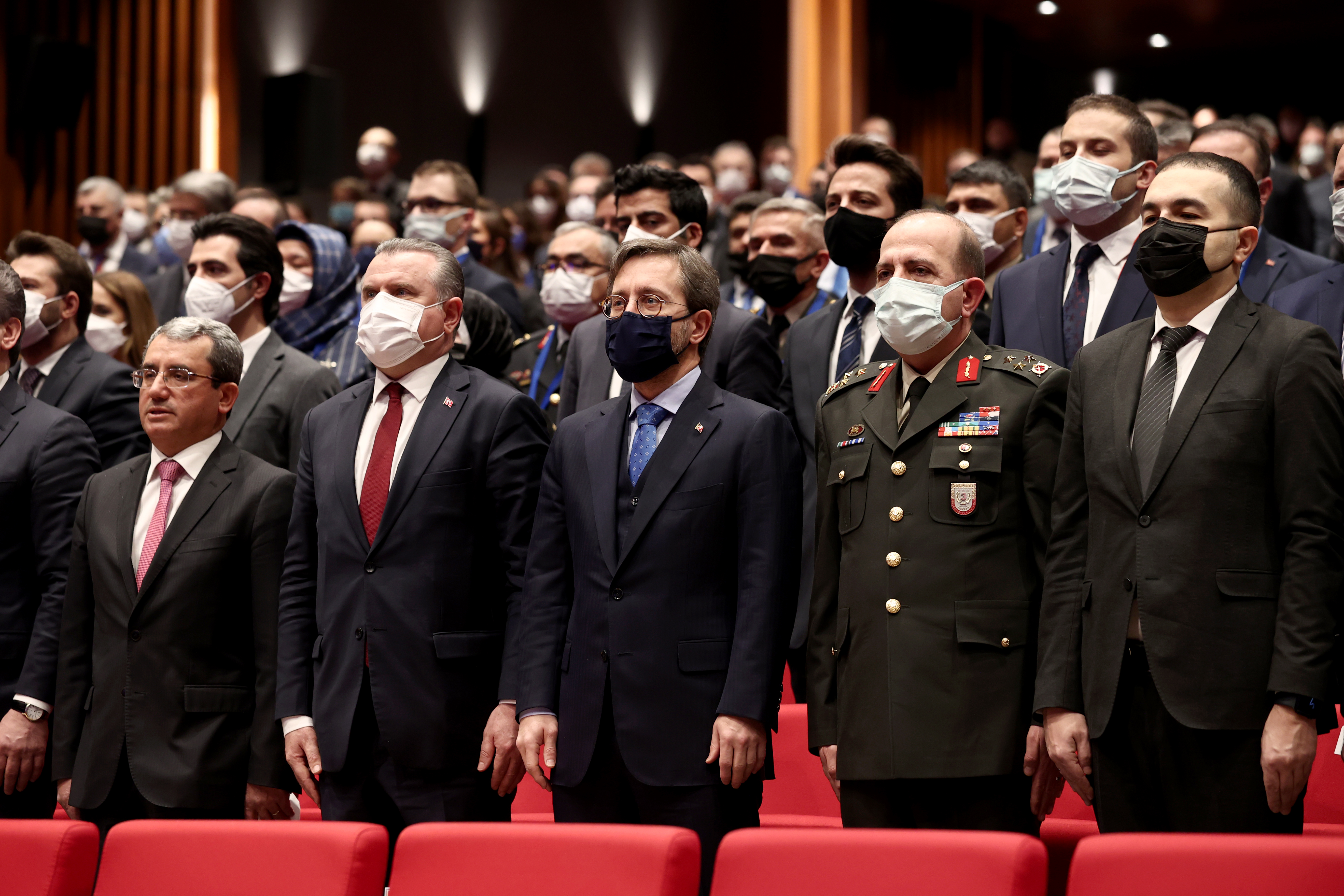
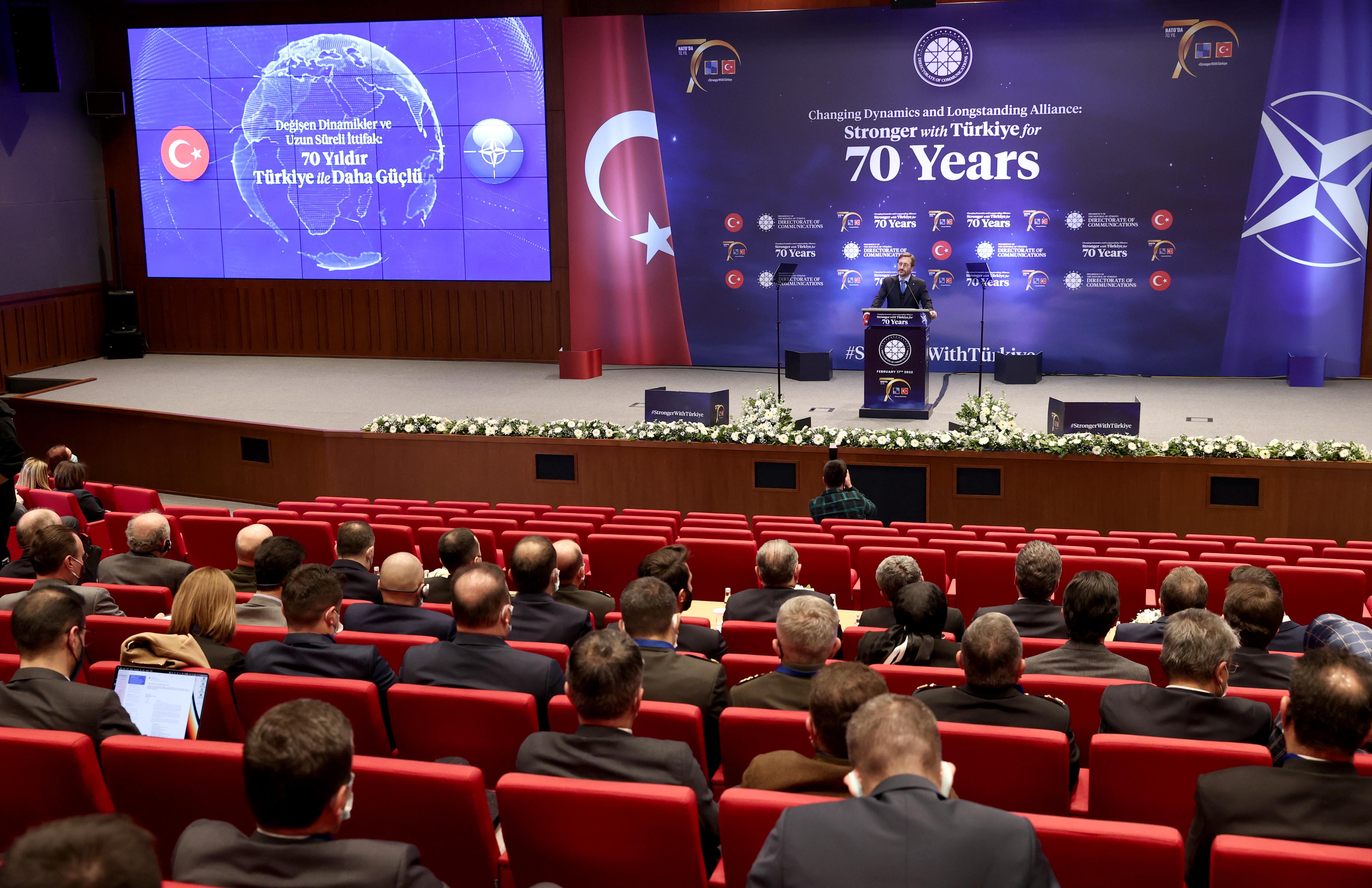
During his opening speech on the panel on the 70th anniversary of Türkiye’s NATO membership, Presidency’s Director of Communications Altun indicated that Türkiye is among the top five countries providing the greatest support for NATO operations and missions, and said: “It is regrettable and unacceptable that some of our NATO allies have appeared arm in arm with some terrorist organizations and are attempting to use some terrorist organizations against other terrorist organizations, let alone supporting Türkiye.”
Director Altun said that NATO was the largest and most institutionally advanced alliance in world history and that the alliance made indelible contributions to peace and stability in world politics since its inception.
Altun stated that NATO is still attempting to adapt to new conditions even after the Cold War, not only preserving its existence but also expanding and gaining new functions through new strategic concepts, adding, "Today, NATO is not just an alliance, it is an international organization in which several countries collaborate for security, reaching beyond the scope of an alliance. Under normal circumstances, alliances were thought to form against an antagonist and disintegrate when that antagonist vanished. NATO, on the other hand, is a successful example of the opposite."
Noting that many people have stated many times in the last 30 years that NATO has expired, that its days are numbered, and that, unfortunately, a NATO member state leader has claimed that "NATO is brain dead," Altun stressed that, despite all these allegations, NATO maintained its position in world politics.
Altun stated that NATO is now more than just an alliance connecting two sides of the Atlantic; it is a vast international organization with 30 allies stretching from the American continent to the borders of Asia.
"Relationships outside NATO cannot be viewed as an alternative to NATO"
Altun, who summarized Türkiye’s approach to NATO under three headings, stated that Türkiye has always regarded NATO as a strategic and valuable alliance.
Altun emphasized that Türkiye values the element of peace and stability that NATO provides not only to alliance members but also to global politics, adding, "Türkiye, like all other countries, has relations with countries that are not members of NATO. These should not be viewed as an alternative to NATO. On the contrary, these are relations that meet NATO's expectations."
Stating that he believes that crises emerging within NATO are not caused by NATO’s institutional structure, but rather by member states' occasionally increasing and decreasing expectations, Altun said, "These kinds of disagreements sometimes arise from budget and contribution accounts, and sometimes originate from temporary international political agenda items. Yet, one way or another, NATO's institutional structure and strategic reality impose themselves, and member states band together under NATO's aegis."
Altun noted that while irreparable resentments were believed to have emerged during the 1960s and 1970s, the importance of NATO reasserted itself automatically during the 1980s, adding, "Türkiye has never lost interest in NATO during these periods and has contributed to clearing up the scenes of crises."
Fahrettin Altun also stated that NATO should constantly strive to find ways to reinvent itself in response to new international conditions.
“Türkiye is among NATO's most active, credible allies and has not become a member of NATO solely because of its geographical features," Altun said, adding that Türkiye is one of the few nations that has contributed to NATO even before becoming a member.
"Türkiye is one of NATO's top five allies in terms of contributions to operations and missions"
Stating that Türkiye has been one of the first eight allies to contribute the most to NATO's budget, Altun said:
"Türkiye is one of NATO's top five allies in terms of contributions to operations and missions. In 2021, our country effectively assumed the leadership responsibility for the Very High Readiness Joint Task Force. One of our troops is currently serving in Kosovo as part of the NATO-led international peacekeeping force KFOR. As a matter of fact, as a key country within the scope of the resolute support mission in Afghanistan, which ended in September, we assumed responsibilities regarding the security and operation of Kabul International Airport and supported the evacuation efforts until the last day. Additionally, we contribute to the NATO Mission Iraq.
We also take an active role in NATO's efforts to adapt to contemporary situations. On the other hand, the 3rdCorps, headquartered in Istanbul, performs the duties of Türkiye's NATO-affiliated Rapid Deployable Corps. Additionally, since 1998, the 'Partnership for Peace Training Centre' in Ankara has provided strategic and tactical training to military and civilian personnel in order to support NATO's partner countries' training and interoperability initiatives. Since 2003, the NATO Centre of Excellence Defence Against Terrorism, founded with national resources, has operated in a similar manner."
Stating that Türkiye has avoided superfluous criticism of NATO for 70 years and that he believes the unconstructive criticisms at this time are unnecessary and pointless, Altun added:
"Türkiye attempted to resolve even its problems with member states under the aegis of NATO, and it reminded them on international platforms, even during these conflicts, by underlining its NATO alliance. Türkiye has maintained the NATO alliance as a primary priority of its security and foreign policy agenda for 70 years, despite ups and downs, and has continued to make significant contributions. Türkiye occupies a pivotal position in NATO's geopolitical future. Türkiye is a part of NATO not because it is required in a bipolar or multipolar world, but because it should be a symbol of international security and stability."
Stating that Türkiye also has expectations from NATO and its allies, Altun added:
"NATO should assist the pursuit of stability on Europe's frontiers more intensely as it contributes to stability in Europe. Simply looking at the events in Syria in the last decade have demonstrated that there are regions on Europe's frontiers that can be a source of global instability. Problems such as migration and terrorism surfacing in this region are the most urgent problems of the new era that need to be resolved.
Türkiye had to fight multiple terrorist organizations in Syria simultaneously, including DAESH and PKK and was successful in this fight. Unfortunately, in the fight against terrorism, Türkiye did not receive the support it expected from its NATO allies. These fights, in which Türkiye used its right of self-defence, aided NATO's anti-terrorism goals and the fight against the global terrorist threat. However, it is disappointing and unacceptable that, rather than supporting Türkiye, some of our NATO allies have appeared to be working hand in hand with terrorist organizations and are attempting to use some terrorist organizations against other terrorist organizations.
Just as Ukraine deserves NATO's attention today, just as Afghanistan and Al-Qaeda in Afghanistan have become NATO's priority; the fight against terrorism in Syria and the balancing of terrorist organizations and foreign powers that cause instability in the Syrian civil war should have been and should be on NATO's agenda equally."
Stating that Türkiye expects NATO's "deterrence" principle to be handled carefully, Altun emphasized that the deterrence principle characterises NATO.
Presidency’s Director of Communications Altun noted that the deterrence principle has allowed NATO allies to avoid devastating wars for many years, ensuring stability for world politics.
Altun said, “Some member states' reluctance in recent years is an unacceptable trend that could undermine NATO's deterrence. At all costs, it is imperative to avoid giving the impression that NATO's principle of "one for all, all for one" can be broken.”
Stating that NATO’s Article 5, which commits collective defence to all allies, is an element that builds the alliance’s identity and culture, Altun added, “This principle must be recalled. If the said commitment is applied selectively towards countries, NATO loses this identity.”
“In the last 30 years, NATO has evolved to represent more than just military security.”
Altun emphasized that NATO should also assist member states’ pursuit of stability, adding:
“NATO, especially in the last 30 years, has evolved to represent more than just military security. We’re not just talking about a military alliance here. In essence, we’re talking about an international organization with political implications. NATO must assume a larger role in the new security conceptualisation, both in combating terrorism and in humanitarian security issues.”
Terrorism, climate change, and pandemics must be addressed under NATO’s new mission. NATO should broaden its scope not only geographically but also in terms of relevant concerns. NATO should also support member nations’ stability and the maintenance of public order in addition to safeguarding their borders because political crises that may occur in any of NATO’s member states can deal heavy blows to the deterrence of the alliance. Member states must have political and economic stability for NATO to provide stability in world politics.
The heinous coup attempt on July 15 in Türkiye provides a highly instructive experience in this respect. NATO made statements that prioritised Türkiye’s security against coup plotters on an institutional level, but some member states, unfortunately, did not pay the same attention. There is still a NATO member state that refuses to extradite the coup plotters, terrorists to Türkiye. Such gaps would cause detrimental impacts on NATO’s future. Member states cannot hesitate to protect each other’s democratic institutions and legal orders.
“For 70 years, Türkiye has repeatedly proven to be a reliable partner to its friends and allies.”
Stating that for 70 years, Türkiye has repeatedly proven to be a reliable partner to its friends and allies, Altun said, “We hope that NATO will contribute to both world politics and the security expectations of its member states in the future more than ever before. Türkiye, a strong member of the strategic alliance, will continue to fulfil its responsibilities in NATO as a stabilizing power. However, Türkiye expects much more support from NATO and its allies in NATO for its stabilizing efforts in the regional and global arena. New challenges and threats emerging on a global and regional scale require better and stronger NATO solidarity."
Lieutenant General Levent Ergün, Commander of the 3rd Corps, also spoke at the panel, explaining Türkiye’s contributions to NATO and its activities in this context.
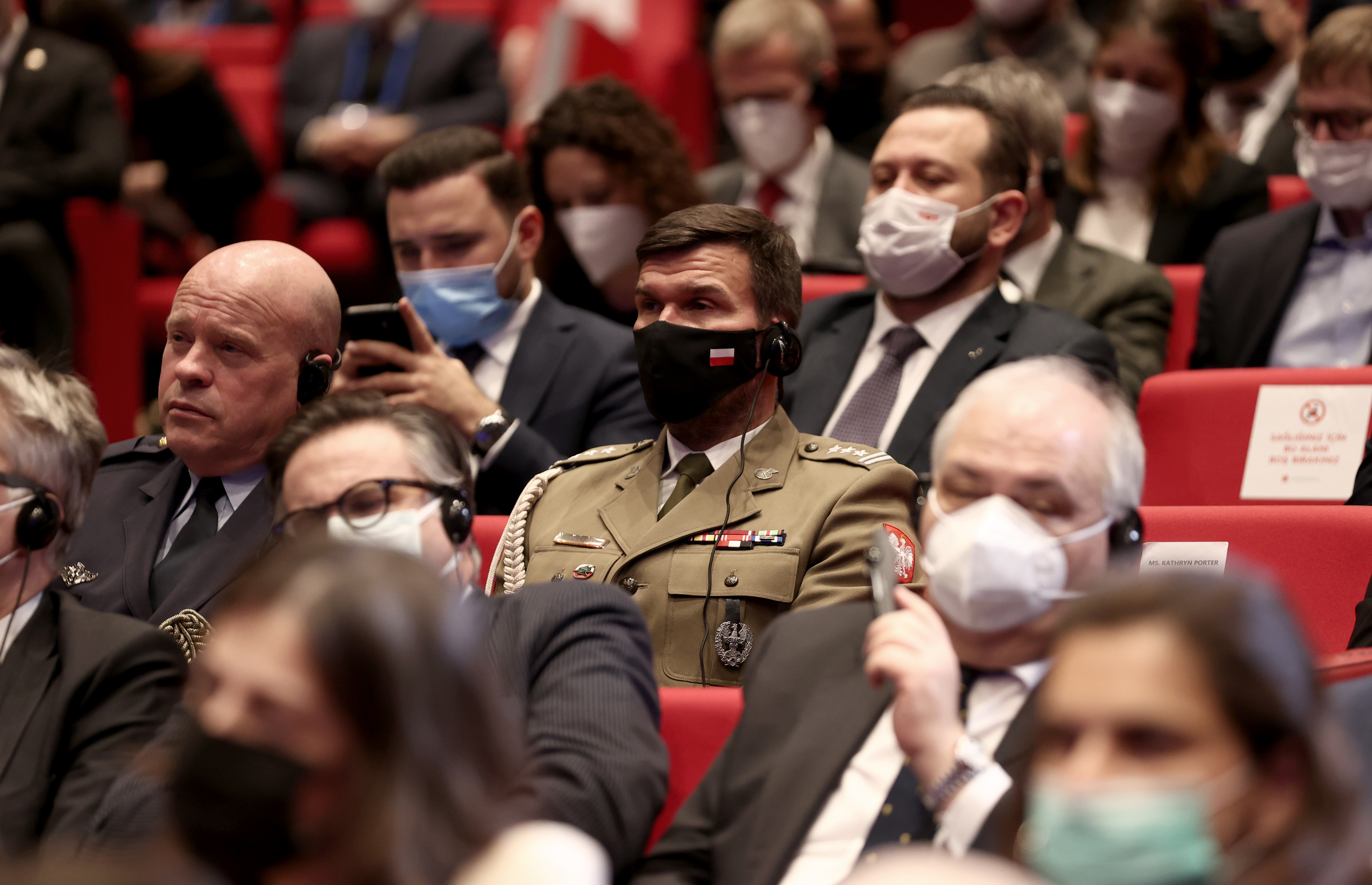
The panel was attended by Grand National Assembly of Türkiye (GNAT) Head of the Turkish Delegation to the NATO Parliamentary Assembly Osman Aşkın Bak, Director General of Turkish Radio and Television Corporation (TRT) Mehmet Zahid Sobacı, MPs, ambassadors of NATO member states, defence attachés of some countries, and many other guests.