Director of Communications Fahrettin Altun: "It should not be forgotten that digital terrorism is also a matter of national security. We must ensure our national security in the field of communication."
Presidency's Director of Communications Fahrettin Altun delivered the opening speech of the New Media and Digital Terrorism Workshop organised by the International Media Information Association (UMED) at the Conference Hall of the Presidency's Directorate of Communications.
Noting that the media is a field where information is produced, reproduced and disseminated, Directorate of Communications Altun said, "This field has gone through remarkable transformations compared to a decade ago. Our media culture has changed dramatically over the last ten years. With the development and socialisation of technology and digitalisation, it has succeeded in creating its own fields. This new order is conceptualised as 'new media,' which also includes every element of social media. Whether or not individuals, societies, and countries are a part of this new order and make effective use of digital means shapes and transforms their present and future.”
Pointing out that the advent of the information age and digitalisation brought about developments that transcend the boundaries of many established understandings and traditional disciplines, Director of Communications Altun said:
"Digitalisation, which encompasses economics, diplomacy, criminal investigations, and public policies, undoubtedly offers both opportunities and risks. Our country is among the nations that are most vulnerable to cyber threats and attacks. But why are these threats and attacks directed at us? Because of our foreign policy initiatives that place Türkiye at the centre of regional and global affairs, as well as our opposition to global information and perception centres. To put it more concisely, the fight for the truth that our President is engaged in. Yes, our resolute stance at these issues disrupts the peace and order of those who wish to return Türkiye to its former position of international dependency. They are also trying to get results by using new methods. Cyber attacks, disinformation in the virtual world, black propaganda and fifth column activities, security issues with blockchain technologies, and terrorist organisation activities in the digital world are examples of these methods. These attacks can target both public institutions and organisations, the private sector and people directly."
"We are actively and decisively fighting against digital threats"
Director of Communications Fahrettin Altun stated that 6 million 137 thousand 330 cyber attacks were detected worldwide during the first three months of 2022 and emphasised the significance of this field. Underlining that cyber attacks can target not only people but also all objects with internet connections, Director of Communications Altun said:
"Therefore, while explaining the benefits of concepts such as the internet of things, digital twin, and metaverse, it is necessary to take precautions against the threats and risks they pose. While the internet of things brings conveniences in many areas of life, it is also the target of cyber attacks. In the past three years, for instance, the number of attempted cyber attacks on smart vehicles utilising autonomous driving and 5G technologies has increased by 225 per cent. It was determined that 84,113 cyber attacks took place in Türkiye only in 2021. As of July 1, this number was 53,202 in 2022. Compared to July 2021, we are talking about cyber attacks that increased by about 27 per cent. Obviously, our state is aware of this threat with all its institutions and is taking its precautions and fighting as necessary."
Director of Communications Fahrettin Altun emphasised that Türkiye's cyber defence capacity against all existing and potential threats in the cyber homeland, as well as in our homeland, our blue homeland, and our homeland in the sky and beyond, is constantly improving. Noting that the National Intelligence Organisation is engaged in an effective battle against the ever-changing technical and cyber threats, Director of Communications Altun continued:
"National Cyber Incident Response Centre (TR-CERT), which operates under the umbrella of the Information and Communication Technologies Authority, acts as one of the defence mechanisms in our cyber homeland. Thousands of cyber security experts operating in public and critical private sector organisations work in coordination with TR-CERT. In addition, through machine learning, KASIRGA, AVCI and AZAD applications also autonomously fight against cyber threats. Virtual patrol activities are carried out on a 24/7 basis on the internet by the Department of Combating Cyber Crimes of the General Directorate of Security. We are actively and decisively fighting digital threats in coordination and cooperation with all our institutions."
"Internet access rate is 94.5 per cent"
Presidency’s Director of Communications Fahrettin Altun stated that Türkiye, under the leadership of President Recep Tayyip Erdoğan, strengthened the infrastructure of communication and information technologies and made tremendous progress in all areas over the past 20 years, and shared the following information:
"During this period, a freer conventional and digital media environment that includes many different voices has emerged. Thus, our citizens and institutions have received services that will provide the highest level of benefit in this field. The results of the Social Network Map project conducted by our Directorate of Communications also reveal how widespread digitalisation has become in our country. According to the data of our research, the internet access rate in our country was recorded as 94.5 per cent in the first six months of 2022. Social networks are used by 98.5 per cent of our citizens, who have very high internet access rates. Furthermore, 85 per cent of users access the internet via a mobile connection. These figures show that Turkish society has widespread internet access and frequently uses social media in their daily lives. However, given the high rate of internet access, we can easily conclude that perception management operations are concentrated in this area. As we all know, we are living in a new media era in which communication is becoming faster, one-sided interaction is becoming more versatile, and information is spreading rapidly. As a result, in addition to the benefits of high access and usage rates, we must also take precautions against the possibility of being exposed to digital media crimes, digital terrorism, and disinformation."
"Our Centre for Countering Disinformation will work to crush down the terrorism of lies"
Director of Communications Altun stated that measures taken against terrorism and similar crimes that may emerge in the digital world are neither an option for the state nor a way to exert control over society, but rather a responsibility of the state towards its citizens. Director of Communications Fahrettin Altun stated:
"Considering the issue solely on the basis of digital media speed and freedom, and viewing any attempt at regulation as interference with speed and freedom, is a very shallow and outdated perspective that ignores the risks of digitalisation. Unfortunately, in the post-truth era, these channels are also used as mediators for the blurring of the line between truth and lies. False news and misinformation, which are deliberately and systematically disseminated, are attempting to be used as a tool in the management of mass perception in new media platforms where information is constantly flowing. As news tracking via digital channels, particularly through social networks, becomes more prevalent in our country, the rate at which users are exposed to fabricated news increases. Undoubtedly, this is a situation we should not only be concerned about but also closely monitor and work to adopt the necessary measures in the public interest. For example, in Türkiye, trust in digital media news decreased by 5 per cent from 2021 to 36 per cent. According to international studies, 62 per cent of people are concerned about fake and misleading news."
“Making new media safer is a requirement, not a luxury"
Director of Communications Altun drew attention to the fact that numerous studies have shown that Türkiye is the country most subjected to disinformation in the world and made the following assessments:
"Making the new media safer, with its dimensions ranging from personal rights to social order and national security, is a requirement, not a luxury. It is critical that the public authority considers this and pursue related regulations. This is the state's obligation to its citizens. This is also a part of our fight for the truth. This, without a doubt, is a component of our President's call for communication mobilisation. As he himself stated, one of the key pillars of our Türkiye Communication Model is the fight against 'terrorism of lies' from within and without. As the Directorate of Communications, we have conducted numerous studies in the fight against disinformation directed at our country, with gratifying results. But we are all aware of the gravity of the situation. We have expanded our work in this area and recently established our Centre for Countering Disinformation as an independent unit. This centre will work to crush down the systematic disinformation and terrorism of lies directed at our country, as well as to present the truth to our people. It will ensure that our efforts in this direction continue in a more specific field and disciplined manner. I believe we will achieve new successes in both the immediate fight against disinformation and lies and the promotion of the truth."
"It is critical that we base our interests on the general public rather than social media companies"
According to the Presidency's Director of Communications Fahrettin Altun, Türkiye has been and continues to be targeted not only by physical attacks but also by disinformation attacks by terrorist organisations such as the PKK/YPG and FETO.
Noting that accounts supporting terrorist organisations are systematically attempting to mobilise local and foreign public opinion against Türkiye by posting disinformative posts about Türkiye on social media platforms, Director of Communications Altun stated, "Terrorist groups also use new media for propaganda, indoctrination, communication, sympathiser and militant recruitment, and training. It is also used for operational control and so-called command."
Stating that terrorists place a high value on the mediatic character of their attacks and messages, Director of Communications Fahrettin Altun underlined that social media platforms and new media channels should not provide this foundation for terrorist organisations and terrorism. Director of Communications Fahrettin Altun said:
"Failure to fulfil this responsibility must result in criminal charges. This is in the public interest and it is in the national interest. This is to protect our citizens' rights and freedoms. Unfortunately, new media and digitalisation allow terrorist organisations' messages to spread quickly. Again, we see that these social media companies are likely to operate as an element of the war of attrition waged by some international circles against Türkiye, which we are closely monitoring. Terrorist organisations can continue to reap the benefits of the virtual space in the absence of any measures and controls. While all countries are strengthening their legal and institutional infrastructures to combat threats in this area, Türkiye cannot afford to fall behind. It should not be forgotten that digital terrorism is also a matter of national security. We must ensure our national security in the field of communication. This is our obligation to our citizens. Our President has instructed us to remain vigilant in this regard and to always act in a manner that protects the interests of our citizens and the general public. It is critical that we base our interests on the general public rather than some international social media companies."
"Opposition politicians need to question themselves"
Director of Communications Altun emphasized that every state should put in place the necessary defence and preventive mechanisms against threats in the digital world, and he went on to say:
"Our government has built defence systems against hybrid threats in collaboration with all key state institutions and organisations in the cyber homeland, leaving many global countries behind." In this framework, we are routinely following terrorist organisations' activities in the traditional and new media ecosystems, detect disinformation campaigns, and implement blocking mechanisms quickly. We are fighting terrorism and its supporters in the defence of our cyber homeland by conducting preliminary studies with rigorous examinations of the threats that may arise in the digital universe. We are honoured to take part in this struggle. Of course, at this stage, individuals, in addition to the state, have obligations, such as avoiding participating in the dissemination of disinformation and fake news. Individually, we must all commit to not spreading fake news.
Another point I would like to make is that opposition politicians who own these systematic attacks on Türkiye by both terrorist organisations and those from other countries, who spread disinformation and exploit it for political purposes, should question themselves. Nowhere else in the world will you find a political mentality that is so prone to character assassination and attacks on its own country that it wants to seek such attacks. Obscurantism is demonstrated by those who strive to polarise, provoke, and even incite hostility between two parts of the society by taking a proactive path through disinformation. It's a disgrace for our democracy. I would like to remind you once more that in the digital world, which will be one of the most difficult battlegrounds in the future years, significant obligations lie on all of our institutions, as well as political and media representatives. We must continue to battle for the truth in the digital world, to strive for, and to establish a safe and secure digital future for everybody.
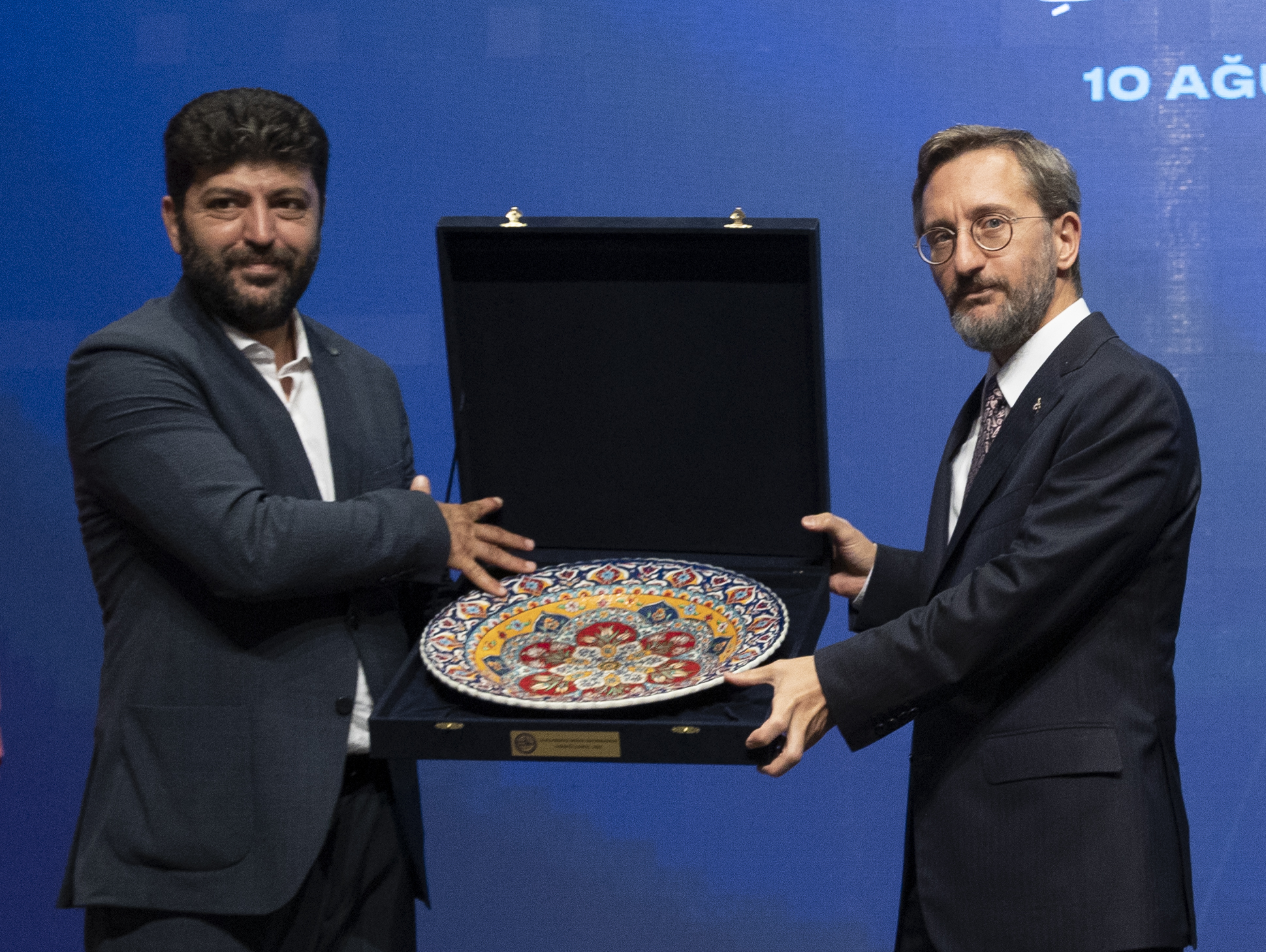
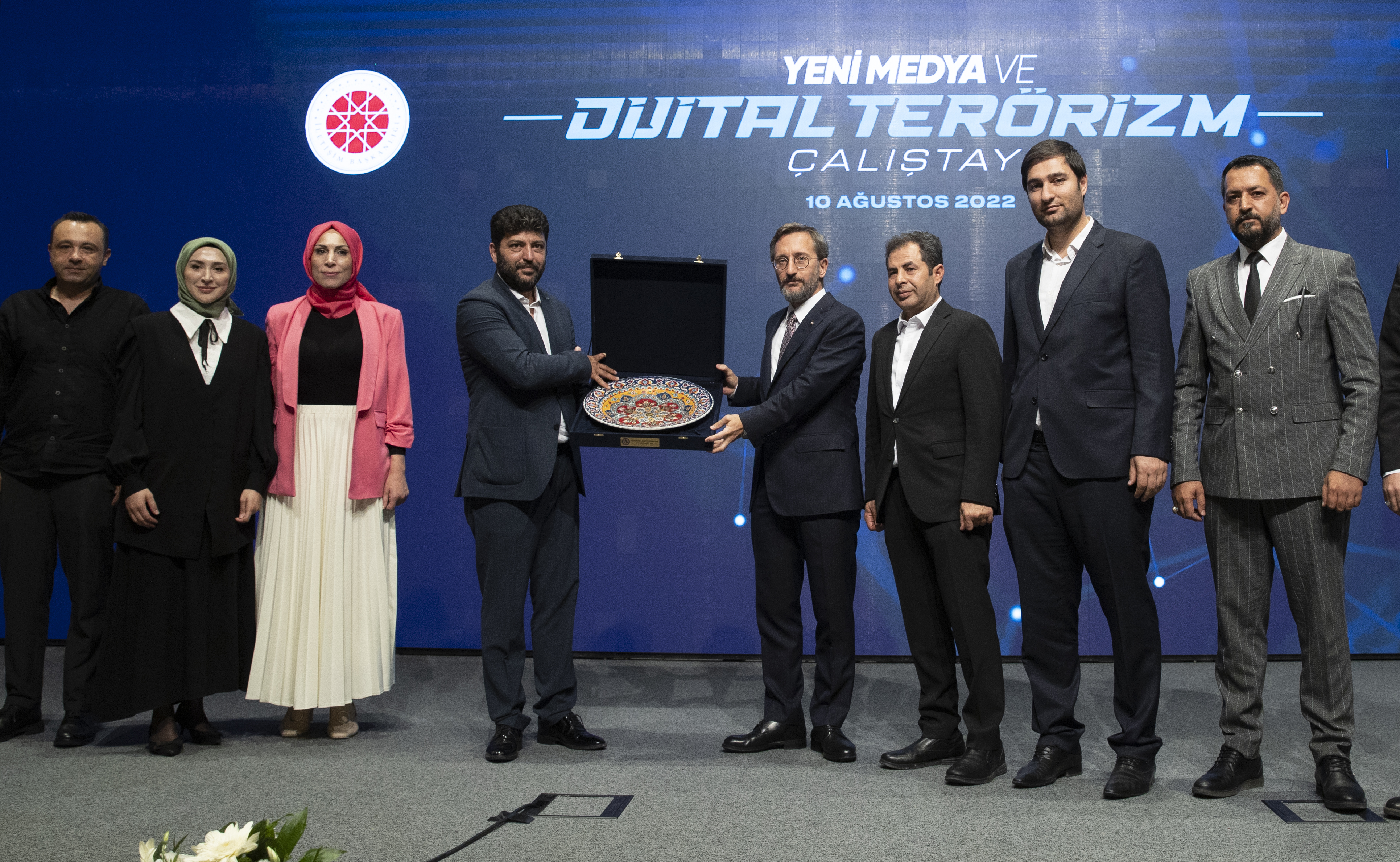
After his address, Aslan Değirmenci, President of UMED, presented the Director of Communication Altun with a tile plate.