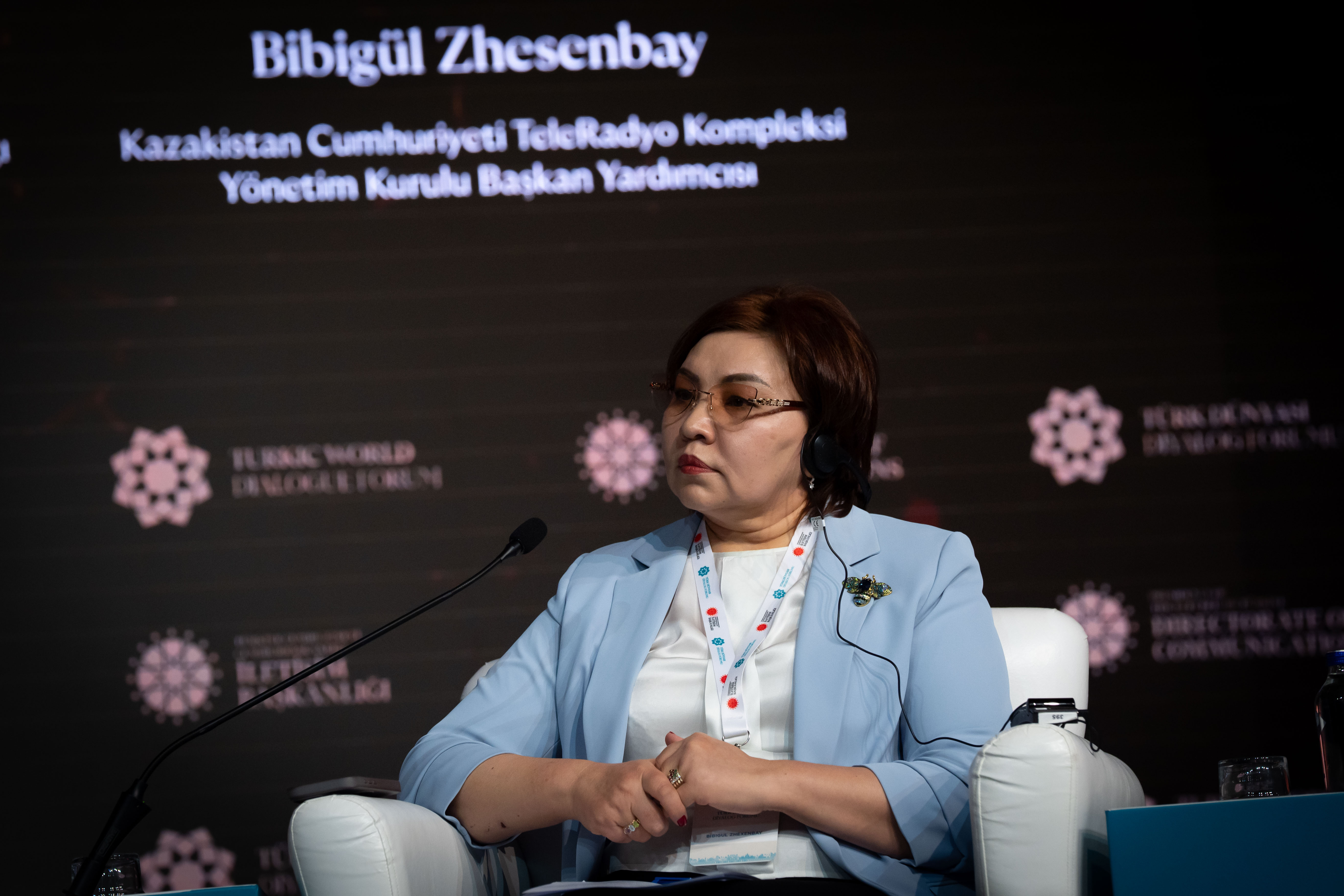
A panel titled “Media and Communication in the Turkic World” was held as part of the Turkic World Dialogue Forum, organised by the Presidency’s Directorate of Communications.
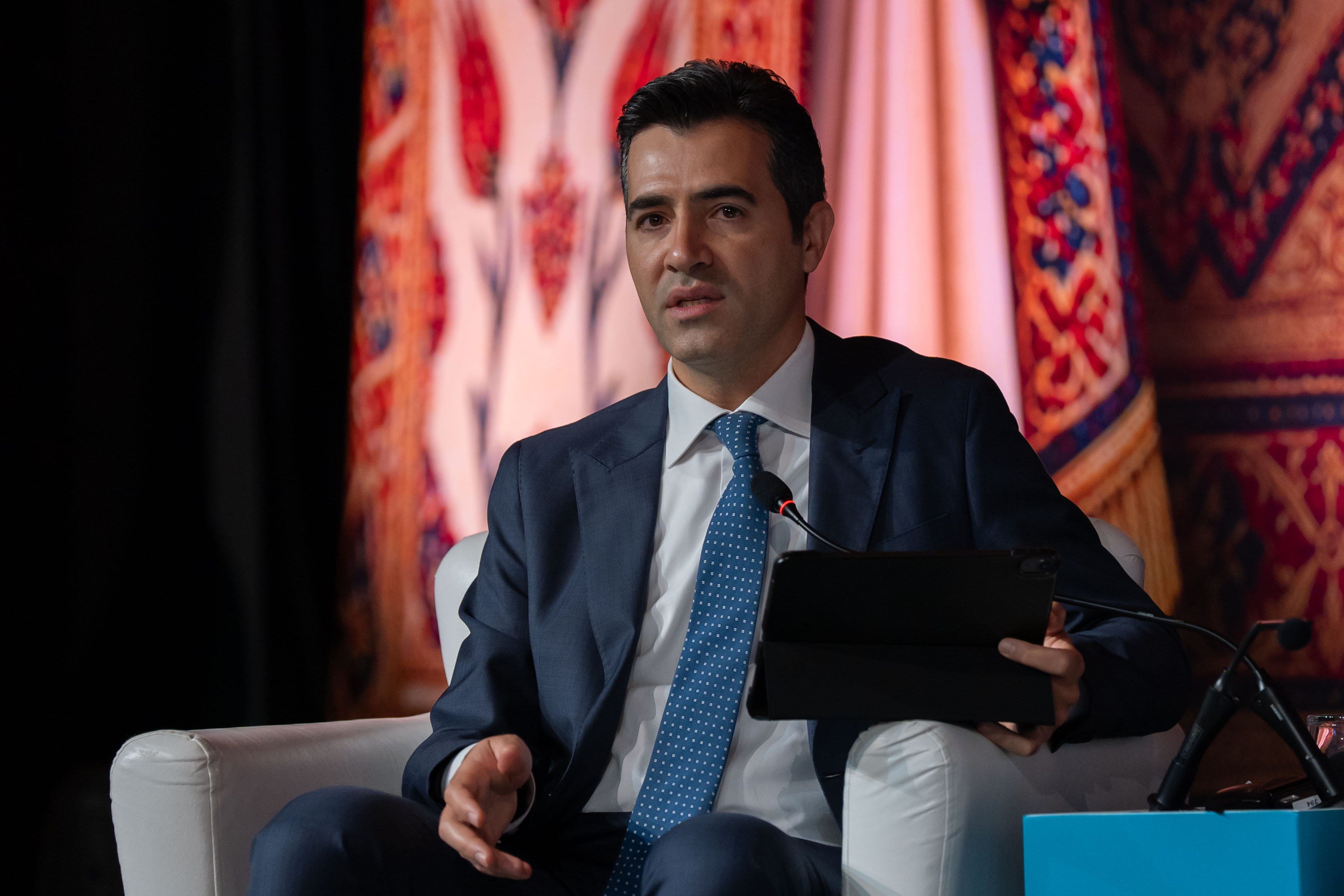
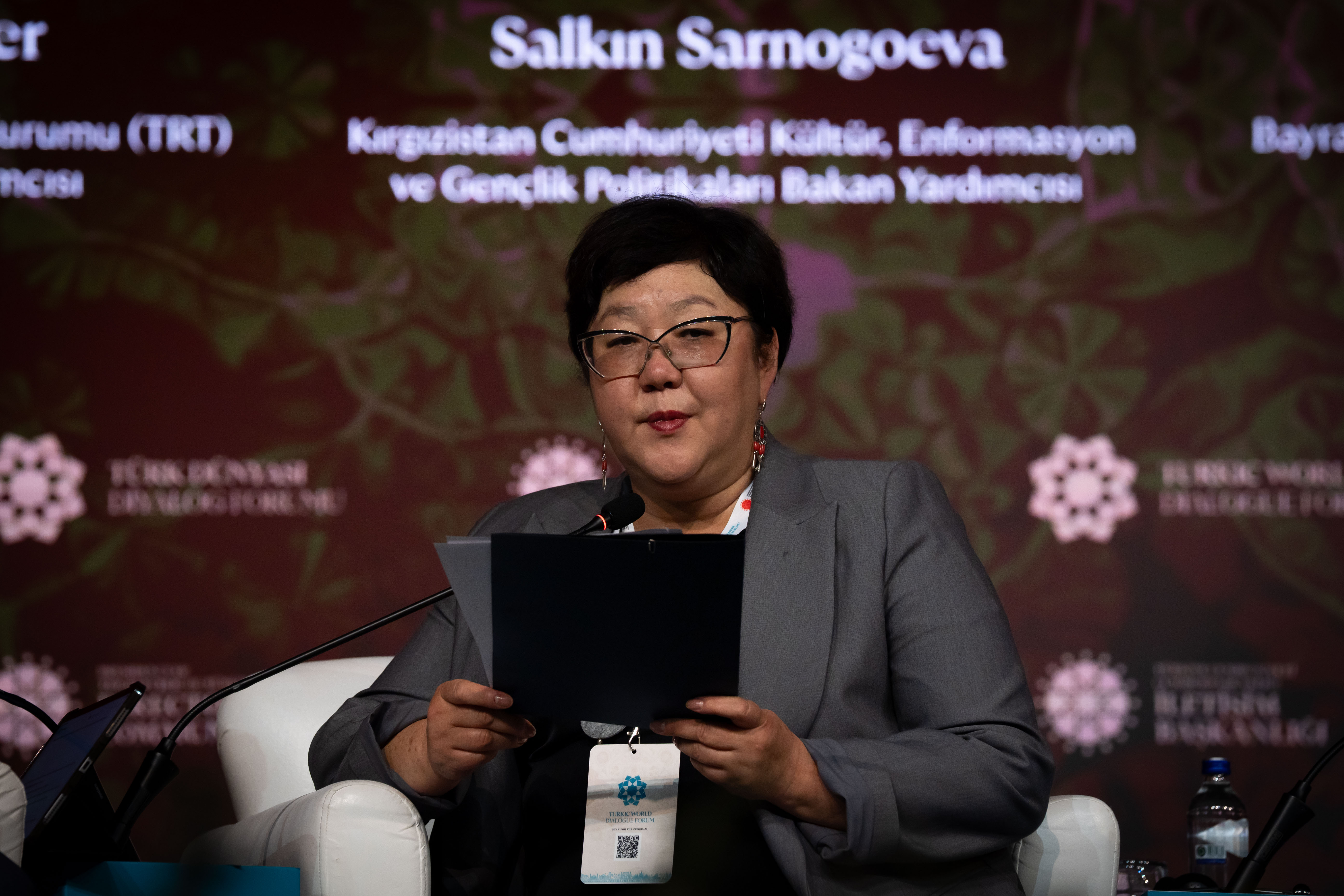
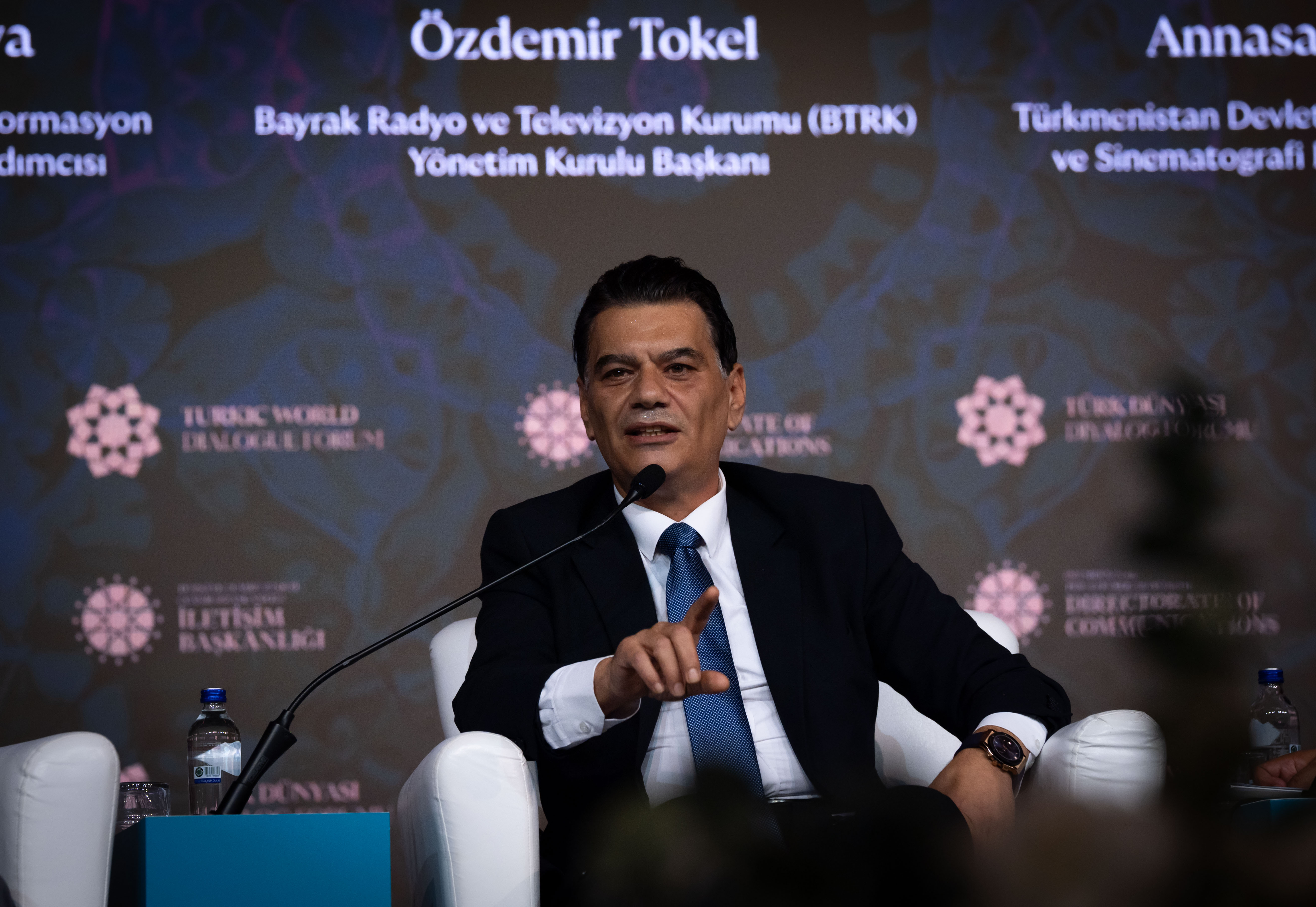
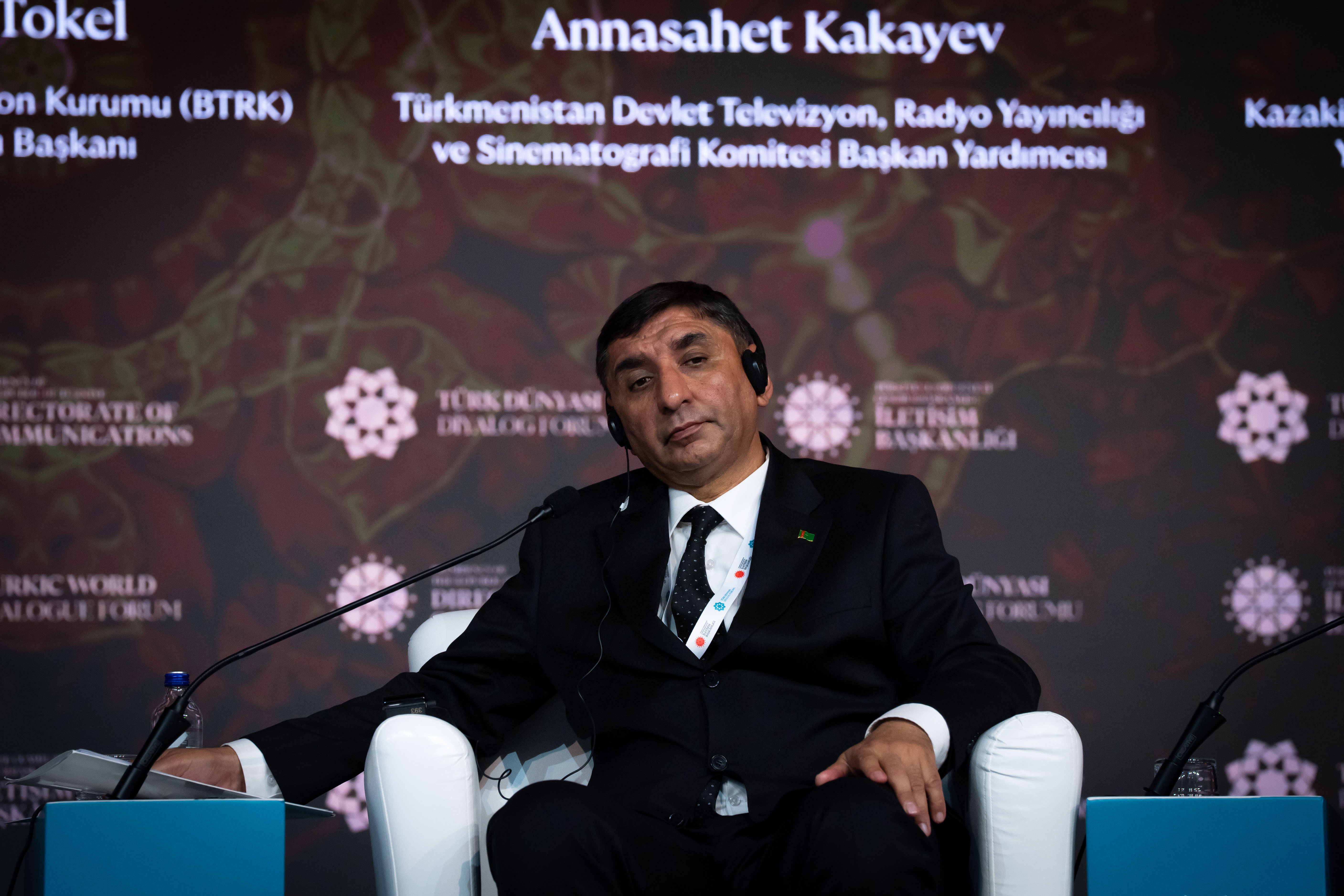
The panel, held at a hotel in Ankara and moderated by TRT Deputy Director General Mücahid Eker, featured Deputy Minister of Culture, Information and Youth Policy of Kyrgyzstan Salkın Sarnogoyeva, Chairman of the Board of Directors of the Bayrak Radio and Television Corporation (BRTK) of the Turkish Republic of Northern Cyprus (TRNC) Özdemir Tokel, Deputy Chairman of the State Committee of Turkmenistan for Television, Radio Broadcasting and Cinematography Annasahet Kakayev, and Deputy Chairman of the Board of Directors of Kazakhstan’s Television and Radio Complex Bibigul Zheksenbai as speakers.
Before the panel, a video was screened introducing the Turkic world and highlighting the importance of cooperation.
Moderator Eker stated that cooperation among the member countries of the Organisation of Turkic States (OTS) was growing steadily in all areas and that TRT was striving to contribute to this cooperation in the field of broadcasting through concrete and sustainable initiatives.
Eker noted that their priorities were to pass on their shared history and culture to future generations, enable their peoples to become better acquainted with one another, and ensure that the voice of the Turkic world was heard more strongly, effectively and clearly on the international stage.
Referring to the implementation of the Turkic World Vision 2040 by the leaders of the Turkic world, Eker stated that cooperation was already under way in numerous fields, ranging from political solidarity to the economy, transportation and technology, as well as culture, the arts and education. He emphasised the importance of making this cooperation visible to the peoples of the Turkic world.
“Our cooperation is not limited to agreements on paper”
Sarnogoyeva stated that the successful conclusion of the historic 13th Summit of the Council of Heads of State of the OTS was not only an important political and strategic step but had also provided significant momentum for the organisation of cultural and information-related events such as the forum.
Emphasising the importance of the forum in strengthening friendly relations among Turkic states, developing cultural and humanitarian ties, and further expanding cooperation in media and communication, Sarnogoyeva said: “Our cooperation is not merely a matter of agreements on paper; it consists of concrete, joint initiatives that bring our states and peoples closer together. The Kyrgyz Republic has always attached particular importance to strengthening the unity of the Turkic world and developing cooperation based on mutual trust and respect. Our shared history, linguistic and cultural affinities, and common spiritual values form the solid foundations that bind our peoples together.”
Sarnogoyeva stated that Kyrgyzstan supported expanding cooperation in information and communication, sharing experience, and implementing joint cultural projects in the field of information. She stressed the need to intensify joint efforts to ensure a reliable and objective flow of news, combat disinformation collectively, uphold journalistic ethics and make effective use of digital technologies.
Underscoring that the unity of the Turkic world was the most tangible outcome of shared history, cultural affinity and mutual trust, Sarnogoyeva said, "Our common responsibility is to preserve this precious value and elevate cooperation among our states to the highest possible level.”
“We will never cease to exist simply because some say we do not exist”
Tokel pointed out that there were those who refused to acknowledge the Turkish Republic of Northern Cyprus (TRNC), stating: “Yet, as you can see, with the support of our motherland Türkiye, the Turkish Republic of Northern Cyprus has been an observer member of the Organisation of Turkic States since 2022. We have a presence in the world, and today we are here before you, officially represented by the Bayrak Radio and Television Corporation. Therefore, we will never cease to exist simply because some say we do not exist.”
Stating that they would continue to make their presence felt on numerous international platforms, including the OTS, thanks to the strong support and global influence of their motherland, Türkiye, Tokel thanked President Recep Tayyip Erdoğan for consistently calling for the recognition of the TRNC on international platforms.
Tokel noted that we were living in an age of media and communication in which perceptions and disinformation played a significant role. He pointed out that while disinformation could be produced with very little effort, countering it required considerable work, adding that the media had particularly important responsibilities in an era shaped by perceptions and artificial intelligence.
Expressing his gratitude for the strong support provided by Türkiye, TRT and Anadolu Agency (AA), as well as the efforts of the Presidency’s Directorate of Communications to enhance the visibility of the TRNC by inviting its representatives to every event, Tokel said, "The Turkish Republic of Northern Cyprus is a state, and the Turkish Cypriot people exist. We invite you all to recognise the Turkish Republic of Northern Cyprus and demonstrate our brotherhood unequivocally.”
The importance of information exchange in the Turkic world
Kakayev, who stated that this was his first time participating in such an event, emphasised the importance of expanding the reach of mass media across the Turkic world.
Describing communication as a force that brings peoples closer together, shapes public opinion and promotes mutual understanding between states and societies, Kakayev said, "Our responsibility is not merely to disseminate information but also to foster trust, responsibility and mutual respect. Information is now disseminated across many fields. In the past, it could take several days for a news report to reach its audience, whereas today news can spread across the world within hours. However, this has also made ensuring the accuracy of information increasingly important.”
Kakayev noted that Turkmenistan’s geographical location had made it a meeting point for ideas since ancient times and that this historical position continued to create numerous opportunities in media and communication today.
Stating that they regarded it as their duty to pass on their heritage from ancient times to younger generations through modern communication tools, Kakayev said: “In this way, the media will become more than a means of delivering news; it will serve as a bridge of friendship between our peoples.”
Kakayev stated that television and radio broadcasters in Turkmenistan were also working to introduce their society to the wider world, adding that the country made extensive use of modern communication technologies.
Emphasising that regular and reciprocal coverage of important events and developments among their peoples would increase mutual interest between societies, Kakayev said, "We need to expand cooperation and strengthen mutual trust among television channels, radio stations and news agencies in the exchange of information between Turkic states.”
Kakayev also stressed the importance of developing joint media projects, producing documentaries and films, and reaching younger audiences through the wider use of digital media.
Noting that open dialogue would strengthen friendship, Kakayev highlighted the role of culture and cultural expression in bringing peoples closer together.
Emphasis on a “common screen”
Zheksenbai stated that their gathering was motivated not only by shared history and deep-rooted ties but also by a common sense of responsibility to pass on this heritage to future generations and create a high-quality media environment.
Describing the concept of a “common screen” as a reflection of the ties that unite the Turkic world, Zheksenbai explained that it could mean enabling viewers in Türkiye to follow current developments in Turkistan closely or helping a young Uzbek become familiar with a Kyrgyz epic.
Zheksenbai emphasised the importance of producing engaging content, particularly for younger generations, noting that artificial intelligence was accelerating content production processes and facilitating translation and access to archival materials.
Stating that Kazakhstan had numerous national television channels and radio stations, Zheksenbai noted that some of its national channels broadcast in Türkiye, the United States, Canada, the United Kingdom and many other countries.
Zheksenbai said, "For us, the primary objective of international cooperation is to bring peoples and younger generations closer together through the dissemination of high-quality content. Since the younger generation has grown up in the digital world, we need to produce joint animated content. It is important to ensure that Kazakh media content reaches Turkish audiences. Sharing Kazakhstan’s content across the Turkic world helps bring our peoples closer together. Joint historical research and the production of films and documentaries are also important. These subjects must be researched and passed on to younger generations.”
In this context, Zheksenbai stressed that the “common screen” should reflect not only the past but also the present and the future, adding that Kazakhstan’s national television channels should be promoted more widely throughout the Turkic world.
Zheksenbai also emphasised the need to encourage the exchange of experience among television channels and media professionals in Turkic countries and to jointly produce content aimed at children and young people.
Highlighting the importance of undertaking initiatives centred on shared national values, such as respect for elders, Zheksenbai proposed establishing a working group and developing various pilot projects within this framework.