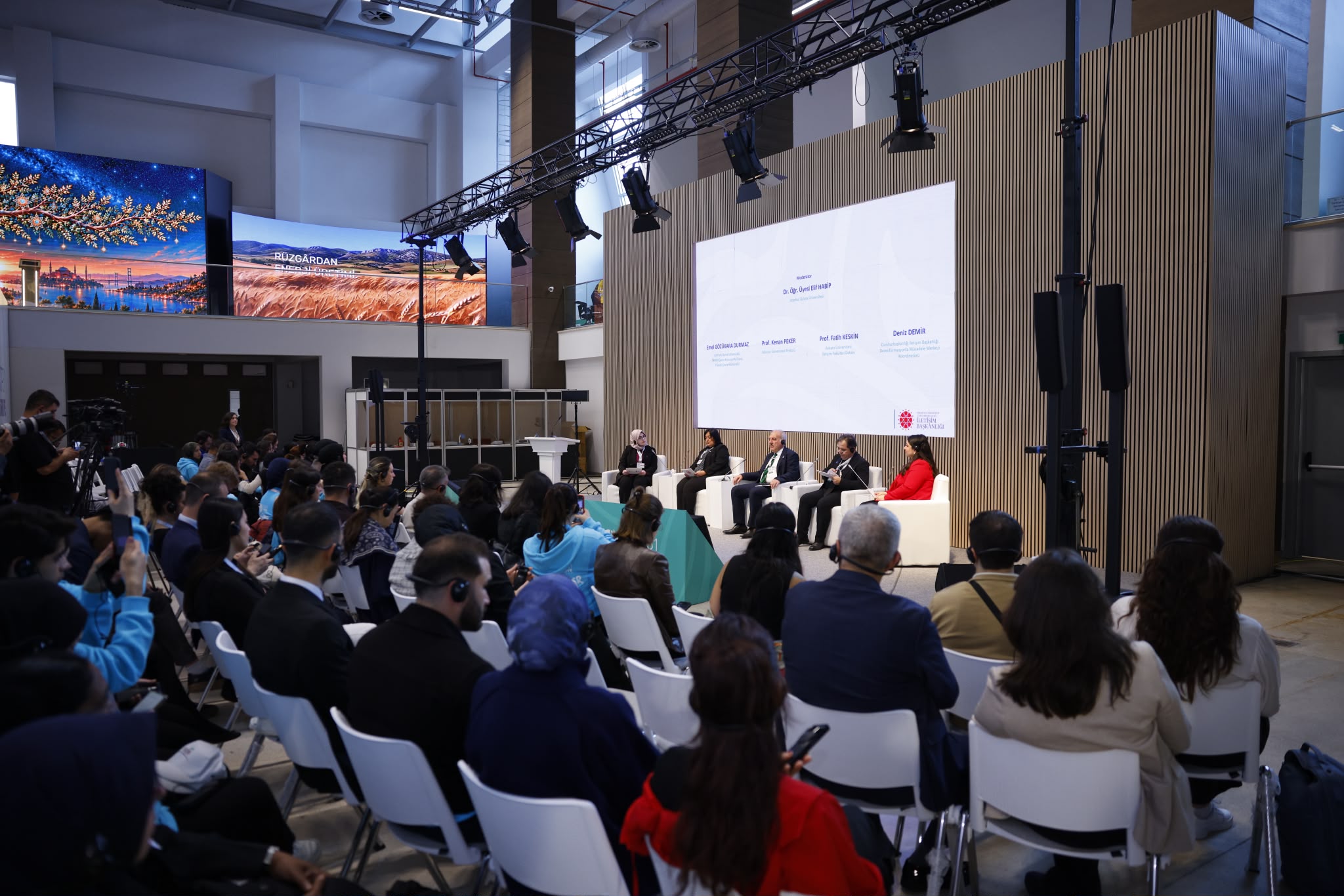
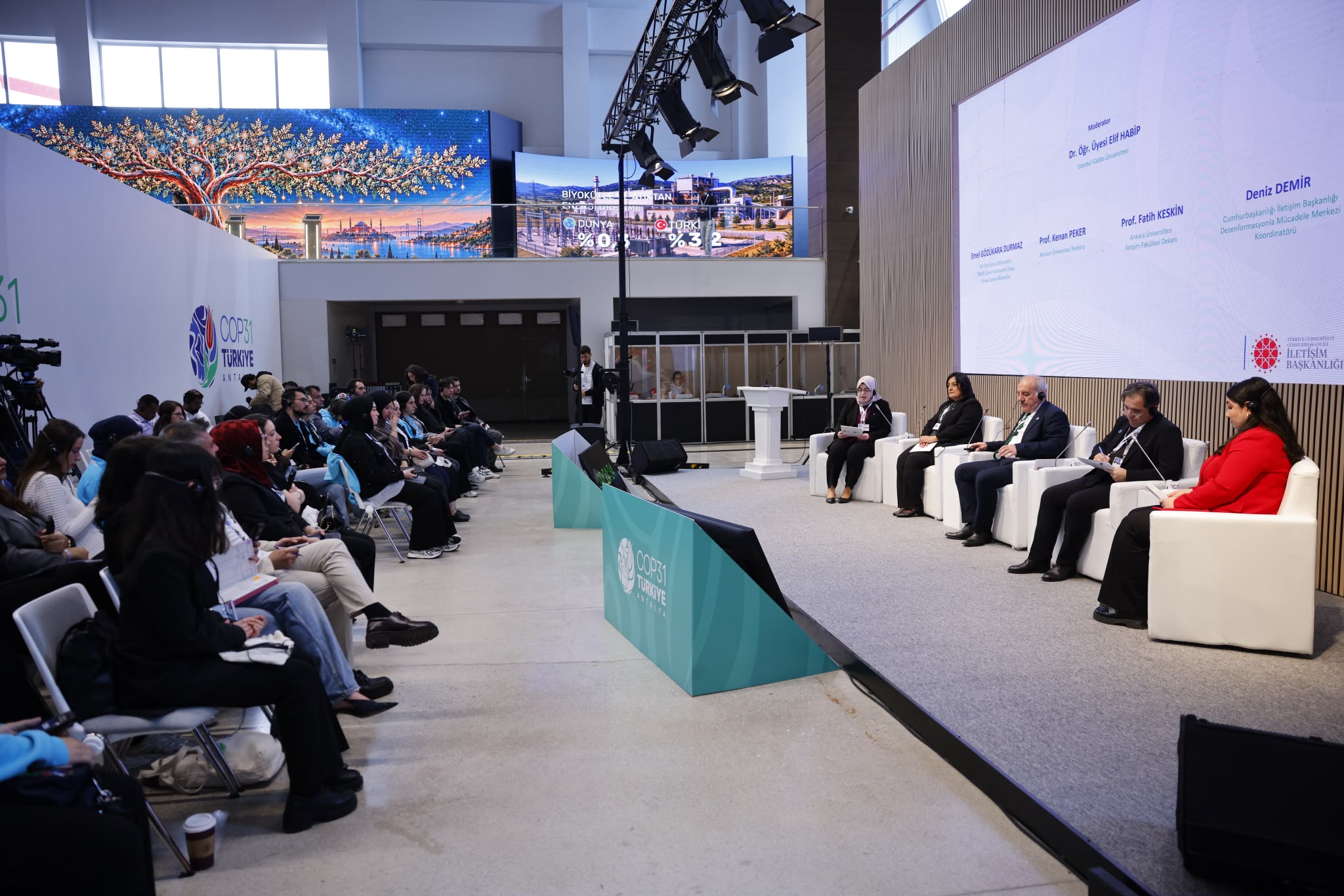
The panel entitled ''Climate Disinformation: A New Front in Information Warfare'', organised by our Directorate as part of COP31, brought the issue of how false and misleading information about the climate crisis undermines global climate action to the forefront of the international agenda.
Held with strong participation in the Zero Waste Programming Area as part of the 31st Conference of the Parties to the United Nations Framework Convention on Climate Change (COP31), currently taking place in Antalya, the panel addressed the climate crisis not only in terms of the atmosphere but also through the lens of the information ecosystem. The panel was moderated by Dr Elif Habip, Assistant Professor in the Department of Business Administration at İstanbul Galata University. The speakers included Emel Gözükara Durmaz, AK Party MP for Bursa and a member of the Environment Committee of the Grand National Assembly of Türkiye; Prof Kenan Peker, Rector of Munzur University; Prof Fatih Keskin, Dean of the Faculty of Communication, Ankara University; and Sena Uluğbüke Eroğlu, Assistant Expert at the Centre for Combating Disinformation (DMM) of the Presidency’s Directorate of Communications.
At the opening of the panel, Dr Elif Habip, Assistant Professor in the Department of Business Administration at İstanbul Galata University, highlighted that climate change is a multidimensional crisis affecting every aspect of life, from the economy and agriculture to energy and health. She underscored the real danger: "Today, the challenge we face in tackling the climate crisis is not only climate change itself, but also the quality of the information produced and circulated about this crisis."
Emel Gözükara Durmaz, AK Party MP for Bursa and Member of the Environment Committee of the Grand National Assembly of Türkiye, was the first to speak at the panel. Addressing the issue from a legislative perspective, she highlighted the forward-looking dimension of the fight against climate change, stating: ''The most valuable legacy we can leave to future generations will be a more liveable world, together with the awareness, trust and solidarity needed to protect it.''
Young generations are the key to a just transition
Speaking next, Munzur University Rector Prof Kenan Peker called for transforming local knowledge into global cooperation: “In combating climate change, we must turn local wisdom into global entrepreneurial cooperation and take shared responsibility for concrete climate action. The three fundamental principles of a just transition in our common home, the world, are love, peace and justice. Younger generations will achieve this transition through the opportunities offered by superintelligence, virtual media and the digital world.”
“An information integrity crisis that legitimises inaction”
Focusing on the role of disinformation in climate diplomacy, Prof Fatih Keskin, Dean of the Faculty of Communication at Ankara University, emphasised that the climate crisis is no longer solely an environmental issue. Keskin said, “The climate crisis is a crisis of information integrity, with tactics such as fostering despair, emphasising economic costs and shifting responsibility used to legitimise inaction." Whether this principle, which entered the diplomatic agenda with COP30, will remain a well-intentioned aspiration during the Antalya process or develop into a binding oversight mechanism centred on combating disinformation is the most critical test for global diplomacy.”
Sena Uluğbüke Eroğlu, who participated in the panel on behalf of the Centre for Combating Disinformation (DMM), drew attention to the fact that climate disinformation knows no borders: “Climate change is not an issue for just one country, but a common concern for humanity. Therefore, misinformation about the climate crisis affects not only a particular society but also humanity as a whole on a global scale. In combating the climate crisis, we must tackle not only pollution in the atmosphere but also pollution in the information ecosystem.”
The panel, which attracted considerable interest from participants, once again demonstrated that the fight against the climate crisis begins with accurate information. The panel highlighted the protection of the information ecosystem as an integral part of climate action and drew attention to the need for stronger international cooperation in the fight against disinformation.